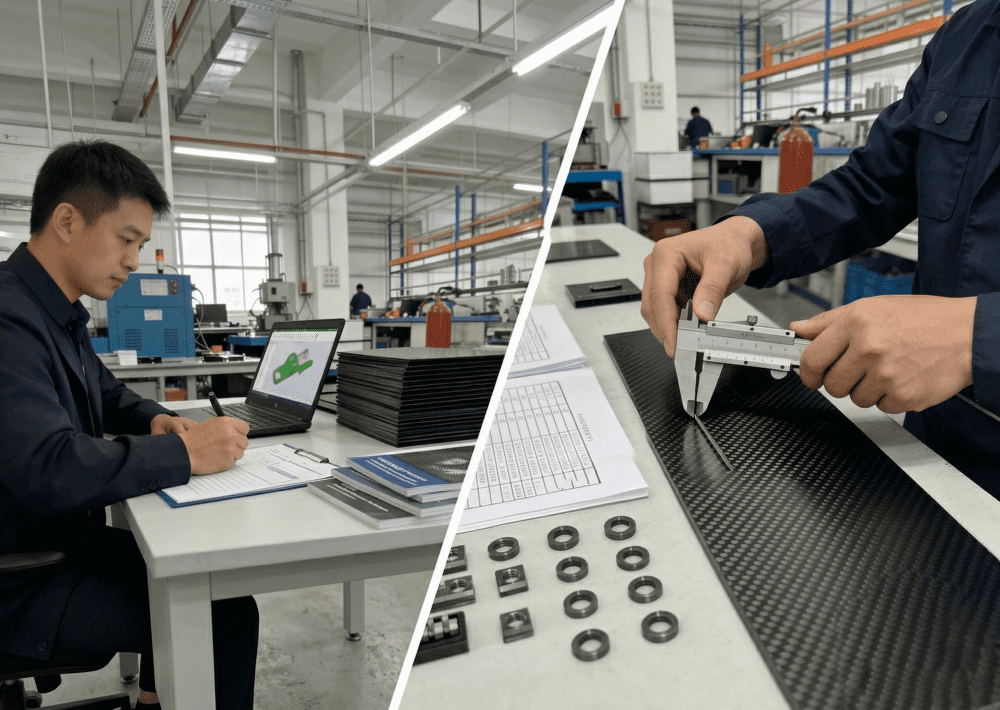
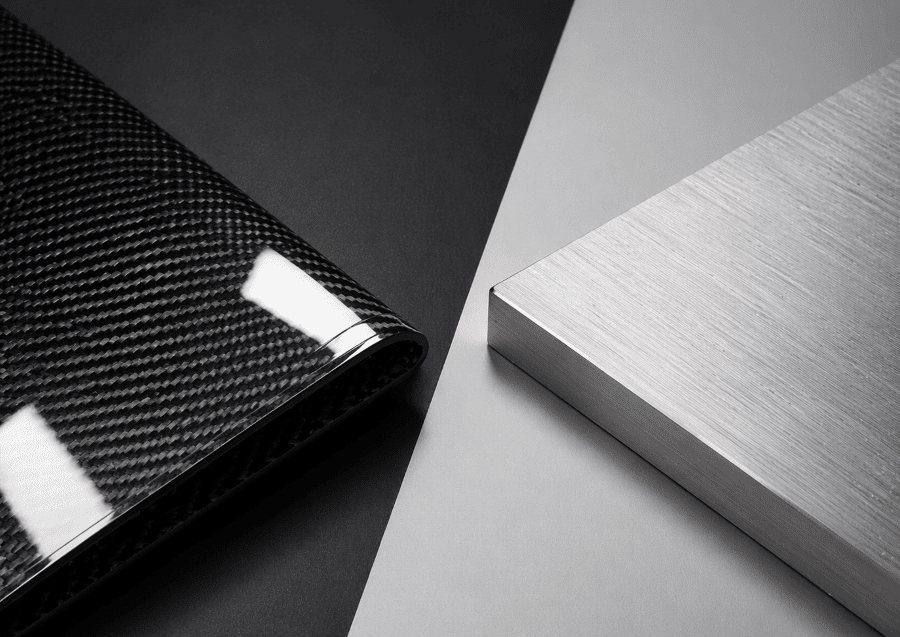
When someone searches carbon fiber vs aluminum, they are rarely looking for a materials science lecture. They are standing at a decision point: a product to redesign, a component to upgrade, a sourcing decision to justify. Automotive engineers evaluating roof structure replacements, sourcing managers comparing supplier proposals, product developers weighing performance against budget — they all arrive at the same question for different reasons.
The framing of “which is better” is the wrong starting point. Carbon fiber composite does not universally outperform aluminum alloy, and aluminum does not hold up across every application. The real question is: in your specific load case, production volume, and performance target, which material’s properties map more accurately to what you need to achieve?
This article breaks down carbon fiber vs aluminum differences across the dimensions that actually drive engineering decisions — density / weight, tensile strength, stiffness / rigidity, strength-to-weight ratio, corrosion resistance, thermal properties, manufacturing / fabrication, and cost. Where applicable, we replace general claims with real finite element analysis (FEA) data from a production automotive structural component tested under identical boundary conditions.
Carbon fiber delivers advantages in strength-to-weight ratio, stiffness / rigidity, and design-integrated performance that aluminum cannot match in weight-critical applications. Aluminum delivers fabrication flexibility, repairability, and thermal conductivity that carbon fiber does not offer. Understanding where each material’s performance boundaries lie is what turns a material selection into an engineering decision.
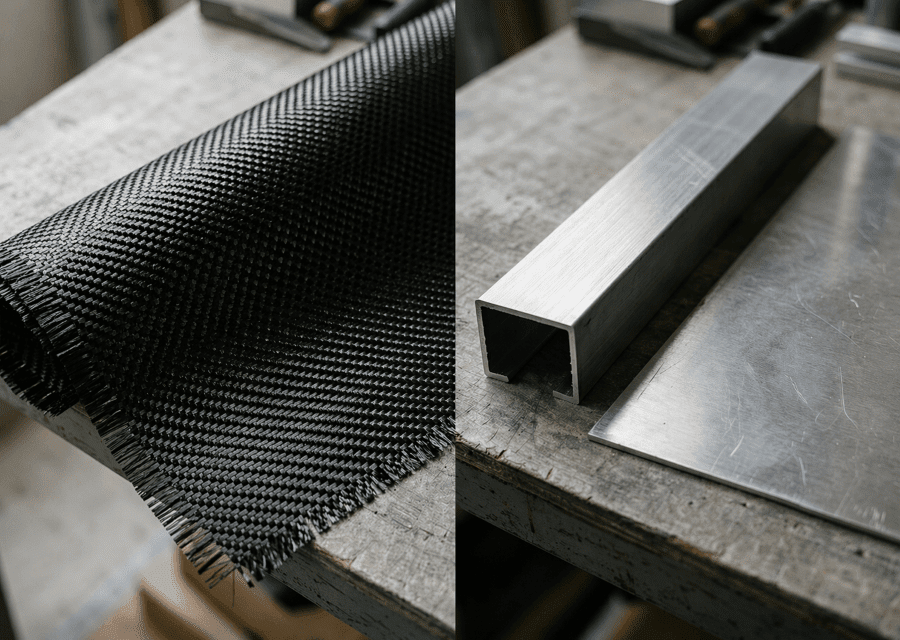
Material Fundamentals — What You Are Actually Comparing
Before any carbon fiber vs aluminum differences can be evaluated, one structural difference must be established: these two materials do not belong to the same category of description.
Aluminum alloy is an isotropic material. Its mechanical properties — stiffness, strength, thermal behavior — are consistent regardless of load direction. This predictability is one of aluminum’s genuine advantages: what you simulate is what you manufacture.
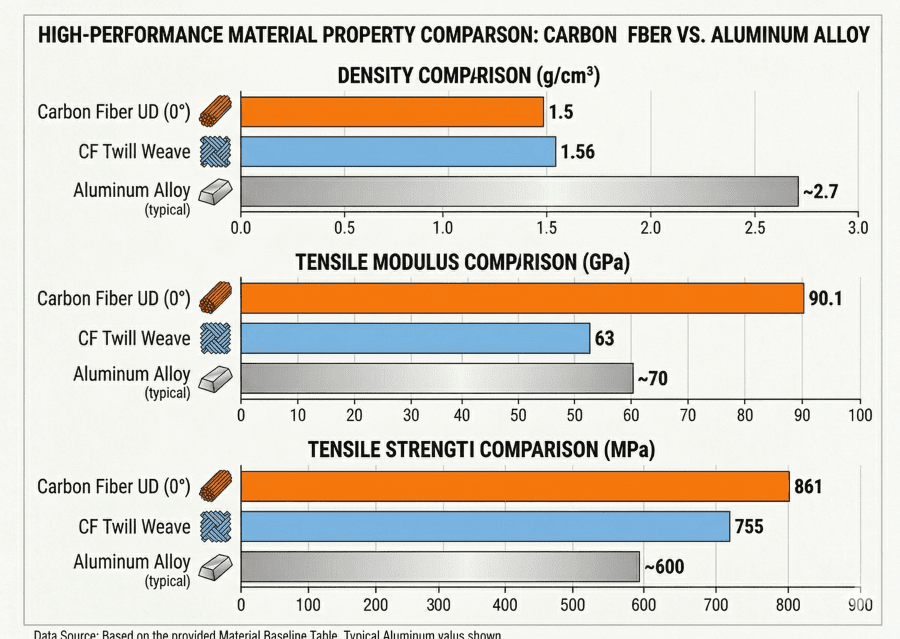
Carbon fiber composite is anisotropic. Its mechanical properties are not fixed — they are designed. The elastic modulus, tensile strength, and failure mode of a carbon fiber part depend entirely on fiber orientation, layup sequence, fiber areal weight, and resin system. A T300 carbon fiber unidirectional fabric achieves a 0° tensile modulus of 90.1 GPa at a density of 1.5 g/cm³. Oriented at 90°, the same material drops to 4.73 GPa. The fiber is not just chosen — it is engineered for the load path.
The density / weight gap is the physical foundation of everything that follows. Carbon fiber composite at ~1.5 g/cm³ is roughly 55% the density of aluminum at ~2.7 g/cm³, and less than 20% the density of structural steel at ~7.85 g/cm³. Every performance-per-kilogram comparison flows from this number. See our carbon fiber composite materials overview for full material specifications.
Material Baseline Comparison
| Property | Aluminum Alloy (typical) | T300 CF UD (0°) | CF Twill Weave |
| Density (g/cm³) | ~2.7 | 1.5 | 1.56 |
| Tensile Modulus (GPa) | ~70 | 90.1 | 63 |
| Tensile Strength (MPa) | ~500–700 | 861 | 755 |
| Compressive Strength (MPa) | ~250–500 | 400 | 517 |
| In-plane Shear Modulus (GPa) | ~26 | 3.26 | 4.5 |
Strength, Stiffness, and Strength-to-Weight Ratio — Three Different Questions
This is where most carbon fiber vs aluminum comparisons fail. The three terms are used interchangeably in product marketing and treated as distinct engineering parameters by anyone who actually designs structural components. They measure different things. The material that leads in one does not automatically lead in the others.
Tensile Strength — The Number You See in Ads
Tensile strength measures the maximum stress a material withstands before fracture under uniaxial tension. High-strength steel used in automotive stampings — such as grade RP153-780BQ — carries a tensile strength of 1,072 MPa. T300 unidirectional carbon fiber fabric in the 0° direction achieves 861 MPa. On raw tensile strength alone, the steel wins. That is accurate, not a marketing error.
At a density of 7.85 g/cm³, however, that steel is more than five times heavier per unit volume than carbon fiber composite at 1.5 g/cm³. Tensile strength without a mass denominator tells you nothing useful about how a structural part performs per kilogram of weight carried. This is precisely why is carbon fiber stronger than aluminum has no single correct answer — it depends entirely on which strength metric and which mass constraint define the design requirement.
Stiffness / Rigidity — What Actually Governs Structural Design
Stiffness / rigidity measures resistance to deformation under load, governed by elastic modulus and part geometry. For most structural applications — automotive body panels, aerospace frames, sports equipment — stiffness failure governs design before strength failure does.
The carbon fiber vs aluminum stiffness comparison is where the conventional ranking gets challenged directly. In the 0° fiber direction, T300 unidirectional carbon fiber achieves an elastic modulus of 90.1 GPa — higher than aluminum’s ~70 GPa — at roughly half the density. Learn how this translates to part-level design in our carbon fiber structural design and FEA analysis resource.
Real FEA data from a production automotive roof front crossbeam comparison: the carbon fiber composite version achieves an axial tensile stiffness of 18,518 N/mm versus 12,500 N/mm for the metal version — a 48% increase — while part mass drops by over 40%. Bending stiffness improves by 87%. These results are from identical boundary conditions, identical load inputs, identical geometric envelope.
Stiffness / rigidity in carbon fiber is direction-dependent. A misaligned layup designed without load path analysis can produce a carbon fiber part that underperforms aluminum of equivalent mass. Engineering the fiber orientation for the actual load case determines whether the stiffness advantage materializes or disappears.
For verified material property data that underpins this analysis, see our carbon fiber material characterization documentation.
Strength-to-Weight Ratio — The Real Performance Metric
Strength-to-weight ratio — specific strength — is the metric that explains why carbon fiber vs aluminum strength-to-weight ratio explained is the most searched variant of this comparison among engineers and procurement managers making real sourcing decisions.
Carbon fiber composites deliver higher specific strength and specific stiffness than aluminum alloys at equivalent structural configurations. This is the engineering reason carbon fiber is specified in Formula 1 chassis, commercial aircraft primary structure, and competition cycling frames — not because it looks premium, but because it achieves the required structural performance at a mass that aluminum cannot match.

Where Aluminum Wins — Cost, Fabrication, and Repairability
A credible carbon fiber vs aluminum pros and cons analysis does not minimize aluminum’s real advantages. For procurement officers managing volume production and product managers operating under fixed cost structures, aluminum’s strengths in manufacturing / fabrication and repairability are not secondary considerations — they are often the decision.
Fabrication accessibility: Aluminum can be machined, welded, extruded, and formed using widely available equipment and workforce. Tooling costs are lower. Prototype lead times are measured in days. Carbon fiber requires specialized molds, autoclave or RTM processing equipment, and trained lamination technicians — none of this infrastructure is plug-and-play.
Carbon fiber vs aluminum cost difference: For structural components at low-to-medium production volume, carbon fiber total program cost — material, tooling, process, labor — runs substantially higher than aluminum. This gap narrows as volume increases and tooling cost is amortized, but it does not disappear. Procurement teams evaluating lightweight materials for engineering applications need to calculate cost-per-kilogram-saved, not just per-part price.
Repairability: Aluminum sustains localized damage that can be welded or reworked in the field. Carbon fiber impact damage is not always surface-visible — internal delamination can occur without cracking the outer plies — and repair requires matching the original material system and layup sequence. For applications where field serviceability is a requirement, carbon fiber introduces genuine operational risk.
Corrosion resistance: Carbon fiber composite itself does not corrode. However, carbon fiber in direct metallic contact with aluminum creates a galvanic couple that accelerates aluminum corrosion. Hybrid assemblies require insulating separation at interfaces — a deliberate engineering requirement that adds joint complexity.
Thermal Properties — Why Temperature Matters More Than You Think
Thermal properties are routinely excluded from carbon fiber vs aluminum comparisons focused on mechanical performance. For sourcing managers in automotive, electronics, and industrial applications, thermal behavior can determine whether a material is viable at all — before any structural analysis is needed.
Carbon fiber vs aluminum thermal conductivity comparison: Aluminum’s thermal conductivity is substantially higher than that of carbon fiber composites. This makes aluminum the correct specification for heat sinks, brake cooling structures, and any assembly where heat must be conducted away from a source rapidly. Carbon fiber composites, with low through-thickness thermal conductivity, do not conduct heat effectively and should not be specified where heat dissipation is a functional requirement.
Thermal expansion: Aluminum’s coefficient of thermal expansion is relatively high, meaning parts grow and contract noticeably across temperature cycles. Carbon fiber composites, depending on fiber orientation, can achieve near-zero or negative CTE in specific directions — a property that makes them the material of choice in aerospace structures and precision instruments where dimensional stability across temperature is non-negotiable.
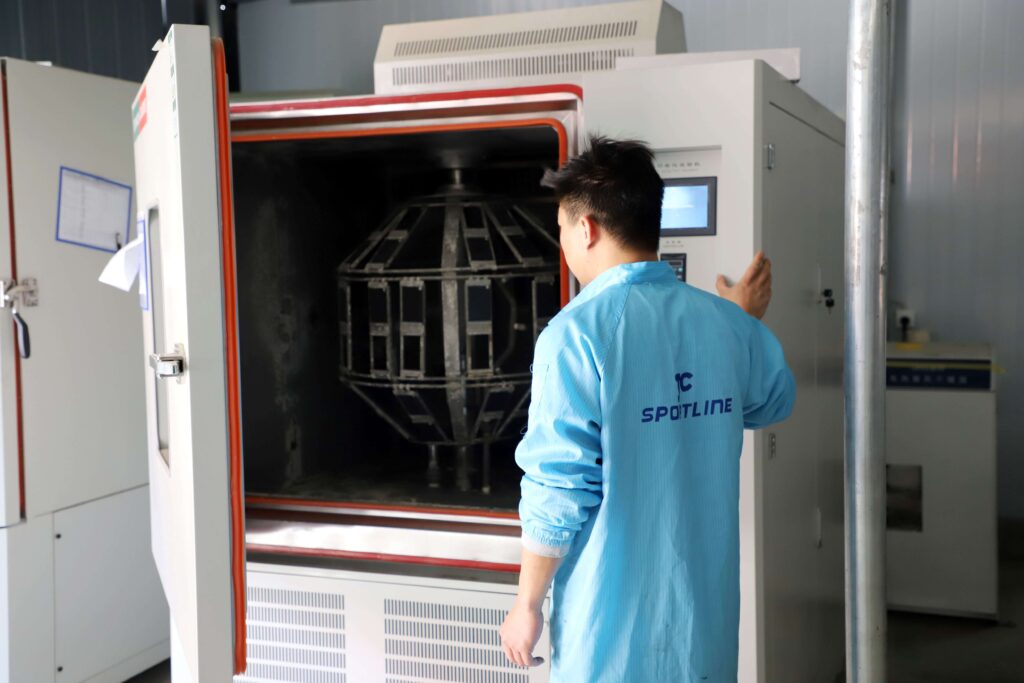
Validated performance, not theoretical properties: JCSPORTLINE’s production carbon fiber intake components are validated through a defined thermal pressure test — heated to 120°C, then subjected to 0.7 MPa (7 bar) internal pressure, with zero leakage and zero structural damage permitted for acceptance. That test result is what determines whether a carbon fiber composite system actually functions in its operating environment.
Application Decision Framework — When You Must Choose Carbon Fiber, and When You Should Not
Which is better carbon fiber or aluminum for product design has a direct answer once the use case is defined. The framework below is based on the engineering logic established in the preceding sections.
Choose Carbon Fiber When:
- Weight reduction has measurable system impact: Racing applications, aerospace structures, performance automotive components — every kilogram of unsprung or rotating mass reduction produces quantifiable performance returns. When to choose carbon fiber over aluminum is clearest here.
- Stiffness-to-weight governs the design: Deflection limits that cannot be met in aluminum without unacceptable mass penalty are where carbon fiber’s specific stiffness advantage is non-negotiable.
- Aesthetics are embedded in the product value proposition: The visual identity of carbon fiber weave is a recognized performance signal in automotive and consumer premium products. This is brand differentiation with material foundation.
- Volume justifies tooling investment: Carbon fiber economics improve substantially with volume. That calculation should precede tooling commitment. See how JCSPORTLINE accelerates the path from design to production in our carbon fiber prototype development workflow.
Aluminum Is the Right Call When:
- Stamping, extrusion, or machining meets structural requirements without mass penalty trade-offs.
- On-site modification, welding, or field repair is a service reality.
- Heat must be conducted through the structure.
- Unit economics at target volume make the cost premium unrecoverable in product pricing.
The Gray Zone — Hybrid Structures
Many high-performance products use carbon fiber composite for primary load-bearing surfaces with aluminum inserts, fastener hardware, or interface brackets. This approach captures carbon fiber’s structural efficiency while using aluminum’s machinability at connection points. Engineering these joints correctly — ensuring load transfer and eliminating galvanic contact between the two materials — is as important as the primary material selection. Hybrid structures are not a compromise; they are a deliberate engineering solution when both materials’ properties are needed in the same assembly.
What a Real FEA Comparison Looks Like — Carbon Fiber vs Aluminum in the Same Part
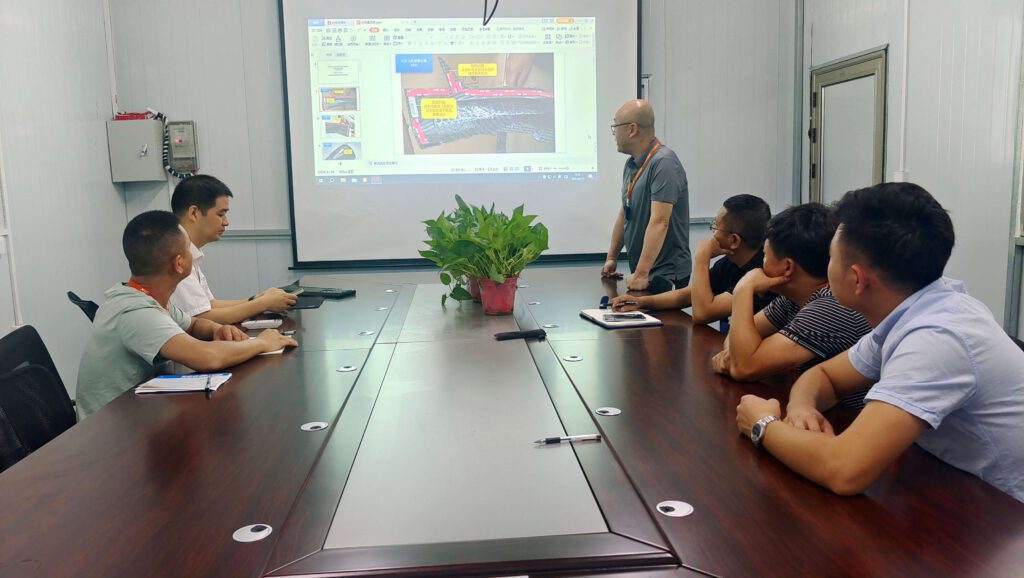
Abstract material comparisons become decision-useful when tested against real geometry under real load cases. The following data comes from a finite element analysis conducted by JCSPORTLINE’s engineering team, comparing a metal and carbon fiber composite automotive roof front crossbeam under identical boundary conditions — same geometric envelope, same bolt hole constraints, same load application points.
Metal version: Two stamped steel components (RP153-780BQ crossbeam at 0.75mm, RP153-590BQ reinforcement plate at 0.8mm), connected by four bolts and 30 weld points. FEA model: 14,402 elements, total mass 1.55 kg (including 342g mass block representing attached hardware).
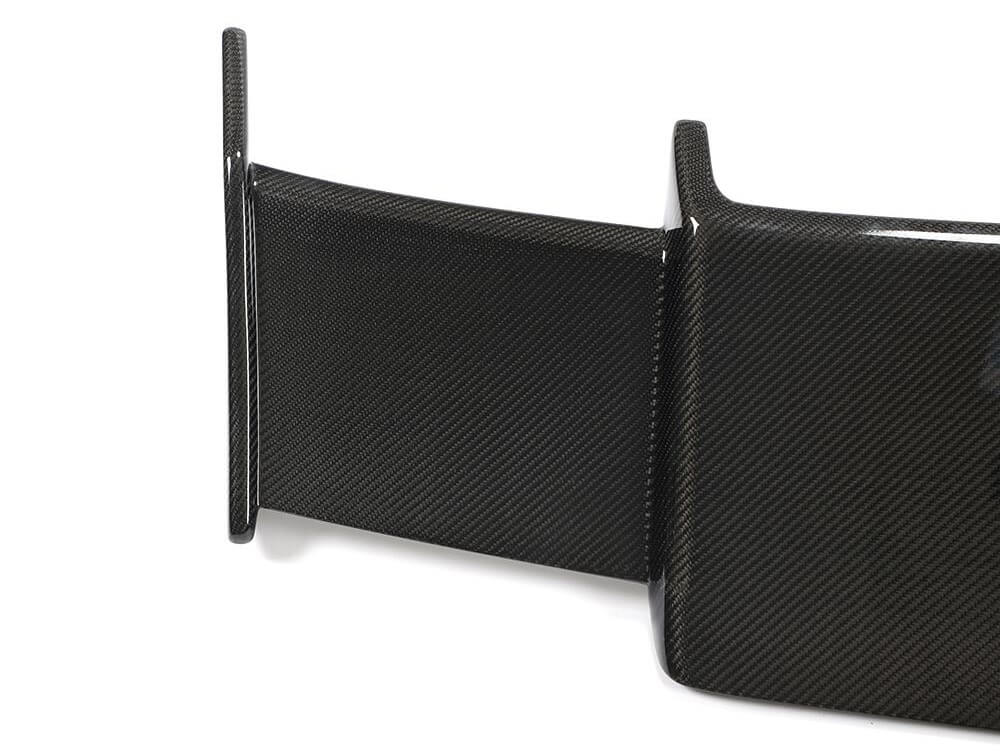
Carbon fiber composite version: Single-piece component via HP-RTM using T300 unidirectional fabric and carbon twill weave with epoxy resin. Six-layer layup: P001 and P006 as ±45° twill surface plies (0.25mm each), P002–P005 as 0° unidirectional structural plies (0.75mm each), total thickness 3.5mm. FEA model: 6,697 elements, total mass 0.718 kg.
Five analysis cases: free modal analysis, constrained modal analysis, axial tensile stiffness, bending stiffness, and bending strength. Full material property data is documented in our carbon fiber material characterization reference.
Full Performance Comparison: Metal vs Carbon Fiber Crossbeam
| Performance Metric | Metal Crossbeam | CF Composite Crossbeam | Delta |
| Weight (kg) | 1.20 | 0.718 | −40.2% |
| Free Modal 1st Frequency (Hz) | 84.1 | 93.2 | +10.8% |
| Free Modal 2nd Frequency (Hz) | 110.1 | 210.4 | +91.1% |
| Constrained Modal 1st Freq (Hz) | 76.8 | 122.7 | +59.8% |
| Constrained Modal 2nd Freq (Hz) | 174.7 | 295.8 | +69.3% |
| Axial Tensile Stiffness (N/mm) | 12,500 | 18,518 | +48.1% |
| Bending Stiffness (N/mm) | 152 | 284.3 | +87.0% |
| Peak Bending Load (N) | 1,018 | 2,681 | +163.4% |
The carbon fiber crossbeam achieves 40% weight reduction while improving peak bending strength by 163% and bending stiffness by 87%. Modal frequencies — which govern vibration behavior and NVH performance — improve by up to 91% in free mode and 70% in constrained mode.
This is the carbon fiber vs aluminum weight comparison and stiffness comparison result when the layup is engineered for the actual load path. It is also the result that does not appear when carbon fiber is treated as a drop-in material substitution without structural redesign. Engineering the fiber orientation for the actual load case is not optional — it is what the performance numbers depend on.
For product developers and sourcing managers evaluating carbon fiber vs aluminum for engineering applications, this is the level of analysis that separates a material decision from a guess. Explore our carbon fiber structural design capability to understand how JCSPORTLINE applies FEA at the design stage.
FAQ
Is carbon fiber actually stronger than aluminum, or is that just marketing?
The claim is accurate in specific terms and misleading as a general statement. In strength-to-weight ratio and stiffness / rigidity per unit mass, carbon fiber composite clearly outperforms aluminum alloy — the FEA data in this article shows a carbon fiber crossbeam achieving 163% higher peak bending load at 40% lower weight than the metal equivalent. In raw tensile strength by absolute value, some high-strength steel and aluminum alloys can match or exceed carbon fiber. The meaningful comparison is always normalized to mass, because mass is what the material costs you in a structural application.
Can carbon fiber replace aluminum in any structural application without redesign?
No. Carbon fiber is anisotropic — its properties depend entirely on fiber direction and layup sequence. Replacing an aluminum bracket with a carbon fiber part of the same geometry, without redesigning the layup for the actual load path, will not reliably replicate the original part’s performance. Material substitution in composites requires structural re-engineering and FEA validation of the layup schedule before any tooling is committed.
How do carbon fiber and aluminum compare for long-term durability?
Carbon fiber fatigue resistance vs aluminum favors carbon fiber under cyclic tensile loading — composites generally do not develop the progressive fatigue cracks that aluminum can at stress concentrations. However, carbon fiber vs aluminum impact resistance presents a different picture: aluminum deforms plastically under impact and the damage is visually assessable. Carbon fiber fractures in brittle mode, and internal delamination may not be visible on the surface — requiring non-destructive inspection after significant impact events.
When does the cost of carbon fiber become justifiable?
The cost calculation is program-specific. Carbon fiber’s higher per-part cost can be offset by reduced part count (a single-piece composite component replacing a multi-piece metal assembly), elimination of secondary operations, and the performance or pricing premium it enables in the final product. The carbon fiber vs aluminum cost difference is real but not static — it is governed by part complexity, annual volume, and what the weight saving is worth in the application. That calculation should be done before tooling, not after.
Does carbon fiber corrode?
Carbon fiber composite itself does not corrode. In direct metallic contact with aluminum, however, carbon fiber creates a galvanic couple that accelerates corrosion of the aluminum. Corrosion resistance of carbon fiber in isolation is excellent; managing it in mixed-material assemblies requires deliberate insulating separation at interfaces, and that requirement must be designed in, not retrofitted.
What thermal limits should I know about for carbon fiber in engineering applications?
The carbon fiber itself is thermally stable at high temperatures. The practical operating limit is governed by the resin matrix. JCSPORTLINE validates production carbon fiber components to 120°C under 0.7 MPa (7 bar) internal pressure as an acceptance test — a real qualification threshold, not a theoretical property. If your application involves sustained temperatures approaching this range, the thermal properties of the full composite stack must be evaluated against your specific operating conditions before specification.
Make the Right Material Decision for Your Next Project
The carbon fiber vs aluminum question has a correct answer for each specific application — once the load case, production volume, thermal environment, and cost structure are properly analyzed.
Carbon fiber composite delivers a combination of strength-to-weight ratio, stiffness / rigidity, and design-integrated performance that aluminum cannot match in weight-critical structural applications. The FEA data in this article — 163% bending strength improvement, 87% bending stiffness improvement, 40% mass reduction in a production automotive component — is what that advantage looks like when the engineering is done correctly.
Aluminum alloy remains the right material when fabrication accessibility, field repairability, thermal conductivity, or program economics make carbon fiber’s cost premium unrecoverable. Neither material wins universally. Both win in their correct context.
At JCSPORTLINE, every material recommendation begins with engineering analysis. Our team provides free technical feasibility assessments within 24 hours — covering material selection, layup design, tooling strategy, and production cost modeling — so that carbon fiber vs aluminum for engineering applications decisions are grounded in real data before any tooling commitment is made. Explore our carbon fiber prototype development process to see how we move from FEA to first article.
If you are developing a component where the weight-performance trade-off matters, contact JCSPORTLINE to request a technical feasibility review.
You can also subscribe to our YouTube channel for more content like this.