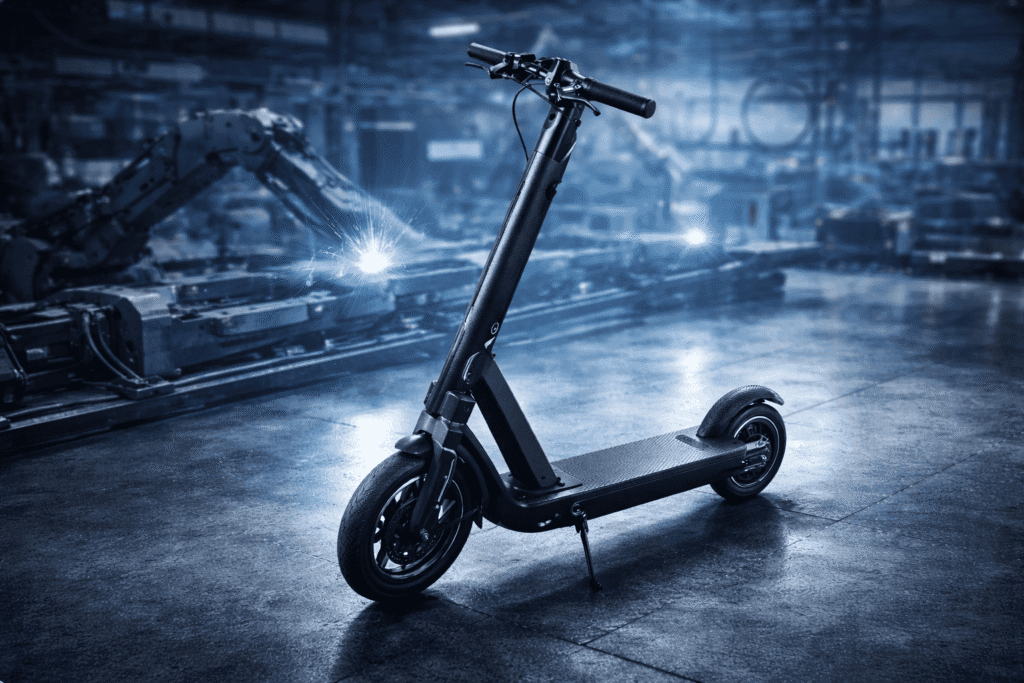
From Sample Success to Mass Production Reality in Electric Scooter Programs
In the electric scooter industry, many suppliers can produce attractive samples. However, real challenges appear when projects move from small trial quantities into stable mass production.
For this visiting brand, their product had already been in the market for three years. Sample quality had never been a problem. What concerned them most was whether a new partner could maintain batch consistency when order volume increases rapidly during the peak sales season.
Why batch consistency matters more than sample appearance
In electric scooter structures, especially housings and load-bearing composite parts, visual appearance is only the most visible layer of quality.
True manufacturing stability depends on:
- consistent laminate consolidation,
- dimensional repeatability,
- predictable demolding behavior,
- and stable assembly tolerance control.
When these factors are not controlled, small variations between batches accumulate into assembly problems, cosmetic defects, and field failure risks.
For brands preparing for scale, electric scooter production consistency becomes more important than the perfection of a single prototype.
The hidden cost of repeated trial production
During the visit, the customer proposed a common approach:
They wanted to avoid repairing existing molds and instead perform a small trial run first to evaluate batch quality.
From a manufacturing engineering perspective, this approach often leads to higher overall cost.
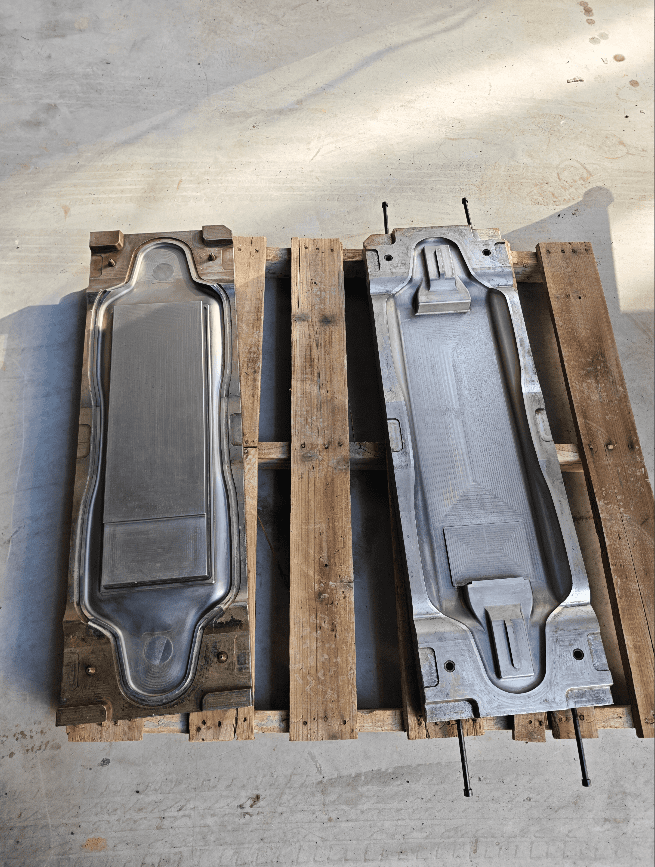
Because their molds had not been polished and the available product data was not the latest version, trial production would require repeated process adjustments. Under such conditions:
- demolding becomes difficult,
- cleaning and surface repair time increases,
- and operators rely heavily on manual intervention.
With complete and verified data, stable production is usually achieved within two to three trial cycles.
However, in the customer’s current situation, six to seven trial cycles—or even more—would be required to approach acceptable stability.
The accumulated cost of labor, energy, material waste, and engineering time often exceeds the cost of proper mold preparation.
For electric scooter brands evaluating suppliers, understanding electric scooter trial production cost is essential when planning scale-up.
Why outdated product data increases production uncertainty
Another challenge identified during the visit was the use of outdated product drawings.
When tooling, fixtures, and process parameters are adjusted based on older data versions:
- dimensional mismatch increases,
- interface tolerances become unstable,
- and quality inspection becomes less reliable.
For suppliers, unclear technical baselines force repeated on-site tuning.
For brands, this results in longer ramp-up time and higher manufacturing risk.
Effective electric scooter production data management is therefore a prerequisite for any reliable manufacturing partnership.
Tooling Readiness and Core Material Strategy for Electric Scooter Structures
Tooling quality and core material selection play a decisive role in production throughput and long-term cost structure.
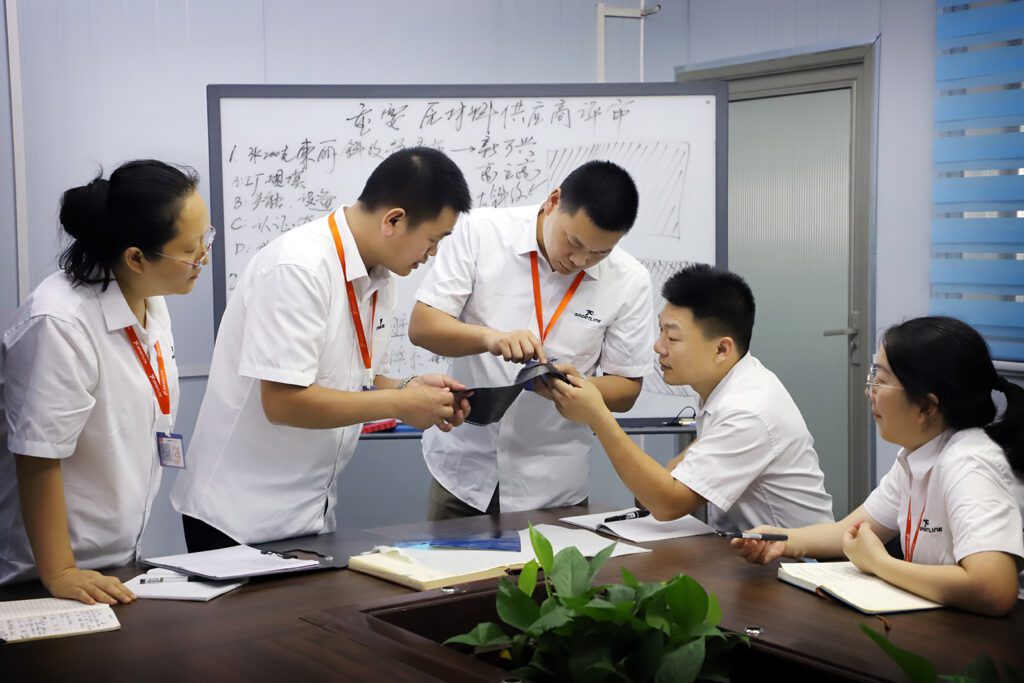
During the visit, the customer shared photographs of their existing molds. Although the tooling had already been manufactured, surface finishing had not been properly performed.
Why mold surface finishing directly affects throughput
In composite manufacturing for electric scooter structures, mold surface condition determines:
- demolding time,
- cleaning frequency,
- and the probability of surface defects.
Without proper polishing:
- operators must spend significant time prying parts from the mold,
- cleaning and surface restoration become frequent,
- and cycle time becomes unstable.
For peak season production, even small inefficiencies multiply into major delivery delays.
This is why electric scooter mold polishing is not an aesthetic process—it is a capacity and cost control measure.
From a production planning perspective, well-prepared tooling significantly improves electric scooter composite demolding efficiency and reduces reliance on operator experience.
PU core vs fiber-based core in electric scooter structures
Another key discussion point during the visit was core material selection.
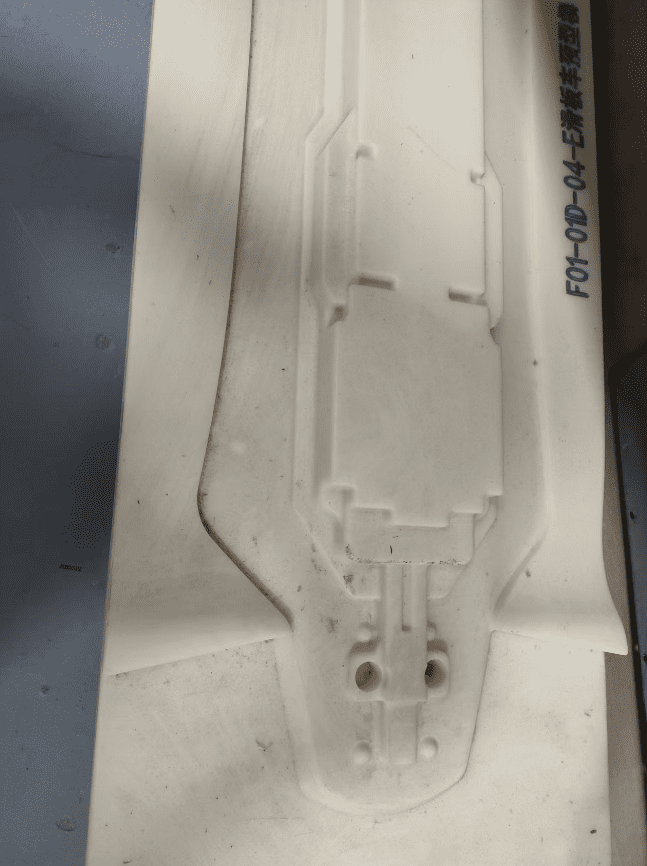
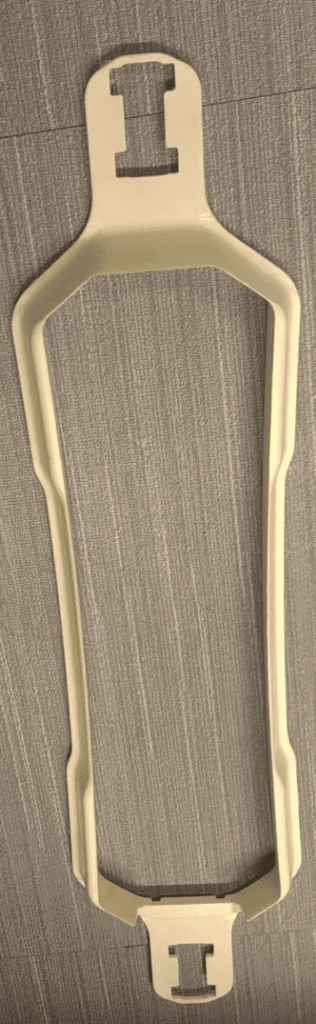
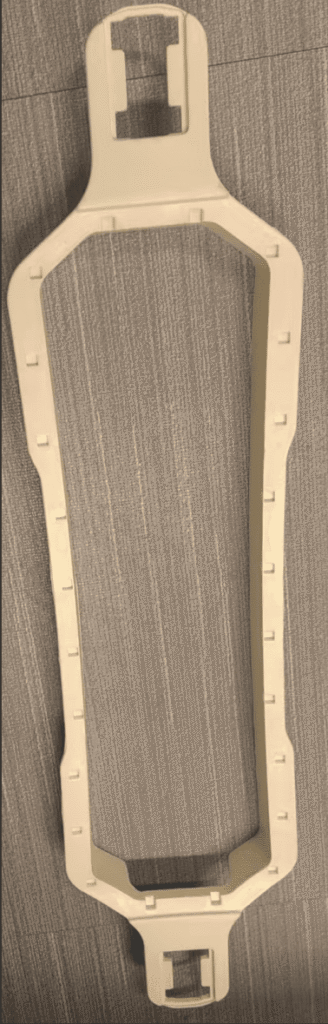
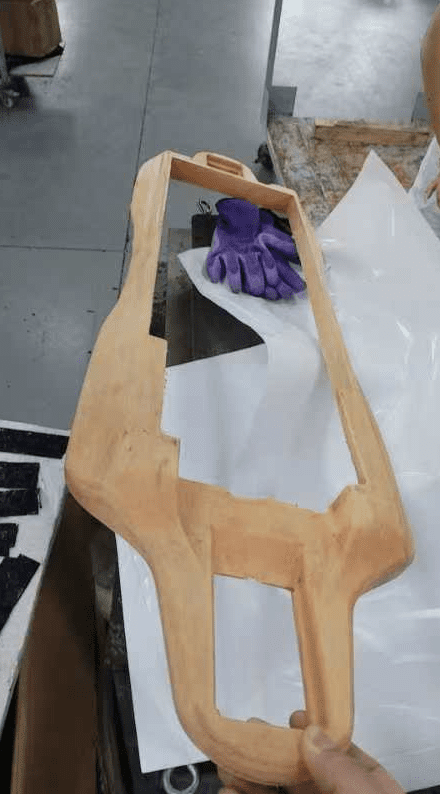
The customer’s current design used a fiber-based core combined with epoxy systems. In practice, this solution presents several challenges in volume production:
- local shape distortion after curing,
- incomplete surface formation requiring manual repair,
- and increased labor intensity.
Our engineering recommendation was to adopt a PU core electric scooter structure solution.
PU cores provide:
- one-piece forming capability,
- stable geometry,
- reduced risk of surface sink or missing shapes,
- and easier integration with carbon fiber and glass fiber skins.
Structurally, PU cores combined with carbon and glass fiber laminates can meet strength and stiffness requirements. From a manufacturing standpoint, they offer higher productivity and lower scrap rates.
For high-volume electric scooter programs, PU core solutions also result in lower total manufacturing cost than traditional fiber-based core systems.
Core material selection for high-volume scooter programs
For brands planning sustained growth, electric scooter core material selection must be aligned with long-term production strategy.
Key production factors influenced by core materials include:
- curing stability,
- assembly tolerance consistency,
- labor dependency,
- and scrap control.
In high-volume electric scooter composite manufacturing, reducing manual rework is one of the most effective ways to improve profit margins and delivery reliability.
Production Capacity and Resource Allocation for Growing Electric Scooter Brands
One of the most sensitive concerns raised during the visit was production priority.
The customer’s previous supplier could only produce approximately five sets per mold per shift. The brand was worried that as a medium-volume customer, their orders might be deprioritized in favor of larger clients.
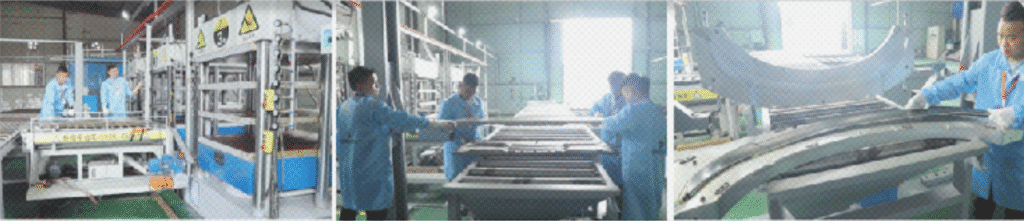
Per-shift output and capacity benchmarking
A meaningful capacity discussion must be based on measurable indicators.
In our manufacturing environment, optimized tooling and process design allow production to reach approximately ten sets per shift per mold. This represents a significant improvement in electric scooter manufacturing throughput.
For procurement and operations teams, electric scooter production capacity per shift is one of the most reliable metrics for supplier benchmarking.
Flexible machine matching for different scooter models
Electric scooter brands typically operate multiple models simultaneously.
Different structures, laminate configurations, and core materials require different equipment setups. A rigid production line easily becomes congested during model changeovers.
By configuring multiple machine types and matching them to specific model requirements, manufacturers can:
- balance production loads,
- reduce waiting time between batches,
- and improve scheduling accuracy.
This flexible equipment strategy supports stable electric scooter multi-model production line operations.
Multi-plant and workforce support strategy
Another factor discussed during the visit was production resilience.
For fast-growing scooter brands, unexpected order surges or delivery pressure are common. Multi-plant coordination and workforce mobility provide critical risk mitigation.
By enabling:
- cross-factory scheduling,
- temporary workforce support,
- and shared engineering resources,
manufacturers can maintain delivery commitments even during high-demand periods.
This type of factory network capability directly supports electric scooter cross-plant production support and enhances supply chain reliability.
For brands concerned about production resource allocation, transparent capacity planning and flexible deployment are key elements of a trustworthy electric scooter manufacturing partner.
FAQ: Electric Scooter Manufacturing and Partner Selection
Can electric scooter products be trial-produced without repairing existing molds?
Yes, trial production is technically possible without repairing existing molds.
However, based on real production experience, this approach significantly increases:
- trial cycle count,
- labor input,
- and material waste.
Without mold polishing and proper surface preparation, demolding becomes inefficient and unpredictable. In addition, when product data is incomplete or outdated, repeated adjustments are unavoidable.
For most electric scooter programs, electric scooter mold trial production without mold repair leads to higher total cost than a properly prepared production setup.
Is PU core suitable for structural electric scooter components?
Yes. PU core solutions are widely used in structural electric scooter components when combined with carbon fiber and glass fiber laminates.
From both structural and manufacturing perspectives, PU core composite structures provide:
- stable geometry,
- good bonding performance,
- reduced manual rework,
- and consistent surface quality.
For brands evaluating material systems, PU core composite electric scooter frame solutions offer an effective balance between performance, manufacturability, and cost.
How can medium-volume brands secure stable production resources?
Medium-volume brands often worry that their projects may not receive sufficient priority.
In practice, stable production resource allocation depends on:
- transparent capacity planning,
- clear production scheduling,
- and multi-plant support mechanisms.
Manufacturers with flexible machine configuration and workforce mobility can guarantee delivery reliability without sacrificing operational efficiency. This directly supports fair and predictable electric scooter production resource allocation.
How should new electric scooter models be introduced into a production partnership?
For brands planning future growth, new model programs should be introduced through a staged cooperation framework.
Typical best practice includes:
- early engineering involvement,
- tooling and process feasibility assessment,
- and structured production ramp-up planning.
This approach reduces technical uncertainty and shortens the time to stable mass production. For long-term growth strategies, selecting a new electric scooter model manufacturing partner with strong engineering participation is essential.
Final perspective
The factory visit highlighted a clear conclusion:
For electric scooter brands preparing for peak-season growth and future model expansion, selecting a manufacturing partner is not a short-term sourcing decision. It is a strategic choice that affects product quality, delivery reliability, and long-term competitiveness.
By focusing on tooling readiness, scalable process design, PU core structural solutions, and flexible capacity allocation, brands can build a manufacturing foundation that supports both immediate production needs and future product innovation.
For any brand evaluating an electric scooter manufacturing partner, real production capability—not sample appearance—must remain the decisive factor.