Empowering Your Project Success
- Home
- Services
- Industries
- Capabilities
- Products
- Resources
- Company
Consulting for Every Business
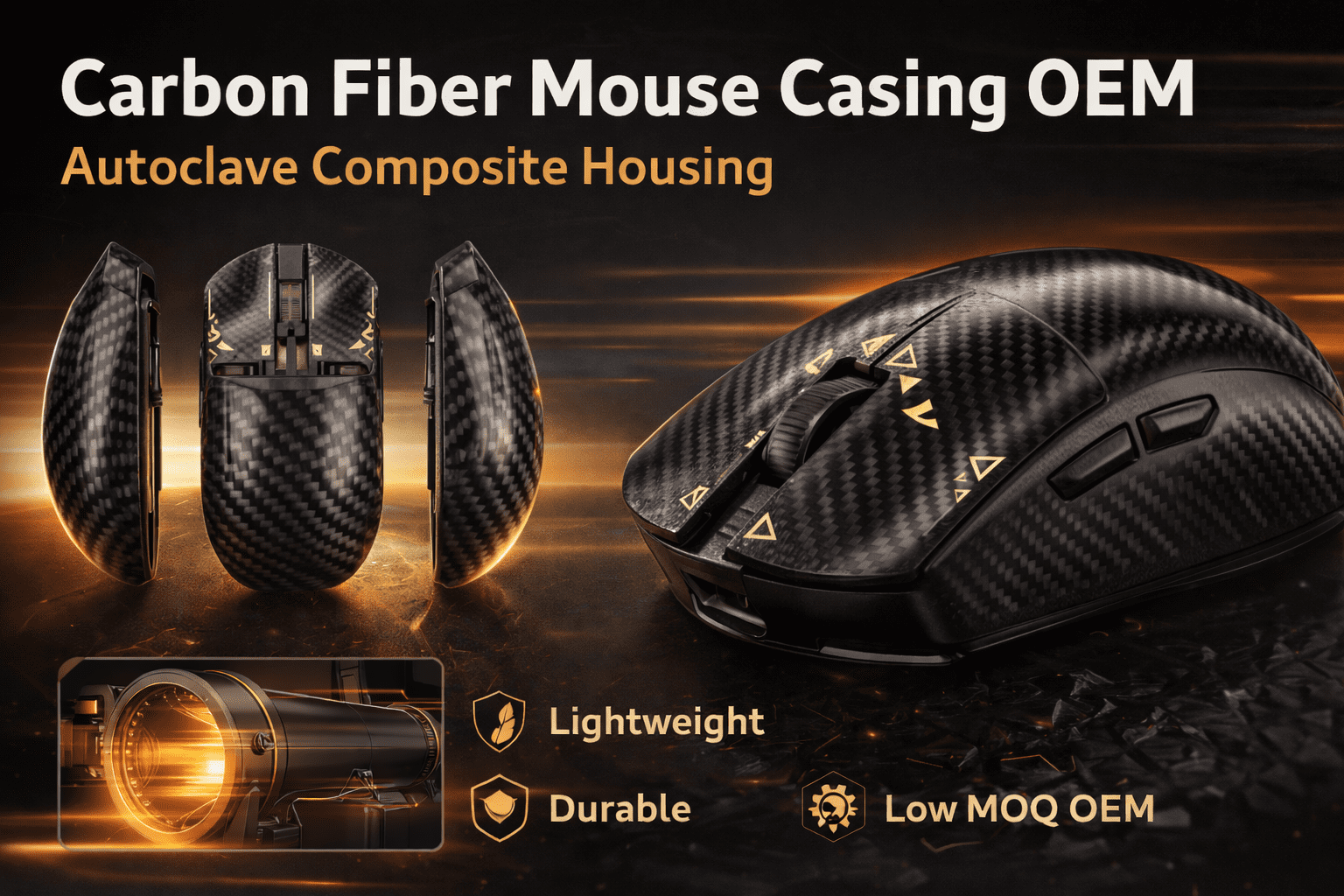
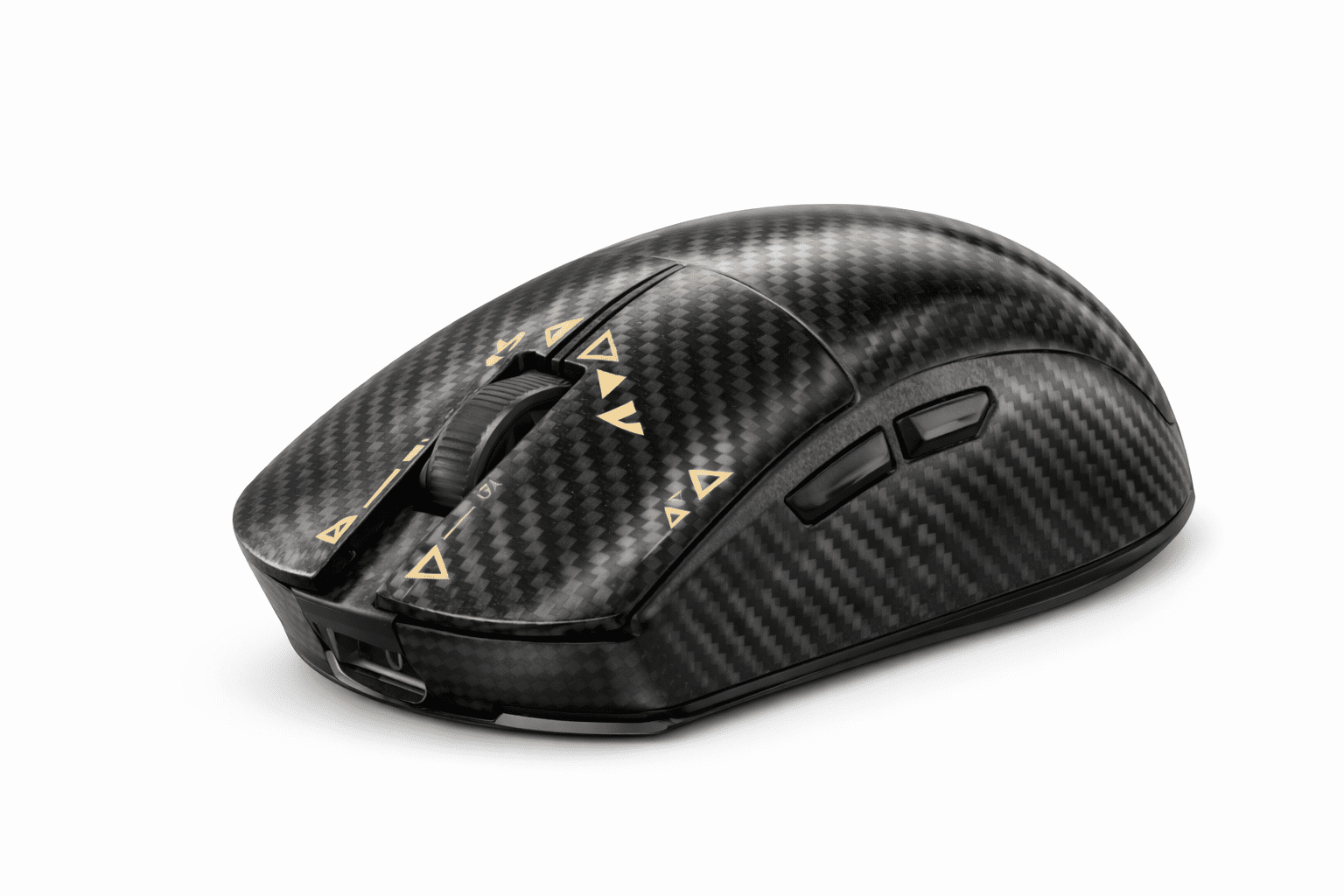
Carbon Fiber Mouse Casing OEM | Autoclave Composite Housing
PRODUCT OVERVIEW
This carbon fiber mouse casing is engineered for OEM and ODM brands seeking higher structural rigidity, improved button rebound consistency, and differentiated exterior aesthetics compared to conventional plastic or metal housings.
The casing adopts a carbon fiber composite outer shell combined with internal ABS structures, achieving an optimized balance between stiffness, dimensional stability, and assembly compatibility. Autoclave vacuum curing ensures uniform resin distribution and dense laminate consolidation, which directly improves click stability and long-term structural reliability of left and right buttons.
Designed through a full development workflow—from ergonomic surface modeling and mechanical simulation to laminate design and prototype validation—the casing supports complex curved geometries with controlled gaps and tight tolerances. Five-axis CNC trimming and dedicated assembly fixtures ensure repeatable accuracy during mass production.
This product is suitable for gaming mice, professional peripherals, and customized electronic housings where structural performance, surface consistency, and OEM-level quality traceability are critical. The solution is optimized for small-batch prototyping and scalable volume manufacturing.
TECHNICAL SPECIFICATIONS
| Specification | Description |
|---|---|
| Material | Carbon fiber composite + epoxy resin + ABS |
| Fiber Type | Carbon fiber fabric (custom layup available) |
| Resin System | Epoxy resin, TG ≥120°C |
| Manufacturing Process | Autoclave vacuum molding + 5-axis CNC + bonding + coating |
| Surface Finish | Gloss / matte coating, polished |
| Flatness Tolerance | ≤0.1 mm after finishing |
| Structural Configuration | Carbon fiber shell with internal plastic support |
| OEM / ODM Options | Layup design, surface texture, logo marking |
| Quality System | IATF 16949, ISO 9001 |
| Traceability | Full process traceability from material to shipment |
PROBLEMS WE SOLVE (PAIN POINT → SOLUTION)
-
Inconsistent button rebound in plastic or metal shells → Carbon fiber laminate provides high stiffness and stable elastic response
-
Poor gap consistency on curved housings → CNC trimming with dedicated fixtures ensures uniform fitment
-
Homogeneous appearance in conventional materials → 3D carbon fiber texture with customizable surface finishes
-
Variable quality between batches → Autoclave-controlled curing and standardized process parameters
-
Difficult quality tracking after shipment → Full-process digital traceability system
KEY ADVANTAGES (WHY CHOOSE US)
-
Engineering-driven composite development from concept to mass production
-
Autoclave molding capability for dense, high-strength laminate structures
-
In-house five-axis CNC machining for precision trimming and edge control
-
Proven laminate design methodology supported by simulation and testing
-
IATF 16949 & ISO 9001 quality systems with batch-level traceability
FAQ
Q1: Can different carbon fiber textures be selected?
Yes. Multiple weave patterns and visual textures are available based on design requirements.
Q2: Can carbon fiber be combined with other materials or patterns?
Yes. Hybrid layups such as forged textures, special patterns, or carbon-aramid combinations are supported.
Q3: Is the casing prone to cracking or impact failure?
No. High-strength carbon fiber laminates and structural adhesives provide higher strength than conventional plastic or metal housings.
Q4: How is gap accuracy between curved surfaces controlled?
Dedicated fixtures, five-axis CNC trimming, and full inspection ensure consistent gap and alignment accuracy.
Q5: How do you prevent edge chipping during machining?
High-alloy cutting tools and optimized high-speed CNC parameters are used to ensure clean edges without delamination.
Q6: How is appearance consistency ensured across batches?
Automated fabric cutting, AI-assisted layup alignment, and poka-yoke tooling features maintain visual and structural consistency.
INDUSTRIES SERVED
Consumer Electronics / Gaming Peripherals / Customized Electronic Enclosures
No related products are available.