1. Why Weight Matters in Outdoor & Sporting Goods
Lightweighting isn’t just a marketing buzzword—it’s a strategic imperative driven by performance, logistics, and market trends.
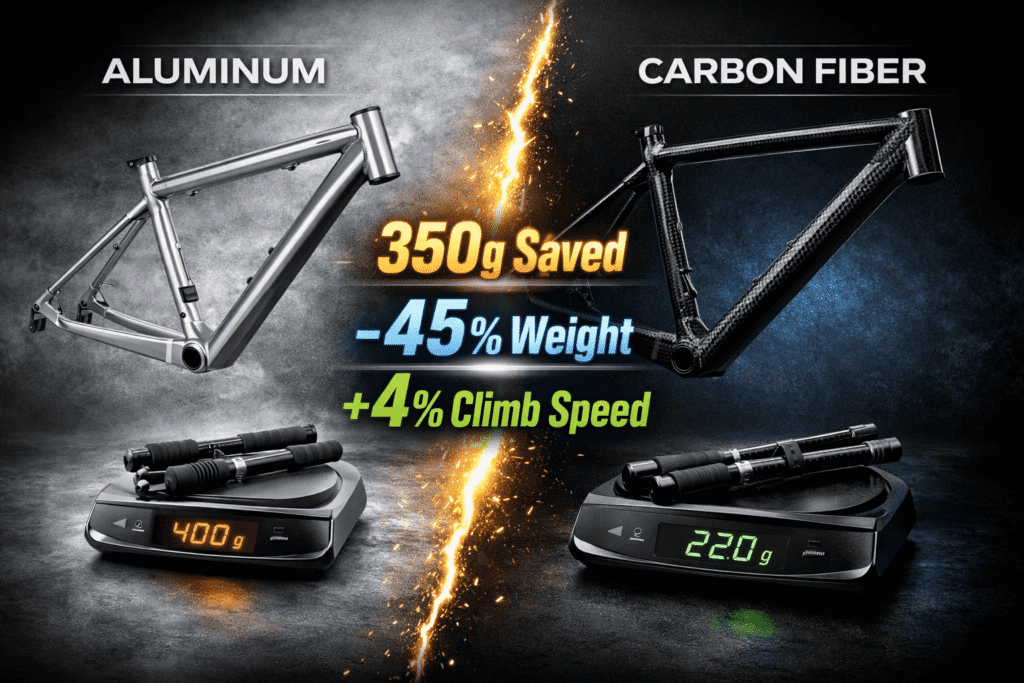
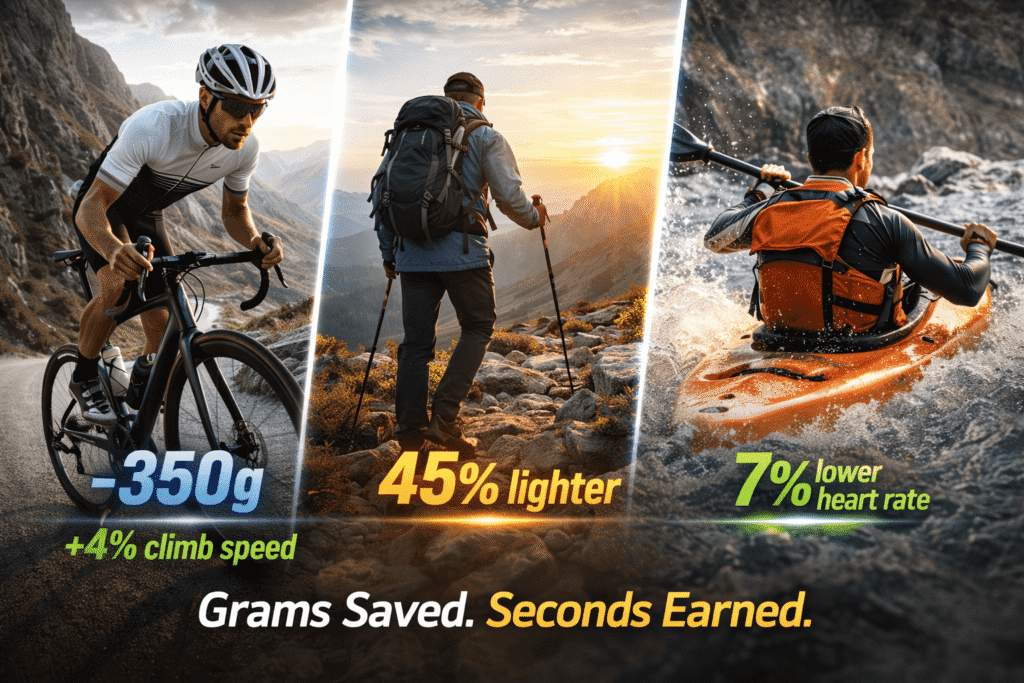
- Performance Correlation: In cycling, hiking, paddling, and skiing, reduced mass directly translates to lower energy expenditure, higher speed, and extended endurance. A 2023 study found that saving 350 g on a road bike frame yields a 4% reduction in climb time—a meaningful advantage even for amateurs.
- Fatigue & Injury Reduction: Carrying extra weight over long durations increases muscular fatigue and joint stress. For hikers using trekking poles 8 hours a day, every 50 g saved per pole reduces forearm strain significantly, lowering the risk of repetitive strain injuries.
- Portability Pain Points: Airline baggage fees, backpack load limits, and multi-day expedition logistics make packability and weight critical purchase drivers. Ultralight Z-fold carbon poles can pack down to 36 cm, fitting easily into travel bags or overstuffed packs.
- Market Momentum: According to industry data, “ultralight” SKUs in North America and the EU have grown 12–15% YoY since 2021. Consumers—and retailers—are demanding quantifiable proof that each gram saved delivers tangible ROI in performance or convenience.
Value Proposition: Whether you’re an athlete or an OEM buyer, you need data-backed justification that lightweighting investments pay off in real-world use.
2. Carbon Fiber Engineering Fundamentals for Sporting Applications
Carbon fiber composites dominate high-performance sporting goods because they offer the highest stiffness-to-density ratio of any structural material. But not all carbon is created equal.
2.1 Fiber Architecture & Grade Selection
Carbon fibers are categorized by modulus (stiffness) and tensile strength:
| Grade | Modulus (GPa) | Tensile Strength (MPa) | Typical Use |
|---|---|---|---|
| T700 (Standard) | 230 | 4,900 | Trekking poles, entry-level frames |
| T800 (Intermediate) | 294 | 5,490 | Mid-range bikes, paddles |
| T1100 (High) | 360+ | 6,600 | Pro racing frames, downhill skis |
- Trade-offs: Higher modulus = stiffer but more brittle. T1100 costs ~30% more per GPa of stiffness than T700.
- Areal Weight: Hiking poles may use 200 g/m² prepreg, while downhill skis require 800 g/m² for impact resistance.
Why the $200 price gap? It’s not just branding—it’s fiber grade, lay-up complexity, and performance tuning.
2.2 Resin Systems & Cure Cycles
The resin matrix binds fibers and determines impact resistance, UV stability, and manufacturability.
- Toughened Epoxies: Incorporating core-shell rubber nanoparticles improves fracture toughness—critical for climbing gear that endures rock impacts.
- UV-Stable Resins: Essential for kayak paddles exposed to sunlight; standard epoxies degrade, causing micro-cracks.
- Fast-Cure Prepregs: Reduce labor by 25%, enabling cost-effective production without autoclaves.
Hidden Risk: Poor resin choice leads to invisible field failures that damage brand trust.
2.3 Hybrid Lay-ups (Carbon/Glass, Carbon/Aramid)
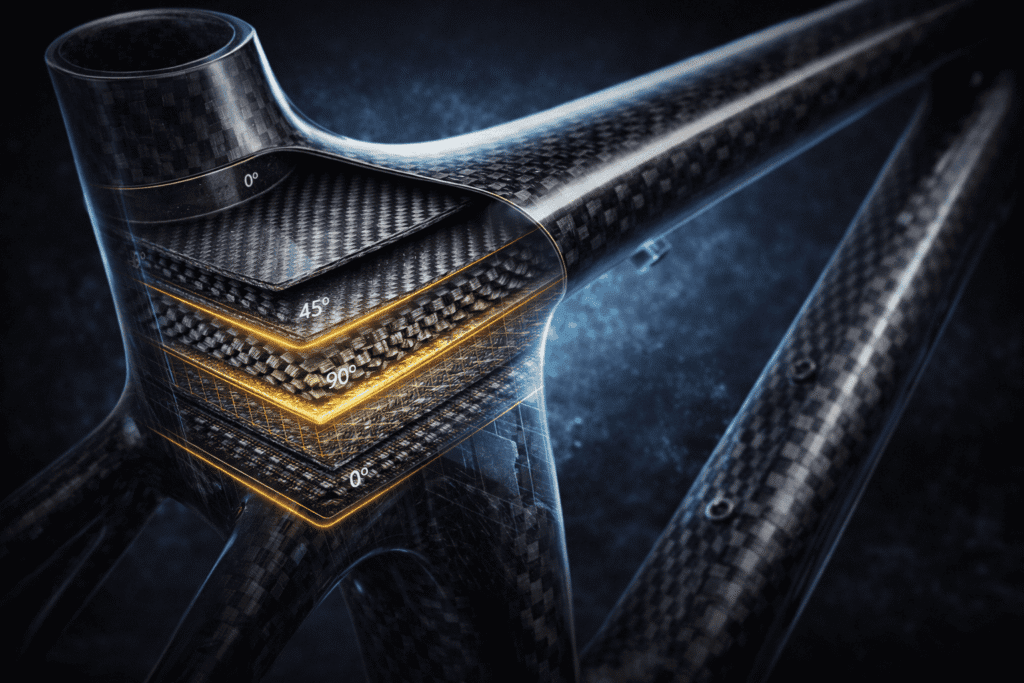
Pure carbon excels in stiffness but lacks damping and chip resistance. Hybrid composites solve this:
- Glass outer plies protect ski topsheets from edge chips.
- Aramid (Kevlar) in paddle blades absorbs whitewater impacts without adding significant weight.
- ROI: A 5–8% weight penalty can double product lifespan—a net win for durability-focused users.
2.4 Sustainable Precursors & Recyclability
Eco-conscious consumers and EU regulations (e.g., Green Deal) demand lower CO₂ footprints.
- Bio-based PAN: Lignin-derived precursors reduce emissions by up to 40% vs. petroleum-based.
- Recycling: Solvolysis (chemical) and pyrolysis (thermal) recover fibers; recycled carbon fiber (rCF) retains 85–90% of virgin strength.
- LCA Data: A 1 kg bio-based carbon bike frame can cut lifecycle emissions by 120 kg CO₂e vs. aluminum.
Retailer Need: Credible sustainability claims backed by third-party LCAs are now table stakes.
3. Real-World Weight vs. Strength Wins Across Sports Categories
Let’s quantify the benefits with side-by-side comparisons OEMs can use in 2025 catalogs.
3.1 Cycling: Road, Gravel & MTB
- Frame Savings: 1.1 kg carbon frame vs. 1.45 kg aluminum = 350 g saved → 4% faster climbs (peer-reviewed).
- Stiffness KPI: UCI teams optimize torsional stiffness-to-weight ratios; modern carbon frames exceed 120 Nm/deg per kg.
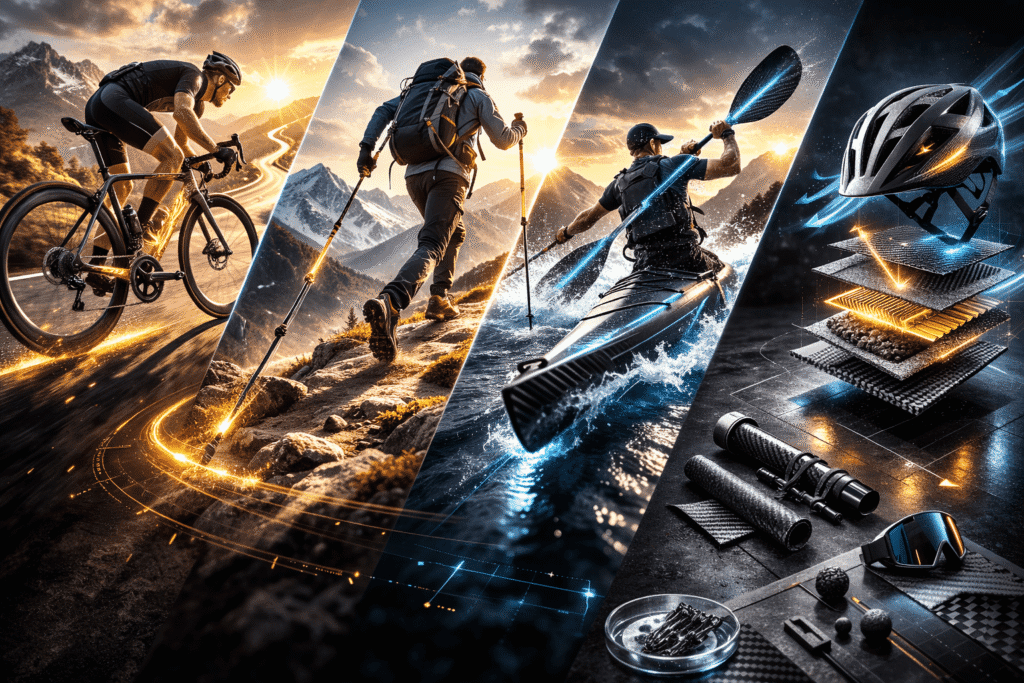
3.2 Hiking & Ski-Touring Poles
- 45% lighter than 7075-T6 aluminum at equal bending strength.
- Z-fold design: Packs to 36 cm, ideal for air travel or minimalist packs.
3.3 Paddles: Kayak, SUP, Outrigger
- 20% lighter paddle = 7% lower heart rate during sustained paddling (ergometer data).
- Dihedral blade design with carbon stiffness prevents flutter, improving tracking and efficiency.
3.4 Protective Gear: Helmets & Shin Guards
- 1 mm thinner EPS liner = 8% larger vents, enhancing cooling without compromising safety.
- Multi-directional carbon lay-ups pass EN 1078 (bikes) and ASTM F2040 (snow sports) at just 220 g.
User Impact: Lighter helmets = cooler heads = better focus and longer sessions.
4. Design-to-Manufacture Workflow for OEMs & Start-ups
Bringing carbon fiber products to market in under 12 months requires a streamlined, simulation-driven process.
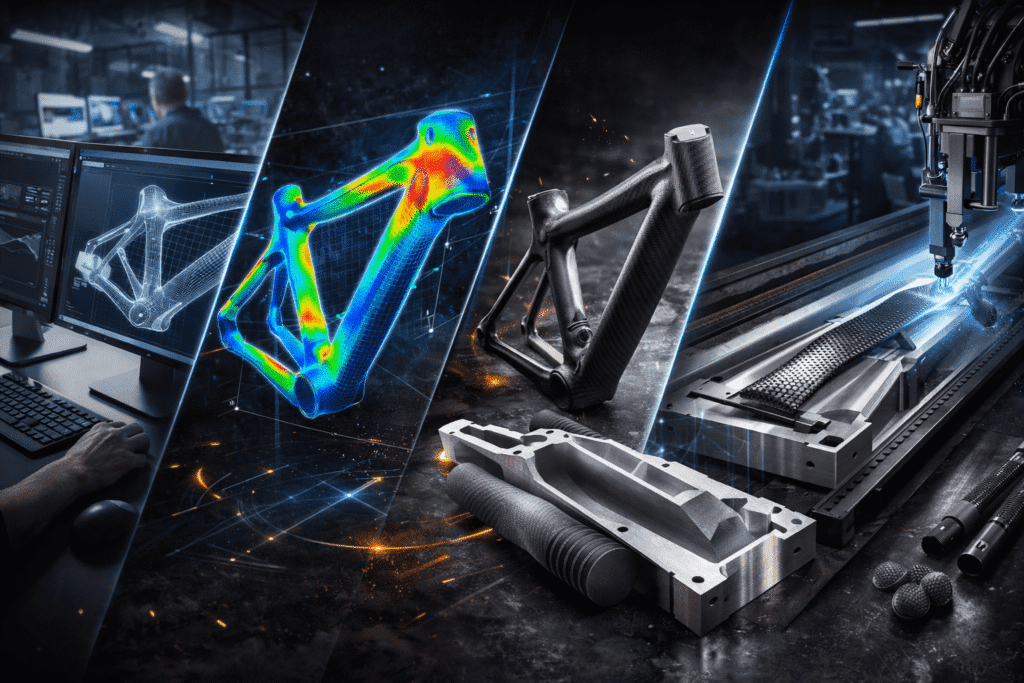
4.1 Load-Path Simulation & Topology Optimization
- Use FEA with Tsai-Wu or Hashin failure criteria to model composite-specific behavior.
- Export ply books directly to laser projection systems for accurate lay-up.
- Integrate early cost estimators tied to fiber areal weight to avoid budget overruns.
4.2 Rapid Tooling: 3D-Printed Mandrels & Aluminum Molds
- SLA 3D printing delivers mandrels in 10 days for low-volume runs (e.g., 50 ski poles).
- Surface finish Ra ≤ 1.6 µm meets cosmetic standards for visible parts.
Start-up Advantage: Validate demand before investing $50k+ in CNC molds.
4.3 Automated Lay-up & AFP for Complex Curves
- Automated Fiber Placement (AFP) cuts material scrap by 30% and labor from 45 min to 8 min per seat-stay.
- Enables reshoring to Western factories by offsetting higher wages with precision and speed.
4.4 Testing & Certification Protocols
Know the standards upfront:
| Product | Key Standard | Test Requirement |
|---|---|---|
| Bikes | ISO 4210-6 | 100k fatigue cycles at 70% UTS |
| Ice Axes | EN 13089 | Impact & bending tests |
| Paddles | ASTM F2569 | Blade flex & torsion |
Avoid Redesign: Align testing early to prevent costly post-tooling fixes.
5. FAQ – Lightweight Carbon Fiber Sporting Goods
Q1: How much weight can I save switching from aluminum to carbon trekking poles?
→ 40–45% lighter—e.g., 220 g/pole vs. 400 g for aluminum.
Q2: Do carbon bike frames fatigue or have a shelf life?
→ No inherent fatigue if undamaged. Lifespan exceeds 20,000 miles with proper care.
Q3: Are field repairs possible?
→ Yes. Epoxy-based repair kits restore 80–90% original strength; ideal for paddles or poles.
Q4: Is recycled carbon fiber as strong?
→ rCF retains 85–90% of virgin performance—suitable for non-critical parts like handlebar tape cores.
Q5: What’s the cost premium per kg saved for a carbon SUP paddle?
→ ~$120–$180 per kg saved vs. fiberglass, but justified by reduced shoulder fatigue and longer session times.
By marrying material science, user-centric design, and agile manufacturing, brands can deliver sporting goods that are not just lighter—but smarter, safer, and more sustainable. In the race for performance, grams are the new currency.