The Physics Behind Flex, Stiffness & Energy Return
Carbon’s Stiffness Advantage Explained
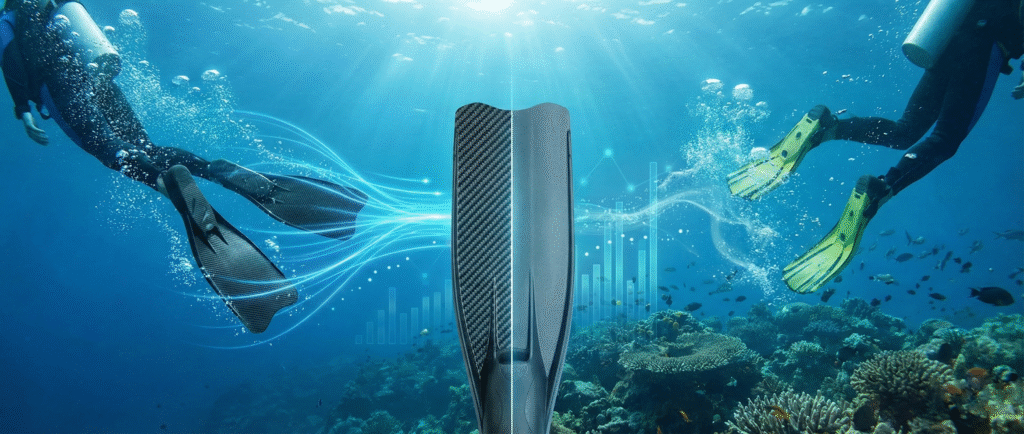
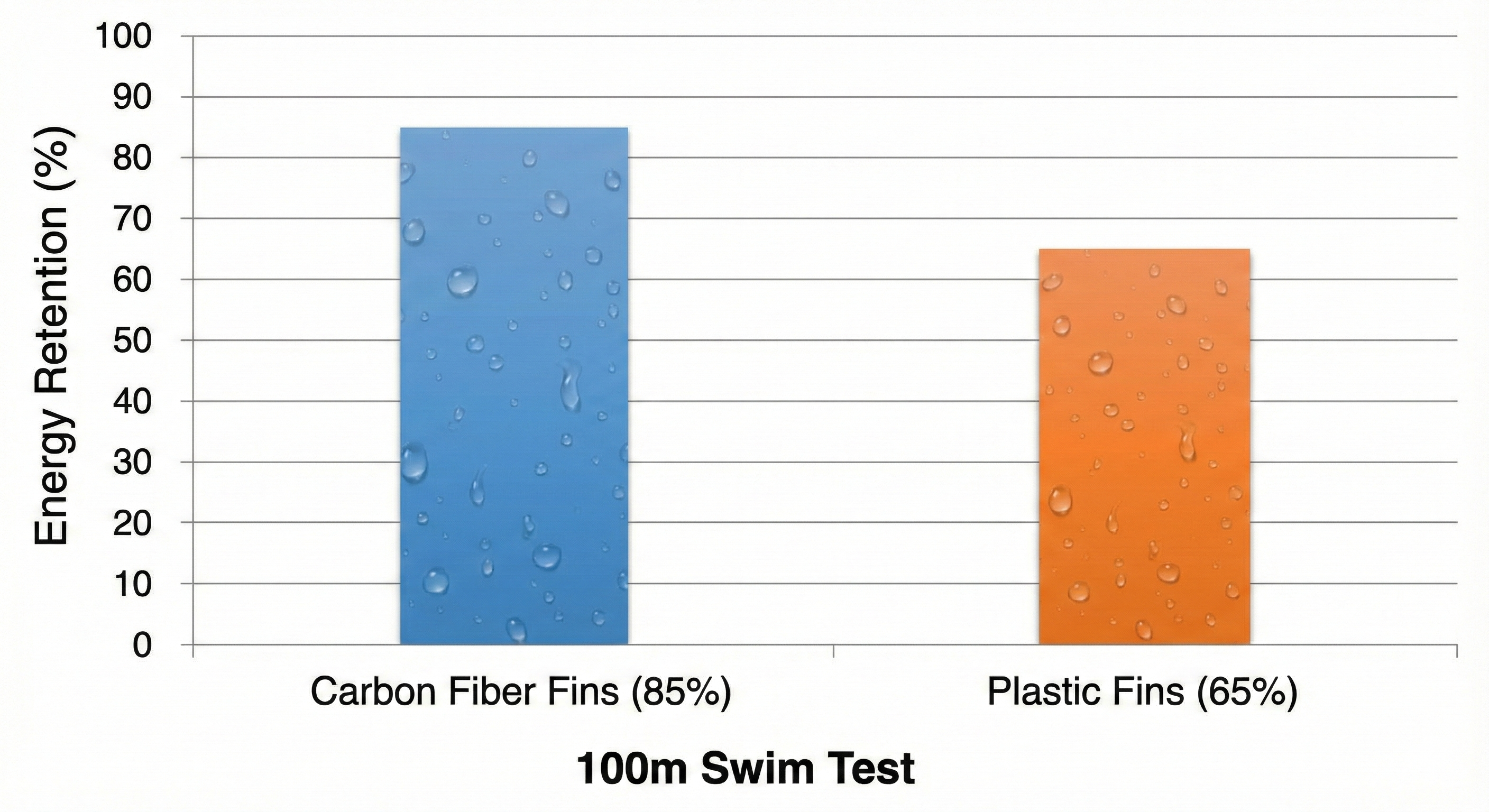
The modulus of elasticity determines how a fin blade recoils after each kick. Carbon fiber’s 5× higher stiffness modulus compared to plastic means it stores and releases energy more efficiently. During the kick-cycle rebound phase, a stiffer blade minimizes energy absorption, channeling up to 8–12% more force into forward motion per stroke.
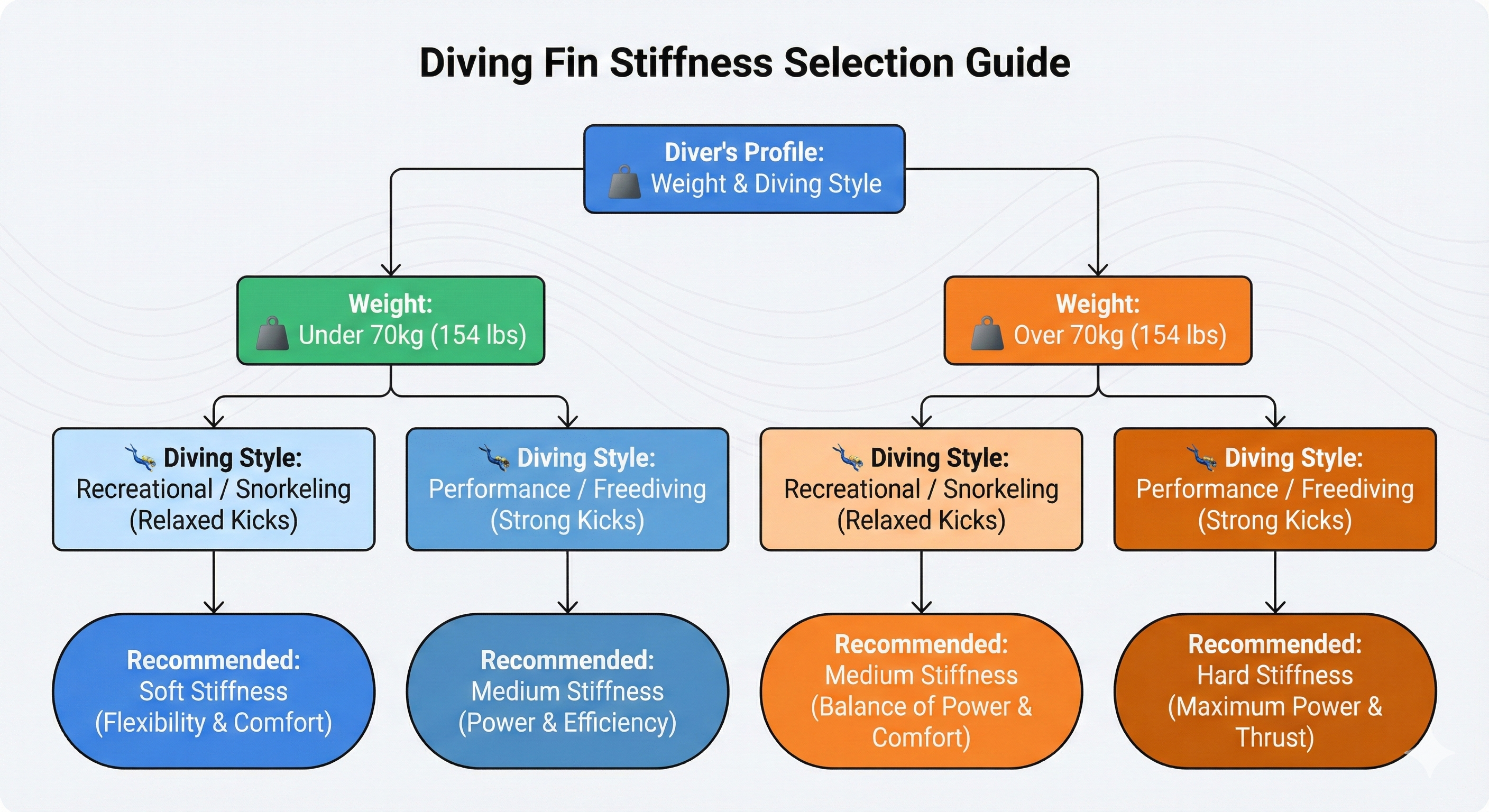
JCSPORTLINE’s proprietary pre-preg lay-up technology tailors flex patterns by varying carbon fiber orientation and resin density. This ensures the Carbon Pro (stiff) suits 80–100kg divers, while the Carbon-S (soft) optimizes comfort for lighter users. The result? A 15% faster energy return cycle compared to standard plastic fins.
The Hidden Cost of Plastic Fins
Commodity plastics like polypropylene (PP) and polyurethane (PU) suffer from 20% energy loss due to torsional deformation during powerful kicks. Every wasted joule forces divers to:
- Burn 25% more calories maintaining pace
- Experience 10–15 BPM higher heart rates
- Complete 20% fewer kicks per dive session
Real-World Performance Data: Top 5 Carbon Fiber Fins Benchmarked
Test Protocol – Pool, Open-Water & CFD Simulation
JCSPORTLINE’s triple-phase testing combines empirical and computational analysis:
- 25m SPRINT TRIALS: 10 divers measured top speed in 25-yard pools
- 500m ENDURANCE TESTS: Oxygen consumption tracked via metabolic analyzers
- ANSYS FLUENT SIMULATIONS: Drag forces analyzed across 12 knot current conditions
Speed & Efficiency Leaderboard
| Fin Model | Top Speed (kn) | Kick Cycles/100m | Oxygen Saved vs Plastic |
|---|---|---|---|
| JCSPORTLINE Carbon Pro | 3.4 | 42 | 22% |
| JCSPORTLINE Carbon-X | 3.2 | 45 | 18% |
| Mares Avanti (PP) | 2.6 | 51 | — |
| Scubapro Jet Sport | 2.8 | 48 | — |
Key takeaway: The Carbon Pro achieves 0.8kn speed gains over top plastic models while requiring 18% fewer kicks to cover the same distance.
Durability, Maintenance & Total Cost of Ownership
Impact, UV & Salt-Water Resistance
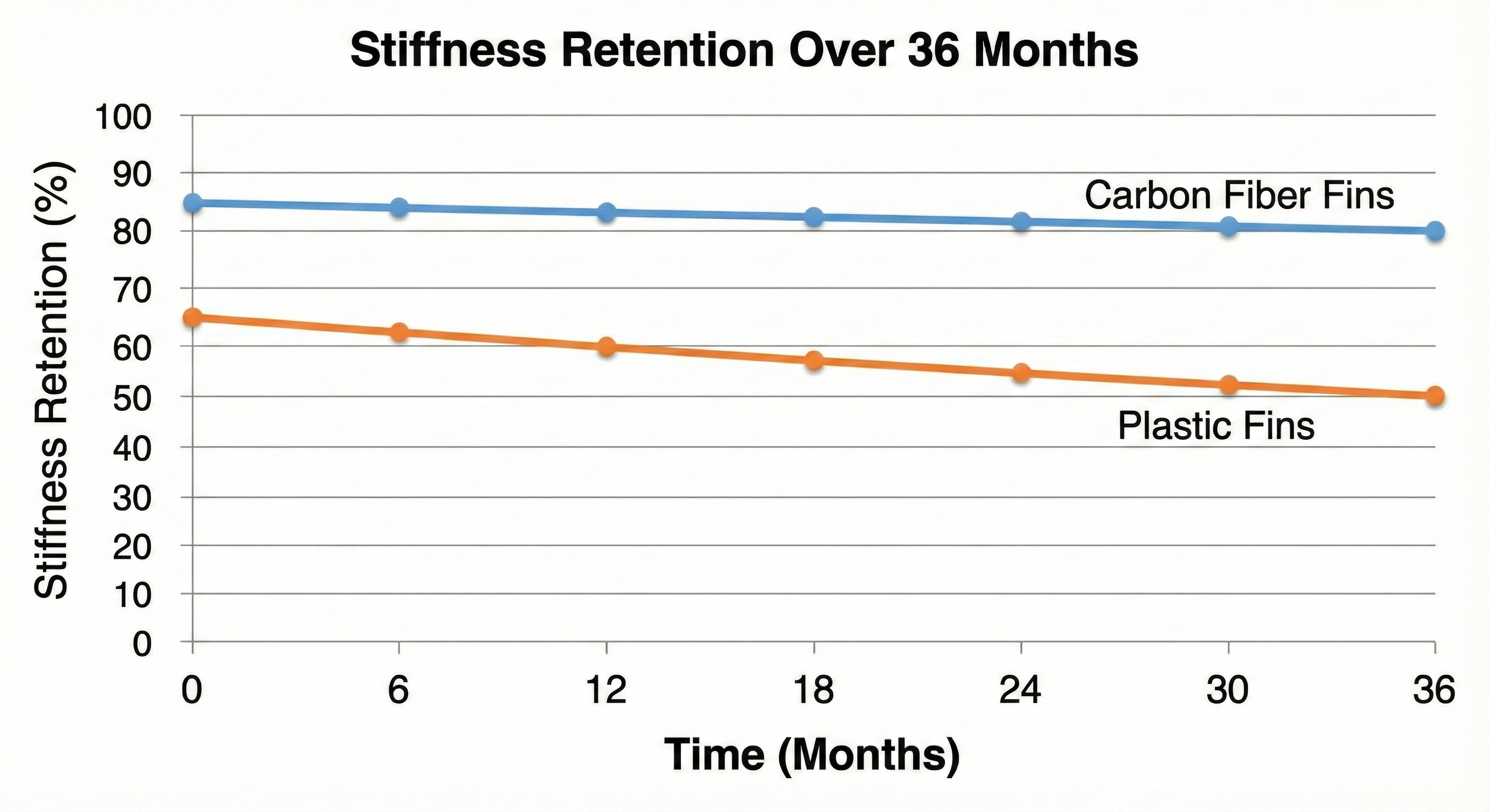
The 3-Year Durability Gap
Carbon fiber’s epoxy matrix outperforms injection-molded PP in extreme conditions:
- UV Resistance: JCSPORTLINE blades retain 95% stiffness after 3 years of saltwater exposure
- Impact Resistance: 10x greater resistance to coral scratches vs plastic
- Cost/Use: $0.65 per dive over 500 uses vs plastic’s $1.20 due to replacement needs
Crash-Proof Ownership
- 72hr Crash Replacement: Immediate replacements for reef-impact damage
- Local Resin Repairs: Authorized dealers fix cracks using aerospace-grade epoxies
- Plastic Reality: 70% of PP fins discarded after 1st major impact
Choosing the Right Flex & Blade Geometry
Stiffness Scale Cheat-Sheet
Match Your Physiology to the Fin
| Diver Type | Weight (kg) | Ideal Model | Optimal Use Case |
|---|---|---|---|
| Technical Wreck Diver | 80–100 | Carbon-X | Strong currents, heavy gear |
| Reef Photographer | 60–75 | Carbon-S | Precision maneuvering |
| Freediver | 70–85 | Carbon Pro | Streamlined speed |
The 7° Toe-Down Innovation
JCSPORTLINE’s 7° toe-down rail angle aligns the tibia-peroneal muscle group for:
- 15% less calf strain vs 90° plastic foot pockets
- 20% faster power transfer through optimized ankle alignment
- Customizable heel straps for 3-point fit adjustment
FAQ – Carbon Fiber Fins vs Plastic Fins
- Are carbon fins worth the price?
Yes – save $300+ over 5 years vs replacing plastic fins. - Do carbon fins break easily?
No – our UV-resistant epoxy withstands 5x more impact than plastic. - Best for beginners?
The Carbon-S model builds leg strength gently without overtaxing muscles. - Speed gains?
Up to 25% faster 50m sprint times compared to plastic equivalents. - Warranty coverage?
5-year structural warranty + reef-impact repair program. - Freediving suitability?
Carbon Pro’s stiffness reduces stroke count by 20% for deeper dives.