
When carbon fiber parts don’t fit, many people blame craftsmanship.
In reality, most fitment problems start much earlier—at the mold.

Before carbon fiber is laid up, before curing, before trimming, the mold already decides the final shape.
The Mold Controls Every Part That Comes After
Carbon fiber parts do not self-correct.
Every part takes its geometry directly from the mold.
If the mold is inaccurate:
- Every part will repeat the same error
- Every batch will carry the same problem
No amount of finishing or skill can fix that later.
Why CNC Machining Matters for Carbon Fiber Tooling
High-precision molds are built using CNC machining.
This allows:
- Stable reference points
- Consistent geometry
- Better repeatability between batches
When molds are accurate, production becomes predictable.
Predictable production leads to predictable installation.
JCSPORTLINE approaches carbon fiber manufacturing from the tooling level.

Fitment accuracy is established through CNC-machined molds, defined reference points, and controlled geometry—before carbon fiber is ever laid into the mold.
This tooling-first approach allows consistent results across batches, which is critical for distributors, installers, and brand owners.
🔘 Get Your Personalized Quote Now
🔘 Get Your Aerodynamic Upgrade Plan
Fitment Problems Often Start in Digital Data
Accuracy begins on the computer.
If digital models are wrong, the mold will be wrong.
If the mold is wrong, the final part cannot fit correctly.
This is why serious carbon fiber manufacturing treats modeling and data control as part of fitment—not just design.
Cheap Tooling Creates Expensive Problems
Low-cost tooling often skips steps that protect accuracy:
- Loose tolerances
- Manual adjustments
- Simplified geometry
These shortcuts may reduce upfront cost, but they increase risk:
- Longer install times
- More complaints
- More returns
- Damage to brand reputation
Tooling accuracy is one of the most overlooked costs in carbon fiber sourcing.
What B2B Buyers Should Ask Suppliers

Before placing orders, it’s worth asking:
- How are molds produced—CNC or manual shaping?
- How are reference points defined and controlled?
- How is trimming accuracy maintained?
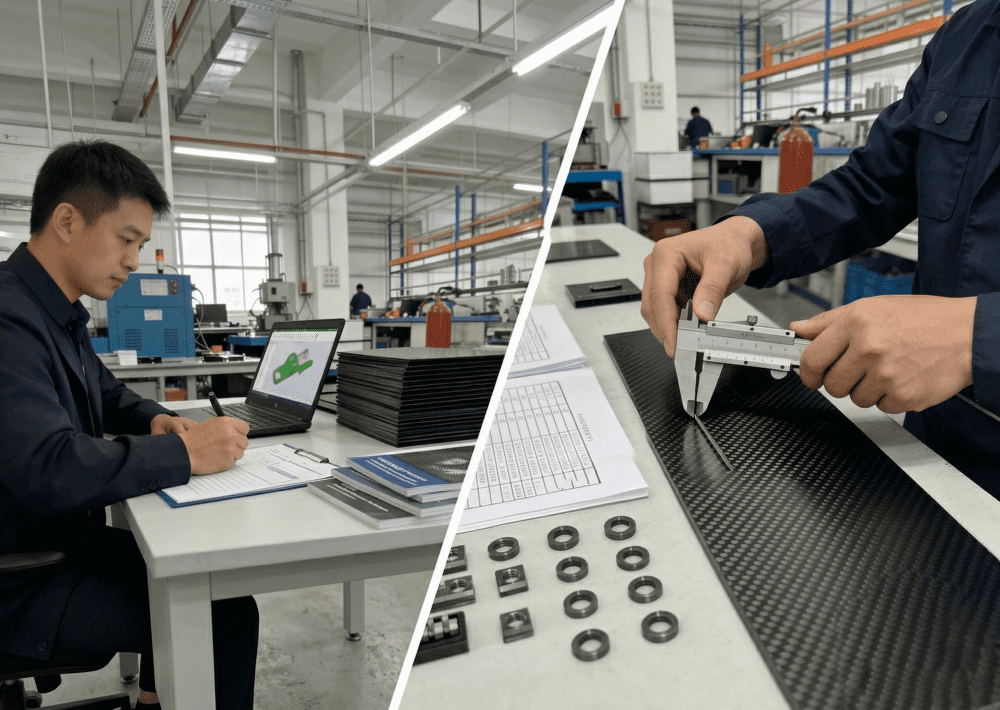
- How are key dimensions inspected before shipping?
These answers tell you far more about fitment than surface finish ever will.
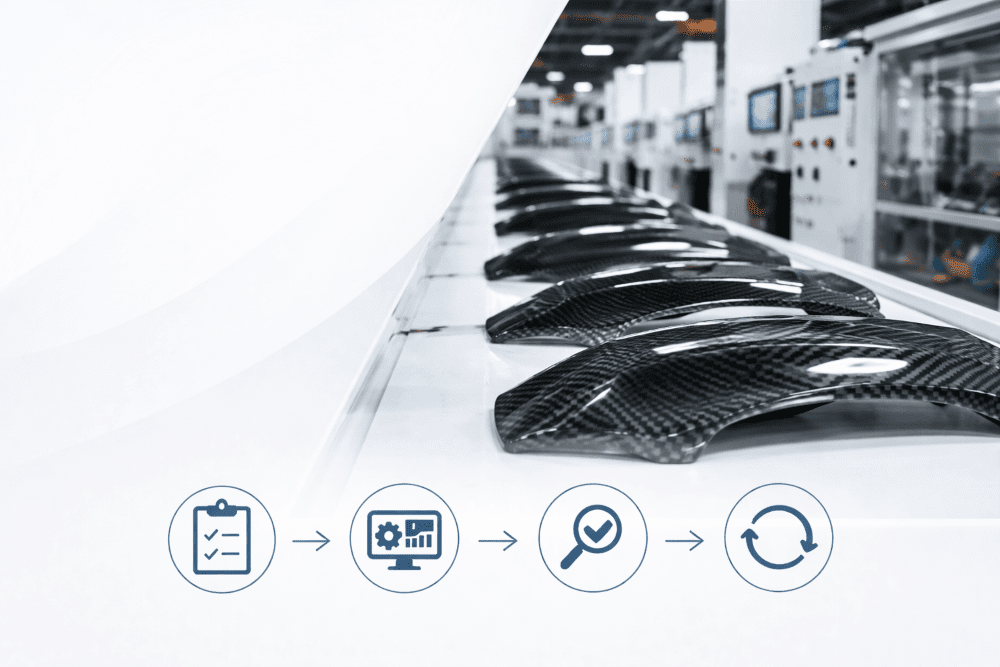
Tooling, Tolerance, and Inspection Work Together
Even the best mold needs proper trimming and inspection.
Tight tolerance control—often down to 0.1 mm in key areas—turns good tooling into consistent results.

For the full picture, continue with:
- How 0.1 mm Tolerance Changes Carbon Fiber Quality and Fitment
- Why Carbon Fiber Parts Fail at Installation
FAQ – Mold & Tooling
Why does fitment start with the mold?
Because every carbon fiber part takes its final shape from the mold, errors at this stage repeat across all parts.
Can skilled workers fix mold errors later?
Not reliably. True fitment correction requires tooling-level accuracy.
Why does JCSPORTLINE emphasize CNC tooling?
CNC machining improves repeatability and reduces variation between production batches.
Is tooling accuracy more important than material quality?
Both matter, but tooling accuracy directly controls fitment.