
Most sourcing managers and brand owners evaluating a carbon fiber manufacturer never get to visit the factory. They can’t see the production floor, the mold department, or the quality inspection line. The only thing they can compare, reliably, is a price.
That’s the most dangerous position to be in.
A buyer who selects a carbon fiber manufacturer based on price alone is making a partnership decision using the one data point that reveals the least about whether the project will succeed. The price doesn’t tell you whether the supplier responds within 24 hours when a production defect surfaces two weeks before your launch. It doesn’t tell you whether anyone answers after shipment. It doesn’t tell you whether the supplier’s first instinct is to understand your business—or to ask how many units you need.
What does good customer service mean to you in carbon fiber manufacturing? If you’re a procurement officer managing an OEM program, a sourcing manager evaluating a new supplier, or a brand owner building a product line in a category you’re still learning—the answer is the same. It’s a system. Not a promise, not a personality, not a fast reply on WhatsApp. A verifiable, mechanism-based system that functions before the sale, during production, and after the shipment clears customs.This article gives you a framework for evaluating that system—built from 20 years of working with automotive brands, aerospace buyers, drop shipping operators, and OEM program managers across four continents.
What Does “Customer Service” Actually Mean in a B2B Manufacturing Context?
First, clear up the most common category error buyers make: what is customer service when you’re buying manufactured composite components is structurally different from what it means when you’re buying software or consumer goods.
In retail, customer service definition centers on responsiveness and tone. That’s fine for returning a jacket. It has almost nothing to do with what happens when your custom mold produces a dimensional deviation at the 40-set mark, or when a paint adhesion failure triggers a return claim from your largest retail customer.
Customer service meaning in B2B customer service for carbon fiber manufacturing covers the full production lifecycle: need diagnosis before quoting, technical feasibility judgment before tooling, production transparency during manufacturing, and accountable resolution when something deviates from specification. A supplier who replies quickly but cannot interpret your application requirements isn’t providing good customer service—they’re providing the performance of it.
Customer service what does it mean when the person evaluating a supplier is a composite specialist, a mechanical engineer, or an OEM program manager? It means three things:
The supplier understands your business model before they quote your price. A drop shipping operator needs logistics infrastructure and image assets. A brand owner needs IP protection and exclusive mold rights. An OEM program manager needs milestone documentation and production repeatability records. A supplier who treats all three identically has understood none of them.
The supplier tells you what will go wrong before it goes wrong. This is the most valuable and most absent service capability in the industry. A supplier who flags a potential fitment risk during tooling review saves three weeks of rework. A supplier who catches a layup inconsistency before bulk production saves a container.
Someone is accountable—by name, by role, by date—for every production stage.
The gap between retail responsiveness and manufacturing accountability is where most supply relationships break down.
The Three Most Common Service Failures That Cost Carbon Fiber Buyers the Most
These aren’t hypothetical. They’re patterns that appear consistently in the conversations we have with buyers who lost money, time, or brand equity with a previous supplier.
Failure #1 — No Response Across Time Zones
Carbon fiber buyers in North America and Europe are almost always working with Chinese manufacturers. That’s a 7-to-15-hour gap depending on location. The gap itself doesn’t cause problems. The absence of a defined communication protocol does.
The failure pattern: a buyer flags a quality concern or production question at the end of their business day. The supplier receives it during working hours, treats it as low priority. The buyer wakes up to either no response or a response that doesn’t answer the question. By the time a substantive reply arrives, 48 hours have passed. In a development cycle where tooling decisions affect the next three weeks of scheduling, 48-hour communication gaps are not inconvenient—they’re expensive.
Responsive customer service in manufacturing is not instant replies. It’s committed response windows, clear escalation paths, and transparent communication that keeps the buyer informed without requiring them to chase. The buyer should never be in a position of not knowing where their project stands.
Failure #2 — The Supplier Who Only Talks Price, Not Problems
One moment reveals an entire service philosophy: a buyer sends an inquiry with product specifications, application context, and project timeline. The first response from the supplier is: “What quantity do you need?”
That’s not a qualification question. It signals the supplier has no process for understanding what the buyer is actually trying to build—or whether the supplier is the right party to build it. It tells you the service model is transactional at the start, which means it will be transactional when a problem arises.
Professional customer service in carbon fiber begins with need diagnosis. What is the application? What are the structural loads? What is the buyer’s go-to-market model? A drop shipping operator needs SKU breadth, image assets, and logistics coordination. A brand owner needs exclusivity protections and brand-consistent packaging. An OEM program manager needs process documentation and production repeatability. A reliable supplier leads with these questions in the first conversation and knows what to do with the answers.
Failure #3 — After-Sales Disappears the Moment You Pay
This is the most costly failure and the hardest to screen for before it happens.
One documented case from our files: a brand buyer in the UK was receiving carbon fiber intake components from multiple Chinese suppliers. Every batch arrived with surface brightness failures, transit scratch damage, and inconsistent inner surface finishing. Their response was to build a small workshop in their UK warehouse and hire workers to repaint and re-polish every incoming batch before fulfillment. They were paying finished-goods prices and receiving semi-finished products—and absorbing the entire correction cost in local labor and timeline.
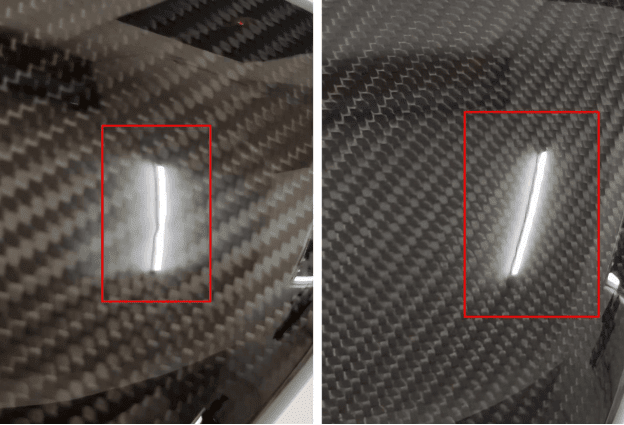
When we engaged with this buyer, we redesigned their product finishing specification: switched from wet-sanding to dry-sanding production lines, sourced paint with tested adhesion and hardness ratings against defined standards, and standardized all auxiliary consumables including polish wax grades and sandpaper specifications by brand and grit. The result: zero second-process requirement on arrival, a 15-day reduction in the buyer’s committed lead time to their own customers, and 40 minutes to 4 hours of saved labor per part at UK wage rates. Across a year of orders, that’s a material cost recovery—not a service improvement, a business improvement.
That’s what customer support looks like when it functions. Not a complaint ticket acknowledged and closed. A root cause identified, fixed, and verified.
What Great Customer Service Actually Looks Like: A Standard Buyers Should Use
Four questions. Use them on any supplier, including us.
Question 1: Did the supplier try to understand your business model before quoting a price?
If the first substantive conversation was about unit price and payment terms, the supplier has already failed. A supplier capable of what great customer service means in practice will ask about your sales channel, your end customer profile, your current supply chain structure, and your growth plan before recommending any product or pricing configuration.
Question 2: Can they provide a feasibility assessment, not just a quotation?
This is the single most important service differentiator in custom carbon fiber development. A quotation tells you what a supplier wants to charge. A feasibility assessment tells you whether the project is manufacturable at your target specification, which design modifications improve production efficiency, where the realistic cost drivers sit, and what the risk points are in the development timeline. Buyers who receive carbon fiber feasibility consultation before committing to tooling investment make materially better decisions. Buyers who don’t frequently discover the problems after paying for the mold.
Question 3: Do they proactively communicate production risks—or wait for you to find the problems?
The difference between a supplier who tells you in week three that a mold produced dimensional variance, and one who tells you in week five why your delivery is late, is the difference between a managed project and an unmanaged one. Best customer service in this context is preemptive. Risk surfaces before it becomes delay.
Question 4: Is their after-sales service “we’ll find someone” or “we’ll fix it”?
Named account managers. Defined escalation timelines. Local service presence in your market. A documented track record of technical complaint resolution. Those are the indicators. “We’ll find someone” is not a service structure. It’s an absence of one.
| Service Tier | Basic Supplier | Advanced Supplier | JC Sportline |
| First response | 24–72 hours | 12–24 hours | Defined windows by time zone |
| Needs diagnosis | Price + quantity focus | Some application questions | Business model analysis before quote |
| Production visibility | Updates on request | Periodic status reports | PLM system + custom development schedule |
| Feasibility analysis | Not offered | Optional at cost | Standard for all custom projects |
| After-sales coverage | Email only | Email + occasional call | Local teams in Europe and North America |
| IP protection | Not offered | NDA available | NDA + patent registration + legal support |
Excellent customer service in industrial manufacturing has one test: did your project land with fewer surprises than you expected? If yes, the supplier delivered real service. Everything else is presentation.
Service Is Also Delivery, Quality, and Project Control
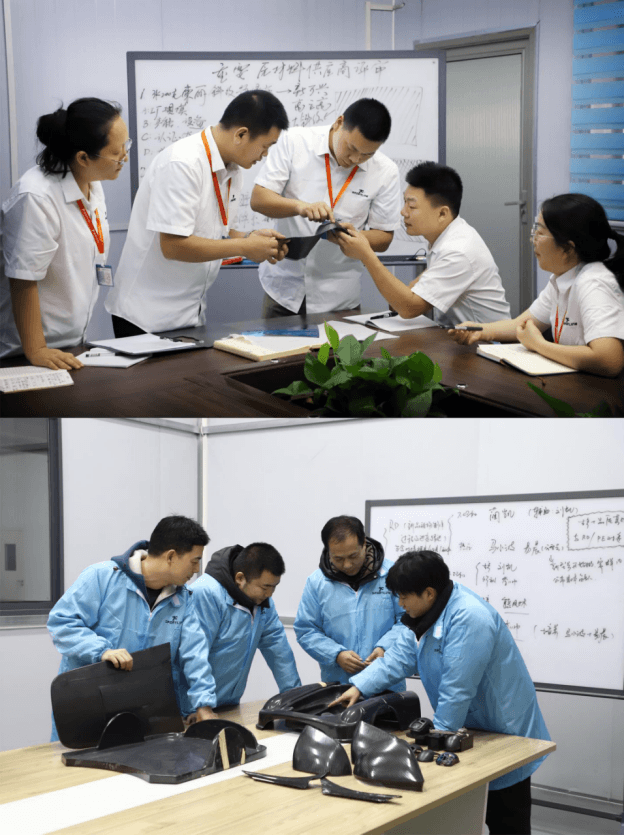
Separating “service” from “delivery and quality” in a supplier scorecard is a category error. Delivery performance and quality consistency are service capabilities. They’re the dimensions of your experience that most directly determine whether your business runs or stalls.
On-Time Delivery as a Service Commitment
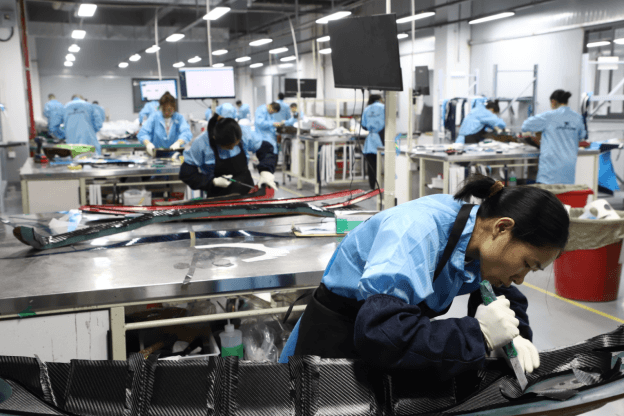
On-time delivery in carbon fiber is structurally difficult. The material is predominantly hand-laid, which means production speed is constrained by skilled worker availability, not machine throughput. Mold cycle times are fixed. Quality rework cannot be shortcut without producing defective output. Any supplier who quotes a 15-day lead time on a complex custom kit without explaining how they protect that commitment across a full production run is giving you a number, not a guarantee.
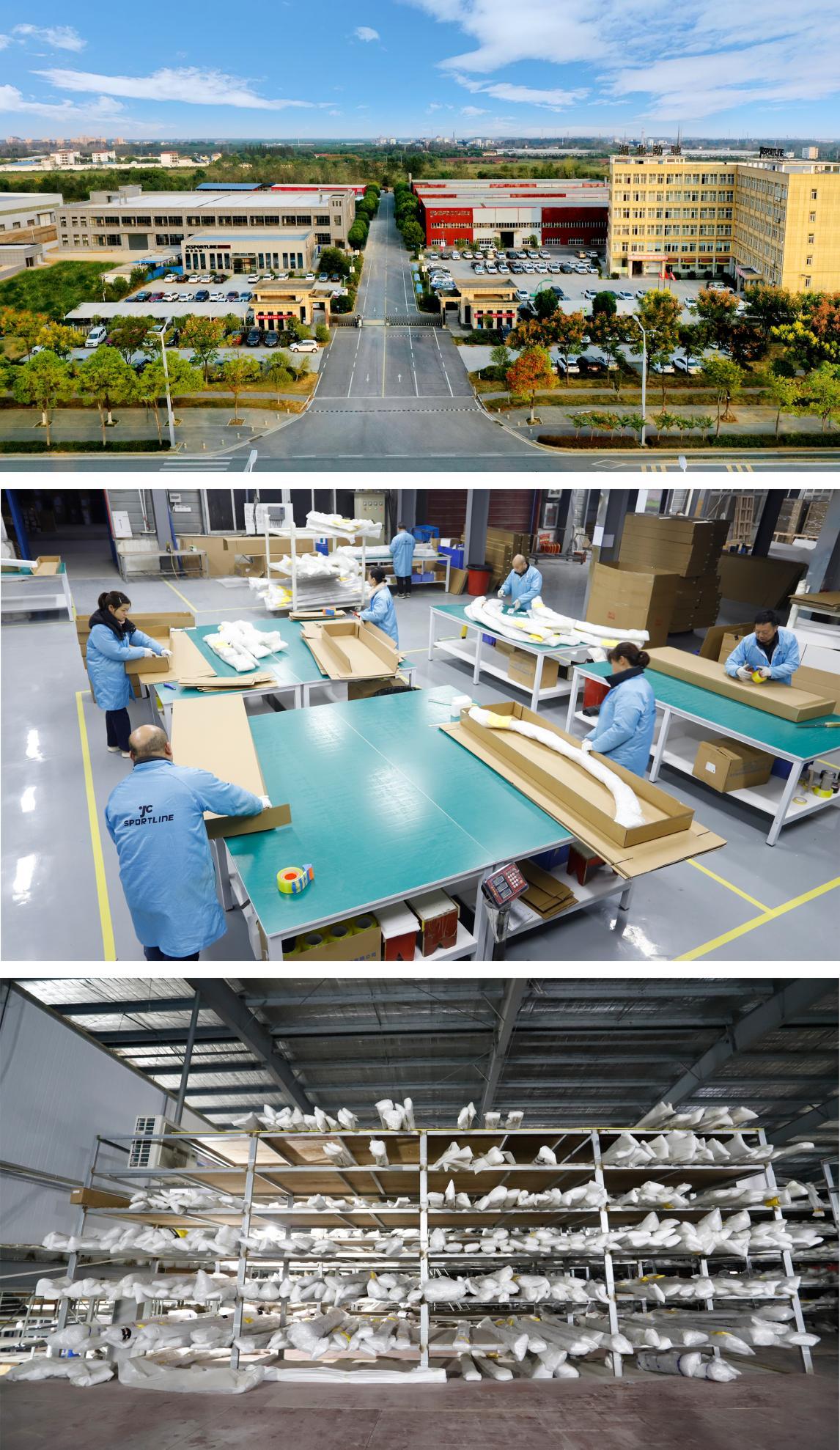
The infrastructure behind consistent on-time delivery includes: AI-assisted demand forecasting fed into production scheduling; dedicated mold sets per high-volume model to eliminate cycle bottlenecks; 20% of daily production capacity held in reserve for rush orders and VIP customer requirements; and a supply chain management system tracking raw material intake through finished goods release. Our workforce of over 450 skilled workers across 8 production lines supports a daily output of 800 carbon fiber kits, with over 10,000 semi-finished and finished sets maintained in warehouse stock to protect against demand spikes.
In a documented case, a US buyer had a 100,000-unit order with a previous supplier requiring 90 days due to mold limitations and production queuing. After transitioning to our facility, dedicated mold sets and priority production scheduling brought the same volume inside 30 days. The time recovered translated directly into market availability during peak season—a competitive advantage measured in sales, not just logistics.
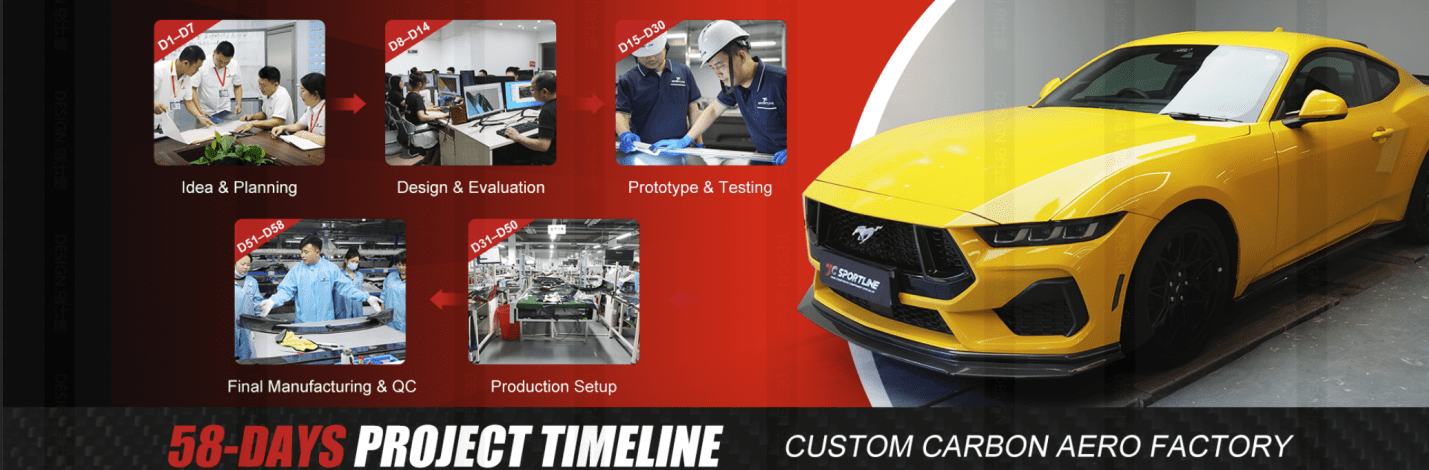
For custom development programs, our 58-day ODM/OEM delivery commitment—from confirmed design to sample delivery—is backed by a shared development schedule provided to the client from day one. Project management for custom parts is not a service add-on. It’s the documented structure that makes the delivery commitment credible and traceable.
Quality Control Is Not a Final Inspection — It’s a Process
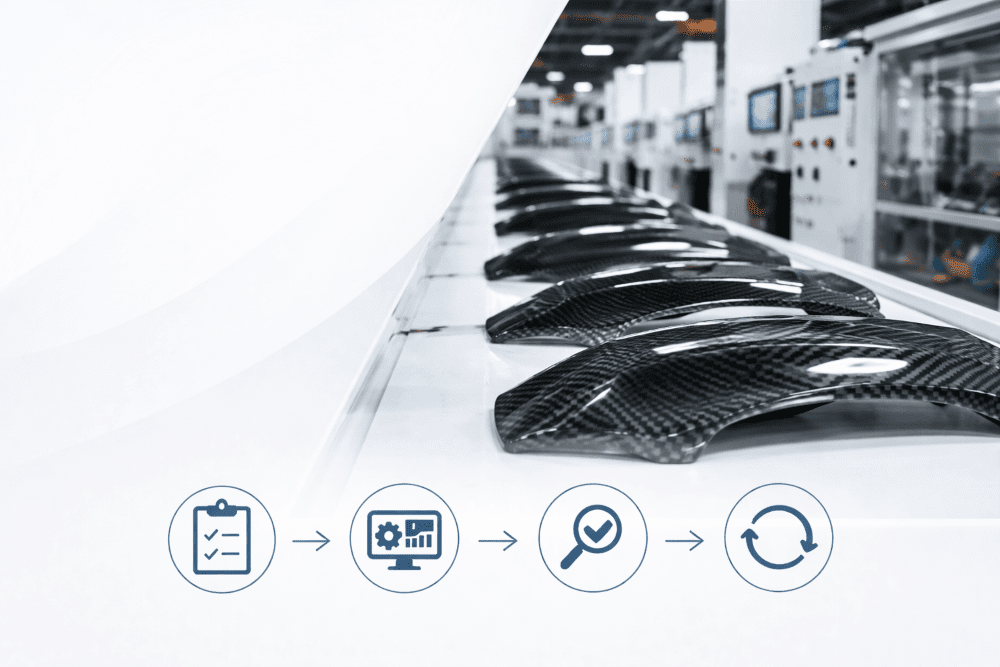
Quality control that functions as a genuine service is built into the production sequence at every stage—not applied at the end as a filter.
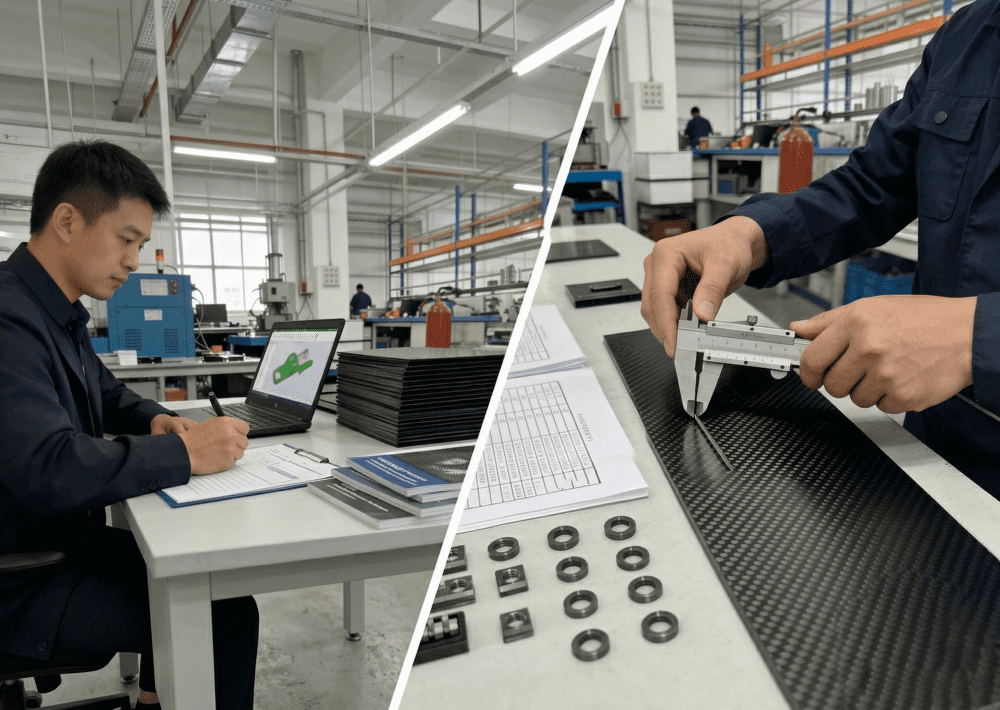
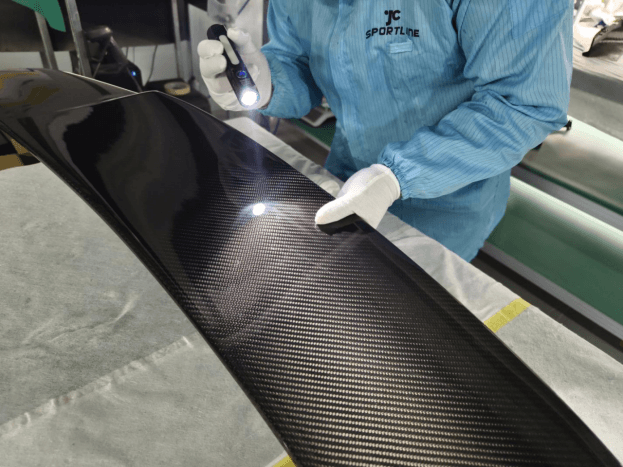
The mechanism: layup specifications are standardized in documented BOM formats before production begins, fixing fiber weight, orientation, and sequence across every part in a batch. Cure parameters are locked per material specification. Paint adhesion and surface hardness are tested against defined standards—including bake resistance at 120°C for over 1,600 hours for premium paint systems—before parts proceed to finishing. Before bulk shipment, products are scanned and compared against original 3D mold data to verify dimensional integrity. At the 20-set production mark, mold condition is re-verified to detect early dimensional drift before it compounds across a larger run.
This matters because variance is the most common and most damaging quality failure mode in carbon fiber. A German brand buyer came to us after a series of consistency failures: part weights varying between 10kg and 15kg on the same model, weave orientation misaligned left-to-right on split-panel products, and pattern asymmetry on three-section pieces—all failing against their near-OE tolerance requirement. Every one of those failures traced back to the absence of standardized layup documentation and in-process dimensional control. Standardizing the BOM, fixing the layup sequence per part, and implementing inter-stage scan comparison resolved all of them.
Custom carbon fiber parts produced with this level of process control arrive ready for your customer, not for your quality team.
Project Transparency as a Service
Transparent communication is not a disposition. It’s an infrastructure. Our development projects run on a shared timeline provided at project initiation—each phase carries a named milestone and committed date. Deviations are communicated before they become delays. The buyer is never left to infer project status from silence.
A reliable supplier doesn’t only report what went right. They surface what deviated, what was done to correct it, and what the revised schedule looks like. That’s the discipline that makes long-term programs manageable.
Value-Added Services That Separate a Supplier from a Partner
The services in this section don’t exist at most carbon fiber manufacturers. They’re not peripheral extras—they’re the infrastructure that allows a buyer to grow their business rather than simply manage their supply.
Brand Identity Services — Logo, Packaging, and Visual Assets
For brand owners and resellers building product lines under their own mark, brand consistency across every customer touchpoint is a business requirement, not a preference.
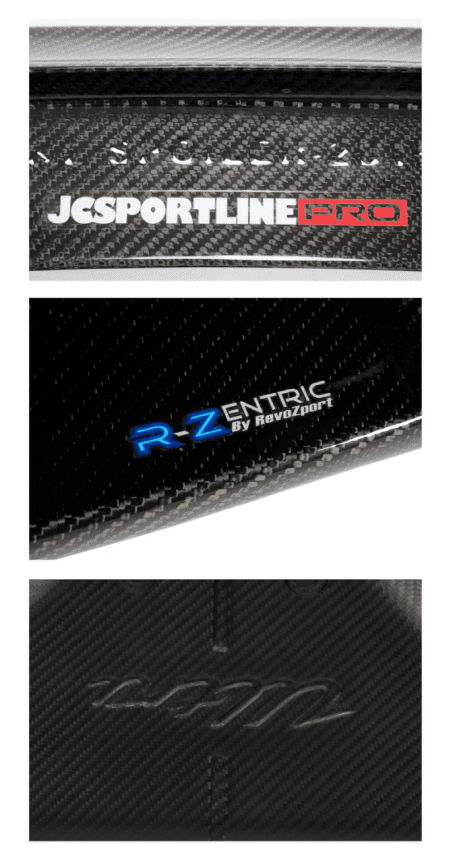
Three logo integration methods are available with distinct application logic. Under-clearcoat logo embeds the brand mark below the protective gloss layer—the logo is visually present and fully protected from UV degradation and physical contact. Surface clearcoat logo maximizes visual impact for retail-facing products where brand visibility is prioritized. Mold-engraved logo is the permanent solution for high-volume OEM carbon fiber supplier production: the brand mark is part of the mold geometry, appearing on every part as a structural feature with no print degradation risk across the production lifetime of the mold.
Custom packaging—wood crate, foam-lined individual carton, fully branded irregular-form packaging—eliminates the re-boxing step that many buyers currently absorb as a hidden labor cost. An OEM supplier that ships product packaged to your brand standard is not providing convenience. It’s reducing a cost line that you’re currently carrying invisibly.
The Jianguoyun app which is like google drive synchronization service connects this brand infrastructure to digital operations. Buyers receive synchronized access to high-resolution, white-background, no-logo product images updated in real time as new products enter the catalog. In a documented case, a buyer who spent 10 years and $1.2 million building a 10,000-SKU ABS plastic catalog used this system to list 3,000 carbon fiber SKUs in a single month—reaching equivalent monthly sales volume within that same quarter. A second drop shipping buyer, starting from a 10-product listing, built a 2,000-product site within one year, scaling annual revenue from the equivalent of $200,000jianguo. The value-added services manufacturing capability here is not a time-saver. It’s a business model that otherwise doesn’t exist without a team of designers, photographers, and product managers working for you full-time.
Logistics and Inventory Infrastructure
For buyers serving North American and European markets, the logistics gap between Chinese manufacturing and domestic end-customer delivery creates real operating friction: extended lead times, unpredictable international freight windows, and difficulty competing with domestic suppliers on delivery speed.
Carbon fiber overseas warehouse service operates through our Los Angeles facility covering nationwide US distribution and our Netherlands facility covering the European market. Buyers pre-position inventory in our facilities; domestic fulfillment is executed via FedEx or regional carriers, with end customers receiving delivery in 2–3 business days from order.
Dropshipping carbon fiber parts is supported directly from both locations. Our team handles individual order picking, packaging, label application, and shipment—the buyer manages sales and order acquisition rather than fulfillment operations.
A Canadian buyer whose primary market was North America was previously routing shipments through a Canadian warehouse before forwarding to US customers, effectively doubling freight costs and carrying a second warehousing overhead. After transitioning to our North American overseas warehouse, 90% of their orders shipped domestically from Los Angeles; the remaining 10% destined for Canada was shipped direct from China via postal channels. Their annual sales went from $1 million in 2022 to $2 million in 2023 as a direct result of reduced fulfillment friction and faster domestic delivery windows.
Design and Development Support
A significant share of buyers who want to build branded custom carbon fiber parts lines do not have in-house design teams. Without CAD capability and composites design experience, translating a concept into a manufacturable part is a genuine barrier. Our European design team provides original carbon fiber design services from concept sketch to production-ready 3D model. For buyers with a reference image, a hand sketch, or a verbal brief but no 3D file, we convert the concept into a manufacturable design—including structural engineering review for process compatibility. Our carbon fiber designer resources cover the full development lifecycle from initial brief to production handoff.
Carbon data acquisition services provide accurate dimensional scan data for specific vehicle platforms without requiring the buyer to source or ship a vehicle. Our global scanning infrastructure covers major German, Japanese, and American marques. This data feeds directly into tooling development, eliminating the most common source of fitment failures in new product programs.
Brand rendering services produce photorealistic product visuals before physical samples exist—allowing buyers to present products to retail channels during the development phase rather than after physical production.
These capabilities together define what we mean by carbon fiber product development support. The buyer brings a project objective. We provide the engineering, design, and manufacturing infrastructure to convert it into production reality.
For buyers considering a shift in material system or manufacturing process, our carbon fiber feasibility report analysis engages at the design stage—structural requirements, process compatibility, realistic cost modeling, and production timeline projections, all before tooling investment is committed. In one documented case, a buyer developing a carbon fiber composite intake manifold from a previously metal design was guided through a full feasibility analysis, resulting in a per-unit acquisition cost reduction of over 50% and an annual project development rate that doubled from 5 programs to 10.
Intellectual Property and Brand Protection
Carbon fiber brand protection China is a service category most suppliers don’t offer and most buyers don’t think to require—until they discover their exclusive design is in production for their local competitors.
This is not an edge case. A US brand owner working with a previous supplier discovered that their custom-molded components—designs they had paid tooling costs to develop—had been replicated into additional mold sets and sold into competing businesses in their domestic market. The damage to their brand positioning was structural and compounded across multiple selling seasons before they identified the source.
JC Sportline’s IP protection framework includes: formal NDA agreements executed under Chinese legal jurisdiction with notary witnessing available, design and appearance patent registration in China coordinated through our in-house legal partner network, and ongoing enforcement support if infringement is detected. In a documented case, a buyer flew to our facility specifically to execute the NDA under notarized supervision. We completed the formal exclusivity agreement, initiated the China design patent application, and signed an annual strategic partnership agreement covering ongoing development—all within the timeline of their factory visit.
For buyers with significant tooling investment and proprietary product designs, IP protection is not optional. It’s a fundamental condition of a trustworthy supply relationship.
After-Sales Support: The Real Test of Customer Service
Delivery is the easiest part of the supply relationship to monitor. After-sales support is where you find out what a supplier is actually built for.
Functional after-sales support in carbon fiber has three levels. The first is problem resolution: defect claims are responded to within a defined window, replacements are coordinated, and complaints are closed with documentation. The second is technical diagnosis: the supplier’s team has the engineering knowledge to identify why a problem occurred—not just what it is—and advise on corrective action. The third level is what separates suppliers from partners: proactive program monitoring, where the supplier identifies opportunities to reduce cost or improve specification before the buyer asks.
Technical support for carbon fiber parts is a specific engineering capability. Carbon fiber body and structural components have installation torque specifications, fitment tolerances, and surface care requirements that plastic or metal equivalents don’t carry. A buyer new to the category—or whose end customers are new to it—needs a supplier whose support team speaks to these requirements accurately, in the buyer’s language, without delay.
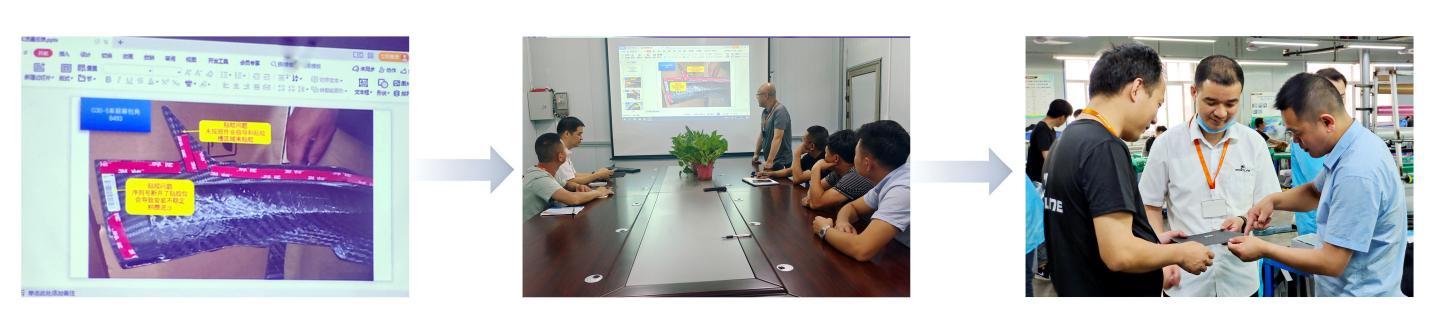
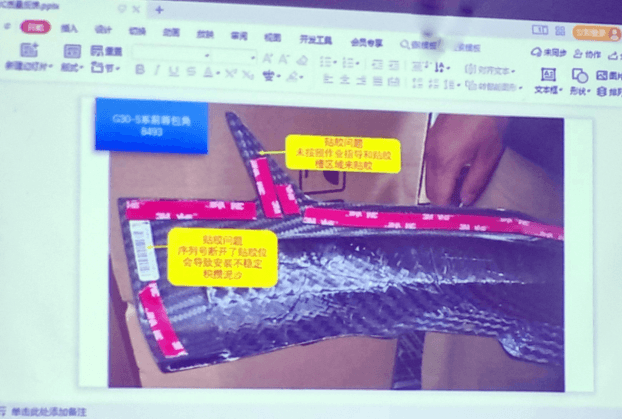
Fitment support is the highest-frequency technical issue in our product category. Carbon fiber body components must align to vehicle-specific mounting positions within tolerances that don’t accommodate dimensional drift from original scan data. Our fitment support protocol addresses this at every stage: pre-production data audit to verify scan accuracy, post-tooling dimensional comparison against original 3D model, post-sample scan comparison before bulk production approval, and mold condition re-verification at the 20-set mark. When a fitment issue arises post-delivery, our technical team can trace it to a specific production stage—and that traceability is what enables a fast, permanent fix rather than a replacement that repeats the same failure.
Customer service experience over the life of a supply relationship is shaped more by how problems are handled than by how smoothly things run when there are no problems. Any supplier can process a clean order. The real test is what happens when a container arrives with surface defects, or a mold produces fitment variance mid-run, or an end customer complaint reaches your desk on a Friday afternoon.
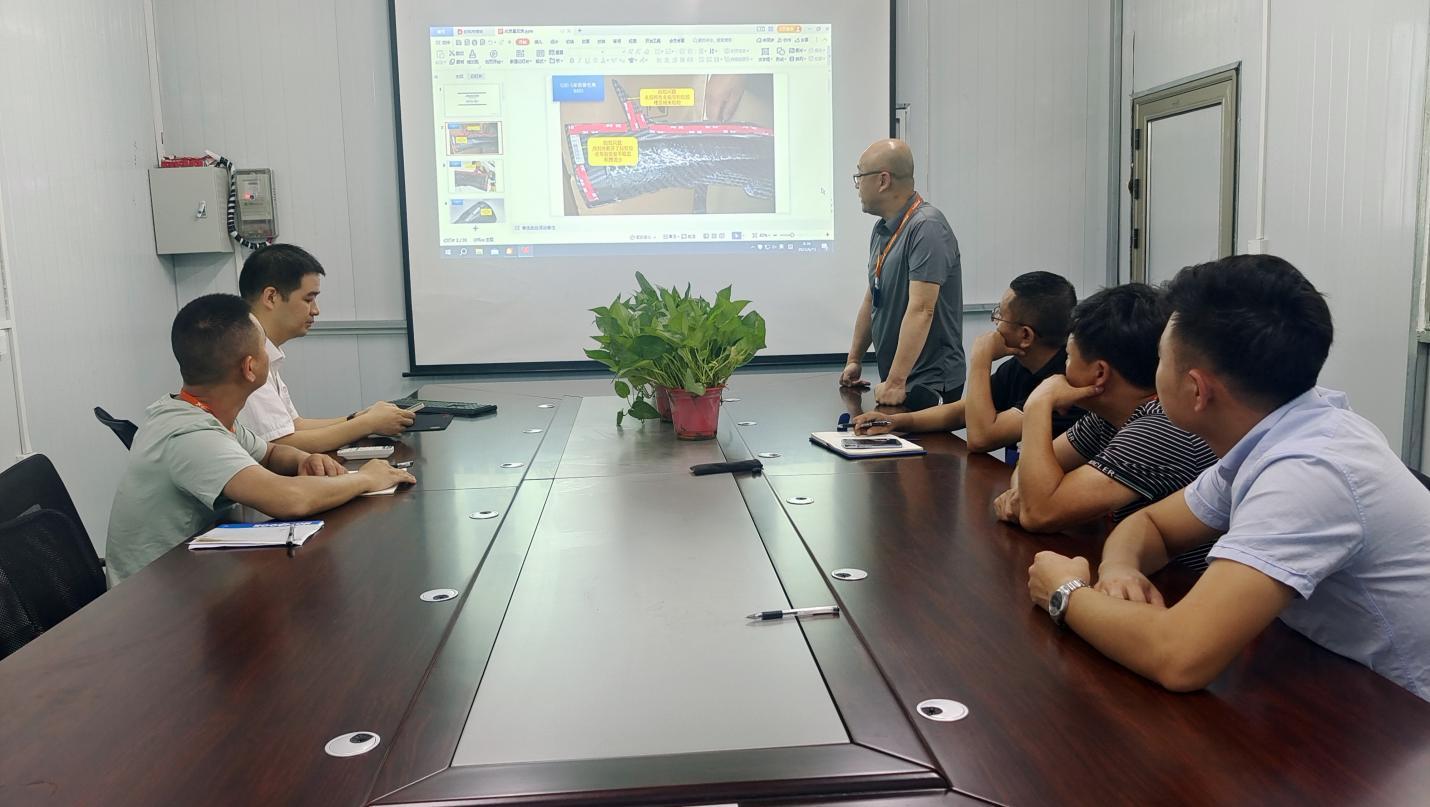
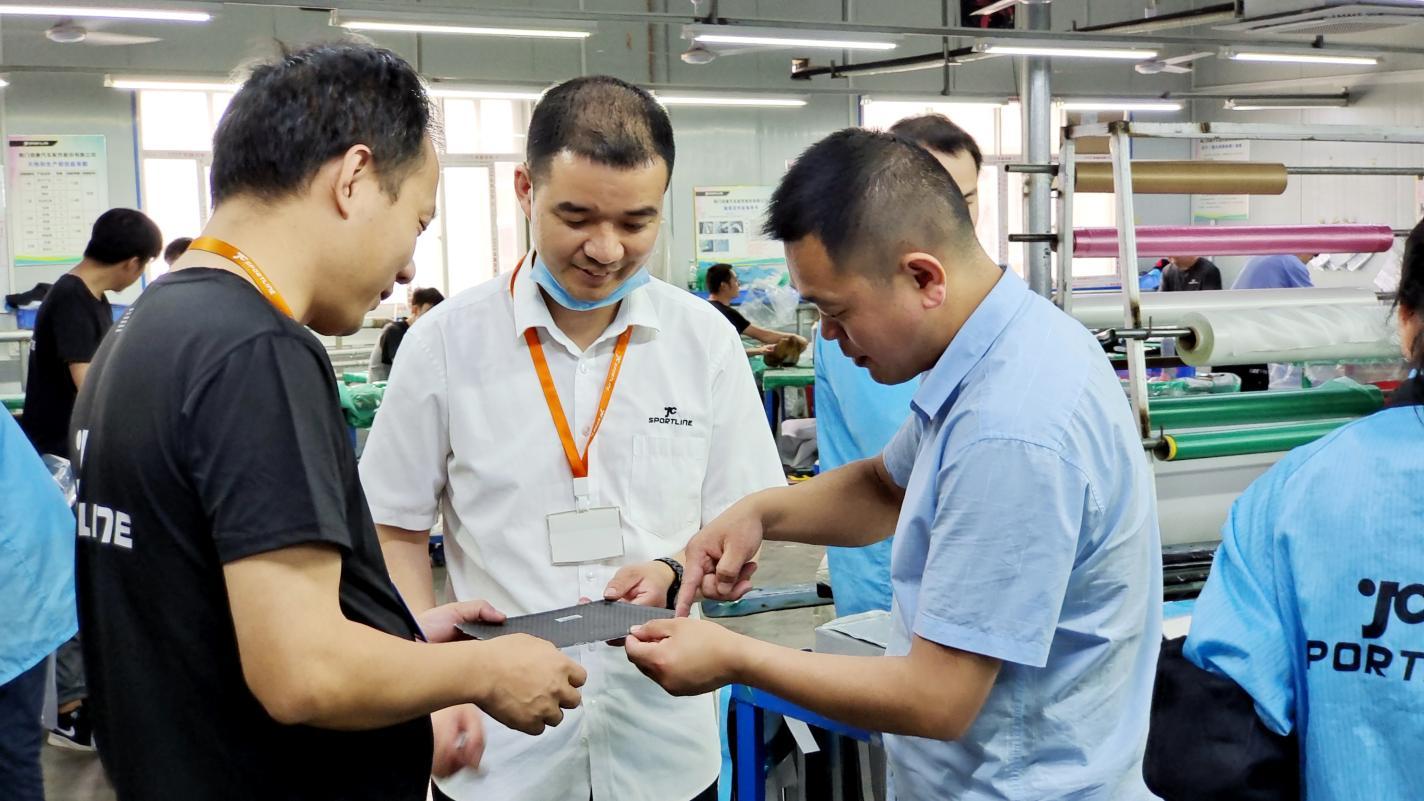
Our project support team in the Netherlands and the United States means customer support for buyers in those markets is not a time-zone-delayed email. It’s a local team with direct product knowledge and authority to initiate resolution without routing every decision back through the factory.
The question is not whether you can reach someone. It’s whether the person you reach can fix the problem.
Conclusion — Good Customer Service in Carbon Fiber Is Not a Feature. It’s a Filter.
When you ask what does good customer service mean to you in the context of selecting a carbon fiber manufacturing partner, the underlying question is: when something goes wrong—and in complex manufacturing, it does—will this supplier stand next to you, or will they become difficult to reach?
Excellent customer service in this industry is a filter. It separates suppliers structured to succeed with you from suppliers structured to process orders until friction appears.
The structure is verifiable. It looks like this: a supplier who understands your business model before quoting; who provides feasibility analysis before tooling investment; who maintains production transparency through a shared project schedule; who controls quality at every production stage, not the last one; who provides brand infrastructure—logo integration, custom packaging, synchronized digital assets—that reduces your operating cost rather than adding to it; who protects your IP in the jurisdiction where it’s most exposed; and who maintains local after-sales capability in your market so problems are resolved in your business hours by someone who has the authority to act.
That is not a premium service offering. That is the baseline a serious buyer should require before committing tooling investment and production volume to a supplier relationship.
JC Sportline is not the lowest price in carbon fiber manufacturing. We are the option that has systematically built every layer of this infrastructure—and you can learn more about why clients choose JC Sportline on our website. Because 20 years in this industry makes clear that price has never protected a buyer’s project, their brand, or their business. Service does.
If you’re evaluating a carbon fiber manufacturing partner, speak with our carbon fiber project consultant directly. Bring your project brief, your current challenges, and your questions about how a full-service supply relationship would change your operation. That conversation is where customer service meaning stops being abstract and starts being something you can actually use.
FAQ
1. How do I evaluate a carbon fiber supplier’s customer service before placing an order?
Four questions determine the answer. Does the supplier try to understand your business model before quoting? Can they provide a feasibility assessment—not just a price? Do they share a documented project schedule from day one? Do they have local after-sales presence in your market? A supplier who answers all four with specifics, not promises, has built a service infrastructure worth evaluating further. A supplier who answers with generalities has told you exactly what you need to know.
2. What should I expect in terms of communication frequency during a custom carbon fiber project?
At minimum: milestone updates at tooling confirmation, sample completion, fitment verification, and bulk production release. A supplier with a functioning project management system shares a development schedule at project initiation and updates it proactively when timelines shift. If you’re in a position where you need to ask for status, the communication structure is already failing you.
3. Does JC Sportline offer local after-sales support in Europe or the US?
Yes. We operate subsidiaries in the Netherlands serving European markets, and in the United States serving North American markets. Local teams handle technical support, after-sales coordination, and regional project execution directly—without routing every issue through the factory. For buyers with complex product programs or high complaint volumes, local team access is not a convenience. It’s a material difference in resolution speed.
4. Can my carbon fiber supplier help me protect my product design in China?
Most can’t. JC Sportline provides a complete IP protection framework: NDA agreements under Chinese legal jurisdiction with notary witnessing available, design and appearance patent registration coordinated through our legal partner network, and enforcement support if infringement is detected. For buyers with proprietary designs and tooling investment, this protection is a non-negotiable condition of a trustworthy supply relationship—not an optional service.
5. What value-added services does JC Sportline offer for brand owners and drop shipping operators?
The full set: three logo integration methods (under-clearcoat, surface clearcoat, mold-engraved), custom packaging options (wood crate, foam-lined carton, fully branded irregular-form), Jianguoyun which is like google drive synchronized product image service covering 3,000+ SKUs with no-logo high-resolution files, overseas warehouse fulfillment in the US and Europe, drop shipping with label application and individual order management, original design services from our European design team, carbon data acquisition for vehicle-specific platform programs, brand rendering services, and IP protection. Each service addresses a specific cost or operational gap that buyers currently absorb internally—often without realizing it’s a supplier-solvable problem.
6. Why does the first message from a carbon fiber supplier reveal so much?
Because it’s unscripted. A supplier whose first reply asks “what quantity do you need?” has shown you their process starts with their production requirements, not yours. A supplier who asks about your application, your business model, and your project context has shown you their orientation is toward your outcome. That orientation doesn’t change once the order is placed. It compounds—in your favor or against it—across every interaction that follows.
Click to visit YouTube and follow us to learn more.