(And How Precision Fixes It)
Many carbon fiber parts look perfect in photos.
The real problems usually appear during installation.

If you’ve ever had to force a part into place, drill new holes, or explain delays to a customer, you already know the issue. Carbon fiber parts don’t fail because of how they look. They fail because they don’t fit.
Carbon Fiber Does Not “Flex to Fit”
Unlike plastic or thin metal, carbon fiber is rigid by design.
That’s what makes it strong—and also what makes fitment critical.
If something is off, even slightly, you will notice it immediately during installation.

Common problems include:
- Bolt holes not lining up
- Panels sitting too tight or too wide
- Uneven gaps between parts
- Extra trimming or drilling on-site
For a shop, this means more labor time.
For a distributor or brand, it means complaints, returns, and lost trust.
Why Good Looks Don’t Guarantee Good Fitment
A carbon fiber part can have:
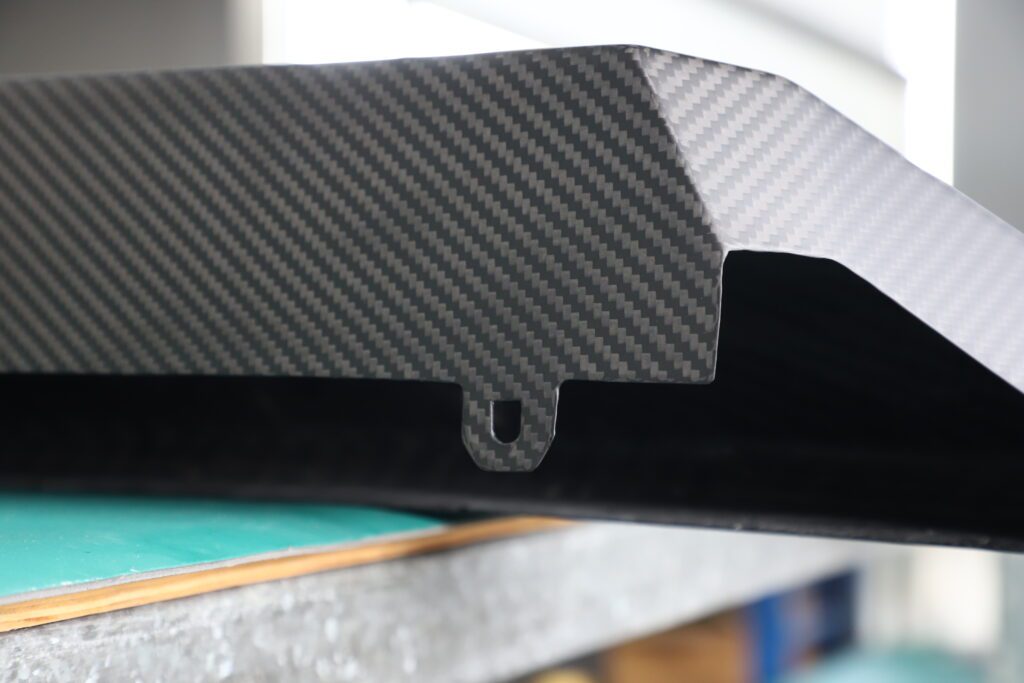
- Clean weave
- Glossy clear coat
- Perfect surface finish

And still be wrong.
Surface quality and fitment accuracy are not the same thing.
Fitment depends on dimensions—hole position, angles, and consistent geometry.
If those dimensions are off, installation becomes difficult or unpredictable.
🔘 Get Your Personalized Quote Now
🔘 Get Your Aerodynamic Upgrade Plan
Precision Is What Turns Installs into Routine Work
When precision is controlled properly:
- Parts align naturally
- Holes line up without force
- Panels sit flat and clean
Installers don’t need to “make it work.”
The job becomes repeatable, fast, and professional.
For B2B buyers, precision is not a bonus feature.
It is how you control risk.
Where Installation Problems Really Start
Fitment issues rarely come from bad luck.
They usually come from earlier decisions in production, such as:
- Inaccurate molds
- Poor trimming control
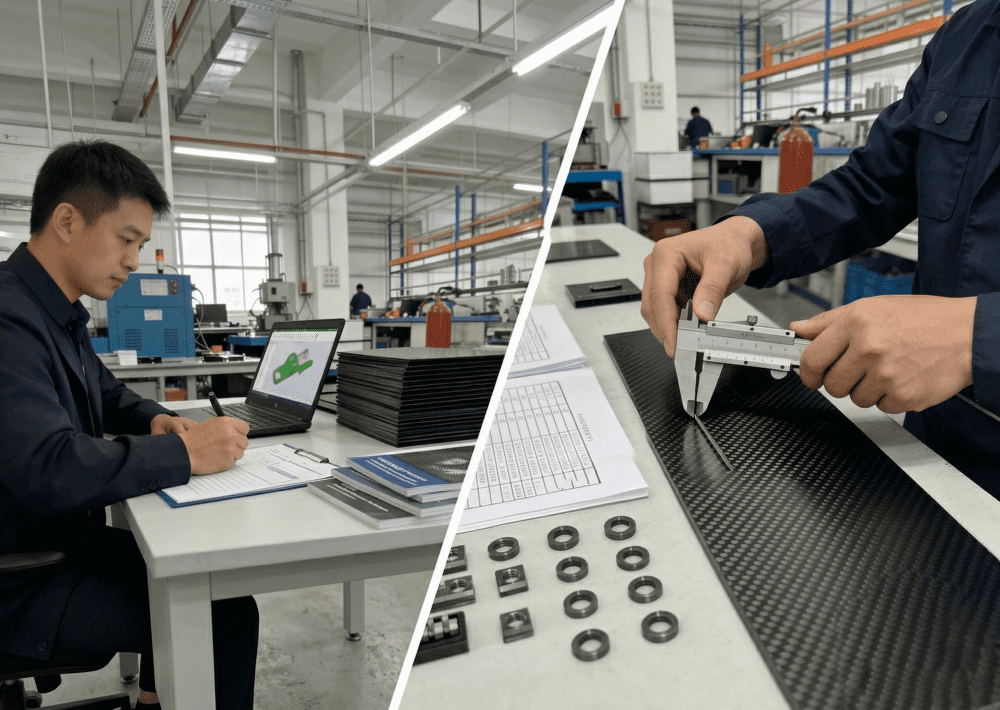
- Lack of dimensional inspection
If you want to understand the root cause, start with tooling and tolerance control:
- Carbon Fiber Fitment Starts with the Mold
- How 0.1 mm Tolerance Changes Carbon Fiber Fitment
Why This Matters Before You Order in Volume
When you buy carbon fiber parts in bulk, you’re not just buying parts.
You’re buying install time, customer experience, and brand reputation.
Precision manufacturing reduces rework, lowers labor cost, and protects your margins.
That’s why fitment should always be evaluated before price.
How JCSPORTLINE Reduces Installation Risk
JCSPORTLINE focuses on installation results, not just finished parts.

That means:
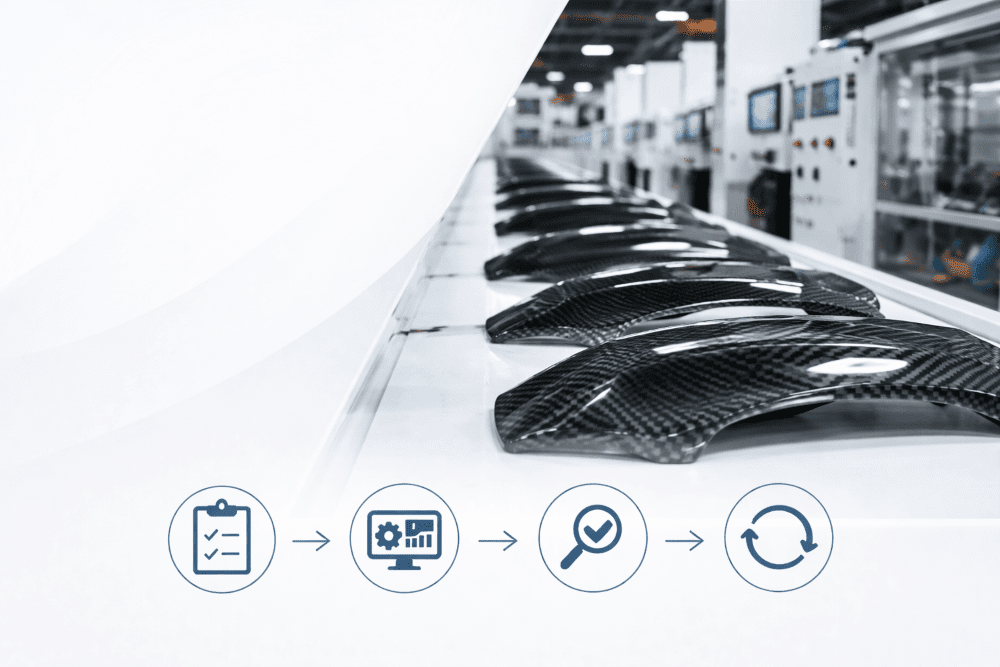
- Accurate digital modeling before tooling
- CNC-machined molds with fixed reference points
- Controlled trimming to protect hole and edge accuracy
- Dimensional inspection before shipment
The goal is simple:
carbon fiber parts that install cleanly, without forcing or rework.
Why Installation Should Be Considered Before Ordering
If you are sourcing carbon fiber parts in volume, installation quality directly affects:
- Labor cost
- Delivery timelines
- Customer satisfaction
- Brand trust
Fitment problems are expensive.
Preventing them during manufacturing is far more efficient than fixing them after delivery.
FAQ – Installation & Fitment
Why do carbon fiber parts often fail at installation?
Most failures are caused by dimensional inaccuracy, not surface quality. Carbon fiber does not flex to hide errors.
Can carbon fiber parts be adjusted during installation?
Carbon fiber should not be forced. Adjustments can damage mounting points, clear coat, or surrounding panels.
How does JCSPORTLINE improve installation success?
By controlling fitment at the tooling, trimming, and inspection stages rather than relying on installers to “make it work.”
Is good surface finish a sign of good fitment?
No. Surface finish reflects appearance, not dimensional accuracy.