Real Design Validation
3D printed prototypes help verify whether the actual product proportion, styling effect and fitment relationship match the approved design direction.
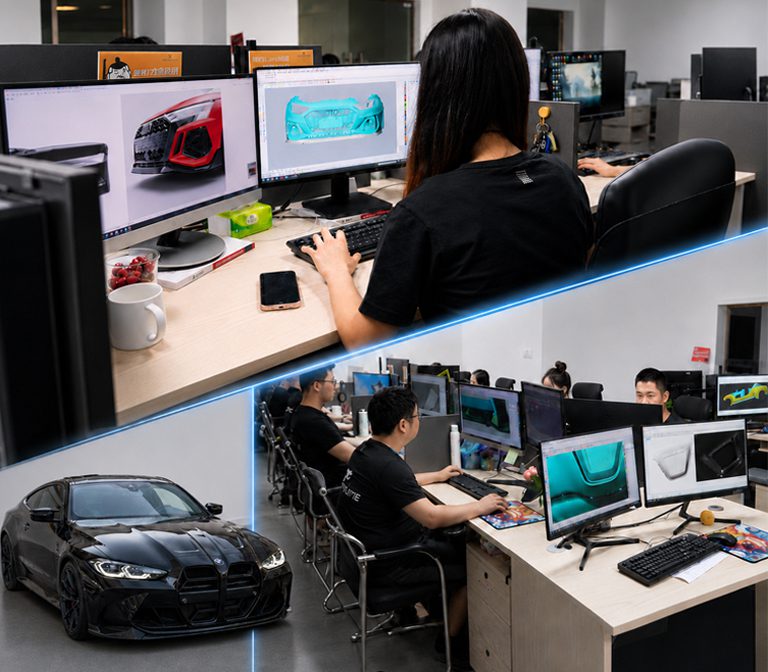
At JCSPORTLINE,we specialize in high‑performance custom carbon fiber solutions. From concept ideas, styling development and 3D modeling to fitment-oriented design and manufacturing feasibility review, we help automotive brands and OEM/ODM developers turn carbon fiber product ideas into practical, production-ready solutions.
A good carbon fiber product is not only about appearance. It must balance visual proportion, surface flow, real vehicle fitment, mounting structure, carbon fiber weave direction and manufacturing feasibility from the beginning.
That is why JCSPORTLINE approaches carbon fiber design with three key considerations: styling, structure and production feasibility. Our goal is to create designs that are visually refined, technically reasonable and suitable for real carbon fiber development.
JCSPORTLINE supports carbon fiber design for automotive parts and customized carbon fiber product development. Our design work is not limited to visual appearance. We also consider carbon fiber lamination direction, structural logic, product strength and real manufacturing requirements.
Flexible Design Support Based on Your Project Stage
Different customers enter the development process at different stages. Some already have design files, 3D renderings or a complete product concept. Others may only have a market idea, target style or reference image. JCSPORTLINE provides two design support models to match different project needs.
If you already have a design team, 3D rendering, design files or reference concepts, our 3D reverse engineering team can help convert your design direction into workable data for carbon fiber development. We review the product concept from a manufacturing perspective and help optimize the design for real fitment, surface quality, carbon fiber structure, mold feasibility and future production.
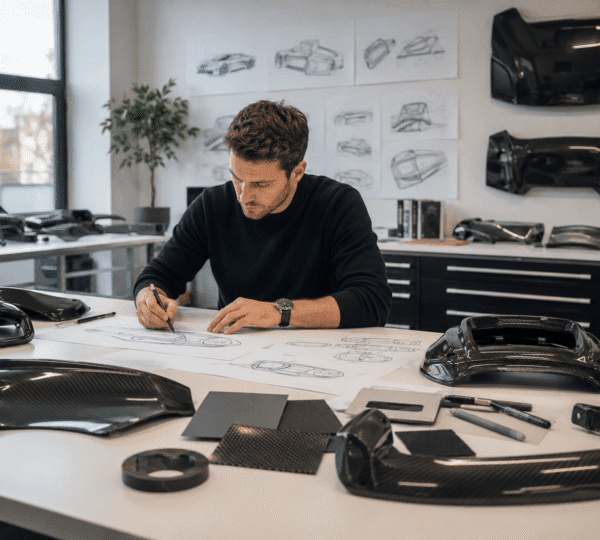
If you do not have an in-house design team, we can support original concept design and 3D rendering through creative design resources in Europe and North America. This service is suitable for customers who need a unique product direction, new styling language or differentiated product concept. Original design support is quoted separately based on project scope, design complexity and development requirements.
The customer provides hand sketches, drawings, reference images, 3D renderings, original part photos or existing product concepts.
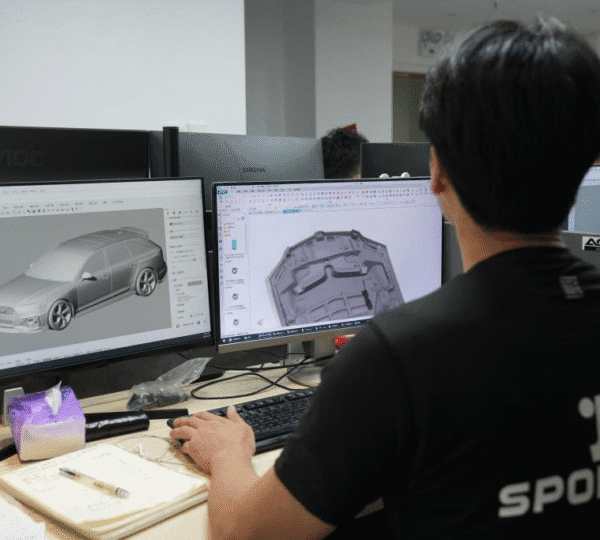
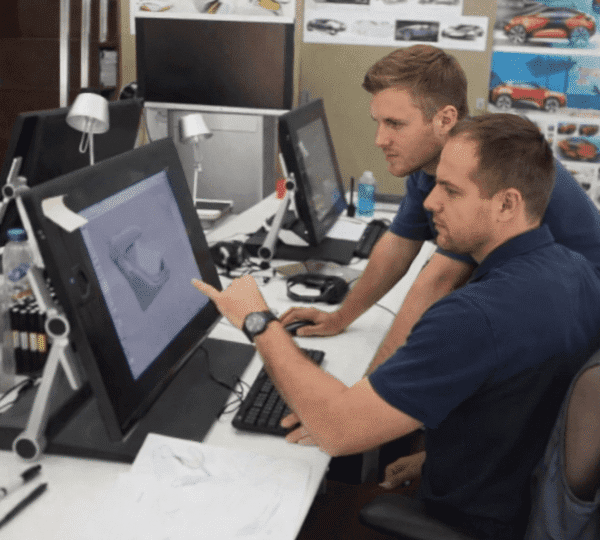
Our 3D reverse engineering team reviews the design according to carbon fiber development requirements, including product proportion, surface transition, mounting logic, structure and manufacturing feasibility.
After the design direction is optimized, rendering images can be prepared for customer review. This helps confirm styling, proportion and visual effect before detailed 3D modeling.
Once the rendering is approved, our engineering team converts the confirmed design into 3D modeling data for further development.
Depending on project complexity, the design can either move to 3D printing validation or proceed directly to mold development preparation if the fitment and structure are already clear.
The customer provides brand positioning, target market, product category, application scenario, style preference and competitive references.
Creative designers develop initial sketch concepts based on the approved design direction.
The customer reviews the sketch direction and provides feedback on proportion, styling language, visual aggressiveness, luxury feeling or functional requirements.
After multiple rounds of communication and adjustment, the designer develops 3D rendering images to present the final visual direction.
Once the rendering is approved, our reverse engineering team converts the visual design into 3D engineering data.
The final design can enter 3D printing validation or move directly into mold development preparation based on project requirements.
Validate real fitment, reduce development risk, and accelerate the project before tooling.
In carbon fiber product development, rendering images and final physical products can sometimes be different, especially for automotive exterior parts with complex surfaces and strict fitment requirements.
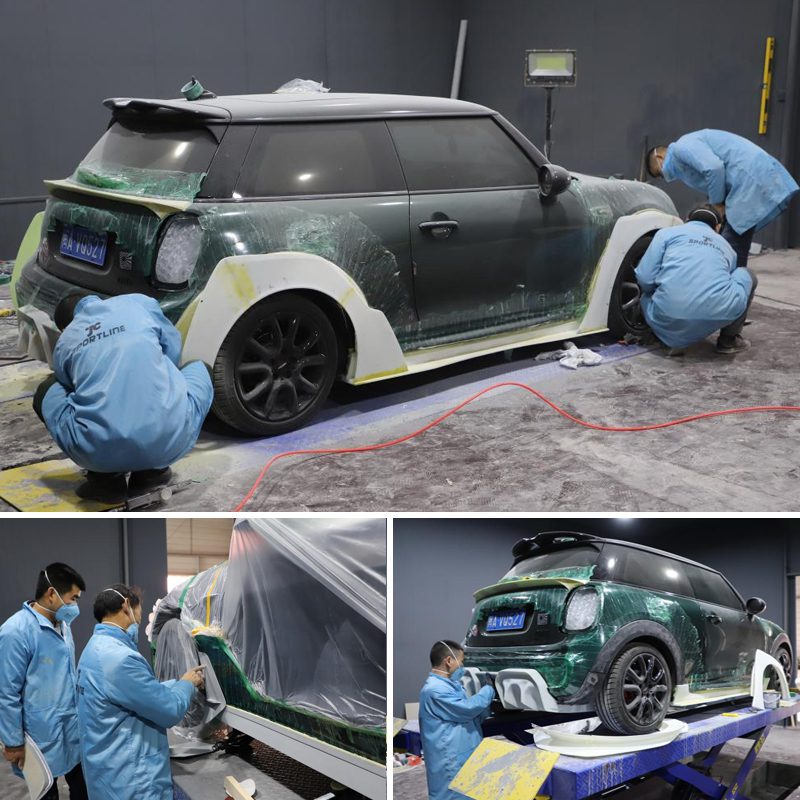
To reduce this risk, JCSPORTLINE can use 3D printed prototypes before formal mold development. A 1:1 or scaled prototype helps customers review the actual product proportion, visual effect, surface relationship and installation position before investing in tooling.
For complex automotive carbon fiber parts, 3D printing allows both the customer and engineering team to evaluate the design directly on the vehicle. This helps identify potential design issues earlier, optimize details more efficiently and avoid discovering major problems only after the final sample is completed.
3D printed prototypes help verify whether the actual product proportion, styling effect and fitment relationship match the approved design direction.
Potential issues in surface transition, mounting position, body line harmony or product scale can be identified before formal mold development.
By reducing unnecessary CNC machining and repeated mold modification, 3D printing helps control early-stage project costs.
The customer and engineering team can review the product directly on the vehicle, making communication and design optimization more efficient.
To start a carbon fiber design project, customers do not need complete engineering data at the beginning. Clear project information helps us evaluate the design direction, development feasibility and engineering requirements more accurately.
Customers can provide information such as size requirements, functional requirements, logo or branding requirements, expected surface finish, product parameters and application scenarios.
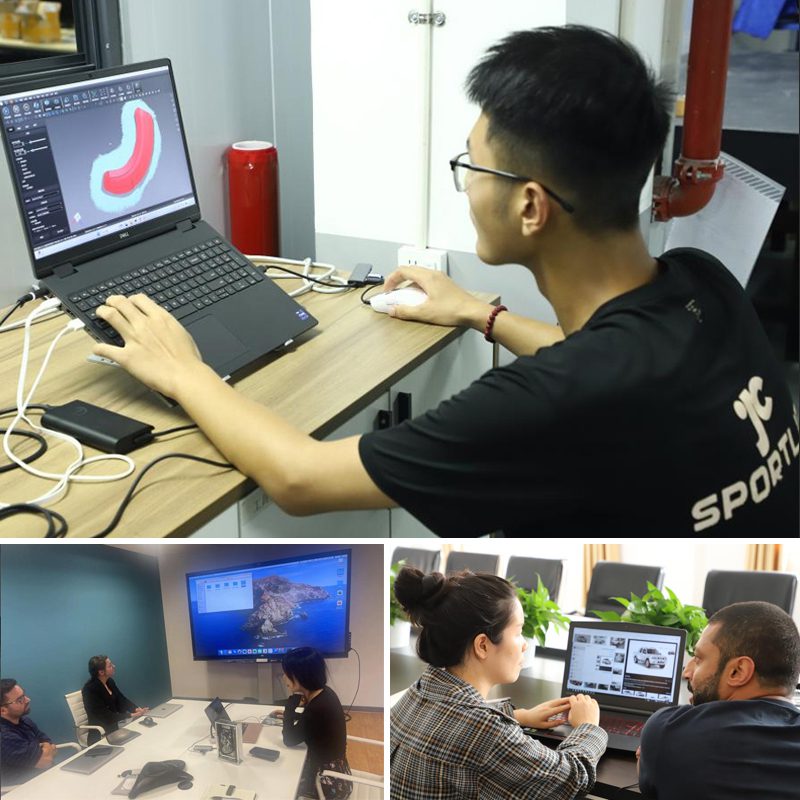
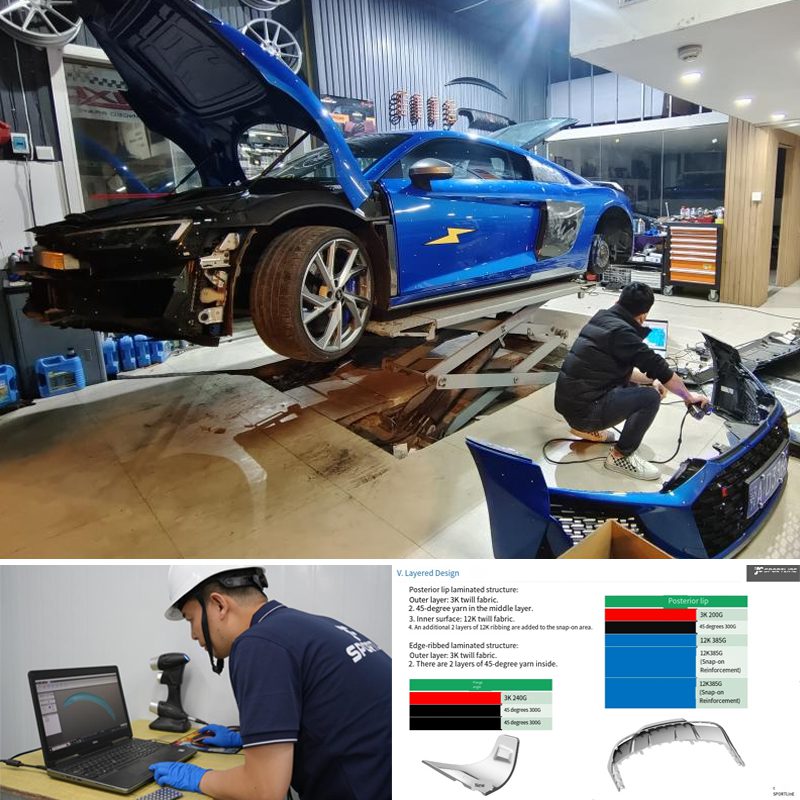
In addition to carbon fiber design services, JCSPORTLINE can also provide global scanning support to help customers complete the required development data.
For automotive 3D scanning data, we can help coordinate scanning resources in key markets such as North America, Europe, China and Canada.
Many customers may have incomplete data or may not have local development conditions. We can help supplement missing data, provide accurate data support and optimize the project foundation.
We can also provide feasibility analysis reports to help customers evaluate whether the product concept is suitable for carbon fiber development before moving forward.
We can help coordinate scanning resources in key regions to supplement missing vehicle or product data for development.
We help evaluate whether the product concept is suitable for carbon fiber manufacturing before development moves forward.
Reliable data improves communication, reduces uncertainty and helps the project move toward tooling more efficiently.
More Than Design — We Help Customers Build the Development Foundation
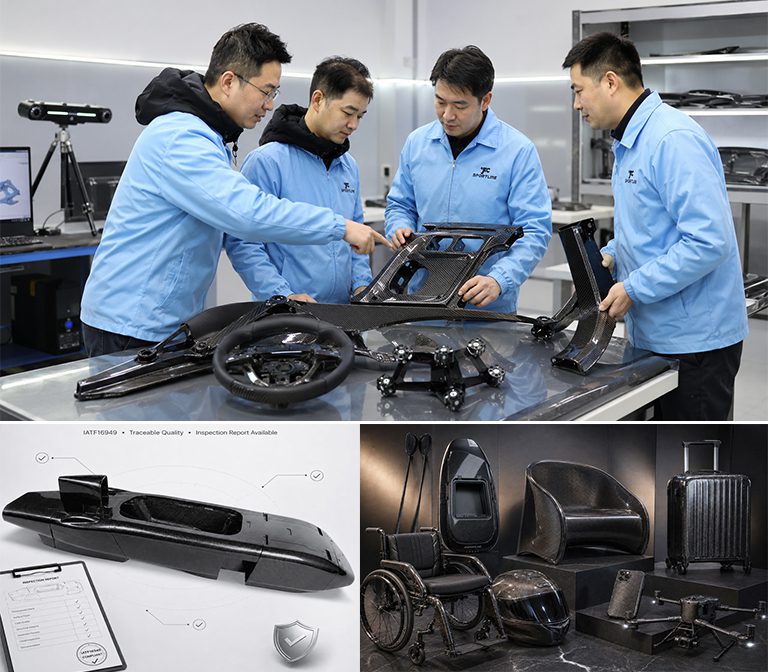
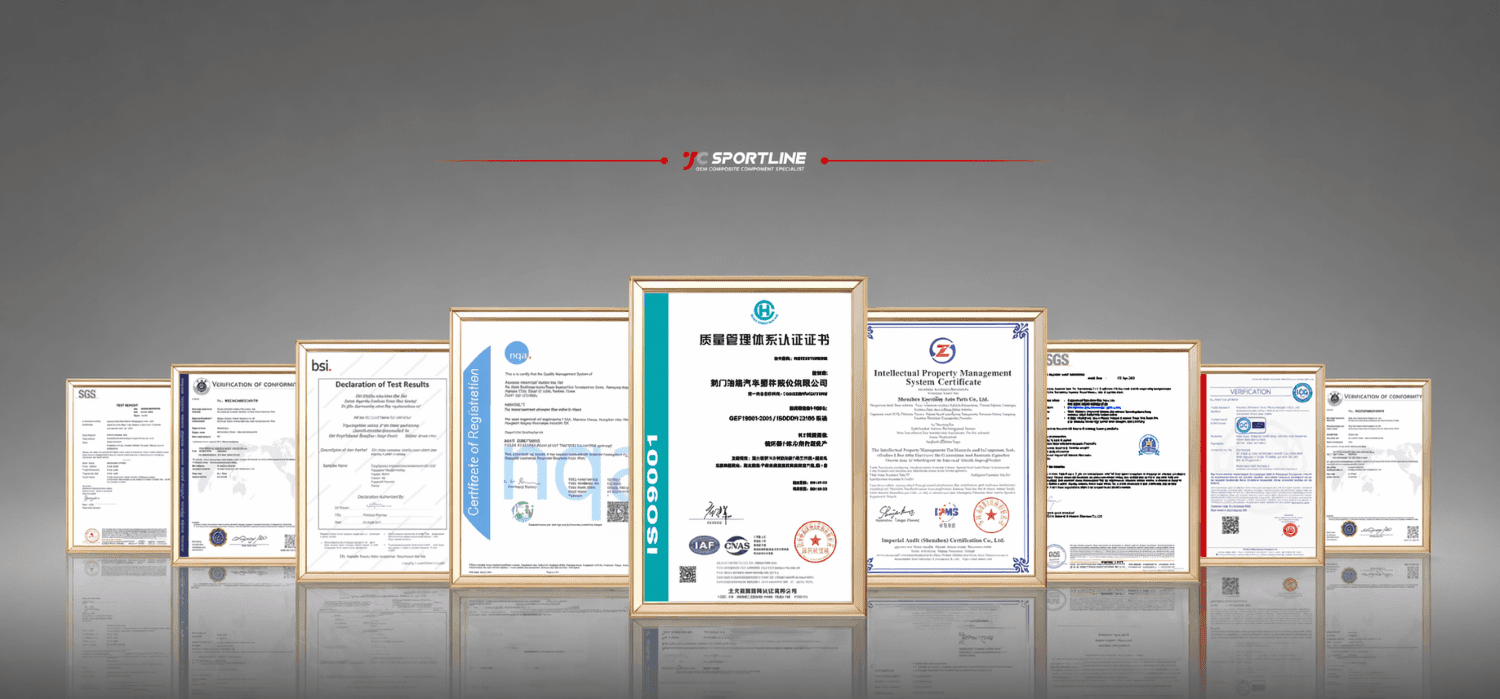
Backed by internationally recognized certifications, JCSPORTLINE operates with structured quality systems, verified manufacturing processes, Backed by internationally recognized certifications such as ISO 9001 and IATF 16949, JCSPORTLINE operates with structured quality systems, verified manufacturing processes, and stronger project traceability. This gives brands, distributors, and OEM buyers greater confidence in consistency, compliance, and long-term supply reliability.
Carbon Fiber Design Service
Yes. If the client provides 3D renders, design files, or reference concepts, JCSPORTLINE can use them for 3D reverse engineering, structure review, and mold development preparation. If the client does not have a designer, we can also provide original creative design and 3D rendering support through our Europe and North America creative design resources. This service may be charged separately depending on the project scope and complexity.
Yes. No problem at all. All you need to do is provide a hand-drawn sketch, and our R&D design team will handle the 3D rendering, 3D reverse engineering, structural design and feasibility assessment, turning your idea into engineering drawings. (In fact, once we have the sketch, our designers simply use reverse engineering to recreate the render.)
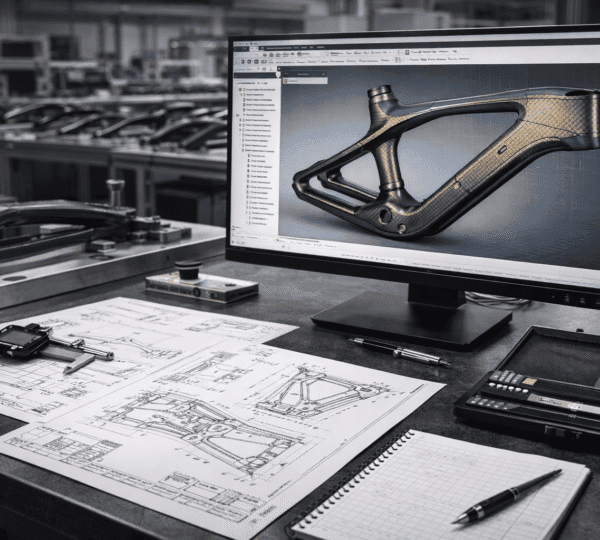
Our carbon fiber design service includes concept review, styling direction, 3D modeling, reverse engineering support, fitment evaluation, laminate and structural considerations, 3D printing validation recommendations, and manufacturing feasibility review before tooling.
Useful project information includes product type, vehicle model and year, original part photos, reference images, size requirements, functional requirements, expected surface finish, logo or branding requirements, product parameters, target market and application scenarios.
Carbon fiber design is not only about appearance. It also needs to consider weave direction, laminate structure, mounting logic, product strength, surface transition, demolding direction and tooling feasibility. A design that looks good in rendering may still need engineering optimization before real carbon fiber development.
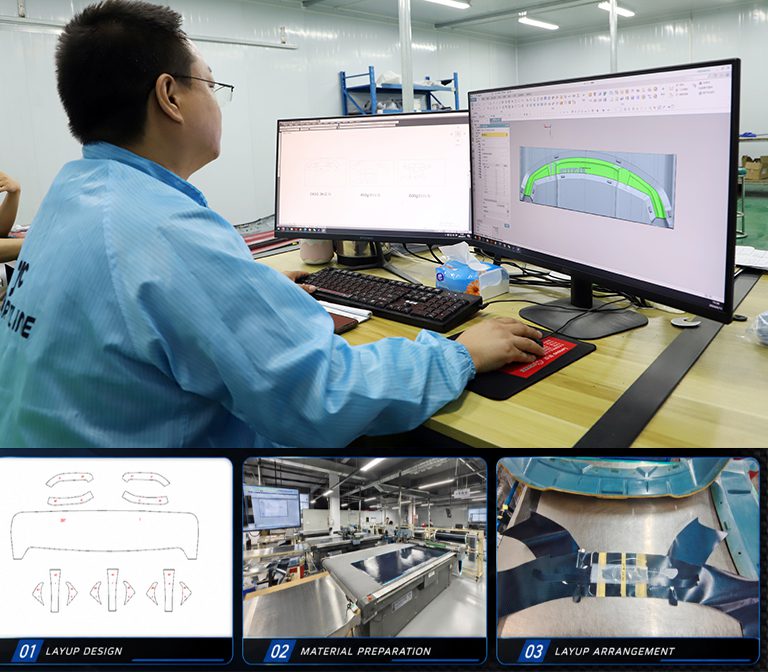
Laminate design determines how carbon fiber layers are arranged, including fiber direction, layer count, local reinforcement and surface weave effect. It directly affects product strength, stiffness, weight, durability and visual quality.
A 1:1 or scaled 3D printed prototype helps customers review actual product proportion, visual effect, surface relationship and installation position before tooling. It allows potential issues to be found earlier, reducing unnecessary CNC machining, repeated tooling modification and early-stage trial-and-error costs.
Contact us to discuss your specific needs. Our highly skilled craftsmen use their combined expertise to develop a practical yet innovative solution—no matter if you need a single prototype or a full production run.
Our engineers will review your concept and provide materials, structure, and feasibility suggestions.