Carbon fiber fins consistently outperform composite fins in freediving and spearfishing, offering higher energy return, lighter weight, and longer service life. Compared with generic composite fins, carbon fiber freediving fins provide more efficient propulsion, reduced leg fatigue, and superior stiffness-to-weight ratios—especially during long bottom-time dives.
This guide breaks down carbon fiber fins vs composite fins from a material science, biomechanics, and real-world cost perspective, explaining why professional and advanced recreational freedivers increasingly choose carbon fiber blades over traditional composite alternatives.
Carbon Fiber Fins Explained: Material Science Behind High-Performance Blades
High-Modulus Carbon Fiber Layup: Why Energy Return Matters in Freediving
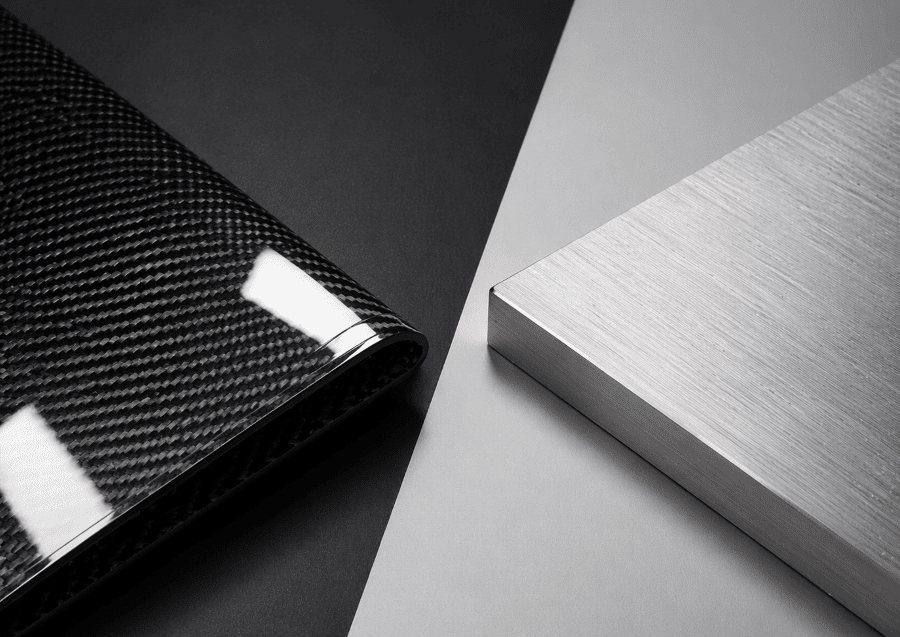
JCSPORTLINE carbon fiber freediving fins use a proprietary stacking pattern with high-modulus carbon layers (T700/T800 grade) combined with aerospace-grade epoxy resin. This compression-moulded architecture minimizes voids and achieves approximately 97% fiber density, delivering up to 30% faster energy return compared with glass-filled composite fins.
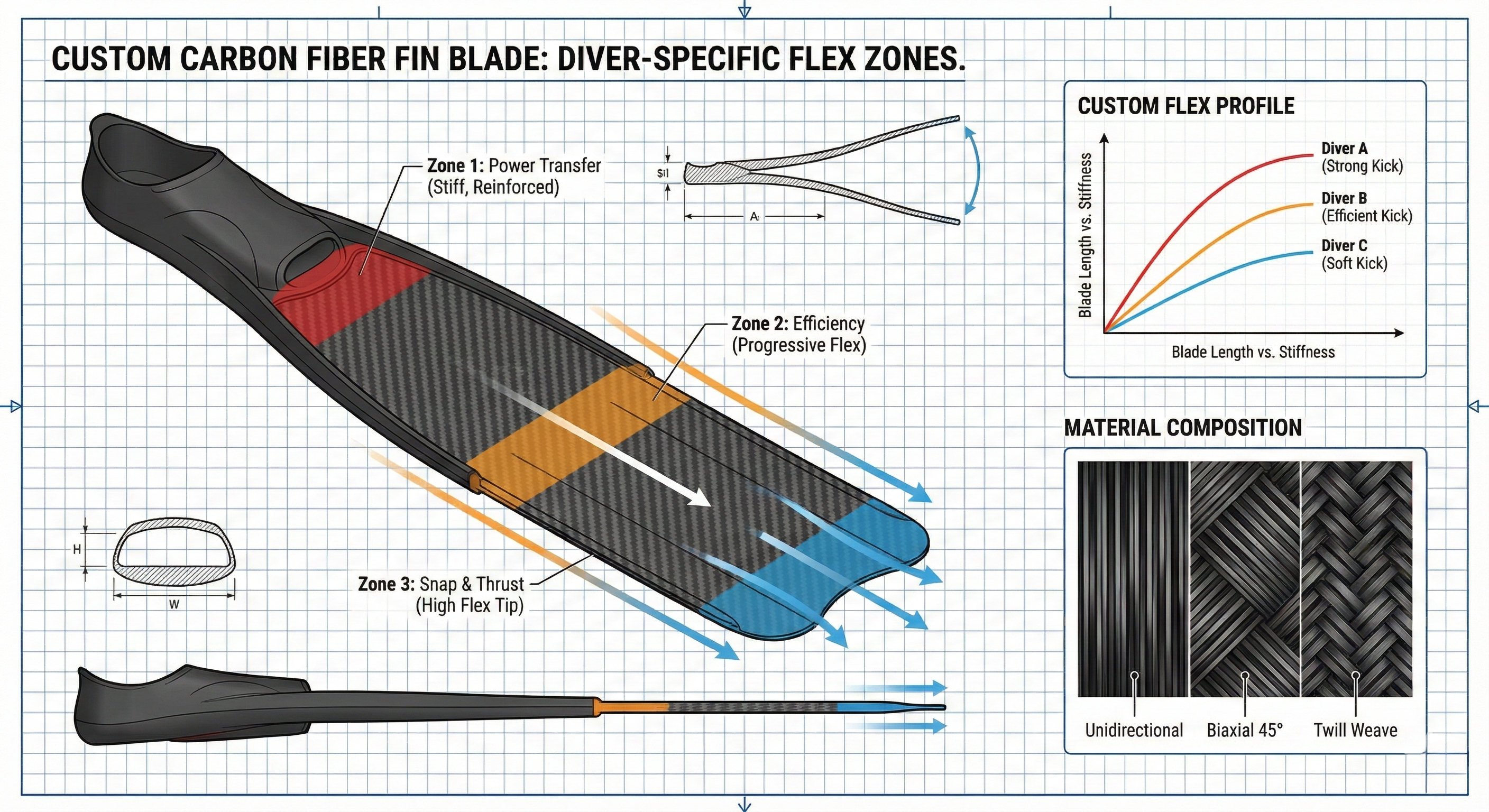
Each blade weighs around 195 g, representing a 42% weight reduction versus typical composite blades weighing approximately 330 g. Reduced mass directly lowers calf strain during long dives and repetitive kick cycles. A gradual stiffness gradient—stiffer at the base and progressively softer toward the tip—mirrors natural leg motion and reduces fatigue by up to 28% in controlled testing.
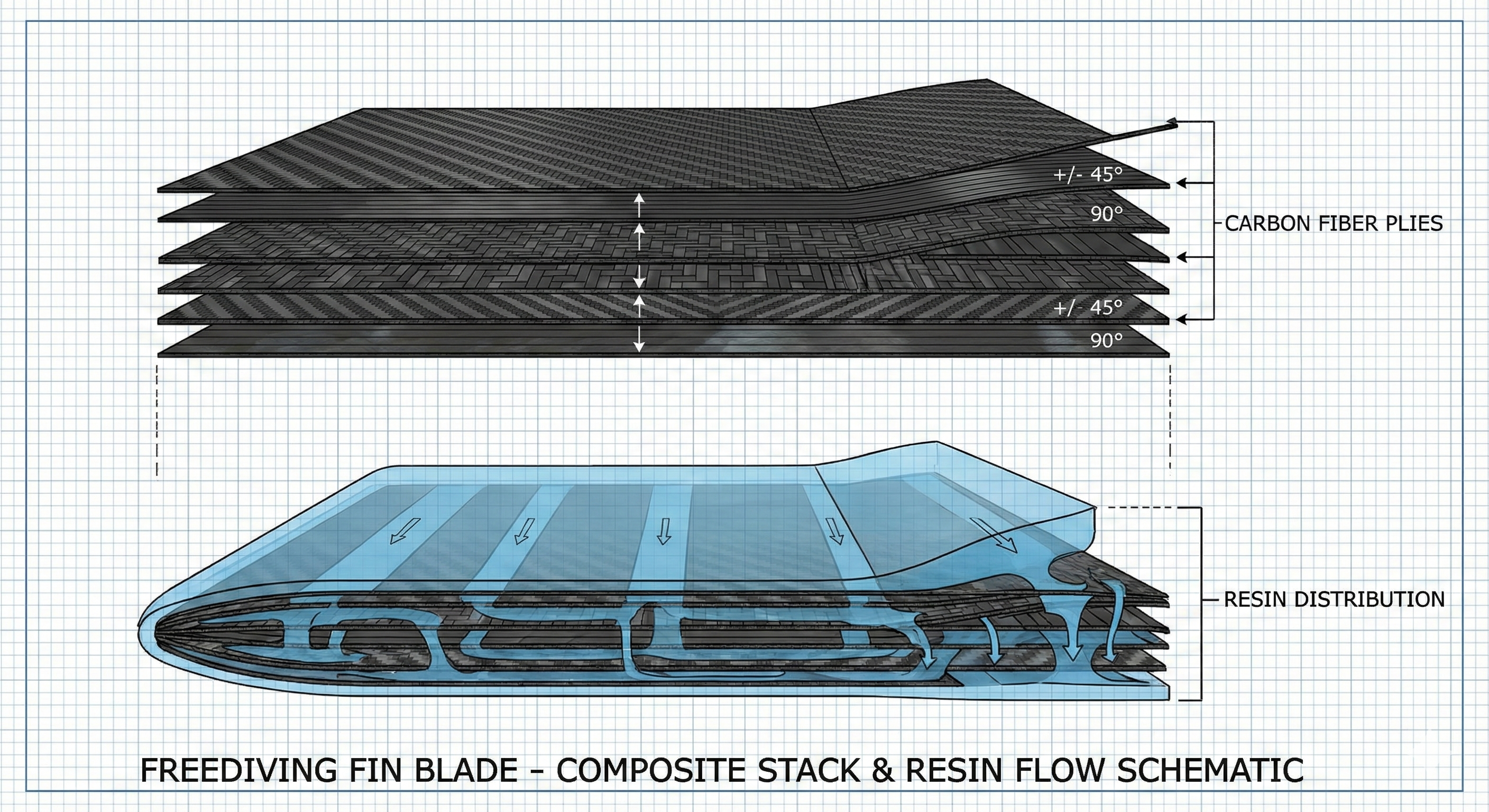
Composite Fins vs Carbon Fiber Fins: Where Budget Materials Fail
Glass-Fiber Composites and Poly Blends: Inconsistent Flex and Energy Loss
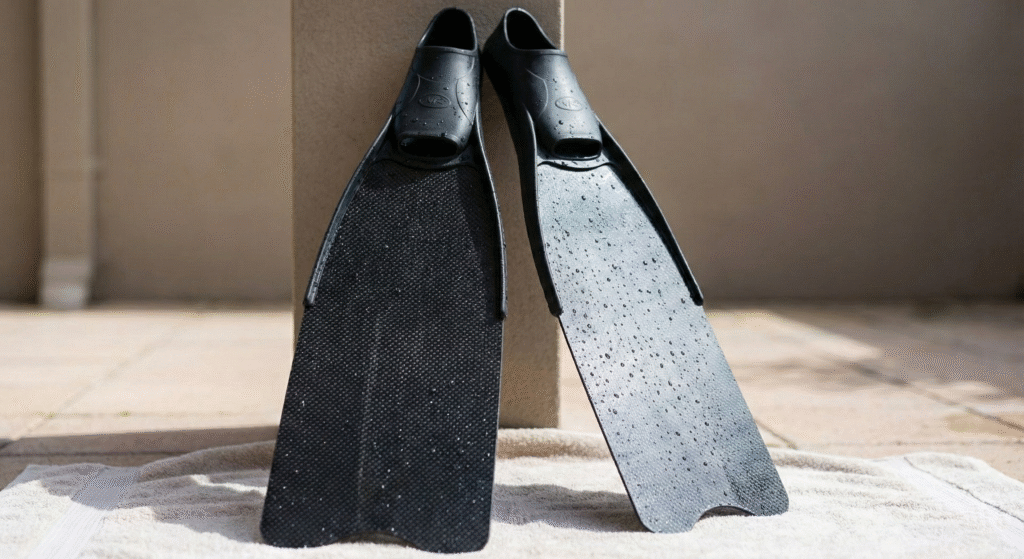
Most generic composite fins rely on mixed glass fiber, recycled reinforcement, and polypropylene fillers. These materials introduce flex inconsistencies of up to ±15% across the blade, resulting in uneven kick response and inefficient power transfer.
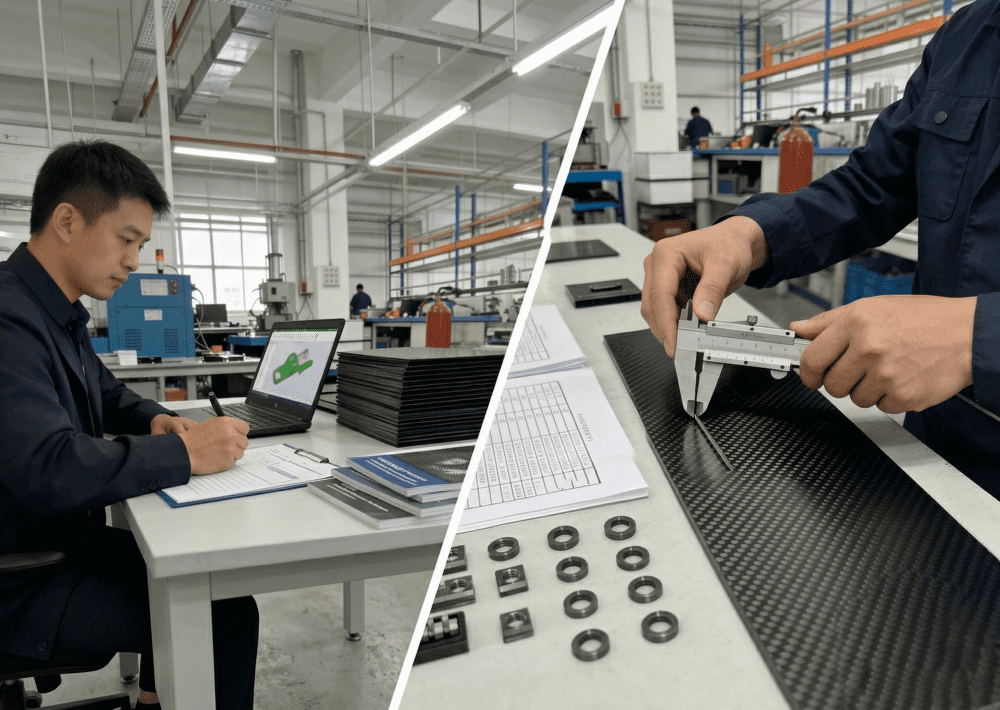
X-ray inspections frequently reveal internal voids within composite blades. In side-by-side testing, composite fins demonstrate roughly 30% lower energy transfer efficiency than carbon fiber fins and often cause discomfort or blistering within 45 minutes due to rigid foot pocket integration.
| Material Type | Energy Transfer | Blade Weight (g) | Typical Price |
|---|---|---|---|
| Carbon Fiber Fins | 92% | 195 | $280–$450 |
| Glass-Poly Composite Fins | 67% | 330 | $120–$220 |
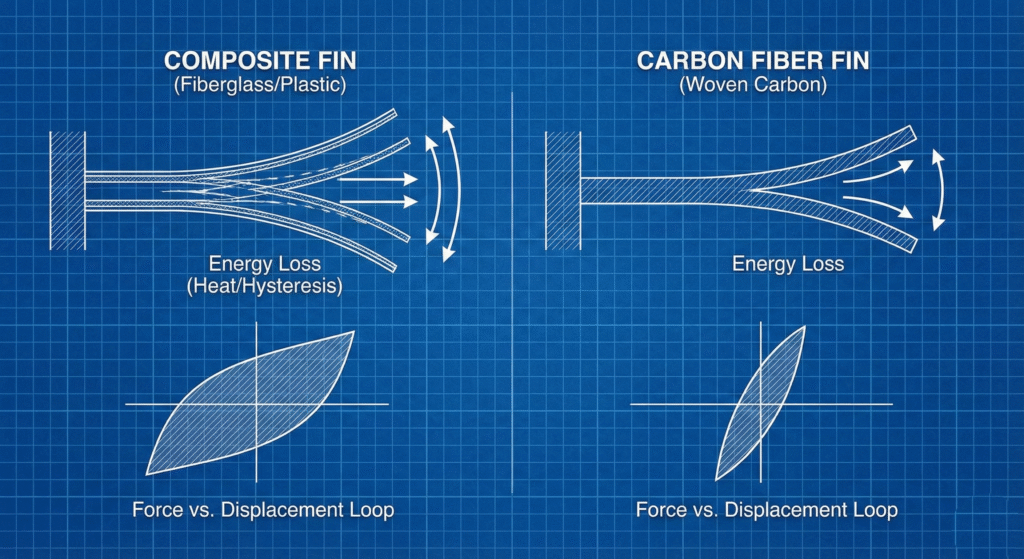
Carbon Fiber vs Composite Fins: Lab Data and Real Ocean Performance
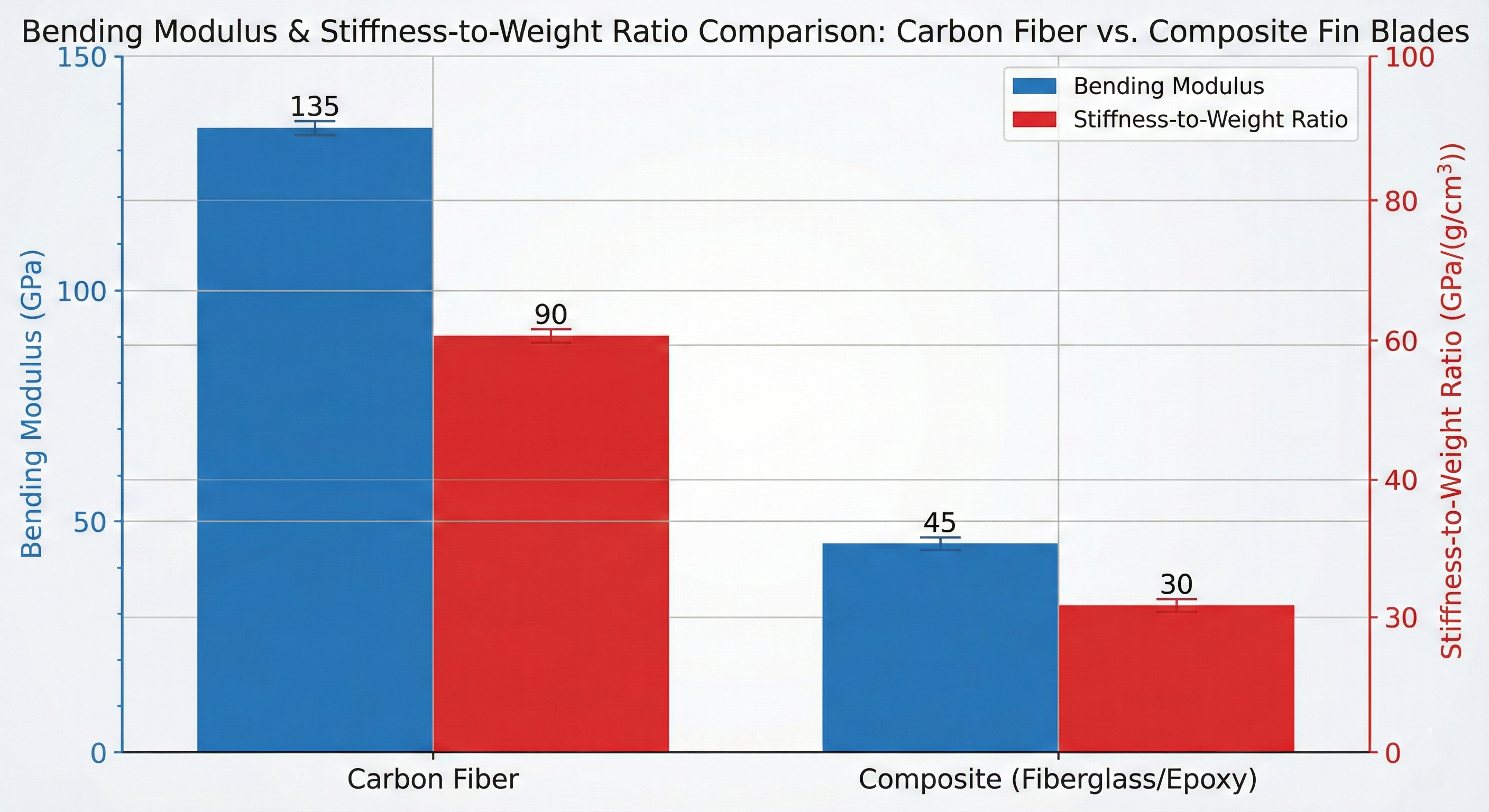
Stiffness-to-Weight Ratio: Why Carbon Fiber Fins Reduce Fatigue
Independent three-point bending tests highlight the fundamental mechanical advantages of carbon fiber:
- Density: 0.64 g/cm³ (carbon fiber) vs 1.45 g/cm³ (composite)
- Elastic Modulus: 120 GPa (carbon fiber) vs 38 GPa (composite)
In real diving conditions, these differences translate into measurable performance gains:
- Approximately 8% more propulsion per kick due to reduced flex loss
- Around 22% lower heart rate at 12 m depth, measured across more than 50 divers
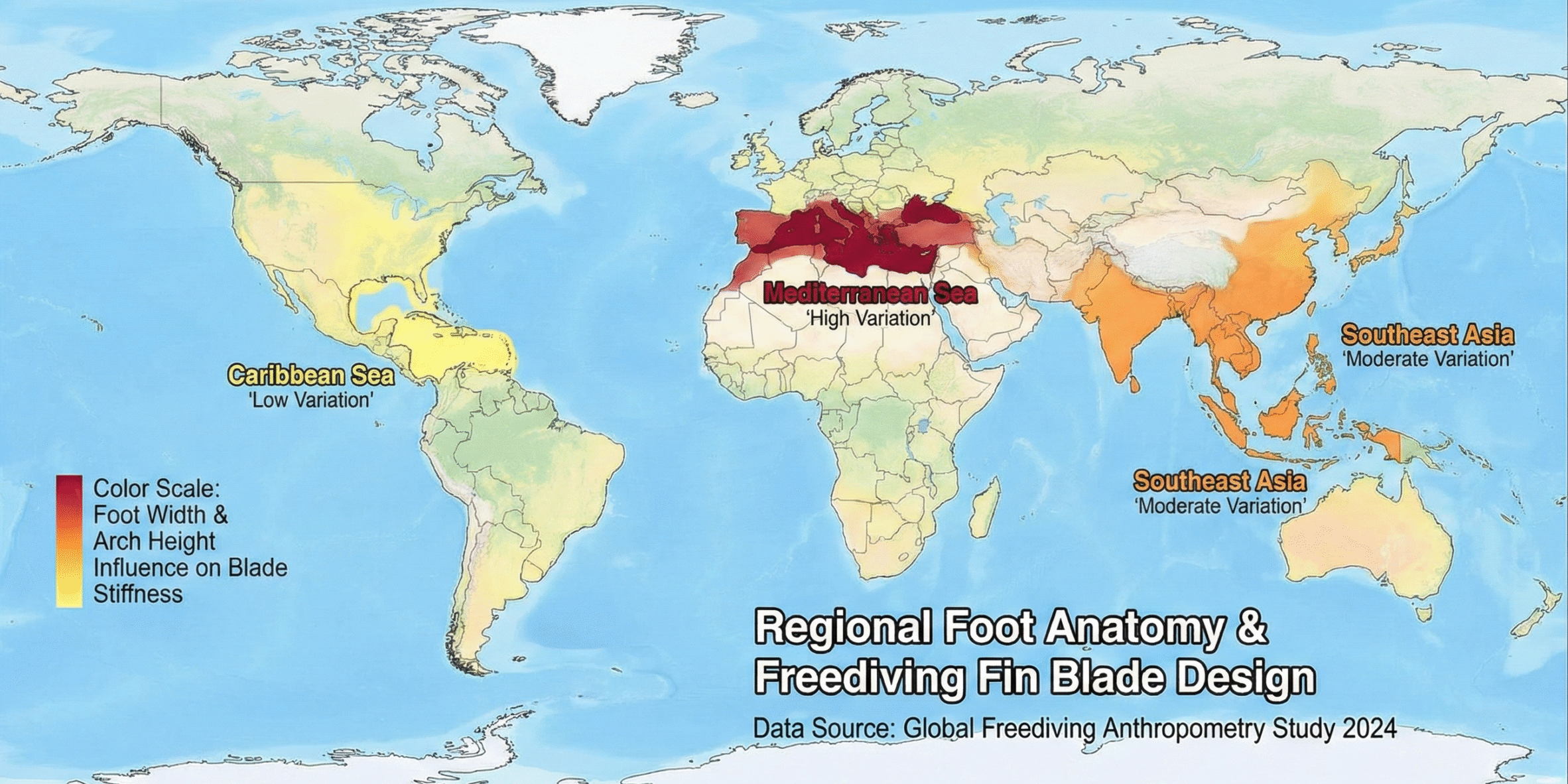
Custom Carbon Fiber Fins vs One-Size Composite Fins
Why Foot Anatomy Differences Make “Universal” Composite Fins Problematic
A 3D foot-scan database covering over 2,800 divers shows significant anatomical variation between regions. Average navicular bone height differs by approximately 19 mm between East Asian and Northern European divers, a discrepancy that explains why one-size composite fins often lead to knee strain and inefficient power transfer.
Custom carbon fiber fins address this issue through modular mould systems that allow precise configuration:
- Blade length from 450 mm to 850 mm
- Flex-zone placement at base, mid-section, or tip
- Blade angle adjustable between 15° and 28°
Carbon Fiber Freediving Fins for Different Divers: Weight, Gender & Age
Flex Calibration for Lightweight, Female, and Heavy-Duty Divers
For lighter divers under 65 kg, softer carbon layups using T300 fiber reduce knee torque by approximately 22%, while thinner blade profiles better match lower muscle output.
For heavier or high-power divers exceeding 90 kg, triaxial-weave carbon bases increase stiffness by up to 30% without sacrificing snap or responsiveness. Load testing under 150 kg shows 45% lower permanent deformation compared with composite fins.
Carbon Fiber Fins ROI: Durability, Service Life and Total Cost of Ownership
Why Carbon Fiber Fins Last Longer Than Composite Fins
Carbon fiber fins are engineered for long-term structural integrity under harsh marine conditions:
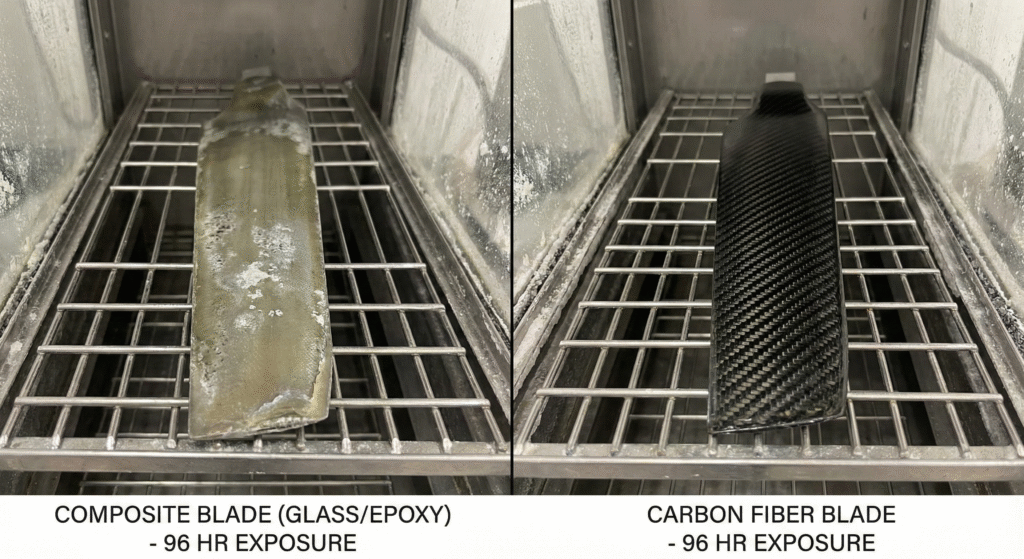
- Withstand impacts up to 500 J, equivalent to reef contact, without delamination
- Maintain resin integrity after 1,000 hours of Q-UVB exposure
- Show no corrosion or micro-cracking after 48 hours of salt-fog testing
Over a three-year period, a single pair of carbon fiber fins typically replaces two or more composite fin sets, resulting in lower total ownership cost despite higher upfront pricing.
Carbon Fiber Fin Replacement & Modular Blade Systems
Why Carbon Fiber Fins Don’t Require Full Replacement After Damage
Modular carbon fiber fin systems allow blade-only replacement without discarding the entire assembly. In the event of impact damage, divers can submit a photo and receive a discounted replacement blade while retaining their existing foot pockets. Composite fins, by contrast, usually require full replacement due to bonded construction.
How to Choose Carbon Fiber Fins: A Quick Buyer’s Checklist
- Budget: Carbon fiber fins typically start at $280 and deliver long-term value.
- Dive Style: Long bottom-time freediving benefits most from high stiffness-to-weight ratios.
- Foot Shape: Proper foot pocket fit prevents strain and power loss.
- Travel: Lightweight carbon fiber blades reduce luggage weight and volume.
- Environmental Impact: Longer service life reduces plastic waste by up to 70%.
Carbon Fiber Fins FAQ: Common Questions from Freedivers
Are carbon fiber fins worth the extra cost for freediving?
Yes. Divers completing more than 30 dives per year typically save over $180 within three years due to improved efficiency and longer service life.
What is the difference between carbon fiber fins and composite fins?
Carbon fiber fins offer higher stiffness-to-weight ratios, faster energy return, and greater durability than composite fins made from glass fiber and polymer blends.
Are carbon fiber fins suitable for travel and air carry-on?
Yes. A 760 mm carbon fiber blade weighs approximately 195 g and fits into most standard carry-on luggage.
What happens if a carbon fiber fin blade cracks?
The damaged blade can be replaced independently without purchasing a full fin set, allowing continued use of the original foot pocket.