
Choosing the wrong carbon fiber manufacturer can bury your project under hidden costs and reputational damage. Imagine a supplier overpromising on delivery timelines—only to force you into last-minute re-tooling costing $50k+ or delayed product launches. Warranty claims from defective parts could erode margins further, while a single flawed lay-up might cascade through your Bill of Materials (BOM), inflating pricing and damaging customer trust.
JCSPORTLINE flips this script by embedding rigorous engineering controls from the start. Our proprietary “MarginGuard” system identifies cost-saving opportunities early in design, while ISO-certified production ensures zero-defect runs. Partnering with us protects your profit margins and brand equity—because a carbon fiber part failure isn’t just a mechanical issue; it’s a brand credibility crisis waiting to happen.

Separate Real Capabilities from Marketing Gloss
Tooling & Mold Development—Can They Own the Critical Path?
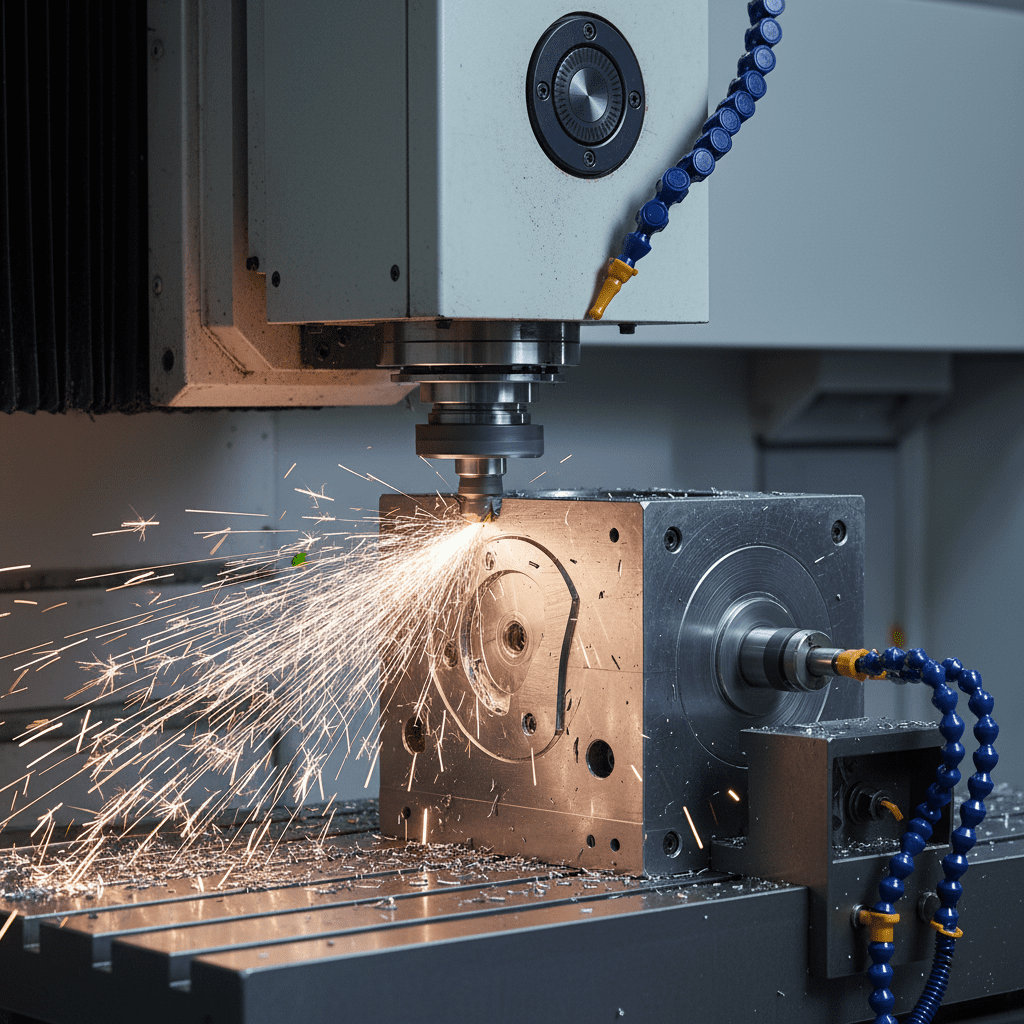
True capability starts with in-house tooling mastery. Ask suppliers: Do they use CNC master patterns or outsource them? Can they modify molds in rapid loops without costly iterations?
JCSPORTLINE’s Edge:
- 5-axis CNC milling cells reduce tooling lead-times by 30% vs. industry averages
- IP-secure workflows keep your designs locked in our Pacific-side facilities
- Rapid mold iteration using aluminum master patterns cuts prototyping cycles by 40%
| Tooling Type | Industry Lead-Time | JCSPORTLINE Lead-Time |
|---|---|---|
| Metal molds | 8-12 weeks | 6-8 weeks |
| Composite | 6-10 weeks | 4-6 weeks |
Material Control & Lay-up Strategy — Auditing the Carbon Stack
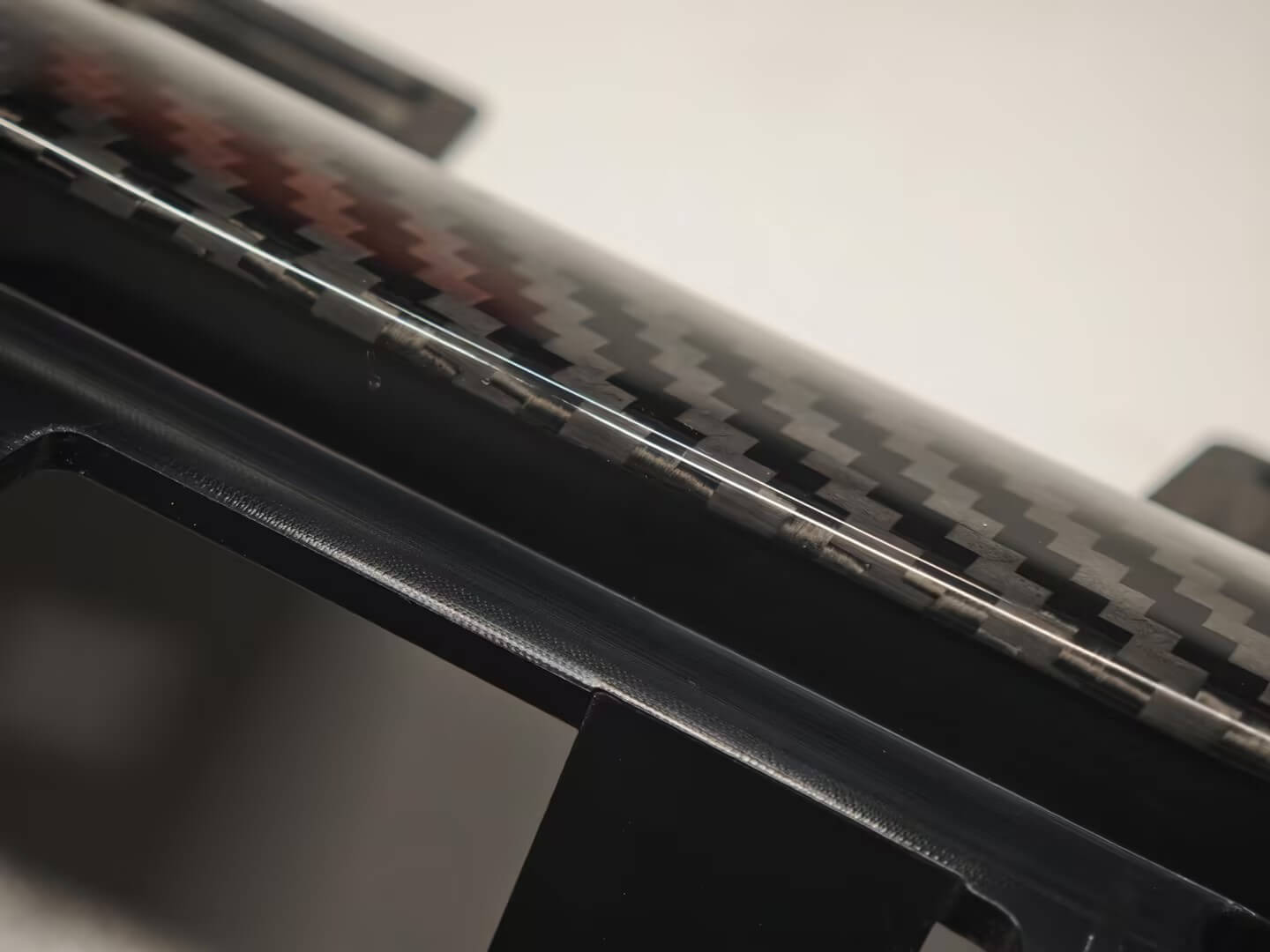
Every layer of a composite part represents a critical quality control point. At JCSPORTLINE, material control and lay-up consistency are ensured through standardized inspection procedures and process-driven verification, rather than assumptions or unchecked automation.
Our material and lay-up control framework includes:
- Fiber Source Verification:
Qualified prepreg carbon fiber materials sourced from approved suppliers, such as Torayca, verified through incoming quality inspection (IQC).- Resin System Validation:
Resin systems are selected according to project requirements and validated through internal testing and customer-specified standards, ensuring stability and long-term performance.- Controlled Storage & Handling:
Prepreg materials are stored and managed under controlled temperature conditions, with storage records maintained to ensure material consistency prior to lay-up.- Lay-up SOP & Process Control:
Ply orientation, stacking sequence, and trimming locations follow defined SOPs established by the R&D team, with in-process quality control (IPQC) monitoring critical steps during production.- First Article & Batch Validation:
First samples and mass-production parts are compared and validated through dimensional inspection, performance testing, and customer-approved standards before full-scale production.
JCSPORTLINE Quality-Control Innovation:
Instead of relying on marketing-driven tracking concepts, JCSPORTLINE ensures delivery accuracy and material consistency through an AI-assisted quality management system integrated with ISO-certified SOPs.
From incoming raw material inspection (IQC) to in-process control (IPQC) and final quality control (FQC), our system continuously monitors key process parameters, compares pilot samples with mass-production parts, and flags deviations before they impact delivery schedules or part performance.
This data-driven approach allows us to maintain stable lead times, consistent lay-up quality, and reliable batch-to-batch performance—supporting precise project execution without compromising quality or delivery commitments.
What Proves a Carbon Fiber Factory Has Real B2B Capability
A real B2B-capable carbon fiber factory should be able to do more than produce simple parts. It should have the systems, equipment, engineering team, and project experience to support both prototype development and mass production.
In-House Engineering and R&D Capability
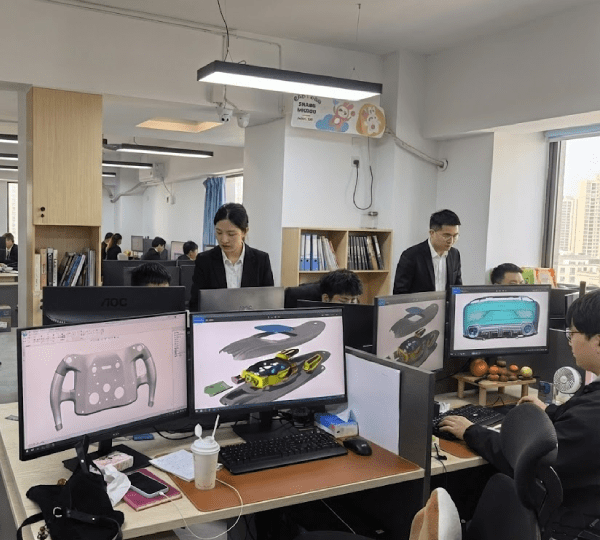
In-house engineering capability is one of the most important signs of a reliable supplier. Many buyers come to a manufacturer with only a concept, reference image, old sample, sketch, or rough performance requirement. Without engineering support, the project may stay at the level of imitation or simple processing.
A stronger manufacturer can support concept review, structure development, material selection, 3D scanning, reverse engineering, CAD design, DFM review, and process planning. This allows the buyer to confirm whether the product is manufacturable before investing in molds and production.
3D Scanning, Reverse Engineering, and CAD Development
For automotive and custom industrial parts, fitment accuracy is critical. A supplier that can provide 3D scanning and reverse engineering can convert existing parts, vehicle surfaces, or reference samples into usable digital data.
This is especially valuable for custom carbon fiber parts manufacturer projects where the buyer does not have original CAD data. Accurate 3D data helps reduce repeated sample shipping, installation corrections, and mold rework.
Mold Development and Tooling Control
Mold quality has a direct impact on final part fitment, surface consistency, and production repeatability. A reliable carbon fiber manufacturer should either develop molds in-house or have strong control over tooling quality.
For custom carbon fiber parts, mold development should consider product geometry, demolding direction, surface finish requirements, tolerance control, bonding areas, trimming position, and mass production repeatability.
Multi-Process Manufacturing Capability
A capable carbon fiber manufacturer with OEM and ODM service should not rely on only one process. Different products require different process routes.
Prepreg dry carbon is often used for premium lightweight components that require strong stiffness-to-weight performance and high surface quality. Vacuum infusion can be suitable for larger composite parts or projects that require a balance between cost and performance. Compression molding is useful for repeatable production and certain structural components. Forged carbon fiber can support premium appearance and complex small parts. Carbon fiber weaving or material know-how also helps when custom textures, visible carbon surfaces, or material optimization are required.
A supplier with wider process coverage can recommend the most suitable route based on budget, timeline, appearance standard, strength requirements, and production volume.
Case: From Idea to a New Carbon Fiber Product Line
A practical B2B example involves a Los Angeles-based performance car modification shop founded in 2018. The founder, Mike, focused on high-end performance cars such as BMW M series and Porsche 911. In the early stage, the shop struggled with unstable supplier quality, long lead times, poor product fitment, installation difficulty, surface defects, and inconsistent batches.
These problems increased customer complaints, damaged brand reputation, and caused some high-end customers to leave. In 2023, Mike began looking for a reliable strategic carbon fiber parts partner. His goal was to transform the business from an ordinary modification service provider into a high-end performance tuning brand.
How JCSPORTLINE Supported the Project
JCSPORTLINE supported the customer with high-quality dry carbon fiber products for selected premium automotive applications. The product range included front lips, side skirts, rear diffusers, hoods, wings, and other carbon fiber body kit components for popular performance vehicles such as BMW G80/G82 M3 and Porsche 992.
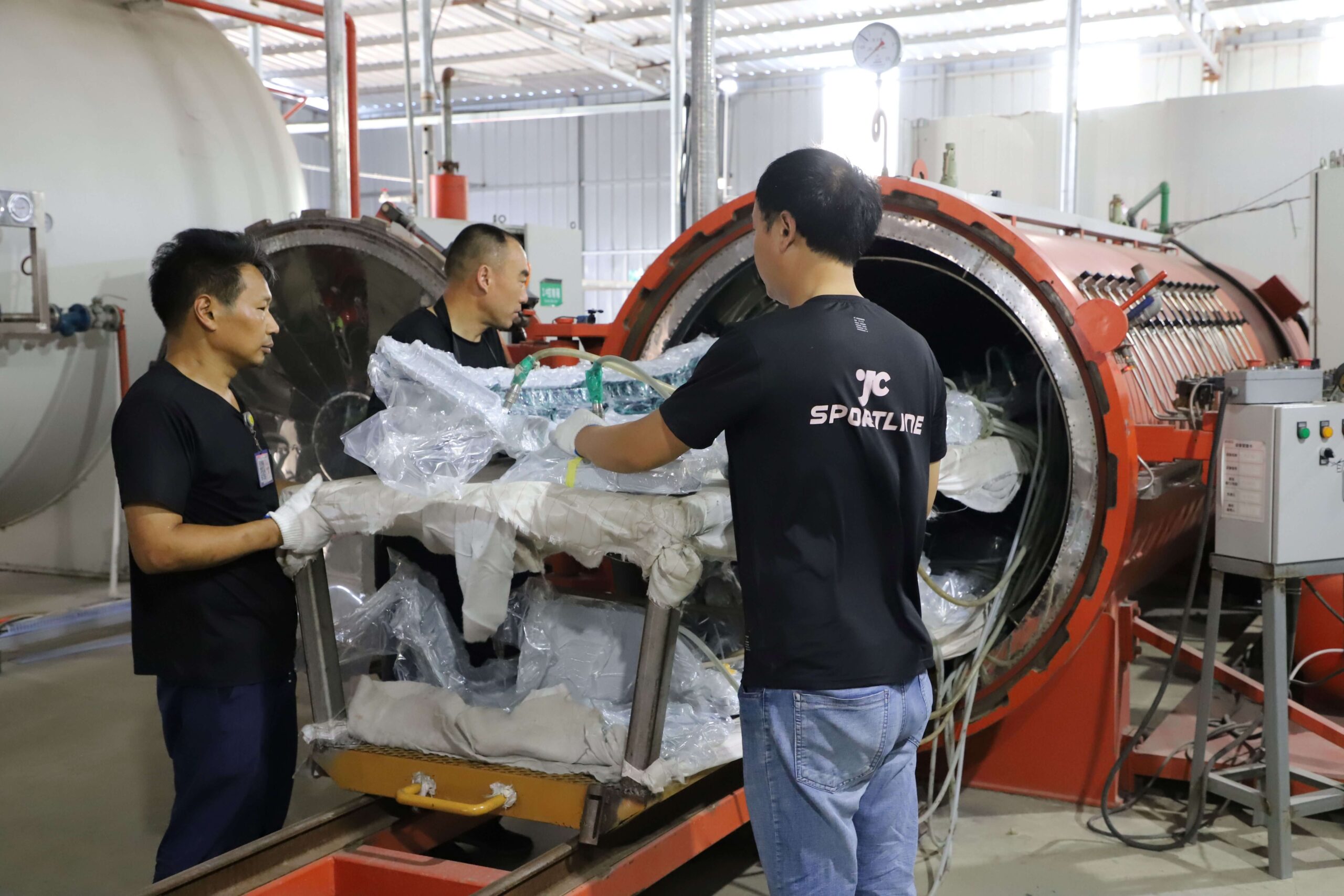
For selected parts, the project used prepreg and autoclave curing to improve product consistency, lightweight performance, and visible carbon quality. Surface finishing was controlled for both high-gloss and matte products so that the final parts matched the customer’s premium brand positioning.
The project also included custom development and exclusive design support. JCSPORTLINE helped develop signature carbon fiber aerodynamic kits, including custom rear diffusers and wings designed around the customer’s brand style. 3D scanning, prototype validation, and batch delivery support helped the customer move from idea to product line more efficiently.
To protect the customer’s exclusive designs, NDA support was provided. Beyond manufacturing, the project also included product rendering, professional photo materials, social media copywriting, and online and offline modification display activities.
Project-Specific Results
After cooperation, the customer’s carbon fiber kit-related orders increased significantly, the share of high-end custom projects improved, fitment satisfaction became stronger, and return-related pressure decreased. The customer also developed a “Signature Carbon Series” product line and moved from a local modification shop toward a more influential premium performance brand.
These results should be understood as project-specific outcomes, not universal guarantees for every customer. Actual results depend on product strategy, market positioning, sales execution, customer base, supplier cooperation, and long-term brand management.
If you are interested in automotive components, please browse our automotive carbon fiber applications and BMW-related product categories.
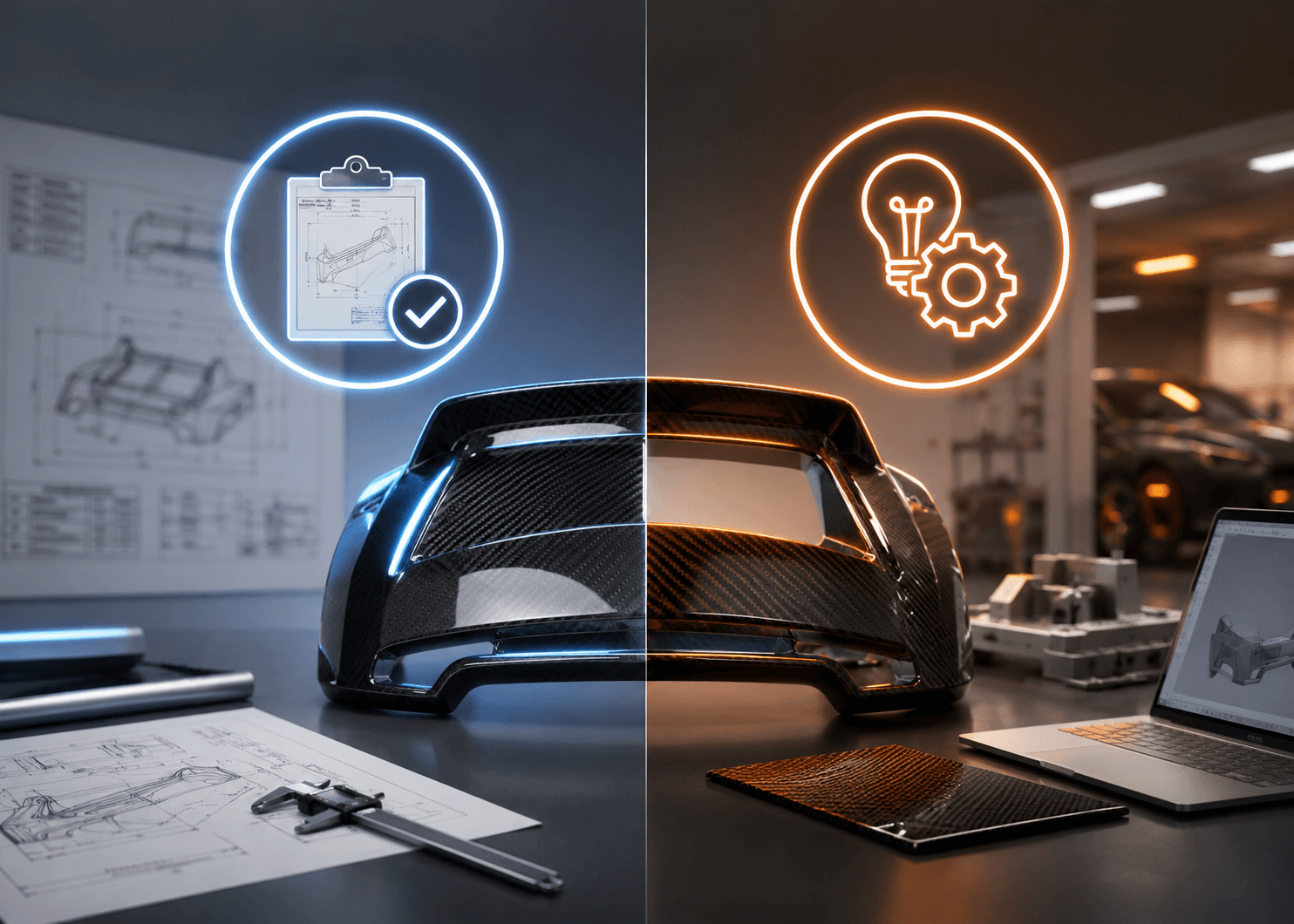
Engineering Support vs. Build-to-Print—Who Adds Value?
Many factories operate as “CAD-to-CAVE” shops, blindly reproducing designs that may contain hidden inefficiencies. True partners like JCSPORTLINE offer:
Another Case Study:
A racing gear manufacturer sought a 12% weight reduction for a diffuser rib. While competitors quoted 14% cost increases, we:
- Redesigned using topology optimization to save 12% weight
- DFMA analysis identified 8% material cost savings
- NVH simulation ensured noise levels met F1 regulations
Scalability, Consistency & Risk Control—From 10 Units to 10k
Production Phases:
- Pilot Cell: 5-axis machining for prototypes
- Autoclave Batches: ±0.1% tolerance control via real-time pressure/temperature mapping
- Compression Mold Lines: Mass production at Cpk >1.67, void content <1%
Risk Mitigation:
- Dual-factory redundancy in China/EU
- Global shipping supported through multiple logistics and warehousing locations.
- AI-driven yield analytics predicts quality issues 72 hours before they occur
7 Red Flags That Kill Projects (Checklist)
- No Material Certs: Ask for third-party test reports
- Single Autoclave: Reduces production flexibility
- No NDT Map: Non-destructive testing should cover 100% of critical parts
- Ghost Shift Photos: Reject suppliers using stock images for “production lines”
- MOQ > Annual Forecast: Traps you in inventory risks
- Expiring NDAs: Legal loopholes for IP theft
- Alibaba-Only Address: No physical factory verification
What a Long-Term B2B Partner Looks Like
A strategic partner should evolve with your business:
- 3-Year Roadmap:
Year 1: Joint cost-down targets
Year 2: Co-developed patents
Year 3: ESG score integration - Dedicated Program Office: Your single point of contact for engineering, compliance, and logistics
Conclusion: Choose Capability, Not Only Price
For B2B custom projects, choosing a carbon fiber manufacturer is a strategic decision. The cheapest supplier may reduce the first quotation, but it may also increase long-term risk through poor fitment, unstable quality, late delivery, weak communication, and inconsistent batches.
A reliable carbon fiber manufacturer should act as a complete product development partner. It should support concept review, engineering design, 3D scanning, mold development, prototype validation, process selection, mass production, QC, branding support, and long-term supply.
If you are looking for a custom carbon fiber parts manufacturer that can support prototype development and mass production, contact a professional carbon fiber company to discuss your project requirements, timeline, quality expectations, and long-term supply plan.
FAQ – Quick Answers for Procurement & Engineering Teams
Q1: What does a custom carbon fiber manufacturer actually do?
We translate your material specs (fibers, resins, geometries) into repeatable production processes, including:
- Tooling design/maintenance
- Lay-up/autoclave curing
- Full PPAP documentation
Q2: How do I evaluate a factory’s engineering capability?
Request:
- Live DFMA walk-through
- FEA report samples
- References from clients with similar annual volumes
Q3: Can custom parts scale to mass production?
Yes—if the vendor has:
- Multi-process cells (autoclave/RTM/compression)
- Cpk consistency tracked from pilot to SOP
Q4: What certifications matter?
- ISO 9001 for quality
- IATF 16949 for automotive
- AS9100 for aerospace
- ISO 14001 for ESG compliance
Q5: Is JC SPORTLINE a trading company or a manufacturer?
JC SPORTLINE is an engineering-driven carbon fiber and composite manufacturer founded in 2002. It operates specialized facilities covering R&D, 3D scanning, mold development, prepreg dry carbon, vacuum infusion, compression molding, forged carbon, and carbon fiber weaving.
Q6: What are the core advantages of JC SPORTLINE?
The core advantages include composite engineering, multi-process manufacturing, in-house R&D, mold development, fitment control, carbon fiber material know-how, global project support, and experience turning concepts into production-ready products for B2B clients.
Q7: Which industries can JC SPORTLINE support?
JC SPORTLINE supports carbon fiber and composite projects for automotive, motorsport, marine, sports equipment, medical devices, aerospace and drone structures, consumer electronics, home and lifestyle products, and other custom composite applications.