
Understanding the full carbon fiber part cost breakdown helps buyers evaluate supplier quotes more accurately and plan budgets more effectively. This guide explains how carbon fiber material price, manufacturing labor, tooling investment, and factory operations contribute to the final cost of composite parts.
But there is one number no quote ever shows you: the cost of the parts that never get delivered. Across the procurement teams, OEM program managers, sourcing managers, and online resellers we work with, the most expensive supplier is rarely the one with the highest quote — it is the one whose low quote collapses into late shipments, failed batches, and capacity it cannot hold. The lowest quoted price and the lowest total cost are almost never the same number, and the rest of this breakdown is written to help you tell them apart.
Understanding the True Cost Structure of Carbon Fiber Parts
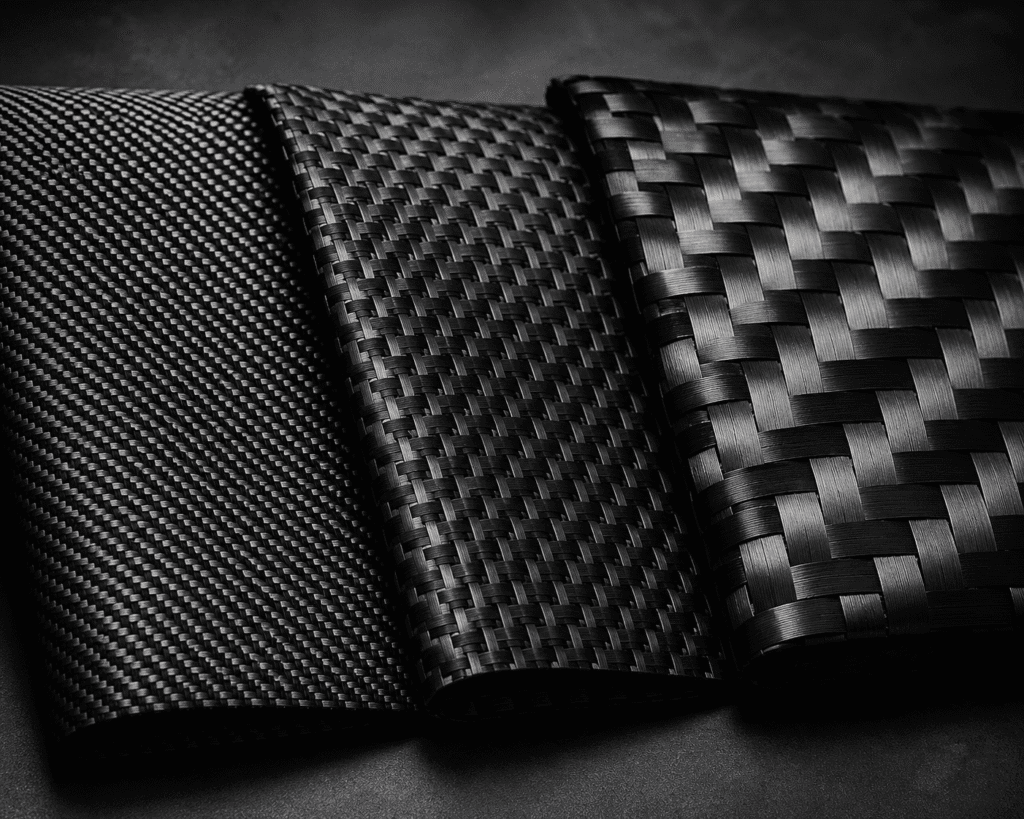
To understand carbon fiber cost, it is important to recognize that carbon fiber components differ fundamentally from traditional manufactured products. Metal parts are typically produced using highly automated stamping or machining. In contrast, composite components are manufactured through a labor-intensive carbon fiber production process that combines advanced materials with manual craftsmanship.
For this reason, carbon fiber parts should be treated as service-intensive engineered products, not commodity materials — which is exactly why comparing them on unit price alone misleads buyers.
Typical Carbon Fiber Part Cost Breakdown
In most professional composite facilities, the carbon fiber part cost breakdown follows a balanced distribution between materials and labor.
| Cost Category | Technical Details | % of Quote |
| Primary Materials | Toray 3K / 12K prepreg + Kevlar reinforcement | 39.0% |
| Process Consumables | Autoclave bagging materials, release film, peel ply | 4.5% |
| Lamination Labor | Clean-room layup, fiber orientation, debulking | 16.5% |
| Surface Performance Engineering | Manual leveling, sanding, polishing, UV clear coating | 28.0% |
| Thermal Processing | Autoclave energy cycles and curing management | 5.0% |
| QC & NDT Inspection | Dimensional inspection and structural verification | 3.0% |
| Packaging & Logistics | Protective packaging and export handling | 4.0% |
| Factory Gross Profit | Manufacturing margin and operational sustainability | 12.0% |
| TOTAL | — | 100% |
This distribution simplifies into three primary categories:
- Material Cost: ~43.5%
- Labor Cost: ~44.5%
- Factory Overhead & Margin: ~12%
The near 1:1 ratio between material and labor is the defining feature of high-quality composite manufacturing. Many buyers assume most of the carbon fiber cost comes from expensive raw material; in reality nearly half is generated by the carbon fiber production process itself — skilled labor and surface finishing. A quote that undercuts the market on price is, by arithmetic, cutting one of these two halves — and that is where delivery and quality failures originate.
Material Cost Drivers in Carbon Fiber Manufacturing
Material selection plays a critical role in determining carbon fiber material price. High-performance parts commonly use prepreg carbon fiber materials with pre-impregnated resin systems for consistent fiber-to-resin ratios.
Key supply-chain cost factors: cold-chain storage (refrigerated transport and storage to prevent premature curing), limited shelf life (defined expiration windows force tight inventory control), and quality grades (aesthetic-grade fabrics with consistent weave cost significantly more than industrial grades). Because of these factors, carbon fiber material price varies greatly with performance and visual requirements.
Scrap Rate and the Nesting Factor
Carbon fiber is an anisotropic material — strength depends on fiber orientation, so fibers must align with load paths and fabrics cannot be cut in any direction. That nesting limitation creates unavoidable waste:
| Part Type | Typical Scrap Rate |
| Standard structural components | 8–10% |
| Complex geometry components | up to 12% |
Material consumption therefore exceeds final part weight, and this scrap factor belongs in any honest carbon fiber part cost breakdown.
Hybrid Layering and Cost Optimization (DFM)
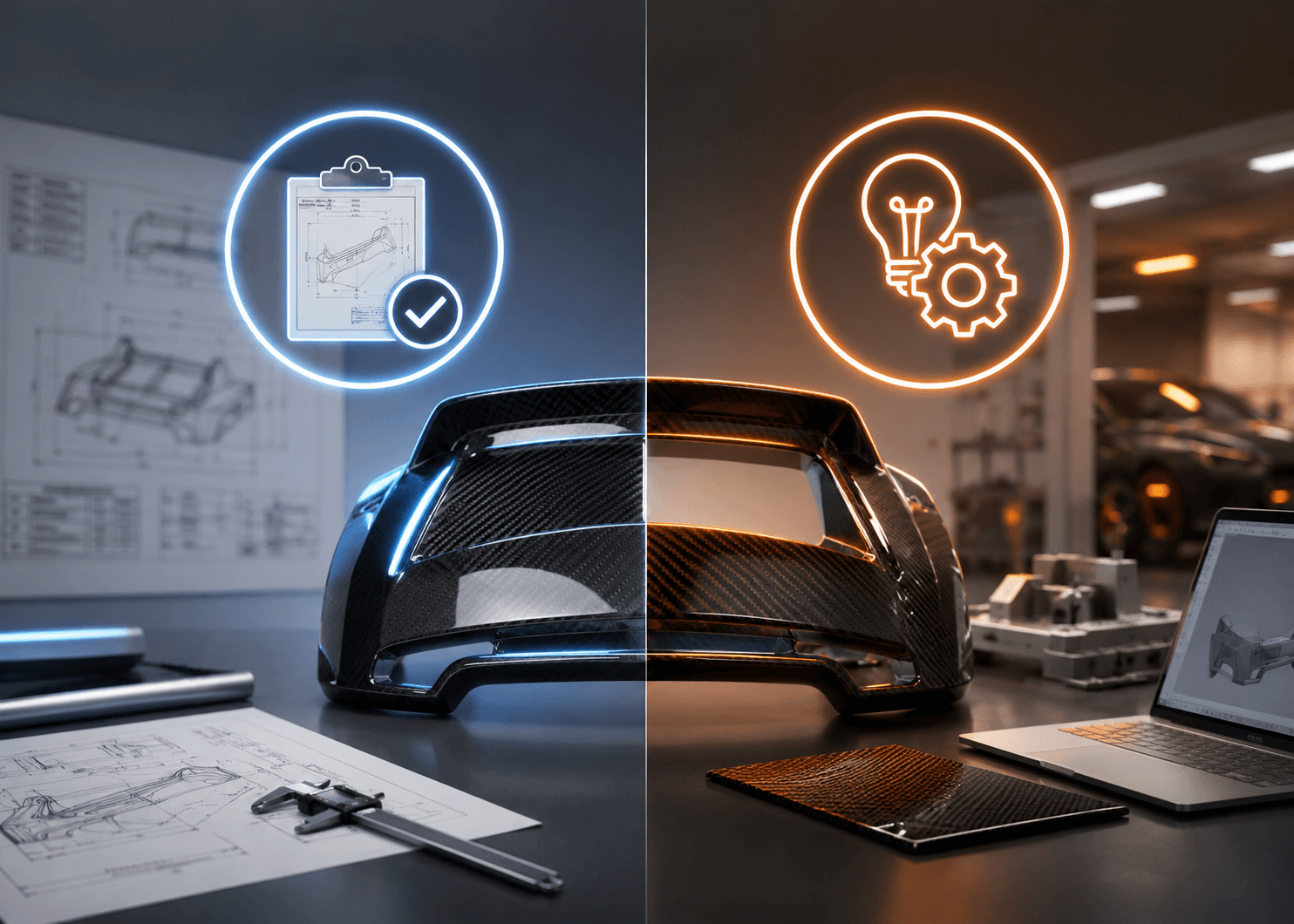
One of the most effective ways to control carbon fiber cost is hybrid composite layering. In many parts only the outer surface must show the carbon weave; internal structural layers can use different materials without affecting appearance — 3K on the visible layer, 12K for reinforcement, glass fiber or Kevlar for internal support. This is developed during Design for Manufacturing (DFM) collaboration, and it is where real material savings come from — not from buying cheaper fiber, but from spending it only where it does structural work.
This is not theoretical. An e-commerce seller came to us after sourcing a rear spoiler from a supplier quoting around 15% below market — a price that looked unbeatable until almost none of the parts could actually be delivered, leaving the seller shipping only a fraction of what they had already sold. We rebuilt the economics from the laminate up: holding exterior appearance and function fixed, our engineers re-optimized the stacking sequence to cut raw-material consumption, re-engineered the process so a single mold could turn out eight parts per day, and added mold capacity to match real demand. The outcome was 99% on-time delivery, a 99% quality pass rate, and doubled sales — recovered from a project the cheapest quote had nearly killed.
Tooling Investment and Production Volume Economics
Tooling is a major capital line in carbon fiber manufacturing plant cost. Molds must withstand curing temperature and pressure while holding dimensional accuracy. Automated fiber placement or compression molding lowers labor per part but demands very expensive tooling — a single automated mold can exceed $150,000, viable only at very high volume. Manual autoclave manufacturing carries lower tooling investment and greater flexibility, fitting low-to-medium volumes well.
A development client in Poland was carrying tooling cost the hard way — machining molds in-house at high cost and long cycle times, so new designs reached the market too slowly to earn back their investment before the trend passed. We compressed the entire path from design to delivered sample into a 58-day workflow, paired it with a production schedule and PLM tracking so they could plan annual sales around firm dates, and moved them to a more cost-efficient tooling route. Their landed cost — part price plus international freight — came in well below the cost of building in-house, and annual order volume grew from 10 to 50 units.
Mold Types and Lifecycle Economics
| Mold Type | Typical Lifespan | Typical Application |
| FRP molds | 20–50 cycles | Prototype development |
| Epoxy / carbon molds | 100–300 cycles | Low-volume production |
| Steel or aluminum molds | 1000+ cycles | Mass production |
Matching mold type to part geometry and volume is what controls tooling cost and ROI — and the right tool is rarely the most expensive one.
For a North American front-lip program, the client was quoted steel tooling so costly it was starving the rest of their development budget. We proposed a carbon-fiber mold instead — lower tooling outlay, freeing cash for engineering and marketing — engineered to the identical mounting positions as the steel tool. By comparing 3D scan data across production stages, we held that fitment consistent across a large front lip / splitter production run, proving a cheaper tool does not have to mean a looser part.
Why Carbon Fiber Parts Are Expensive: Labor and Surface Engineering
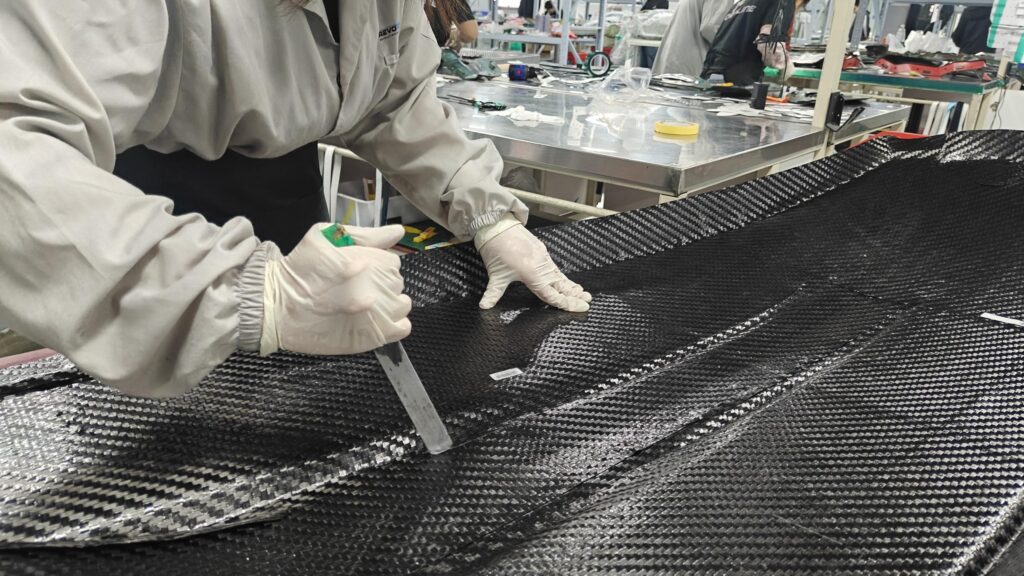
Beyond materials and tooling, the largest hidden contributor to carbon fiber cost is manual labor and finishing.
Precision Lamination and Clean-Room Layup
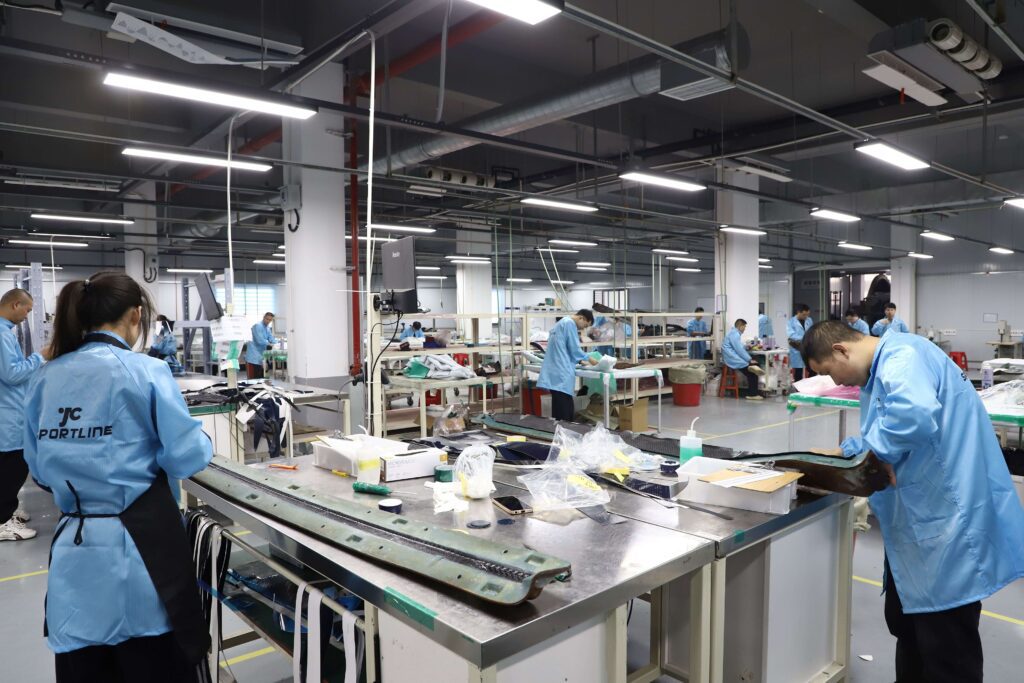
Lamination is one of the most demanding stages: fiber orientation alignment, layer stacking to structural design, debulking, and vacuum-bag preparation, performed in a controlled environment. It accounts for roughly 16.5% of the total carbon fiber part cost breakdown.
Surface Performance Engineering and Mirror Finishing
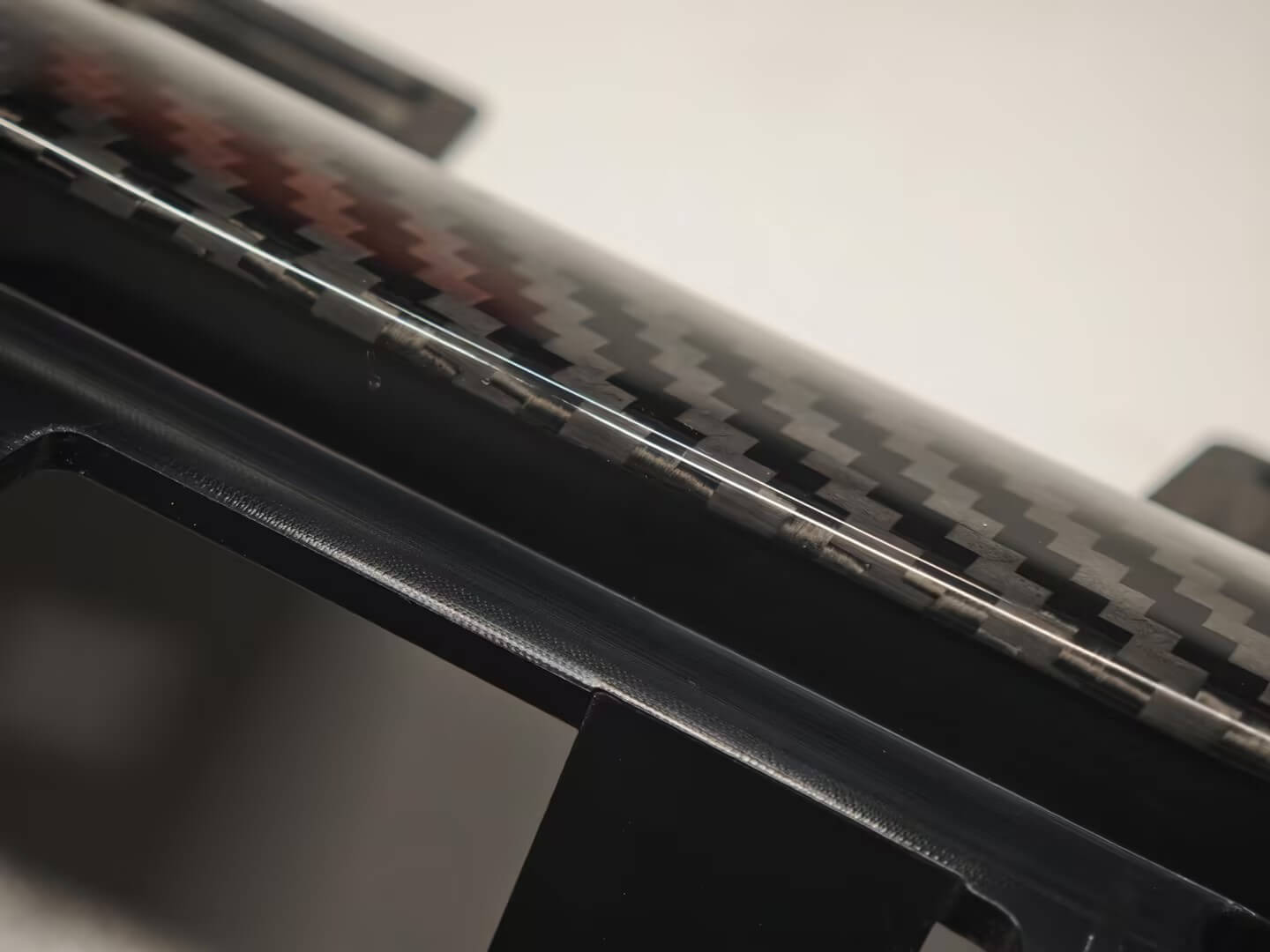
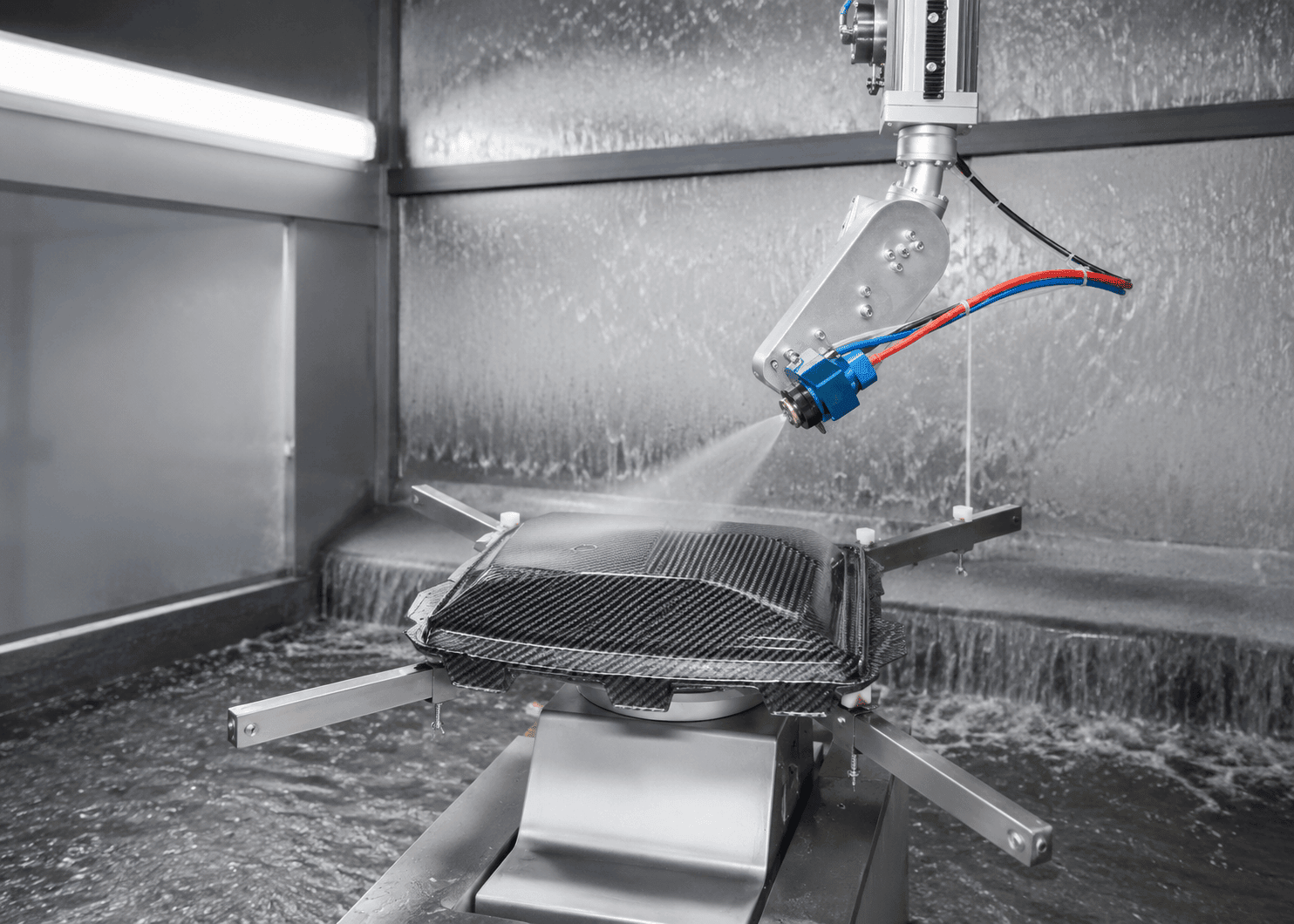
For visible parts, the largest labor investment often comes after the part leaves the mold: surface leveling, progressive sanding, polishing, multi-layer UV clear coating, and final mirror polishing. This surface engineering can reach 28% of total carbon fiber cost. Industrial structural parts may skip it; visible products (automotive exterior, sporting, marine, consumer) cannot.
Process Selection and Manufacturing Path Optimization
Manufacturing method directly shapes carbon fiber manufacturing plant cost:
| Manufacturing Process | Cost Level | Typical Applications |
| Autoclave curing | High | Aerospace and high-performance components |
| Compression molding | Medium | High-volume industrial products |
| Vacuum infusion | Lower | Large composite structures |
The strategic insight most suppliers miss: process is not one choice for the whole catalog — it is a lever you set per product, against volume and price position. A Tesla-focused trader showed us the other side of the cost equation: demand outran capacity, stockouts were constant, and their store account performance suffered for it.
Instead of forcing every part down one route, we ran a feasibility analysis and split production across three processes by purpose — autoclave prepreg for their branded high-end custom line, compression molding for high-volume best-sellers, and vacuum-infusion wet carbon to hold price-competitive market share. The point was stable, predictable supply across every price tier so they could focus on selling, not firefighting — and rear-wing output climbed from 1,000 to 5,000 pieces a month, with new Tesla parts developed on top.
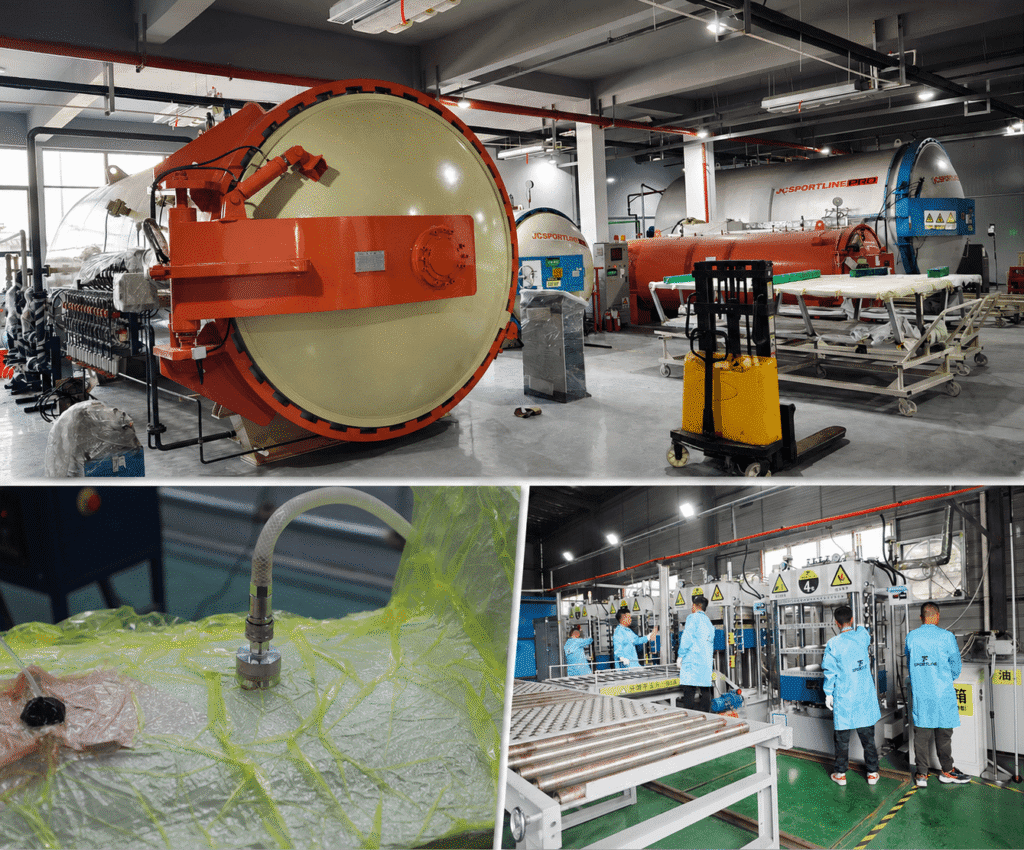
Through proper Design for Manufacturing (DFM), engineers also simplify geometry — larger corner radii, simpler curvature — to cut finishing labor and overall cost.
Unit Price vs Total Landed Cost: A Buyer’s Blind Spot
Everything above points to one conclusion: a quote is only the visible tip of your real cost. Total landed cost includes freight, scrap, rework, late-delivery penalties, lost sales from stockouts, and the management time spent chasing an unreliable supplier — none of which appear on a price list.
Dropshippers and online resellers feel this most, because sorting suppliers by sticker price alone is most tempting where per-order margin is visible. One dropshipping client was doing exactly that — chasing the lowest unit price while ignoring whether parts would arrive on time and on spec. We restructured the relationship around reliability and total cost instead: a modest prepaid balance that doubles as working capital, access to a synced cloud product library for fast listing and fulfillment, and pricing positioned meaningfully below the major online marketplaces — enough to protect a healthy reseller margin while delivery reliability protected their store metrics.
For buyers who want to verify a supplier before committing, the discipline is the same one running through every case above: judge delivery and quality consistency, not just price. That is what separates a cheap quote from a low total cost.
FAQ – Carbon Fiber Cost Questions from OEM Buyers
What factors drive carbon fiber part cost the most?
The biggest drivers are carbon fiber material price and prepreg grade, scrap rate during cutting, manual lamination labor, surface finishing, and tooling investment relative to volume. Material price and finishing labor are usually the two largest contributors.
Why is carbon fiber tooling expensive for small production runs?
Composite molds must survive curing heat and pressure while holding precise surface quality, so even small programs need carefully engineered tooling. To lower the initial carbon fiber manufacturing plant cost, many manufacturers use FRP or epoxy/carbon molds for small batches.
What is typically included in a carbon fiber OEM quote?
Prepreg materials plus scrap factor, vacuum-bagging consumables, lamination labor, curing cycles and energy, finishing and coating, and inspection and packaging. Seeing these line items lets you evaluate quotes on a real carbon fiber part cost breakdown rather than a single price.
Can you help with logo and private-label branding?
Yes. We support several branding methods — surface decals, under-clear-coat logos, engraving, mold marking, labels, and custom packaging. The best option depends on finish requirements, durability, MOQ, and production process.
How can I get a product catalog and pricing?
Contact us via our website, email, WhatsApp, or sales team. Please share vehicle model, product type, quantity, material preference, finish, shipping country, and whether you need standard products or custom development.
How are custom project costs calculated?
Custom cost depends on product size, structure, material, process, mold type, engineering time, sample validation, surface finish, MOQ, and production volume. We provide a project-based quotation after reviewing your drawings, sample, or requirements.
Do you offer bulk order discounts?
Yes. Bulk pricing depends on product type, order quantity, customization level, annual purchasing plan, mold ownership, and cooperation model. Larger, more stable orders generally allow more competitive pricing.
What payment methods do you accept?
Common international methods such as T/T bank transfer, PayPal, Alibaba Trade Assurance, and other agreed methods depending on order size, country, and cooperation model.
What are your standard payment terms?
For most production orders, 30% deposit before production and balance before shipment. For new custom mold projects, mold and sample-related costs are usually paid before tooling or sample development begins.