Empowering Your Project Success

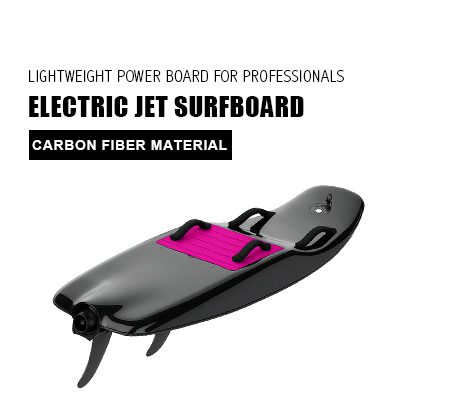
Electric Jet Surfboard – Lightweight Carbon Fiber Power Board for Professionals

Leave your contact information, and our consultant will get in touch within 24 hours.

Electric Jet Surfboard – Lightweight Carbon Fiber Power Board for Professionals

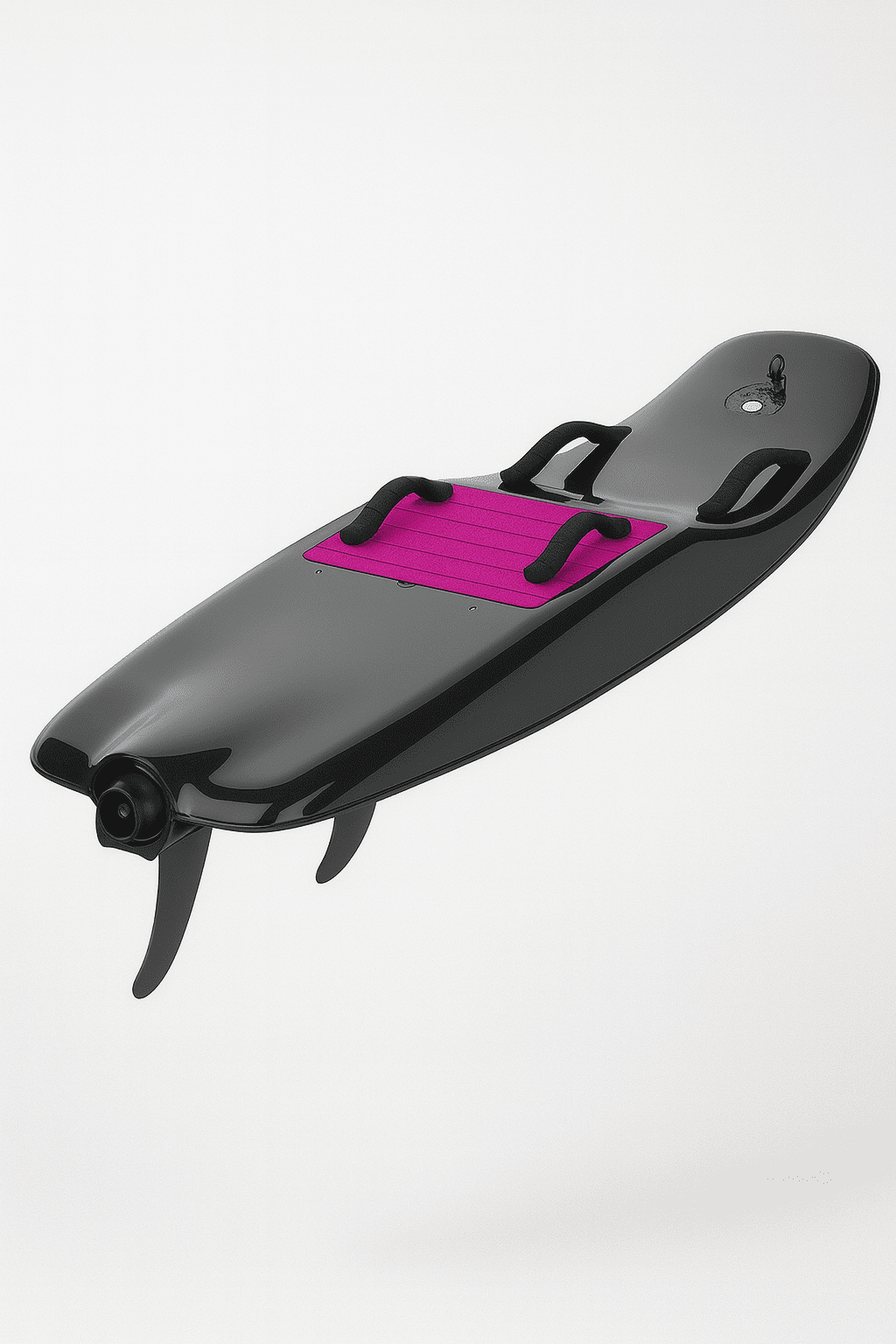
Experience the pure adrenaline of jet-powered surfing with our Electric Jet Surfboard. Designed for professionals and enthusiasts who demand precision, speed, and stability, this lightweight carbon fiber power board delivers next-level performance with aerospace-grade composites and CFD-guided hydrodynamics. Built for speed, control, and endurance — it’s the ultimate evolution of electric water mobility.

Key Features

  • Carbon Fiber Monocoque Construction – One-piece compression molding provides superior stiffness, seamless design, and long-term durability.
  • Jet Propulsion Power Unit – Integrated high-thrust electric jet system for rapid acceleration and smooth control at speeds up to 55 km/h.
  • Lightweight & Balanced – Optimized “Carbon + Core” sandwich structure keeps total weight around 9 kg for effortless handling.
  • CFD-Optimized Hull – Streamlined V-shape geometry ensures low drag, precise cornering, and high stability at top speed.
  • Battery Management System (BMS) – Smart lithium module with overcharge and thermal protection for safe, consistent performance.
  • Surface Finish Options – Gloss, matte, forged carbon, or custom-colored weave finishes available for brand customization.

Customer Problems We Solve

  • Excessive Weight & Poor Agility – Conventional boards exceed 15 kg. Our fix: 9 kg carbon composite frame with optimized stiffness-to-weight ratio.
  • Overheating & Short Runtime – Low-quality motors and batteries reduce session length. Our fix: high-efficiency cooling channels and advanced lithium packs extend runtime by 30%.
  • Unstable Handling at Speed – Inconsistent hull geometry causes wobbling. Our fix: CFD-tuned V-concave hull for controlled lift and stable turns.
  • Weak Joints & Water Ingress – Hand-layup boards leak along seams. Our fix: one-piece compression molding eliminates joints and seals out moisture.
  • Corrosion & Hardware Fatigue – Marine exposure leads to rust. Our fix: 316L stainless hardware and sealed insert reinforcement ensure durability.

Why Choose Carbon Fiber Jet Technology?

  • Extreme Power-to-Weight Efficiency – Delivers higher thrust with less drag for exceptional speed.
  • Superior Durability – Carbon fiber resists fatigue, impacts, and saltwater corrosion better than fiberglass or ABS.
  • Professional Ride Feel – Rigid deck provides instant power response and balanced maneuverability.
  • Premium Aesthetics – Exposed carbon weave finish showcases high-end craftsmanship and modern design.

Applications

  • Professional and advanced riders seeking competitive performance.
  • Luxury resorts and rental centers offering jet-powered surf experiences.
  • OEM and private-label clients developing custom electric surfboard lines.
  • Marine sports enthusiasts who demand cutting-edge propulsion and design.

Frequently Asked Questions (FAQ)

Q1: What’s the maximum speed and runtime?
A1: Up to 55 km/h top speed with a ride time of 60–80 minutes, depending on rider weight and mode.

Q2: Is the propulsion system waterproof?
A2: Yes, the jet unit and motor housing are IP68-sealed for full submersion protection.

Q3: Can I customize the surfboard design?
A3: We support OEM/ODM customization for shape, finish, logo, and hydrodynamic configuration.

Q4: What maintenance does it require?
A4: Minimal—simply rinse with fresh water after use; all electrical and mechanical components are sealed for marine use.

Q5: Do you offer engineering support for new jet models?
A5: Yes. Our R&D team assists with 3D CAD design, jet integration, and performance simulation to tailor your custom board.

Power meets precision—crafted by JCSPORTLINE, where professionals turn ideas into carbon reality.

Design Phase: From Hydrodynamics to Structural Optimization

  • SolidWorks / CATIA with CFD hydrodynamic simulation for complete structural design.
  • Optimized waterline, tail rocker, and channel layout for lower drag and higher agility.
  • V-shape or dual-concave bottom with leading-edge radius control for stability in choppy water.
  • Integrated inserts & routing during design to minimize post-processing risk and leakage points.
  • AI-based load & CG simulation ensures stability at speed across multiple sea conditions.

Lightweight Structure: Achieving the 8 KG Balance

  • Sandwich Construction: “Carbon Fiber + Core” for strength-to-weight efficiency.
  • Carbon Layers: 2×2 twill outer (impact) + unidirectional inner (longitudinal) with ±45° lay-up for torsional rigidity.
  • Core Material: PU or PMI foam (60–120 kg/m³); PU offers PMI-like mechanics at lower cost.
  • Localized Reinforcement: Tail, stance zone, and fin base per use case (racing/rental/recreation).

Weight Performance: Mainstream target ≈ 8 kg, tuned per strength standard while maintaining buoyancy and stability.

Mold Manufacturing: Precision from Surface to Structure

  • P20 mold steel with Ra ≤ 0.8 μm mirror finish.
  • 5-axis CNC machining for ±0.1 mm tolerance.
  • Split mold + precision locating pins for exact alignment.
  • Teflon release layer prevents fiber print-through and surface damage during demolding.
  • One-piece compression molding eliminates visible seams; continuous carbon weave increases strength by ~35%.

Prototyping and Performance Validation

  • Thermal Curing: 120 °C autoclave for 4h or 150 °C press-molding for 1.5h.
  • Mechanical Testing: Flexural ≥300 MPa; Tensile ≥80 MPa; Core shear ≥15 MPa.
  • Dynamic Testing: Water-tank tuning places the CG at ~1/3 board length for optimal control.
  • 3D Scan Verification: CAD vs. prototype deviation ≤0.5 mm for repeatable precision.

Appearance and Coating

  • Seamless one-piece surface with continuous carbon weave.
  • Finishes: Gloss / Matte / Semi-transparent Carbon / Custom Logo.
  • Large water-decal capability (>1 m) for branding.
  • All finishes pass thermal cycling and salt-spray tests—no peeling, blistering, or warping.

Waterproofing and Anti-Corrosion Design

  • Marine-grade stainless steel 316L inserts and hardware.
  • 24-hour salt-spray pre-treatment; service life ≥ 3 years in marine conditions.
  • Glass-fiber wrap + ABS reinforcement around insert zones to resist fatigue.

Mass Production and Quality Control

  • Automated prepreg cutting, accuracy ±0.2 mm.
  • PU core one-shot molding for uniform density.
  • 150 °C / 90 min compression molding with closed-loop temperature monitoring.
  • Ultrasonic (UT) + industrial CT; internal defect rate ≤0.5%.
  • Modular assembly design; efficiency +60%.
  • Custom PE film + foam crate; transport vibration ≤2g.

Environmental and Sustainable Manufacturing

  • ≥90% carbon fiber recycling via fiber carbonization.
  • Solar-powered curing reduces unit energy by ~30%.
  • Low-VOC resin systems to minimize emissions.

Key Technical Challenges and Solutions

Technical Challenge JCSportline Solution
Interlaminar Delamination Glass-fiber transition layers to increase interfacial bonding strength.
Mold Deformation P20 steel mold with constant-temperature control; lifespan ≥ 5000 cycles.
Batch Consistency Digital monitoring of curing pressure and temperature; automated adjustments.
Visible Seam Lines One-piece compression molding eliminates joint lines entirely.

Final Performance Summary

  • Weight: 8–15 kg, tunable via lay-up per strength target (mainstream target ≈ 8 kg).
  • Dynamic Load Capacity: ≥ 500 kg.
  • Surface Texture: Seamless carbon weave, natural flow without seam lines.
  • Waterproof Durability: ≥ 3 years in marine conditions.
  • Finish Quality: Mirror-like gloss or matte; no color deviation or bubbles.

Our Carbon Fiber Electric Surfboard achieves an optimal balance of innovation, performance, and durability.
With aerospace-grade materials, one-piece compression molding, and CFD-guided design, it delivers a precise, stable, and premium riding platform—
whether you are chasing performance or curating a dependable fleet for rental operations. Propulsion system is not included.

Sectors: automotive, aerospace/marine, sports, home, medical OEM/ODM available; build to drawings/samples

Yes. With 20 years of experience, we offer customization for color, style, and dimensions, and can build to customer drawings or samples (OEM/ODM).

Incoming material hardness/performance checks; Key processes: vacuum bagging, thermal curing, wet sanding & polishing; Paint hardness testing and final quality inspection (FQC) before shipment.

Depends on the product. For single components like spoilers, the typical MOQ is 5–10 pcs; final MOQ is negotiable by vehicle model and design.

Yes. We can apply customer logos, provide OEM packaging, and deliver tailor-made design solutions.

FBA direct fulfillment and global warehousing; Protective packaging for safe transport; Courier, air freight, or sea freight arranged per customer request.

We offer a return and exchange policy for quality issues.
Our technical support team is always available to answer any questions regarding installation, maintenance, and upkeep.
Business-to-business customers can enjoy long-term partnership discounts and regular product previews.

Start Your Personalized Customization Plan

Leave your contact information, and our consultant will get in touch within 24 hours.