
Understanding the True Cost Structure of Carbon Fiber Parts
To understand carbon fiber cost, it is important to recognize that carbon fiber components differ fundamentally from traditional manufactured products.
Metal parts are typically produced using highly automated stamping or machining processes. In contrast, composite components are manufactured through a labor-intensive carbon fiber production process that combines advanced materials with manual craftsmanship.
For this reason, carbon fiber parts should be considered service-intensive engineered products rather than commodity materials.
Typical Carbon Fiber Part Cost Breakdown
In most professional composite facilities, the carbon fiber part cost breakdown follows a balanced distribution between materials and labor.
| Cost Category | Technical Details | % of Total Quote |
|---|---|---|
| Primary Materials | Toray 3K / 12K prepreg + Kevlar reinforcement | 39.0% |
| Process Consumables | Autoclave bagging materials, release film, peel ply | 4.5% |
| Lamination Labor | Clean-room layup, fiber orientation alignment, debulking | 16.5% |
| Surface Performance Engineering | Manual leveling, sanding, polishing, UV clear coating | 28.0% |
| Thermal Processing | Autoclave energy cycles and curing management | 5.0% |
| QC & NDT Inspection | Dimensional inspection and structural verification | 3.0% |
| Packaging & Logistics | Protective packaging and export handling | 4.0% |
| Factory Gross Profit | Manufacturing margin and operational sustainability | 12.0% |
| TOTAL | — | 100% |
This cost distribution can also be simplified into three primary categories:
- Material Cost: ~43.5%
- Labor Cost: ~44.5%
- Factory Overhead & Margin: ~12%
The near 1:1 ratio between material cost and labor cost is a defining feature of high-quality composite manufacturing.
Many buyers assume the majority of carbon fiber cost comes from expensive raw materials. In reality, almost half of the total cost is generated by the carbon fiber production process itself, including skilled labor and surface finishing.
Understanding this structure helps procurement teams interpret quotes and evaluate the true carbon fiber manufacturing plant cost behind a finished component.
Material Cost Drivers in Carbon Fiber Manufacturing
Material selection plays a critical role in determining carbon fiber material price and overall manufacturing cost. Several key factors influence how raw carbon fiber translates into final component pricing.
Prepreg Materials and Supply Chain Factors
High-performance carbon fiber parts are commonly produced using prepreg carbon fiber materials. These materials contain pre-impregnated resin systems that ensure consistent fiber-to-resin ratios and predictable structural properties.
Commonly used prepregs include:
| Material Type | Typical Function |
|---|---|
| 3K Carbon Fiber | Aesthetic outer surface layers |
| 12K Carbon Fiber | Structural reinforcement layers |
| Kevlar Hybrid Layers | Impact and fatigue resistance |
Several supply chain factors influence carbon fiber material price:
Cold Chain Storage
Prepreg materials must be stored in refrigerated environments to prevent premature curing of the resin system. This requires specialized transportation and storage infrastructure.
Limited Shelf Life
Prepreg materials typically have a defined expiration window. Manufacturers must manage inventory carefully to avoid material waste.
Quality Grades
Carbon fiber fabrics used in aesthetic applications require extremely consistent weave patterns and surface quality. These premium grades are significantly more expensive than industrial-grade fabrics.
Because of these factors, carbon fiber material price can vary greatly depending on performance requirements and visual quality standards.
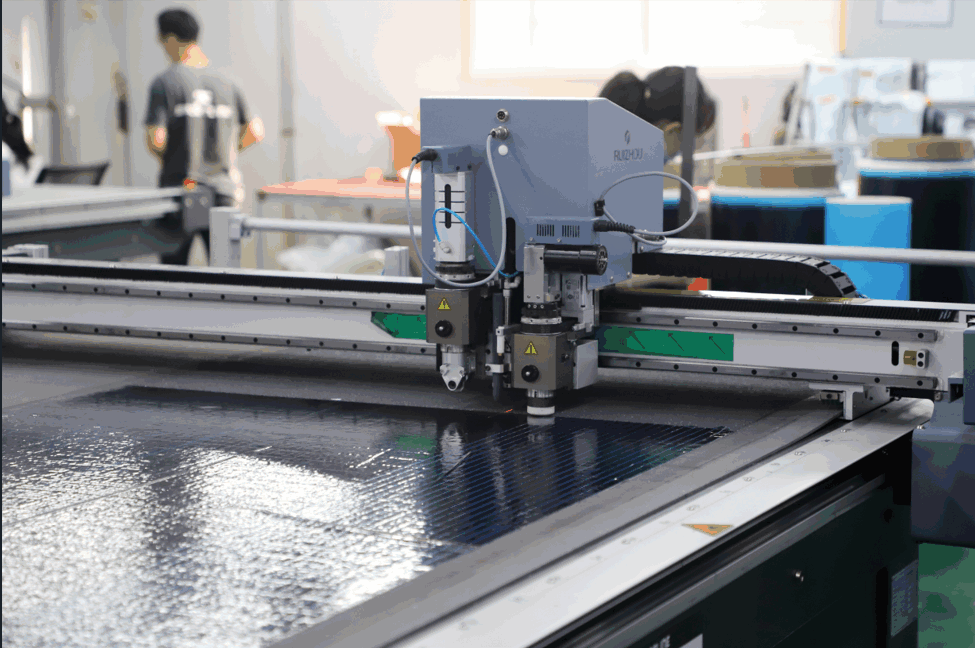
Scrap Rate and the Nesting Factor
Another factor influencing carbon fiber manufacturing plant cost is material waste during the cutting process.
Carbon fiber is an anisotropic material, meaning its mechanical strength depends on fiber orientation. To maintain structural integrity, fibers must align with the expected load paths of the component.
Unlike metal sheets, carbon fiber fabrics cannot simply be cut in any direction. This limitation affects cutting efficiency and creates unavoidable waste.
Typical scrap rates include:
| Part Type | Typical Scrap Rate |
|---|---|
| Standard structural components | 8–10% |
| Complex geometry components | up to 12% |
Because of this nesting limitation, material consumption often exceeds the final part weight. This scrap factor is included in most professional carbon fiber part cost breakdown calculations.
Understanding this logic helps buyers trust supplier calculations and better interpret material quantities within a bill of materials.
Hybrid Layering and Cost Optimization (DFM)
One of the most effective ways to control carbon fiber cost is through hybrid composite layering.
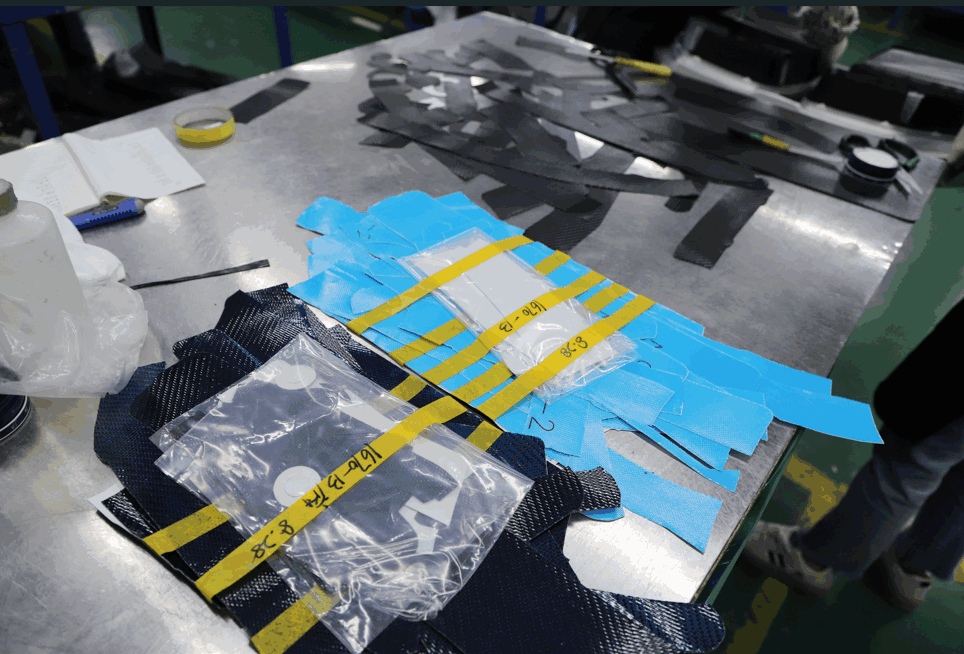
In many applications, only the outer surface must display the recognizable carbon fiber weave pattern. Internal structural layers can be optimized using different materials without affecting visual appearance.
Typical hybrid layup strategies include:
| Layer Function | Material |
|---|---|
| Visible outer layer | 3K carbon fiber |
| Structural reinforcement | 12K carbon fiber |
| Internal support layers | Glass fiber or Kevlar |
This hybrid structure maintains the premium appearance while reducing overall material consumption.
Hybrid layering is usually developed during Design for Manufacturing (DFM) collaboration between engineers and composite manufacturers. By optimizing the laminate structure, companies can significantly reduce carbon fiber material price contribution without compromising performance.
Tooling Investment and Production Volume Economics
Tooling investment is another important factor in determining carbon fiber manufacturing plant cost.
Composite parts require molds capable of withstanding curing temperatures and pressure while maintaining dimensional accuracy. These molds represent a major capital investment, especially for OEM production programs.
Automation vs Manual Composite Manufacturing
Composite production facilities generally follow one of two approaches.
Automated Composite Production
Some advanced factories use automated fiber placement or compression molding technologies. These systems significantly reduce labor per part and increase production speed.
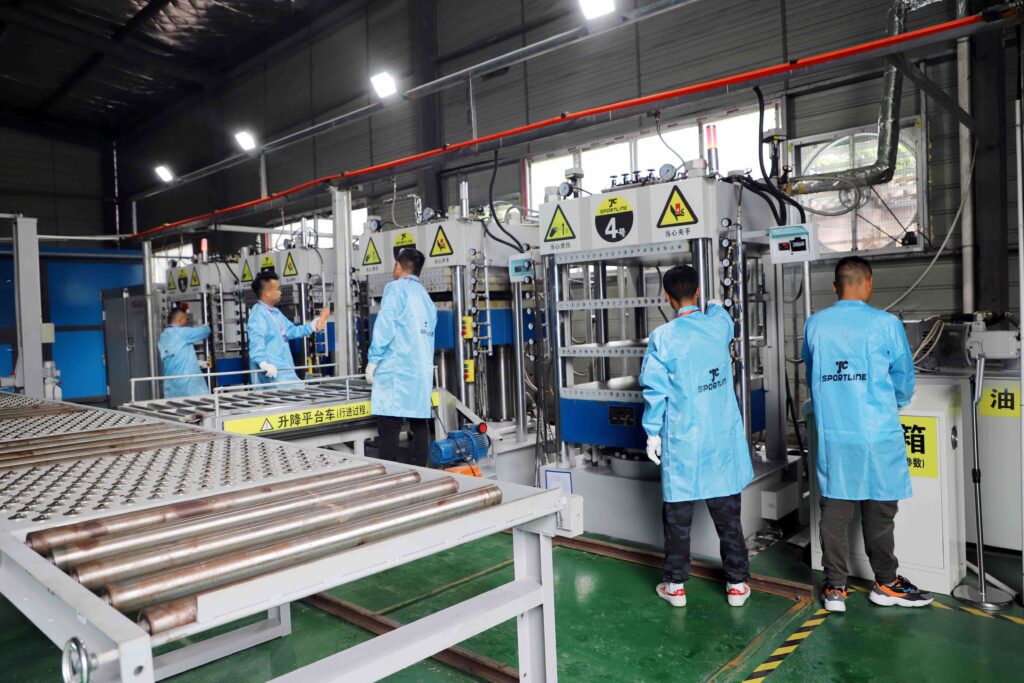
However, automated systems require extremely expensive tooling. In many cases, a single automated mold can cost more than $150,000.
Because of this high investment, automated production is typically suitable only for very high-volume manufacturing programs.
Manual Autoclave Manufacturing
Manual composite manufacturing remains widely used for specialized industries such as marine equipment, robotics structures, aerospace components, and performance sporting equipment.
Advantages include:
- lower tooling investment
- greater design flexibility
- suitability for low and medium production volumes
For many OEM projects, this approach provides a better balance between investment and flexibility.
Mold Types and Lifecycle Economics
Different mold materials offer different durability levels and production capacities.
| Mold Type | Typical Lifespan | Typical Application |
|---|---|---|
| FRP molds | 20–50 cycles | Prototype development |
| Epoxy / carbon molds | 100–300 cycles | Low-volume production |
| Steel or aluminum molds | 1000+ cycles | Mass production |
Choosing the right tooling solution is essential for controlling carbon fiber manufacturing plant cost and ensuring a favorable return on investment.
Why Carbon Fiber Parts Are Expensive: Labor and Surface Engineering
Beyond materials and tooling, the largest hidden contributor to carbon fiber cost is manual labor and finishing work.
High-quality composite components require extensive manual processes to achieve both structural reliability and premium surface appearance.
Precision Lamination and Clean-Room Layup
Lamination is one of the most technically demanding stages of the carbon fiber production process.
Technicians must carefully place each layer of carbon fiber according to structural load requirements. This process typically takes place in a controlled environment to prevent contamination.
Key lamination steps include:
- fiber orientation alignment
- layer stacking according to structural design
- debulking to remove trapped air
- vacuum bag preparation
Because this work requires trained technicians and careful attention to detail, lamination labor accounts for approximately 16.5% of the total carbon fiber part cost breakdown.
Surface Performance Engineering and Mirror Finishing
For products where visual quality is important, the largest labor investment often occurs after the part leaves the mold.
Composite parts must go through several finishing stages to achieve a smooth surface and durable protective coating.
Typical finishing processes include:
- surface leveling
- progressive sanding
- polishing
- multi-layer UV clear coating
- final mirror polishing
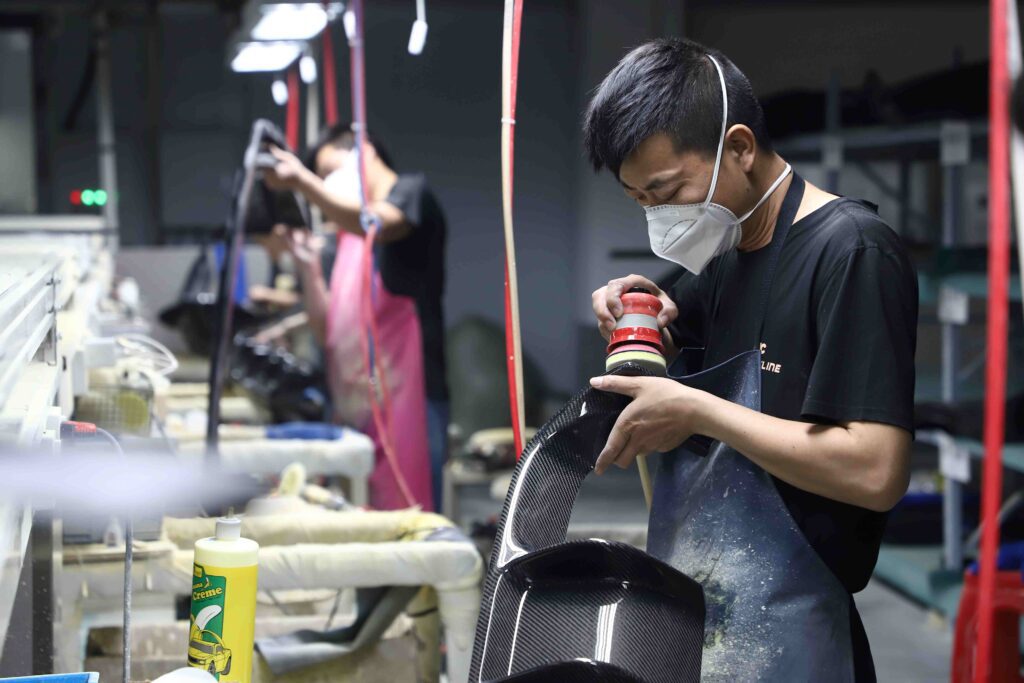
These steps ensure the part meets aesthetic and durability standards for visible applications.
Because of the extensive manual work required, surface engineering can represent up to 28% of the total carbon fiber cost.
Industrial structural components may skip this stage, but products designed for visible applications—such as sporting equipment, marine hardware, consumer products, or architectural components—require this finishing process.
Process Selection and Manufacturing Path Optimization
The choice of manufacturing method can also influence carbon fiber manufacturing plant cost.
Common composite production processes include:
| Manufacturing Process | Cost Level | Typical Applications |
|---|---|---|
| Autoclave curing | High | aerospace and high-performance components |
| Compression molding | Medium | high-volume industrial products |
| Vacuum infusion | Lower | large composite structures |
Each process affects:
- production speed
- tooling investment
- labor intensity
- surface quality
Through proper Design for Manufacturing (DFM), engineers can simplify component geometry and reduce unnecessary complexity. Small design adjustments—such as increasing corner radii or simplifying curvature—can significantly reduce finishing labor and overall production cost.
FAQ – Carbon Fiber Cost Questions from OEM Buyers
What factors drive carbon fiber part cost the most?
The most important cost drivers include:
- carbon fiber material price and prepreg grade
- scrap rate during cutting
- manual lamination labor
- surface finishing work
- tooling investment and production volume
Among these factors, material price and finishing labor are usually the largest contributors to the final carbon fiber cost.
Why is carbon fiber tooling expensive for small production runs?
Composite molds must withstand high temperatures and pressure during curing. They must also maintain extremely precise surface quality to produce accurate parts.
Even for small production programs, molds must be engineered carefully to ensure durability and dimensional stability.
To reduce tooling investment, many manufacturers use FRP or epoxy molds for small-batch production, which significantly lowers the initial carbon fiber manufacturing plant cost.
What is typically included in a carbon fiber OEM quote?
A transparent supplier quote typically includes:
- prepreg carbon fiber materials and scrap factor
- vacuum bagging consumables
- lamination labor
- curing cycles and energy usage
- finishing and coating processes
- inspection and packaging
Understanding these elements allows buyers to evaluate quotes based on a clear carbon fiber part cost breakdown rather than simply comparing prices.