Why Carbon Fiber Manufacturing Defects Still Occur in Modern Composite Production
Carbon fiber components demand extremely tight dimensional tolerances and highly controlled manufacturing environments. Unlike traditional metal manufacturing processes, composite parts involve multi-stage carbon fiber manufacturing processes including material layup, curing, bonding, machining, and finishing, which require advanced carbon fiber manufacturing services to maintain structural consistency.
Each stage in the carbon fiber production process introduces potential variability that can affect the final part.
defects often originate from gaps between engineering design and manufacturing execution, which is why many OEM projects require professional carbon fiber design services before entering production.
Common categories of carbon fiber production quality issues include:
- Installation fitment problems
- Process deviation and customization misalignment
- Surface finish defects and contamination
- Dimensional inconsistencies in large composite structures
These challenges become particularly significant in high-end customized carbon fiber products, where production volumes are lower and each component may require specific adjustments or design modifications.
Without proper integration between design engineering and production systems, even advanced composite technologies can produce inconsistent results.
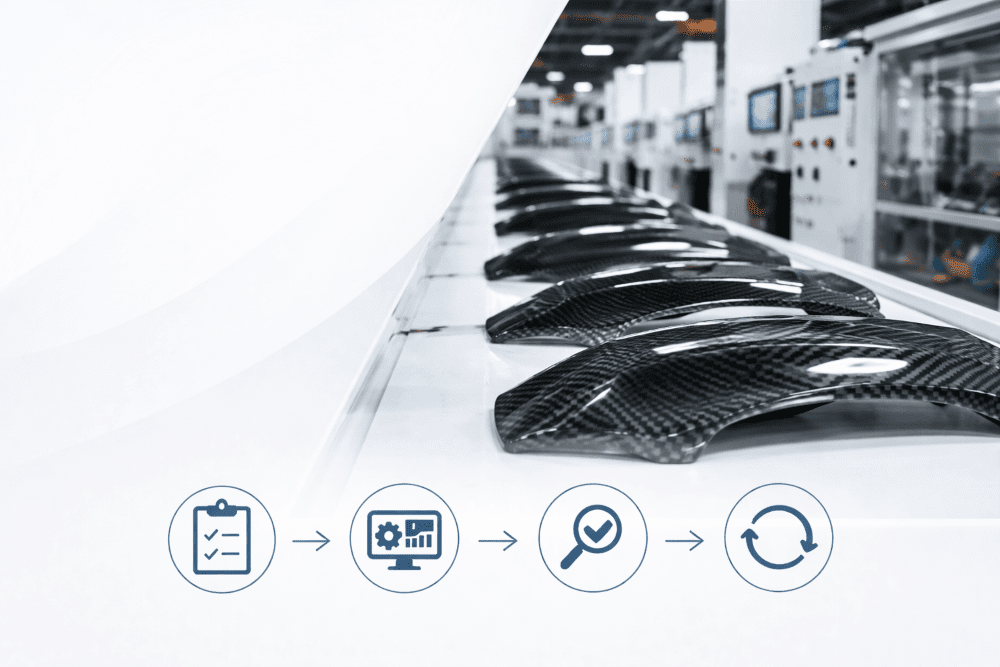
reliable production requires consistent process monitoring and carbon fiber quality control systems throughout the manufacturing workflow.
Installation Fitment Problems: The Most Common Carbon Fiber Quality Issue
Among all composite manufacturing defects, installation fitment problems are the most frequently reported by buyers and installers.
These issues occur when a carbon fiber component fails to align correctly with its intended mounting locations during installation. In automotive applications, this may appear as uneven panel gaps or mounting holes that do not match OEM specifications.
Typical carbon fiber fitment issues include:
- Mounting hole misalignment
- Uneven panel gaps between adjacent components
- Incorrect bonding angles between structural sections
- Warping or dimensional drift after curing
These problems are particularly common in large composite panels such as hoods, diffusers, and aerodynamic body components.
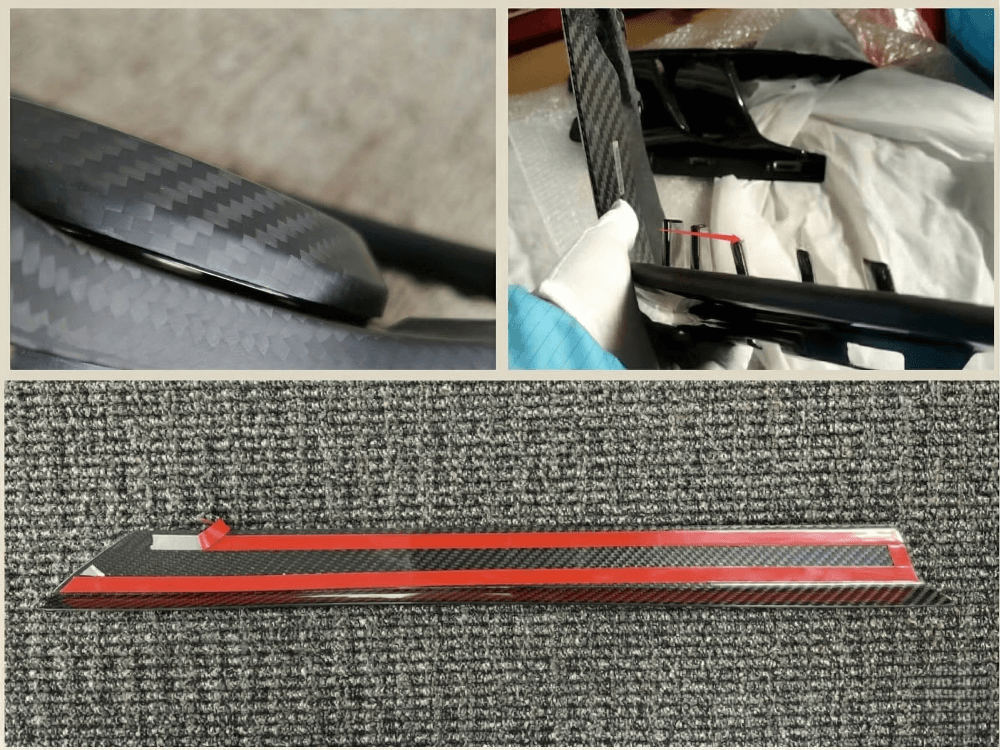
The root cause lies in the dimensional control challenges inherent to composite materials. Unlike metal components that are machined directly from solid materials, carbon fiber parts rely on layered composite structures cured within molds.
Any inconsistency in mold precision, material placement, or curing conditions can result in dimensional deviations.
For installers and distributors, these problems create significant frustration. Automotive carbon fiber parts that fail to align with factory mounting points often require manual modification during installation, increasing labor costs and reducing trust in the product.
To address these risks, modern manufacturers increasingly rely on inspection fixtures and dimensional verification systems to validate installation accuracy before parts reach the market.
Process and Customization Errors in Carbon Fiber Production
Another major source of carbon fiber manufacturing defects arises from process control failures and customization misalignment.
High-end carbon fiber components are often produced in customized configurations for specific vehicle models or product platforms. While customization adds value for customers, it also introduces significant complexity into the manufacturing workflow.
In many factories, production teams continue to operate with static standard operating procedures (SOPs) that are not regularly updated to reflect engineering changes or customer customization requests.
This disconnect can create several manufacturing problems:
- Production teams following outdated instructions
- Design revisions not fully communicated to manufacturing teams
- Custom configurations not properly validated before production
When communication between engineering and production departments breaks down, the result can be carbon fiber production mistakes that affect both performance and appearance.
For customers ordering customized carbon fiber components, the consequences are particularly frustrating. The final product may not match the requested specifications, leading to delays, rework, or replacement costs.
Modern composite manufacturing systems address these challenges by implementing dynamic process control frameworks, where engineering changes are immediately reflected in updated production instructions.
This level of synchronization between design and manufacturing significantly reduces customization-related defects.
Surface Defects and Finishing Problems in High-End Carbon Fiber Parts
In addition to structural and dimensional issues, surface defects remain one of the most visible quality problems in carbon fiber manufacturing.
Premium carbon fiber products are often purchased not only for performance but also for their distinctive aesthetic appearance. A flawless carbon fiber weave pattern and smooth clear coat finish are critical to maintaining perceived product value.
Common surface defects observed in carbon fiber components include:
- Clear coat bubbles or pinholes
- Surface contamination during finishing
- Uneven edges or trimming irregularities
- Fiber print-through or resin distortion
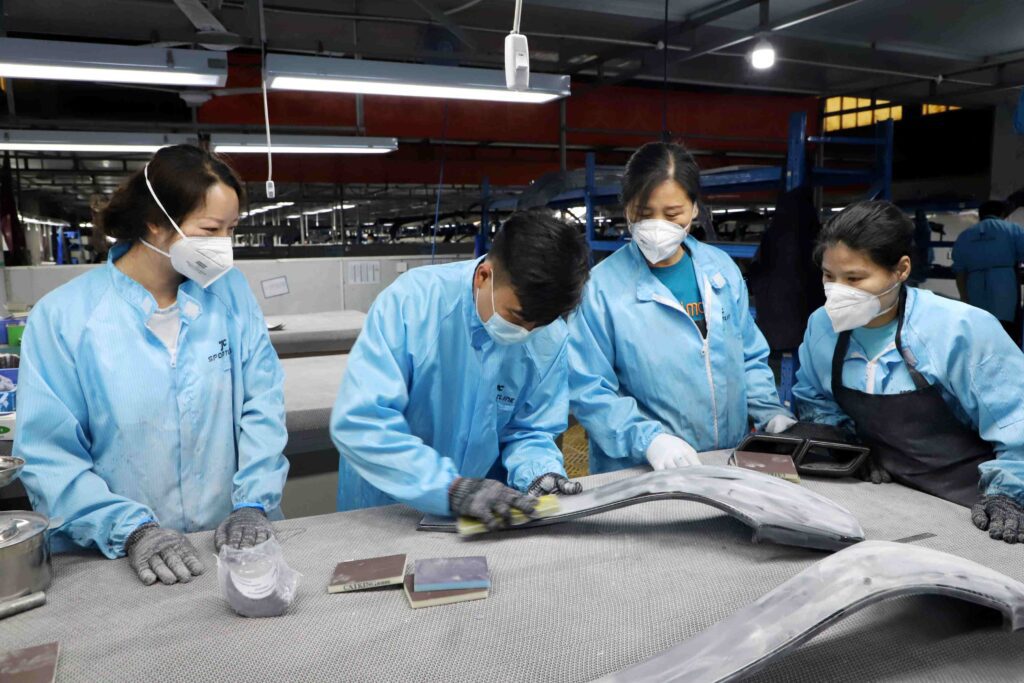
These issues are typically linked to insufficient environmental control or inadequate surface preparation during finishing processes.
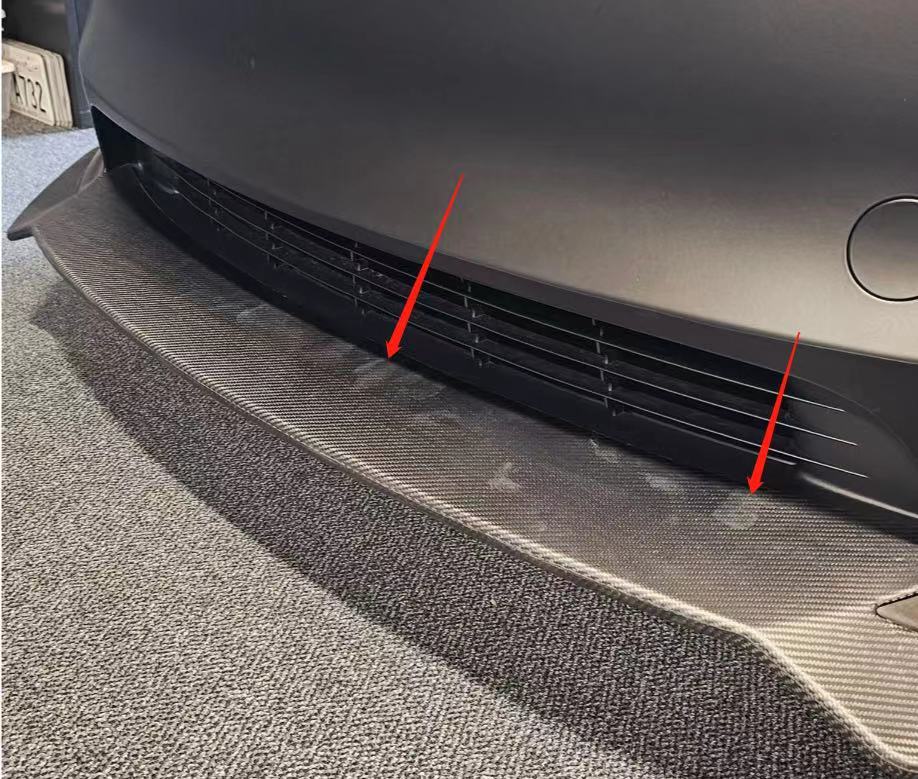
For example, contamination from dust particles in the finishing environment can become trapped beneath clear coatings, creating visible imperfections. Similarly, improper surface cleaning before finishing can lead to bonding issues between resin layers and coatings.
Because carbon fiber products are frequently marketed as premium materials, these cosmetic defects can significantly reduce perceived quality even when the structural integrity of the part remains intact.
To maintain consistent surface quality, advanced manufacturers integrate multi-stage surface inspection procedures and controlled finishing environments within their production systems.
Engineering Solutions to Eliminate Carbon Fiber Manufacturing Defects
Addressing carbon fiber manufacturing defects requires more than reactive troubleshooting. Modern composite engineering focuses on building quality directly into the design and production system.
Instead of correcting problems after production, engineering-driven manufacturers implement full lifecycle quality control systems that integrate design engineering, tooling precision, production processes, and inspection systems.
These systems focus on three key areas:
- Standardized engineering design
- Advanced inspection and measurement systems
- Continuous production process optimization
By addressing these factors simultaneously, manufacturers can significantly reduce defect rates and improve product consistency.
For buyers, this engineering-driven approach delivers one critical benefit: predictable product quality and installation reliability.
Design Standardization to Prevent Installation Errors
One of the most effective ways to eliminate carbon fiber fitment issues is through engineering-driven design standardization.
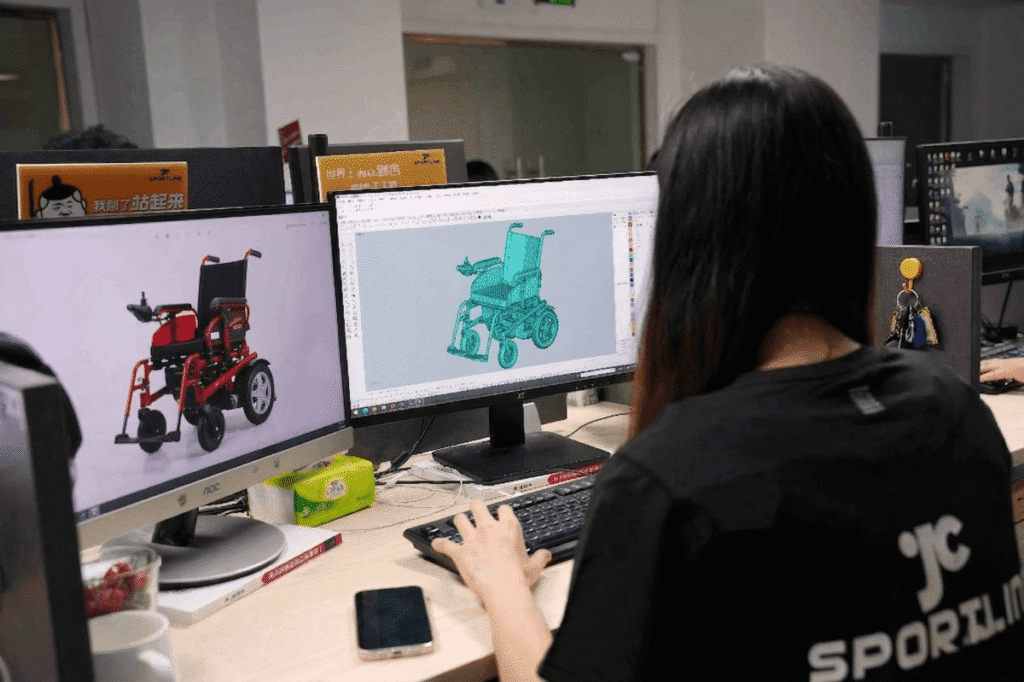
Instead of designing components independently for each project, advanced composite manufacturers establish standardized installation geometry guidelines that ensure compatibility across multiple platforms.
These design standards typically include:
- Defined installation angle specifications
- Standardized mounting interface structures
- Verified dimensional tolerances for composite panels
By implementing consistent design frameworks, engineering teams can ensure that carbon fiber components maintain OEM-level installation compatibility.
Another key factor in design standardization is the integration of customer feedback loops. Installation feedback from distributors, installers, and end users provides valuable insights that help engineers refine future product designs.
Over time, these feedback-driven improvements significantly reduce installation errors and dimensional inconsistencies.
Inspection Systems and Tooling Control for Dimensional Accuracy
Inspection systems play a critical role in preventing dimensional drift during carbon fiber production.
Modern composite manufacturers rely on fixture-based inspection systems that allow parts to be tested against reference geometries before they reach customers.
These inspection frameworks often include:
- Dedicated installation verification fixtures
- Dimensional measurement tools such as coordinate measurement systems
- Structured inspection checkpoints throughout production
Another important factor is the maintenance and calibration of inspection equipment. Over time, inspection tools can experience wear or measurement drift, potentially introducing errors into quality verification systems.
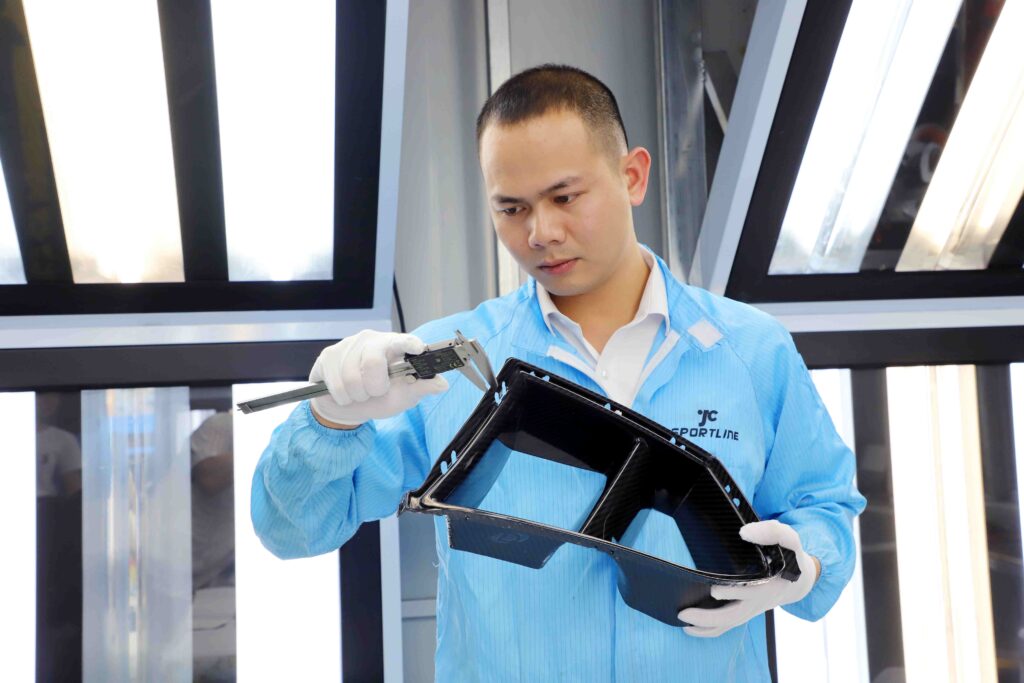
dimensional accuracy and mounting alignment are verified using specialized carbon fiber inspection tools during the production process.
By integrating inspection processes directly into the production workflow, manufacturers can detect dimensional deviations early and prevent defective parts from entering the market.
Production Process Optimization and Dynamic SOP Management
Production environments are constantly evolving as materials, tooling, and engineering standards improve. To maintain manufacturing consistency, composite factories must adopt dynamic process management systems.
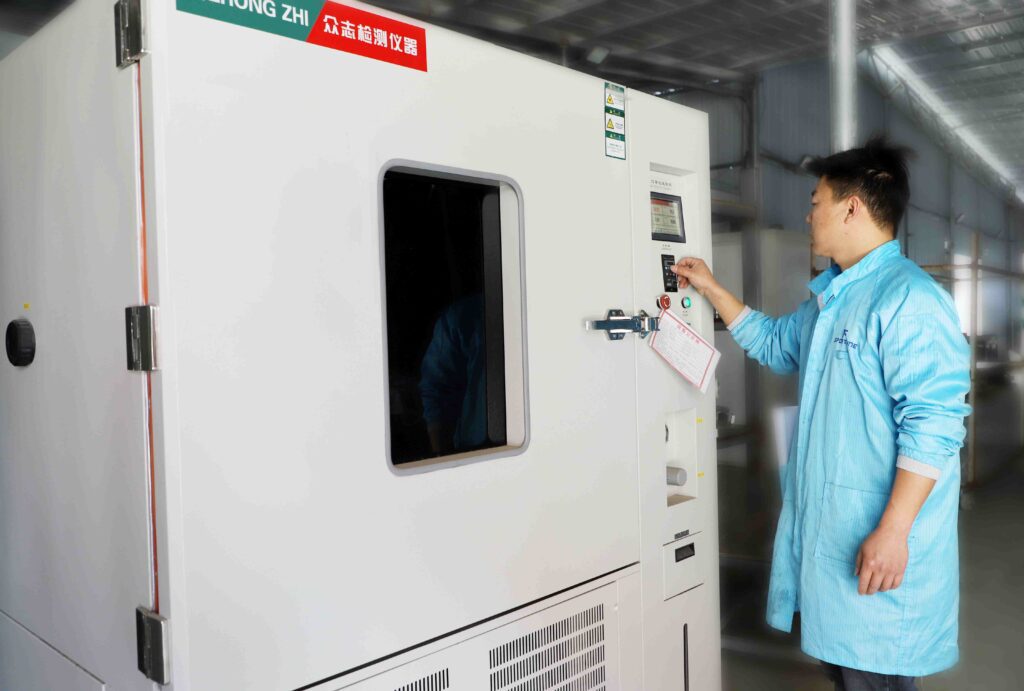
Unlike static production instructions, dynamic SOP frameworks allow engineering teams to update manufacturing procedures in response to design changes or process improvements.
Key elements of process optimization include:
- Continuous mold precision inspection
- Rapid SOP updates following engineering changes
- Real-time communication between engineering and production teams
These systems reduce human error and ensure that production teams always follow the most current manufacturing guidelines.
As a result, manufacturers can significantly reduce composite production process errors and maintain consistent product quality across multiple production runs.
Product-Level Optimization and Manufacturing Technology Breakthroughs
In addition to improving manufacturing systems, many modern composite manufacturers focus on product-level engineering optimization.
These improvements address long-standing industry challenges by introducing new manufacturing techniques and engineering solutions.
Process innovations in composite manufacturing often target three key areas:
- Structural dimensional stability
- Surface quality improvement
- Scalable production infrastructure
These engineering breakthroughs transform theoretical quality improvements into measurable product performance gains.
Carbon Fiber Panel Surface Quality Improvements
Achieving flawless carbon fiber surfaces requires precise control over multiple manufacturing variables.
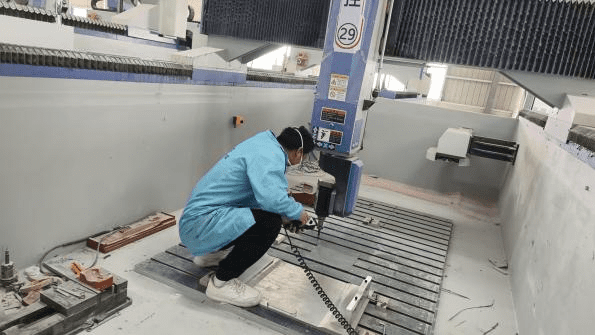
Recent advancements in panel manufacturing focus on improving:
- Carbon fiber layup consistency
- Mold surface optimization
- Environmental cleanliness during production
- Resin curing parameter control
These improvements ensure that the carbon fiber weave pattern remains visually consistent while minimizing defects such as resin distortion or surface contamination.
The result is high-quality carbon fiber panels with premium visual finishes, meeting both structural and aesthetic expectations.
Manufacturing Infrastructure Upgrades Supporting High-Quality Production
The final factor supporting defect reduction in carbon fiber manufacturing is modernized production infrastructure.
Advanced composite production facilities now incorporate specialized equipment designed specifically for carbon fiber processing.
Examples include:
- Dedicated CNC cutting systems for carbon fiber materials
- Dust-controlled manufacturing environments
- Scalable production lines designed for composite materials
These infrastructure upgrades significantly improve manufacturing consistency while enabling manufacturers to scale production volumes without sacrificing quality.
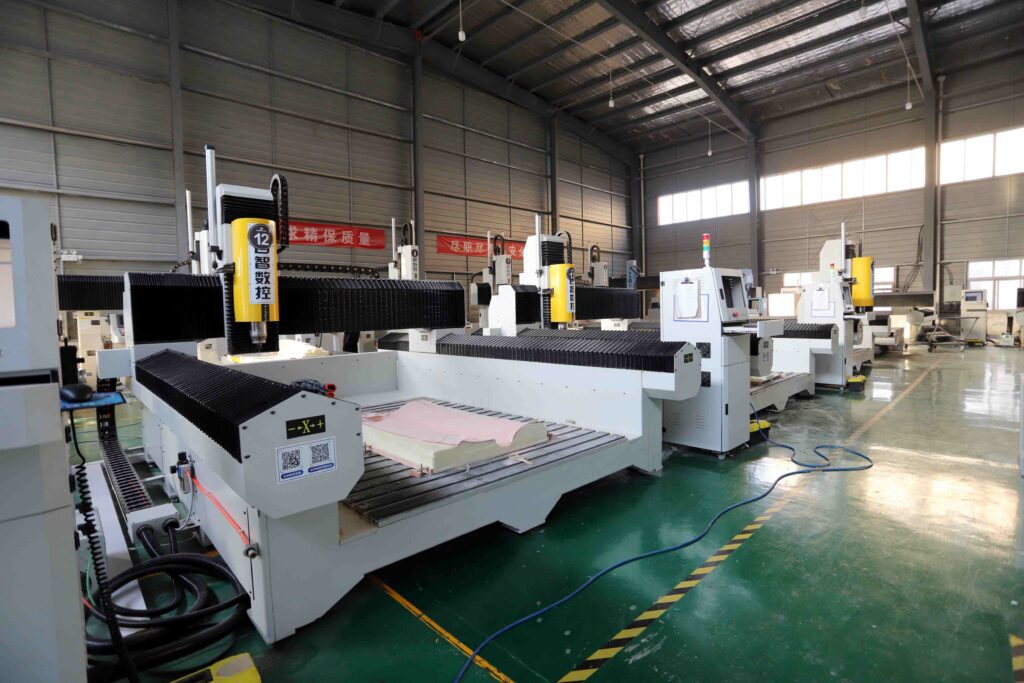
For customers, these improvements translate directly into more reliable carbon fiber components across large production runs.
FAQ: Carbon Fiber Manufacturing Defects and Quality Control
1. Why do carbon fiber parts sometimes have fitment or installation problems?
Fitment issues in carbon fiber components usually originate from dimensional inconsistencies, worn inspection fixtures, or insufficient design standardization. When tooling inspection systems are not regularly calibrated, dimensional verification may become inaccurate, resulting in parts that do not align correctly during installation.
At JCSPORTLINE, these issues are addressed by implementing standardized design guidelines for mounting positions and maintaining strict inspection fixture calibration schedules to ensure dimensional accuracy throughout production.
2. What causes deformation in carbon fiber components during manufacturing?
Deformation often occurs due to insufficient mold precision, unstable curing conditions, or inadequate process control during composite molding. In some cases, non-metal molds can introduce structural distortion during curing if clamping force and curing parameters are not properly controlled.
JCSPORTLINE addresses this challenge through optimized mold design, improved bonding fixture systems, and carefully controlled curing parameters that stabilize the composite structure and maintain consistent part geometry.
3. Why do surface defects such as bubbles or uneven finishes appear on carbon fiber parts?
Surface defects are frequently caused by contamination during pre-painting preparation, incomplete surface cleaning, or improper environmental control during finishing processes. Even small particles trapped in the coating layer can create bubbles or visible imperfections.
To prevent this, JCSPORTLINE applies standardized surface preparation procedures, strict cleaning protocols, and additional inspection checkpoints before coating operations begin.
4. Why are customized carbon fiber products more prone to manufacturing defects?
Customized carbon fiber components often require unique geometries, installation angles, or bonding configurations. Without standardized design frameworks and close communication between engineering and production teams, these variations can introduce alignment errors or structural inconsistencies.
JCSPORTLINE mitigates this by establishing standardized design libraries, dedicated project management workflows, and continuous collaboration between design engineers and production teams throughout the product lifecycle.
5. What engineering systems help prevent carbon fiber manufacturing defects?
Preventing composite manufacturing defects requires an integrated system covering design, production, and inspection.
At JCSPORTLINE, this includes:
- Standardized design guidelines for installation geometry
- Regular calibration and replacement of inspection fixtures
- High-precision mold design and maintenance
- Strict surface preparation and finishing procedures
- Cross-department communication between engineering, production, and quality teams
These integrated engineering systems help ensure consistent quality and reliability for high-performance carbon fiber components.