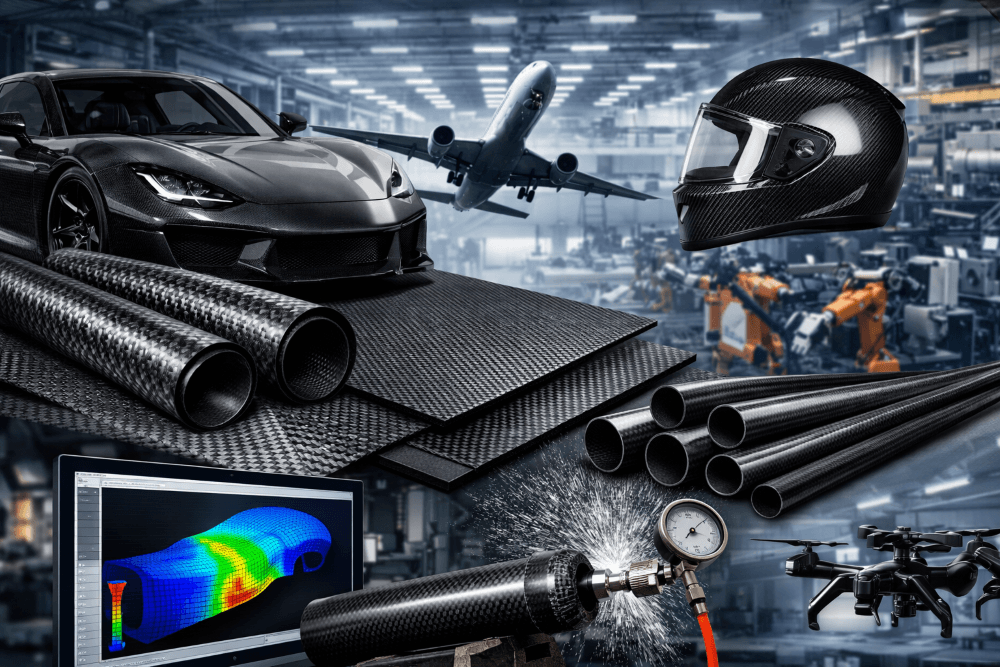
In the competitive landscape of B2B manufacturing, material selection is the ceiling of brand potential. Many companies face a common bottleneck: traditional metals like steel and aluminum have reached their limits in weight reduction, fatigue resistance, and structural efficiency. Carbon fiber materials offer a strategic path for brands seeking a technical breakthrough.
Using carbon fiber is not just about the iconic black weave aesthetic; it is about embedding a “tech-leading” DNA into your brand. Through carbon fiber applications, companies can achieve “Secondary Innovation” and “Secondary Engineering.” The core commercial value of transitioning to composites lies in the ability to outperform competitors on critical metrics, effectively allowing you to Differentiate Your Brand in a crowded market.
1. Feasibility and Structural Design: Is Your Project Right for Carbon Fiber?
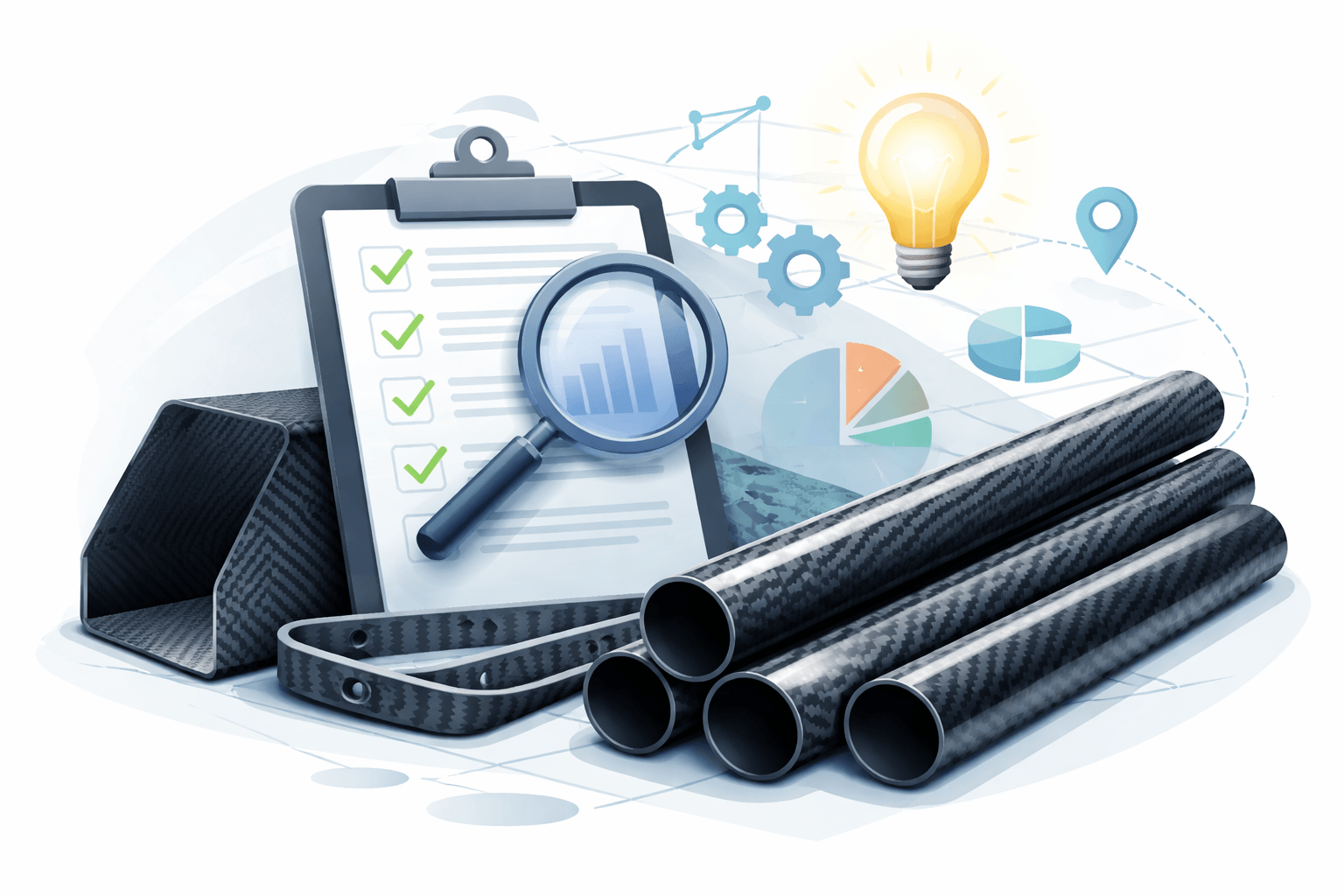
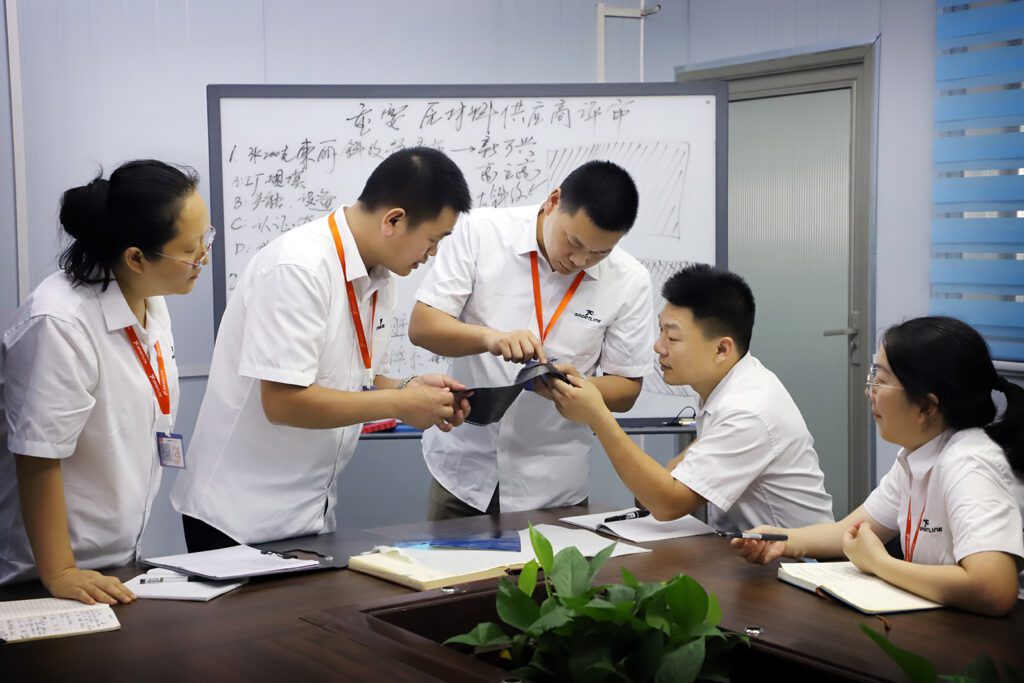
Before launching a carbon fiber product development project, the first step is a rigorous feasibility assessment. Carbon fiber is not a universal “plug-and-play” replacement; its true value is unlocked in scenarios requiring extreme strength-to-weight ratios.
Technical Foundation: The Necessity of FEA
In the design phase, engineering must go beyond the surface. It is mandatory to use Finite Element Analysis (FEA) to determine how the structure should be reinforced. The anisotropic nature of advanced carbon fiber composites means that ply orientation and laminate schedule are the “secret sauce” of performance.
Data-Driven Case Study: Roof Front Cross-Member Report
A JCSPORTLINE comparative analysis between traditional metal and carbon fiber for a vehicle’s roof front cross-member reveals:
- Extreme Weight Reduction: The metal assembly weighed 1.551kg. By using T300 carbon fiber and carbon fiber molding techniques (specifically HP-RTM), the composite version weighed only 0.718kg—a reduction of 53.7%.
- Performance Leap: * Axial Tensile Stiffness: Increased from 12,500 N/mm (metal) to 18,518 N/mm (composite).
- Max Bending Load: The metal part failed at 1,018N, while the carbon fiber part sustained 2,681N—a 2.6x increase in strength.
This data demonstrates the role of carbon fiber technology in lightweight vehicle design, proving that you can shed weight while significantly improving structural safety and torsional rigidity.
| Analysis Item | Metal | Carbon Fiber | Comparison |
|---|---|---|---|
| 1st Natural Frequency (Free Modal) | 84.1 Hz | 93.2 Hz | Carbon fiber is higher |
| 2nd Natural Frequency (Free Modal) | 110.1 Hz | 210.4 Hz | Carbon fiber is significantly higher |
| 1st Natural Frequency (Constrained Modal) | 76.8 Hz | 122.7 Hz | Carbon fiber is higher |
| 2nd Natural Frequency (Constrained Modal) | 174.7 Hz | 295.8 Hz | Carbon fiber is higher |
| Max Displacement in Axial Tensile Test | 1.83 mm | 1.59 mm | Carbon fiber is lower |
| Loaded Point Displacement in Axial Tensile Test | 0.40 mm | 0.27 mm | Carbon fiber is lower |
| Axial Tensile Stiffness | 12,500 N/mm | 18,518 N/mm | Carbon fiber is higher |
| Max Displacement in Bending Stiffness Test | 4.54 mm | 5.07 mm | Metal is slightly better |
| Limit Indicator in Bending Stiffness Test | Max stress: 436 MPa | Max strength factor: 0.92 | Different evaluation metrics |
| Weight | 1.55 kg | 0.718 kg | Carbon fiber is lighter |
2. The Core of Quality Control: Advanced Testing Equipment
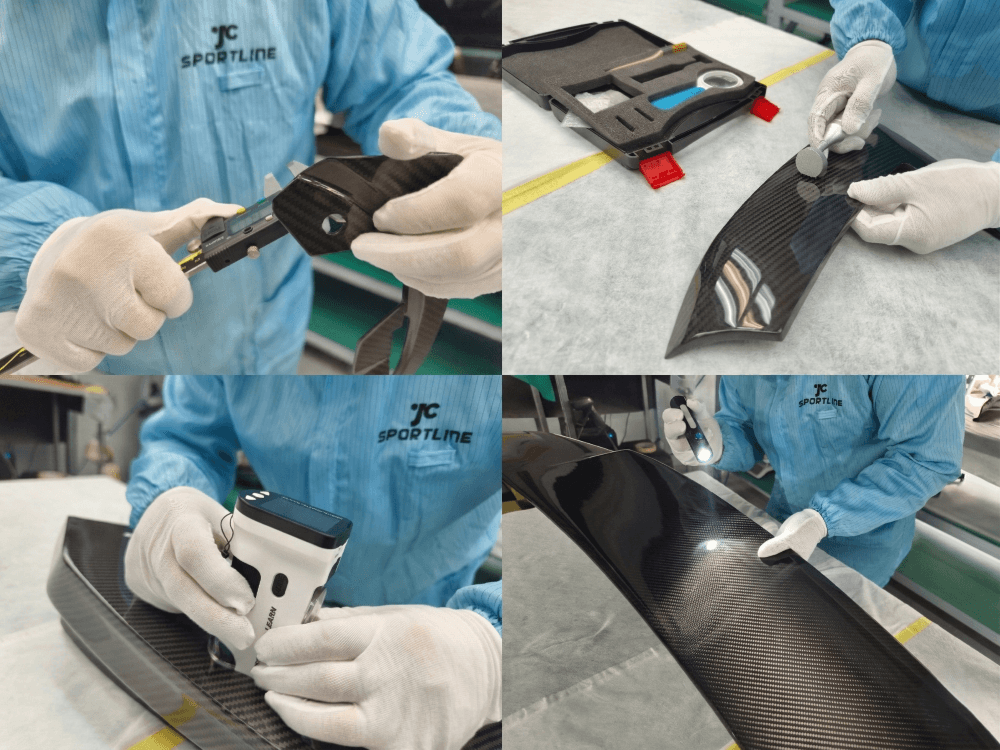
The success of a composite project relies heavily on carbon fiber testing and quality control. A professional suite of carbon fiber testing equipment is the baseline for ensuring B2B delivery standards in advanced composite factories.
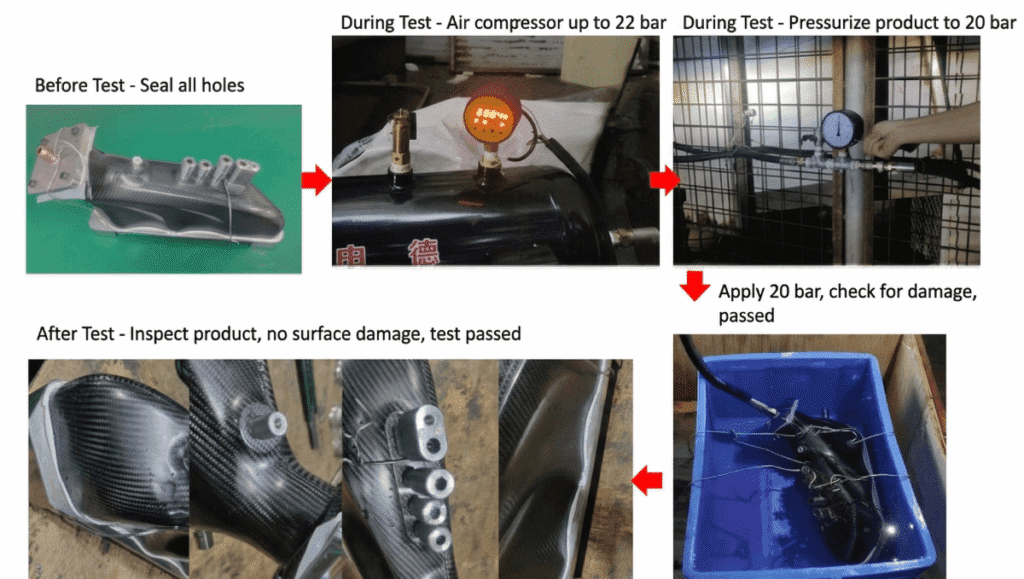
Real-World Case: Intake System Burst Test
For a carbon fiber intake project, the component must survive extreme engine bay heat and sudden pressure spikes. Our quality control procedures in manufacturing involve:
- Thermal Challenge: Heating the product in an industrial oven to 120°C.
- Pressure Limit: Placing the heated part in an explosion-proof box and increasing internal pressure to 0.7Mpa (7bar).
- Pass/Fail Criteria: The part must show zero air leakage, zero cracking, and no delamination.
Furthermore, for visual components, UV and corrosion testing are vital. Our carbon fiber factory technology includes testing various paint systems—such as Nippon C7900 vs. imported BASF coatings—to ensure the carbon fiber automotive parts manufacturing process yields a finish that resists yellowing and corrosion over time.
3. Multi-Industry Applications: Where Carbon Fiber Empowers Brands
Beyond automotive, high-performance carbon fiber applications are penetrating high-value sectors where traditional materials fail to meet modern demands.
- Medical Devices: Carbon fiber composites for medical devices: engineering and applications leverage “radiolucency.” Carbon fiber allows X-rays to pass through with minimal interference, resulting in clearer imaging and lower radiation doses for patients.
- Industrial Robotics: Reducing the mass of a robotic arm with carbon fiber lowers inertia. This allows for faster start-stop cycles, higher precision, and reduced energy consumption for servo motors.
- Aerospace Engineering: Parts must remain dimensionally stable across extreme temperature cycles. Using advanced carbon fiber molding and curing techniques for aerospace parts, components like satellite brackets maintain micron-level precision in the vacuum of space.
- Sports Equipment: From high-end bicycles to professional racing helmets, the vibration-damping properties of carbon fiber provide a performance feel that metals cannot replicate.
4. Manufacturing Process & Mold Selection: Balancing Volume and Cost
The primary hurdle in carbon fiber manufacturing is choosing the right process. Project volume and part complexity dictate the tooling strategy.
At JCSPORTLINE, we guide clients through carbon fiber mold selection to optimize ROI:
- Non-Metallic Tooling: For large, complex parts with annual volumes under 200 units, non-metallic molds significantly reduce upfront CAPEX.
- Overcoming Deformation: Non-metallic molds can deform under heat. Our carbon fiber fabrication experts use compensation design and specific resin systems to ensure dimensional tolerances are met, what’s more,
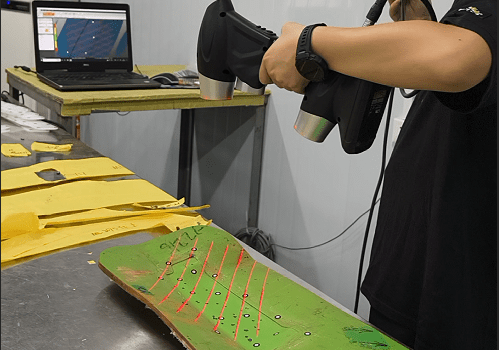
- Laser scanning equipment is used for mold inspection in carbon fiber production. It provides high-precision, non-contact measurements of the mold’s surface, ensuring no deformation occurs during the high-temperature curing process. The system captures detailed 3D data, compares it with the CAD model, and identifies any dimensional or shape discrepancies. This method enhances production efficiency, maintains accuracy, and ensures the final carbon fiber parts meet strict quality standards.
- Mass Production: For high-volume contracts, we utilize steel molds and HP-RTM to ensure the highest consistency throughout the carbon fiber production process: From raw materials to finished products.
5. Ensuring Quality Consistency in Mass Production
B2B buyers prioritize quality consistency. In carbon fiber fabrication, a 5-degree shift in ply angle or a 10-degree fluctuation in curing temperature can lead to part failure.
JCSPORTLINE maintains a rigorous monitoring system:
- IQC (Incoming Quality Control): Testing resin content and areal weight of prepreg.
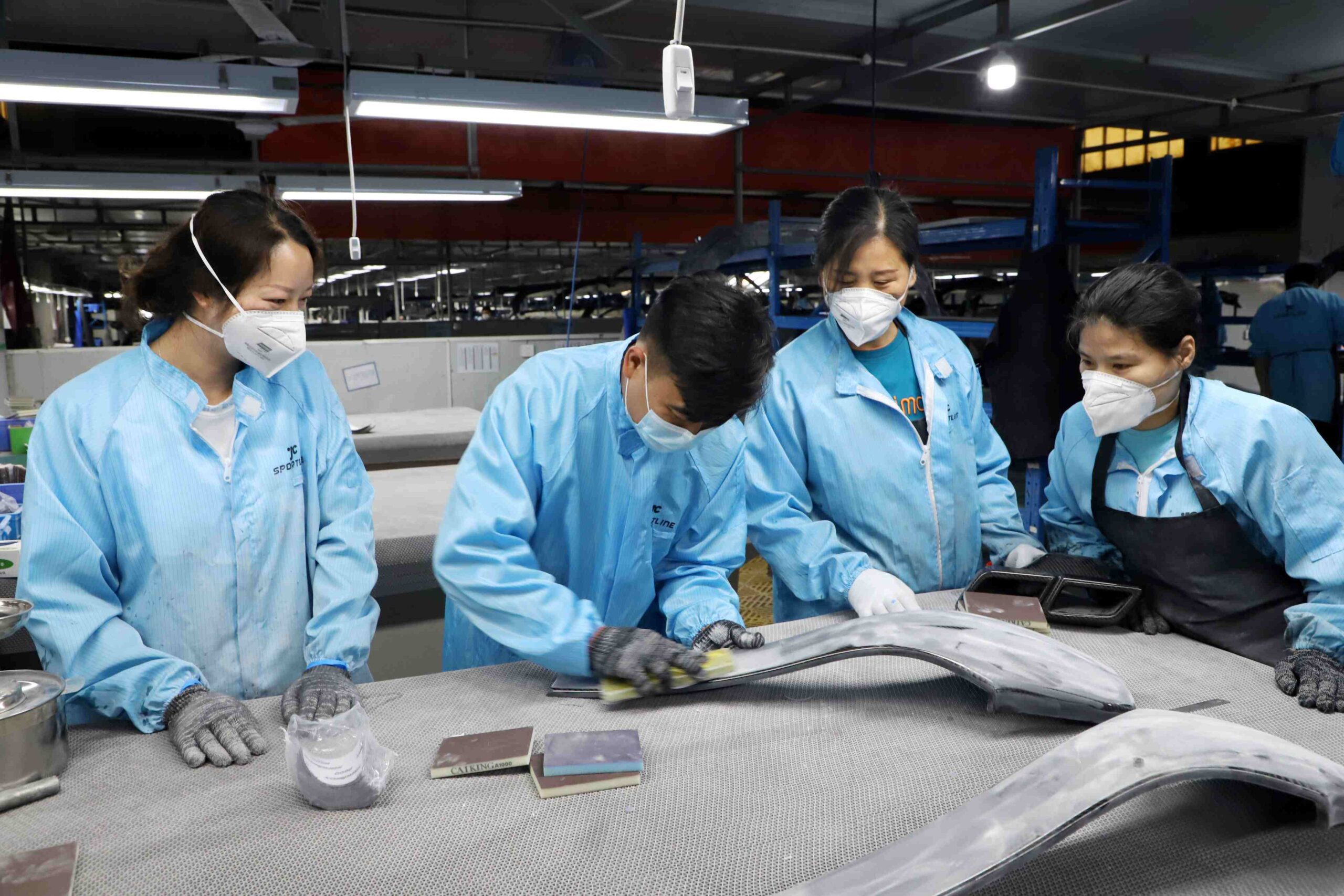
- Cleanroom Lay-up: Preventing dust contamination that causes interlaminar defects.
- Digital Curing Logs: Real-time recording of pressure, vacuum levels, and temperature curves to meet testing and certification of carbon fiber components for aerospace industry standards.
6. Frequently Asked Questions about Carbon Fiber
How much weight can carbon fiber save compared to metal?
In structural applications like automotive cross-members, carbon fiber typically achieves a 50-60% weight reduction while simultaneously increasing stiffness and load-bearing capacity.
What are the essential carbon fiber factory equipment for production and testing?
Advanced facilities must have CNC cutting machines, Autoclaves, HP-RTM systems, and testing rigs for FEA validation, burst testing, and CMM dimensional inspection.
Why is FEA important in carbon fiber product development?
Unlike metal, carbon fiber’s strength depends on the direction of the fibers. FEA allows engineers to simulate stress loads and optimize the “ply schedule” before physical production begins, saving time and costs.
7. Conclusion: Partner with Experts to Drive Brand Differentiation
The application of carbon fiber materials is a complex engineering journey. From initial FEA and carbon fiber applications in automotive and aerospace engineering to final mass production, every step requires deep technical expertise.
As a leading composite manufacturing partner, JCSPORTLINE provides the carbon fiber factory technology and engineering support needed to empower B2B brands. Whether you are in medical, industrial, or automotive sectors, we provide a one-stop solution from DFM review to high-performance delivery.
Ready to redefine your product line with carbon fiber?
Contact the JCSPORTLINE engineering team today for a comprehensive DFM review and project evaluation. Let’s build the future of your brand together.