Empowering Your Project Success

MOTORCYCLE CARBON FIBER PARTS

CARBON FIBER MOTORCYCLE PARTS

OEM/ODM carbon fiber motorcycle parts manufacturing for
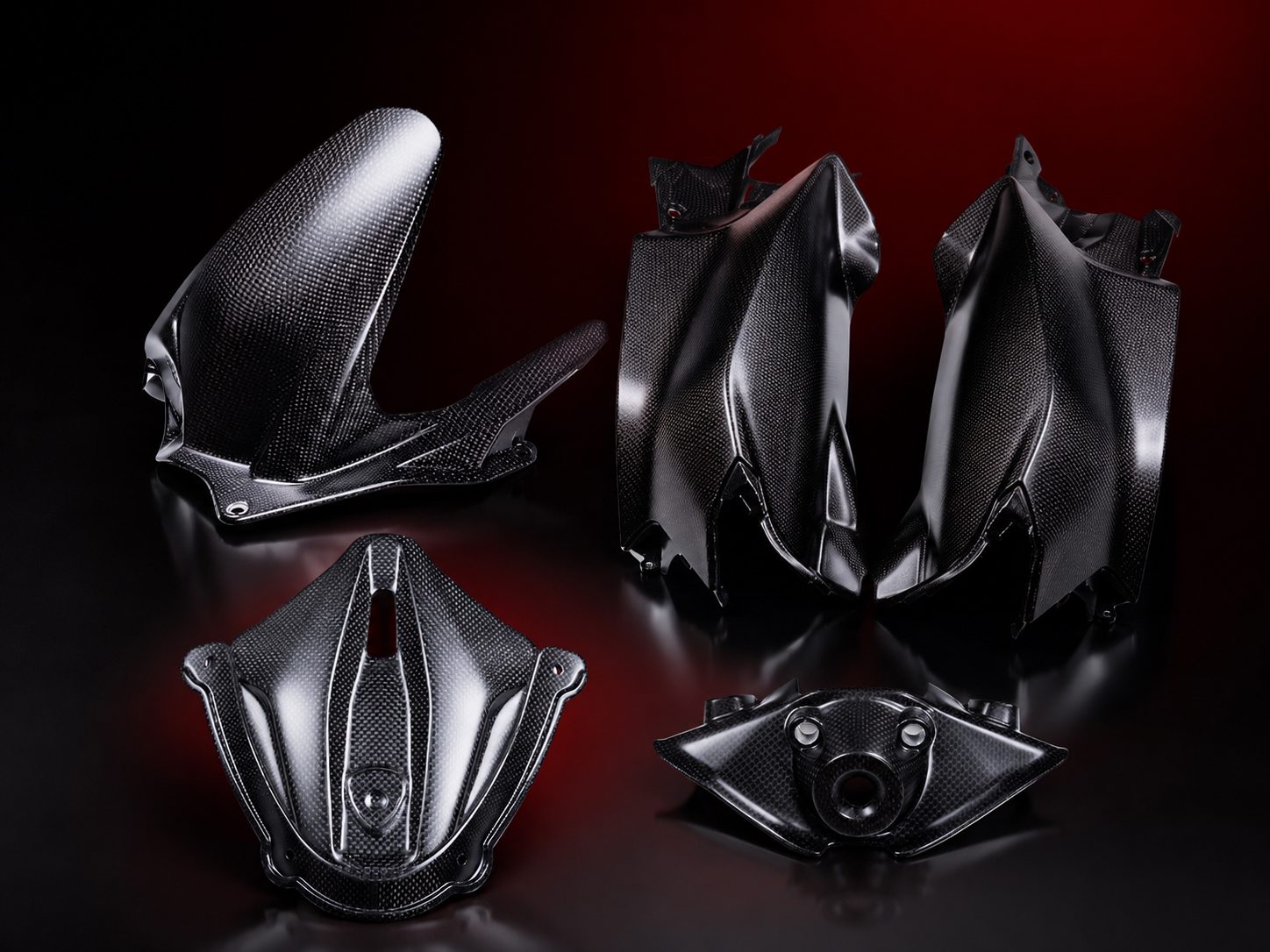
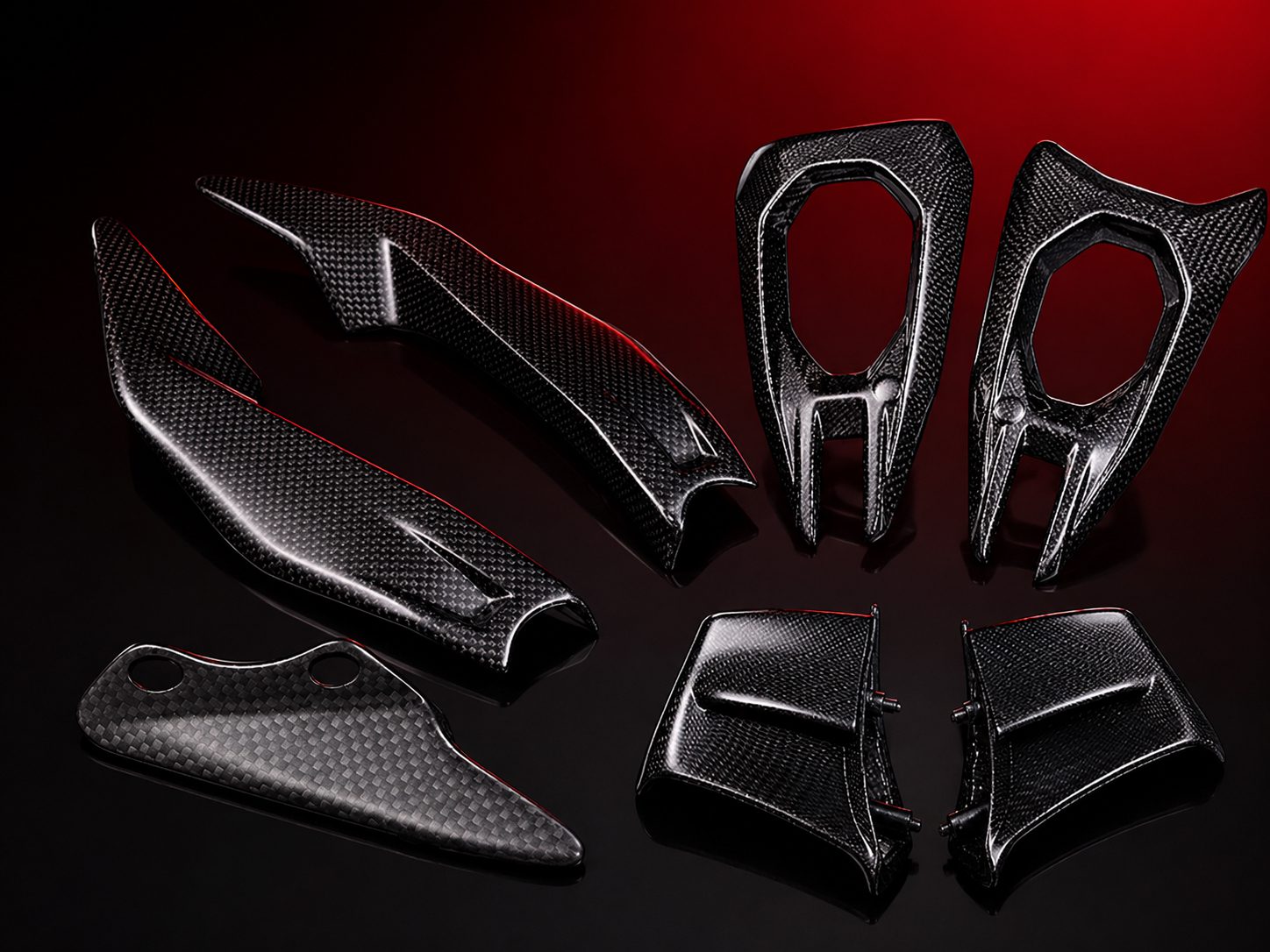
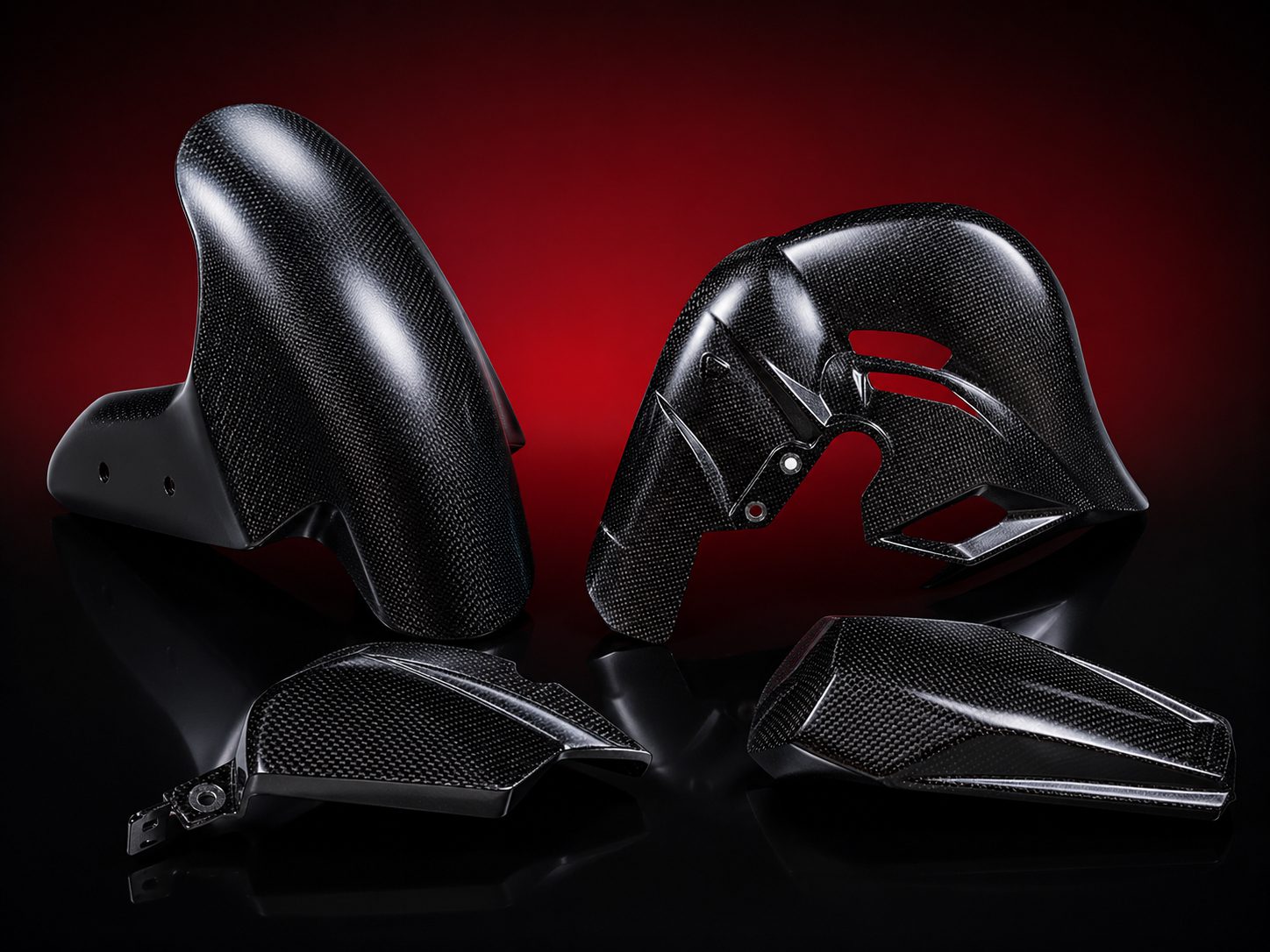
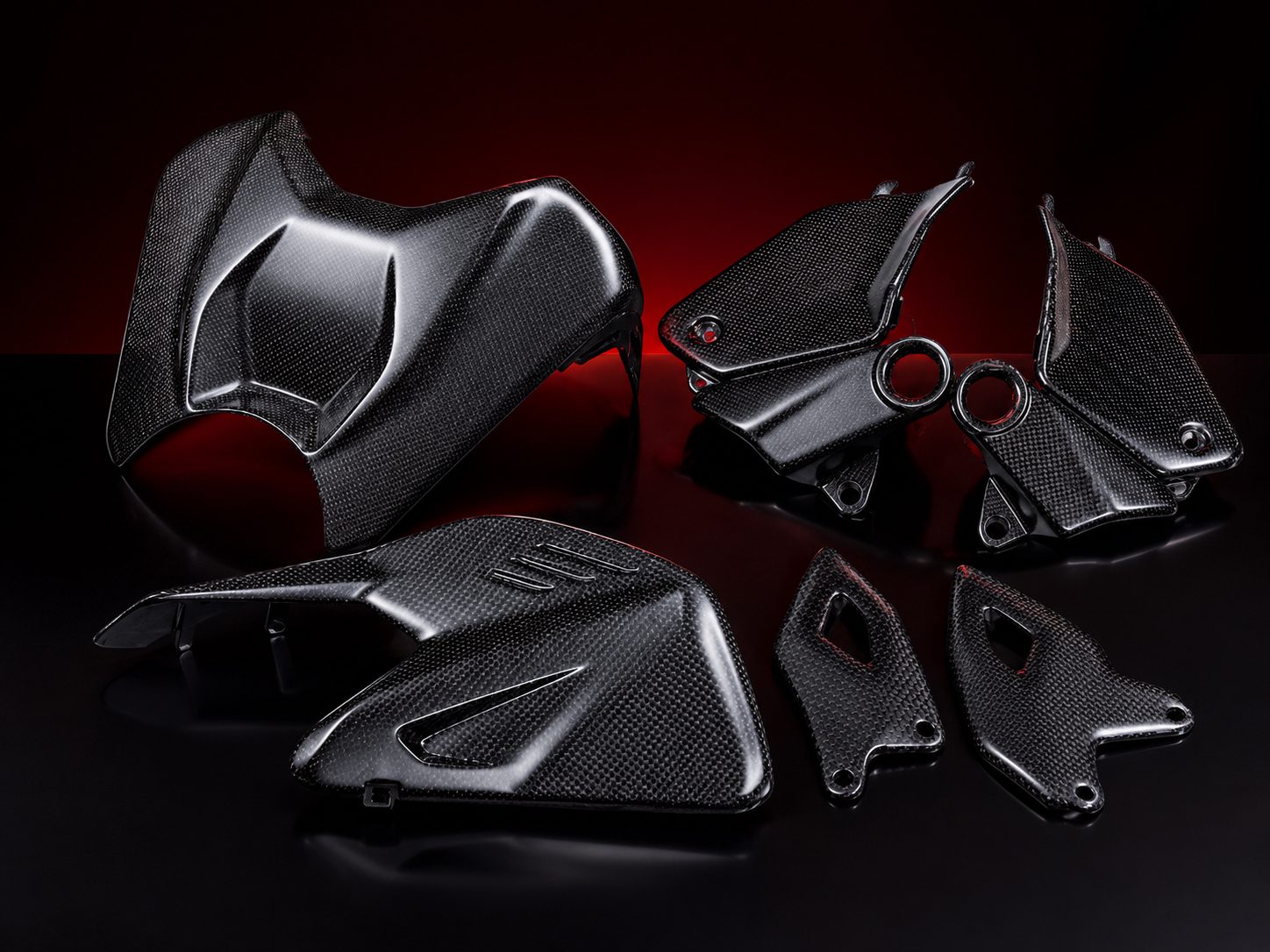
fairings, tank covers, fenders, winglets, exhaust shields and
custom aftermarket projects.

LIGHTER 45%+

than metal parts

STRONGER Anti-impact

& Durable

BUILT TO LAST 6–10 Years

Outdoor Performance

MARKET PROBLEM

Built Beyond Appearance.
Engineered for Fitment,
Strength and Stability.

This page explains why JCSPORTLINE’s motorcycle carbon fiber program focuses on model data, tooling accuracy, prototype fitment, batch consistency, installation support and after-sales risk control.

Common market pain points

Many motorcycle carbon fiber parts look similar online, but fail during development, installation, batch production or after-sales service.

01

Inaccurate model data

Complex curves, narrow gaps and deformed OEM samples can lead to poor edge matching and wrong mounting logic.

02

High tooling cost and rework risk

Small model data errors may cause expensive mold rework, especially for low-volume motorcycle carbon fiber projects.

03

Skipped prototype fitment

Some suppliers move directly to production without trial fitting, causing edge lifting, interference and loose clips.

04

Unstable batch quality

Manual layup, curing temperature changes and inconsistent trimming can create surface defects and fitment variation.

05

Installation complaints

Loose clips, abnormal noise, missing pads and unclear guidance often become major after-sales problems.

06

Low-price imitation products

Fake carbon, simplified structures and weak packaging reduce buyer trust and damage brand value.

SOLUTION 01

Accurate Model Data & CAD Review

Model data, mounting points, edge gaps and installation logic are reviewed before tooling to reduce development risk.

SOLUTION 02

Motorcycle-Specific Tooling Process

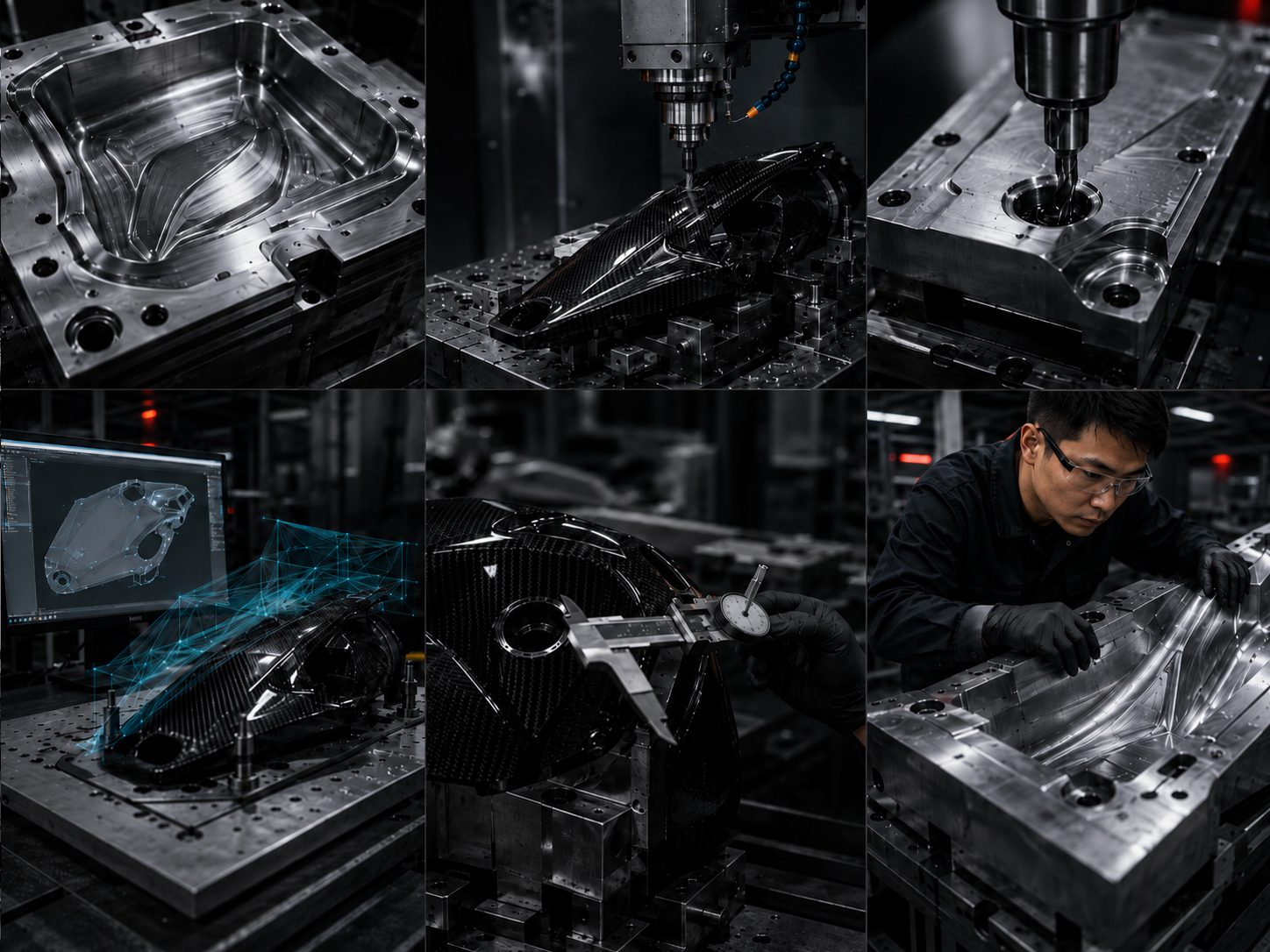
CNC mold development, split-line review and structural reinforcement help control fitment, surface quality and repeatability.

SOLUTION 03

Prototype Fitment Before Production

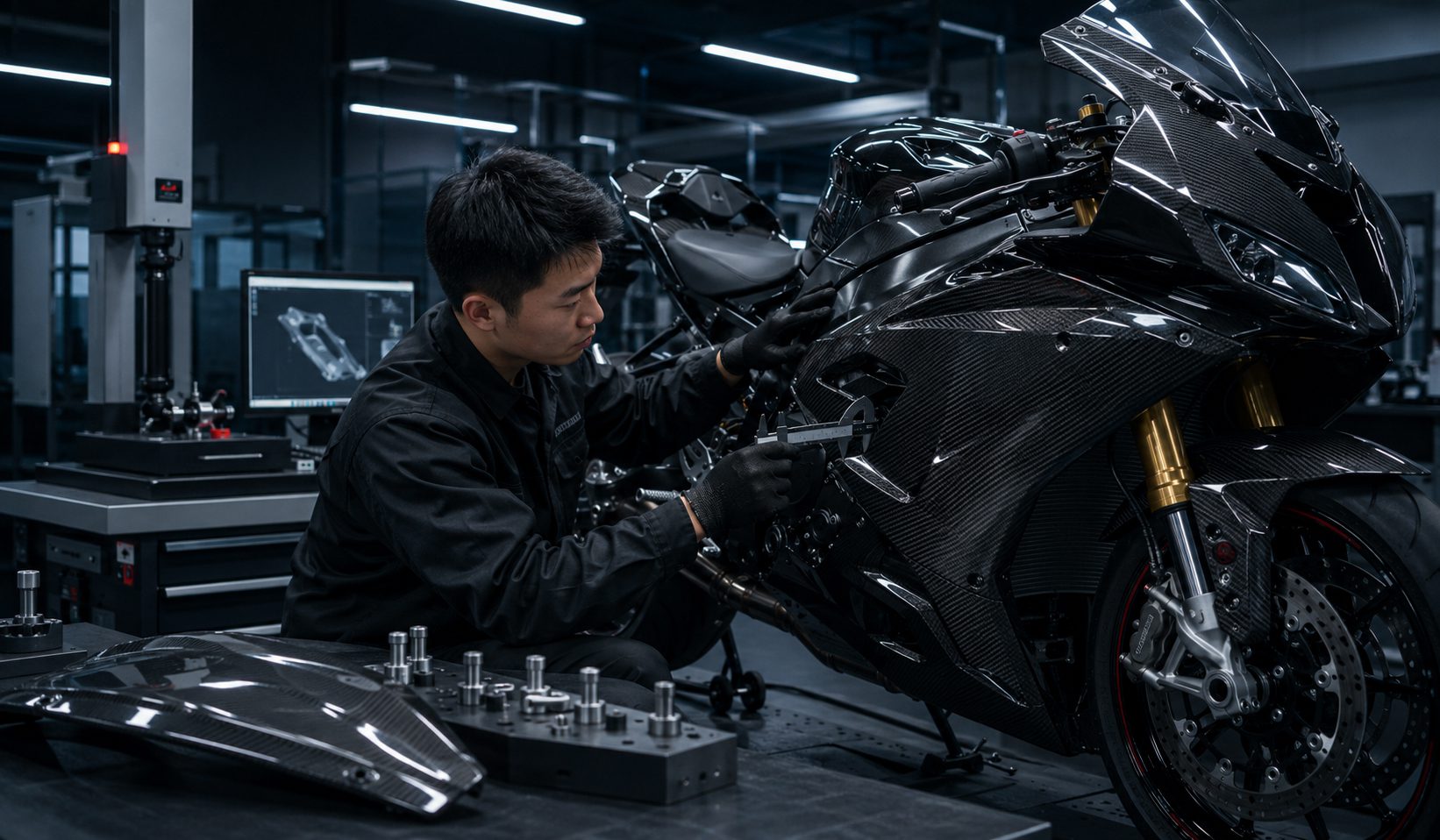
Samples are checked for hole position, edge fit, clip stability, surface finish and installation compatibility before mass production.

SOLUTION 04

Batch Quality & Installation Support

Layup, curing, trimming, coating, hardware, packaging and installation guidance are controlled to reduce after-sales risk.

FULL PARTS COVERAGE

Full Carbon Fiber Parts Coverage

Use six product systems, then list complete available part types for inquiry and SEO.
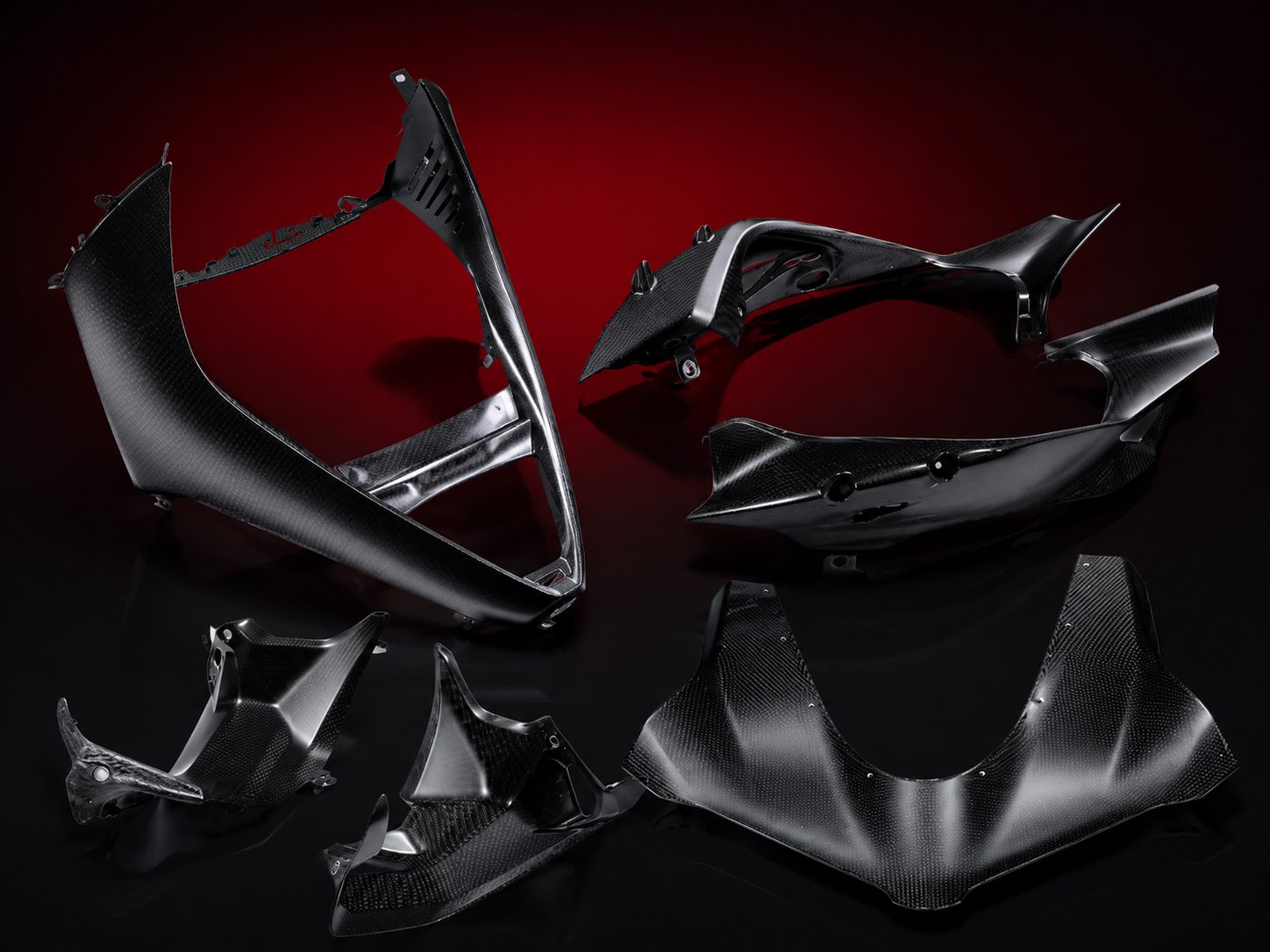
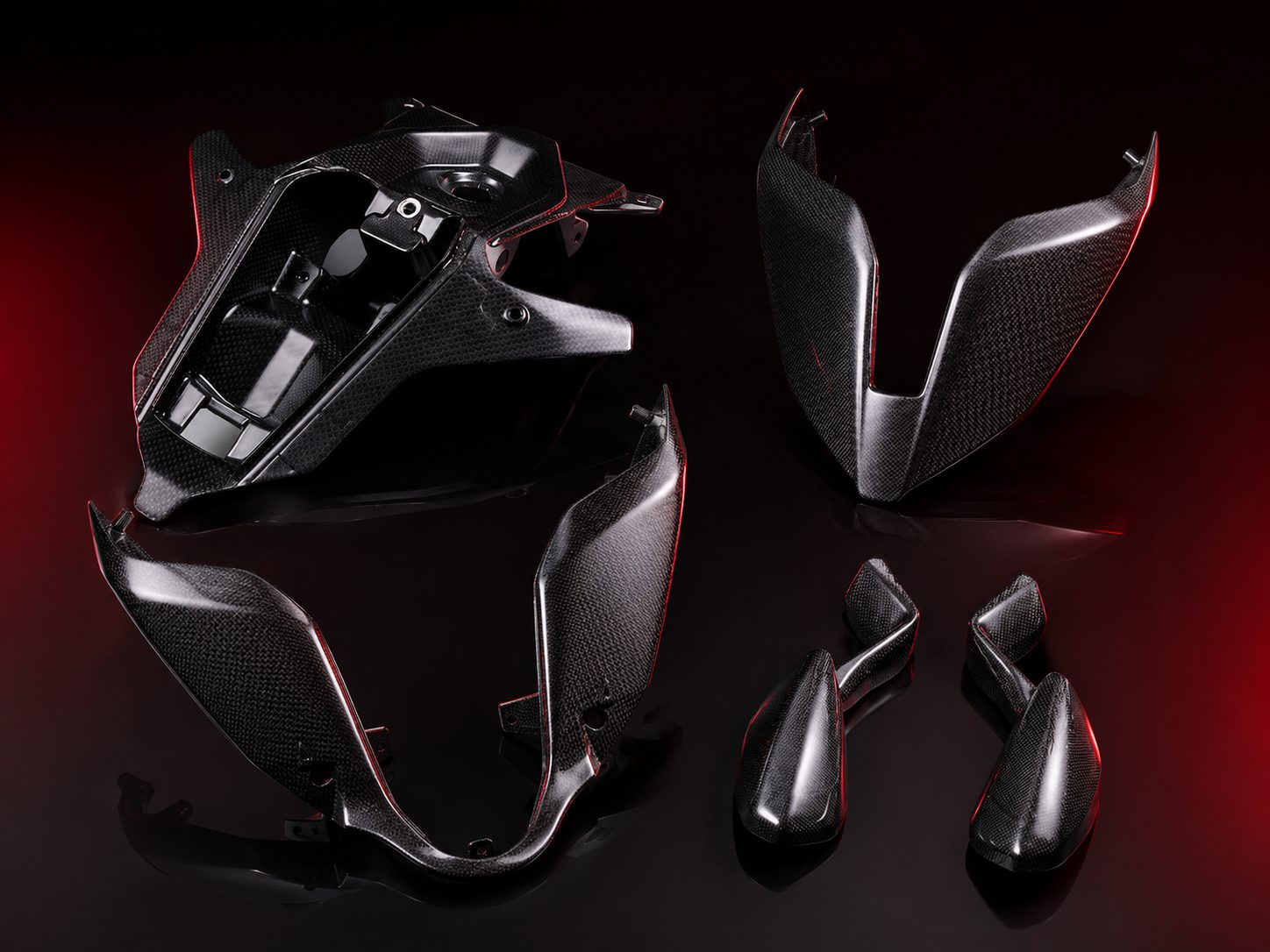
Fairing & Bodywork Parts

Fairing & Bodywork Parts

Exterior carbon fiber panels designed for model lines, aerodynamic surfaces and premium sportbike appearance.

  • Head fairing
  • Body side panels
  • Lower panels
  • Inner side panels
Fairing & Bodywork Parts

Tank & Seat Area Covers

Carbon fiber parts around the tank, cockpit and rear cowl area, where surface quality and fitment are highly visible.

  • Tank front cover
  • Tank side panels
  • Rear seat cowl
  • Key cover
Fairing & Bodywork Parts

Aero & Racing Parts

Racing-inspired carbon fiber parts for aggressive styling, track builds and premium custom motorcycle programs.

  • Winglets
  • Front lip
  • Windscreen inner trim
  • Aero trims
Fairing & Bodywork Parts

Fenders & Protection Covers

High-impact parts exposed to mud, water, road debris, vibration and repeated cleaning.

  • Front fender
  • Rear fender
  • Chain guard
  • Swingarm cover
Fairing & Bodywork Parts

Engine & Exhaust Covers

Carbon fiber covers around high-detail mechanical areas where heat, vibration and mounting safety matter.

  • Timing belt cover
  • Gear cover
  • Mid exhaust cover
  • Exhaust heat shield
Fairing & Bodywork Parts

Frame & Accessories

Structural-area covers and small carbon fiber accessories used to complete the full vehicle style.

  • Subframe
  • Radiator bracket
  • Rear seat bracket
  • Mirror covers

Available Product Types

Rear Seat Cowl Tank Front Cover Winglets Footpeg Side Panels Timing Belt Cover Tank Side Panels Windscreen Inner Trim Key Cover Rear Cowl Center Mid Exhaust Cover Rear Fender Front Fender Chain Guard Swingarm Cover Subframe Gear Cover Inner Side Panels Rear Seat Bracket Head Fairing Lower Panel Under Seat Side Panels Exhaust Shield Radiator Bracket Front Lip Body Side Panels Mirror Covers
ENGINEERING ANATOMY

More Than a Shell. Engineered as a System.

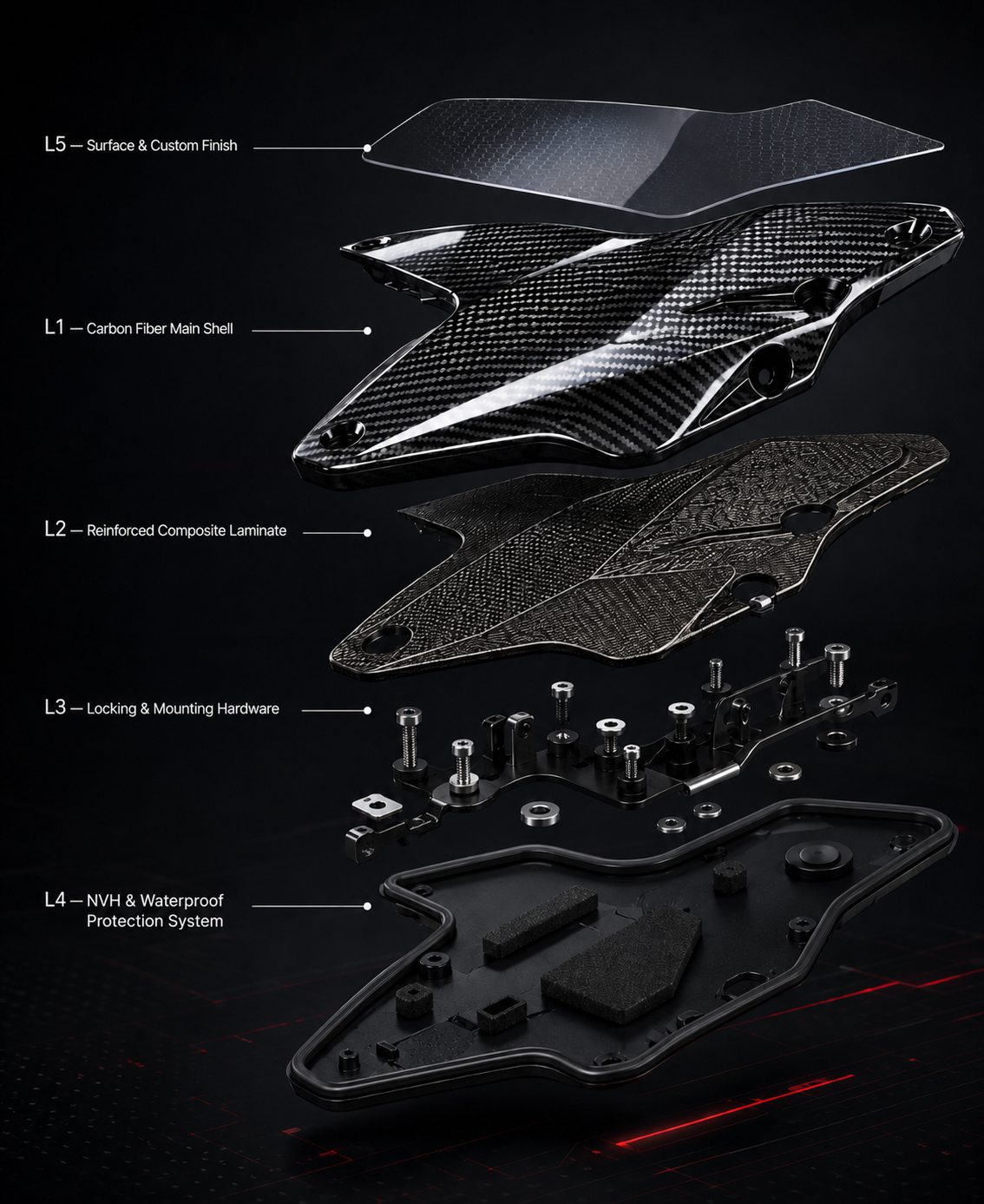
The deeper page explains the body shell, reinforcement layer, locking hardware and sealing system as one integrated structure.

L1

Carbon Fiber Main Shell

Multi-axial carbon fiber and epoxy resin form the visible protection and styling layer. It provides lightweight strength, weather resistance, impact resistance and carbon weave appearance.

L2

Reinforced Composite Laminate

High-density carbon reinforcement, optional Kevlar or high-toughness reinforcement can be used in impact zones, screw holes, edges and wind-facing areas.

L3

Locking & Mounting Hardware

Stainless screws, custom clips, locating brackets and anti-loosening washers keep parts fixed under vibration, bumps and high-speed airflow.

L4

NVH & Waterproof Protection System

Silicone pads, waterproof sealing strips and buffer foam reduce vibration noise, dust/water ingress, paint abrasion and hollow-area wind noise.

L5

Surface & Custom Finish

3K twill, 3K plain, forged carbon, matte, gloss, laser logo, team mark, personalized texture and packaging customization.
Fairing & Bodywork Parts
OEM / ODM PROCESS

Custom Carbon Fiber Parts Process

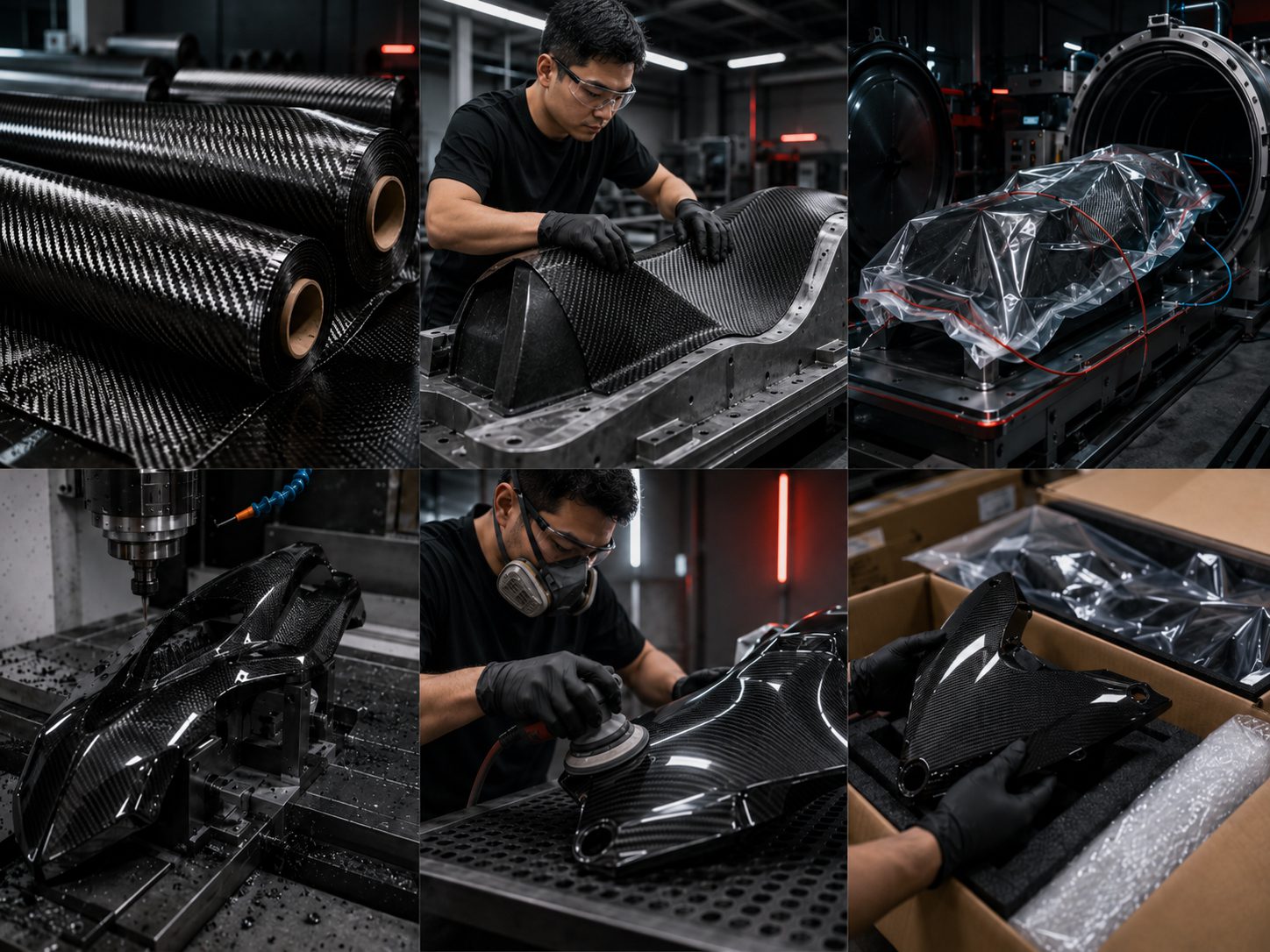
A streamlined OEM / ODM workflow from requirement review, CAD design and carbon process selection to tooling, prototype, testing, approval, mass production and shipping.

From Idea to Production

We help brands, distributors and custom project teams control cost, reduce development risk and move faster from concept to production-ready carbon fiber motorcycle parts.

Engineering Review Process Selection Prototype Validation
START A CUSTOM PROJECT
01

Requirement

Confirm model, target part, quantity, finish, packaging and project goal.

02

CAD Design

Create or optimize 3D data based on sample, scan data or drawings.

03

DFM Analysis

Review structure, split line, trimming area and production feasibility.

04

Process Selection

Select the right carbon process for cost, strength and volume.

Wet Carbon Dry Carbon
05

Quotation

Quote by material, tooling, process, finish and order quantity.

06

Tooling

Develop molds based on approved 3D data and part structure.

07

CNC

Machine molds, trimming fixtures and drilling positions for accuracy.

08

Prototype

Produce first sample to verify surface, thickness and installation logic.

09

Testing

Check fitment, vibration, strength, surface finish and reliability.

10

Approval

Confirm prototype details and approve before mass production.

11

Mass Production

Control layup, curing, trimming, coating and batch consistency.

12

QC & Shipping

Inspect, pack safely, support private label and arrange shipment.

QUALITY & TESTING

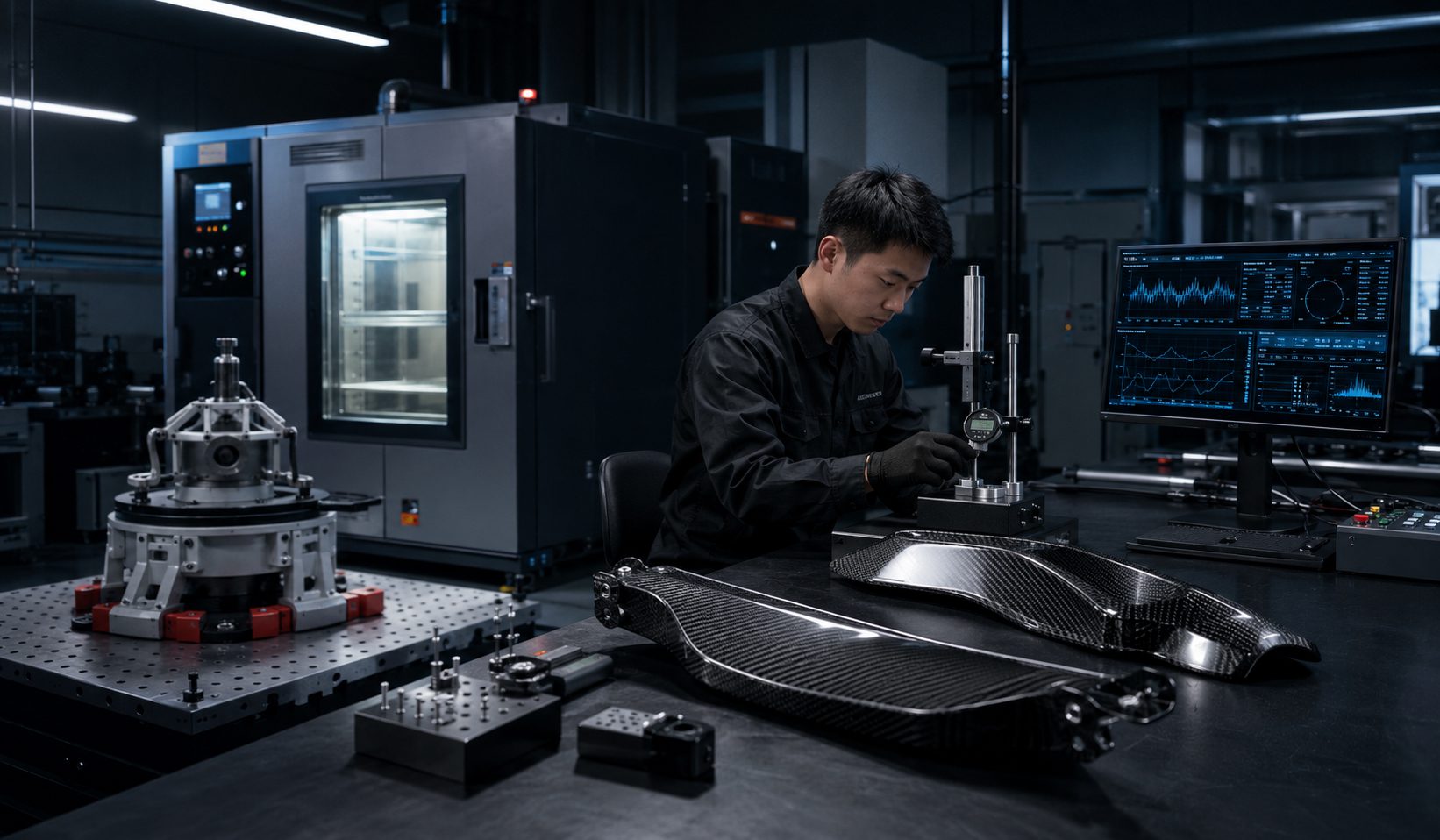
Testing should simulate real riding conditions.

Turn quality control into a selling point: weather, vibration, wind pressure, water, dust, impact and fitment.

FITMENT

Dimension & Hole Position

Check hole alignment, mounting position, edge gap, curvature and part-to-body fit.

STRUCTURE

Compression & Impact

Evaluate high-stress areas such as screw holes, edges, fenders and wind-facing zones.

WEATHER

High / Low Temperature

Simulate outdoor sun exposure, cold weather, rain, mud and long riding environments.

RIDING

Vibration & Wind Pressure

Reduce risk of noise, loosening, resonance and high-speed airflow instability.

SURFACE

Clear Coat & Carbon Weave

Inspect gloss, matte, weave consistency, bubbles, delamination and rough edges.

PROTECTION

Waterproof & Dust Sealing

Check sealing strips, gasket positions and contact areas to protect original components.

INSTALLATION

Hardware Reliability

Review stainless fasteners, clips, brackets, washers and installation kits.

BATCH

Consistency Control

Control repeated production quality from mold, trimming, drilling, coating to packaging.
Testing Equipment Laboratory
Fitment Quality Inspection Process
MATERIALS & CUSTOMIZATION

Materials, Weaves & Finishes

Different parts need different material strategies, not one universal carbon plate.

Material structure options

Standard Carbon Version

Real carbon fiber structure for lightweight styling and general protection parts.

Carbon + Kevlar Reinforced

For impact-prone areas requiring higher tear resistance and toughness.

High-Rigidity Laminate

Localized thickness tuning for screw holes, edges, wind-facing surfaces and bracket zones.

Competition / Premium Grade

One-piece molding and higher surface requirements for racing or high-end motorcycle projects.

Surface and brand options

3K Twill / 3K Plain

Classic carbon weave choices for mainstream motorcycle aftermarket parts.

Forged Carbon

More aggressive premium texture for special editions and private label products.

Gloss / Matte Finish

Surface finish can be matched to product positioning and customer brand style.

Logo & Packaging

Laser logo, club mark, team customization, personalized text and gift-box packaging.

Compatible model categories and brands

Suitable for sportbikes, naked bikes, retro motorcycles, off-road bikes, scooters, touring and custom projects.

BMW Yamaha Honda Ducati Kawasaki Suzuki KTM Aprilia Triumph Harley-Davidson Vespa CFMOTO MV Agusta
QUALITY & TESTING

Tested for Real Riding Conditions

Motorcycle carbon fiber parts should be checked under real-use risks: fitment, vibration, wind pressure, heat, water, dust, surface durability and batch consistency.

FITMENT

Dimension & Hole Position

Check hole alignment, mounting position, edge gap, curvature and part-to-body fit.

STRUCTURE

Compression & Impact

Evaluate high-stress areas such as screw holes, edges, fenders and wind-facing zones.

WEATHER

Heat & Weather Resistance

Consider sun exposure, temperature changes, water, dust, mud and repeated cleaning.

RIDING

Vibration & Wind Pressure

Reduce risk of noise, loosening, resonance and high-speed airflow instability.

SURFACE

Clear Coat & Carbon Weave

Inspect gloss, matte, weave consistency, bubbles, delamination and rough edges.

PROTECTION

Waterproof & Dust Sealing

Check sealing strips, gasket positions and contact areas to protect original components.

INSTALLATION

Hardware Reliability

Review screws, clips, brackets, washers, pads and installation accessory compatibility.

BATCH

Consistency Control

Control repeated production quality from layup, curing, trimming, drilling and coating.
Carbon Fiber Inspection Lab
Industrial Testing Laboratory
FITMENT & INSTALLATION

Better Fitment. Lower After-Sales Risk.

Installation quality is one of the strongest after-sales risk points for motorcycle carbon fiber parts. A good product should consider OEM mounting logic, thermal expansion, buffer hardware and buyer guidance.

AFTER-SALES RISK CONTROL

Why Installation Risk Matters

Even if the carbon surface looks perfect, poor clip design or unclear installation can still lead to loose mounting, abnormal noise, edge lifting, customer complaints and return costs.

Loose Clips Abnormal Noise Edge Lifting Installation Damage
01
FITMENT

Clip Position Accuracy

Molded clip slots and mounting areas are designed around OEM installation logic.

02
THERMAL

Heat Expansion Gap

Proper clearance helps reduce squeezing noise caused by riding temperature changes.

03
HARDWARE

Buffer & Hardware Support

Silicone pads, stainless screws and washers help protect thin carbon fiber areas.

04
GUIDANCE

Installation Guidance

Model-specific guidance helps buyers reduce installation mistakes and after-sales risk.

PRODUCT VIDEO

Motorcycle Carbon Fiber Parts Walkthrough

A real product introduction video showing motorcycle carbon fiber parts, surface details, product categories and available customization options.

REAL PRODUCT SHOWCASE

See the Parts Before You Source

This video helps buyers quickly understand our motorcycle carbon fiber product range, including fairings, covers, fenders, winglets, guards and other model-specific parts.

  • Real product presentation by our team
  • Close-up view of carbon fiber texture and finish
  • Multiple motorcycle carbon fiber part categories
  • Useful reference for brands, distributors and custom projects
MATERIAL COMPARISON

Carbon fiber vs plastic and
metal motorcycle parts.

This table is useful for SEO and for customers comparing price, lifetime value and performance.

Comparison Item JCSPORTLINE Carbon Fiber Parts Plastic / Metal Parts
Main Material T300/T700 carbon fiber prepreg structure, optional Kevlar or high-toughness reinforcement, designed for lightweight and rigidity. ABS plastic, recycled plastic, thin iron or aluminum alloy with limited structural reinforcement.
Impact &
Deformation
High rigidity, better resistance to falling, stone impact, compression, high-speed wind pressure and outdoor deformation. Plastic can age, crack or turn brittle; metal can dent, rust, bend or damage paint.
Weight Can be over 45% lighter than metal alternatives depending on part design, improving handling and response. Metal parts add weight; thin plastic parts are light but often lack protection.
Weather
Resistance
Waterproof, corrosion-resistant, UV-resistant, high/low temperature resistant and suitable for outdoor riding. Plastic can yellow or crack; metal can oxidize, rust and require maintenance.
Riding Experience Silicone pads, waterproof strips and buffer foam reduce vibration, resonance noise and body paint abrasion. Poorly fitted parts can loosen, vibrate, scratch paint or generate wind noise.
Brand Value Visible real carbon weave, gloss/matte options, custom logo and private label packaging. Often lower visual value, weaker customization and limited premium differentiation.
B2B COOPERATION

Built for B2B Motorcycle Parts Partners

Motorcycle carbon fiber projects face fragmented models, high SKU pressure, niche traffic, low-price competition and cross-border after-sales risks. We help B2B buyers reduce complexity and build higher-value product lines.

01

Ready-to-Sell Catalog Supply

Support model-based product categories and part range planning for distributors, online sellers and aftermarket brands.

02

Private Label Production

Support brand packaging, logo options, finish selection, product labels and private label project supply.

03

Custom Mold Development

Develop new motorcycle carbon fiber parts based on samples, 3D data, drawings or buyer requirements.

04

SKU & Inventory Planning

Help distributors plan model-based product lines, reduce slow-moving inventory risk and focus on higher-demand categories.

05

Quality-Driven Differentiation

Use material clarity, process proof, testing content and fitment control to compete against fake carbon and low-price products.

06

Packaging & Installation Support

Support protective packaging, hardware kits, installation guidance and after-sales risk reduction for cross-border supply.

FAQ

Motorcycle Carbon Fiber Parts FAQ

Common questions from brands, distributors, custom shops and OEM / ODM buyers before quotation, development, catalog supply and private label cooperation.

01

Why is 3D data review important before mold development?

Motorcycle parts often have complex curves, narrow gaps and mounting areas. Reviewing data before tooling helps reduce model deviation, mold rework, poor edge matching and installation problems.

02

Can you develop parts for a motorcycle model not in the catalog?

Yes. Custom projects can start from original samples, scan data, CAD files, drawings or reference parts. We review model year, mounting logic, surface split and production feasibility first.

03

Why is prototype fitment needed before mass production?

Prototype fitment helps find edge lifting, hole mismatch, clip looseness, interference, abnormal noise and surface problems before mass production.

04

How do you reduce installation complaints?

We focus on clip position, mounting logic, thermal expansion clearance, buffer pads, screws, washers and installation guidance to reduce loose mounting, abnormal noise and return risk.

05

Can you support ready-to-sell catalog supply?

Yes. We can support model-based product categories and part range planning for distributors, online sellers, aftermarket brands and local modification shops.

06

Can you support private label production?

Yes. We support brand packaging, logo options, finish selection, product labels, hardware kits and private label project supply according to B2B requirements.

07

How can distributors reduce SKU and inventory risk?

We help buyers plan model-based product lines, prioritize higher-demand part categories and reduce slow-moving inventory risk before large-scale catalog expansion.

08

What should buyers provide for a faster quotation?

Please provide motorcycle model and year, target parts, quantity, preferred carbon process, finish, packaging requirements and whether samples or 3D data are available.

Free Technical Evaluation

Ask for a Free Feasibility Report

Our engineers will review your concept and provide materials, structure, and feasibility suggestions.