Lightweight. Agile. Powerful.
These three words define what makes a modern eFoil board truly exceptional. Whether you’re gliding above calm water or testing waves at full throttle, board weight directly determines how your ride feels — from acceleration to battery life.
For dealers, OEM partners, and professional riders alike, understanding eFoil weight is essential to choosing or developing the right product. Here’s how JCSPORTLINE engineers precision and performance into every carbon eFoil design.
The Core of Performance: Why Weight Matters
Every kilogram affects how your eFoil lifts, balances, and responds.
A lighter board demands less thrust to rise out of the water, consumes less energy, and reacts more quickly to your body movements. Meanwhile, an overly heavy setup can slow acceleration, reduce battery life, and make high-speed control more difficult.
That’s why most modern eFoil boards target a board-only weight of 8–10 kg — the sweet spot between strength and stability.
JCSPORTLINE’s one-piece carbon fiber construction achieves this balance by combining aerospace-grade stiffness with a refined hydrodynamic shell. You’ll feel the difference the moment you lift it.
Breaking Down the Weight: What’s Inside an Efoil
1. Board Structure (6–10 kg)
The main board contributes most of the controllable weight.
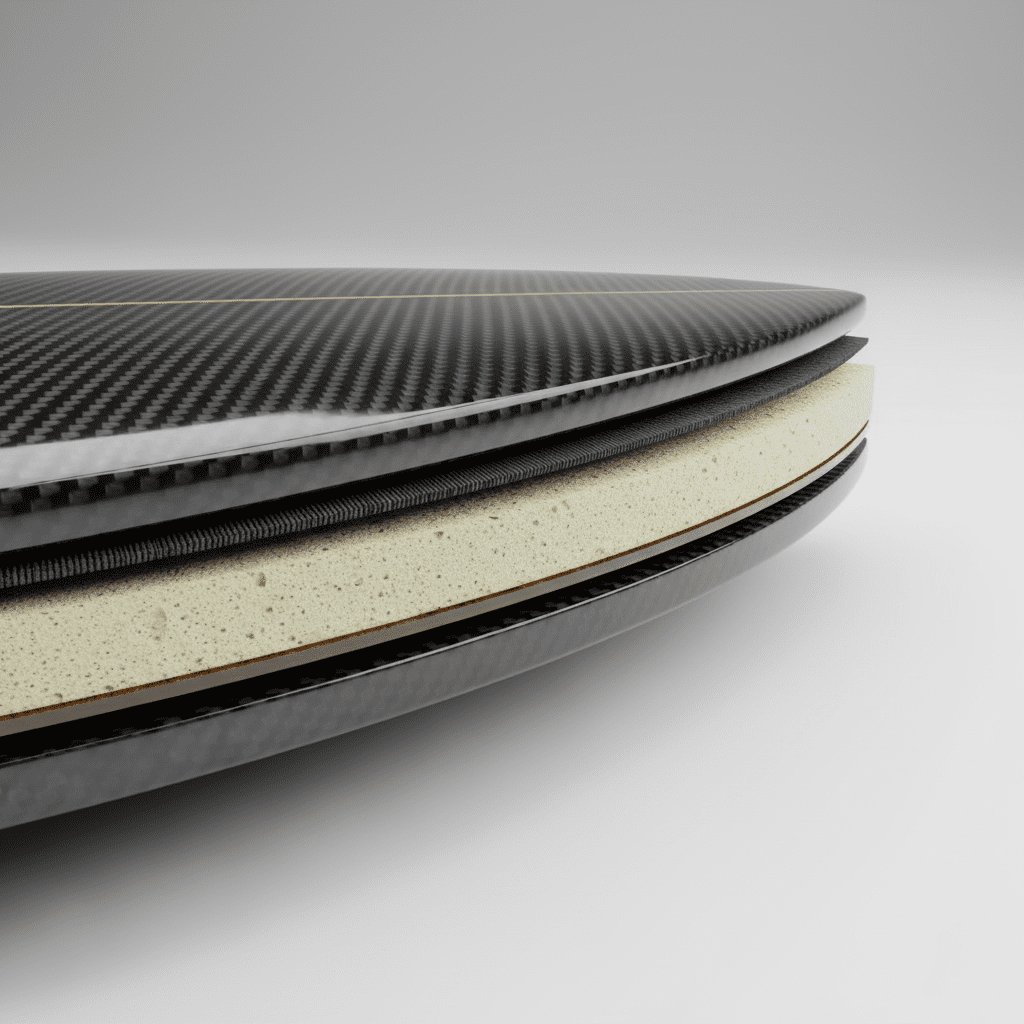
JCSPORTLINE uses a carbon-fiber sandwich structure — outer layers of 2×2 twill for impact resistance, inner unidirectional carbon for stiffness, and a PU foam core (60–120 kg/m³ density).
PU cores match the strength and buoyancy of PMI foam but at a significantly lower cost. This approach maintains the lightweight advantage while ensuring durability in both recreational and professional use.
2. Battery & Motor System (12–18 kg)
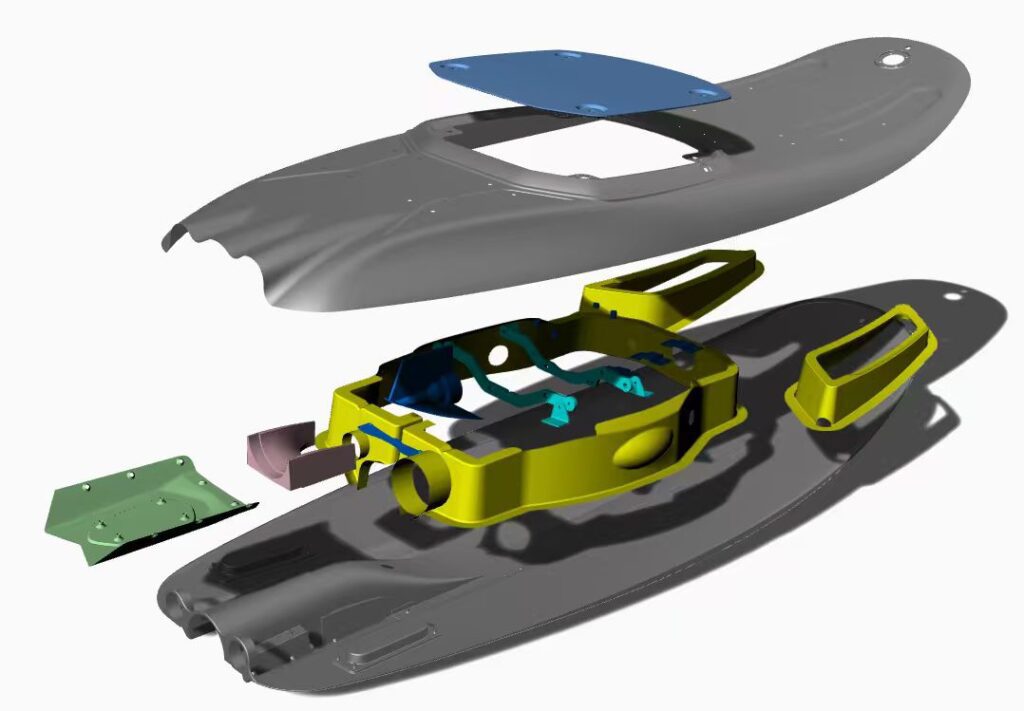
The power unit — battery and motor — often accounts for over 60% of total weight.
JCSPORTLINE’s modular design allows quick battery swaps while ensuring full IPX7 waterproof protection. Each connection point uses marine-grade stainless steel with corrosion-proof treatment tested for over three years in saltwater conditions.
For manufacturers and dealers, this modularity means faster servicing, safer logistics, and a longer product lifespan.
How Weight Influences Efoil Performance
Acceleration & Lift-Off Speed
Every kilogram counts when it comes to lift.
A lighter eFoil requires less thrust to “pop up” on the foil, allowing faster takeoffs and smoother transitions. You’ll experience a more responsive board that reacts instantly to your foot pressure — ideal for dynamic carving or quick turns.
In JCSPORTLINE’s internal tests, reducing 1 kg of board weight improved lift-off speed by up to 12%.
Stability & Rider Control
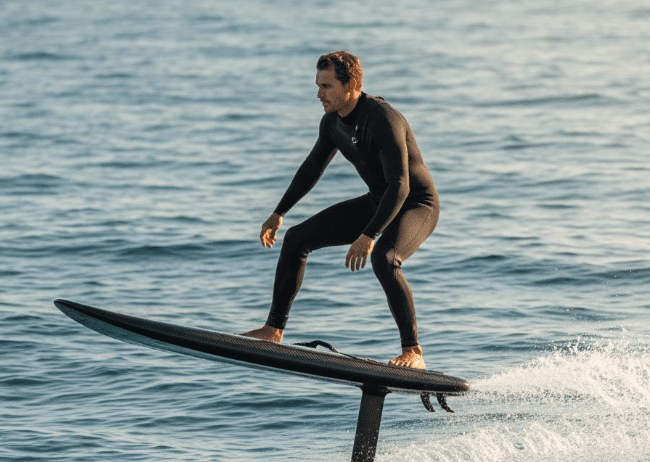
While lighter boards accelerate faster, they can feel twitchy for beginners.
Heavier boards provide a smoother, more planted ride in choppy waters. The key lies in finding the perfect balance — something JCSPORTLINE achieves with 8 kg carbon shells and internal anti-twist reinforcements.
This structure gives you low inertia for quick response, yet maintains rigidity and balance even at 40 km/h.
Battery Life & Energy Efficiency
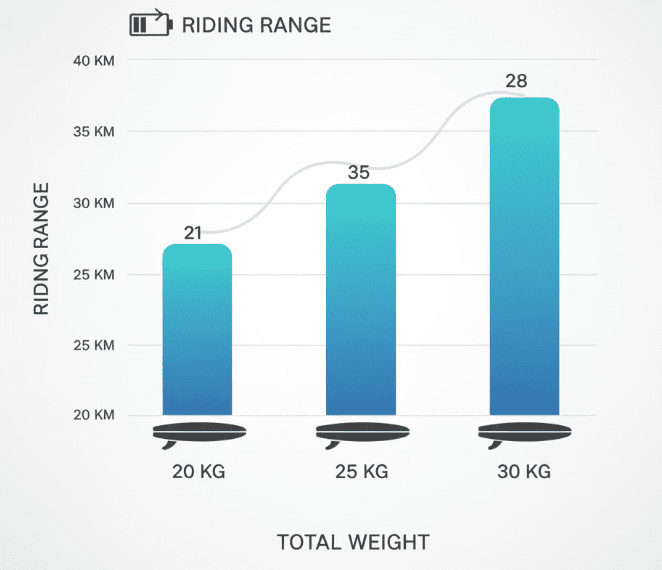
A heavy eFoil drains energy faster. The added mass increases drag, forcing the motor to work harder — often reducing range by 15–25%.
JCSPORTLINE’s lightweight carbon fiber design reduces total power draw, extending ride time and improving battery temperature control. Over long sessions, that translates into longer playtime and longer battery life.
The JCSPORTLINE Advantage — Lightweight Meets Strength
Behind every JCSPORTLINE eFoil is a manufacturing process built for both performance and precision.
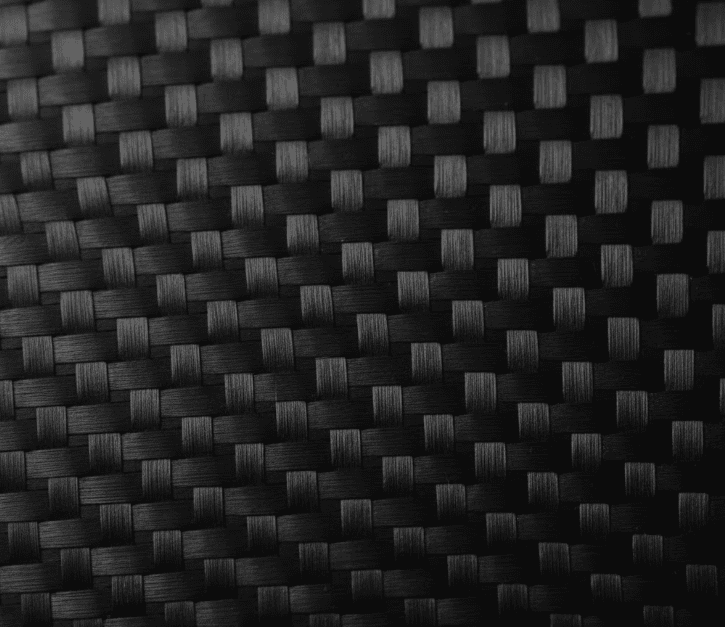
Each board is formed in a P20 steel CNC mold with ±0.1 mm accuracy. The one-piece molding eliminates center seam lines, reduces resin waste, and ensures visual perfection — a continuous carbon texture with structural integrity to match.
The result:
- 8 kg lightweight design
- 500 kg dynamic load capacity
- Zero visible seam lines
- UV-protected coating that won’t yellow or crack
For distributors, this means a product that looks premium, performs consistently, and reflects world-class engineering.
Choosing the Right Weight for Your Riding Style
Not every rider needs the same setup. Here’s a simple reference:
| Rider Type | Ideal Board Weight | Performance Focus |
|---|---|---|
| Beginner | 10–12 kg | Stability, smoother control |
| Intermediate | 8–9 kg | Balanced handling, easy lift |
| Professional | <8 kg | Agility, responsiveness, race performance |
Selecting the right balance ensures you get both comfort and precision.
Dealers can use this data to help customers choose models based on experience level and local water conditions.
Sustainability in Lightweight Engineering
Every JCSPORTLINE eFoil reflects a commitment to eco-conscious production.
Our facilities use solar-powered curing systems, ultrasound defect scanning, and recycled carbon fiber materials with up to 90% recovery efficiency.
Lightweight engineering isn’t only about speed — it’s about sustainability, energy optimization, and product longevity. That’s what sets JCSPORTLINE apart as a carbon fiber manufacturer with both performance and responsibility at its core.

FAQ — Common Questions About Efoil Weight
Q1: What’s the ideal weight for a beginner’s eFoil?
A: Around 10–12 kg. The added stability helps maintain balance during learning.
Q2: Why are one-piece carbon boards lighter?
A: The integrated shell removes the central seam and excess resin, improving strength-to-weight ratio.
Q3: Does a lighter eFoil mean it’s less durable?
A: Not with JCSPORTLINE. Reinforced carbon layering and ABS inserts maintain high strength even below 8 kg.
Q4: What’s the total system weight with motor and battery?
A: Typically 25–30 kg, depending on configuration and battery capacity.
Final Thoughts — The Weight That Defines Your Ride
When you step on an eFoil, you’re balancing more than your body — you’re balancing physics, power, and precision.
Choosing the right weight isn’t just about numbers; it’s about how your board connects with the water and responds to every command.
With JCSPORTLINE’s one-piece carbon construction, you gain a lighter, stronger, and more responsive ride — engineered for both enthusiasts and professionals who demand the best from their gear.
Contact
Ready to develop or stock your next-generation carbon eFoil boards?
Explore JCSPORTLINE’s lightweight carbon manufacturing solutions, tailored for OEM and distributor partnerships.
👉 Contact JCSPORTLINE
Your journey to better performance starts here.