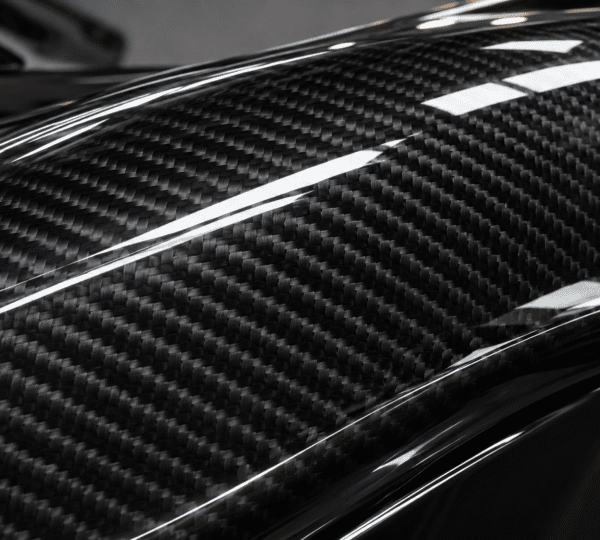
Gloss UV-protective clear coat
A reflective finish over the visible carbon weave.


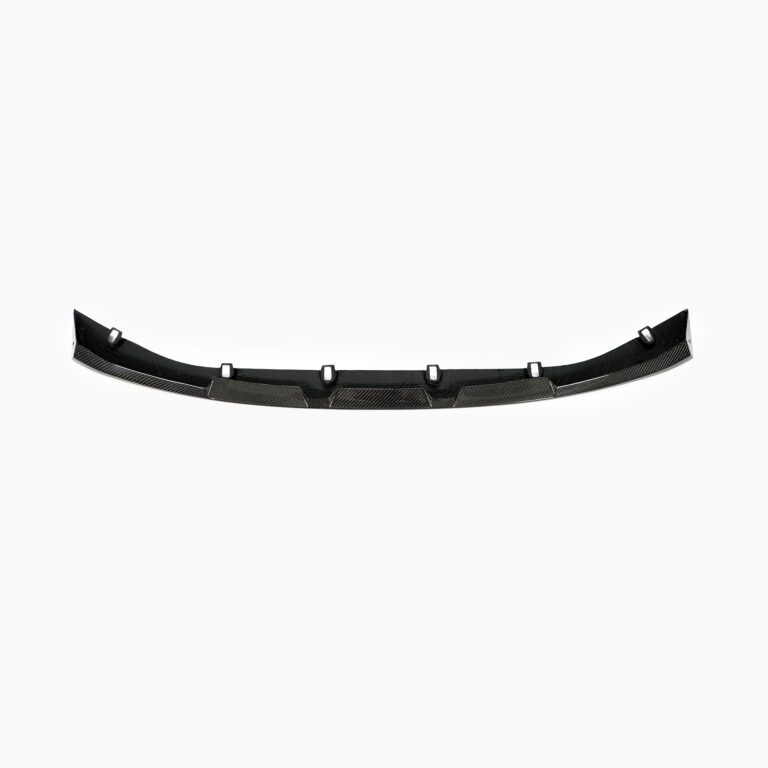
Carbon fiber front lip shaped to the lower edge of the original JCW bumper on the MINI F56 three-door hatch.
This MINI Cooper F56 JCW carbon fiber front lip follows the lower edge of the original JCW bumper on the three-door hatch. The visible 3K 2×2 twill is available with a gloss or matte UV-protective clear coat.
For bulk supply, check a sample against the JCW bumper contour before stocking the part. Include your preferred finish and any label or carton requirements in the request for quotation.
List the lip under F56 JCW exterior trim for the original bumper.
Check sample alignment along the bumper edge before fitting.
Match the visible twill to other carbon exterior pieces on a JCW display car.
Set the clear-coat finish and label format for your own F56 range.
Develop a carbon fiber front lip, corner splitter or front bumper canard around your bumper profile, installation points and order requirements.
Choose the sheen of the UV-protective clear coat when confirming the finish for your order.
A reflective finish over the visible carbon weave.
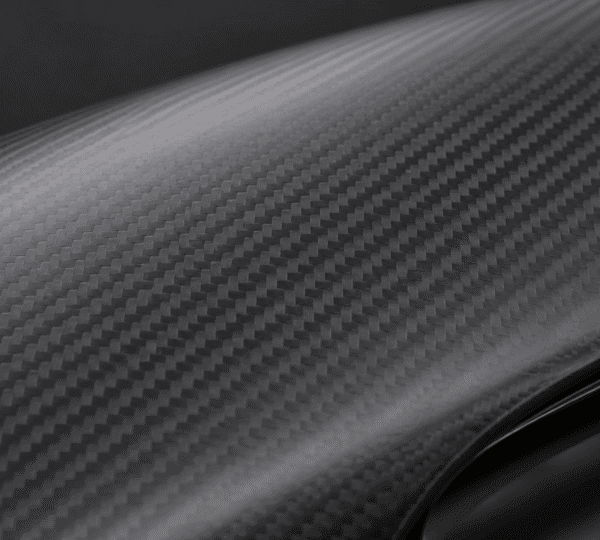
A low-sheen finish over the visible carbon weave.
Review whether the design calls for a continuous lip, a segmented front lip or separate parts at the bumper corners.
Confirm the contact surfaces and attachment points. For parts below the bumper, review the forward projection and ground clearance with the vehicle at its intended ride height.
Discuss product identification for the range and packaging that protects long sections, corners and finished edges.
We review the part geometry, mounting requirements and production volume before selecting a layup and tooling route.
We check bumper shape, mounting points and clearance as part of front lip design.
Confirm the vehicle year, trim and bumper version using photos, drawings, scan data or an original part.
Review the part profile, the contact surfaces and any specified mounting points. Check clearance for parts that extend below the bumper.
Agree on the material, finish and production process. Confirm whether the project uses existing tooling or needs a new mold.
Check the bumper contour, edge alignment and attachment positions. Review left and right alignment for corner parts and section joints for multi-piece designs.
Follow the approved part geometry, mounting configuration and surface finish during batch production.
Check the finished parts against the order requirements and protect long edges, corners and mounting areas for transport.
Company quality management certification
Company quality management certification
Self-owned manufacturing base
Parts or sets, combined capacity
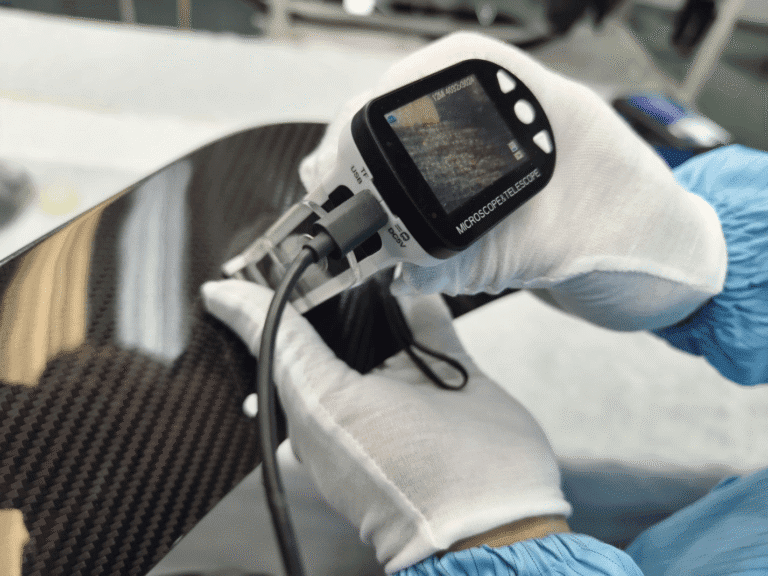
We check the part profile, finished edges, clear coat and specified mounting areas. On paired or segmented designs, we check the alignment of the corresponding sections. Packaging protects edges, corners and attachment points in transit.
Quality controlIt is shaped for the F56 JCW three-door hatch with the original JCW front bumper. The F55 and F57 are outside this fitment.
The lip is designed to fit the original JCW bumper without cutting its outer skin.
The minimum order is 10 pieces for existing models. Minimum quantities for a new development are agreed for each project.
Send the vehicle model, year and trim, the bumper version, photos of the mounting area, the quantity and the finish. For a new design, include drawings, 3D data or an original part if available.
For custom development, the 58-day reference timeline starts once the engineering drawings are confirmed. It covers prototype sample production through final inspection. We quote lead times for existing parts separately and confirm batch production, dispatch and estimated transit times in your quote.
Confirm the bumper version and the attachment points for the selected part. For parts that extend below the bumper, also check the available clearance at the intended ride height.
Send your F56 JCW bumper details, desired finish and order quantity for a quotation.