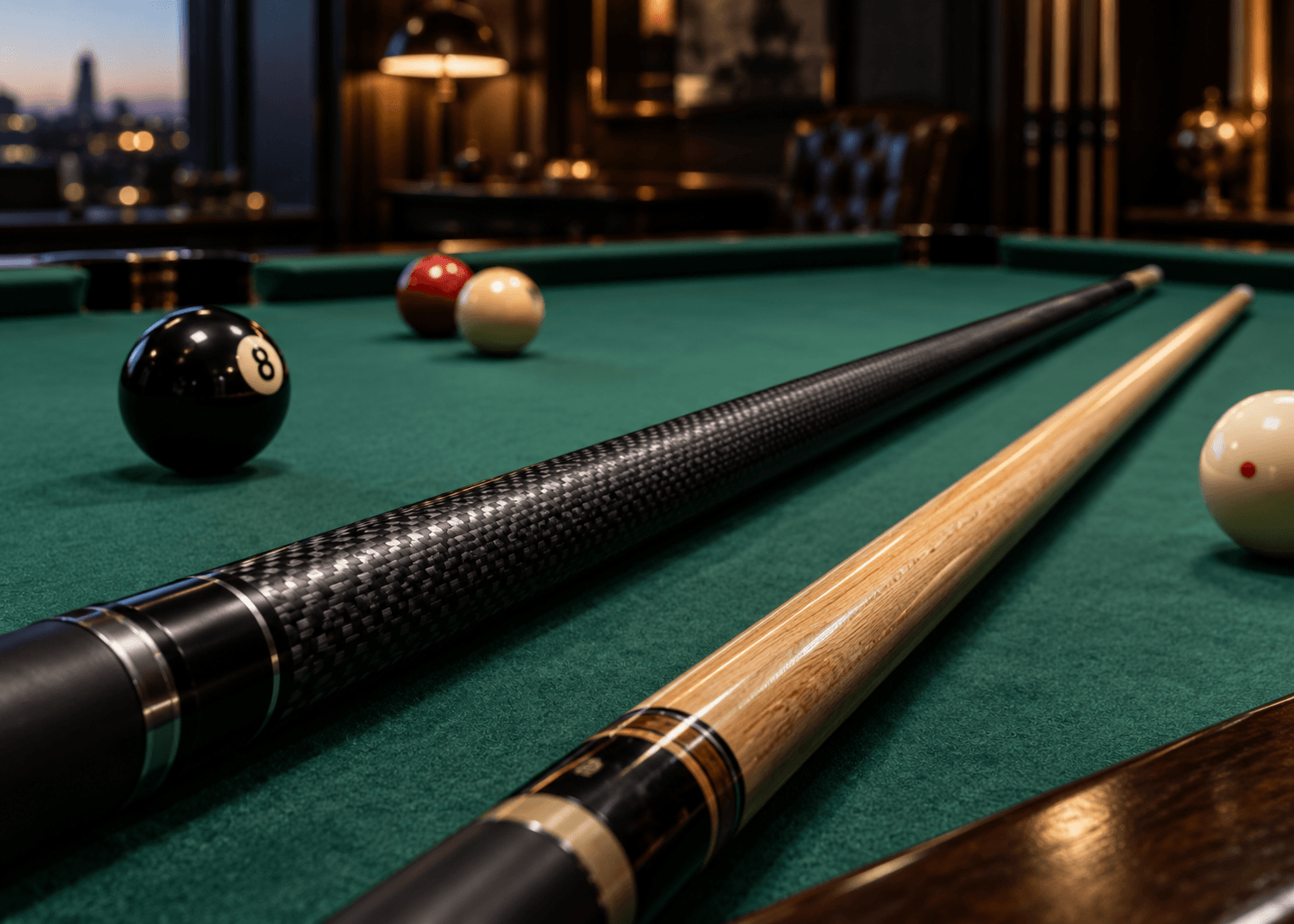
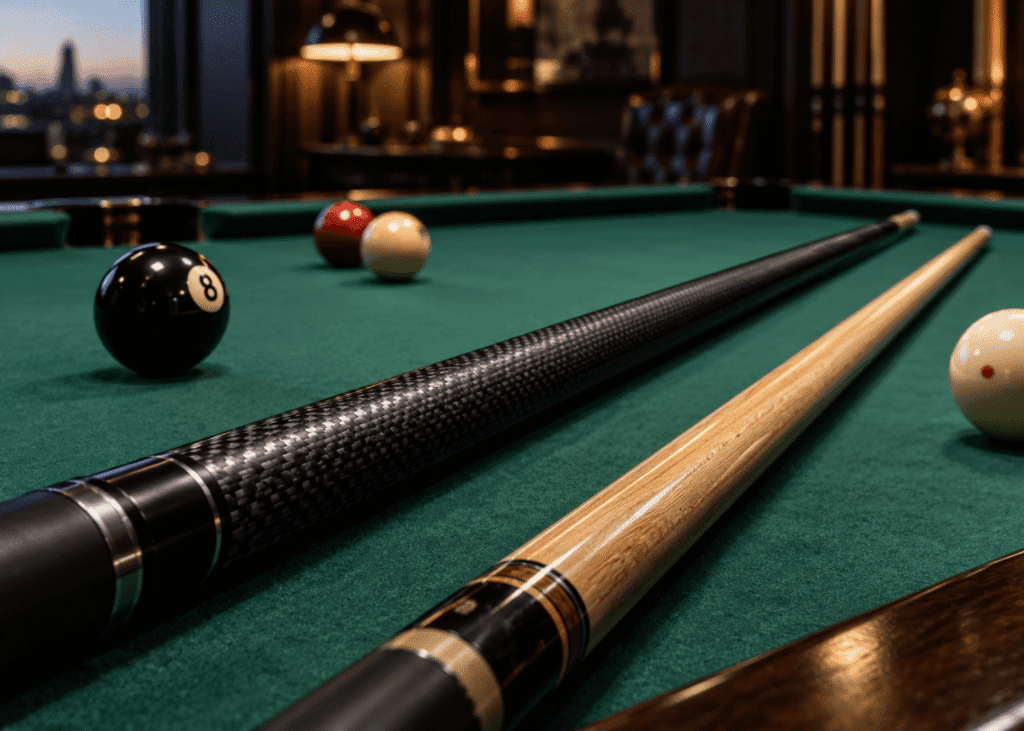
Cue brands rarely start looking at carbon fiber because they are unhappy with wood. They start because they are trying to run a product line — multiple SKUs, repeat production, dealers who expect the same product twelve months from now — and wood keeps making that harder than it should be.
The carbon fiber vs wood pool cue question is almost always framed as a performance argument. For anyone running a brand, that framing is the wrong one. The dividing line in wood vs carbon fiber pool cue construction is not which plays better. It is where the performance comes from. With wood, performance is selected. With carbon fiber, performance is designed.
That distinction is why product managers, sourcing leads and OEM program owners at cue brands are reopening their material strategy. What follows covers what changes, what does not, and how to judge whether the switch fits your product direction. No brand comparisons, no pricing.
What Actually Changes When a Cue Shaft Moves From Wood to Carbon Fiber
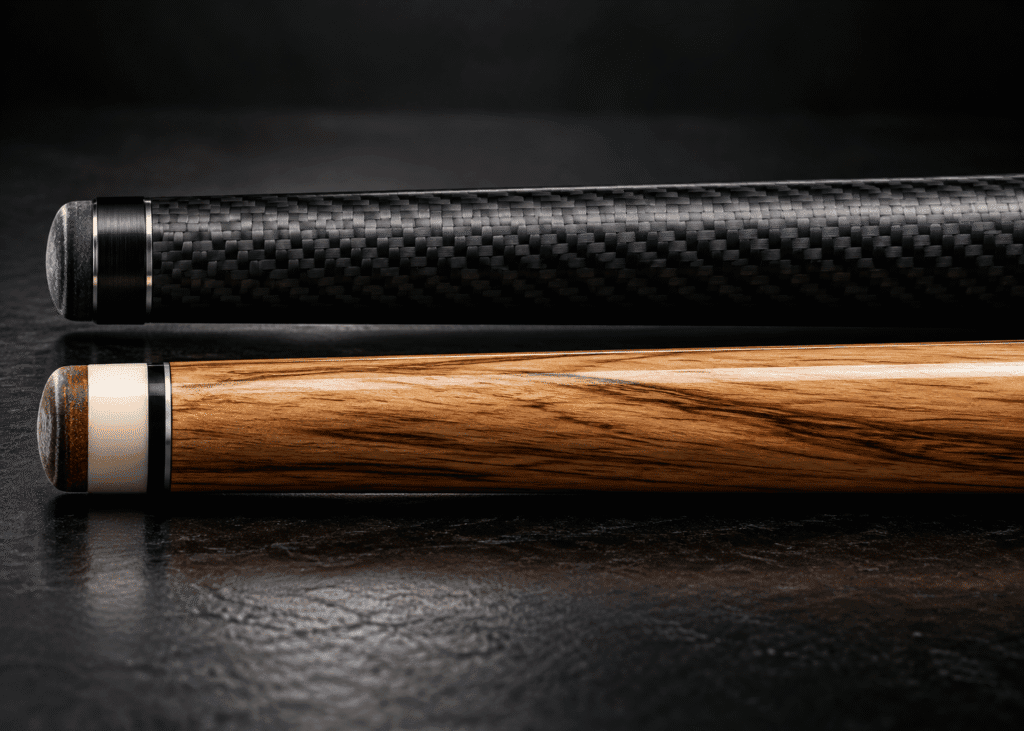
Wood is grown, then sorted. Density, grain direction, moisture content and natural straightness vary from blank to blank, and no process control changes what the tree already did. A cue maker working in wood can reject material outside spec but cannot specify how the next batch will behave. These are the structural wood cue shaft limitations — not defects, but boundaries built into the material.
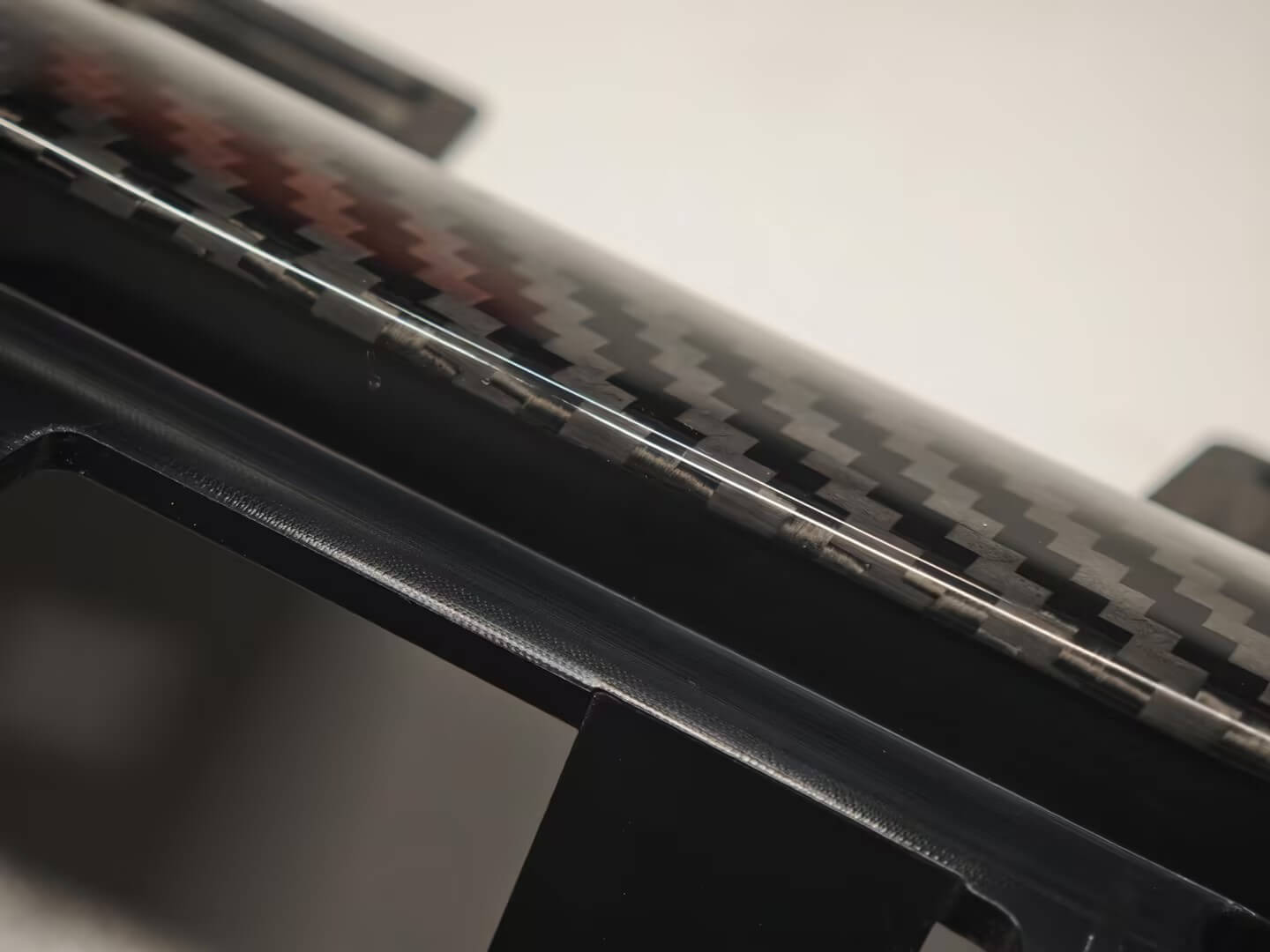
A carbon fiber pool cue shaft differs in kind, not grade. The material and the part are created in the same operation. Fiber orientation, layer count, wall thickness and internal structure are decided during engineering, so the mechanical behavior of the shaft exists in the design file before anything reaches production. Anyone evaluating carbon fiber materials for the first time should sit with that point, because it reverses the normal relationship between sourcing and performance.
It also answers the most common practical question — do carbon fiber cue shafts warp. Wood exchanges moisture with the surrounding air throughout its life, so straightness and dimensional stability track humidity and temperature. In cured composite tubular structures of this type, that mechanism does not exist, which is why long-term straightness behaves differently rather than simply better.
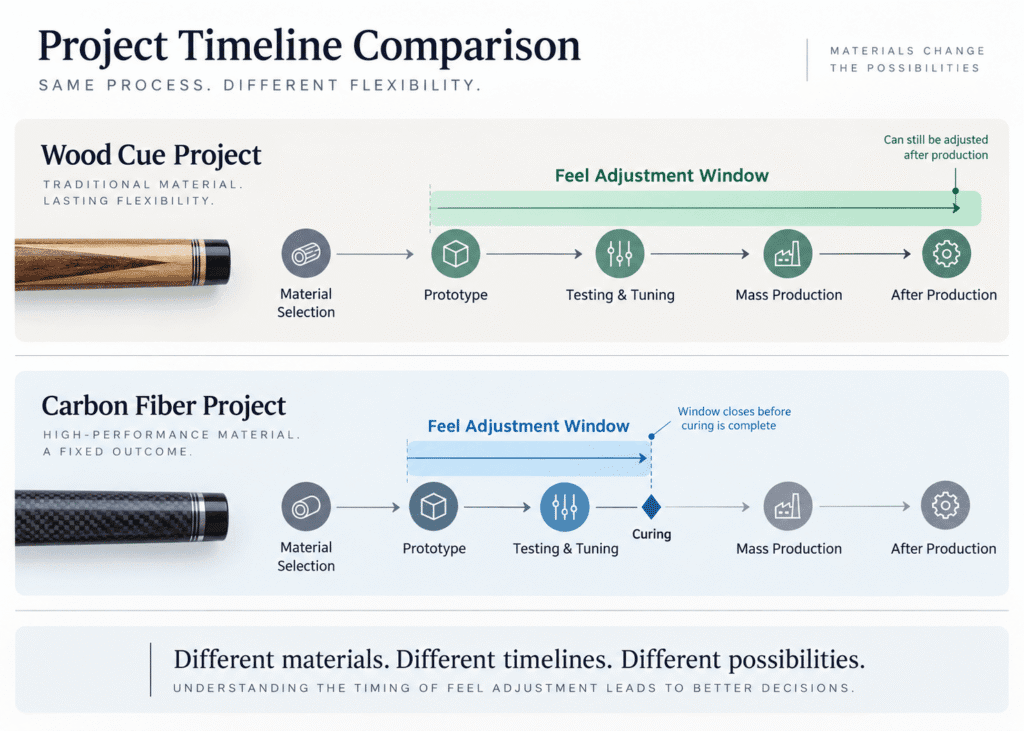
An honest billiard cue material comparison has to include the cost of that control. The pros and cons of carbon fiber pool cue shafts come down to one asymmetry: the structure is locked at cure. A wood shaft that drifts can be re-turned or re-straightened. A composite shaft built on the wrong layup cannot be corrected — it has to be redeveloped, from tooling forward.
| Behavior | Wood Shaft | Carbon Fiber Shaft |
| Source of properties | Grown, then selected | Engineered, then manufactured |
| Batch-to-batch variation | Inherent to the material | Governed by layup and process control |
| Environmental response | Exchanges moisture with air | Stable under normal use conditions |
| Performance tuning | Limited to selection and taper | Layup, wall thickness, reinforcement |
| Correction after production | Possible | Not possible — locked at cure |
Consistency Is Not a Quality Problem — It Is a Product Line Problem
Most factories define consistency as a defect rate. For a brand, that definition is far too narrow to be useful.
A single shaft that plays well is a quality outcome. A specification that plays the same way across the first, second and third production run is a commercial asset. Brands scale on the second one, and wood makes the second one structurally difficult to guarantee.
The consequences surface long after delivery. Reviews stop being reproducible, because the unit a reviewer received is not quite the unit a customer receives. Dealers hedge their stocking commitments. After-sales conversations shift from “this one is faulty” to the far harder “this one feels different from my last one” — a complaint no inspection report can resolve.
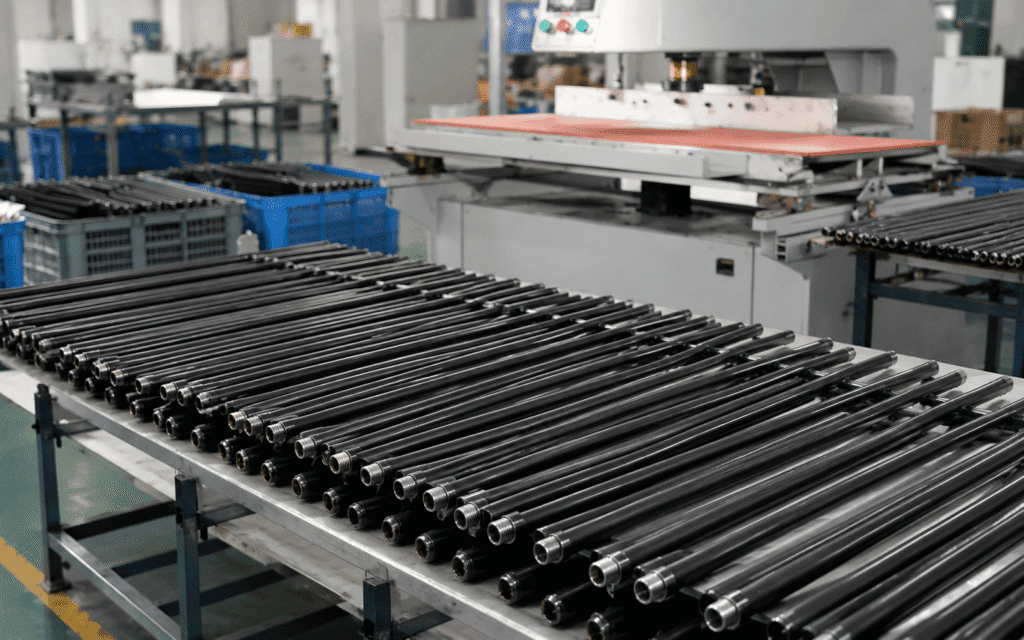
Carbon fiber cue shaft consistency is where this stops being marketing language. Ask specifically what makes carbon fiber cue shafts more consistent than wood and the answer is procedural, not material: a fixed layup schedule, a fixed cure profile, fixed machining datums. Repeatability comes from documented process, which is the entire basis of quality consistency in composite manufacturing.
A wood shaft that plays beautifully is a good product. A shaft specification that plays the same way across three production batches is a good product line. Brands do not scale on the first one.
At JCSPORTLINE, finished cue parameters are verified rather than sampled. Straightness, concentricity, weight, joint assembly and surface condition are each checked before a product moves to delivery. That is what allows a repeat order placed eight months later to carry the same specification forward instead of restarting the approval conversation.
The Feel Question: What Carbon Fiber Changes and What It Does Not
Every brand evaluating this switch hears the objection from experienced players first. It deserves a straight answer, not a defense.
The feedback is different. Vibration transmission and the acoustic signature of a composite shaft are not identical to wood, and that follows directly from the stiffness and damping characteristics of the material. Anyone asking how do carbon fiber cue shafts feel compared to wood and being told “exactly the same” is being sold something.
The useful reframing: in a composite structure, feel is not a property the material hands you. It is an output you specify. Wall thickness distribution, taper profile and internal reinforcement together shape how the shaft responds at impact, which means a brand defines the feedback character of each model rather than discovering it after the fact.
Wood never offered that. A brand can deliberately separate a softer-feedback entry model from a firmer competition model inside one family, and defend that difference to dealers as a design decision rather than a batch variation — which is a materially different conversation.
The discipline requirement comes attached. Because structure is fixed at cure, feel targets must be agreed and validated during prototype development. In a wood project, sample approval is largely cosmetic and dimensional. In a composite project, sample approval is the last moment the playing character of the product is still negotiable.
So when someone asks is carbon fiber better than wood for pool cues, the accurate answer is that it is more controllable — and control only pays off if you spend it early.
Carbon Fiber Turns Cue Performance Into a Set of Design Variables
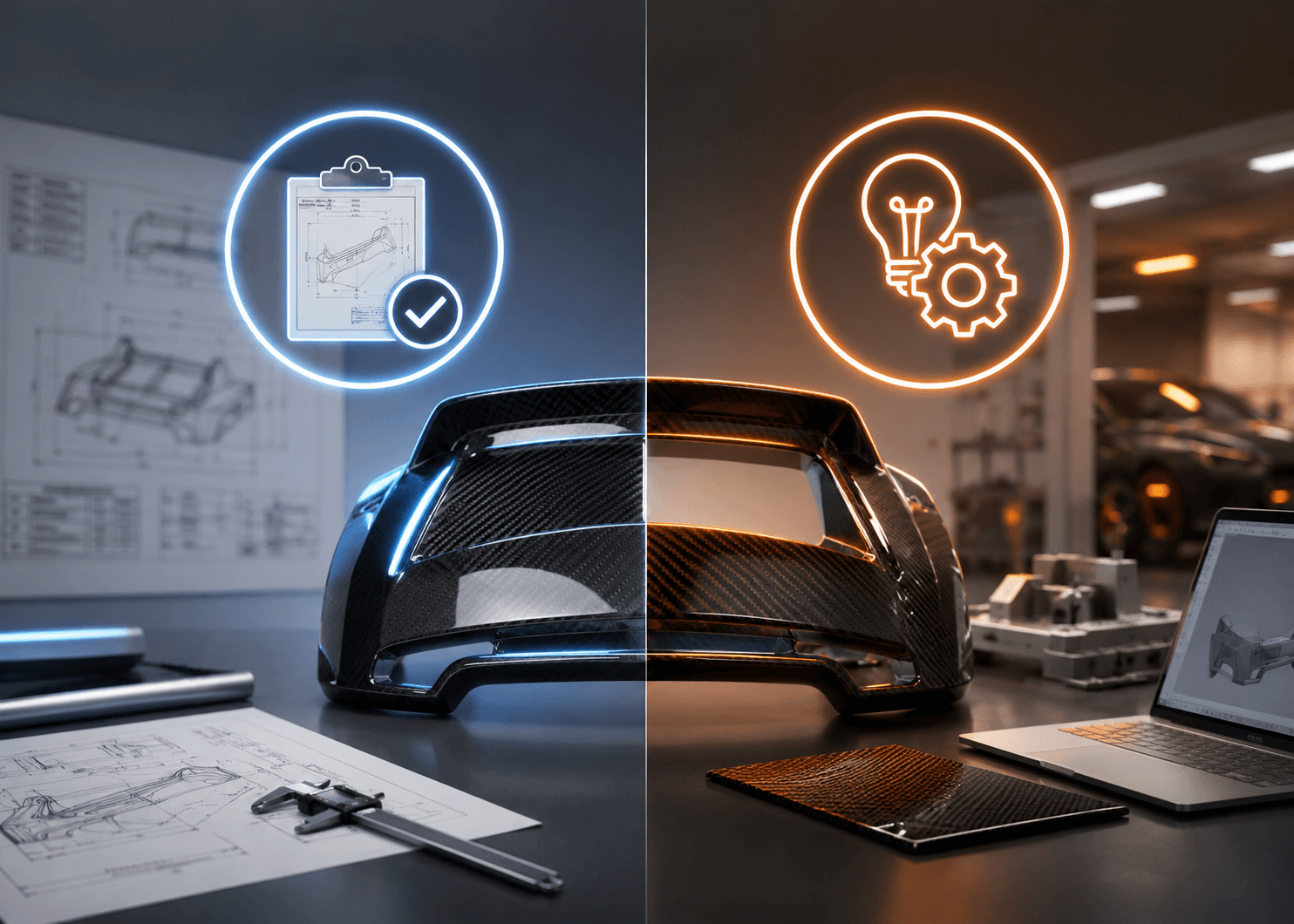
The critical shift for a product team is what you hand a manufacturer. In a wood project, you send a spec sheet. In a composite project, you should be sending performance targets — and whether a factory can translate those targets into a structure separates real engineering partners from tube suppliers.
Understanding how carbon fiber cue shafts are made matters here mainly because it tells you which variables are yours to set. Layup design — fiber angle and layer count determine stiffness distribution and torsional behavior along the shaft. Wall thickness and taper profile — these govern front-end mass and energy transfer at impact. Internal reinforcement — distributes impact loads and supports structural stability through repeated use. Joint and balance system — precision-machined joint interfaces make assembly repeatable across sections, while weight configuration sets the balance point.
These are the actual carbon fiber cue shaft advantages, and they function only when tuned together. Reducing weight in isolation, without accounting for wall structure, degrades rigidity and balance — which is precisely how a lighter cue ends up playing worse than the model it replaced. The advantages of carbon fiber pool cues are therefore best evaluated across a product line, not as a single-model spec comparison.
| Product Positioning | Structural Variables to Tune | What the Factory Must Be Able to Do |
| Competition-grade, firm feedback | Layup angle, wall thickness, front-end mass | Layup design plus repeatable cure control |
| Entry-level, forgiving feedback | Taper profile, reinforcement structure | Translate performance targets into structure |
| Discipline-specific (snooker / Chinese 8-ball / American pool) | Shaft diameter, joint configuration, balance point | Multi-configuration development capability |
| Private-label product family | Shared shaft platform, variant finishes | Prototype-to-production continuity |
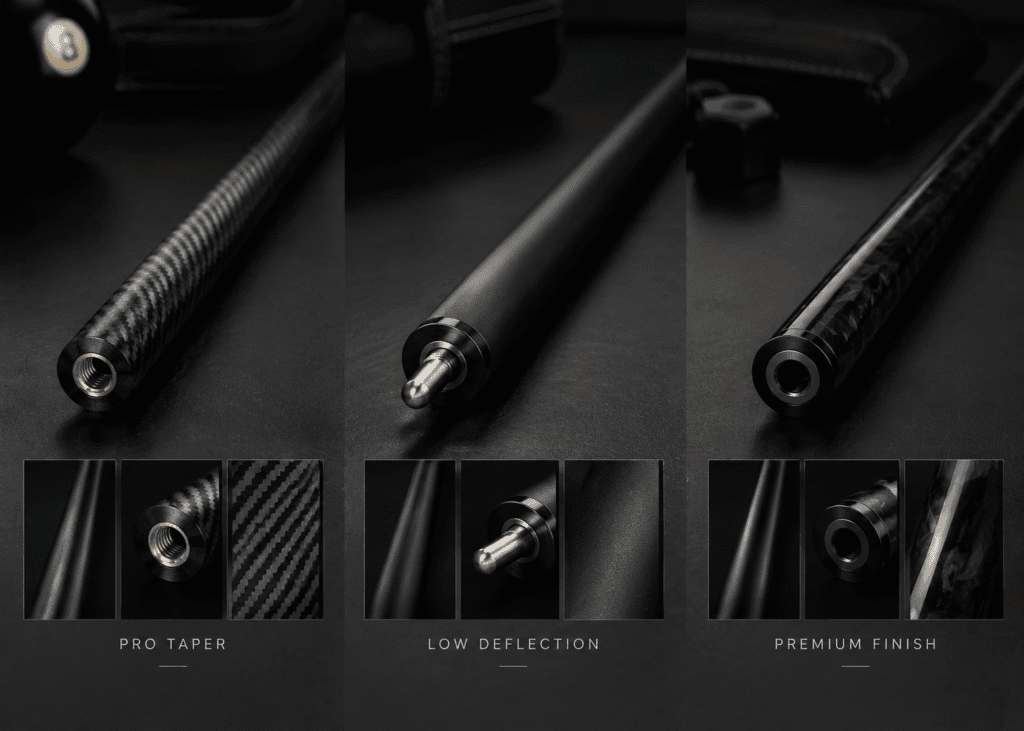
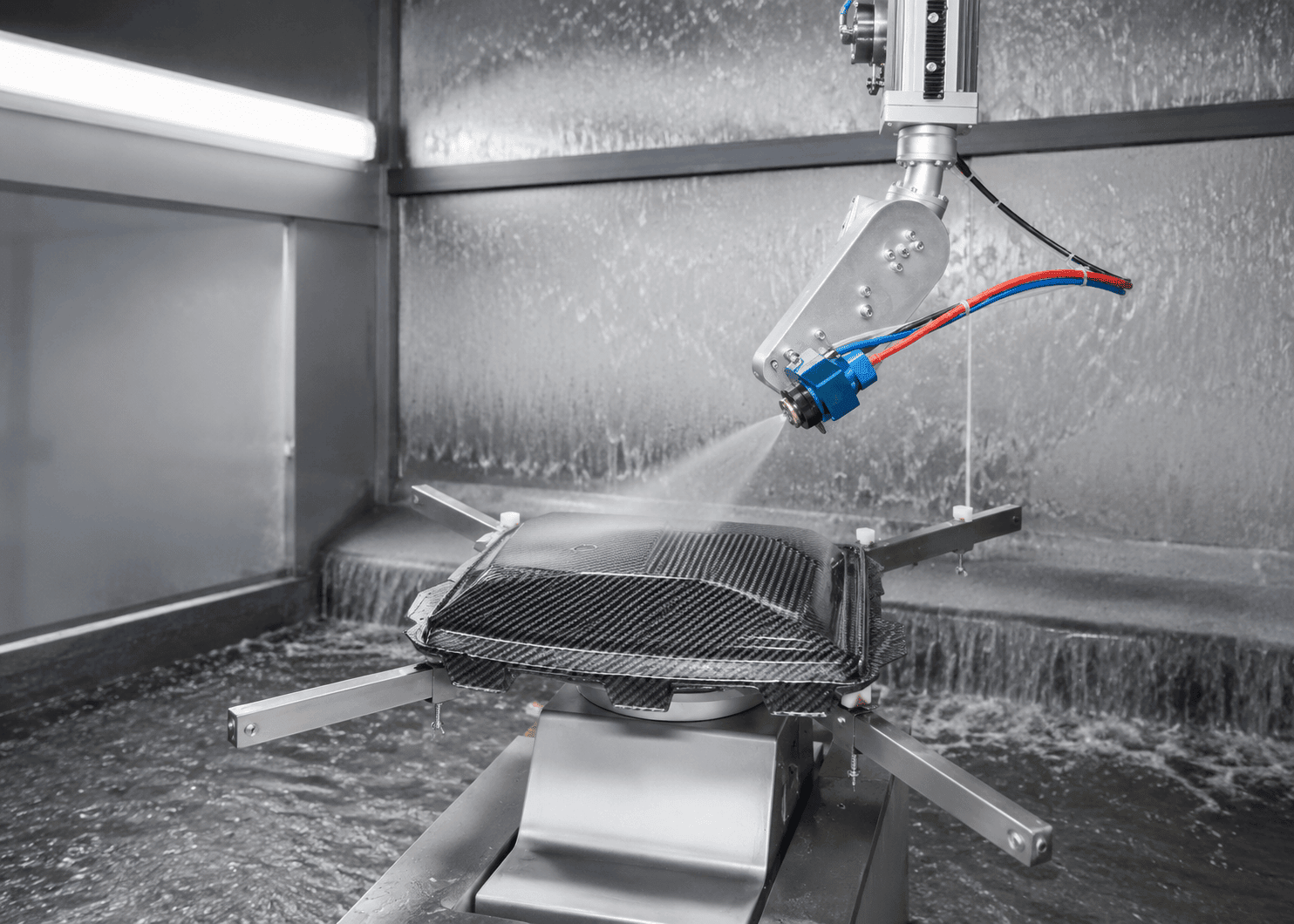
JCSPORTLINE’s composite engineering sits inside automotive structural components, aerospace, marine and medical programs, where layup design and structural evaluation are standing engineering functions rather than capabilities improvised for a new category. Cue shaft development currently uses T700-grade carbon fiber prepreg, with layup structure and dimensions developed around the required specification. That engineering layer is what makes carbon fiber cue shaft for brand product development a design conversation instead of a catalog selection, and it is the same layer that governs how we approach custom carbon fiber parts in every other structural category we work in. For teams developing custom carbon fiber pool cues, this is where the product line is actually defined.
What to Evaluate Before Committing a Product Line to Carbon Fiber
Carbon fiber cue programs rarely fail on material. They fail on engineering capability. These are the carbon fiber cue shaft manufacturing considerations worth pressing a prospective partner on.
Can they explain the material choice? A supplier who answers “we use carbon fiber” has told you nothing. A supplier who explains why a specific prepreg grade and layup serve your performance target is doing engineering.
Is the structural design theirs, or yours? Some factories only replicate a sample you provide. Acceptable for a one-off, fatal for a product family — every variant then requires a new physical reference before work can begin.
How deep does the quality system go? Sampling and full verification are different disciplines. ISO 9001 and IATF 16949 systems, applied through documented inspection and process records, are what make a program traceable when something needs investigating two batches later.
Does the prototype process equal the production process? Excellent samples followed by inconsistent volume output is the most common failure mode in this category, and it happens whenever prototyping and carbon fiber mass production run on separate logic.
Ask a prospective partner to explain why they chose a specific layup for your target feel. The quality of that answer tells you more than any factory tour.
The Real Question Is Not Which Material Is Better
Wood and carbon fiber serve two different product logics, and both remain valid.
If your brand sells the individuality of a single crafted cue, wood still makes sense, and no material argument overrides that positioning. If your brand is building a line that must be reproducible, extendable and continuously supplyable — where the third batch has to match the first — carbon fiber gives you something wood structurally cannot: control over the variables that define the product.
That is the substance behind why switch to carbon fiber cue shafts, and why choosing between wood and carbon fiber for a cue product line is a product strategy decision before it is a material one.
If you are working through that decision, bring performance targets, target market and product positioning to the discussion rather than a photo and a quantity. That is the point at which a manufacturer becomes useful to you. Carbon Fiber Pool Cues developed this way begin as an engineering brief, not a catalog order.
Frequently Asked Questions
Should we replace our entire wood cue line, or run both?
Run both, at least through the first cycle. Wood and carbon fiber answer different buyer motivations, and a parallel line lets you read market response without abandoning an established customer base. What fails is treating the carbon fiber model as a drop-in replacement built on the same specification logic — it needs performance targets written for it.
How early do we need to lock the shaft feel target?
Before tooling and layup are finalized. Composite structure is fixed at cure, so feedback characteristics cannot be adjusted afterward the way a wood shaft can be re-turned. Feel targets belong in prototype approval, and that stage should include actual play testing rather than dimensional sign-off alone.
Can carbon fiber support a multi-tier product family, or only a flagship model?
It supports a family, and suits one better than wood does. A shared shaft platform with varied layup, taper, joint configuration and finish builds differentiated tiers off common development work. In wood, each tier depends on the grade of material you can consistently source, which is a supply constraint rather than a design choice.
What should we prepare before the first technical discussion?
Target discipline and market, intended playing characteristics, any reference sample or drawing, target weight and balance range, and your expected order pattern across the first year. The last item matters more than most brands anticipate — it determines how the development itself is structured.
Does moving to carbon fiber change how we position the product to dealers?
It should. The weakest position is “we use a better material” — dealers hear that from everyone. The strongest is that your specification is reproducible, so what they stock next quarter performs like what they stocked this quarter. That is a supply argument, and channel partners respond to it far more than to a performance claim.