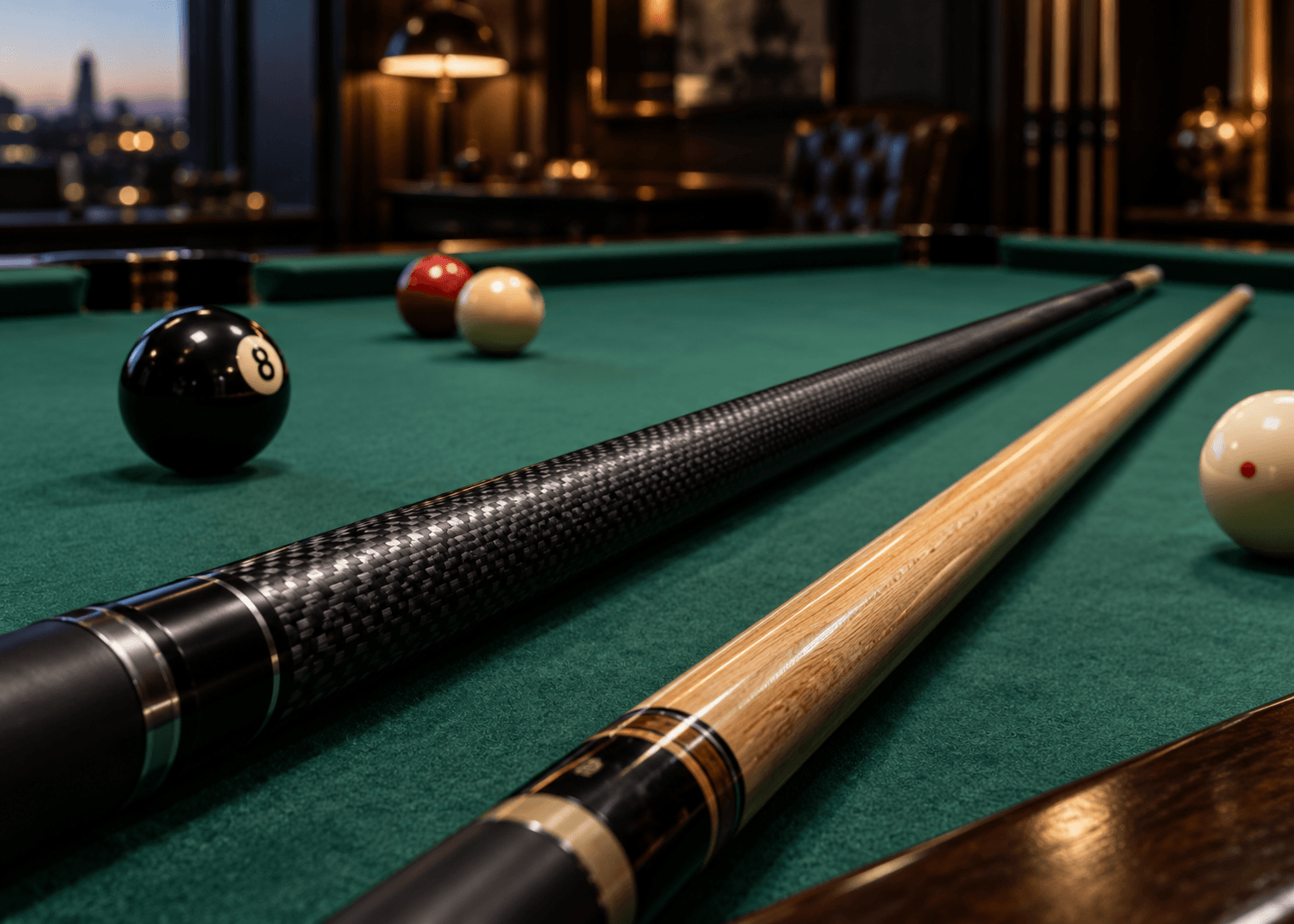
When B2B buyers talk about different types of carbon fiber, they are not only talking about material names. They are also making decisions about product positioning, surface appearance, performance targets, manufacturing process, cost structure, and long-term production feasibility.
For a custom carbon fiber project, the right question is not simply, “Which carbon fiber is the best?” A better question is:
Which carbon fiber type is most suitable for my application, target weight, strength requirement, visual style, budget, production volume, and brand positioning?
A 3K carbon fiber weave may be ideal for a visible automotive exterior part. Forged carbon may be better for a small premium accessory. Colored carbon may help a consumer brand build a stronger visual identity. Hybrid carbon may be selected when the product needs a balance of appearance, toughness, or special reinforcement.
This guide explains how procurement managers, product developers, R&D engineers and OEM/ODM buyers can compare carbon fiber material options before starting a custom project.

What “Different Types of Carbon Fiber” Means for Product Development
Many buyers use the phrase “types of carbon fiber” to describe several different things at the same time. This often creates confusion during quotation, sampling, and production planning.
In a real product-development discussion, “different types of carbon fiber” may refer to:
- fiber tow size, such as 3K or 12K;
- weave style, such as twill weave or plain weave;
- visual pattern, such as forged carbon;
- color effect, such as colored carbon;
- hybrid reinforcement, such as carbon fiber mixed with aramid or other fibers;
- manufacturing route, such as prepreg, wet carbon, compression molding, or forged carbon molding;
- surface finish, such as gloss, matte, tinted clear coat, or UV-resistant coating.
These are connected, but they are not the same.
A product may use the same carbon fiber material but look different because of clear coat, polish, lighting, resin tint, or surface finish. Two products may look similar but perform differently because they use different resin systems, layup structures, molding processes, thickness, or curing parameters.
For B2B buyers, separating these concepts is important. If a buyer chooses carbon fiber only by surface appearance, the project may face problems such as unsuitable material cost, unstable batch appearance, poor process selection, insufficient stiffness, longer sampling time, or repeated quotation changes.
To ensure your carbon fiber project proceeds smoothly, buyers can learn more through JCSPORTLINE’s carbon fiber materials and carbon fiber solutions,
Common Options: 3K, 12K, Forged Carbon, Colored Carbon and Hybrid Carbon
Different carbon fiber types are not a simple ranking from low-end to high-end. Each option has suitable applications, limitations, cost implications, and manufacturing requirements.
3K Carbon Fiber
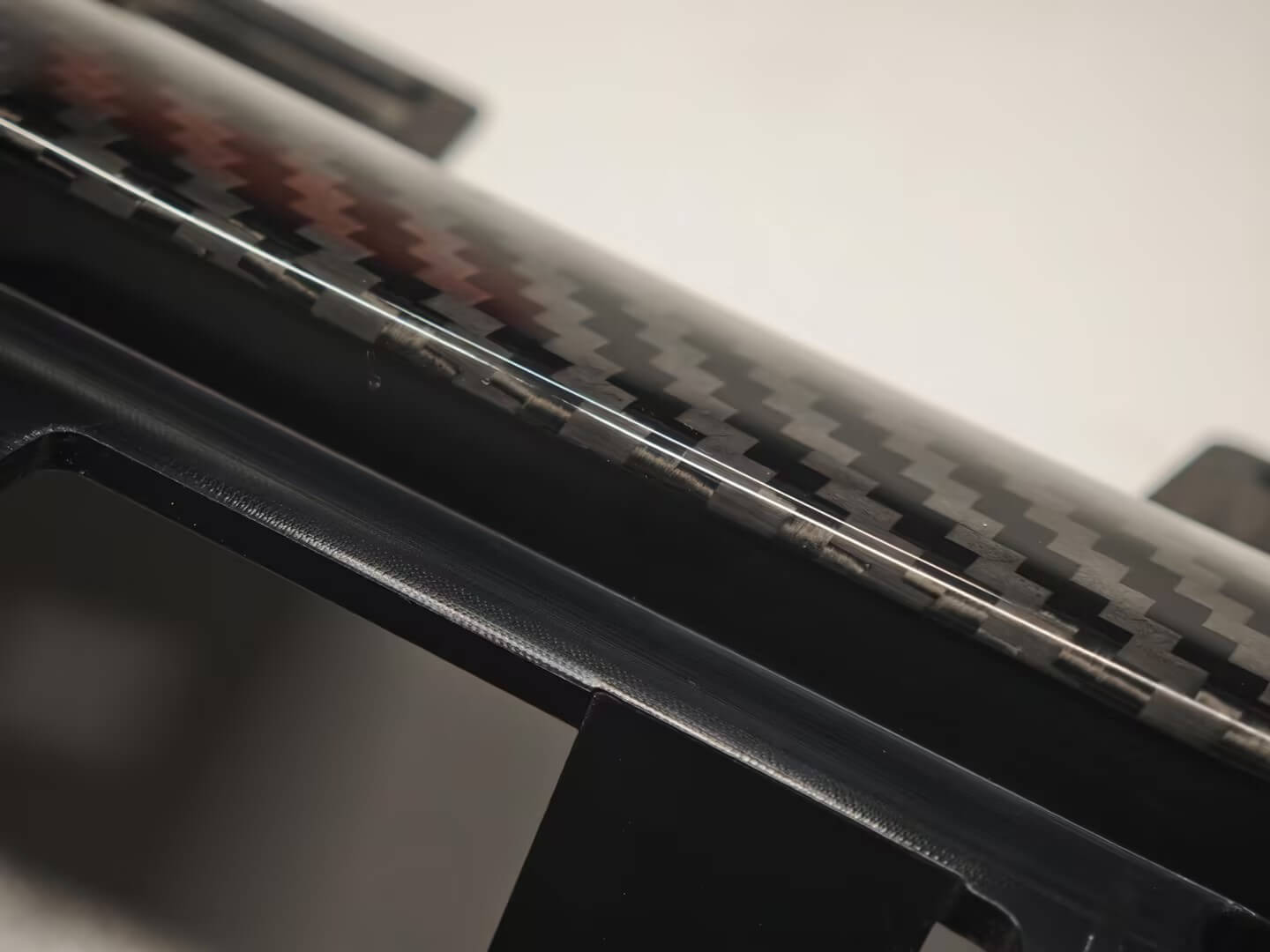
3K carbon fiber has a fine and refined weave appearance. It is one of the most recognizable visible carbon fiber styles and is widely used in premium automotive parts, motorcycle parts, sports products, and consumer products.
For exterior and visible-surface applications, 3K carbon fiber can create a classic, high-end carbon look. It is often selected when the buyer wants a clean weave, detailed visual texture, and strong market familiarity.
Typical applications include:
- automotive exterior parts;
- motorcycle fairings and covers;
- interior trims;
- premium accessories;
- sports equipment;
- visible consumer product shells.
However, 3K is not automatically the best choice for every product. Product size, shape, fabric alignment, production volume, budget, and surface consistency all affect whether 3K is suitable.
12K Carbon Fiber
12K carbon fiber has a larger and bolder weave appearance. Compared with 3K, the visual texture is more obvious and may create a stronger structural or aggressive design language.
It may be suitable for selected automotive, marine, sports, and industrial products where the buyer wants a larger carbon pattern.
12K may be chosen for:
- larger visible surfaces;
- products requiring a bold carbon aesthetic;
- selected structural or semi-structural parts;
- projects where the visual direction supports the brand image.
B2B buyers should not assume that 12K is always stronger or better than 3K. Final strength and stiffness depend on fiber direction, layup design, resin system, product geometry, thickness, curing process, and manufacturing quality.
Forged Carbon Fiber
Forged carbon fiber has a random, non-woven visual effect. Instead of continuous woven fabric, it uses chopped carbon fiber or carbon fiber molding compounds to create a distinctive pattern.
Forged carbon is popular for premium accessories, small components, interior trims, luggage, consumer products, and design-focused parts. It is especially useful when woven fabric alignment is difficult or when the brand wants a more unique appearance.
Typical uses may include:
- small automotive trims;
- luxury accessories;
- speaker or electronics shells;
- luggage components;
- interior decorative parts;
- private-label consumer products.
Forged carbon is often selected for visual differentiation. However, buyers should not assume forged carbon is always stronger than woven carbon fiber. Its performance depends on fiber distribution, resin system, compression process, mold design, part thickness, and structural engineering.
Colored Carbon Fiber
Colored carbon can help brands create stronger visual identity. It may be used in consumer products, accessories, lifestyle products, sports equipment, and private-label designs.
Color effects may come from hybrid yarns, colored fibers, tinted resin, clear coating, or surface treatments. The exact method depends on the product and the desired appearance.
Colored carbon can support:
- brand-color product lines;
- limited-edition products;
- high-end accessories;
- sports and lifestyle products;
- retail-ready consumer goods.
The main challenge is consistency. Color matching, coating control, surface inspection, and batch stability become more important. Colored carbon may also increase material cost, process complexity, and quality-control requirements.
Hybrid Carbon Fiber
Hybrid carbon fiber combines carbon fiber with other reinforcement materials such as aramid, colored fibers, glass fiber, or other composite materials.
Hybrid solutions may be used to balance appearance, toughness, impact resistance, cost, or special design effects. For example, carbon and aramid hybrid structures may be considered for selected sports, protective, marine, luggage, or mobility applications.
Hybrid carbon can be valuable, but it requires engineering review. Material compatibility, resin selection, layup sequence, bonding, curing, and final application all affect performance.
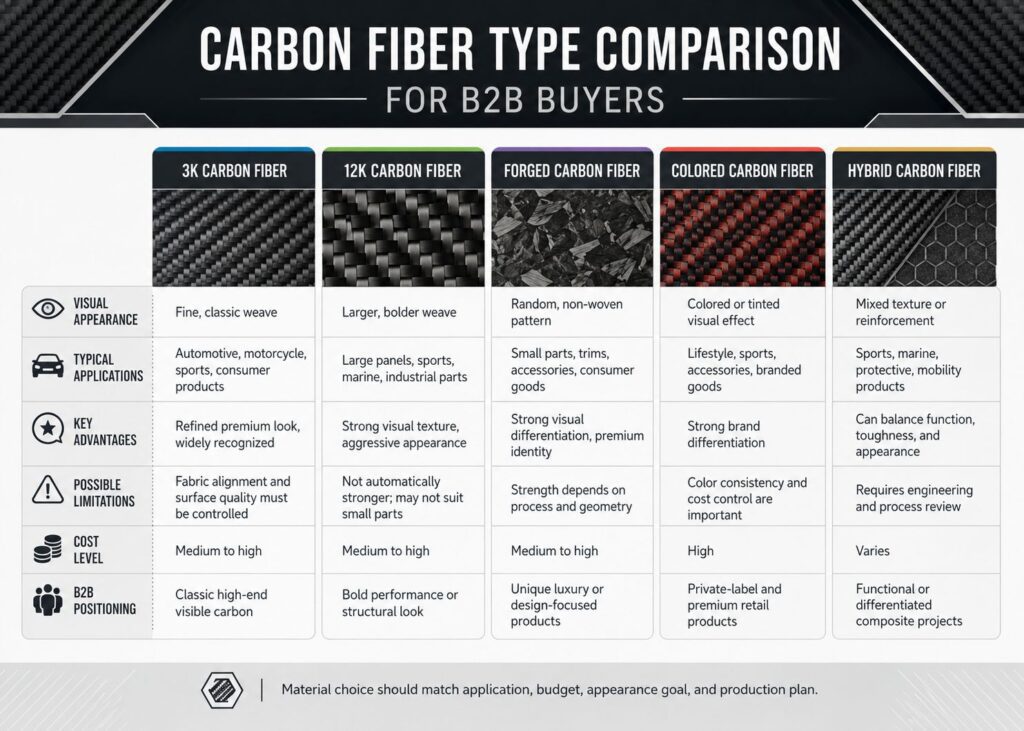
Carbon Fiber Type Comparison for B2B Buyers
| Carbon Fiber Type | Visual Appearance | Typical Applications | Key Advantages | Possible Limitations | Cost Level | B2B Positioning |
| 3K Carbon Fiber | Fine, classic weave | Automotive, motorcycle, sports, consumer products | Refined premium look, widely recognized | Fabric alignment and surface quality must be controlled | Medium to high | Classic high-end visible carbon |
| 12K Carbon Fiber | Larger, bolder weave | Large panels, sports, marine, industrial parts | Strong visual texture, aggressive appearance | Not automatically stronger; may not suit small parts | Medium to high | Bold performance or structural look |
| Forged Carbon Fiber | Random, non-woven pattern | Small parts, trims, accessories, consumer goods | Strong visual differentiation, premium identity | Strength depends on process and geometry | Medium to high | Unique luxury or design-focused products |
| Colored Carbon Fiber | Colored or tinted visual effect | Lifestyle, sports, accessories, branded goods | Strong brand differentiation | Color consistency and cost control are important | High | Private-label and premium retail products |
| Hybrid Carbon Fiber | Mixed texture or reinforcement | Sports, marine, protective, mobility products | Can balance function, toughness, and appearance | Requires engineering and process review | Varies | Functional or differentiated composite projects |
Material Selection by Application: Automotive, Marine, Sports and Consumer Products
Different products require different carbon fiber material decisions. The best option for a car part may not be suitable for a marine product or consumer accessory.
Automotive Exterior and Aero Parts
Automotive exterior parts often require visible weave quality, UV resistance, surface finish, fitment accuracy, and batch consistency.
For many premium exterior applications, 3K twill carbon fiber is a common choice because it delivers a classic carbon look. However, final selection depends on part size, vehicle positioning, target price, process route, and surface standard.
Important factors include:
- weave consistency;
- gloss or matte clear coat;
- weather resistance;
- mounting accuracy;
- production repeatability;
- brand positioning.
Motorcycle Parts
Motorcycle parts often have curved geometry and visible surfaces. Buyers may focus on lightweight performance, vibration resistance, surface texture, fitment, and design style.
3K carbon fiber is often suitable for premium visible parts, while forged or colored carbon may be used for small decorative components or limited-edition product lines.
Marine and Water-Sports Products
Marine and water-sports products require more than appearance. They may need stiffness, fatigue resistance, water exposure control, saltwater resistance, core materials, sealing, and suitable resin systems.
Material decisions should consider:
- water exposure;
- saltwater environment;
- structural loads;
- impact conditions;
- bonding and sealing;
- metal inserts;
- surface coating;
- weight target.
For these applications, the right carbon fiber material must be reviewed as part of the full product system.
Sports Equipment
Sports products often need a balance of weight, stiffness, controlled flex, fatigue resistance, and impact behavior.
A sports component may require a hybrid solution, special layup, or engineering-driven structure rather than a purely visual carbon finish. In these projects, carbon fiber type should be selected after the product’s load direction and performance targets are defined.
Consumer Products and Lifestyle Goods
Consumer products may prioritize appearance, brand identity, surface finish, packaging, and retail presentation.
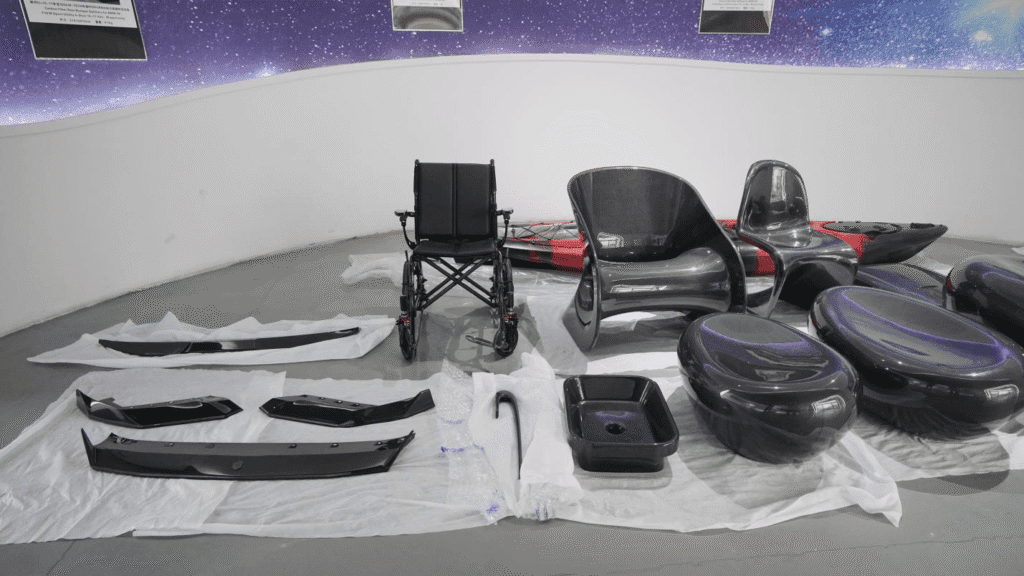
Forged carbon, colored carbon, and hybrid carbon can help brands avoid generic product competition. They are often used when the product must look premium, distinctive, and recognizable in photos or retail displays.
How Carbon Fiber Type Affects Cost, Appearance, Strength and Production Process
Appearance
Different carbon fiber options create different visual languages.
3K carbon fiber gives a fine, classic, technical appearance. 12K creates a larger and more aggressive weave. Forged carbon provides a random premium texture. Colored carbon supports brand-specific styling. Hybrid carbon creates special texture or functional visual effects.
The chosen appearance should match the product’s market position.
Cost
Carbon fiber cost is affected by more than raw material price.
Cost may depend on:
- fiber type;
- material availability;
- weave complexity;
- pattern requirements;
- color-control requirements;
- layup difficulty;
- mold complexity;
- resin system;
- surface finish;
- defect rate;
- batch consistency;
- production volume.
A more expensive material does not always create a better commercial result. If the target customer does not recognize or pay for the difference, the product may become difficult to sell.
Strength and Stiffness
Strength and stiffness are not determined only by visible pattern.
They depend on:
- fiber type;
- fiber direction;
- tow size;
- layup sequence;
- resin system;
- product geometry;
- thickness;
- reinforcement;
- curing process;
- manufacturing quality.
This is why a professional manufacturer should review the product’s function before recommending a material.
Manufacturing Process
Different carbon fiber materials and patterns may require different production routes.
For example:
- visible 3K may require careful fabric alignment;
- 12K may need pattern planning for large surfaces;
- forged carbon may require compression molding control;
- colored carbon may need tighter coating and color inspection;
- hybrid carbon may require compatibility review.
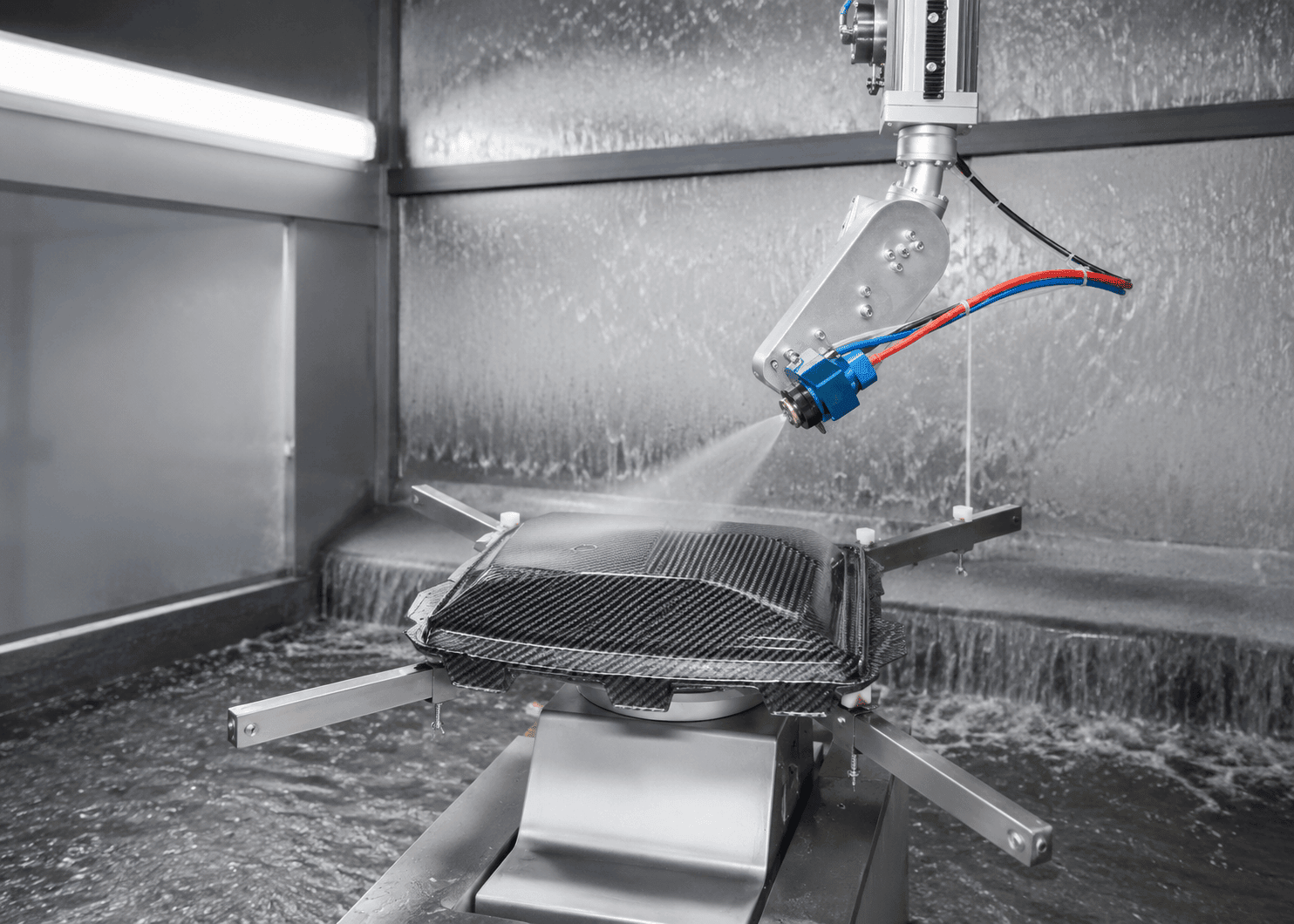
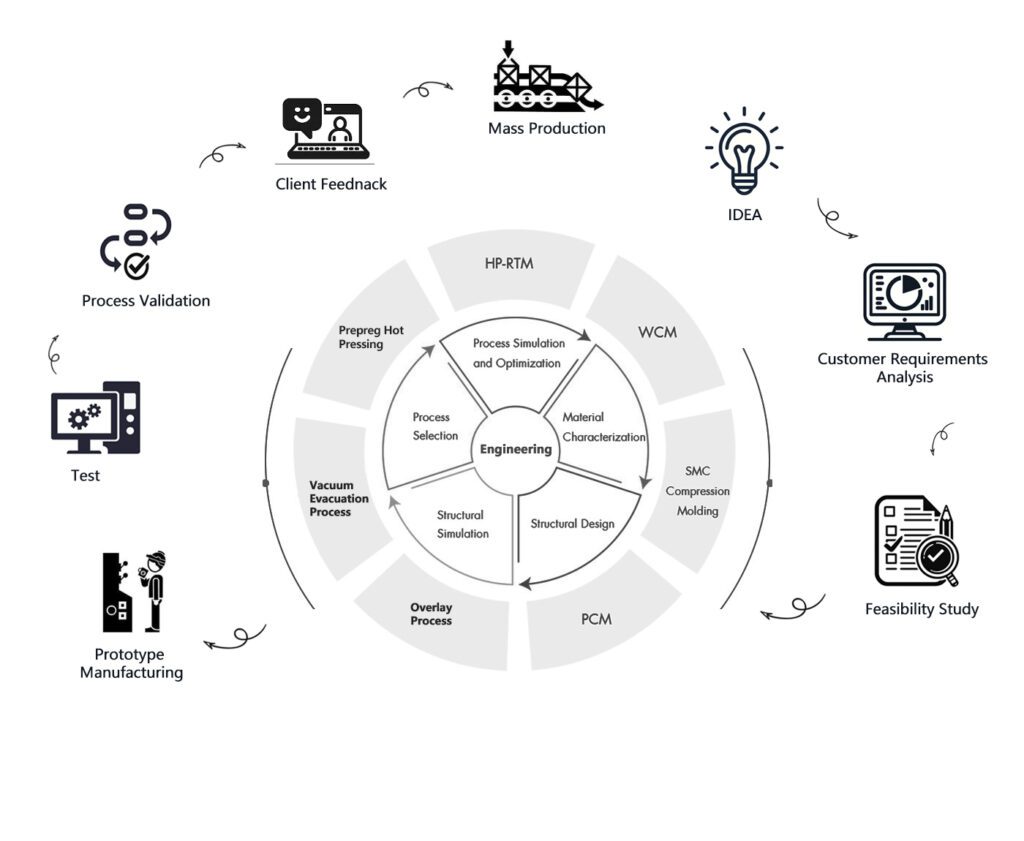
Process decisions can affect cutting, layup, mold design, curing, polishing, defect rate, inspection, and mass-production consistency.
Carbon Fiber Weave, Pattern and Finish: What Buyers Should Not Confuse
B2B buyers should separate four important concepts: weave, pattern, finish, and process.
Weave
Weave refers to how the carbon fiber yarns are arranged. Common examples include plain weave and twill weave.
Pattern
Pattern refers to the visible design effect, such as 3K, 12K, forged carbon, colored carbon, or mixed carbon appearance.
Finish
Finish refers to the final surface effect, such as gloss, matte, tinted clear coat, UV coating, or protective coating.
Process
Process refers to the manufacturing route used to form the part, such as prepreg autoclave, oven cure, wet carbon, compression molding, or forged carbon molding.
Two products may share the same weave but look different because of finish. Two products may look similar but perform differently because of resin, layup, thickness, and curing.
Surface texture alone should never be used as the only indicator of quality.
Choosing Carbon Fiber for Product Positioning
Material selection should support the product’s target market.
High-End Automotive Modification
A high-end automotive part may focus on classic 3K twill, dry carbon or prepreg processing, gloss or matte clear coat, fitment accuracy, and premium surface quality.
Performance Sports Equipment
A sports product may focus on weight, stiffness, controlled flex, impact behavior, fatigue resistance, and hybrid reinforcement.
Luxury Consumer Products
A luxury consumer product may focus on forged carbon, colored carbon, special patterns, surface gloss, packaging, and brand identity.
Volume Production Accessories
A volume accessory may need stable material supply, manageable cost, easy quality control, repeatable surface appearance, and a process that supports batch production.
The correct carbon fiber type should serve the business goal, not only the buyer’s personal preference.
What Buyers Should Confirm Before Starting a Custom Carbon Fiber Project
Before starting a project, buyers should prepare as much information as possible.
Useful details include:
- product application;
- target market;
- product size;
- reference image;
- 3D file or physical sample;
- visible surface requirements;
- preferred carbon fiber type;
- weave or pattern preference;
- gloss or matte finish;
- color requirements;
- strength requirement;
- stiffness requirement;
- weight target;
- use environment;
- UV exposure;
- water or saltwater exposure;
- temperature conditions;
- impact or fatigue requirements;
- order quantity;
- target price;
- tooling budget;
- sample timeline;
- mass-production plan;
- packaging requirements;
- logo or branding needs.
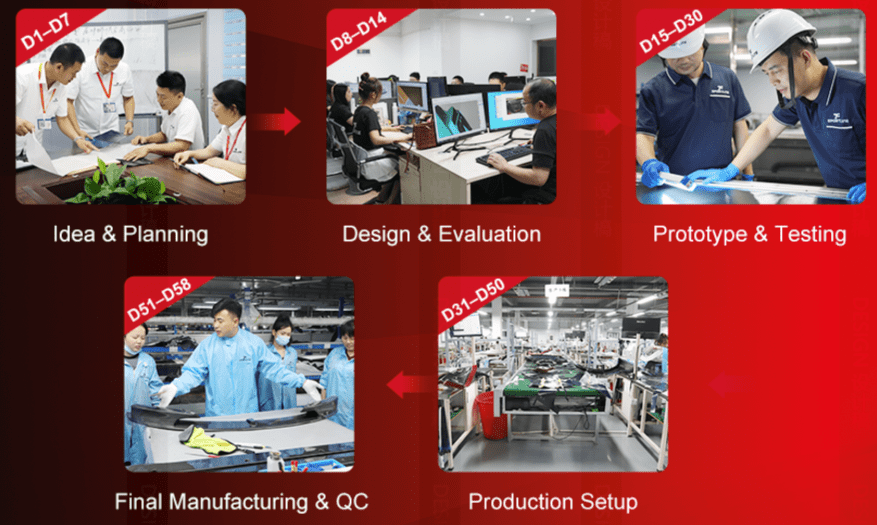
Clearer information helps the manufacturer recommend the right carbon fiber material, estimate cost more accurately, select the right process, reduce repeated quotations, shorten sample development, and improve batch consistency.
How a Professional Manufacturer Recommends Carbon Fiber Material
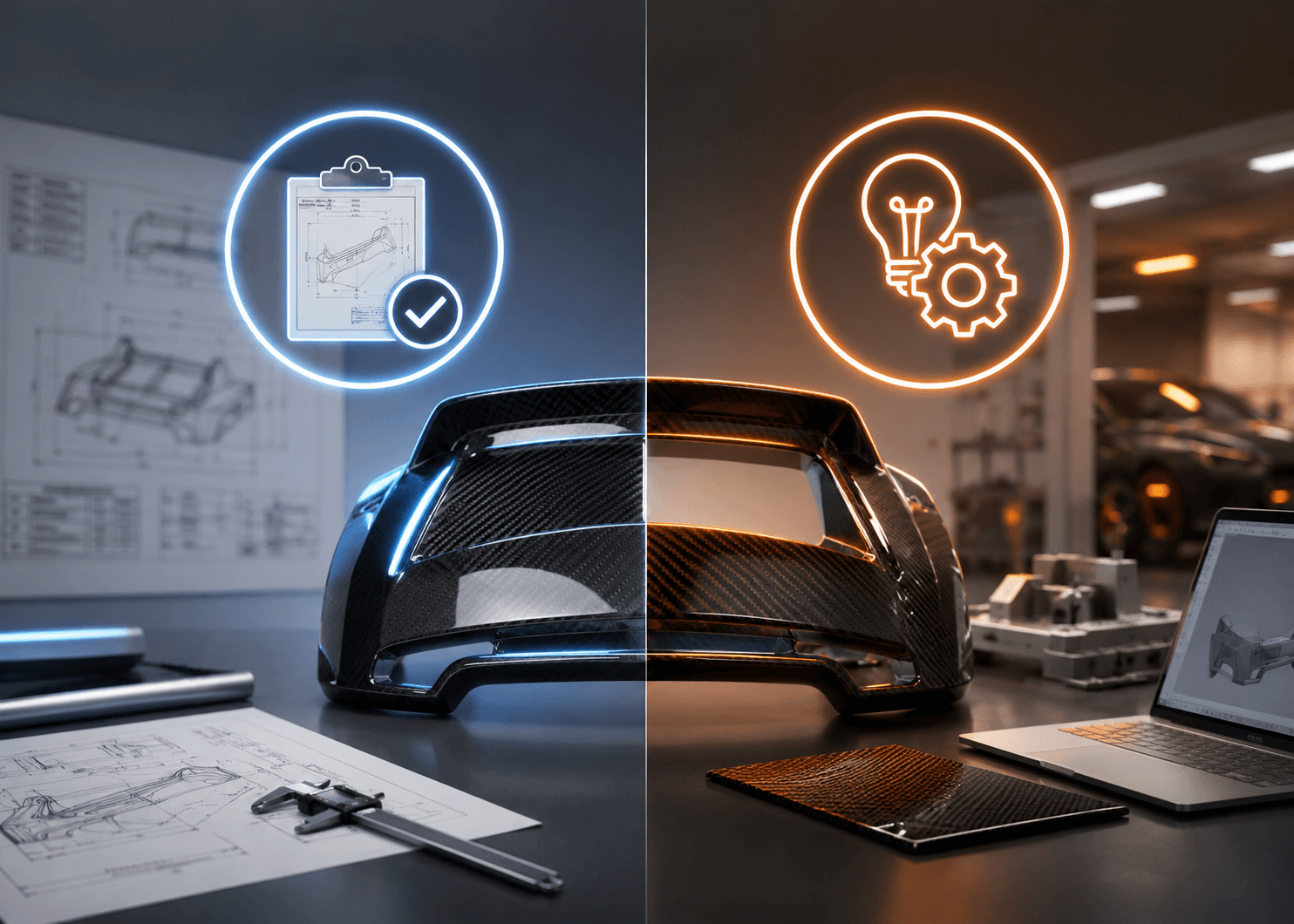
A professional custom carbon fiber manufacturer should not simply accept the material name requested by the buyer without review. The supplier should evaluate the product’s function, structure, appearance, market, and production plan.
Key review points include:
- product function;
- load direction;
- visible surface area;
- geometry;
- required weight;
- stiffness and strength targets;
- appearance goal;
- cost target;
- MOQ;
- production volume;
- process feasibility;
- mold requirements;
- QC difficulty;
- batch consistency risk.
JCSPORTLINE supports 3K, 12K, forged carbon, colored carbon, and hybrid carbon solutions for automotive, marine, sports, consumer, and custom composite applications.
The company evaluates material, design, process, surface finish, and mass-production requirements together, helping B2B customers avoid unsuitable materials, unnecessary cost, and low-quality competition. Buyers can learn more through JCSPORTLINE’s carbon fiber project management and carbon facilities.
Conclusion: Choose Carbon Fiber by Application, Not Only Appearance
The different types of carbon fiber are not simply decorative choices. They affect product appearance, cost, strength, stiffness, manufacturing process, quality control, and brand positioning.
3K, 12K, forged carbon, colored carbon, and hybrid carbon each have suitable applications. The right choice depends on what the product must do, how it should look, how much it can cost, and how consistently it must be produced.
For B2B buyers, the best result comes from working with a manufacturer that can review material, design, process, finish, budget, and mass-production requirements together.
If your company is developing custom carbon fiber products, contact an experienced carbon fiber manufacturer for material selection, weave and finish recommendations, design review, process planning, sample development, and scalable production support.
FAQ
What is the best type of carbon fiber for my product?
There is no single best carbon fiber for every product. The right choice depends on application, target weight, strength requirements, surface appearance, budget, production volume, and brand positioning.
What is the difference between 3K and 12K carbon fiber?
3K carbon fiber has a finer and more refined appearance. 12K carbon fiber has a larger and bolder weave. The final choice depends on product size, visual direction, strength requirements, cost, and manufacturing process.
Is forged carbon fiber stronger than regular woven carbon fiber?
Forged carbon and woven carbon have different structures and visual effects. Strength depends on resin, mold design, compression process, part thickness, fiber distribution, and structural engineering, not only the carbon fiber type.
Can I customize the carbon fiber weave, color, and finish?
Yes. Options may include 3K twill, plain weave, 12K, forged carbon, colored carbon, hybrid carbon, glossy finish, matte finish, clear coating, logo placement, and custom packaging. Available options depend on product size, mold structure, MOQ, surface requirements, and target price.
Does carbon fiber type affect product cost?
Yes. Cost can be affected by fiber type, pattern, color-control requirements, resin system, layup difficulty, mold design, surface finish, defect rate, batch consistency, and production volume.
What information should I provide before starting a custom carbon fiber project?
B2B buyers should prepare product application, target market, reference images, 3D data or samples, size requirements, strength targets, preferred carbon fiber type, finish requirements, estimated order quantity, budget range, and expected timeline.