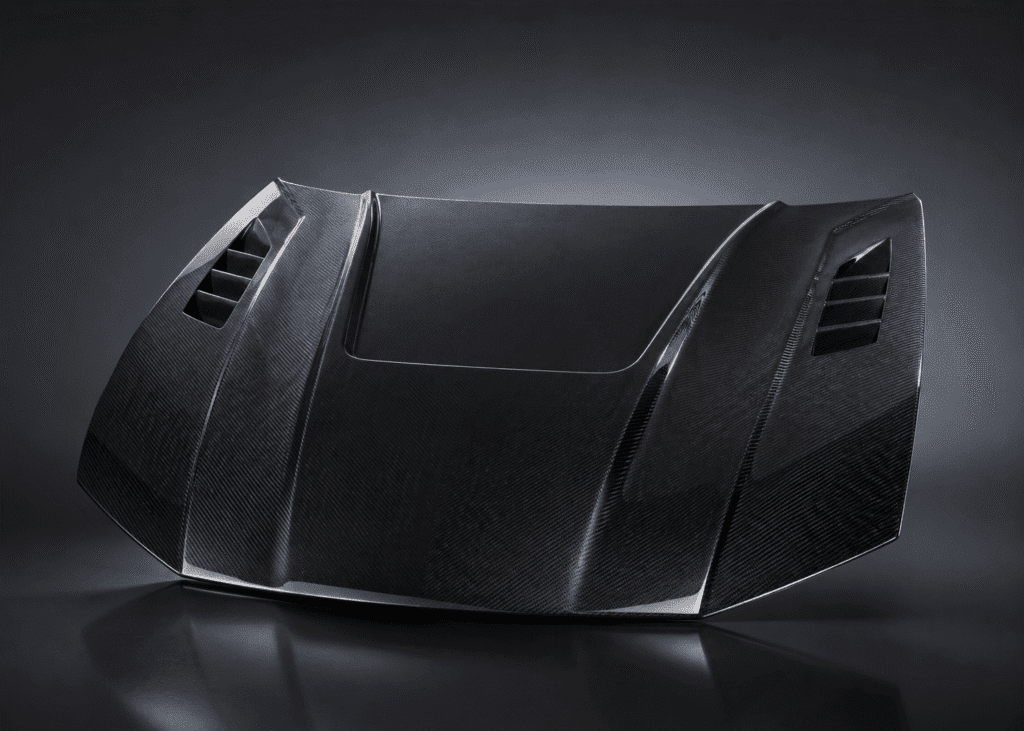
A dry carbon fiber hood is a better solution for OEM, wholesale, racing, and performance car projects because it can reduce front-end weight, improve stiffness-to-weight performance, support aerodynamic design, and create a premium motorsport appearance when engineered and manufactured correctly. For B2B buyers, the real value is not only the carbon fiber look. It is the complete combination of material selection, prepreg layup, autoclave curing, fitment control, coating durability, quality inspection, and reliable mass production.
For OEM automotive brands, tuning parts brands, wholesale distributors, and performance car product developers, a hood is not just a body panel. It affects vehicle appearance, installation experience, perceived quality, front-end weight, airflow, cooling, and long-term durability. That is why choosing the right dry carbon hood supplier matters from the beginning of the project.
What Is a Dry Carbon Fiber Hood?
A dry carbon fiber hood is a lightweight automotive hood manufactured using carbon fiber prepreg materials, controlled layup, vacuum forming, and high-temperature curing. Unlike wet carbon fiber parts, where resin is manually applied during production, dry carbon fiber uses prepreg carbon fiber fabric that already contains a controlled amount of resin.
This gives manufacturers better control over fiber alignment, resin content, part thickness, surface consistency, and structural performance. For serious dry carbon hood manufacturing, the process often includes autoclave curing, CNC tooling, precise trimming, sanding, polishing, and UV-resistant clear coat finishing.
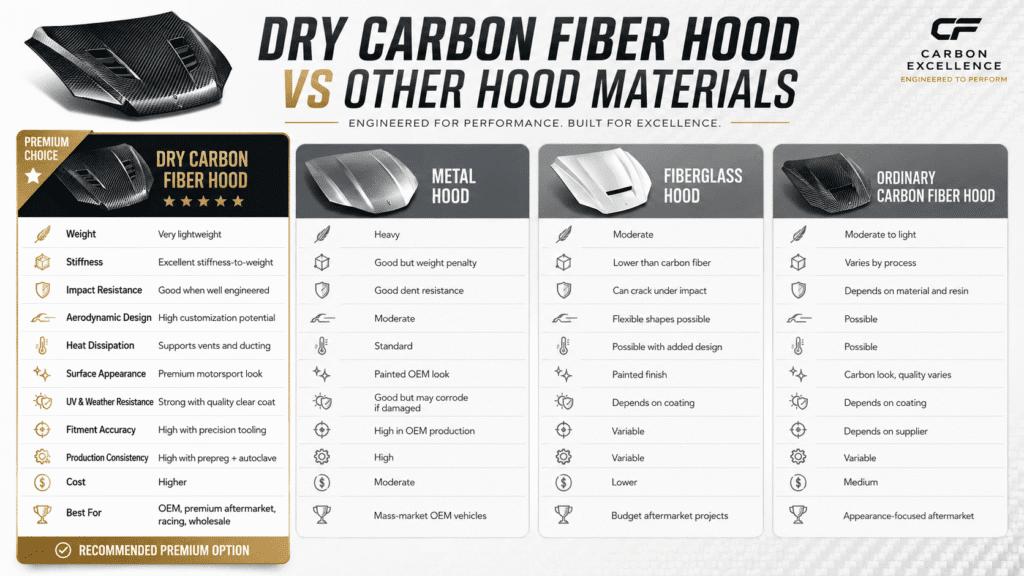
Dry Carbon Fiber Hood vs Other Hood Materials
Compared with Traditional Metal Hoods
Traditional steel or aluminum hoods are widely used in OEM production because they are cost-effective and familiar to vehicle manufacturers. However, metal hoods can be heavy, especially for performance and modified vehicles. Excess weight over the front axle can reduce vehicle response, affect handling balance, and limit fuel efficiency potential.
A properly designed dry carbon fiber hood can help reduce front-end weight while maintaining a premium and performance-focused appearance.
Compared with Wet Carbon Fiber Hoods
Wet carbon fiber hoods are usually more affordable, but they may have higher resin content, greater weight variation, and less structural consistency. For entry-level aftermarket applications, wet carbon may be acceptable. For OEM, wholesale, and performance projects, dry carbon fiber offers more controlled production and better repeatability.
Compared with Plastic or Fiberglass Hoods
Plastic and fiberglass hoods can be cost-effective, but they may lack the stiffness, premium appearance, and long-term stability required for high-end projects. In high-speed or outdoor conditions, weak structure, poor coating, and limited dimensional control can lead to deformation, cracking, aging, or surface defects.
Compared with Ordinary Aftermarket Carbon Fiber Hoods
Not every carbon fiber hood is built the same way. Some ordinary aftermarket hoods focus mainly on appearance but lack proper aerodynamic design, fitment control, resin quality, curing standards, and quality testing. A professional carbon fiber hood project should consider both engineering and market requirements.
Material Comparison Table
| Factor | Dry Carbon Fiber Hood | Metal Hood | Fiberglass Hood | Ordinary Carbon Fiber Hood |
| Weight | Very lightweight when properly designed | Usually heavier, especially steel | Moderate | Varies by resin content |
| Stiffness | Strong stiffness-to-weight performance | Good stiffness but heavier | Lower than carbon fiber | Depends on layup and process |
| Impact Resistance | Can be improved with carbon fiber + Kevlar structure | Good dent resistance but can deform | May crack under impact | Depends on material and resin |
| Aerodynamic Design Potential | High; supports ducts, vents, and curved surfaces | Possible but heavier and costlier to modify | Possible but may lack rigidity | Possible but depends on tooling |
| Heat Dissipation Design | Custom vents and duct layouts available | Limited by OEM stamping | Possible but may need reinforcement | Possible |
| Surface Appearance | Premium motorsport texture | Painted OEM look | Painted or basic finish | Carbon look, quality varies |
| UV Resistance | Strong with quality clear coat | Good with paint | Depends on coating | Depends on coating |
| Weather Resistance | Strong with resin and coating control | Good but may corrode if damaged | Variable | Variable |
| Fitment Accuracy | High with CNC tooling and 3D scanning | High in OEM production | Often inconsistent | Depends on supplier |
| Production Consistency | High with prepreg and autoclave process | High in mass production | Variable | Variable |
| Cost | Higher | Moderate to high | Lower | Medium |
| Ideal Applications | OEM, racing, premium tuning, wholesale | Mass-market OEM vehicles | Budget aftermarket | Appearance-focused aftermarket |
Why Weight Reduction Matters for Performance Cars
One major reason buyers choose a dry carbon fiber hood is weight reduction. Traditional metal hoods increase front-end load, especially on vehicles where handling response and acceleration matter. Reducing weight from the front of the vehicle can help improve steering feel, braking response, and overall balance.
For carbon fiber hood for performance cars, weight reduction is not just a marketing message. It can support better vehicle dynamics when combined with proper suspension, tire, chassis, and aerodynamic design. It may also contribute to improved fuel efficiency potential, depending on the vehicle platform and driving conditions.
However, lightweight design should never be separated from structural design. A hood that is light but poorly reinforced can create vibration, deformation, poor fitment, or safety concerns. A professional custom carbon fiber hood manufacturer should balance weight, stiffness, durability, and installation requirements.
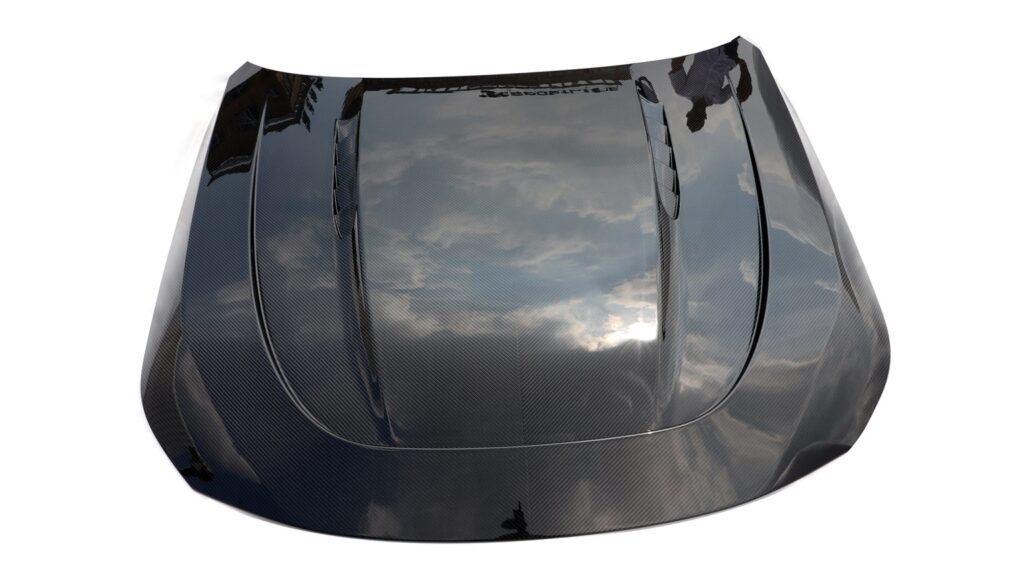
Carbon Fiber + Kevlar: A Better Composite Structure
JC SPORTLINE’s Carbon Fiber & Kevlar Dry Carbon Hood uses carbon fiber fabric, Kevlar fiber, and imported epoxy resin prepreg. This combination is designed to improve structural performance compared with single-material solutions.
Carbon fiber provides stiffness and lightweight performance. Kevlar can help improve impact resistance and toughness. When used together in a controlled composite structure, the hood can achieve better resistance to deformation and impact than many ordinary plastic, fiberglass, or low-grade carbon fiber parts.
That does not mean the hood is unbreakable. A dry carbon hood can still be damaged under extreme impact, incorrect installation, or unsuitable use conditions. Real performance depends on material grade, resin system, layup direction, curing process, reinforcement design, hood structure, and testing standards.
Manufacturing Process of JC SPORTLINE’s Dry Carbon Hood
A reliable carbon fiber manufacturer should be able to explain the process clearly. For JC SPORTLINE’s dry carbon hood, the production process includes several important steps.
Prepreg Material Selection
The product uses carbon fiber fabric, Kevlar fiber, and imported epoxy resin prepreg. Prepreg materials help control resin content and improve consistency from sample production to mass production.
Multi-Layer Cross-Angle Layup
The hood uses dry carbon prepreg layup with multi-layer cross-angle structures, such as 30°, 45°, and 60° layup directions. This helps distribute load more effectively and improves the balance between stiffness, impact resistance, and deformation resistance.
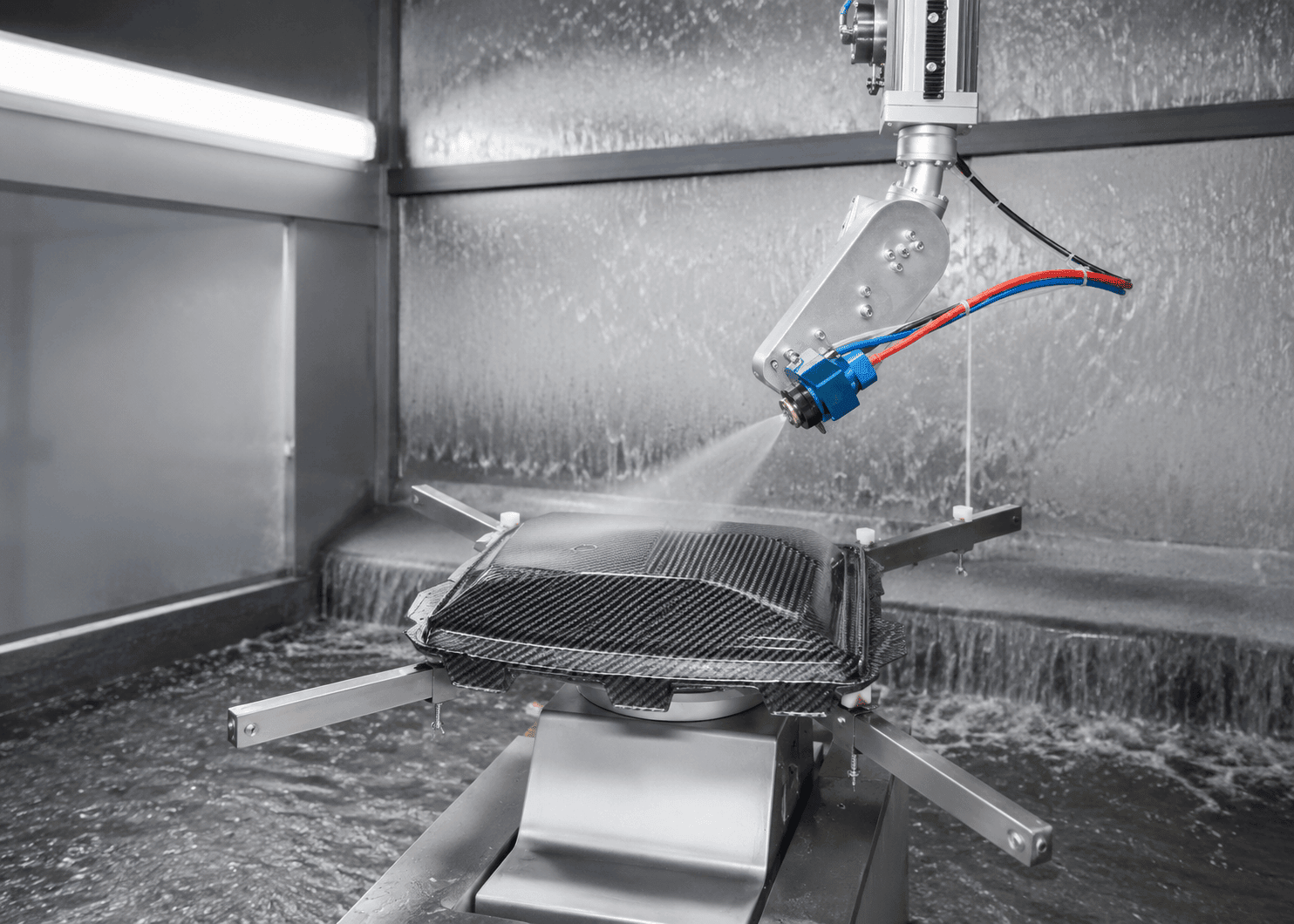
Autoclave Vacuum Forming
Autoclave vacuum forming is used to improve laminate density and reduce voids. Standardized temperature, pressure, and time parameters help improve structural stability and part consistency.
120°C High-Temperature and High-Pressure Curing
The curing process is carried out at 120°C under high temperature and high pressure. Proper curing is critical for resin performance, long-term durability, and dimensional stability.
Manual Sanding, Polishing, and UV Coating
After forming, the hood is finely sanded and polished by hand. A UV-resistant clear coat is applied to improve weather resistance, reduce yellowing risk, and protect the visible carbon fiber and Kevlar texture.
Aerodynamic Design for Racing and Street Use
A premium dry carbon fiber hood should not only look aggressive. It should also support real aerodynamic and cooling needs.
JC SPORTLINE’s hood design is based on aerodynamic principles, with duct design and sunken curved surfaces. These features can help reduce drag, improve front downforce, enhance high-speed stability, and support engine bay heat dissipation when properly matched to the vehicle platform.
For OEM and ODM projects, buyers can customize vent layout, opening style, duct position, surface texture, and vehicle fitment. Racing projects may prioritize cooling, downforce, and weight reduction. Street-use projects may focus more on appearance, fitment, weather resistance, and installation convenience.
For deeper engineering support, buyers can refer to JC SPORTLINE’s carbon engineering capabilities.
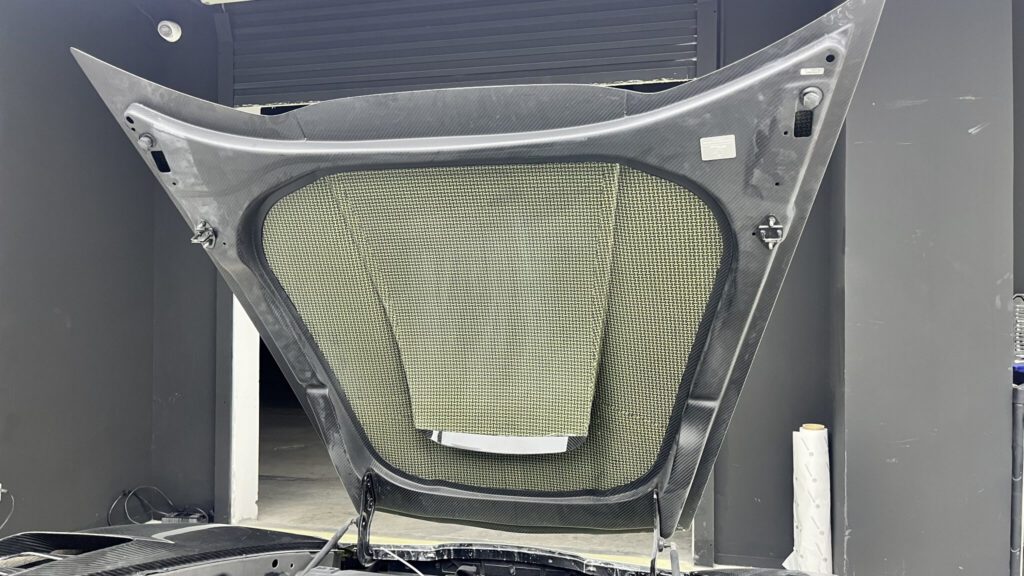
Appearance: Carbon Fiber + Kevlar Performance Identity
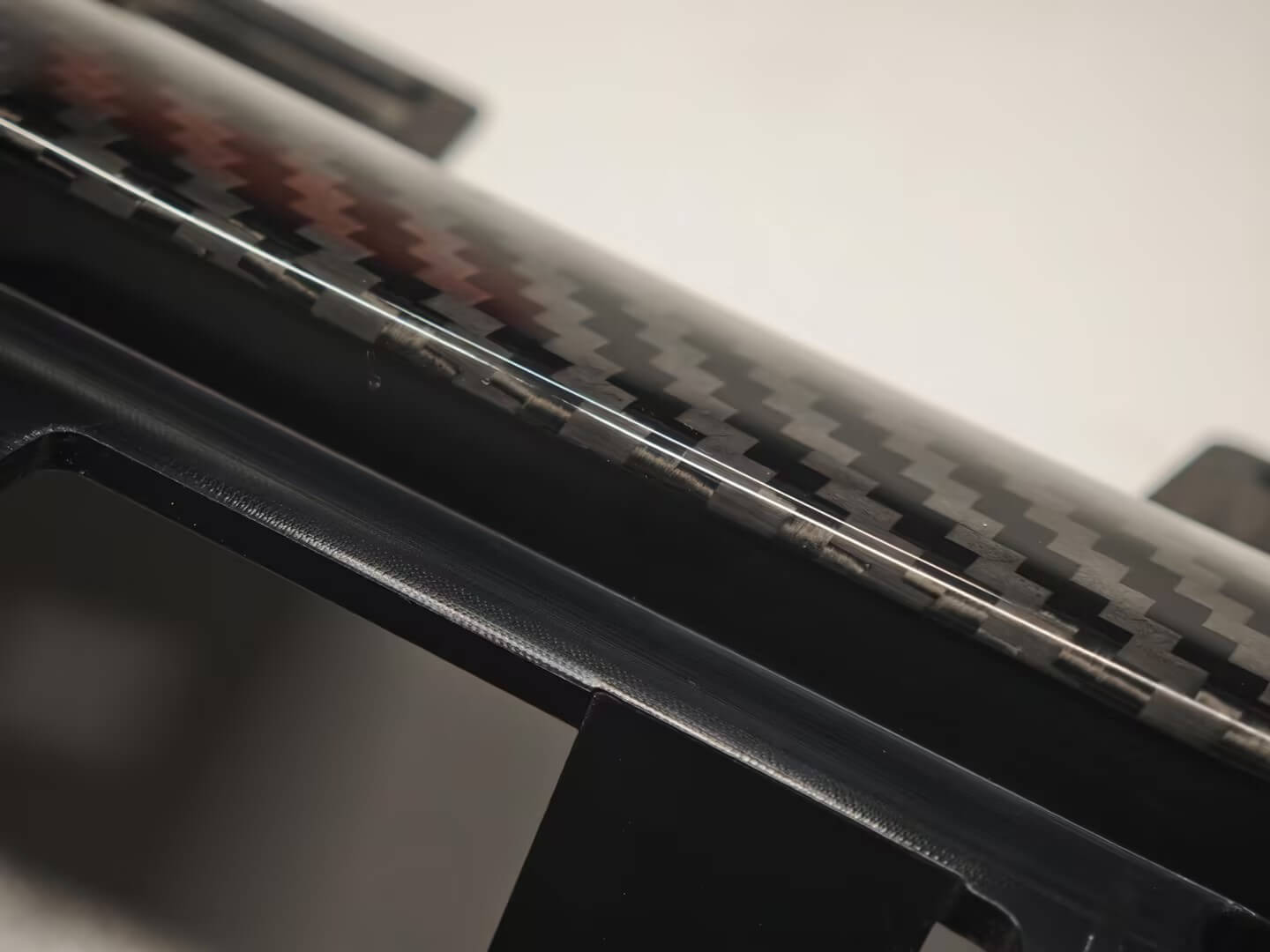
Appearance matters in the performance car market. A carbon fiber hood is often one of the most visible modification parts on a vehicle. The natural carbon fiber and Kevlar interwoven texture creates a racing-inspired, premium visual effect.
Compared with ordinary painted panels, a dry carbon hood can immediately communicate performance, lightweight engineering, and high-end customization. Clean body line integration also improves the overall modification quality. For tuning brands and distributors, this visual identity can help create a stronger product image and higher perceived value.
Why Fitment Accuracy Is Critical for OEM and Wholesale Buyers
Fitment is one of the most important quality factors in carbon fiber hood wholesale projects. Poor fitment increases installation time, creates uneven gaps, affects alignment with fenders and bumpers, and may reduce the perceived quality of the entire vehicle.
For installers and end customers, poor fitment can also increase the risk of damaging original vehicle structures during installation. This is a serious concern for tuning brands and distributors because after-sales complaints can quickly reduce profit margins.
JC SPORTLINE uses imported high-precision CNC machining centers with machining accuracy up to ±0.01 mm. High-precision tooling, 3D scanning inspection, and controlled trimming help improve consistency between samples and mass production.
For buyers who want to evaluate real product fitment, structure, and visual execution, model-specific examples are useful references. JC SPORTLINE’s BMW G87 M2 replacement dry carbon hood shows how a dry carbon fiber hood can be developed for a performance vehicle platform with attention to lightweight construction, vehicle-specific fitment, and premium exterior styling. This type of application is especially relevant for tuning brands, performance car distributors, and buyers looking for a reliable dry carbon hood supplier for model-based development.
Production Capability for OEM, ODM, and Wholesale Projects
A strong OEM dry carbon fiber hood supplier should support more than simple part production. For professional projects, buyers often need vehicle model development, mold development, structure customization, surface options, packaging support, and long-term supply capability.
JC SPORTLINE’s production capability includes high-precision intelligent fabric cutting machines, a constant-temperature and constant-humidity layup workshop, large professional autoclave equipment, 3D scanning inspection equipment, and impact testing equipment.
For dry carbon hood wholesale, production consistency is especially important. A good sample is not enough. Buyers need confidence that batch production can maintain the same fitment, surface quality, structural performance, and packaging standard.
Quality Control: From Raw Material to After-Sales Tracking
Reliable carbon fiber hood quality control must be built into every stage of production. JC SPORTLINE’s QC system includes dimensional accuracy inspection, impact resistance testing, weather resistance testing, high-low temperature cycling from -40°C to 80°C, 72-hour rain testing, and 1000-hour UV exposure testing.
The company reports a finished product pass rate above 98%, with each product carrying a dedicated traceability QR code. This supports lifecycle traceability from raw material procurement to production, delivery, and after-sales tracking.
For brand protection and quality consistency, traceability is especially valuable in wholesale and distributor channels.
Buyer Concerns: What a Reliable Supplier Should Answer
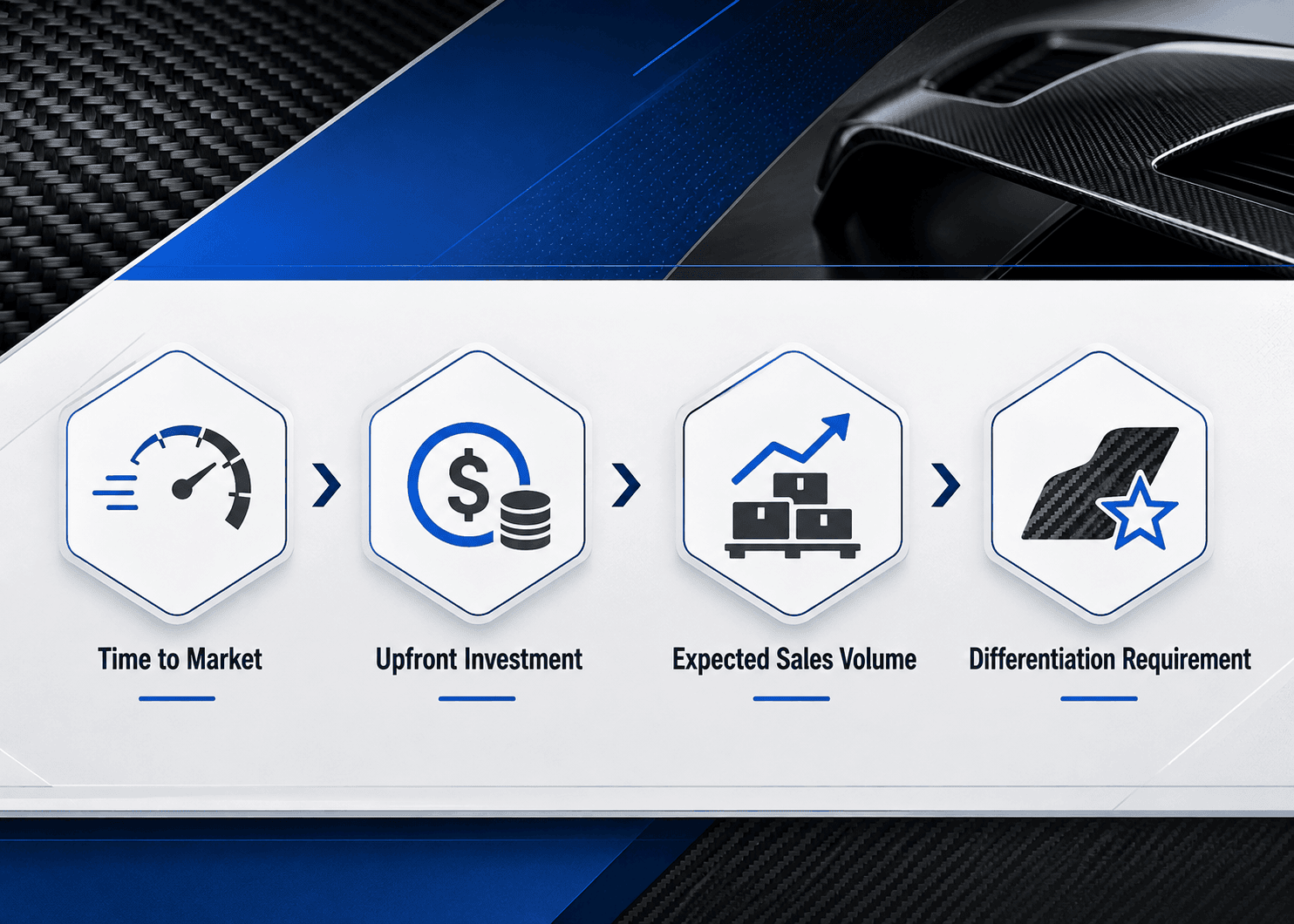
Many B2B buyers worry about whether a project can be successfully developed with a China-based supplier. The concerns are practical: timeline feasibility, real production cost, quotation transparency, sample-to-mass-production consistency, after-sales support, and installation response.
A reliable dry carbon hood supplier should answer these questions with engineering details, not vague promises. Buyers should ask about tooling development time, material options, MOQ, curing process, fitment inspection, surface coating standards, packaging methods, and after-sales responsibility.
For wholesale and OEM projects, the supplier should also provide installation materials, vehicle-specific fasteners, positioning accessories, and technical support. JC SPORTLINE provides installation documents and online technical support to help reduce installation risk.
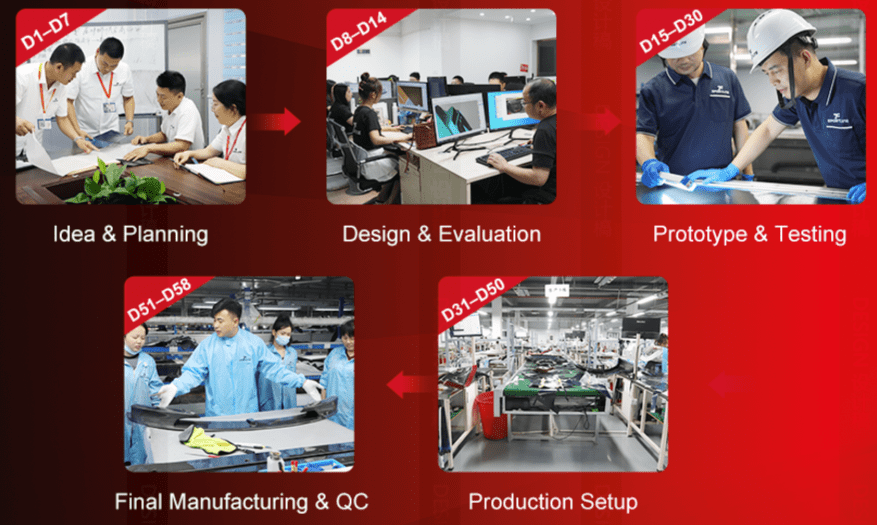
OEM, ODM, and Wholesale Dry Carbon Hood Manufacturing
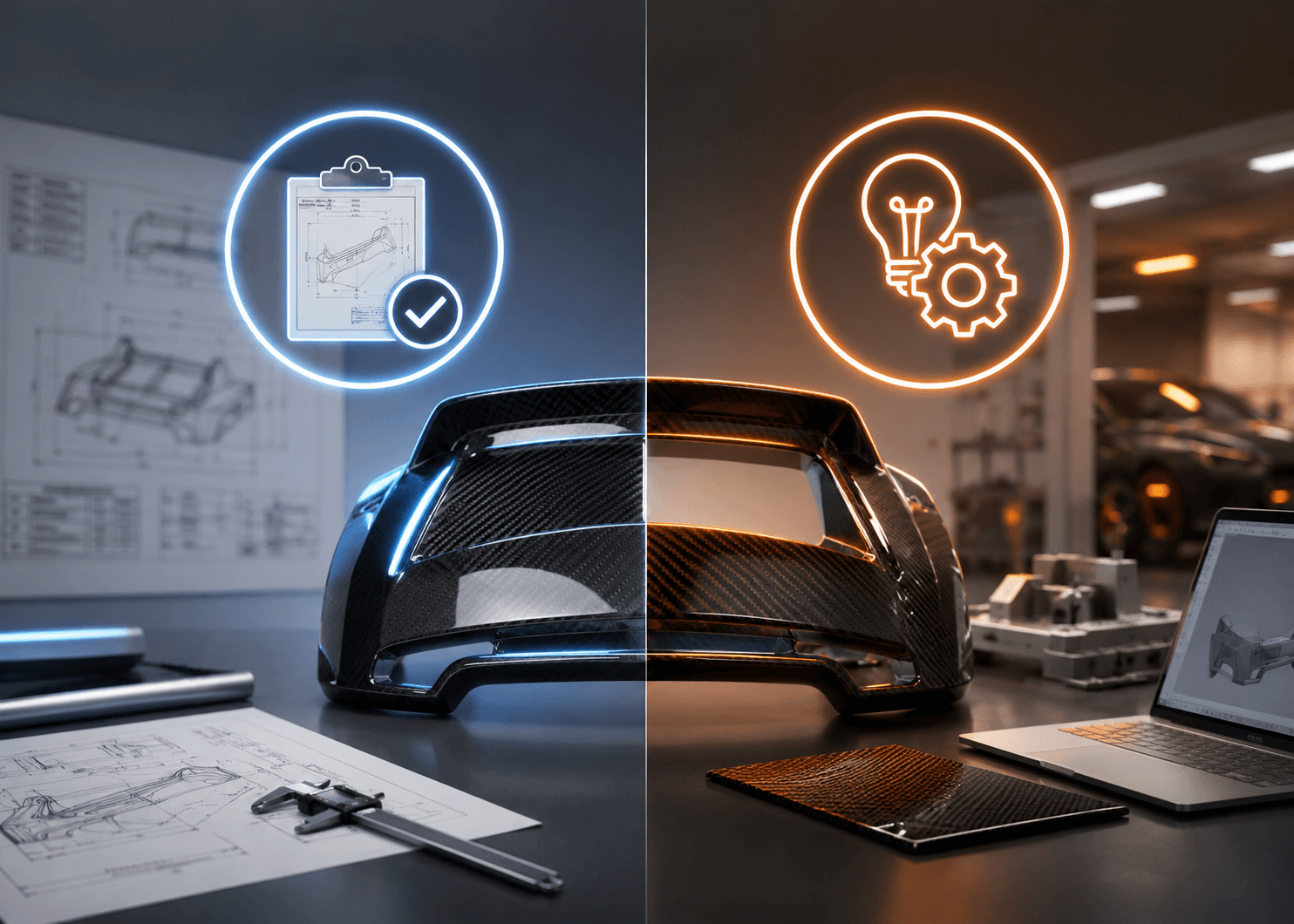
A successful dry carbon fiber hood project is not only about selling one product. It requires engineering thinking, sales thinking, market thinking, consulting thinking, and manufacturing capability.
For OEM and ODM projects, the supplier should support custom vehicle model development, tooling and mold development, carbon fiber + Kevlar structure customization, vent and duct layout design, surface texture options, and different solutions for racing and street-use vehicles.
For wholesale buyers, the supplier must also understand market positioning, packaging, batch consistency, delivery planning, and after-sales expectations. A capable custom carbon fiber hood manufacturer provides a complete solution from design and material selection to production, quality control, delivery, installation support, and after-sales tracking.
FAQ
What is a dry carbon fiber hood?
A dry carbon fiber hood is a vehicle hood made with carbon fiber prepreg material, controlled layup, vacuum forming, and high-temperature curing. It is designed for lightweight performance, premium appearance, and better production consistency than many wet carbon fiber parts.
Is a dry carbon hood better than a wet carbon hood?
For OEM, performance, racing, and wholesale projects, a dry carbon hood usually offers better weight control, resin consistency, structural repeatability, and premium positioning. Wet carbon hoods may be more affordable, but they often have more variation in resin content and weight.
Why use carbon fiber and Kevlar together?
Carbon fiber offers stiffness and lightweight performance, while Kevlar can improve toughness and impact resistance. A carbon fiber and Kevlar dry carbon hood can provide a more balanced composite structure when the layup and curing process are properly designed.
Can dry carbon hoods be customized for different car models?
Yes. A professional supplier can support custom tooling, vehicle-specific fitment, vent layout, duct design, surface texture, and structure customization. This is important for OEM, ODM, racing, and dry carbon hood wholesale projects.
How do buyers judge dry carbon hood quality?
Buyers should check material type, prepreg quality, layup design, autoclave curing capability, fitment accuracy, surface coating, UV resistance, impact testing, weather testing, and traceability. A good supplier should provide clear quality control standards.
What should wholesale buyers ask before choosing a dry carbon hood supplier?
Wholesale buyers should ask about MOQ, tooling cost, lead time, sample approval, mass production consistency, packaging, installation accessories, after-sales support, and whether the supplier has real carbon fiber manufacturing and QC capability.

Conclusion: Choose a Supplier That Delivers the Full Solution
For OEM brands, tuning companies, distributors, and performance car product developers, a dry carbon fiber hood can deliver lightweight performance, premium appearance, aerodynamic design potential, and stronger market value. But the final result depends on much more than carbon fiber material alone.
A successful project requires the right resin system, prepreg layup, autoclave curing, carbon fiber + Kevlar structure, accurate tooling, surface coating, fitment inspection, and full quality traceability.
If you are sourcing a dry carbon fiber hood, carbon fiber hood wholesale solution, or custom OEM/ODM automotive carbon fiber parts, contact a professional custom carbon fiber automotive parts manufacturer that can support your project from concept to mass production. JC SPORTLINE can help turn your dry carbon hood idea into a reliable, market-ready product for performance, racing, and wholesale applications.