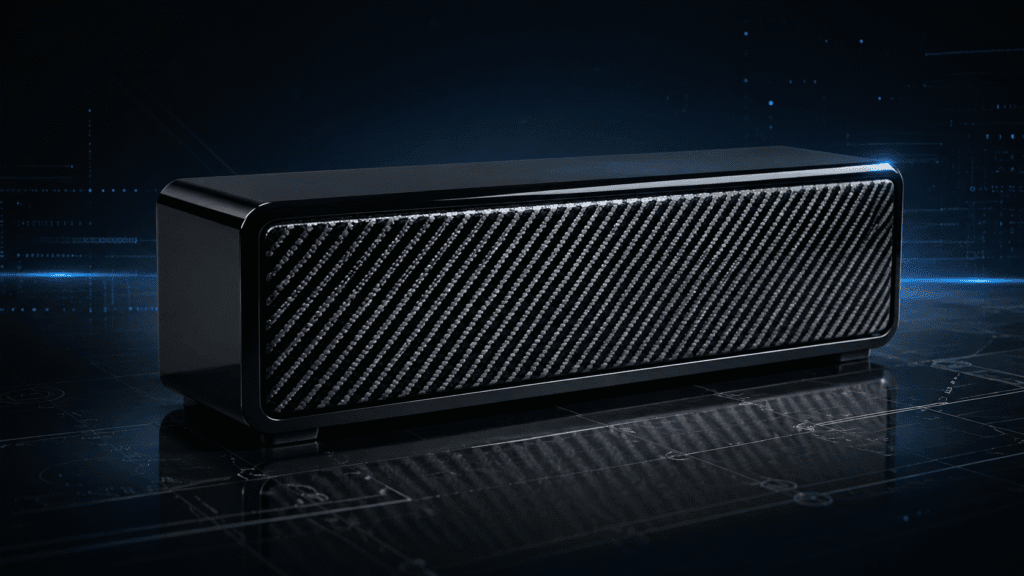
Carbon Fiber Speakers are becoming a practical option for premium audio products because carbon fiber composite can combine low weight, high stiffness, distinctive appearance, and strong resistance to corrosion when the right resin and surface system are used. For speaker brands, outdoor audio companies, sourcing managers, and product developers, the material decision is not only about making a speaker look more expensive. It affects portability, enclosure stability, outdoor performance, manufacturing feasibility, and brand positioning.
Carbon fiber is not the lowest-cost housing material, and it is not unbreakable. But when a product needs a lighter structure, a high-end visual identity, and better resistance to rust than many metal alternatives, carbon fiber can be a better choice than aluminum alloy, plastic, or traditional speaker housing materials.
What Are Carbon Fiber Speakers?
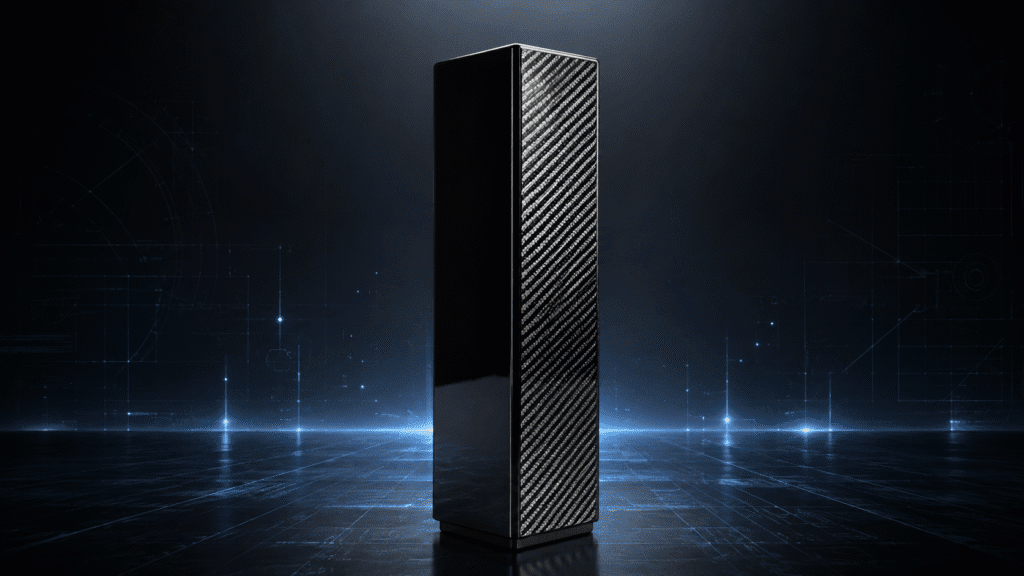
Carbon Fiber Speakers are speaker products that use carbon fiber composite in the housing, enclosure, shell, decorative cover, grille frame, mounting bracket, or other speaker-related components. In most commercial projects, carbon fiber does not need to replace every material in the speaker. It is usually applied where it creates the most value.
A carbon fiber speaker housing may help reduce weight for a portable outdoor speaker. A carbon fiber speaker enclosure may support a compact, stiff structure for a premium home audio system. Carbon fiber speaker parts can also be used for side panels, trim rings, front baffles, mounting plates, handles, and protective covers.
For B2B buyers, this flexibility matters. A brand can develop a full carbon fiber shell for a flagship product, or use selected carbon fiber parts to upgrade an existing aluminum or plastic design without completely changing the speaker platform.
How Carbon Fiber Differs from Aluminum, Plastic, and Traditional Speaker Housing Materials
Plastic is widely used in consumer audio because it supports high-volume production and complex shapes. It is often cost-efficient, but it may not deliver the premium feel, stiffness, or surface depth that high-end audio brands want.
Aluminum alloy is popular for premium electronics because it provides a clean metallic appearance and good structural performance. However, aluminum parts can increase product weight, and their corrosion resistance often depends on alloy selection, anodizing, coating, and sealing quality.
Wood and MDF remain common in many indoor audio systems, especially where acoustic tuning and cabinet mass are part of the design strategy. But they are less suitable for many outdoor, portable, or moisture-exposed applications unless additional protection is used.
Carbon fiber composite is different because it can be engineered by layer structure rather than treated as a single uniform block of material. This gives designers more control over stiffness, weight, thickness, surface appearance, and reinforcement zones.
For brands still comparing structural materials, a broader discussion of carbon fiber vs aluminum strength, weight, and cost can help clarify the trade-offs before moving into speaker-specific design.
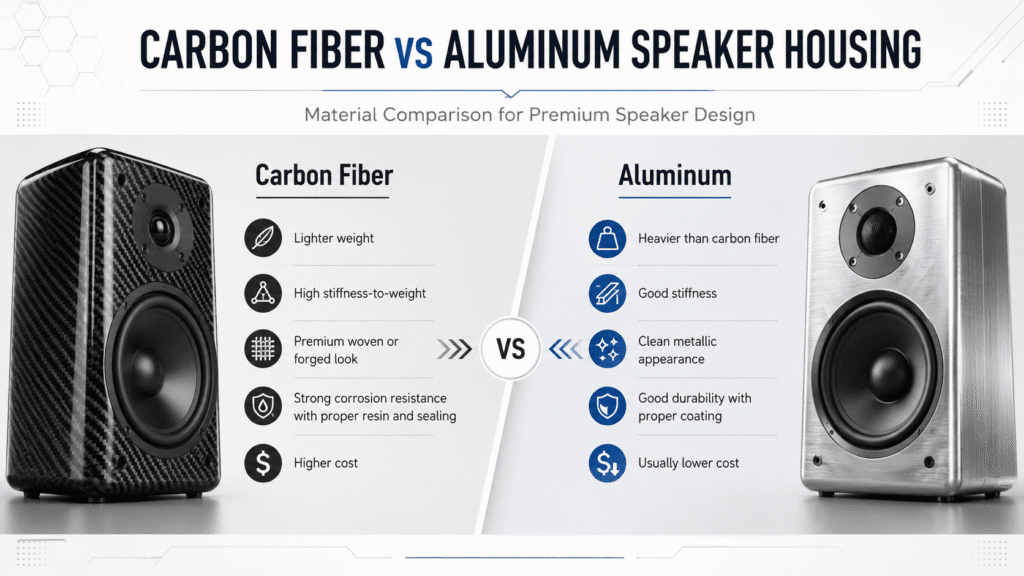
Carbon Fiber vs Aluminum Speaker Housing
| Comparison Factor | Carbon Fiber Speaker Housing | Aluminum Alloy Speaker Housing |
|---|---|---|
| Weight | Usually attractive for lightweight speaker design because of its high stiffness-to-weight potential | Often heavier for comparable enclosure volume, depending on wall thickness and process |
| Stiffness | Can be engineered through fiber orientation, thickness, and layup design | Good material stiffness, but design may require more mass |
| Appearance | Premium woven, forged, matte, satin, or gloss finish options | Brushed, anodized, painted, polished, or coated metallic finishes |
| Surface Finish | Highly dependent on mold quality, resin, clear coat, polishing, and quality control | Highly dependent on machining, anodizing, coating, brushing, or painting |
| Outdoor Durability | Can perform well with suitable resin, coating, sealing, and hardware design | Can perform well with suitable alloy, anodizing, coating, and sealing |
| Scratch Resistance | Depends mainly on clear coat or surface coating, not only on carbon fiber | Depends on anodizing, paint, powder coating, or other surface treatment |
| Dirt Resistance | Smooth gloss or coated surfaces can be easier to clean, depending on finish | Textured, brushed, or matte surfaces may show dirt differently |
| Corrosion Resistance | Strong potential when resin system and edge sealing are properly designed | Depends on alloy, anodizing, coating, and exposure conditions |
| Design Flexibility | Suitable for premium custom shapes, covers, shells, and reinforcement areas | Strong for CNC, extrusion, die casting, and sheet metal structures |
| Cost | Typically higher for custom parts, especially with demanding appearance requirements | Often more cost-efficient for standard metal structures |
| Best Fit | Premium portable speakers, outdoor audio, luxury editions, lightweight components | Metal-bodied electronics, heat-dissipating parts, standard premium housings |
Weight Reduction: Why It Matters for Speaker Brands
Weight has a direct impact on product experience. A portable speaker that feels too heavy may be less attractive for camping, outdoor events, beach use, garden audio, or travel. A wall-mounted or ceiling-mounted speaker that weighs less can simplify installation and packaging. For Amazon sellers, reducing product weight may also help with logistics planning, although the actual shipping benefit depends on packaging size, fulfillment model, and region.
Carbon fiber is useful because it can reduce weight while maintaining structural stiffness. This does not mean every speaker should use the thinnest possible carbon fiber wall. Speaker housings still need enough strength around screw points, mounting areas, inserts, driver openings, sealing surfaces, handles, and corners.
A reliable lightweight speaker design should be developed through engineering review, not by simply replacing aluminum with carbon fiber at the same thickness. In many cases, the best result comes from redesigning the part around the material.
Stiffness and Enclosure Stability
A speaker enclosure must manage vibration, internal pressure, assembly loads, and user handling. If the housing is too flexible, it may contribute to unwanted vibration or panel resonance. Carbon fiber composite can provide high stiffness at low weight, which makes it valuable for compact premium speakers and outdoor audio products where both portability and enclosure stability matter.
Still, carbon fiber alone does not guarantee better sound. Audio performance depends on the complete system: driver selection, enclosure volume, damping, port design, sealing, crossover design, amplifier tuning, and production consistency. Carbon fiber should be treated as a structural and cosmetic material that can support better product design when it is integrated correctly.
For early-stage teams, working with a manufacturer that understands carbon fiber engineering can reduce the risk of designing a beautiful part that is difficult to produce, assemble, or repeat in mass production.
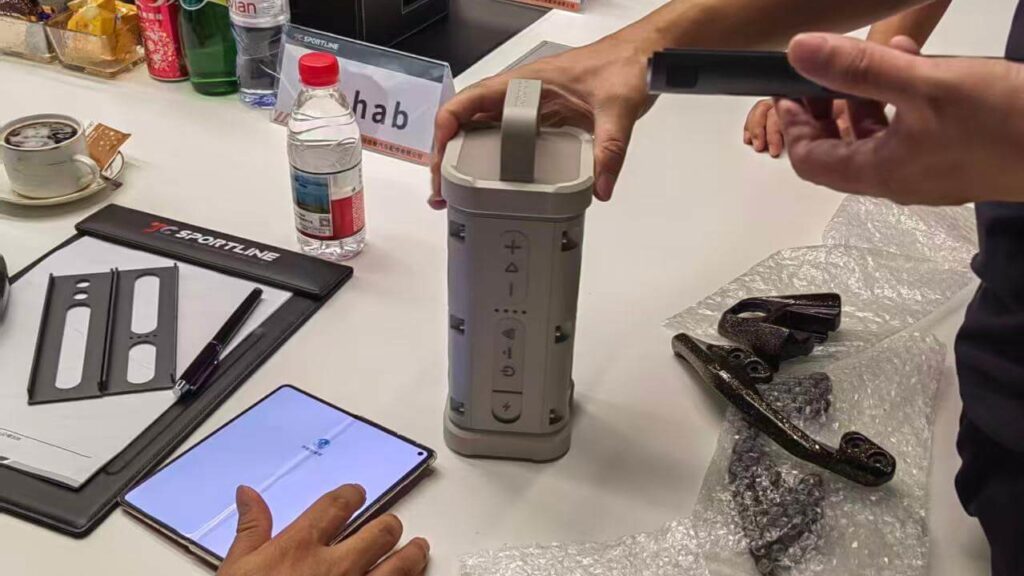
Appearance: Woven Carbon Fiber and Forged Carbon Fiber Speaker Design
Appearance is one of the main reasons brands explore carbon fiber composite speakers. Carbon fiber creates an immediate association with performance, technology, motorsport, aerospace, and luxury products. But the right visual style depends on part size and geometry.
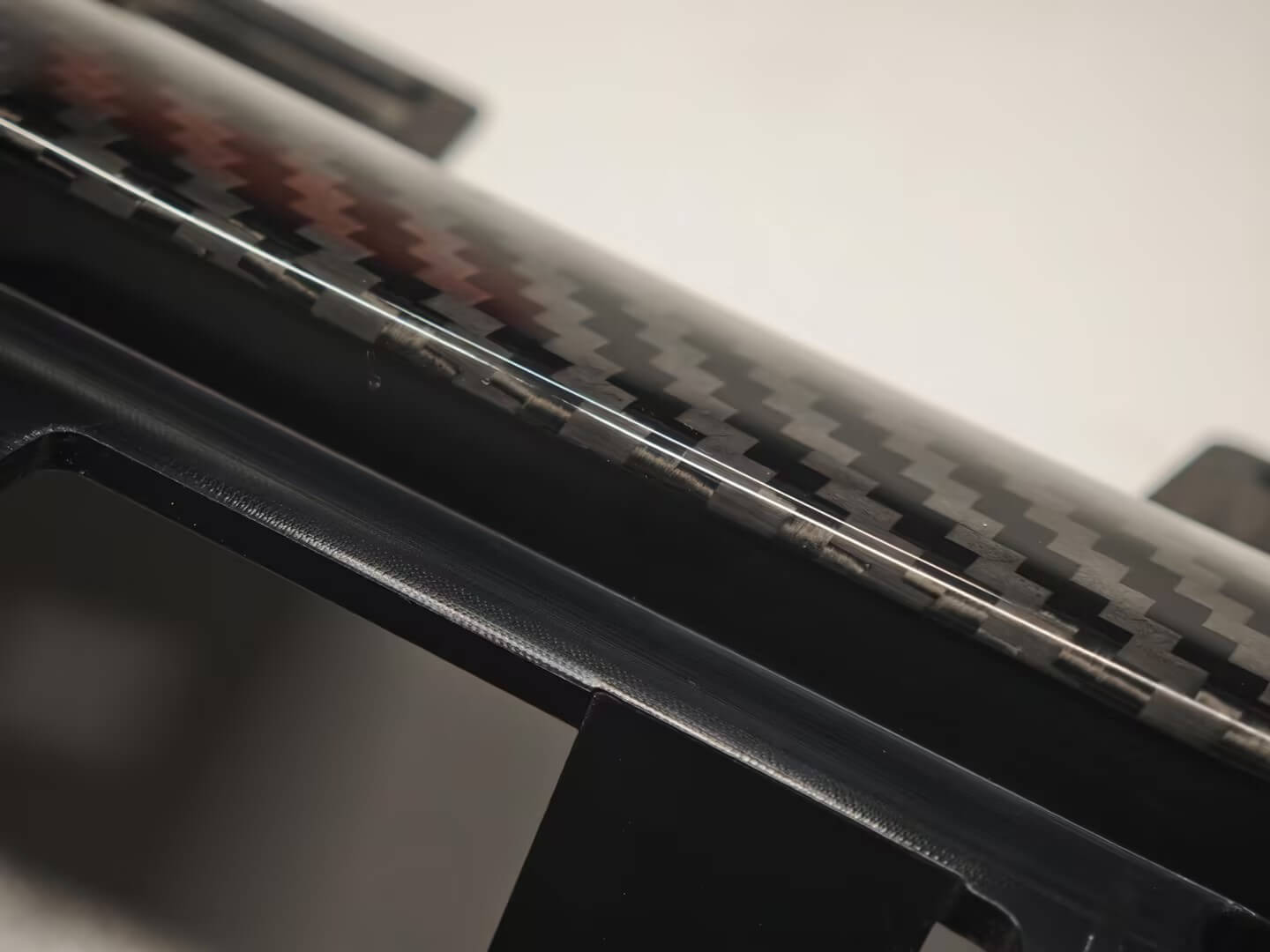
Traditional woven carbon fiber can work well on larger and flatter surfaces where the weave can remain visually consistent. On small speaker parts, tight curves, narrow rings, complex edges, or deep openings, woven patterns may distort or become difficult to align.
That is why forged carbon fiber speaker parts are often worth considering. Forged carbon fiber uses a more random chopped-fiber visual effect. It can create a premium, modern appearance without relying on perfectly aligned woven patterns. For small housings, trim parts, side covers, or decorative shells, forged carbon fiber may offer a more stable visual impression.
The best appearance choice should come from product positioning, part geometry, tooling feasibility, and surface quality requirements—not from assuming that one carbon fiber pattern is always best.
Surface Finish: Gloss, Matte, Scratch Resistance, and Dirt Resistance
For premium speakers, surface finish can influence perceived quality as much as the base material. A glossy carbon fiber shell can look luxurious, but it may show fingerprints or fine scratches more easily depending on the coating. Matte and satin finishes can feel more technical and understated, but they also need careful control to avoid uneven sheen.
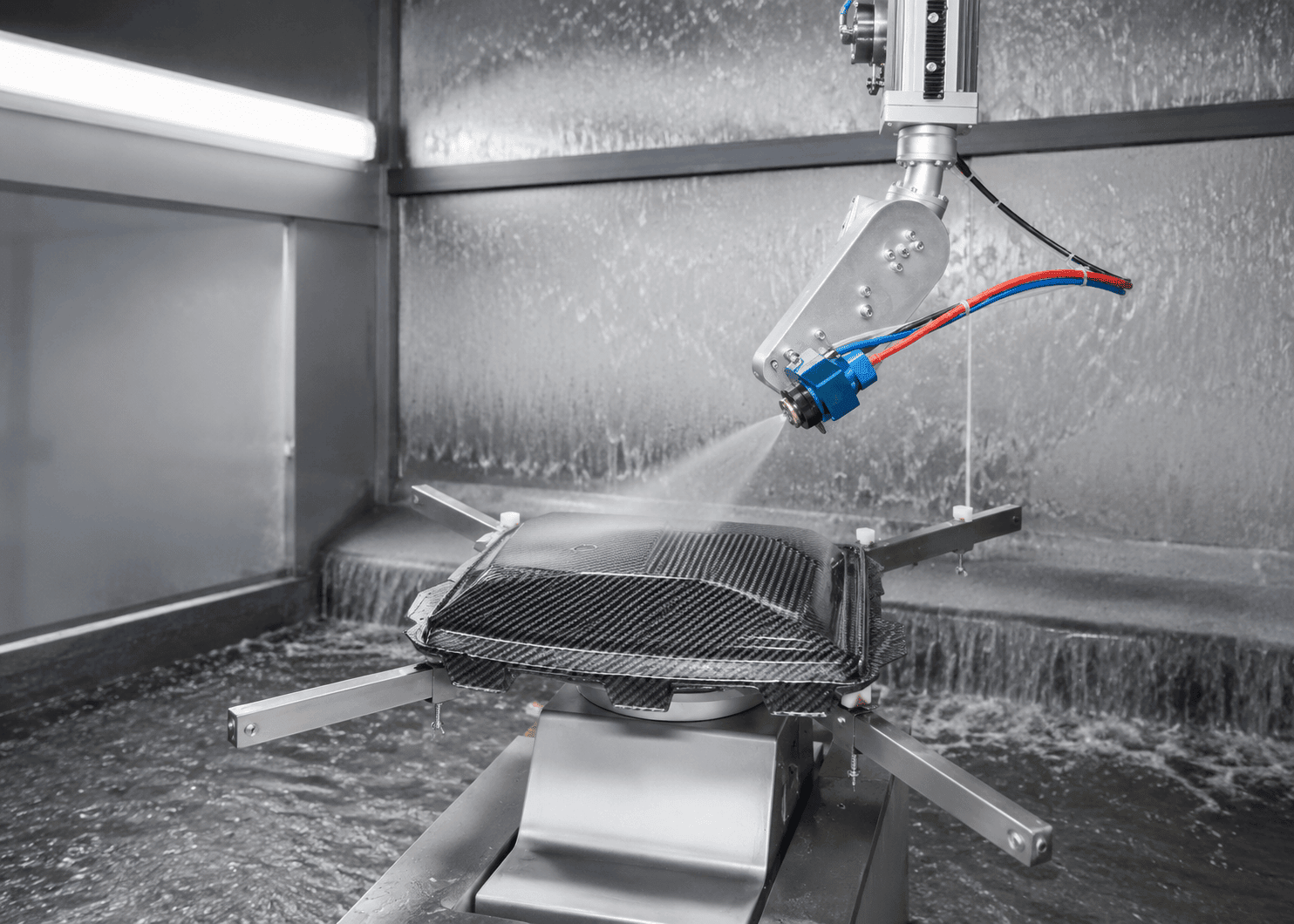
For outdoor speakers, finish requirements are even more important. A speaker may be exposed to dust, rain, sunlight, salt air, cleaning chemicals, or repeated handling. Carbon fiber speaker parts should be designed with the appropriate resin, clear coat, UV-resistant coating where needed, edge sealing, and inspection standard.
Scratch resistance should be described carefully. Carbon fiber is not scratch-proof. In most visible parts, the user touches and scratches the coating layer, not the fiber itself. A better surface system can improve resistance to daily wear, but no premium finish should be marketed as impossible to damage.
Dirt resistance also depends on finish texture. A smooth, well-coated surface may be easier to wipe clean, while deep textures, exposed edges, or inconsistent coating can collect dust and reduce the premium feel over time.
Outdoor Durability and Corrosion Resistance
Outdoor speaker housing material must be selected around real use conditions. A patio speaker, marine speaker, off-road audio component, poolside speaker, and portable camping speaker may all face different levels of moisture, UV exposure, dust, impact, salt air, and temperature change.
Carbon fiber composite has a strong advantage because it does not rust like ferrous metals. It also avoids some oxidation concerns associated with untreated or poorly protected metal parts. However, corrosion resistance in carbon fiber speaker housing depends on the full system.
The resin system protects the fibers and helps seal the composite. Coatings protect the visible surface. Edge sealing helps prevent moisture from entering cut or machined areas. Hardware selection matters because carbon fiber in contact with certain metals may create galvanic corrosion risks if the joint is not designed properly.
For outdoor speaker projects, engineers should review fasteners, inserts, adhesive systems, drainage, sealing, UV exposure, coating durability, and cleaning behavior before confirming the final structure.
Cost: When Carbon Fiber Is Worth the Investment
Carbon fiber becomes more attractive when the product strategy depends on premium differentiation. It may be worth considering when a speaker brand needs:
- Lower weight than an equivalent metal housing
- A distinctive premium appearance
- A flagship or limited-edition product line
- Better resistance to rust than many metal structures
- A high stiffness-to-weight enclosure concept
- Custom visible parts that raise perceived value
- Outdoor-oriented housing with engineered resin and coating
The business case should include tooling cost, part complexity, finish requirements, yield expectations, order quantity, assembly method, and after-sales standards. A part that looks simple from the outside may still require careful mold design, layup planning, trimming, polishing, and inspection.
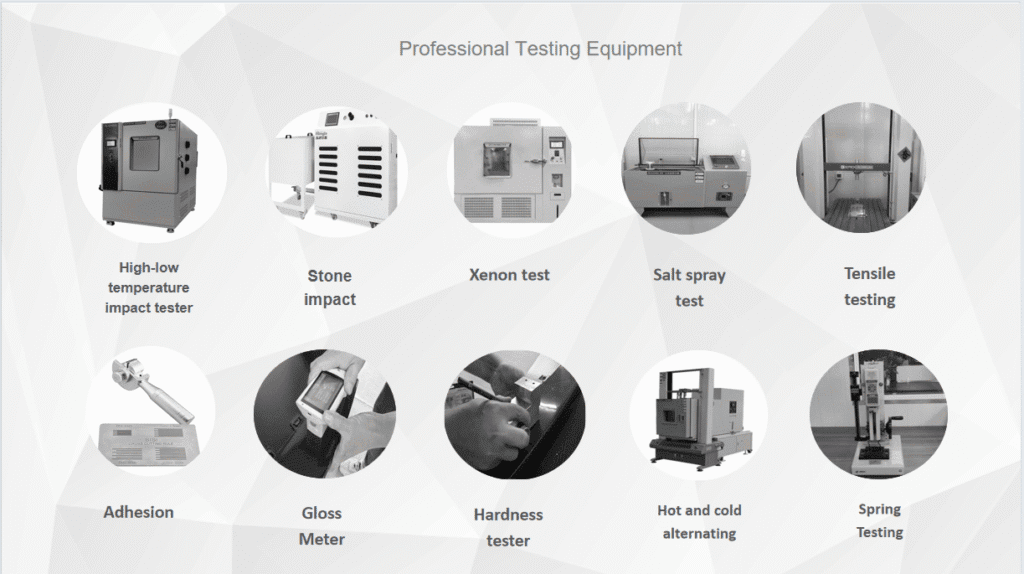
Custom Carbon Fiber Speaker Parts and OEM/ODM Manufacturing
For B2B buyers, the hardest part is often moving from concept to stable production. A sample may look impressive, but mass production requires repeatable surface quality, dimensional control, assembly fit, and clear inspection standards.
A custom carbon fiber parts manufacturer should support more than part quotation. The supplier should help review the speaker structure, recommend the right carbon fiber format, evaluate resin and coating options, design tooling, plan trimming and drilling, and confirm packaging protection.
In OEM/ODM speaker projects, the manufacturer may support:
- Carbon fiber speaker housing development
- Carbon fiber speaker enclosure prototyping
- Forged carbon fiber decorative parts
- Lightweight shell design
- Mold development
- Insert bonding and hardware integration
- Surface finishing
- Small-batch and scalable production planning
- Quality inspection and appearance control
For brands concerned about copycat products or unauthorized market leakage, carbon fiber brand protection should also be considered early, especially when developing a distinctive exterior shell or flagship product design.
Industrial designers and product teams can also benefit from carbon fiber designer resources when translating a speaker concept into a manufacturable composite part.
What B2B Buyers Should Confirm Before Starting a Carbon Fiber Speaker Project
Before ordering tooling, buyers should clarify the product goal. Is the main priority weight reduction, luxury appearance, outdoor durability, stiffness, or brand differentiation? The answer will affect material selection, process choice, surface finish, and cost.
It is also important to confirm assembly requirements. Speaker housings often include driver openings, screw holes, sealing grooves, rubber parts, metal inserts, logos, grilles, charging ports, buttons, and internal brackets. These details should be considered before mold design, not added after the first sample.
A practical supplier should be able to discuss limitations as well as advantages. Carbon fiber can be excellent for premium speaker design, but sharp corners, very thin walls, complex undercuts, high-gloss surfaces, and tight cosmetic standards can all affect cost and lead time. Honest engineering communication is often more valuable than a low initial quote.
FAQ About Carbon Fiber Speakers
1. Are Carbon Fiber Speakers better than aluminum speakers?
They can be better when the goal is lightweight structure, premium appearance, corrosion resistance, and strong stiffness-to-weight performance. Aluminum may still be better for some designs that require metal machining, heat dissipation, or lower-cost production.
2. Is carbon fiber suitable for outdoor speaker housing?
Yes, carbon fiber can be suitable for outdoor speaker housing when the resin system, coating, edge sealing, and hardware design are matched to the use environment. Outdoor performance should be validated according to the product’s actual exposure conditions.
3. Is forged carbon fiber good for speaker parts?
Forged carbon fiber can be a good option for small speaker parts, curved housings, trim panels, and decorative covers. Its random visual pattern can be more forgiving than woven carbon fiber on compact or complex shapes.
4. Can carbon fiber improve sound quality?
Carbon fiber can provide a stiff and lightweight enclosure structure, which may help reduce unwanted housing vibration when properly designed. However, sound quality depends on the full acoustic system, not the housing material alone.
5. Is carbon fiber scratch-proof?
No. Carbon fiber speaker parts are not scratch-proof. Scratch resistance mainly depends on the surface coating or clear coat, as well as the way the product is handled, cleaned, packed, and used.
6. Is carbon fiber too expensive for speaker brands?
Carbon fiber is usually more expensive than standard plastic and many aluminum solutions. It is most suitable for premium products where weight reduction, visual differentiation, outdoor durability, and brand value can justify the investment.
Build Better Premium Speakers with a Custom Carbon Fiber Parts Manufacturer
Carbon fiber is a strong choice for premium speaker design when the project requires lightweight structure, high stiffness, corrosion resistance, outdoor-ready finishing, and a distinctive visual identity. It should not be treated as a simple material swap. The best results come from matching fiber structure, resin system, coating, tooling, assembly, and quality control to the speaker’s real use case.
For speaker brands, outdoor audio companies, industrial designers, and sourcing managers, the right manufacturing partner can help turn a design idea into a repeatable product. Whether you need a carbon fiber speaker housing, carbon fiber speaker enclosure, forged carbon fiber speaker shell, or custom carbon fiber speaker parts, working with an experienced custom carbon fiber parts manufacturer can reduce development risk and support a more competitive premium product.
Contact JCSPORTLINE to review your speaker design, compare carbon fiber with aluminum or plastic, and develop a practical OEM/ODM solution for your next premium speaker project.