Real carbon license plate frame is not the same as a plastic frame with a carbon-look pattern. For B2B buyers, the difference is not only visual. Real carbon fiber uses genuine carbon fiber reinforcement and resin to create a lightweight, stiff, corrosion-resistant, and premium-looking structure, while many fake carbon-look products use plastic, water-transfer printing, sticker films, or surface decoration.
For automotive accessory distributors, car modification shops, and OEM/ODM buyers, this difference directly affects customer satisfaction, return rates, brand reputation, and long-term profit.
A low-cost carbon-look frame may look attractive in online photos. But if it fades, peels, cracks, rattles, rusts, blocks license plate information, or causes installation complaints, the hidden cost can be much higher than the initial purchase price.
This guide explains how B2B buyers can identify real carbon fiber, compare fake carbon-look products, evaluate manufacturing processes, and choose a reliable carbon fiber license plate frame supplier for bulk orders and custom projects.
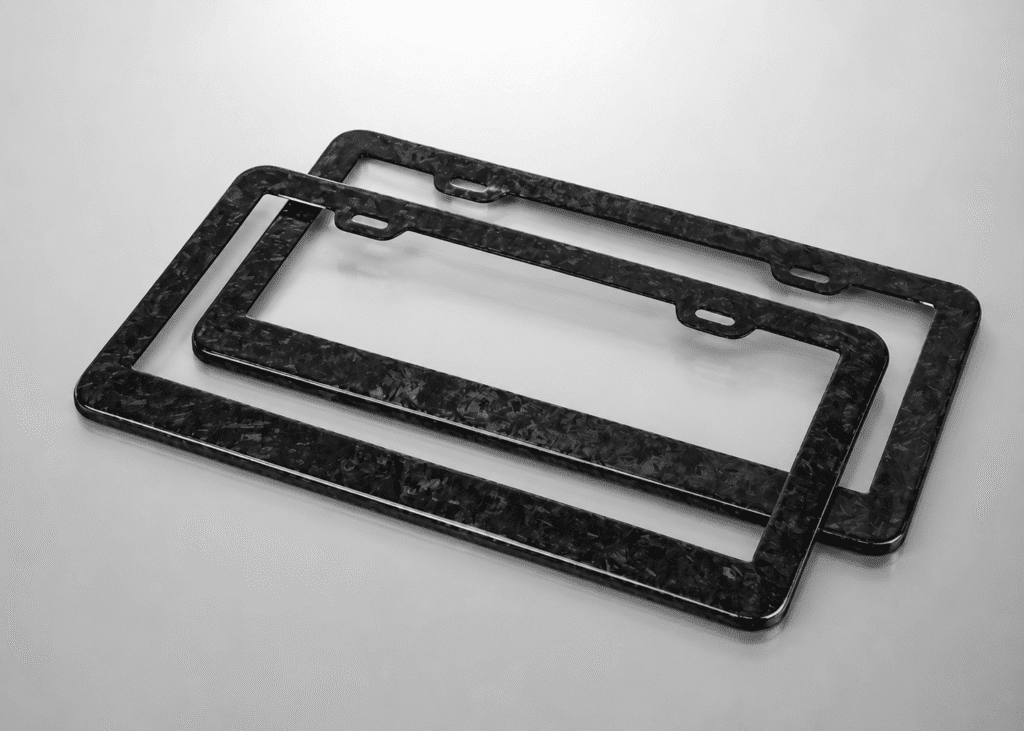
Why Fake Carbon Fiber License Plate Frames Are Common in the Market
Fake carbon-look license plate frames are common because they are easy to produce and cheaper to sell.
Many suppliers use plastic molding, water-transfer printing, carbon-look stickers, or decorative films to create a surface pattern that resembles carbon fiber. In product photos, these frames may look similar to real carbon fiber. For buyers who only compare appearance and unit price, fake carbon-look products can seem attractive.
However, the real difference appears after outdoor use, washing, installation, vibration, sunlight exposure, and customer handling.
Plastic Carbon-Look Frames
Plastic carbon-look frames usually use a molded plastic base with printed or textured carbon-style patterns.
They may be lightweight and inexpensive, but long-term outdoor use can create problems such as:
- fading;
- brittleness;
- deformation;
- cracking;
- lower premium appearance;
- shorter service life.
For very low-cost retail markets, plastic may be acceptable. But for premium automotive accessory channels, it often lacks the material story and durability that B2B buyers need.
Water-Transfer Carbon-Look Frames
Water-transfer printing applies a carbon-look pattern to a plastic or metal substrate.
This method can create a decorative carbon appearance, but the pattern is usually flat and repetitive. The surface may also scratch, fade, or peel over time, especially if the coating quality is weak.
Sticker or Film Carbon-Look Frames
Sticker or film products are among the lowest-cost options. A carbon-style film is applied to a base frame.
Common risks include:
- edge lifting;
- bubbling;
- peeling;
- fading;
- poor resistance to washing;
- weak long-term appearance.
For B2B buyers, these risks can lead to customer complaints and returns after the product has already been sold.
Low-End Laminated Carbon-Look Frames
Some products may include thin decorative carbon layers or poorly bonded surfaces. These frames may appear closer to real carbon fiber, but poor bonding, weak resin, or unstable edge finishing can lead to delamination, cracking, or warped edges.
The problem is not only whether carbon fiber is present. The process and quality control also matter.
How to Identify Real T300 Carbon Fiber Material
In this product category, real carbon fiber means that the license plate frame uses genuine carbon fiber reinforcement in a composite structure. It is not printed plastic, hydro-dipped decoration, or a surface sticker.
T300 carbon fiber is a commonly used carbon fiber grade for lightweight and durable composite products. For a T300 carbon fiber license plate frame, the material can support a stronger premium positioning than fake carbon-look decoration.
However, material grade alone does not guarantee quality. Final performance also depends on:
- fiber orientation;
- layup method;
- resin system;
- molding pressure;
- curing temperature;
- edge finishing;
- hole accuracy;
- surface coating;
- inspection;
- packaging.
Real carbon fiber frame that is poorly processed may still delaminate, crack, deform, or have rough edges.
Practical Ways to Check Real Carbon Fiber
B2B buyers can review several signs before placing bulk orders.
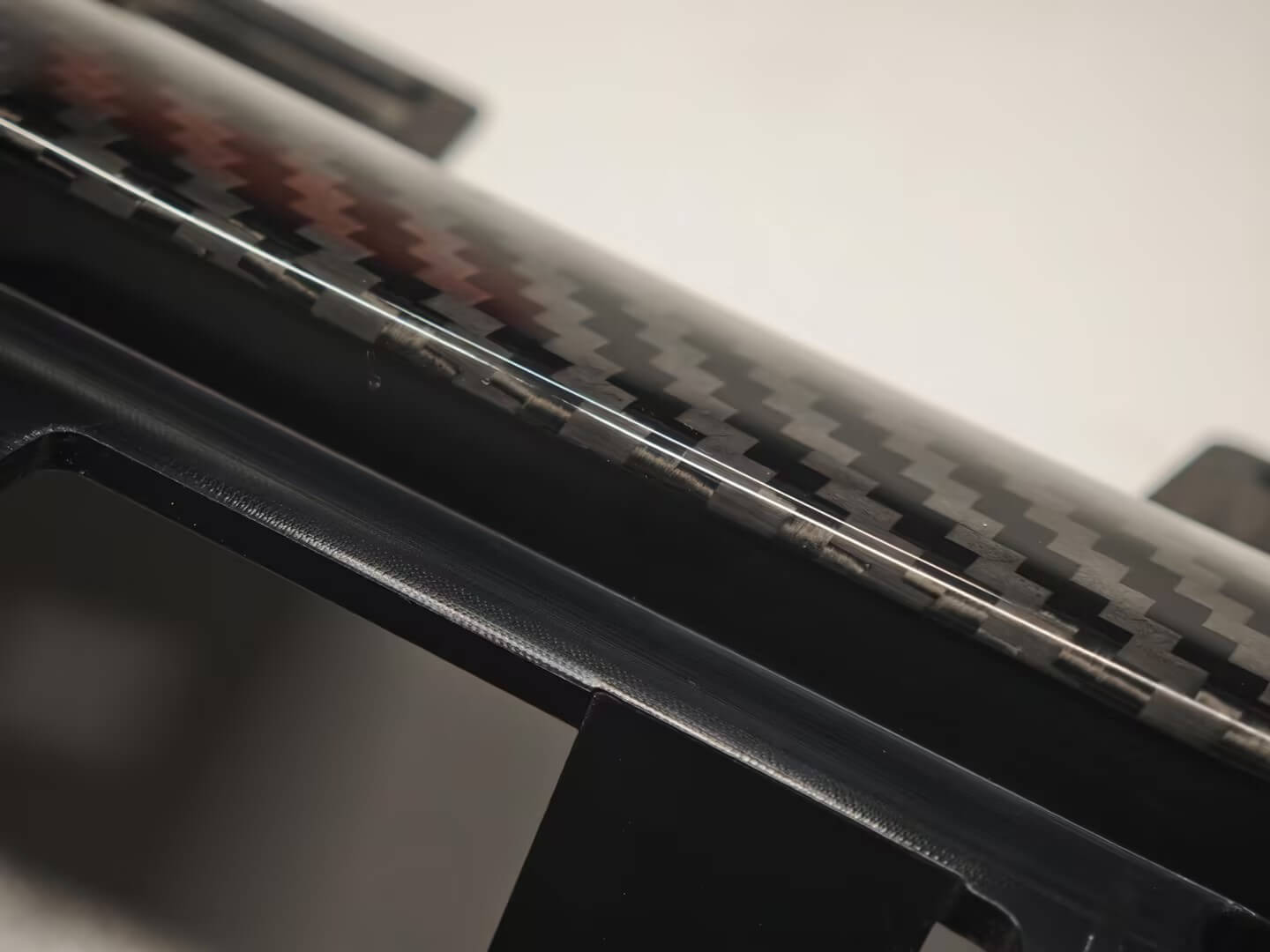
Real carbon fiber usually has a more natural, three-dimensional texture. Each product may show slight natural variation in the carbon fiber pattern. Fake carbon-look products often have patterns that look flat, repetitive, or overly uniform.
Real carbon fiber also tends to feel lighter and stiffer than many metal or plastic alternatives. When tapped, it may produce a clearer sound, while fake plastic products may sound duller. However, tapping sound alone cannot prove authenticity.
Buyers should request:
- material confirmation;
- product samples;
- process information;
- edge and backside photos;
- production details;
- quality inspection evidence;
- supplier capability background.
For large orders, do not rely only on product photos.
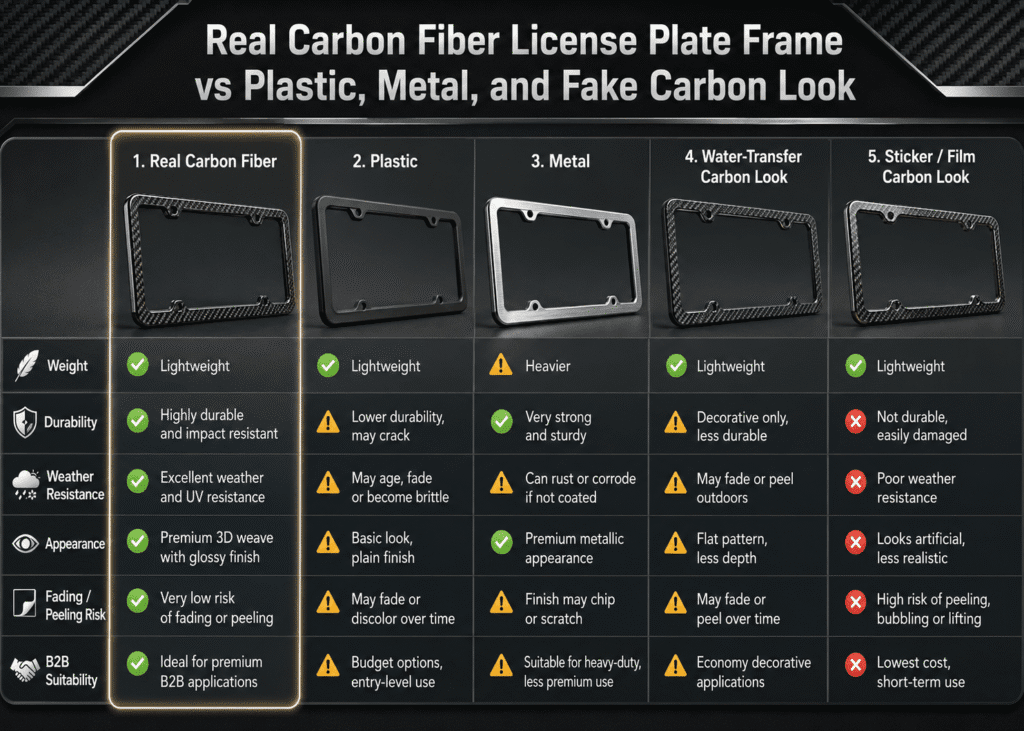
Real Carbon Fiber License Plate Frame vs Plastic, Metal, and Fake Carbon Look
| Item | Real Carbon Fiber Frame | Plastic Frame | Metal Frame | Water-Transfer Carbon Look | Sticker or Film Carbon Look |
| Material | Carbon fiber composite | Plastic | Aluminum, steel, or alloy | Plastic or metal base with printed pattern | Base frame with carbon-style film |
| Weight | Lightweight | Lightweight | Often heavier | Depends on base material | Depends on base material |
| Strength | High when properly molded | Moderate to low | Good, depending on metal | Depends on substrate | Depends on substrate |
| Weather Resistance | Strong when resin and coating are controlled | May age or crack | May rust or lose paint | Pattern may fade or peel | Film may peel or bubble |
| Corrosion Resistance | Does not rust like metal | No rust but may age | Rust or corrosion risk | Depends on substrate | Depends on substrate |
| Surface Appearance | Premium natural carbon texture | Lower-end texture | Painted or metallic | Flat decorative pattern | Film-like appearance |
| Vibration Control | Can include pads and sealing strips | Depends on design | May rattle if not cushioned | Depends on design | Depends on design |
| Peeling Risk | Low when molded properly | Not applicable | Paint may peel | Pattern may peel | High risk at edges |
| Fitment Stability | Strong with accurate hole control | Varies | Varies | Varies | Varies |
| Cost Level | Higher | Low | Low to medium | Low to medium | Low |
| B2B Suitability | Premium retail, clubs, gifts, OEM projects | Low-cost retail | Standard replacement | Price-driven markets | Short-term low-cost promotion |
A real carbon license plate frame usually offers a better balance of lightweight performance, premium appearance, long-term durability, corrosion resistance, and brand value. But it requires stronger material control, molding process, surface finishing, and inspection.
Common Risks of Plastic, Water-Transfer, and Sticker Carbon-Look Frames
Fading and Aging
Low-end carbon-look products often fail under long-term sunlight. UV exposure may cause color fading, yellowing, surface aging, or brittleness.
For dealers and e-commerce sellers, fading is a serious after-sales risk because customers often judge the product by appearance.
Peeling and Delamination
Water-transfer films and stickers may lift at the edges after washing, heat exposure, or outdoor use. Poorly bonded carbon-look layers may also bubble, peel, or separate.
Once peeling begins, the product looks cheap and may be difficult to repair.
Cracking and Deformation
Low-cost plastic frames can deform under heat or stress. Weak frames may crack under pressure, road vibration, or small impacts.
A license plate frame is not a heavy structural component, but it still needs enough stiffness to remain stable during daily driving.
Rust and Paint Loss
Metal frames may look durable, but low-grade metal can rust, corrode, lose paint, or scratch vehicle surfaces if the finish and hardware are not controlled.
Poor Hole Accuracy and Loose Installation
If hole positions are inaccurate, the frame may be difficult to install. Loose frames can create vibration noise during driving, especially on rough roads or at higher speed.
Hidden B2B Costs
Low purchase price does not always mean low total cost.
Hidden costs may include:
- return handling;
- customer service time;
- bad reviews;
- dealer complaints;
- replacement shipments;
- repacking;
- lost repeat orders;
- reduced brand trust.
For long-term B2B sales, after-sales stability can matter more than the lowest unit price.
Why Real Carbon Fiber Frames Must Balance Lightweight, Strength, Weather Resistance, and Compliance
A high-quality carbon fiber license plate frame should not only be light. It must also provide enough strength, outdoor durability, installation stability, and market compliance.
Lightweight but Strong
Lightweight performance should come from carbon fiber material and layup optimization, not from simply reducing structure.
A well-designed carbon fiber frame can be light while still resisting daily handling, road vibration, and normal use.
Impact and Compression Resistance
The frame should resist small impacts, stones, pressure, and normal installation stress. However, no product should be described as indestructible. Severe impact, improper installation, or extreme force can still cause damage.
Long-Term Outdoor Durability
A vehicle license plate frame is exposed to sunlight, rain, mud, snow, washing, heat, and cold.
For long-term use, buyers should review:
- UV-resistant coating;
- water-resistant design;
- resin system;
- edge sealing;
- hardware material;
- surface finish;
- packaging protection.
Anti-Vibration and Noise Reduction
Silicone buffer pads, sealing strips, soft contact areas, and anti-vibration structures can help reduce:
- high-speed rattling;
- road vibration noise;
- plate rubbing;
- paint scratches;
- dust entry;
- water entry.
These details may seem small, but they directly affect end-user experience.
Compliance and License Plate Visibility
A license plate frame must not block plate characters, legal markings, required border areas, or visibility zones.
Compliance depends on target-market regulations, plate size, border width, hole position, local traffic rules, and installation method. B2B buyers should confirm requirements for their country, state, or region before bulk sales.
A product that sells well in one market may not automatically be compliant in another.
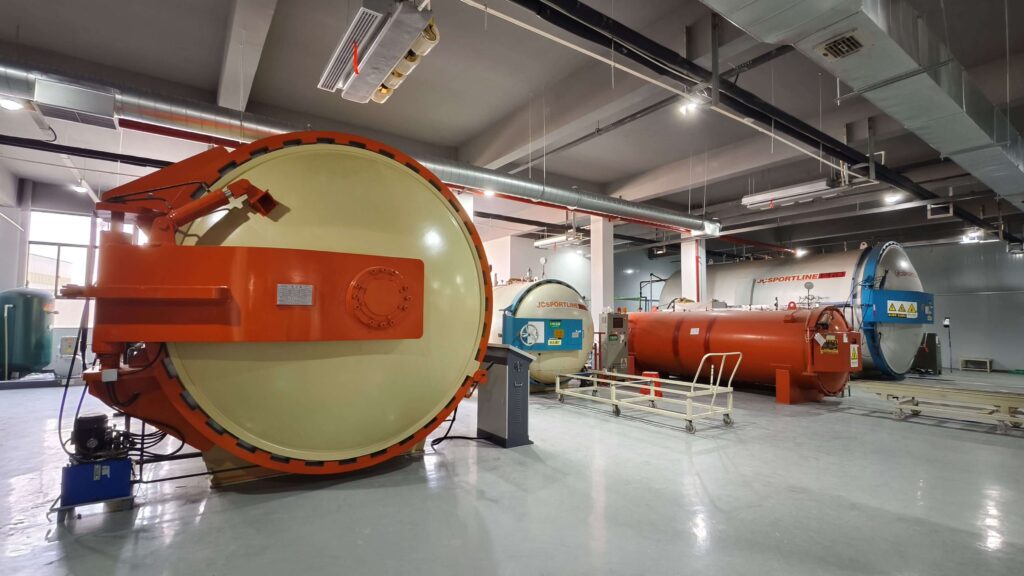
Manufacturing Process: Why High-Temperature Molding Matters
The manufacturing process is one of the biggest differences between real carbon fiber frames and low-end carbon-look products.
Low-End Surface Decoration
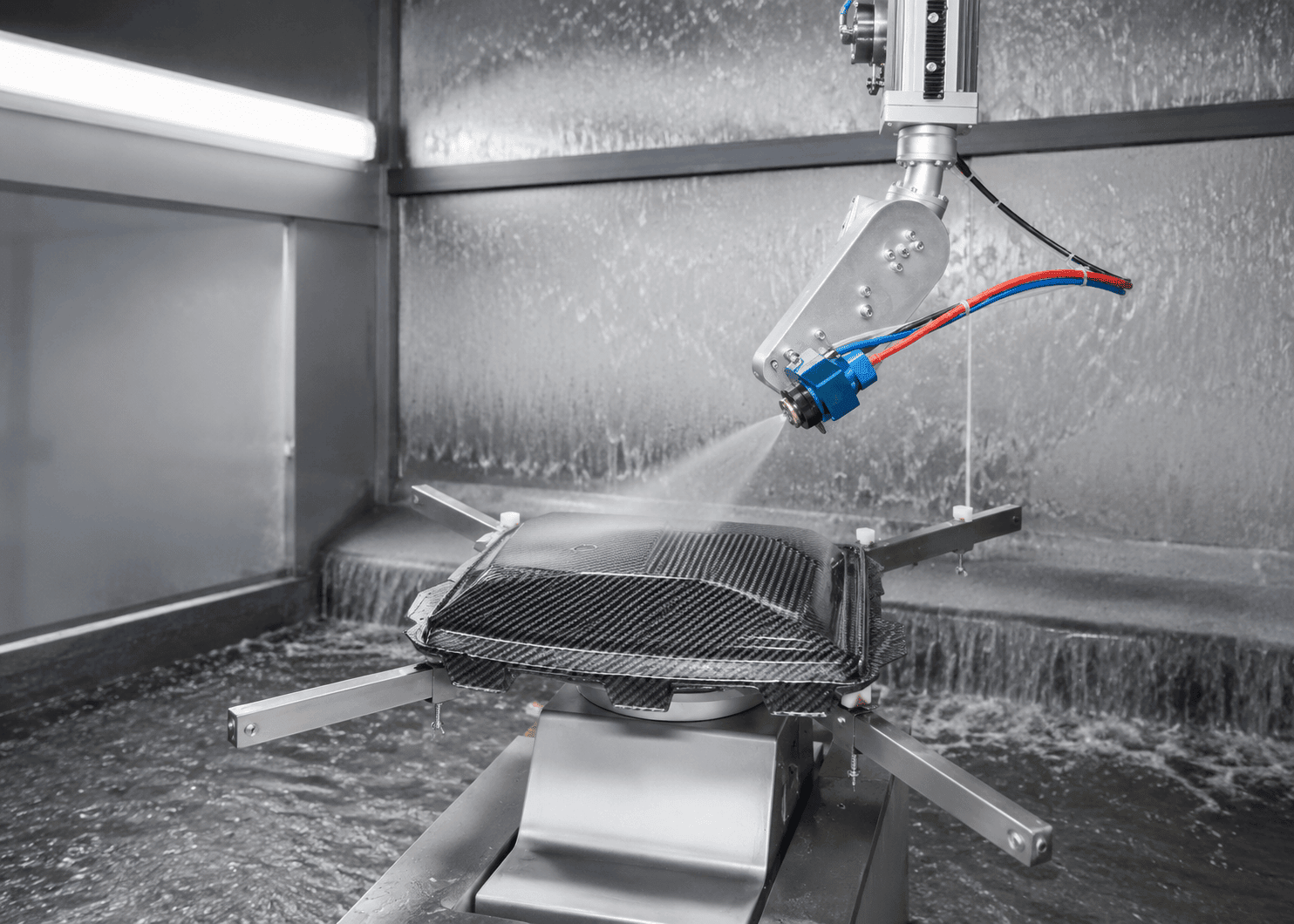
Cold pressing, surface lamination, stickers, and water-transfer printing mainly focus on appearance. These methods are easier to produce but may not provide long-term structure or outdoor durability.
High-Temperature Molding
A mature high-temperature molding process can support:
- better laminate density;
- lower delamination risk;
- better edge stability;
- more consistent structure;
- improved surface quality;
- stable batch production;
- lower warping risk;
- lower cracking risk;
- better long-term supply consistency.
Important process controls include:
- T300 carbon fiber material selection;
- aramid hybrid reinforcement where appropriate;
- layup angle control;
- resin system selection;
- temperature control;
- pressure control;
- curing cycle;
- CNC trimming or hole processing;
- edge finishing;
- surface coating;
- final inspection.
For B2B buyers, the key is not just “real carbon fiber.” The key is whether the supplier can consistently produce real carbon fiber frames at scale.
If you are interested in our carbon fiber product manufacturing process, useful resources include carbon fiber materials and carbon facilities.
Customization Options for OEM Carbon Fiber License Plate Frame Projects
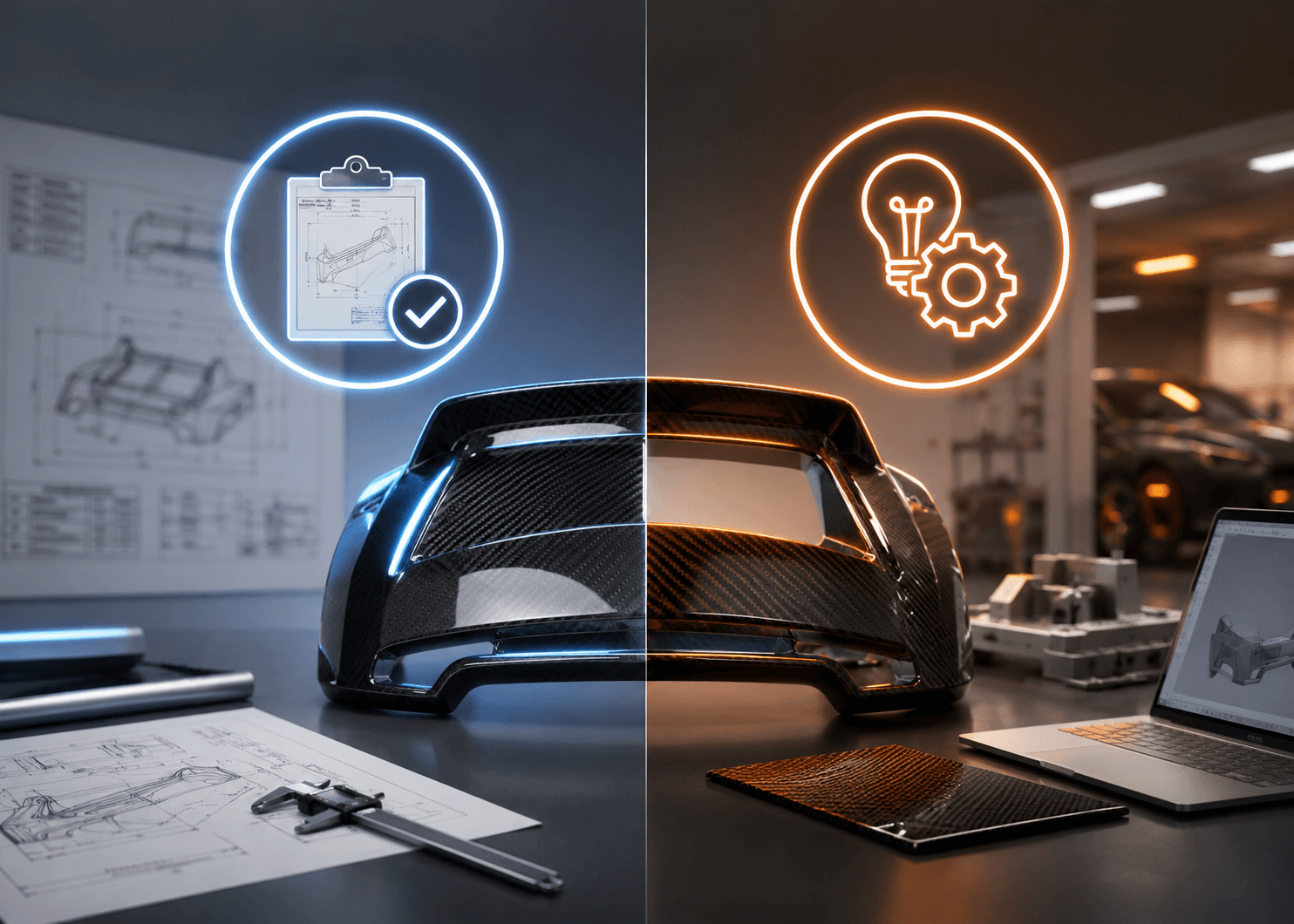
An OEM carbon fiber license plate frame can be more than a standard accessory. With customization, B2B buyers can build a branded product line instead of selling generic items.
Common Customization Options
Customization may include:
- laser-engraved logo;
- vehicle club logo;
- brand name;
- personalized text;
- glossy finish;
- matte finish;
- 3K twill pattern;
- 3K plain pattern;
- forged carbon pattern;
- standard version;
- thickened version;
- motorcycle license plate frame;
- retail packaging;
- gift-box packaging;
- anti-theft screw kits;
- decorative caps;
- instruction cards.
Suitable Sales Channels
A custom carbon fiber license plate frame can be suitable for:
- automotive accessory distributors;
- car beauty shops;
- modification shops;
- vehicle clubs;
- corporate gift programs;
- EV accessory brands;
- premium retail brands;
- e-commerce sellers;
- wholesale programs;
- private-label product lines.
Customization helps buyers improve product recognition, avoid low-price commodity competition, increase perceived value, support brand building, and create vehicle-club or campaign products.

How JCSPORTLINE Supports Real Carbon Fiber License Plate Frame Supply
JCSPORTLINE supports real carbon fiber license plate frame supply for B2B buyers who need reliable materials, controlled production, stable quality, and customization.
The company focuses on genuine carbon fiber materials rather than printed carbon-look decoration. For suitable projects, T300 carbon fiber and hybrid reinforcement can be reviewed based on product requirements.
Key support includes:
- real carbon fiber material options;
- mature high-temperature molding process;
- layup angle and curing control;
- pressure and temperature management;
- edge finishing;
- hole accuracy control;
- glossy and matte finish options;
- logo engraving;
- club marks and custom text;
- custom packaging;
- batch quality control;
- long-term B2B supply.
JCSPORTLINE also supports B2B channels such as retail, wholesale, car clubs, corporate gifts, brand customization, and OEM/ODM programs.
Conclusion
Carbon fiber license plate frame offers more than a carbon-style appearance. When properly manufactured, it can provide lightweight structure, premium texture, corrosion resistance, outdoor durability, anti-vibration performance, and stronger brand value.
For B2B buyers, the real risk is not paying more for genuine carbon fiber. The bigger risk is choosing low-cost fake carbon-look products that create fading, peeling, rattling, fitment, compliance, and after-sales problems.
Before placing bulk orders, evaluate the material, process, edge quality, hole accuracy, anti-vibration structure, compliance, packaging, batch consistency, and customization capability.
FAQ
What does a real carbon fiber license plate frame look like?
A real carbon fiber license plate frame should use genuine carbon fiber reinforcement, such as T300 carbon fiber, rather than plastic water-transfer, printed, or sticker carbon-look decoration. Buyers should request material confirmation and samples before bulk orders.
How can buyers distinguish real carbon fiber from fake carbon-look products?
Buyers can review material evidence, texture, weight, stiffness, edge structure, surface finish, sample quality, and supplier production process. No single method, such as tapping sound, can fully prove authenticity by itself.
Is a carbon fiber license plate frame better than plastic or metal?
A real carbon fiber frame is lightweight, corrosion-resistant, premium-looking, and durable when properly manufactured. Plastic is cheaper but may age, crack, or fade. Metal may be strong but can rust, lose paint, become heavier, or scratch vehicle surfaces depending on material and finish.
Will lightweight design reduce protection?
Not necessarily. Lightweight performance should come from carbon fiber material selection, layup optimization, and process control. It should not come from cutting necessary structure. Under normal driving and installation conditions, it provides a strong balance of lightweight performance and practical protection. Severe impact or improper installation may still cause damage, so correct use is recommended.
Is the license plate frame compliant for road use?
Compliance depends on license plate size, border width, hole position, character visibility, local traffic rules, and installation method. B2B buyers should confirm the target market’s requirements before bulk sales.
Can B2B buyers customize logo, packaging, and surface finish?
Yes. Custom options may include laser-engraved logos, vehicle club marks, personalized text, glossy or matte finish, different carbon patterns, anti-theft screws, decorative caps, instruction cards, retail packaging, and gift-box packaging.