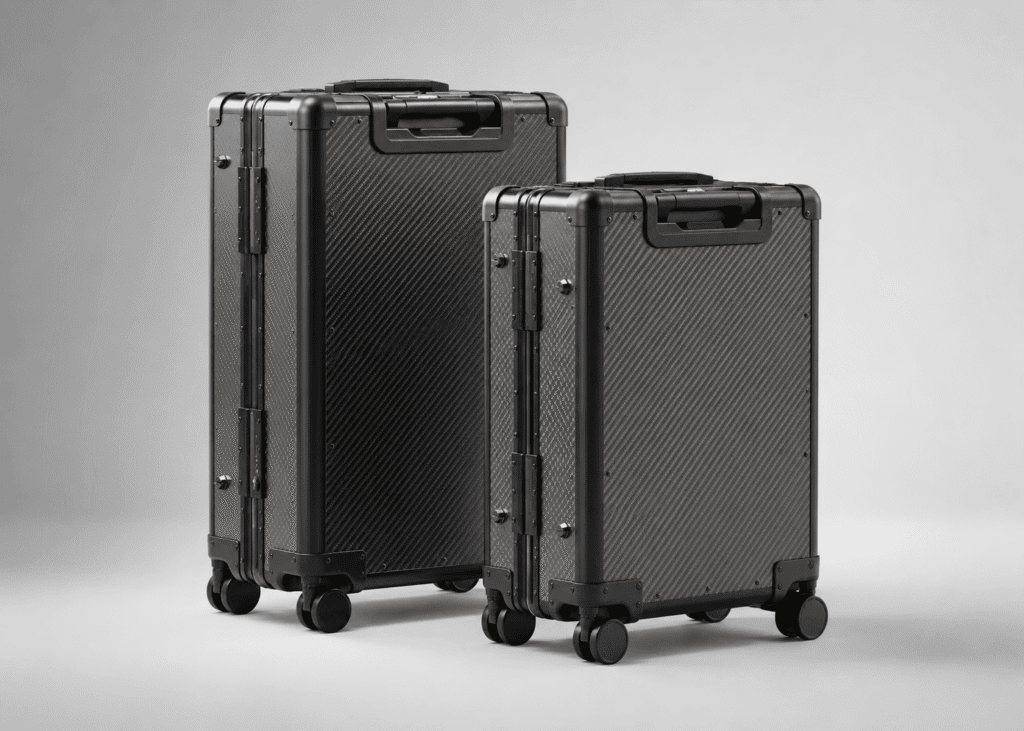
The hard-shell luggage market has a differentiation problem. Walk through any premium travel retailer and the polycarbonate cases blur together — same silhouettes, same finishes, same story. For brand founders and sourcing directors trying to command a genuine price premium, another injection-molded shell in a new colorway changes nothing. Custom carbon fiber luggage changes the equation — but only when it is treated as what it actually is: a brand platform, not a material substitution.
This is the decision this article equips you to make, whether you are a travel goods brand owner, a private label sourcing lead, a gift and luxury channel distributor, or an OEM/ODM program manager scoping custom carbon fiber luggage for brands.
Why Carbon Fiber Luggage Is a Brand Platform, Not a Material Swap
A carbon shell that only looks different changes nothing; a carbon program built around brand positioning changes the price point.
Premium carbon fiber luggage delivers five things simultaneously that no ABS or PC case can: a genuine material story customers can verify with their own hands, immediate visual identity through the weave itself, a real lightweight advantage, a structure engineered around your product concept, and a full private label canvas — surface, hardware, interior, logo, packaging. Brands that capture all five build a product line. Brands that capture only the look build a talking point that collapses at the first side-by-side comparison with a genuine carbon case.
For industrial designers and product developers, this means carbon fiber luggage is not a drop-in replacement decision. It is a product architecture decision, made at the start of the program — which is exactly where the rest of this article begins.
Real Carbon Fiber Shell vs. “Carbon-Look” Luggage
The single biggest buyer concern is justified: much of what sells as carbon fiber is not. The market is full of ABS/PC cases wrapped in water-transfer carbon-pattern film, or shells with one or two thin surface plies of carbon over a body padded out with glass fiber. These products inherit the price of carbon and the performance of plastic.
A genuine carbon fiber luggage shell is a structural laminate. In our luggage program, the shell is built from T300/T700-grade carbon fiber prepreg, hybridized with aramid (Kevlar) and high-toughness glass fiber in a deliberate stacking sequence: carbon supplies rigidity and impact-load distribution, aramid supplies tear and puncture resistance, and glass fiber adds compliance for the abuse of checked-baggage handling. The result is a lightweight carbon fiber luggage body — a 20-inch cabin case at roughly 2.3–2.8 kg net — that resists the localized deformation that cracks conventional shells.
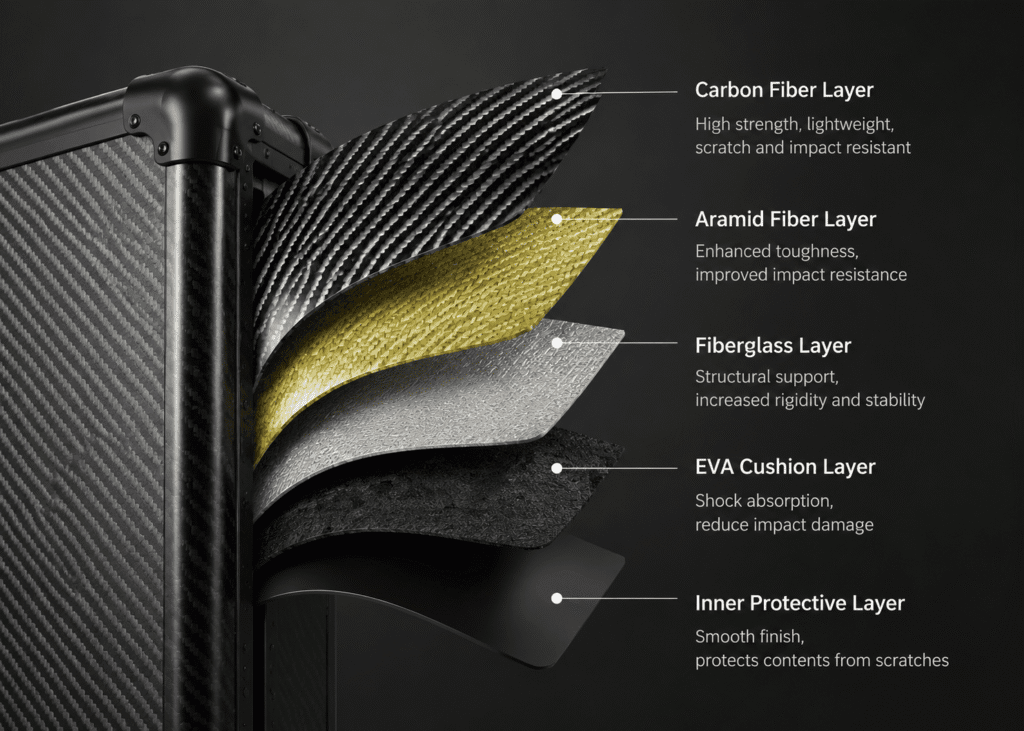
For buyers weighing carbon fiber vs ABS luggage, the differences that matter at product line level are these:
| Attribute | Structural Carbon Fiber Shell | ABS/PC Shell |
| Shell construction | Carbon prepreg + aramid/glass hybrid laminate, molded as one body | Injection-molded thermoplastic |
| Impact behavior | Distributes load across the laminate; resists cracking and permanent deformation | Prone to cracking, denting, and stress-whitening under checked-baggage impact |
| 20″ cabin case weight | ~2.3–2.8 kg | ~3.5–4.5 kg |
| Surface & perceived quality | Visible structural weave, tight tolerances, seamless one-piece molding | Plastic finish, wider tooling tolerances, visible joint lines |
| Aging | Slow performance decay; resists wear and corrosion | UV embrittlement, scratch-prone, joints loosen over time |
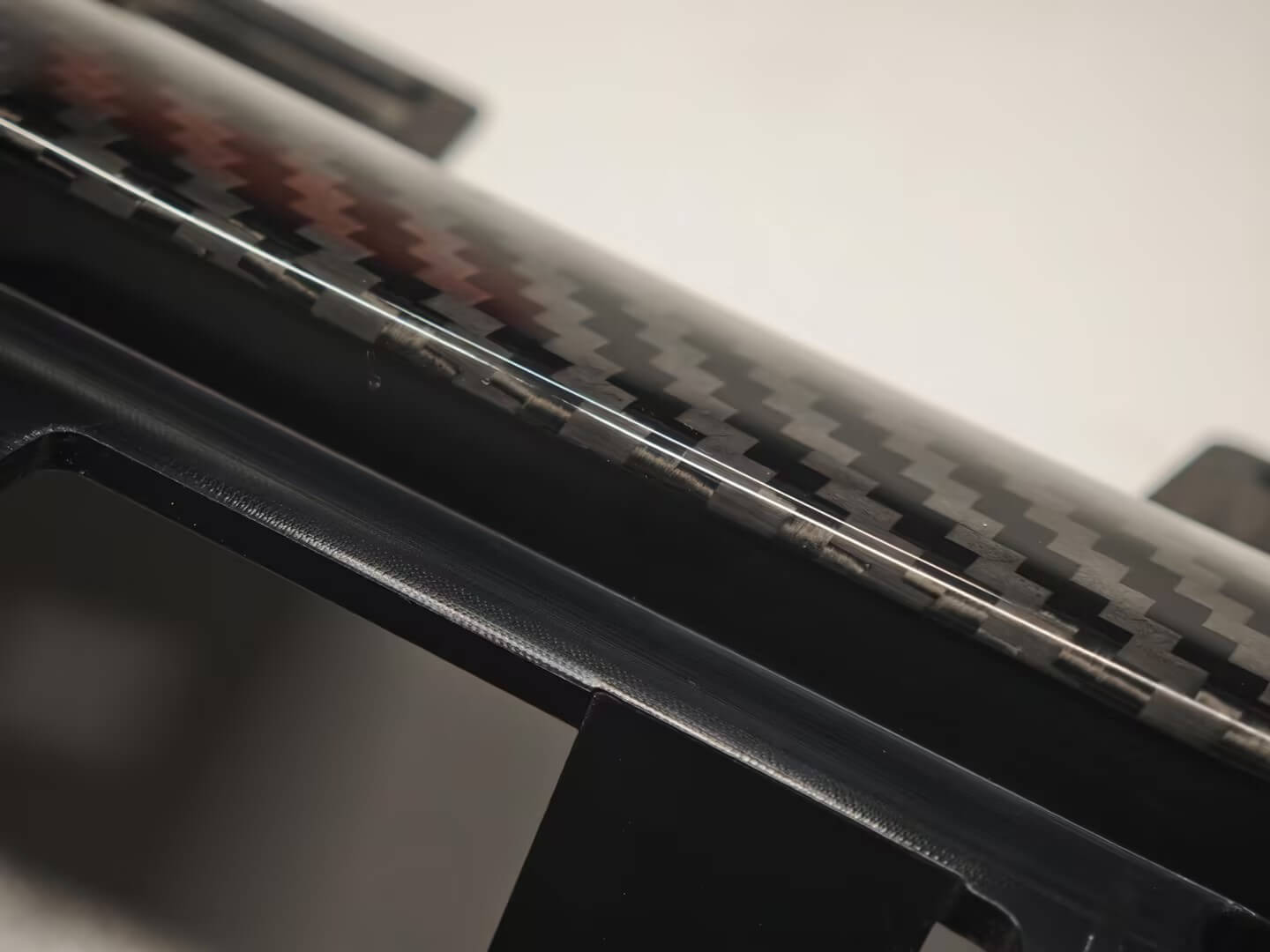
A carbon fiber suitcase built this way is verifiable — by weight, by weave regularity, by tap response — which is precisely why a custom carbon fiber luggage shell manufacturer with real laminate engineering is worth more to your brand than a supplier offering a carbon-look finish. Your customers will check. So should you. The same logic holds whether the format is a cabin case or a full-size carbon fiber travel suitcase.
The Manufacturing Process Decides Your Batch Consistency
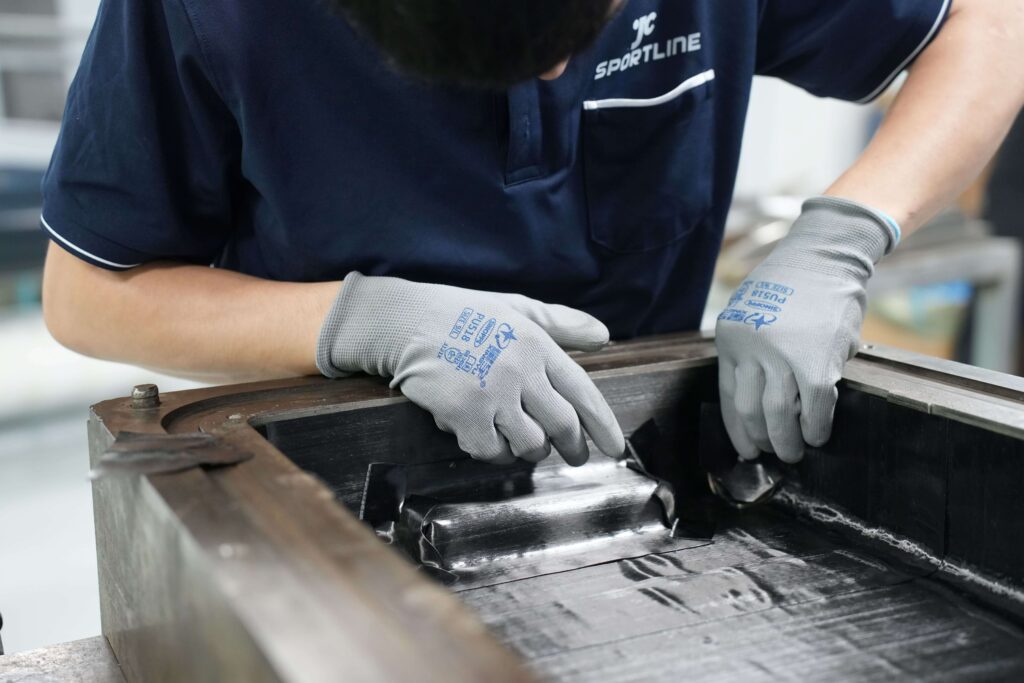
Buyers worry about color variation, weave distortion, and assembly drift across production runs. Those failures are not random; they are process failures. Understanding the carbon fiber luggage manufacturing process is how you prevent them at contract stage rather than discover them at inspection stage.
Two molding routes dominate. Autoclave carbon fiber luggage manufacturing cures the vacuum-bagged laminate under uniform omnidirectional pressure and precisely controlled temperature — in our luggage program, 120–150°C at 0.3–0.5 MPa through a defined cure window — producing minimal void content and the most stable surface quality. Compression molding cures the prepreg between matched heated metal tooling under hydraulic pressure, trading some of that finesse for cycle speed at volume. Neither is universally “better”; the right choice depends on your annual quantity, surface requirements, and unit cost target — the same process-selection logic we apply across our carbon fiber manufacturing solutions.
The judgment that matters: if a supplier cannot explain why they chose autoclave or compression molding for your volume — and what porosity, thickness, and cosmetic tolerances that choice locks in — they are not controlling consistency. They are hoping for it.
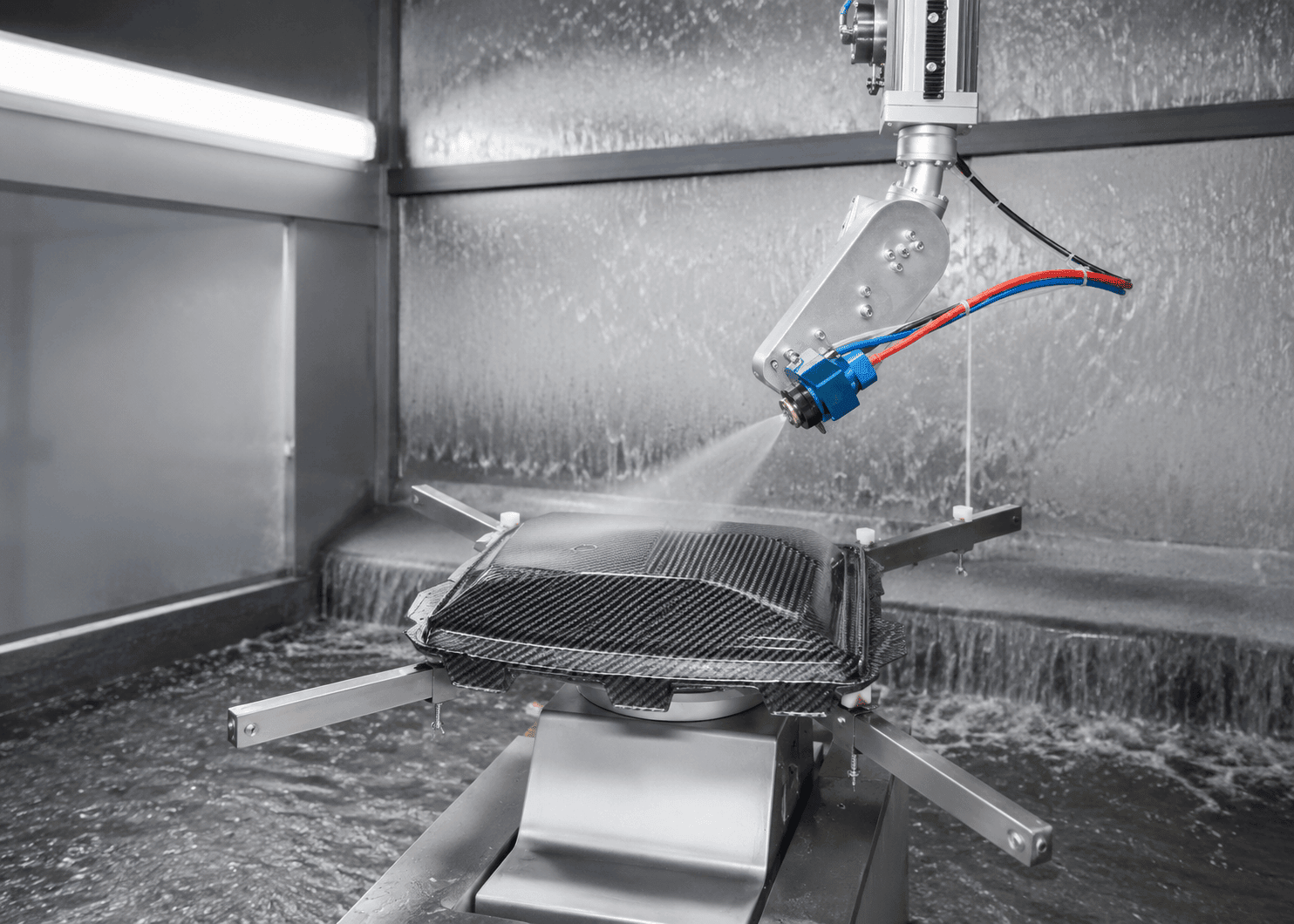
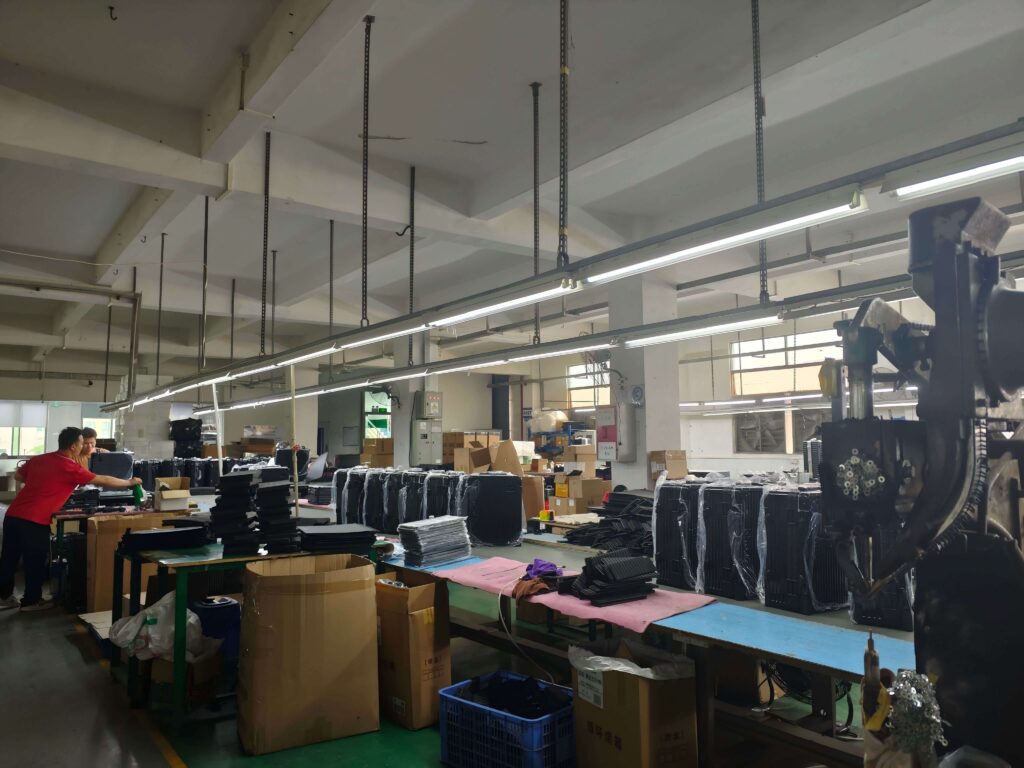
The shell is then ground, polished, and coated (matte anti-scratch systems preserve the native weave), and assembled with wheels, telescoping handle, lock, and lining under controlled fit-up before every unit passes impact, compression, water-resistance, wheel and handle cycling checks.
Designing the Product Line: Surface, Hardware, Interior, and Brand Details
This is where the “product line, not product” argument becomes concrete. A custom carbon fiber suitcase for travel brands is defined across five customization layers, and a serious program plans all five before tooling — the scope of our carbon fiber design services:
Surface identity. Your carbon fiber luggage surface finish options include gloss weave, matte weave, and forged carbon texture — three visibly distinct brand languages from the same structural material. Surface choice is a positioning decision, not an afterthought.
Hardware. TSA-compliant combination locks, silent 360° spinner wheels with sealed bearings, and anodized aviation-grade aluminum telescoping handles — each selectable and brandable to match your tier positioning on a carbon fiber trolley case.
Interior architecture. Compartment layout, wet/dry separation, removable washable lining, document sleeves, padded protection zones — configured around how your specific customer travels.
Brand details. Logo application and colorway treatment executed in the molding and finishing stages, not stickered on afterward.
Packaging. Retail and gift-box presentation designed to the same standard as the case — disproportionately important in luxury gifting and corporate channels, and part of our value-added services scope.
Executed together, these five layers are what make a private label carbon fiber luggage manufacturer relationship an actual brand-building tool rather than a logo-placement service.
How to Evaluate an OEM/ODM Carbon Fiber Luggage Manufacturer
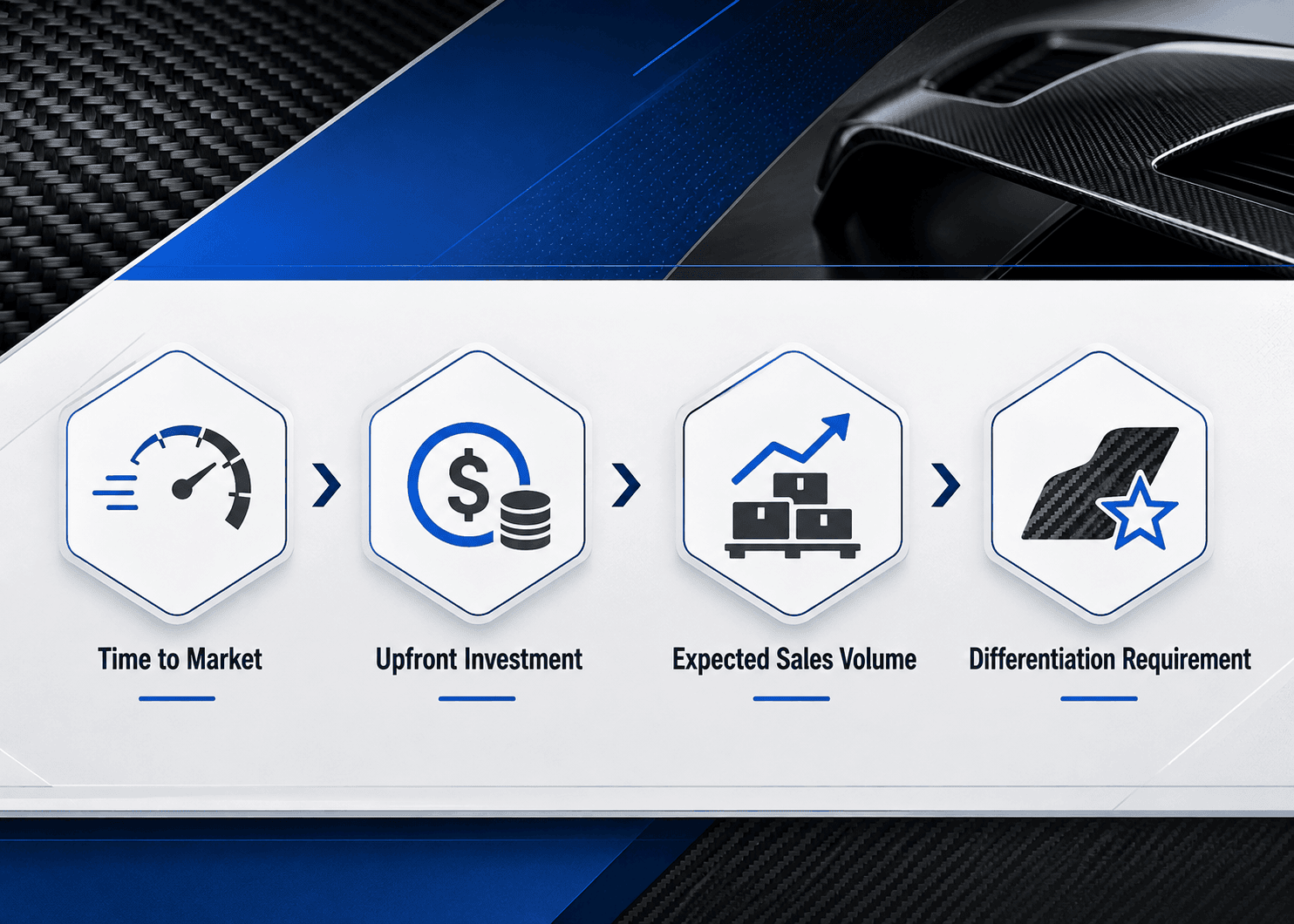
Development cost, prototype timeline, tooling investment, and production consistency are the four anxieties every buyer brings to this category. The way to resolve them is not reassurance — it is an evaluation standard. Before committing to an OEM carbon fiber luggage or ODM carbon fiber luggage program, test the supplier on four points:
- Material verification. Can they show incoming raw-material inspection and state exactly what fiber grades and hybrid plies go into the laminate? A qualified OEM carbon fiber luggage manufacturer answers in specifications, not adjectives.
- Tooling and prototyping path. Can they explain the mold plan for your case sizes, what the tooling investment buys, and how quickly a functional prototype lands in your hands?
- Consistency mechanism. Do they run standardized lay-up documentation and full-item testing — impact, compression, water resistance, wheel and handle cycling — on production units, not just golden samples?
- Project management depth. Can they carry design confirmation, sampling, small-batch validation, and mass production as one managed program?
A carbon fiber luggage manufacturer who passes all four is a development partner. One who passes only the first is a workshop.
From Concept to Mass Production: The JCSPORTLINE Project Path
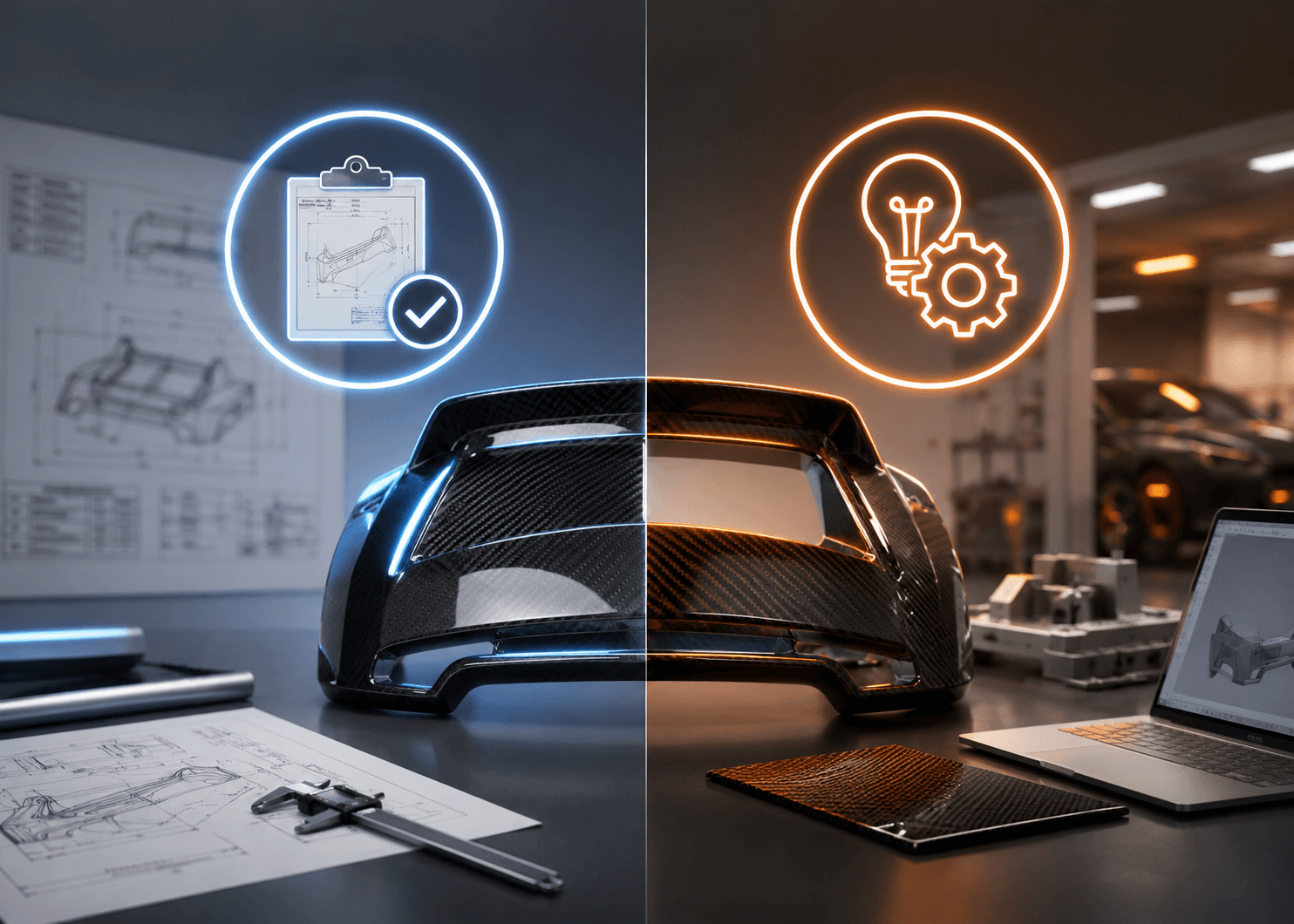
JCSPORTLINE’s position in this category is deliberately different from suppliers showing catalogs of ready-made cases. We run luggage as a project: feasibility assessment of your concept, rapid prototyping, small-batch validation, then scaled production — with more than twenty years of carbon fiber manufacturing behind the process decisions at each stage. Raw material selection, prepreg preparation, precision tooling, hot-press forming, surface finishing, modular assembly, full-item testing, and packaging run as one integrated, internally controlled flow. That integration is what allows surface texture, hardware, interior, logo, and packaging to be engineered together rather than bolted on — and it is the difference between buying custom carbon fiber luggage and building a defensible premium line around it.
Conclusion
Carbon fiber earns its premium only when it is real, consistent, and designed into a complete brand expression. The brands winning in this category are not the ones that sourced a carbon case — they are the ones that planned a product line and chose a manufacturing partner capable of carrying it from concept to volume. If you are scoping a premium carbon fiber luggage program, bring us your positioning and target customer; we will bring the engineering path to get there.
Frequently Asked Questions
What does the development path and timeline look like for a custom carbon fiber luggage project?
The program runs feasibility review → prototype → small-batch validation → mass production. A first functional prototype is typically delivered within 7–15 days of design confirmation, with tooling and production scheduling defined at the feasibility stage so there are no timeline surprises mid-project.
Is the tooling investment justified for a first product line?
Tooling is the gate that determines shell precision, seam quality, and demolding reliability for every unit you ever produce — it is where premium perceived quality is physically created. The feasibility stage defines mold count, material, and cost against your target volumes before you commit, so the investment decision is made on numbers, not faith.
How do you prevent weave or color inconsistency across production batches?
Consistency is locked in by process, not inspection alone: standardized lay-up documentation, controlled cure parameters, and stable surface coating systems, followed by full-item testing on production units. Batch drift in carbon products is almost always a process-discipline failure, which is why we control the flow from raw material to packaging internally.
Can hardware, lining, logo, and packaging all be customized to our brand?
Yes — surface finish (gloss weave, matte weave, forged carbon), locks, wheels, telescoping handles, interior layout, logo application, colorways, and retail or gift packaging are all configurable within the program. These are planned together at the design stage so the finished case reads as one coherent brand product.
How can we verify the shell is structural carbon fiber rather than a cosmetic film?
Ask for the laminate specification and check the physical product: a structural shell shows a regular, continuous weave through curved sections, weighs dramatically less than a plastic equivalent (a 20-inch case at roughly 2.3–2.8 kg), and produces a crisp, rigid tap response. Film-wrapped shells show pattern distortion at corners and carry thermoplastic weight. We support buyer-side verification with material documentation as standard.