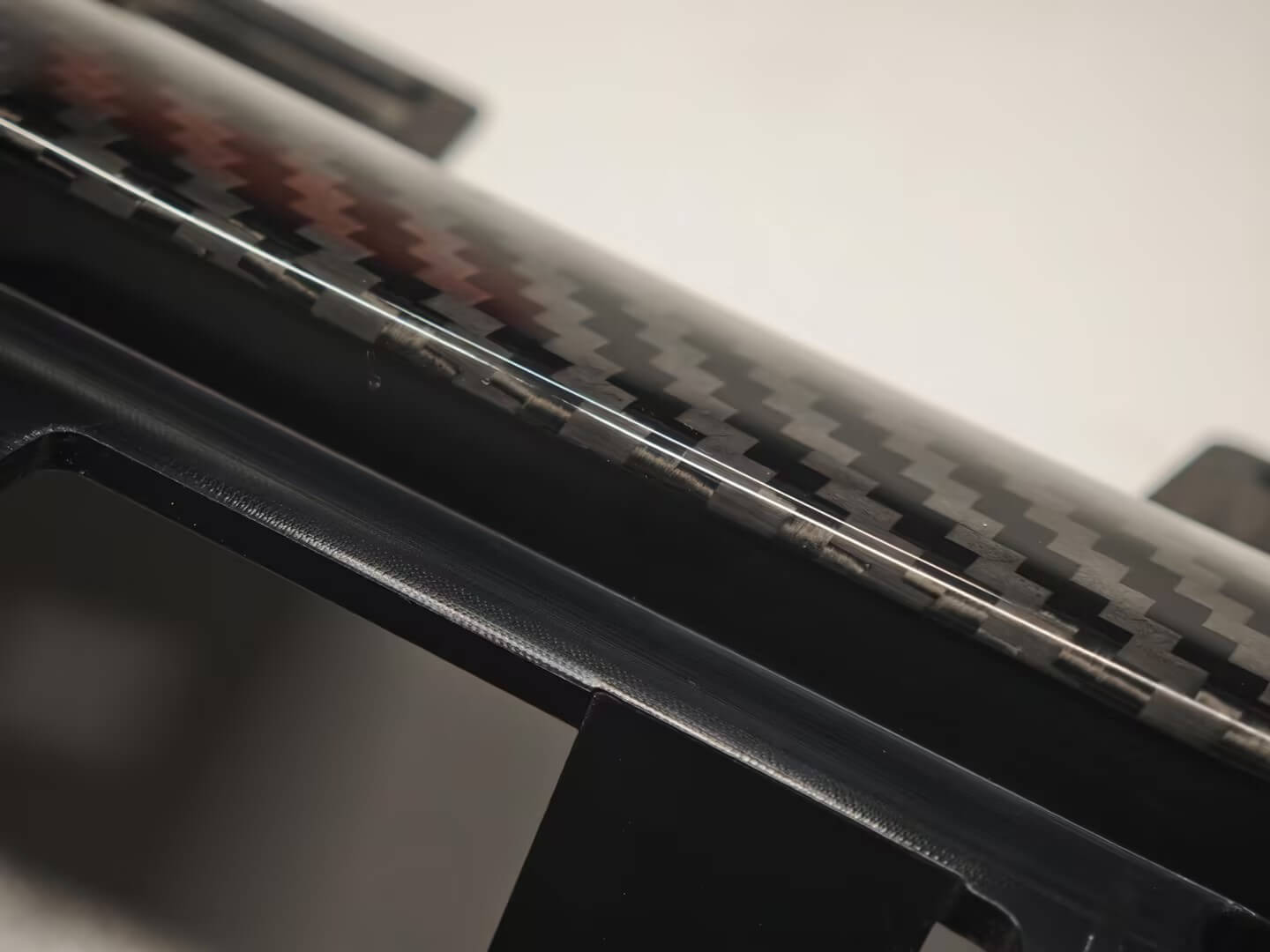
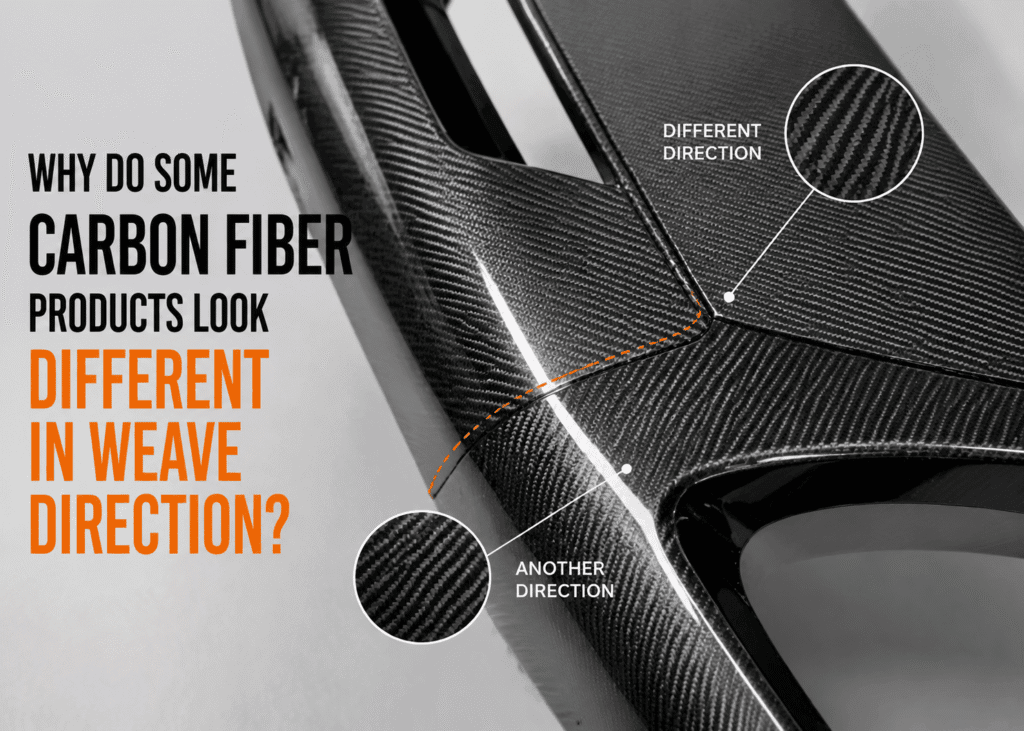
When a body kit brand or aftermarket buyer unboxes a high-value part and sees the weave on one curved section running at a slightly different angle than the flat panel beside it, doubt is the honest first reaction — is production unstable, was the layup rushed, is this a lower grade? That reaction is fair; on premium parts you pay for surface presence as much as fitment. But the position here cuts against the common assumption: minor variation in carbon fiber weave direction across a complex surface is usually geometry, not a defect. The real skill is telling whether is carbon fiber weave direction a quality issue or just woven cloth behaving the way woven cloth behaves. The carbon fiber weave pattern you see is fiber conforming to a 3D shape — reading it correctly stops you from rejecting good parts and from accepting bad ones.
Chasing a promise of “identical weave on every curve” chases something no serious composite shop delivers. Sound quality control aims somewhere more useful: consistency where it’s seen, symmetry where parts are paired, and a documented standard for everything else.
Why Carbon Fiber Weave Direction Is Not Always Consistent
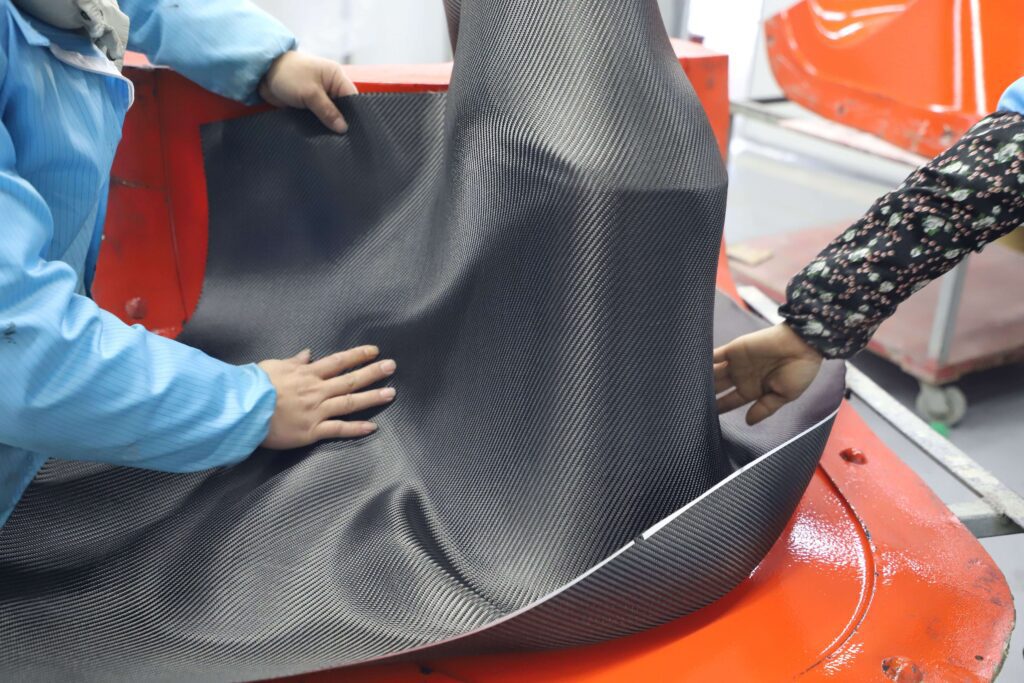
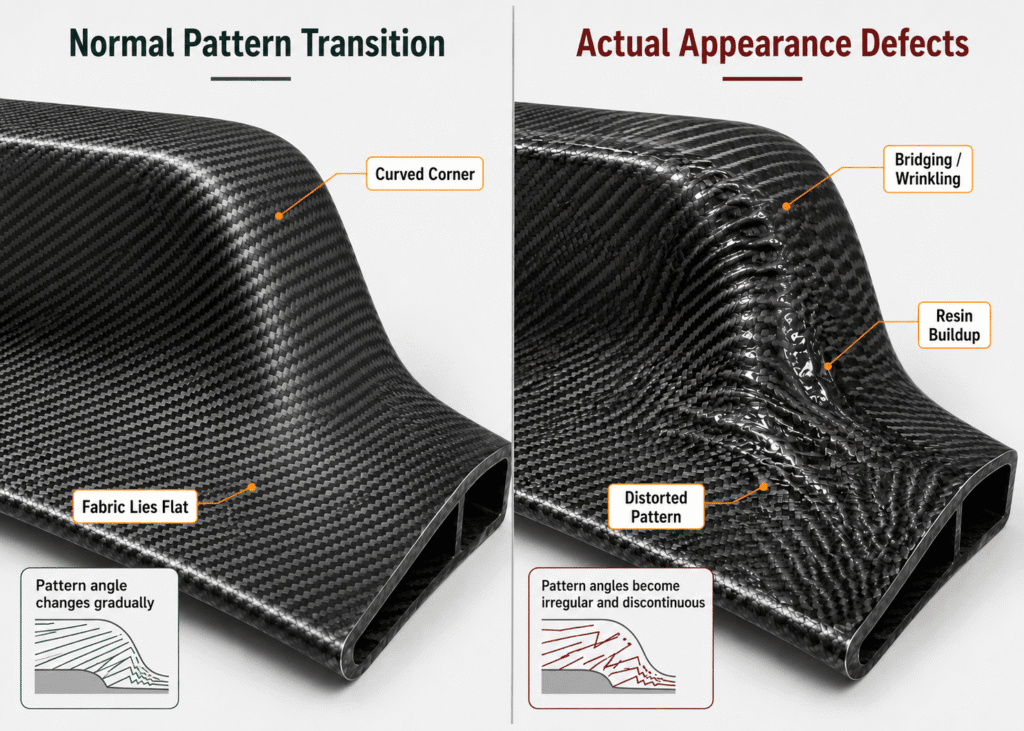
Woven carbon cloth is flat, with fibers locked at fixed angles. To wrap a compound curve — a fender edge, a mirror cap, a diffuser fin — it conforms only by shearing and rotating locally. That shear is how carbon fiber layup affects weave direction: the tighter the curvature, the more the tows rotate to lie flat without wrinkling. So why carbon fiber weave direction is not consistent across a shaped part is geometry, not craftsmanship — the same reason why carbon fiber parts have different weave directions between flat zones and bends. Across large flat areas a skilled team holds the pattern nearly perfect; at high-curvature transitions a disciplined carbon fiber layup process accepts some carbon fiber weave variation and plans the carbon fiber fabric layup around it rather than pretending it away.
Is Weave Variation a Defect, or Normal?
The difference is learnable. Normal variation follows the surface: the pattern drifts gradually around a curve, the cloth stays flat and tight, resin is clear, and the mirrored part behaves the same. A real defect looks different — carbon fiber visual defects vs normal weave variation comes down to fiber distortion and resin pooling, bridging wrinkles where cloth lifted off the mold, scrambled tows, or misalignment sitting in a flat primary zone where nothing forced it. Disorder in a main visible area is a process failure; drift around a sharp radius is not. That line is where carbon fiber weave variation stops being cosmetic and starts costing carbon fiber visual quality.
| Normal variation | Real defect | |
| Where it appears | High-curvature edges, transitions | Flat, main visible zones |
| Cause | Fabric shearing to conform to a 3D shape | Rushed layup, poor cutting, bridging |
| Surface look | Flat, clear, glossy, tows intact | Wrinkles, resin pooling, scrambled tows |
| Left / right parts | Same behavior on both | Random, non-matching |
| Verdict | Accept | Reject / rework |
A high-end automotive OEM program — the kind that sets the strictest inspection standards in this industry — accepts that 100% perfection is undefinable, and instead defines acceptable ranges for the weave pattern at fabric corners, the diameter of white spots, and separate standards for A, B, and C surfaces. Holding a supplier to a documented range through a real systematic quality management system, rather than an impossible absolute, is the professional standard.
Does Weave Direction Affect Structural Strength?
This is the concern under the cosmetic one. On an appearance part, the surface you judge is a cosmetic skin — a twill or forged layer whose job is looks. The structural plies sit beneath it, oriented to angles fixed by the engineering layup scheme, not by whatever the surface cloth does at a curve. So does carbon fiber weave direction affect strength — the visible skin’s local drift does not, because load-bearing carbon fiber fabric layup is controlled independently, and carbon fiber weave alignment in the structural plies is specified and verified under mechanical testing. A surface-weave shift and a weakened structure are two different things; don’t let the first imply the second.
How We Control Weave Consistency on Complex Surfaces
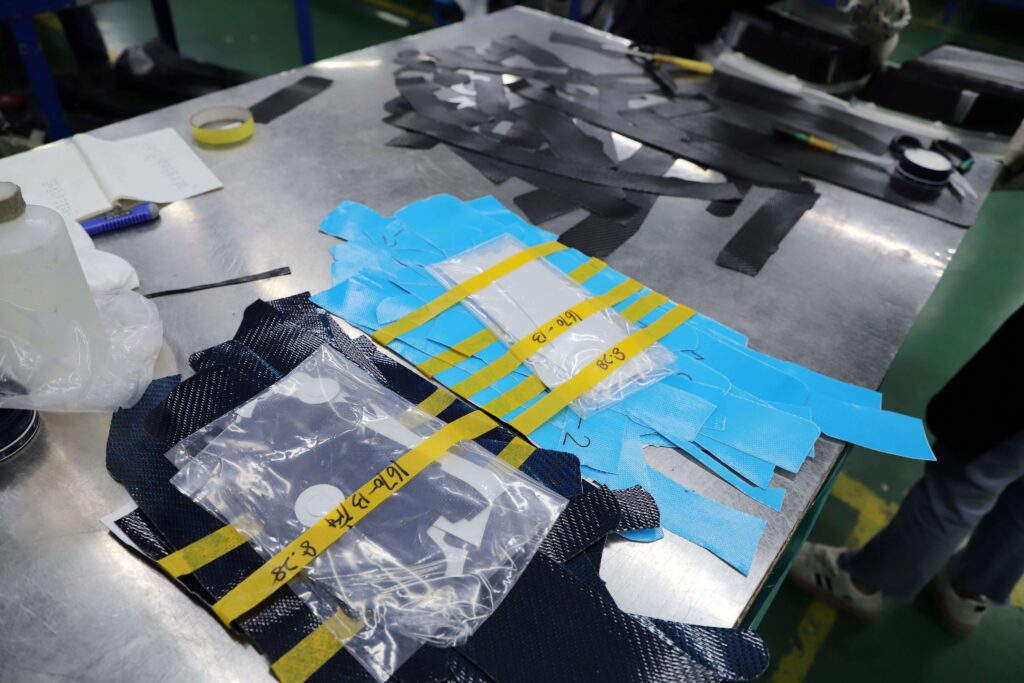
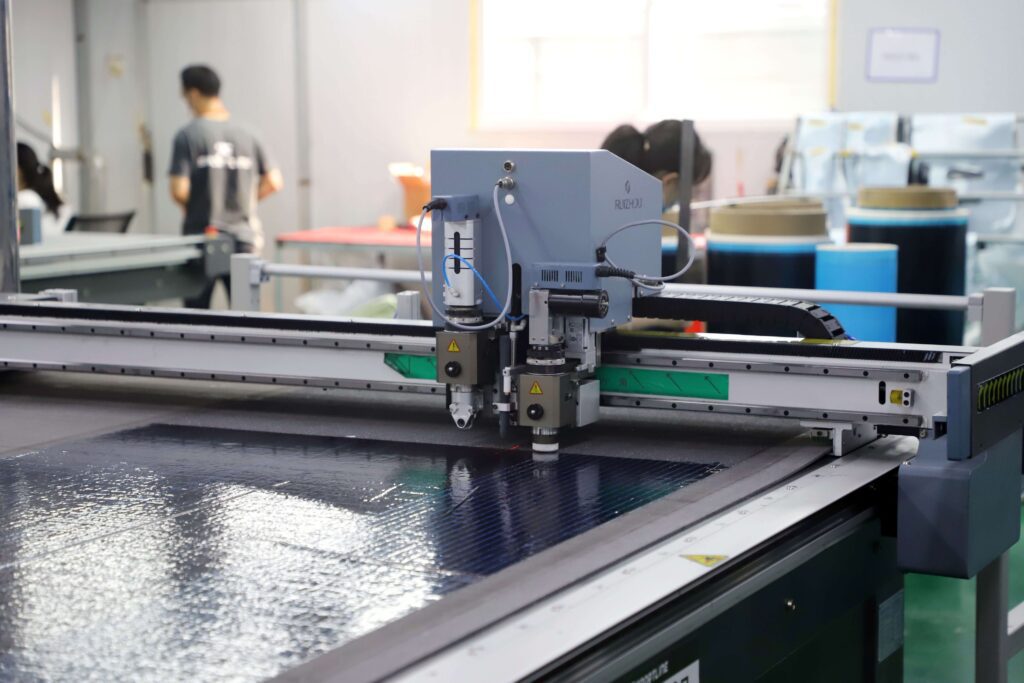
This is where suppliers separate. Many shops sell “carbon fiber look” and lay cloth by hand and feel; batch to batch, that guesswork is what produces the erratic appearance buyers fear. JCSPORTLINE controls it as a system, and it starts before layup. Fabric is cut on automated cutting equipment to a pre-designed layup plan with AI-assisted nesting and anti-error markings, so every ply starts at the intended shape and orientation instead of an operator’s estimate. The weave is controlled at the source too — an in-house weaving factory sets tow count and pattern direction rather than accepting whatever a distributor shipped. A standardized layup SOP fixes each layer’s position and angle, so every part matches the validated sample in structure and appearance, and carbon fiber weave alignment on complex parts becomes repeatable. On shaped geometry we lock carbon fiber weave consistency in the main visible zone first, then run a dedicated carbon fiber left-right symmetry check so paired parts read as a mirrored set. That chain — design, cutting, carbon fiber layup process, molding, inspection — is what holds appearance stable across a full production run.
What Buyers Should Actually Check at Inspection
Now your side of the table. For a sourcing manager, distributor, or brand owner signing off on a shipment, how to inspect carbon fiber weave quality is a short checklist — and writing it into your purchase standard controls end-customer complaints far better than demanding the impossible. Grade surfaces the way OEM programs do: an A surface (primary visible) gets the tightest standard; B and C surfaces run progressively looser.
Buyer inspection checklist: (1) Is the main visible area coordinated and clean? (2) Are left and right parts mirror-symmetric? (3) Is the surface flat, clear, and glossy? (4) Any obviously scrambled or wrinkled tows? (5) Does overall carbon fiber visual quality meet a high-end benchmark?
Judge the carbon fiber weave pattern where the customer actually looks, accept honest drift at the edges, and reject genuine disorder. That standard protects your margin, your return rate, and your brand — the three things a weave complaint actually threatens.
Conclusion
Caring about appearance is right — your buyers do, so you should. But the measure of a supplier isn’t a promise that every curve will match. It’s a system that guarantees consistency where it counts, symmetry where parts are paired, and an inspection standard you can actually hold them to. That’s the line between buying a look and buying controlled quality.
Frequently Asked Questions
Is a different weave direction on my carbon fiber part a defect?
Usually not. Gradual drift around curves is the fabric conforming to a 3D shape. The warning sign is scrambled tows or misalignment in a flat, primary visible area — where nothing forced the pattern to move.
Does weave direction affect the part’s strength?
The cosmetic surface layer’s local drift does not. Structural plies are oriented to an engineered scheme and controlled separately from the visible skin, then verified by mechanical testing.
Will the left and right parts be mirror-symmetric?
They should, and it’s worth checking specifically. We run a dedicated left-right symmetry check, because paired parts are exactly where symmetry problems show up first.
Will the weave look consistent across a bulk order?
Yes, within a defined range. Automated cutting to a fixed layup SOP is what keeps appearance stable batch to batch instead of drifting with each operator.
What should I check to judge weave quality at inspection?
Main visible area coordination, left-right symmetry, a flat and glossy surface, no scrambled tows, and overall visual quality against a high-end benchmark — graded by A/B/C surface priority.