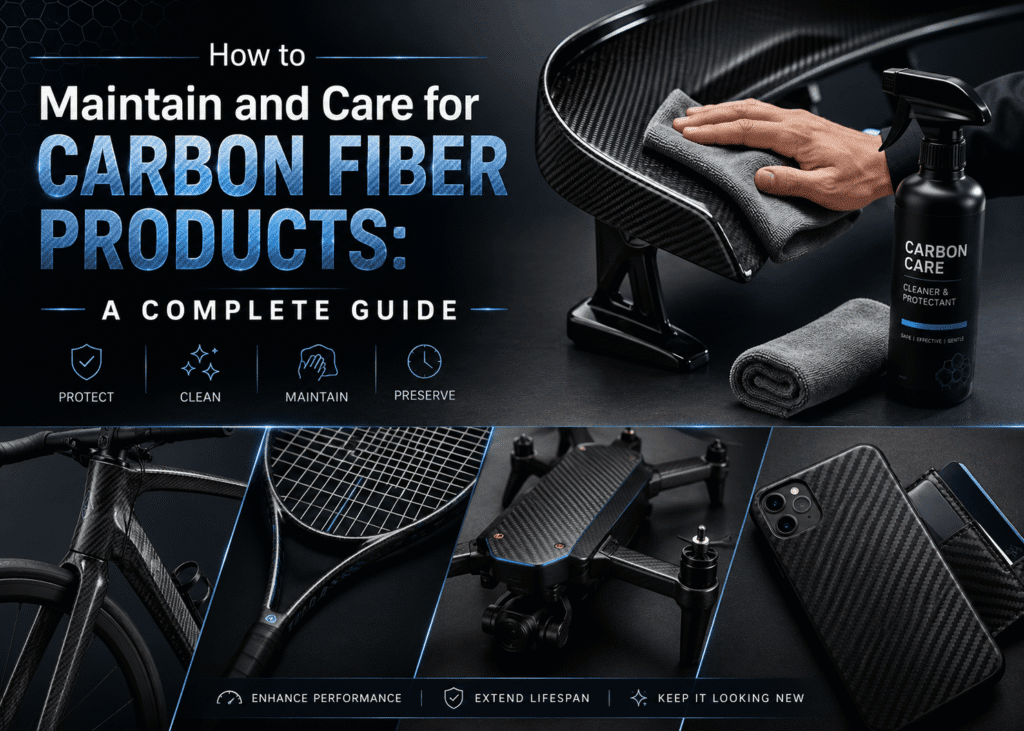
Most buyers assume that paying a premium for carbon fiber means they’ve bought a “set-it-and-forget-it” upgrade. That assumption is the single biggest reason carbon fiber parts lose their finish within the first two years. Whether you’re a car enthusiast running a freshly installed carbon fiber hood, a procurement manager sourcing parts for an aftermarket shop, or a B2B distributor handling post-sale support tickets every week, Carbon Fiber Maintenance is not optional — it’s how you protect the money already spent. This guide covers exactly How to maintain carbon fiber products, which cleaning and protection steps actually work in real conditions, and how to tell cosmetic wear from structural damage that needs replacement. Treat carbon fiber care as a discipline, and these parts will hold their finish for years.
Why Carbon Fiber Needs Real Maintenance — The Myth of “Indestructible”
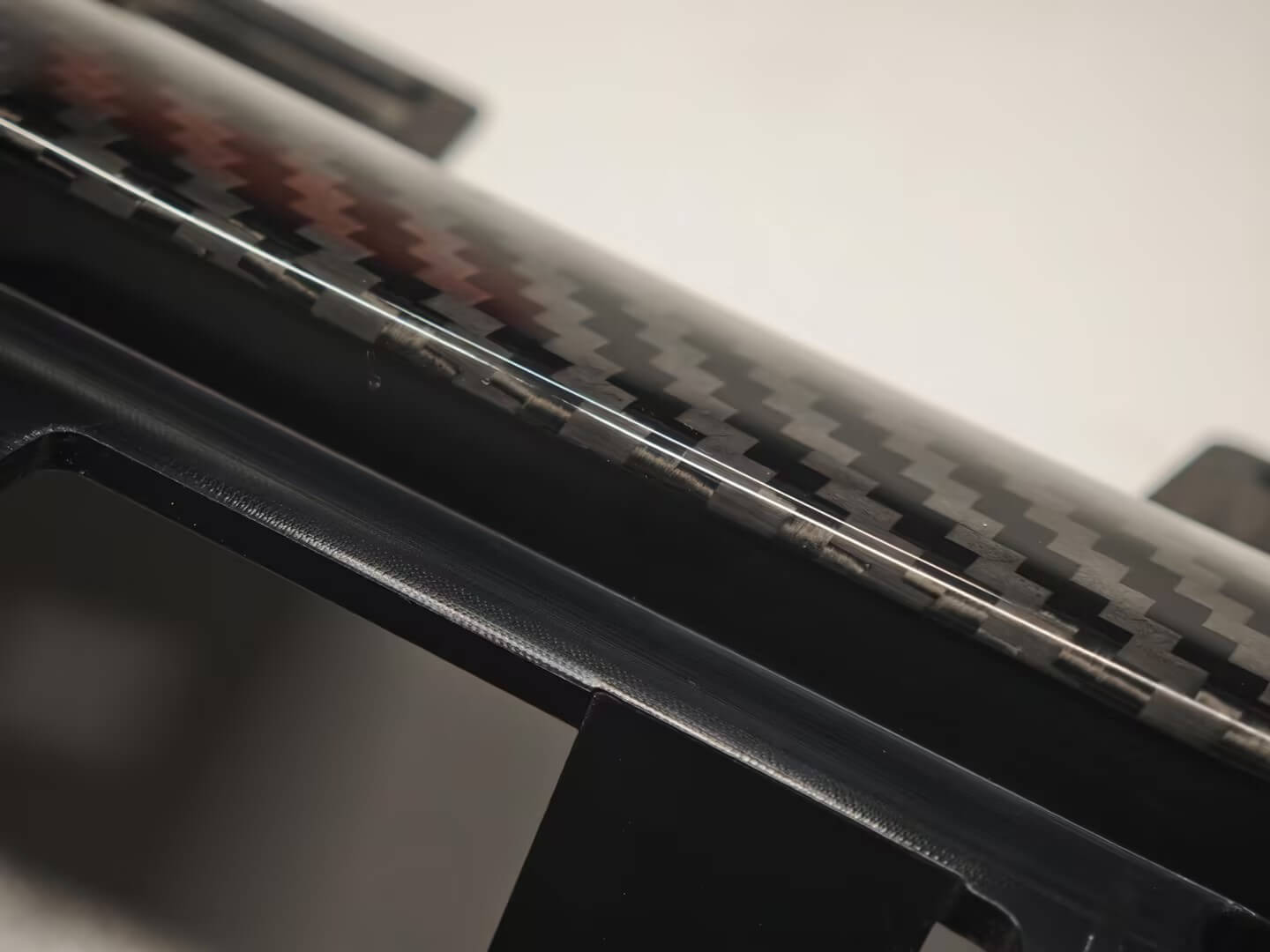
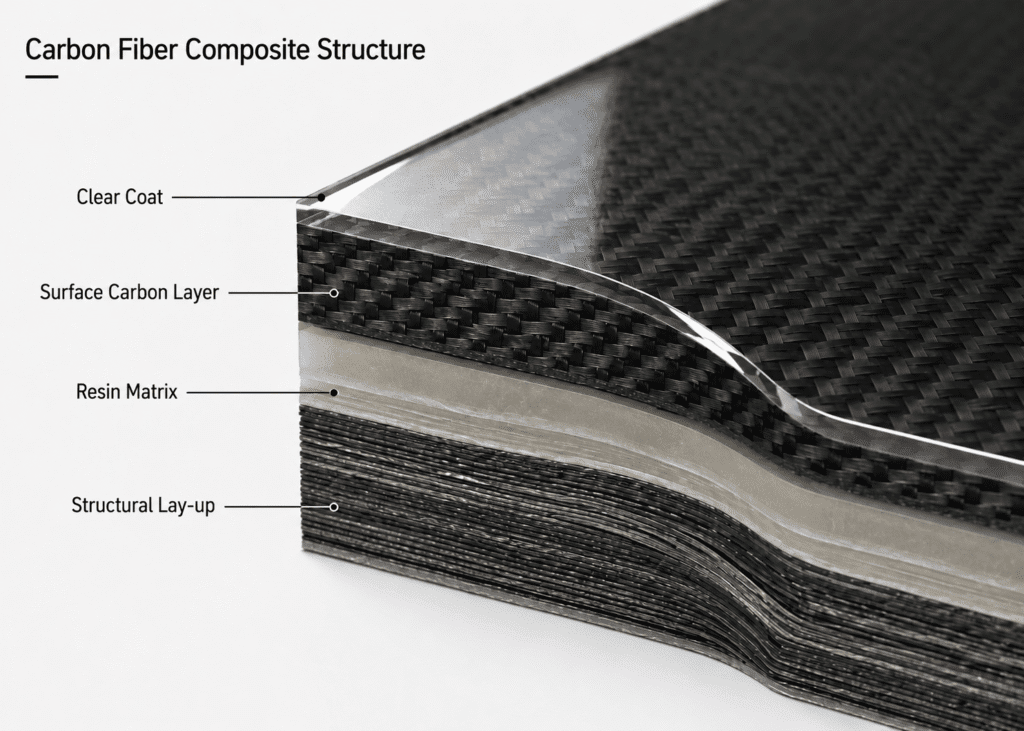
Carbon fiber’s structural strength is real. Its surface durability is not. Every visible carbon fiber part — a roof panel, a diffuser, a side skirt — sits under a clear coat layer that takes the direct hit from UV, road grime, brake dust, and washing chemicals. That clear coat is what you actually see, and it’s the layer that fails first when carbon fiber product maintenance is neglected.
This is the gap that drives most post-sale complaints in the aftermarket. End users assume “carbon fiber” is the part. They blame the part itself for yellowing, hazing, or surface dulling — when the actual failure is the carbon fiber clear coat protection layer breaking down under pressure washing, alcohol cleaners, or untreated sun exposure. For B2B sellers and distributors, this confusion drives warranty disputes, returns, and damaged supplier relationships that should never have happened in the first place.
The discipline of carbon fiber protection starts with one mental shift: you are not maintaining a piece of carbon. You are maintaining a multi-layer composite — surface coat, resin matrix, and reinforced fiber — and each layer fails differently and needs different handling.
How to Clean Carbon Fiber: The Correct Method
The cleaning side of Carbon Fiber Cleaning is straightforward once you separate what helps from what damages. Whether you’re a detailing shop professional handling client cars or a car owner taking care of your own installs, carbon fiber detailing runs on the same baseline rules.
What to Use
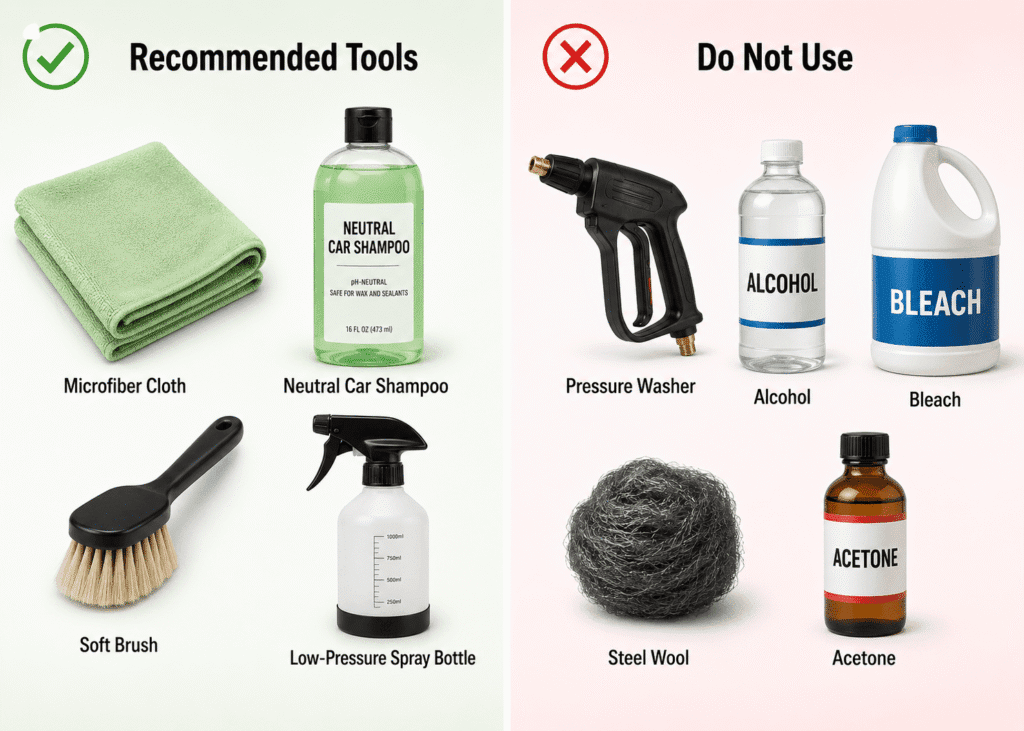
- A soft microfiber cloth for wiping dust and light residue
- pH-neutral car shampoo or a mild soap diluted in clean water
- A soft-bristle brush for textured weave surfaces and tight corners
- A clean microfiber towel to pat the surface dry — never air-dry, since water spots and mineral deposits build up on the clear coat over time
For exterior automotive parts, rinse first with low-pressure water to flush abrasive particles before any contact wash. How to clean carbon fiber parts is fundamentally about lubrication and minimum friction.
What to Avoid
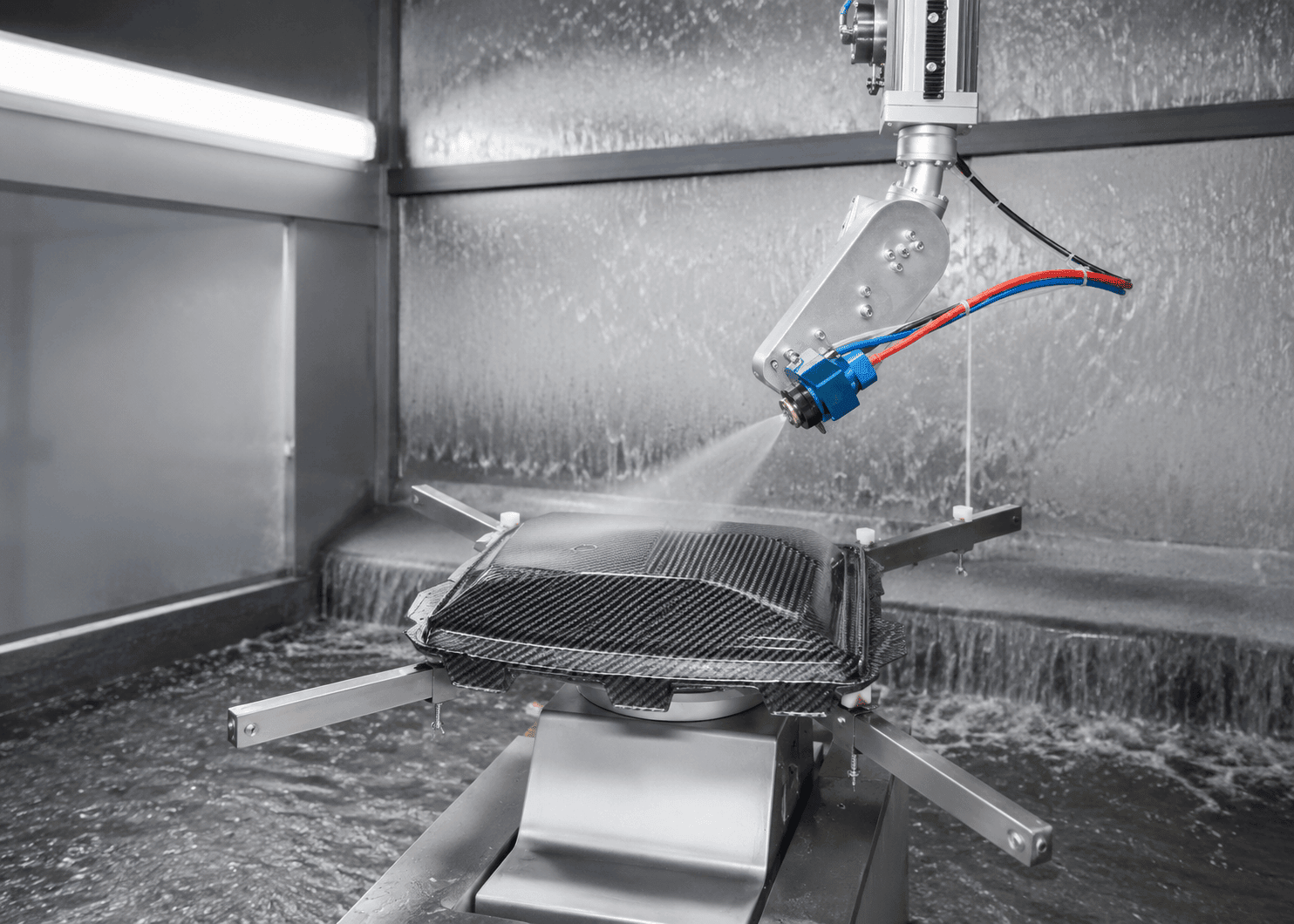
- High-pressure water jets. They strip the edge sealing of the clear coat and force water into hairline gaps. The honest answer to whether you can pressure wash carbon fiber parts is no — not at typical car-wash pressures.
- Ammonia, bleach, and alcohol-based cleaners. These attack the resin and clear coat with every application; the damage is cumulative, not immediate.
- Acetone and strong solvent sprays. These dissolve the protective layer outright.
- Steel wool and abrasive sponges. These leave permanent micro-scratches that no polish recovers fully.
⚠️ The wrong cleaning chemical does more damage in one wash than a year of normal driving. Detailing shops should keep carbon fiber parts on a separate cleaning protocol from painted metal surfaces — and B2B sellers should make this clear in product documentation handed to end customers.
Carbon fiber cleaning and maintenance is not about doing more. It’s about not doing the wrong thing.
⚙️ Note: The cleaning protocols above assume a properly bonded surface layer. If the original carbon fiber overlay process was poorly executed at the factory, even pH-neutral washing will eventually lift the surface — no cleaning routine compensates for that.
Carbon Fiber UV Protection: Why Sun Damage Is the #1 Cause of Yellowing
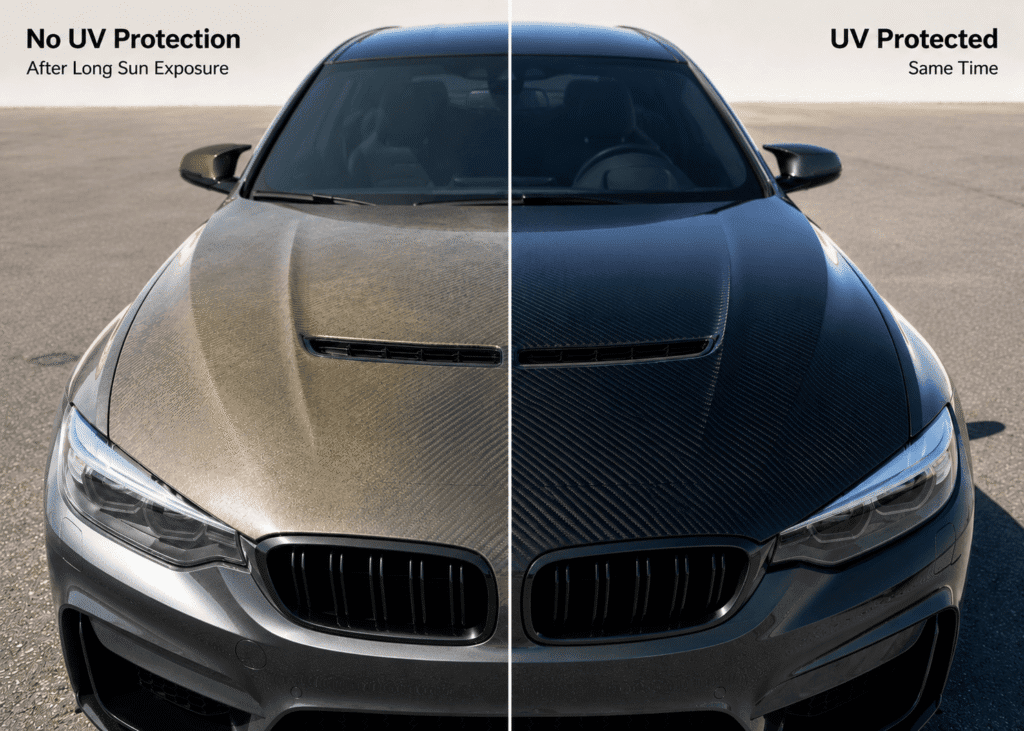
Of all the failure modes in long-term carbon fiber care, UV exposure is the most consistent and the most preventable. Ultraviolet light breaks down the polymer bonds in the clear coat. Over months of unprotected outdoor exposure, the coating yellows, hazes, and eventually micro-cracks.
This matters most for high-exposure automotive parts — hoods, roofs, spoilers, side skirts, diffusers, and front lips. These are the exact high-value parts JCSPORTLINE specializes in, and they live their entire service life facing the sun. Indoor carbon fiber items face far less UV stress; outdoor automotive parts live in it daily.
Practical Carbon Fiber UV Protection and Carbon Fiber Surface Protection comes down to four habits:
- Apply a UV-protective wax designed for clear-coated surfaces on a regular schedule — not once a year
- Park in shade or covered storage whenever possible; cumulative direct sunlight is the main accelerator of yellowing
- Use a breathable car cover during extended outdoor storage
- Add a protective film at high-wear leading edges (hood front, lip leading edge) where stone chips meet UV damage at the same spot
If you’re answering how to prevent carbon fiber from yellowing for an end customer, the short version is this: yellowing is almost always a UV-induced clear coat failure, and it can be slowed dramatically by routine waxing and shaded parking. How to protect carbon fiber from UV damage is a discipline of consistency, not a one-time treatment. Effective carbon fiber maintenance for car parts treats UV defense as routine, not reactive.
Storage and Daily Use: Habits That Quietly Extend Product Life
A lot of damage to carbon fiber products doesn’t happen during use. It happens during careless storage or stacking — in a garage, in a warehouse, or in a shipping container. How to care for carbon fiber products outside of active use comes down to a short list:
- Don’t stack heavy items on top of carbon fiber components, especially interior trim
- Avoid direct heat sources; the resin softens long before the fiber does
- For long-term storage, keep parts in a dry, climate-controlled environment with stable temperature
- For shipped or stocked B2B inventory, store parts flat with foam or fabric between stacked pieces; never stack bare
For distributors and aftermarket sellers, this is the part of the Carbon Fiber Product Care Guide that most directly cuts warranty cost. Two minutes of correct storage instruction at the point of sale eliminates a meaningful share of post-sale complaints — and those minutes pay back across hundreds of units.
Cosmetic Damage vs. Structural Damage: When to Repair, When to Replace
Not every mark on a carbon fiber part is a problem. Not every problem is cosmetic. The framework below saves money on the cosmetic side and prevents safety risk on the structural side.
| Damage Type | Description | Action |
| Light hazing or micro-scratches on clear coat | Visible only at certain angles, no depth | Polish and re-wax |
| Deep clear-coat scratch reaching base | Catches a fingernail; resin exposed | Local re-coat by specialist |
| Resin cracks or visible fiber strands | White marks; visible weave through coating | Professional inspection required |
| Delamination or impact whitening | Layers separating in structural areas | Replace — safety risk |
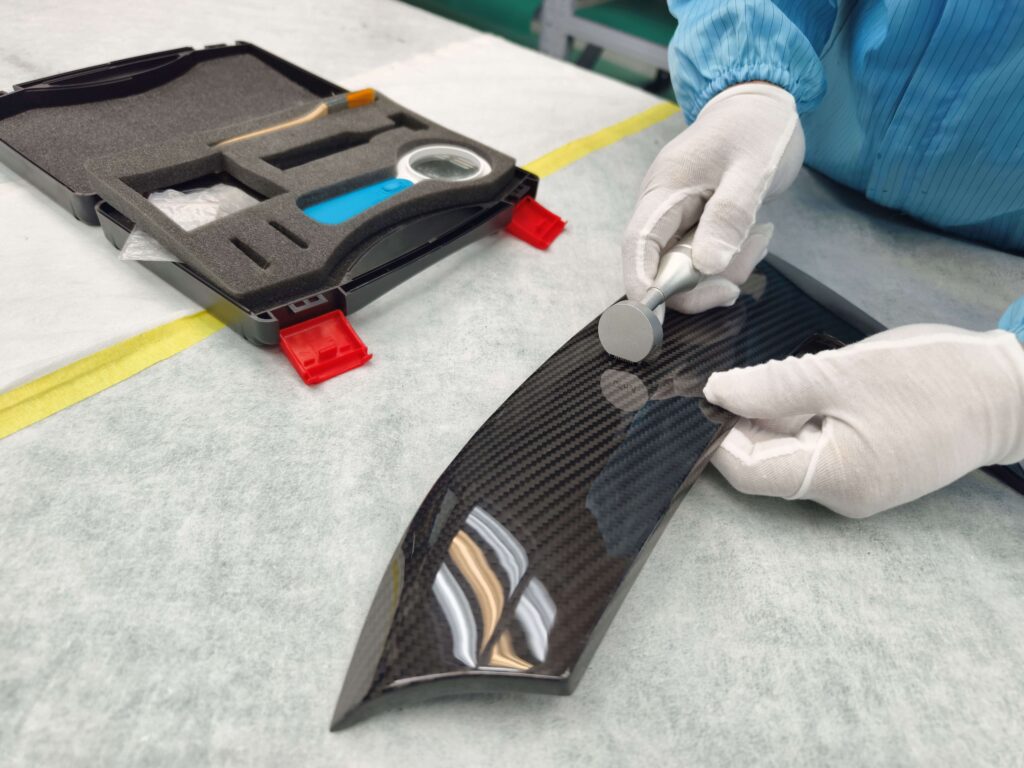
The honest answer to how to fix scratches on carbon fiber depends entirely on which layer is damaged. Mistaking a surface scratch for structural damage wastes money on unnecessary replacement. Mistaking structural damage for a cosmetic scratch is a real safety risk on exterior moving parts and load-bearing components. When in doubt — particularly for hoods, spoilers, splitters, and any part under aerodynamic load — route the part through proper carbon fiber test equipment. That is exactly what OEM-grade suppliers and certified composite labs exist for.
Why Manufacturing Quality Decides Maintenance Outcomes
This is the part most maintenance guides leave out — and it’s the part that matters most for B2B buyers and OEM program managers evaluating suppliers.
How easy a carbon fiber part is to maintain over its lifetime is decided before it ever leaves the factory. Three production realities directly shape maintenance results:
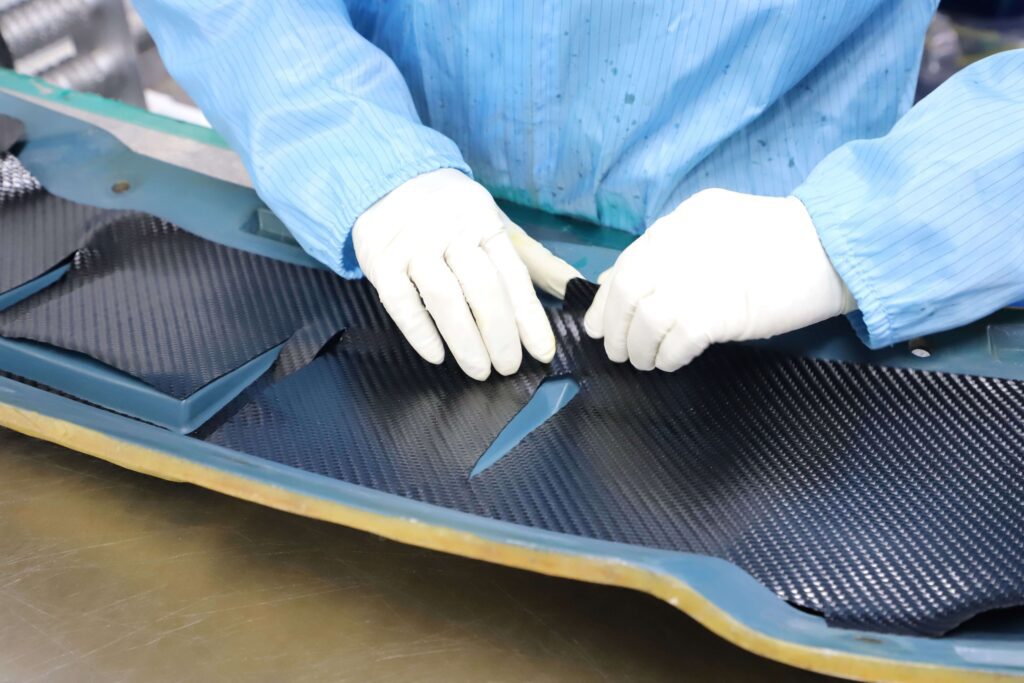
- Lay-up consistency through prepreg and hot pressing. Parts produced through proper prepreg hot pressing develop a denser, lower-void laminate. Lower void content means the clear coat bonds to a stable substrate — which translates to less long-term cracking, less yellowing, and better resistance to washing cycles.
- Overlay quality between the visible carbon layer and the structural laminate. A well-executed carbon fiber overlay process prevents lifting, edge peeling, and surface delamination during normal washing — failures that are nearly impossible to fix once they appear in the field.
- Process validation during material manufacturing. Curing temperature, vacuum stability, and cycle repeatability decide the long-term aging curve of every part. Validated carbon material manufacturing produces parts that age slowly and predictably; unvalidated processes produce parts that fail in unpredictable ways within months — and no maintenance routine can recover them.
��️ Maintenance extends a part’s life only if the part was built right to start with. For B2B buyers evaluating suppliers, the more useful question is not “how do I maintain this part?” — it’s “what production controls protect this part from premature failure?” That answer separates suppliers worth long-term partnership from suppliers who push the maintenance burden onto the customer.
Protecting Your Carbon Fiber Investment
Carbon Fiber Maintenance is investment protection. The right cleaning materials, disciplined UV defense, smart storage, and accurate damage diagnosis will keep a carbon fiber part looking premium for years. But the ceiling on what maintenance can do is set by manufacturing quality. At JCSPORTLINE, that quality starts in the engineering and validation phase — which is why the parts we supply respond predictably to disciplined carbon fiber care. Whether you’re an end user installing your first carbon fiber hood, a distributor managing aftermarket inventory, or an OEM buyer evaluating long-term suppliers, the formula is the same: choose a well-built part, then maintain it deliberately.
FAQ
1. Is carbon fiber maintenance really necessary, or will the part hold up on its own?
Maintenance is necessary. The carbon fiber itself is durable, but the clear coat layer that protects it is not — and the clear coat is what controls how the part looks. Without routine cleaning and UV protection, the surface yellows and hazes regardless of how strong the underlying composite is.
2. Can I use a pressure washer on carbon fiber car parts?
Not at standard car-wash pressure. High-pressure jets force water into clear-coat edges and accelerate coating failure at the seams. Use a low-pressure rinse followed by a hand wash with pH-neutral soap and a microfiber mitt.
3. How often should I apply UV protection to my carbon fiber parts?
For parts in regular outdoor use, a UV-protective wax every two to three months is a reasonable baseline. Parts stored under cover need less frequent treatment, but they should still be inspected and re-waxed periodically — neglected parts in long-term storage can still fade if exposed to ambient indirect light.
4. What’s the difference between surface scratches and structural damage on carbon fiber?
Surface scratches affect only the clear coat — visible from certain angles but cosmetic, and usually polishable. Structural damage shows white stress marks, exposed fiber strands, or layer separation, and requires professional inspection or replacement. Cosmetic repair will not fix structural failure, and treating structural damage as cosmetic is a real safety risk on exterior parts.
5. Does the manufacturing quality of carbon fiber really affect how easy it is to maintain?
Yes, significantly. Parts produced with validated curing parameters, proper prepreg lay-up, and a stable overlay process have denser laminates and better-bonded clear coats. They age slower, yellow less, and respond predictably to routine maintenance. Lower-quality parts fail in ways no maintenance routine can recover — which is why B2B buyers should evaluate production controls before they evaluate maintenance instructions.