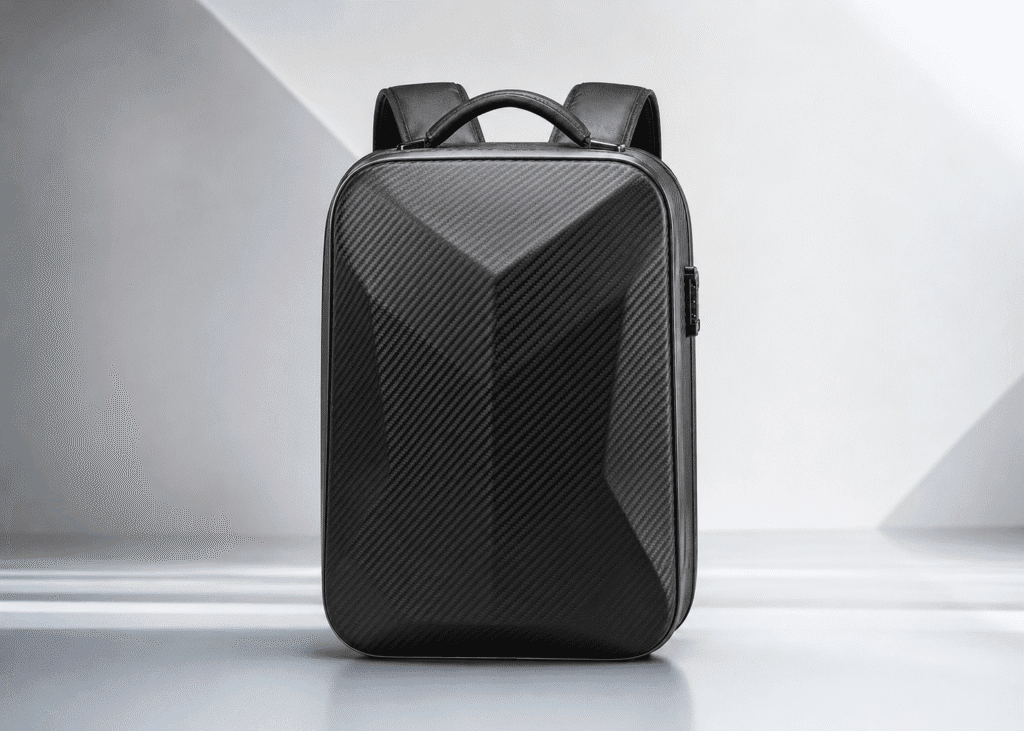
Carbon fiber backpack is suitable for premium outdoor, sport, cycling, commuter, and lifestyle markets because it can combine lightweight structure, high strength-to-weight performance, hard-shell protection, waterproof design potential, and a high-end technical appearance. For OEM brands and B2B buyers, the value is not only the carbon fiber look. The real value comes from engineering, structure design, mold development, material selection, ergonomic carrying systems, modular customization, testing, and stable mass production.
For outdoor backpack brands, industrial designers, and sourcing managers, the backpack market is becoming increasingly competitive. Many products look similar, use similar fabrics, and offer similar functions. A carbon fiber backpack gives brands a stronger way to build product differentiation, especially when targeting premium users who care about lightweight performance, durability, protection, and visual identity.
What Is a Carbon Fiber Backpack?
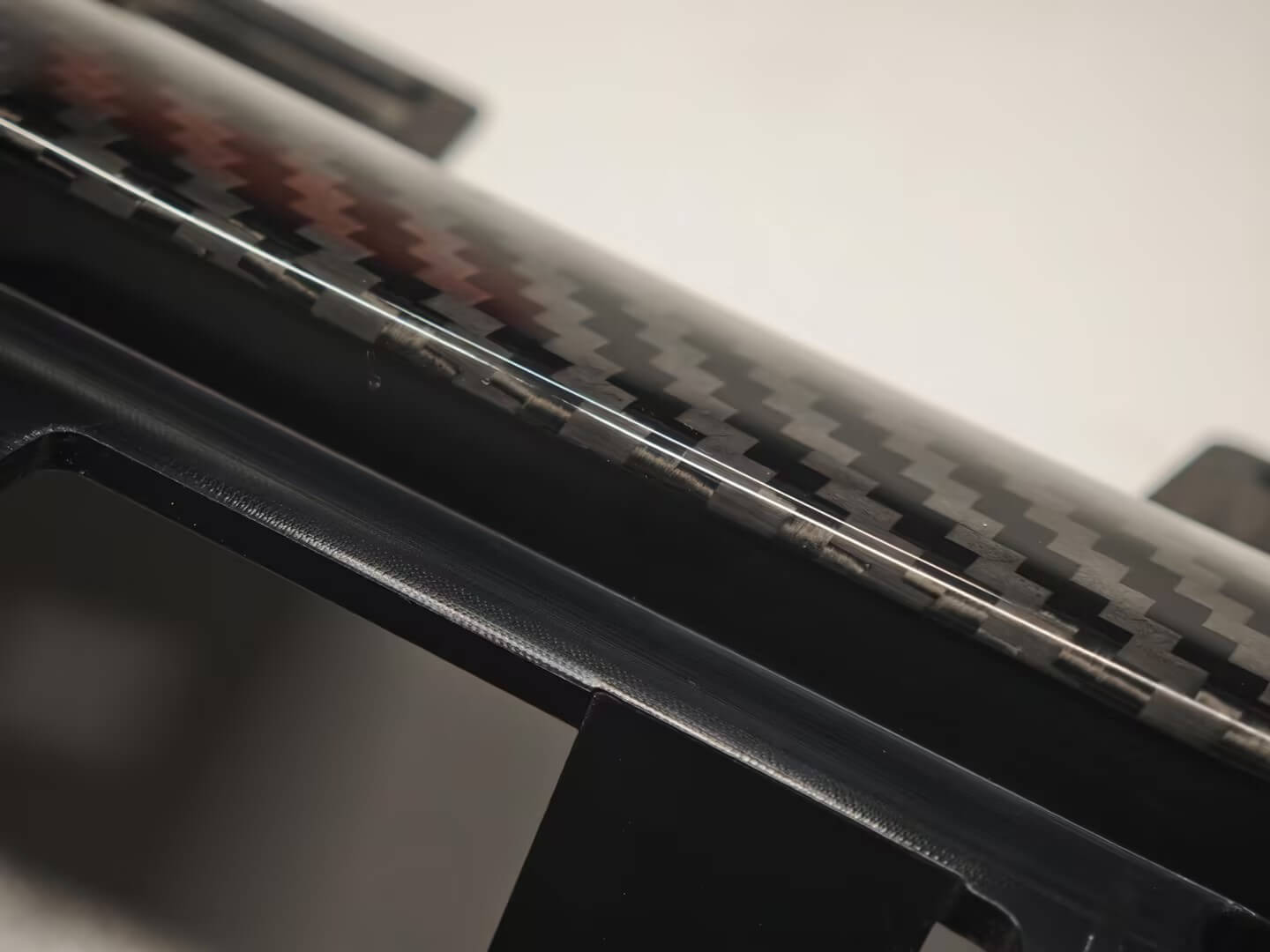
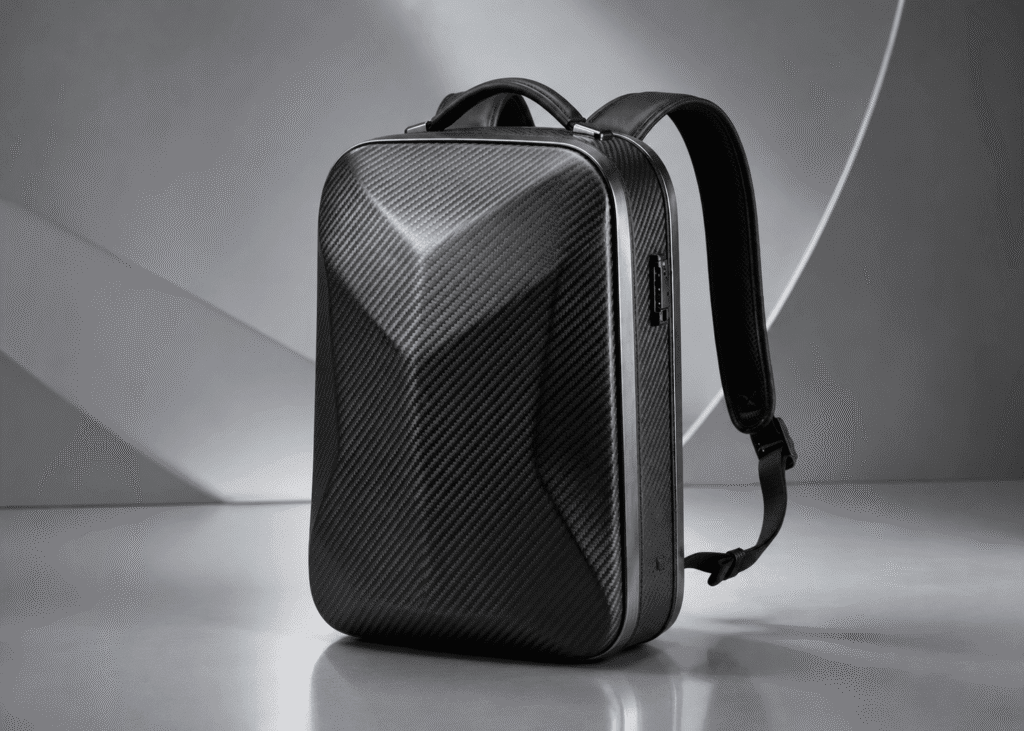
A carbon fiber backpack is a backpack that uses carbon fiber composite materials as part of its main structure, outer shell, protective frame, or functional components. Unlike ordinary fabric backpacks, carbon fiber backpacks can use a hard-shell structure to improve shape retention, impact resistance, and product appearance.
Carbon fiber composite is made by combining carbon fiber reinforcement with a resin system. The carbon fiber provides stiffness and lightweight performance, while the resin bonds the fibers together and helps define the final mechanical, waterproof, and durability characteristics of the part.
In backpack applications, carbon fiber can be used for:
- hard-shell outer panels;
- protective laptop or electronics compartments;
- modular structural frames;
- sports and cycling backpack shells;
- outdoor gear protection areas;
- premium commuter backpack components;
- custom brand-specific exterior parts.
A professional carbon fiber backpack manufacturer must understand both carbon fiber composite engineering and backpack usability. A backpack is not only a shell. It also requires straps, zippers, internal compartments, soft goods integration, back support, ventilation, comfort, waterproof sealing, and long-term user experience.
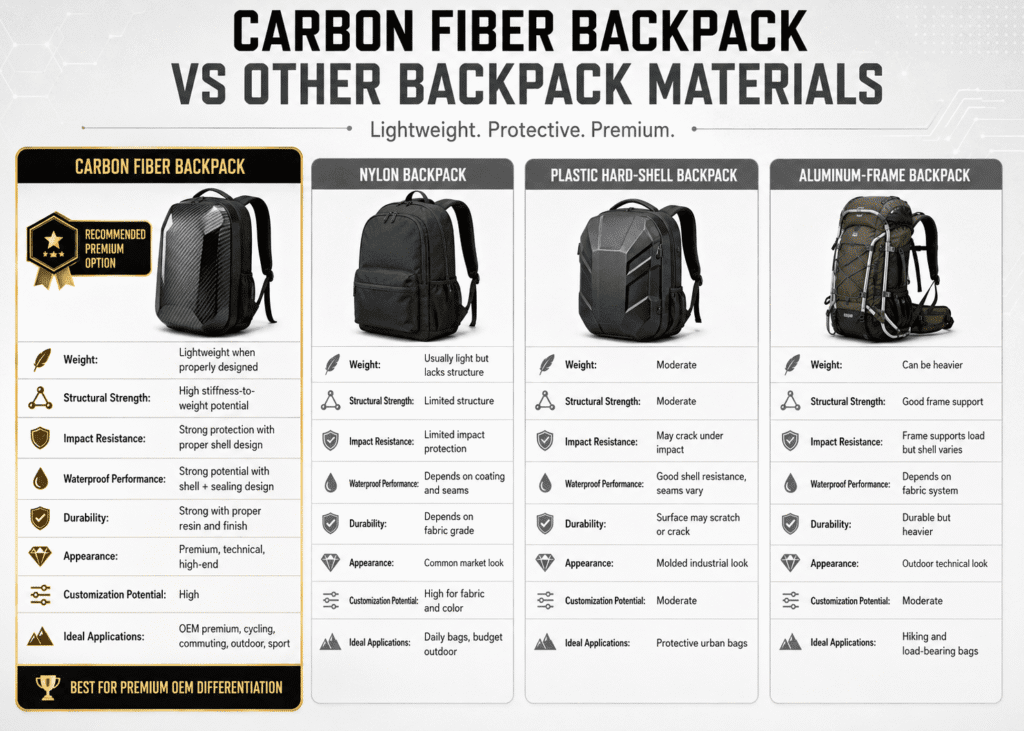
Carbon Fiber Backpack vs Traditional Backpack Materials
| Factor | Carbon Fiber Backpack | Nylon Backpack | Plastic Hard-Shell Backpack | Aluminum-Frame Backpack |
|---|---|---|---|---|
| Weight | Lightweight when properly designed | Usually light but lacks structure | Moderate | Can be heavier |
| Structural Strength | High stiffness-to-weight potential | Limited structure | Moderate | Good frame support |
| Impact Resistance | Strong protection with proper shell design | Limited impact protection | May crack under impact | Frame supports load but shell varies |
| Waterproof Performance | Strong potential with shell and sealing design | Depends on coating and seams | Good shell resistance, seams vary | Depends on fabric system |
| Durability | Strong with proper resin and finish | Depends on fabric grade | Surface may scratch or crack | Durable but heavier |
| Wear Resistance | Good with suitable coating | Fabric can abrade | Surface can scratch | Frame durable, fabric still wears |
| Appearance | Premium, technical, high-end | Common market look | Molded industrial look | Outdoor technical look |
| Customization Potential | High for shell, structure, logo, modules | High for fabric and color | Moderate | Moderate |
| Comfort System | Needs integrated ergonomic design | Flexible and mature | Needs careful back design | Good for load-bearing |
| Production Cost | Higher than fabric-only bags | Lower | Moderate | Moderate to high |
| Brand Positioning | Premium outdoor, sport, commuter | Mass market to outdoor | Mid-range protective | Outdoor and hiking |
| Ideal Applications | OEM premium, cycling, commuting, outdoor, sport | Daily bags, budget outdoor | Protective urban bags | Hiking and load-bearing bags |
Why Lightweight Structure Matters for Outdoor and Commuter Brands
Weight is one of the most important factors in backpack design. Users want protection, capacity, and durability, but they do not want unnecessary load on their shoulders and back. This is especially important for cycling, commuting, outdoor walking, short hiking, travel, and sport use.
Carbon fiber can help brands build a better balance between lightweight structure and strength. In selected projects, a carbon fiber backpack design may achieve around 30% weight reduction compared with traditional nylon backpack solutions, depending on capacity, shell structure, internal frame, resin system, fabric parts, zippers, accessories, and final configuration.
This should not be treated as a universal claim for every design. A larger carbon fiber shell, heavy zipper system, thick padding, or complex modular structure can increase total weight. The key is engineering balance. A reliable custom carbon fiber backpack manufacturer should help buyers optimize shell thickness, layup design, reinforcement areas, soft goods integration, and accessory selection.
Strength, Impact Resistance, and Hard-Shell Protection
One major advantage of a carbon fiber backpack is the ability to create a protective hard-shell structure. For commuter users, this can help protect laptops, tablets, cameras, headphones, or other electronics. For sport and outdoor users, it can help protect gear from bumps, compression, and daily impact.
Carbon fiber composite generally offers excellent stiffness-to-weight performance. When combined with proper shell geometry, reinforcement ribs, and layup design, it can improve shape retention and reduce deformation compared with many soft fabric-only backpacks.
However, it is important to avoid unrealistic claims. Carbon fiber backpacks are not unbreakable. Actual impact performance depends on carbon fiber grade, resin system, layup direction, thickness, shell geometry, reinforcement design, connection points, and testing standards.
In some project designs, carbon fiber hard-shell structures may show stronger impact performance than traditional fabric solutions. But each product should be tested according to its intended use scenario, such as commuting, cycling, outdoor travel, or sport applications.
Waterproof and Outdoor Durability
Outdoor and commuter backpacks often face rain, splashes, dust, dirt, friction, and daily wear. A waterproof carbon fiber backpack can offer advantages when the carbon fiber shell is combined with proper sealing design.
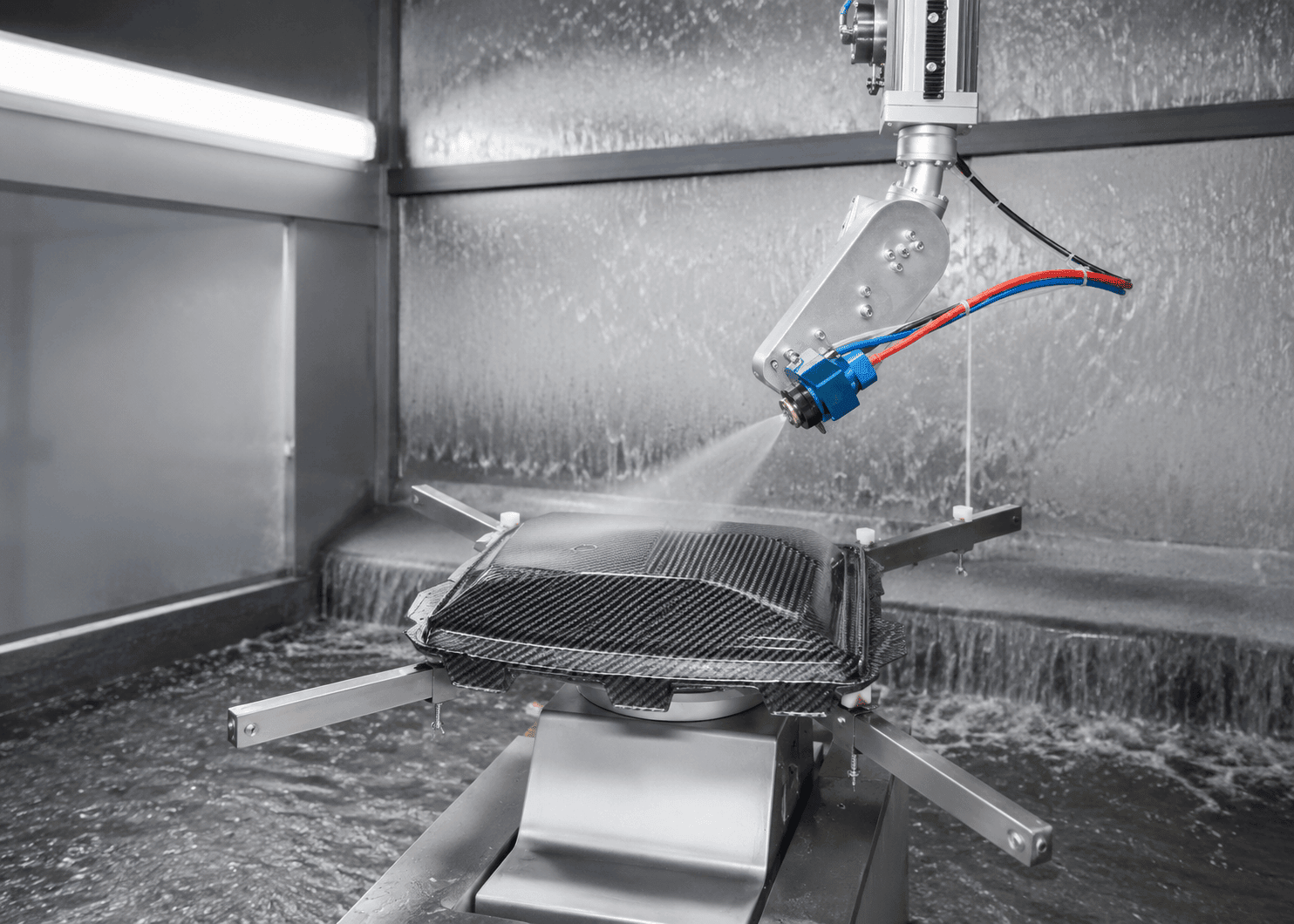
The carbon fiber outer shell itself can help reduce water absorption compared with fabric-only structures. Seamless or reduced-seam hot-pressing processes can also help reduce water entry risk. In selected project designs, waterproof performance may reach IPX4-level splash resistance, depending on the shell structure, zipper system, sealing method, assembly process, and testing standard.
Still, waterproof performance should not be simplified as “carbon fiber means waterproof.” The real result depends on the full backpack system. Zippers, seams, fabric connection areas, logo inserts, mounting points, and ventilation structures all affect water resistance.
Product Differentiation in a Crowded Backpack Market
The backpack market is highly competitive. Many products use similar nylon fabrics, similar pocket layouts, and similar minimalist designs. For brands selling through Amazon, retail channels, outdoor stores, or direct-to-consumer websites, differentiation is essential.
A carbon fiber outdoor backpack can create a stronger product identity. The hard-shell structure immediately communicates protection, technology, and premium value. For sport and cycling brands, it can support a more performance-oriented image. For commuter brands, it can create a high-end tech lifestyle position. For outdoor brands, it can help introduce a more durable and protective product series.
Carbon fiber also allows more structural creativity. Instead of only changing fabric color or logo placement, brands can customize shell shape, surface texture, modular attachment points, internal partitions, and external mounting systems.
Modular Customization for OEM Brands
OEM buyers often need more than a standard product. They need a backpack that matches their brand, user scenario, and price segment. A strong OEM carbon fiber backpack solution should support modular customization.
Possible customization areas include:
- removable internal compartments;
- laptop or electronics protection zones;
- cycling and commuting layouts;
- outdoor gear attachment points;
- detachable external modules;
- adjustable internal dividers;
- capacity customization;
- color and surface finish options;
- logo integration;
- brand-specific shell design;
- special zipper and strap configurations.
This is especially valuable for brands that want to build a full product line. For example, one platform can be adapted into a commuter version, cycling version, sport version, or outdoor version by changing internal layout, attachment systems, padding, and accessories.
For brand owners, product traceability and channel protection are also important. You can learn more about related support through carbon fiber brand protection.
Ergonomic Carrying System: Comfort Still Matters
A carbon fiber shell can provide structure and protection, but backpack comfort depends on the complete carrying system. If the back panel, shoulder straps, ventilation, and weight distribution are poorly designed, even a premium carbon fiber backpack can feel uncomfortable.
For long-time use, buyers should pay attention to:
- shoulder strap width and padding;
- back panel support;
- ventilation channels;
- waist or chest strap options;
- center-of-gravity control;
- load distribution;
- fatigue reduction;
- compatibility with cycling or commuting posture.
Different markets require different comfort strategies. A commuter backpack must work well with laptops and daily items. A cycling backpack should stay stable during movement. An outdoor backpack needs better load support and ventilation. A sport backpack may need flexible attachment and quick access.
A capable commuter backpack manufacturer or carbon fiber backpack partner should understand these different user scenarios.
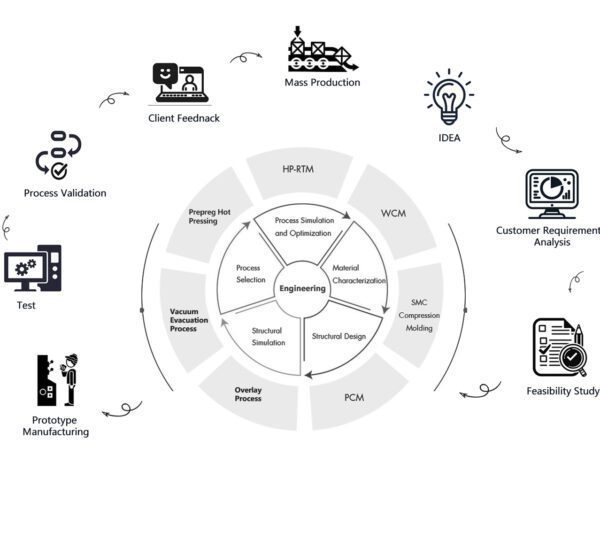
OEM Carbon Fiber Backpack Manufacturing Process
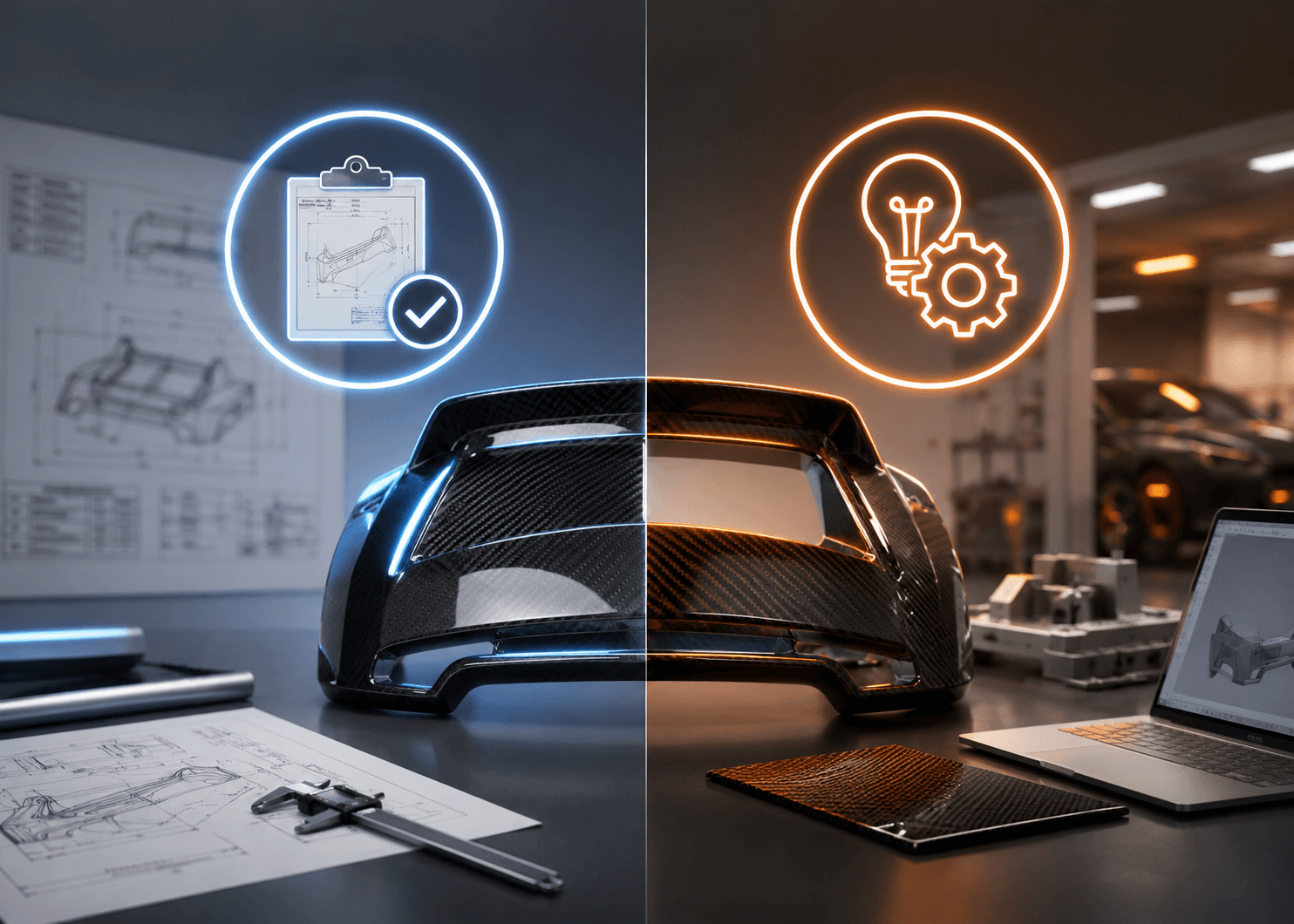
A successful carbon fiber backpack project requires more than a shell mold. It requires product development from concept to delivery.
Concept and Industrial Design
The project should begin with market positioning, target users, capacity planning, product style, and functional layout. This is where product developers and industrial designers define the backpack’s purpose.
Brands that need early design support can work with a partner offering carbon fiber design services.
Shell Structure and Mold Development
The carbon fiber shell must be designed for strength, weight, appearance, and assembly. Mold development is critical because shell quality, fitment, and surface consistency depend heavily on tooling accuracy.
Carbon Fiber Layup and Resin Selection
The layup design affects stiffness, impact resistance, weight, and durability. The resin system affects bonding strength, heat resistance, water resistance, surface quality, and long-term stability.
Soft Goods Integration
A backpack is not only a carbon fiber part. It also includes fabrics, straps, zippers, padding, buckles, compartments, and accessories. These must be integrated with the hard shell without weakening comfort or waterproof performance.
Testing and Mass Production Control
Sample approval is only the first step. B2B buyers need confidence that mass production can match the approved sample. This requires clear process control, material inspection, durability testing, waterproof testing, and final quality inspection.
For complex projects, structured carbon fiber project management can help control timeline, tooling, sampling, testing, and production risk.
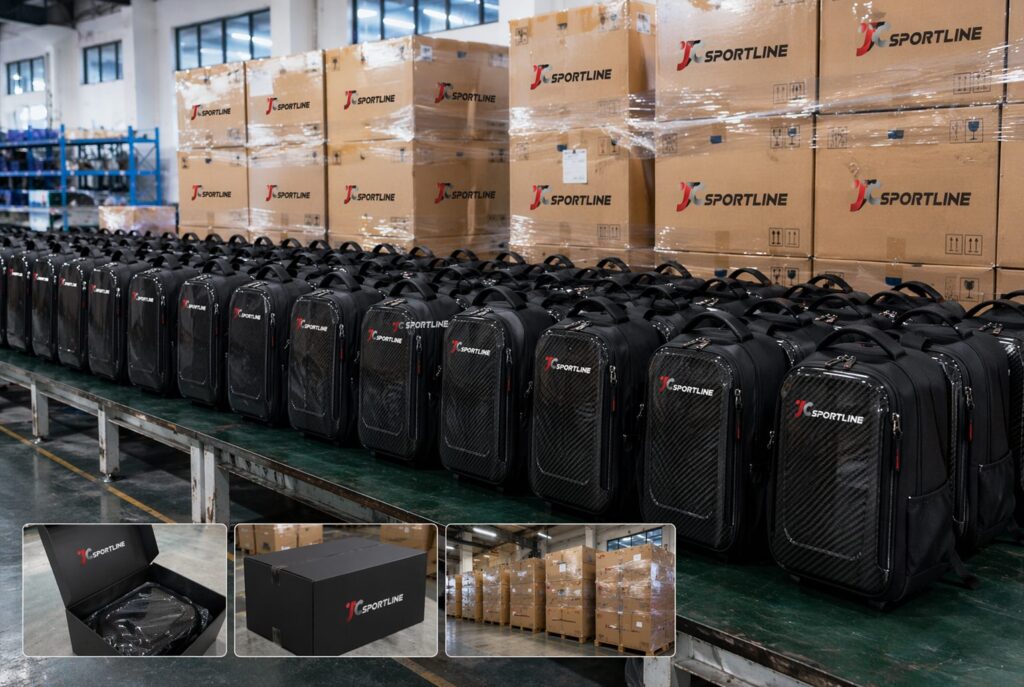
JC SPORTLINE’s Differentiation for Carbon Fiber Backpack Projects
JC SPORTLINE focuses on complete carbon fiber product solutions, not only part production. For carbon fiber backpack projects, the key value is the balance between structure, lightweight performance, waterproof potential, modularity, comfort, and production control.
The company supports aviation-grade carbon fiber layup design, modular customizable structures, removable compartments, external attachment systems, carbon fiber outer shells, seamless hot-pressing processes, waterproof-oriented design, and customization of structure, capacity, color, logo, and functional layout.
Selected backpack projects may target lighter weight, improved impact resistance, better waterproof performance, and stronger product differentiation compared with traditional backpack structures. However, actual performance depends on product size, design requirements, testing methods, and final material configuration.
For a practical project example, buyers can refer to the carbon fiber backpack project.
FAQ
What is a carbon fiber backpack?
A carbon fiber backpack is a backpack that uses carbon fiber composite materials for the outer shell, structure, frame, or protective components. It is designed to offer lightweight performance, hard-shell protection, premium appearance, and stronger product differentiation.
Is a carbon fiber backpack suitable for outdoor use?
Yes, a carbon fiber backpack can be suitable for outdoor use when the shell, zipper system, sealing design, coating, and assembly process are properly engineered. Outdoor performance should be verified through waterproof, impact, abrasion, and durability testing.
How is a carbon fiber backpack different from a nylon backpack?
A nylon backpack is usually softer and more flexible, while a carbon fiber backpack can provide a harder protective structure, better shape retention, and a more premium technical appearance. Nylon may be more affordable, but carbon fiber offers stronger differentiation for premium markets.
Can carbon fiber backpacks be customized for OEM brands?
Yes. OEM brands can customize shell shape, capacity, color, logo, internal compartments, attachment systems, surface finish, straps, zipper layout, and use-case-specific functions for commuting, cycling, outdoor, or sport markets.
What should buyers check before choosing a carbon fiber backpack manufacturer?
Buyers should check the supplier’s carbon fiber layup capability, mold development experience, soft goods integration ability, waterproof testing, strength testing, quality control process, sample-to-production consistency, and after-sales support.
Is a carbon fiber backpack worth developing for premium commuter or sport markets?
Yes, for brands targeting premium commuter, sport, cycling, outdoor, or tech lifestyle users, a carbon fiber backpack can create a stronger product identity and higher perceived value. The project is most worthwhile when the design combines lightweight structure, protection, comfort, and practical customization.
Conclusion
A successful carbon fiber backpack project is not simply about adding a carbon fiber shell to a bag. It requires engineering thinking, sales thinking, market thinking, consulting thinking, and manufacturing capability.
For OEM outdoor, sport, and commuter brands, carbon fiber can help solve key product challenges: lightweight structure, hard-shell protection, waterproof potential, durability, modular customization, and premium differentiation. But the final result depends on design, material selection, resin system, layup structure, mold accuracy, comfort system, soft goods integration, testing, and quality control.
If you are developing a lightweight backpack, waterproof carbon fiber backpack, carbon fiber outdoor backpack, or private-label OEM backpack project, work with a custom carbon fiber parts manufacturer that can support your project from concept to mass production.
To discuss your next OEM, ODM, outdoor, sport, or commuter backpack project, contact JCSPORTLINE through the carbon contact page and explore how a carbon fiber backpack solution can help your brand build a more premium and differentiated product line.