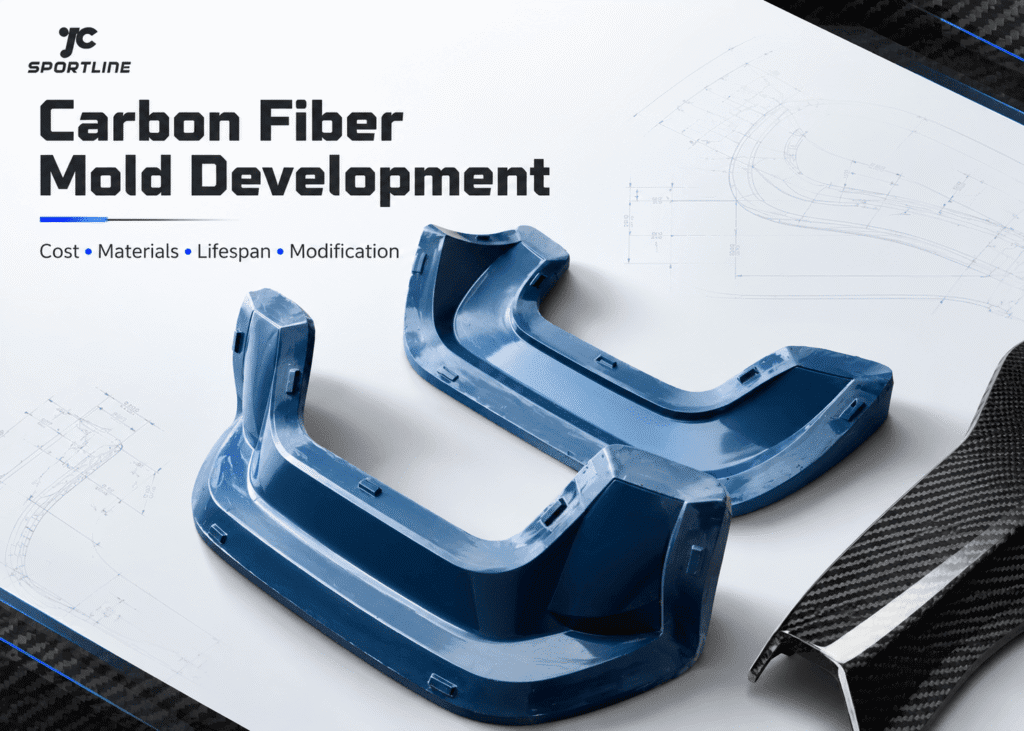
When procurement reviews a carbon fiber mold quote, the first instinct is to ask whether the number is too high. The more useful question is what the tooling actually buys, and what it costs the launch date and the unit price when it is built wrong.
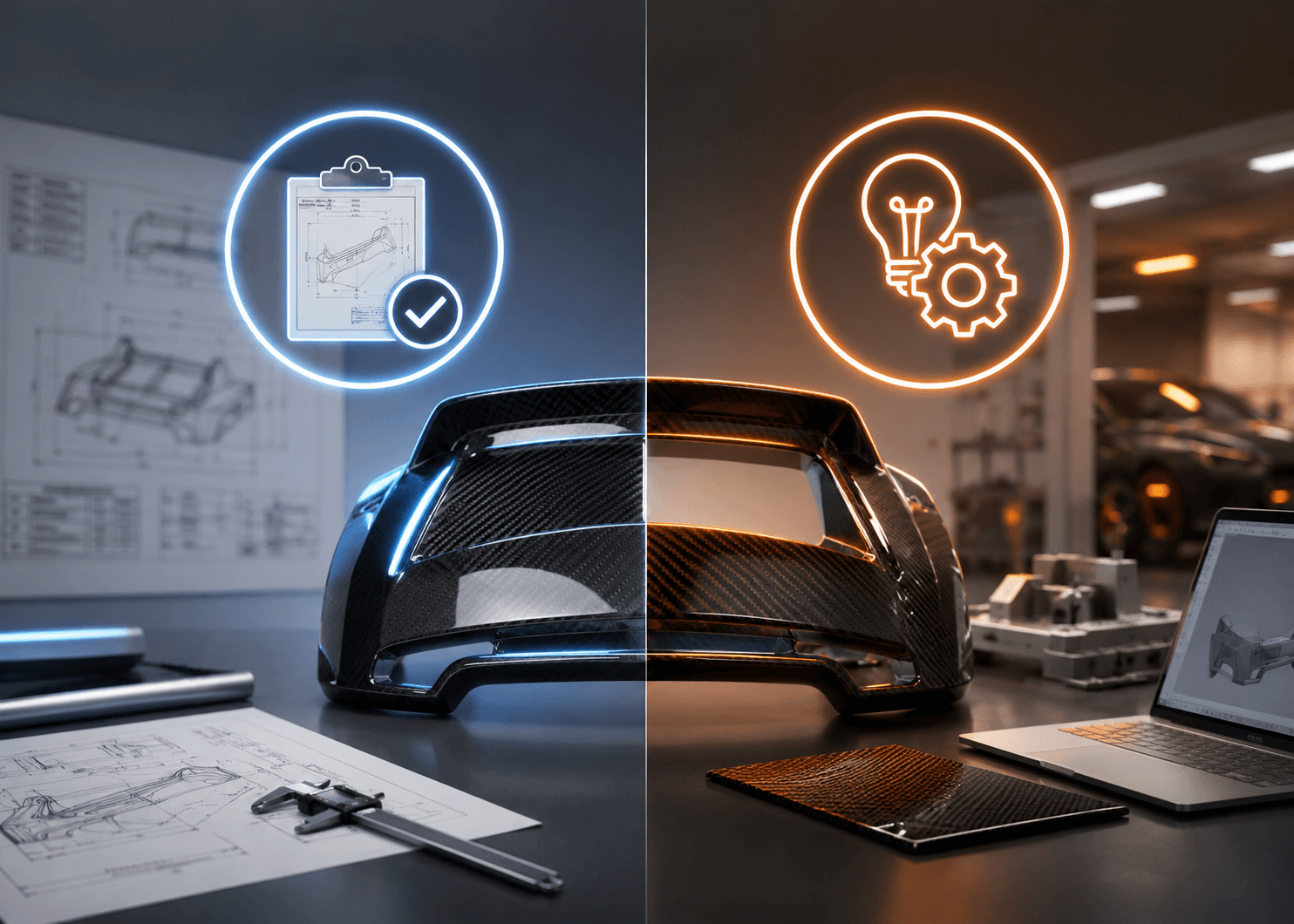
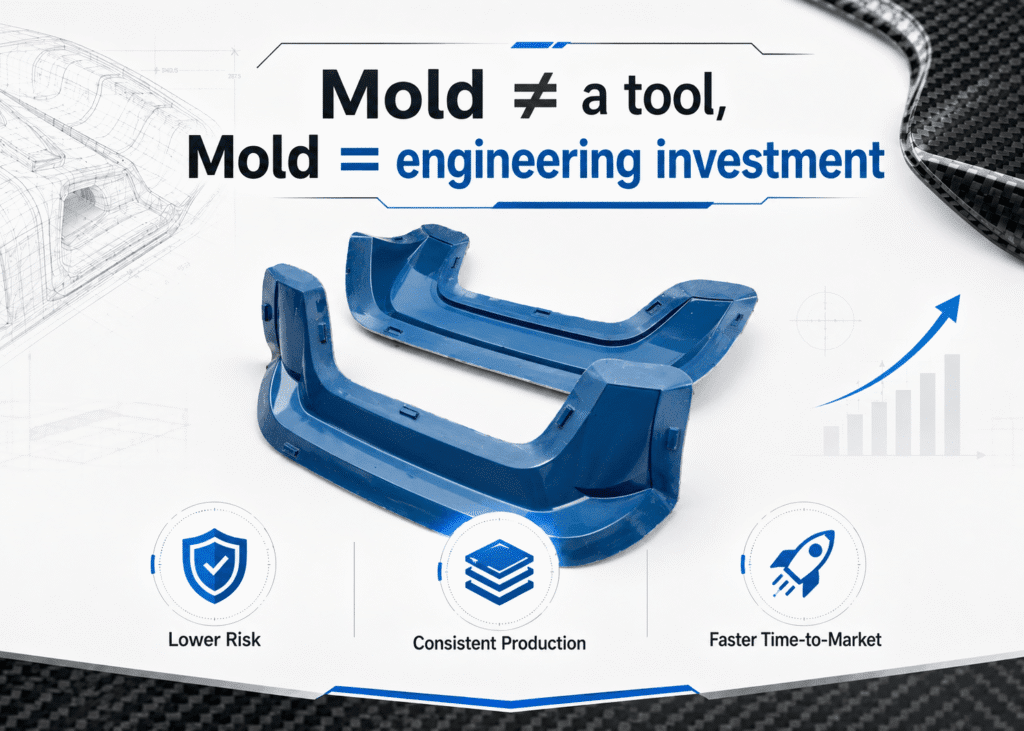
Our position is direct: carbon fiber mold cost is not an “open-the-mold fee.” It is an engineering investment that lowers development risk, locks in mass-production consistency, and sets how fast the product reaches the market. Optimize for the cheapest quote and you buy rework, drift, and missed launches. Optimize for the lowest total project cost and the mold becomes the asset that protects everything downstream.
This logic serves four readers at once — the sourcing manager guarding a budget, the project manager guarding a date, the aftermarket brand owner guarding fitment, and the composites engineer guarding structure. What follows breaks down where the money goes, how to pick carbon fiber mold materials, how to judge carbon fiber mold lifespan, and the rule that decides when a modification is free and when it is billed.
Why Carbon Fiber Mold Cost Is Charged — What You Are Actually Paying For
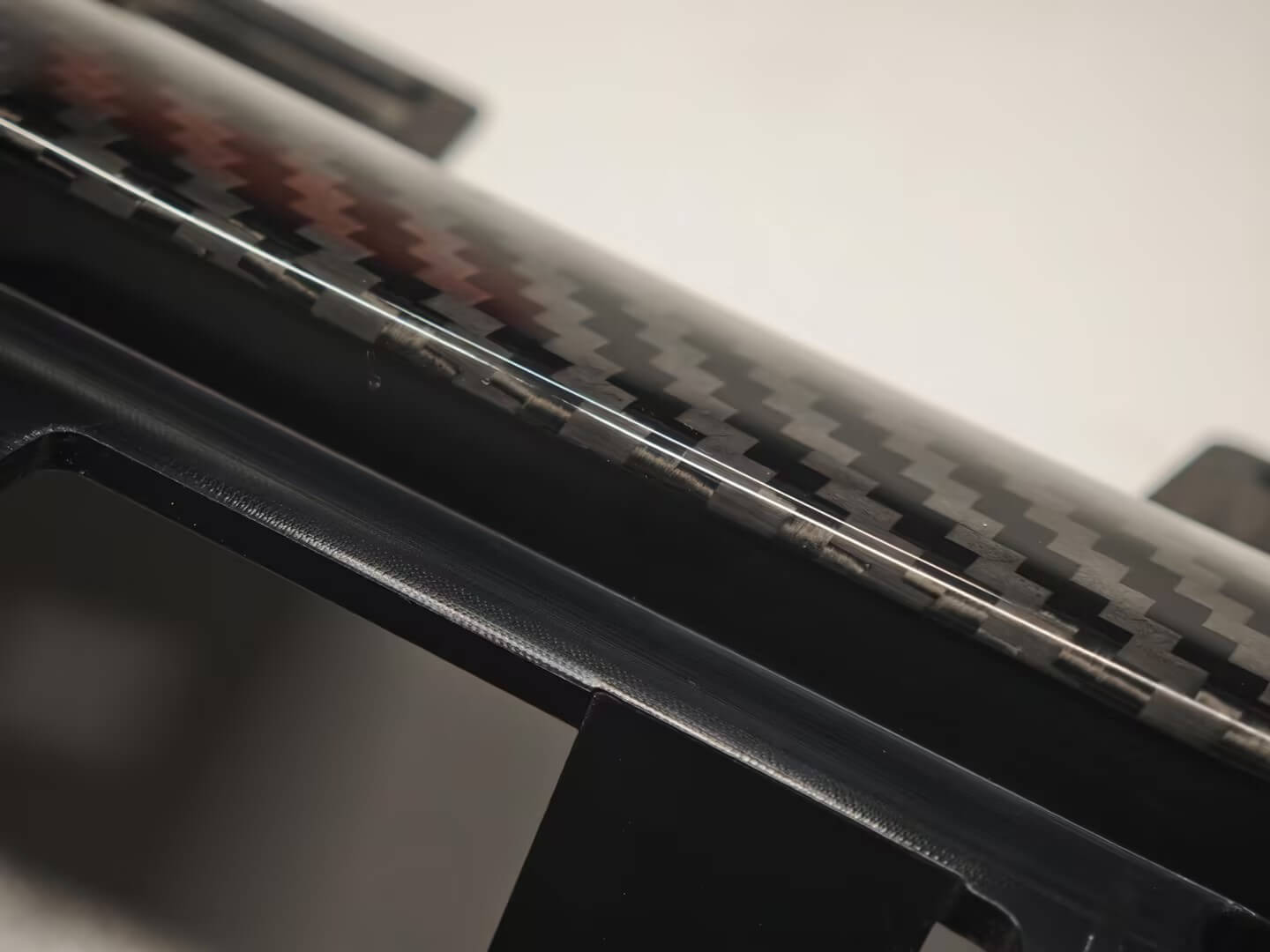
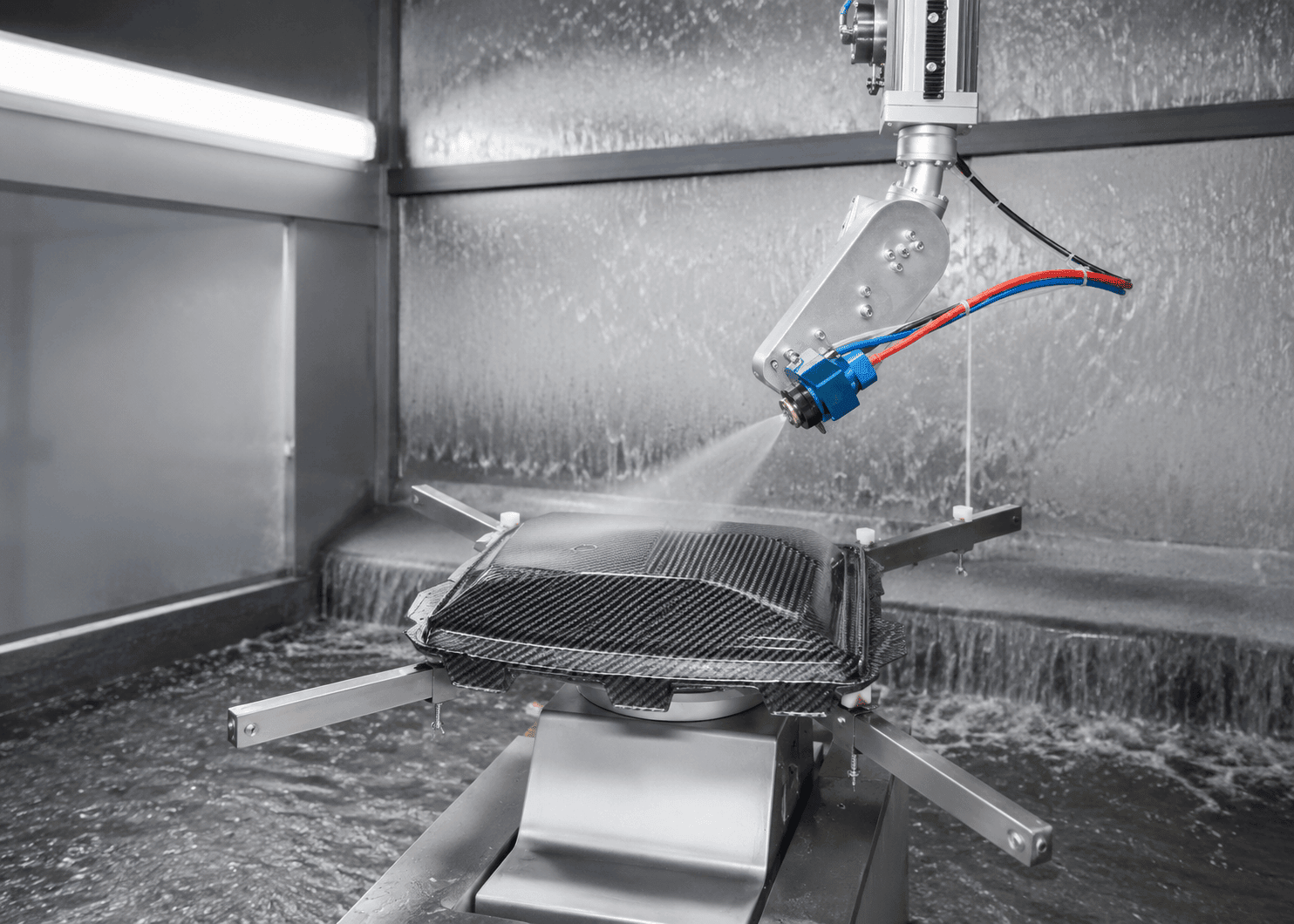
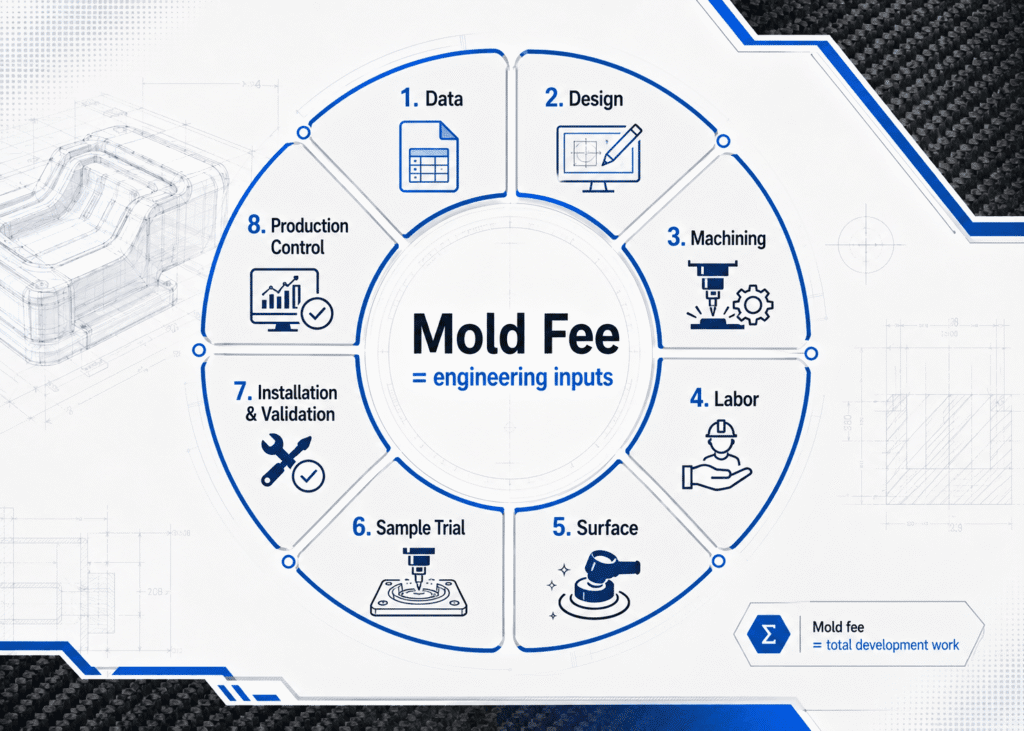
A client who sees the mold as “just a production tool” misses most of the bill. A real carbon fiber mold development cycle carries eight cost drivers, and understanding why carbon fiber mold cost is charged means seeing all of them: 3D data review, structural feasibility assessment, carbon fiber mold materials selection, CNC or hand-layup fabrication, surface finishing, sample validation, fitment-position confirmation, and mass-production stability control. Material is rarely the expensive part. Engineering judgment is.
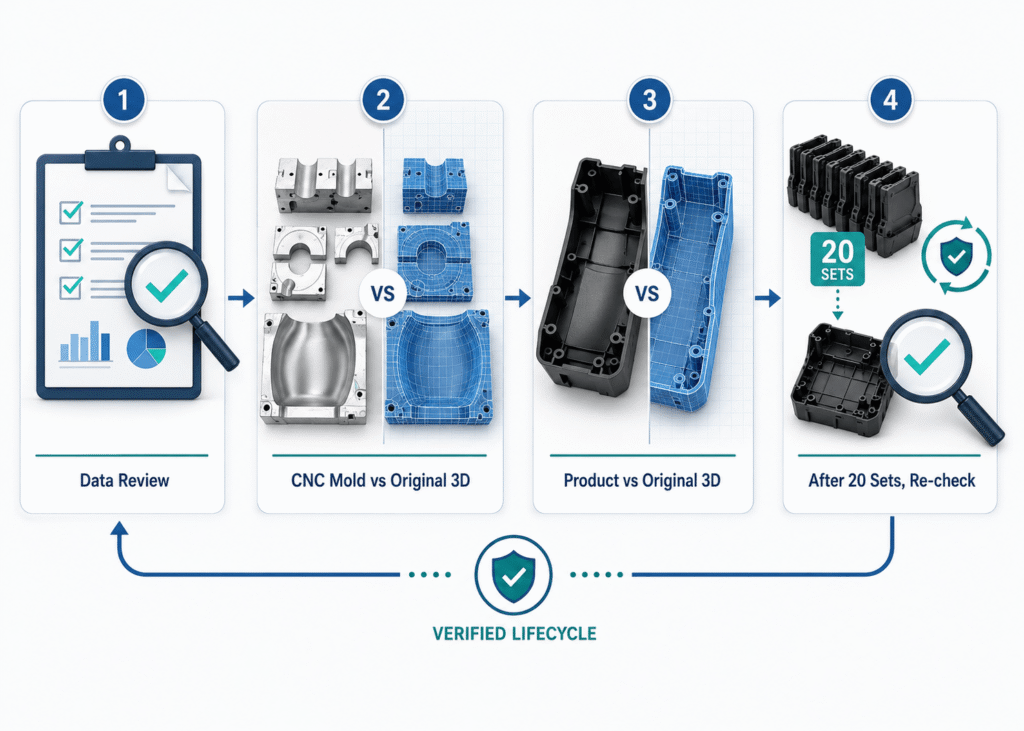
That is also where we split from a typical tooling shop — we start at data review, not at the CNC bed. One US client had already lost money because fitment positions came out wrong on earlier projects. We ran sequential verification: audit the incoming data, compare the CNC mold against the original 3D data, compare the first part against that same data, then re-compare mold and part after 20 production sets. Drawing-to-sample shrank by two months and project cost dropped 30%. That is composite tooling run as risk control.
How to Choose Carbon Fiber Mold Materials
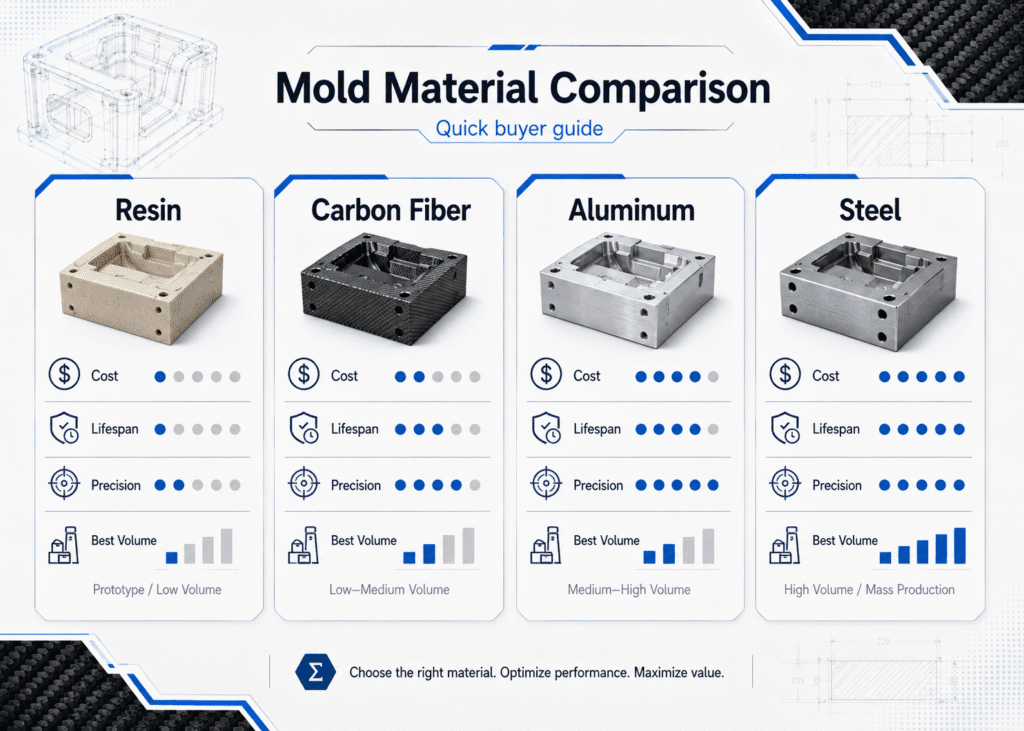
No mold material is universally best. There is only the right one for your stage, volume, and precision target — that is the whole of how to choose carbon fiber mold materials. Resin molds carry the lowest cost and suit early prototype and very low volume. Carbon fiber molds fit prototype validation, small-to-mid batches, and fast brand launches with a lighter capital load. Aluminum and steel molds earn their cost only when volume is high, runs are long, and tolerances are tight.
So carbon fiber tooling vs steel mold is not a contest with a winner. A steel mold is correct for high-volume, long-run, dimensionally stable production. In early development or budget-sensitive programs, carbon fiber tooling and other composite tooling for carbon fiber parts serve better by freeing capital for R&D and marketing.
A North American front-lip client proves it. Steel-mold costs were starving the rest of the program. We supplied a carbon fiber mold that cut tooling cost and held fitment — installation positions matched the steel-mold standard, confirmed by multi-stage 3D data comparison across the production run. Lower cost, identical carbon fiber mold accuracy for automotive parts.
We back material-substitution decisions with finite element analysis before any tooling is committed, not with sales claims:
In a roof front-crossbeam program, FEA confirmed a composite version cut weight by 53.7% while lifting bending stiffness from 152 N/mm to 284.3 N/mm and ultimate bending load from 1,018 N to 2,681 N versus the stamped-metal baseline — that is how a composites engineer should decide whether to replace metal: on simulated, verifiable numbers.
How Long Does a Carbon Fiber Mold Last?
We will not hand you a fixed number, and you should distrust anyone who does. carbon fiber mold lifespan is driven by usage frequency, product complexity, curing temperature and process, demolding frequency, maintenance, surface re-coating, and total batch count — so how long does a carbon fiber mold last has no single answer, only these variables.
Demand a verification mechanism instead of a promise. A mold that produces a perfect first article does not guarantee the 20th or 50th set still holds fitment. This is why we build in a mold-versus-part comparison after 20 production sets — to confirm the mold has not deformed and installation positions stay in tolerance. Lifespan you can audit beats lifespan you were told.
Carbon Fiber Mold Modification Rules: When Modification Requires Extra Charge
Unclear modification billing destroys trust faster than any quote. Define the rule before tooling starts — it answers when mold modification requires extra charge cleanly. If the fault is the supplier’s — manufacturing deviation, a mold not built to confirmed data, a sample that does not match the approved 3D data — the supplier corrects it. If the change is the client’s — a design revision, vehicle-data change, new mounting method, redefined cosmetic surface, or added structure after tooling approval — it counts as a new modification, and carbon fiber mold modification cost and timeline are re-evaluated.
That one boundary keeps carbon fiber mold modification from turning into an open-ended dispute. Procurement and project managers should write it into the agreement on day one, not discover it after the first sample fails.
From Mold Quote to Total Project Cost
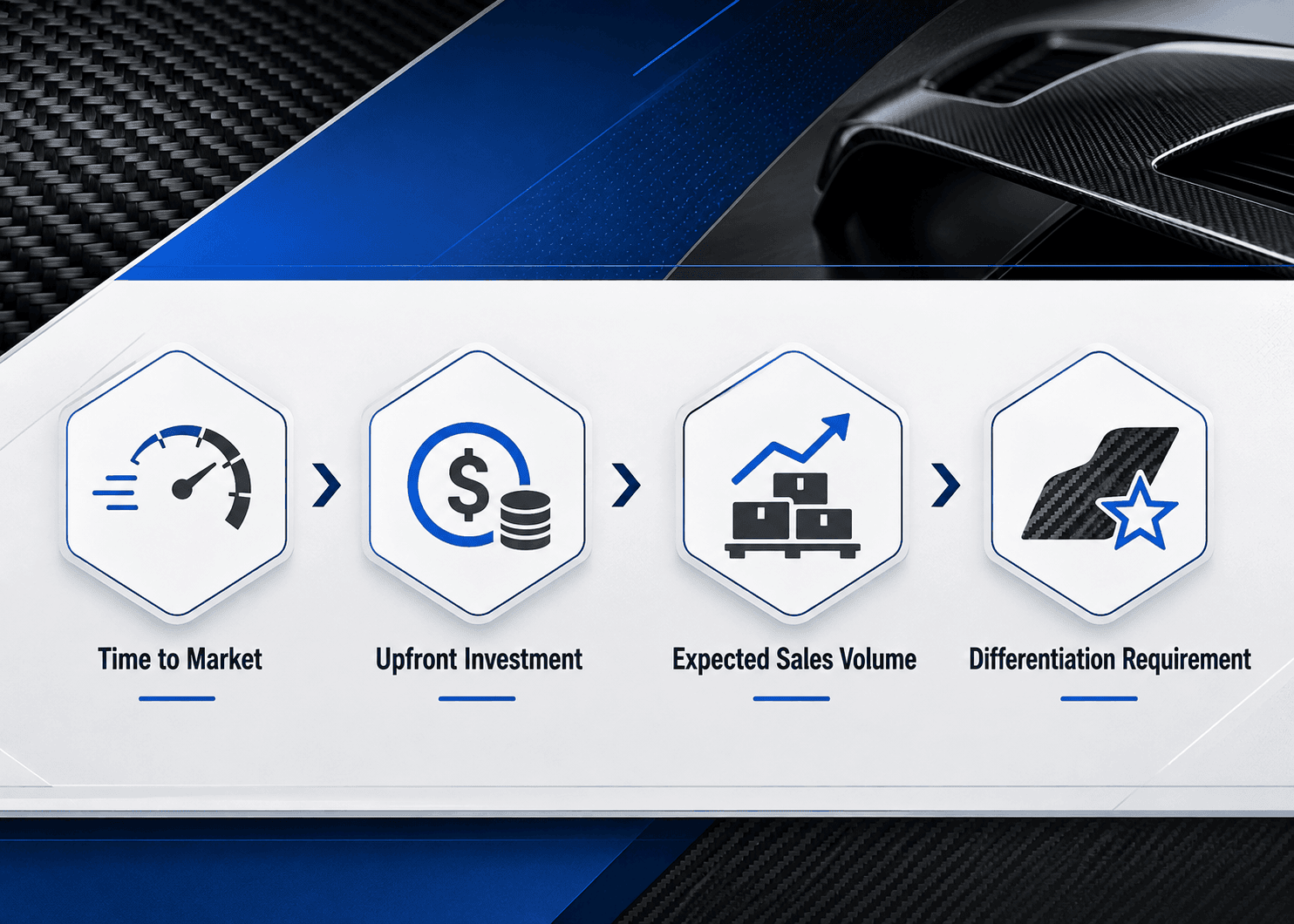
The clients who win stop comparing mold quotes and start comparing total project cost — development time, rework cycles, validation speed, production risk, capital tied up, and time to market. Our differentiation lives here: we are not a factory that cuts molds, we run the project end to end.
An Australian composites client shows the old failure mode. They 3D-printed prototypes locally, fixed shapes with wood and metal, shipped them abroad for tooling, and every minor warp or shrinkage triggered another round-trip of repair — barely two projects a year. Working straight from scan data and design, with no dependence on shipping physical samples back and forth, they now run six projects a year with at least 30% annual project growth.
Another US client had 30-plus molds sitting at a factory that could only produce — no design team, no current data, no way to confirm fitment on a real vehicle — so the molds hit structural problems and produced nothing usable. Under one-stop management we delivered 30+ molds in a year, shared current model data that won them 20 new projects, and applied their LOGO to molds and parts, lifting brand premium by 50%.
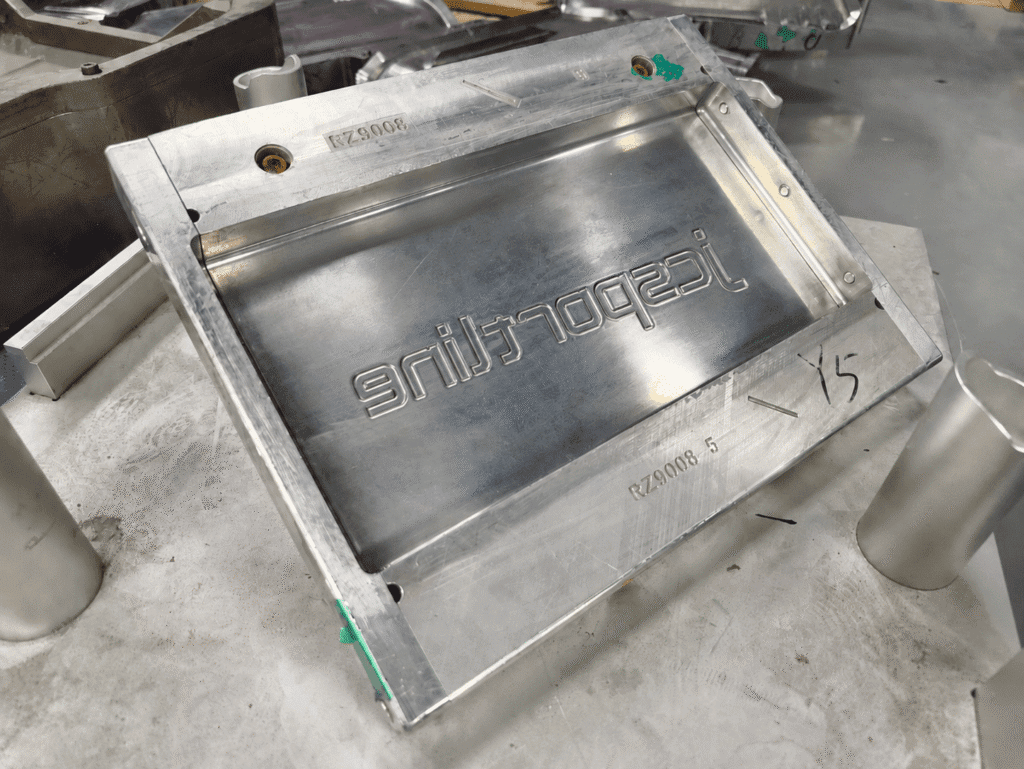
A Poland-based brand proves the commercial payoff. Self-made tooling was expensive and slow, blocking fast launches. With our 58-day concept-to-sample workflow, a custom development timeline, PLM tracking, and a batch-production schedule for annual sales planning, their landed cost dropped enough to double their margin — and orders grew 3x in one year.
That integrated model — data review, design, tooling, sampling, data and real-vehicle alignment, production scheduling, and progress management under one roof — separates buying a mold from shipping a product line.
Conclusion
Choosing a carbon fiber mold is not a decision about a tool. It is a decision about how much risk, delay, and hidden cost you carry into mass production. The right carbon fiber tooling is matched to your stage, volume, budget, and precision — not defaulted to the most expensive steel mold, and not chased down to the cheapest quote. Run carbon fiber mold development as a controlled engineering process with clear modification rules and a real verification mechanism, and the mold stops being a cost you fear and becomes the asset that protects your launch.
Scoping a new program, or rescuing one that won’t scale? Talk to JCSPORTLINE before any metal is cut.
FAQ
1. How does a custom carbon fiber project usually start?
A project can start from a stable physical sample, 3D files such as STP, STL, or IGS, an existing prototype, or even an early concept sketch. Our team reviews feasibility, structure, process, cost, mold plan, and production route before moving into formal development.
2. What mold materials can you provide?
We recommend different mold solutions based on budget, tolerance, production volume, surface requirements, and product size. Options include resin molds, carbon fiber molds, aluminum molds, and steel molds for higher-volume or higher-precision production.
3. How long can one mold be used?
Mold life depends on mold material, product structure, curing temperature, production process, and maintenance. Resin or carbon fiber molds are usually suited to smaller production runs, while aluminum or steel molds are better for higher-volume or higher-precision projects.
4. Do you have in-house mold development capability?
Yes. We support mold planning, CNC mold development, mold repair, mold maintenance, and production fixture design. In-house mold control improves development speed, fitment accuracy, and production consistency.
5. Do you charge extra for mold modifications?
If modification is required because of confirmed production issues, we handle it according to the agreed project responsibility. If the modification is caused by a client-requested design change, structural change, or new requirement after tooling approval, additional costs may apply.