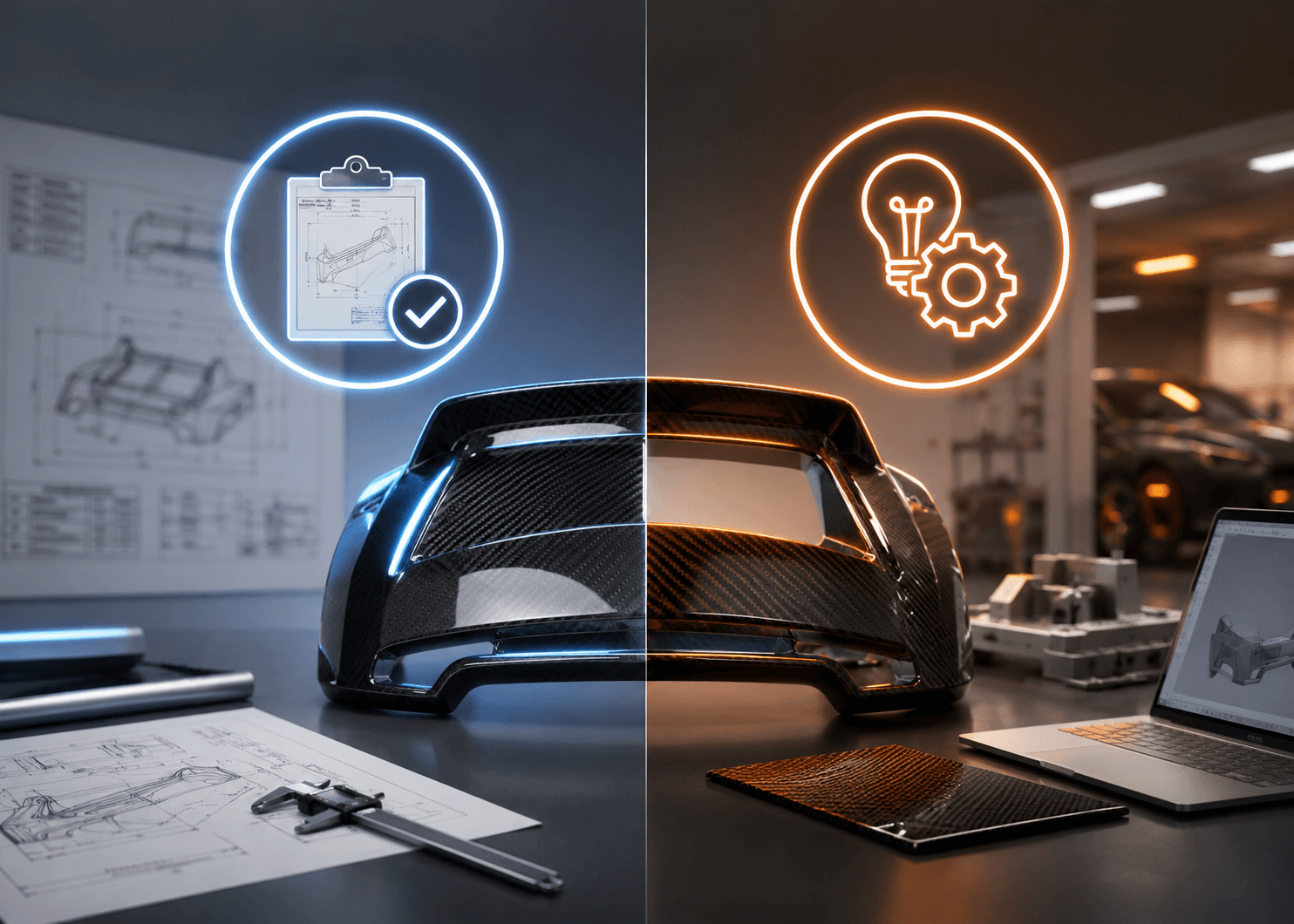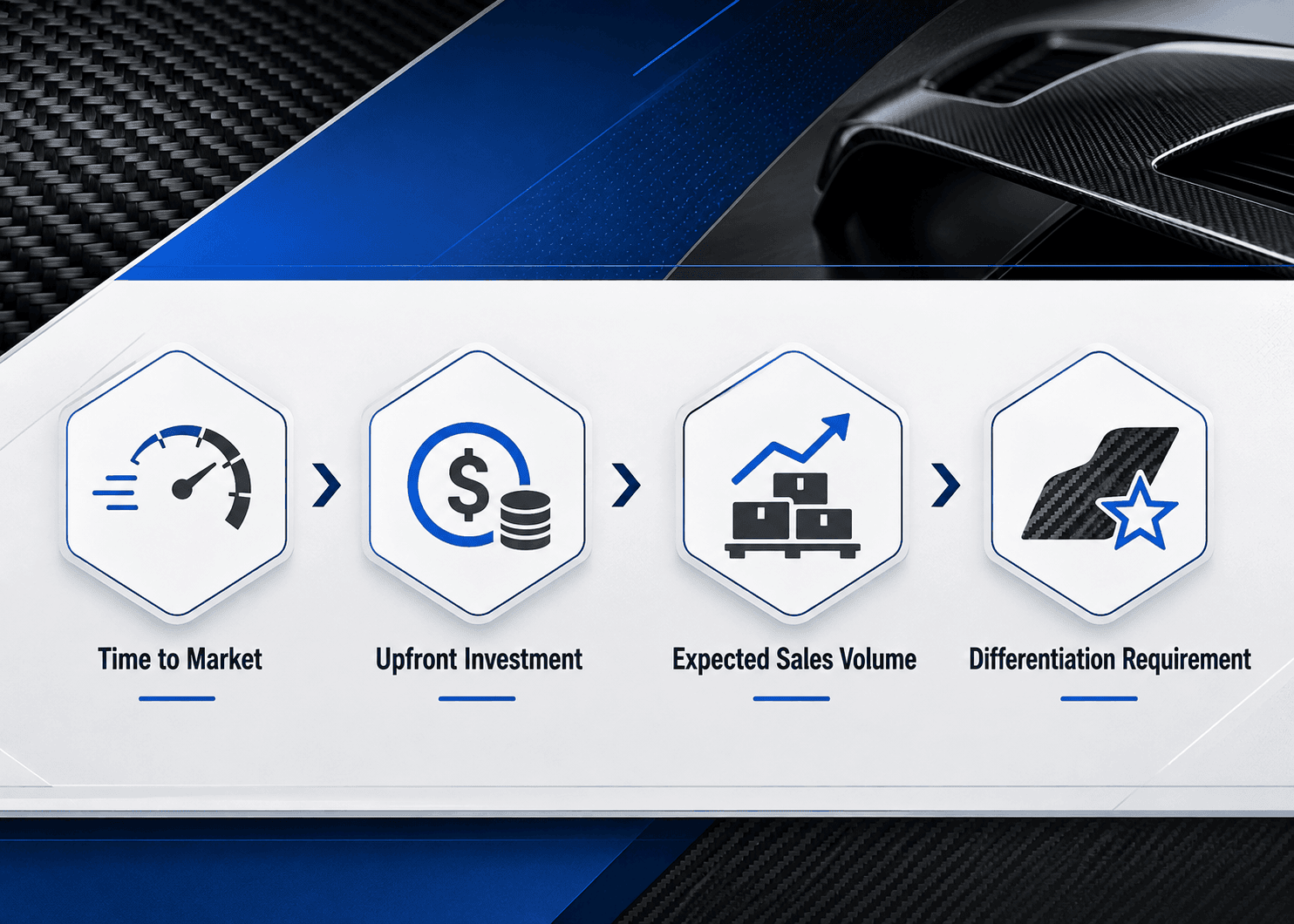
B2B buyers need 3D design, 3D printing, and prototypes for carbon fiber projects when the product concept is not fully defined, the installation position is complex, the appearance risk is high, or the buyer needs to verify fitment before investing in tooling. However, these steps are not required for every project. If accurate 3D data, a mature structure, and a clear manufacturing direction already exist, a carbon fiber manufacturer may move directly into CNC tooling or mold development.
For procurement managers, product managers, R&D engineers, motorsport teams, and OEM buyers, the key is not simply asking, “Do we need 3D printing?” The better question is: “Which development route reduces risk, saves time, controls cost, and prepares the product for mass production?”
In custom carbon fiber product development, 3D design, 3D printing carbon fiber validation, reverse engineering, prototype testing, and first sample approval all play different roles. Understanding when to use each step can help buyers reduce communication errors, avoid mold rework, improve fitment accuracy, and launch products faster.
3D Design vs Rendering vs Reverse Engineering
Many buyers use the terms 3D design, rendering, reverse engineering, and 3D modeling interchangeably. In real carbon fiber projects, they are different stages with different purposes.
What Is 3D Design for Carbon Fiber Projects?
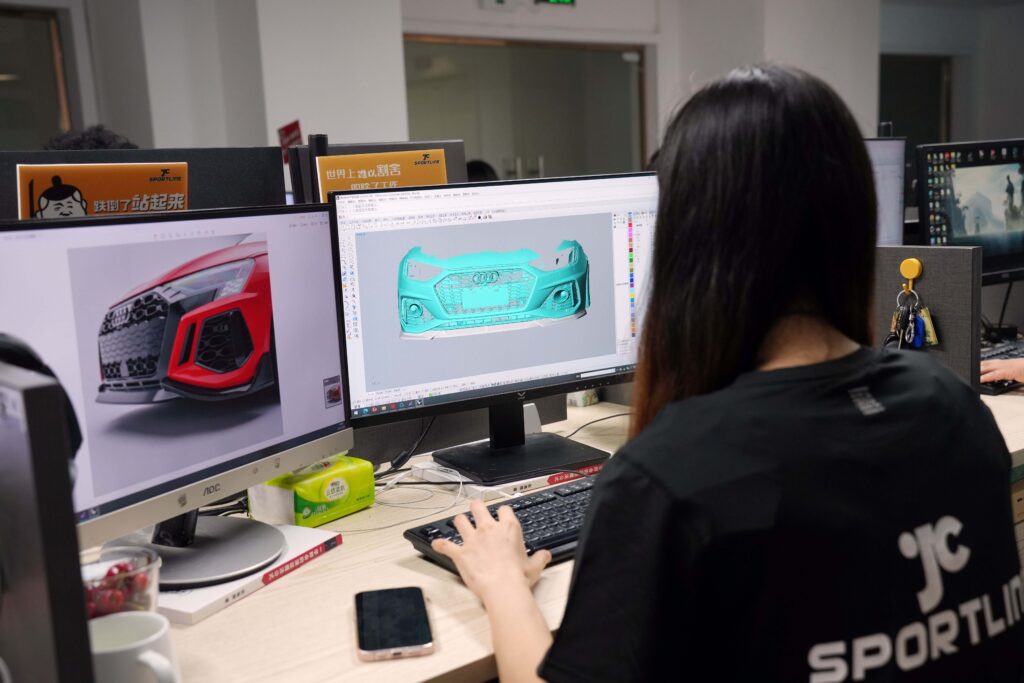
3D design is needed when the buyer only has a concept, sketch, reference image, or appearance direction. At this stage, the supplier or design team converts the idea into a digital model that can be reviewed, adjusted, and later used for engineering analysis.
For example, if a brand wants to develop a new carbon fiber automotive panel, speaker housing, sports equipment shell, drone component, or racing bodywork, 3D design helps define the shape, proportion, assembly relationship, and basic structure before tooling starts.
Professional carbon fiber design services are especially useful when the buyer does not yet have a complete CAD file or manufacturable structure.
What Is 3D Rendering?
3D rendering is mainly used for visual evaluation. It helps buyers review product appearance, market appeal, surface style, brand identity, and presentation before production.
Rendering is useful for sales teams, marketing teams, crowdfunding preparation, product catalog planning, and investor presentations. However, a beautiful rendering is not always manufacturable. Before mold development, the design still needs structure review, thickness analysis, layup planning, assembly evaluation, and tooling feasibility review.
What Is Reverse Engineering?
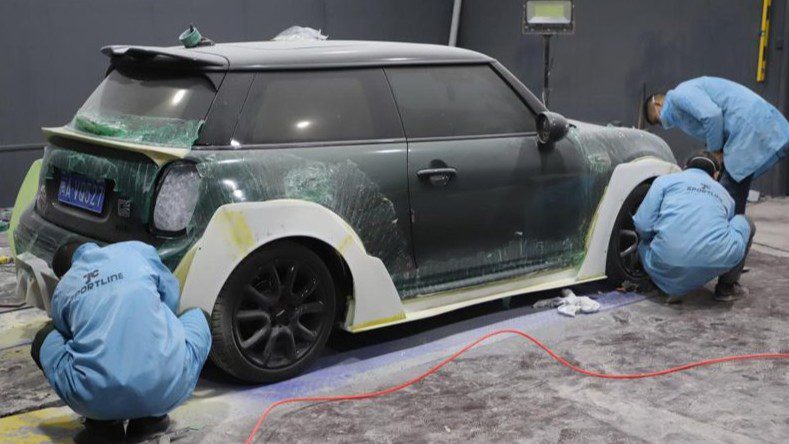
Reverse engineering is needed when the buyer has a physical sample but does not have reliable 3D data. This is common in automotive parts, motorsport parts, industrial covers, performance accessories, and replacement components.
The supplier can use 3D scanning to capture the geometry of the existing part or vehicle surface. The scan data is then cleaned, adjusted, and converted into usable 3D modeling data for mold development.
Why 3D Scanning Matters
Carbon fiber reverse engineering and 3D scanning can reduce repeated sample shipping, mold rework, and installation correction. Instead of relying only on manual measurement or final trial fitting, the supplier can review digital data earlier and compare it against tooling and production requirements.
For custom carbon fiber parts, accurate 3D data is often the foundation of successful fitment.
When 3D Printing Is Necessary, and When CNC Tooling Can Start Directly
3D printing is valuable in carbon fiber product development, but it is not always required. The decision depends on the project risk.
When 3D Printing Is Useful
3D printing for carbon fiber product development is useful when the product has complex styling, difficult installation positions, uncertain structure, or high visual risk. It allows the buyer and supplier to test the physical form before committing to tooling.
B2B buyers should consider 3D printing when:
- the product has complex curves or surfaces;
- hole positions are difficult to confirm;
- the part must match a vehicle, machine, housing, or frame;
- the buyer needs to verify on-car or on-product appearance;
- the design is visible and appearance-sensitive;
- the structure may need several rounds of adjustment;
- mold investment is high;
- the project timeline is tight and fast validation is needed.
For example, 3d printing carbon fiber prototypes for custom projects can help verify whether a racing part fits the installation position, whether a product cover matches the original surface, or whether the visual proportion is suitable before CNC tooling begins.
When 3D Printing May Not Be Necessary
If the buyer already has complete and reliable 3D data, and the design has been verified, 3D printing may not be needed. In these cases, the manufacturer may move directly to CNC tooling or mold development.
Skipping 3D printing can save both time and cost when:
- the 3D data is accurate and complete;
- the product structure is mature;
- the same or similar product has already been developed;
- the installation relationship is simple;
- visual risk is low;
- the supplier can confirm manufacturability through digital review.
This is why a professional manufacturer should not automatically recommend 3D printing for every project. The correct approach is to evaluate data quality, design complexity, fitment risk, and production goals first.
3D Printing Does Not Replace Carbon Fiber Manufacturing
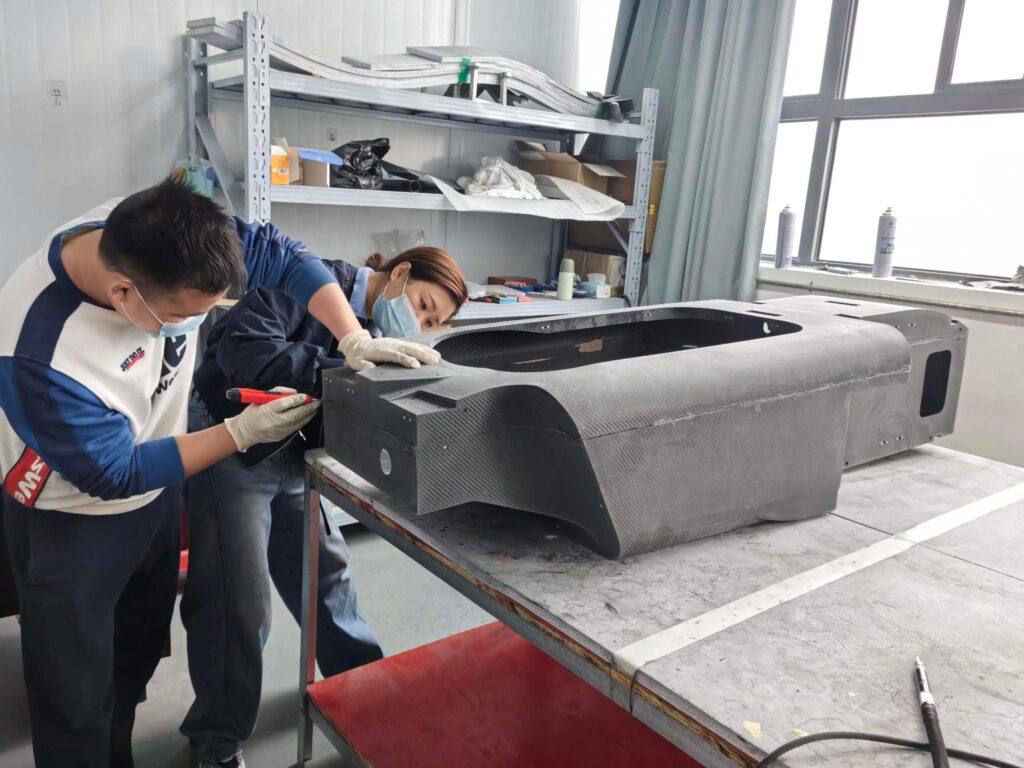
It is also important to understand that 3D printing does not replace final carbon fiber manufacturing. A 3D printed part is mainly used to validate shape, proportion, hole positions, assembly relationships, and local structure.
Final carbon fiber performance still depends on material selection, carbon fiber layup design, resin system, mold accuracy, curing process, trimming, surface treatment, and quality control. A 3D printed prototype may look close to the final product, but it does not usually represent the final strength, weight, surface finish, or composite behavior of a real carbon fiber part.
Case: How 3D Data and 3D Printing Helped a Racing Project Reduce Repeated Corrections
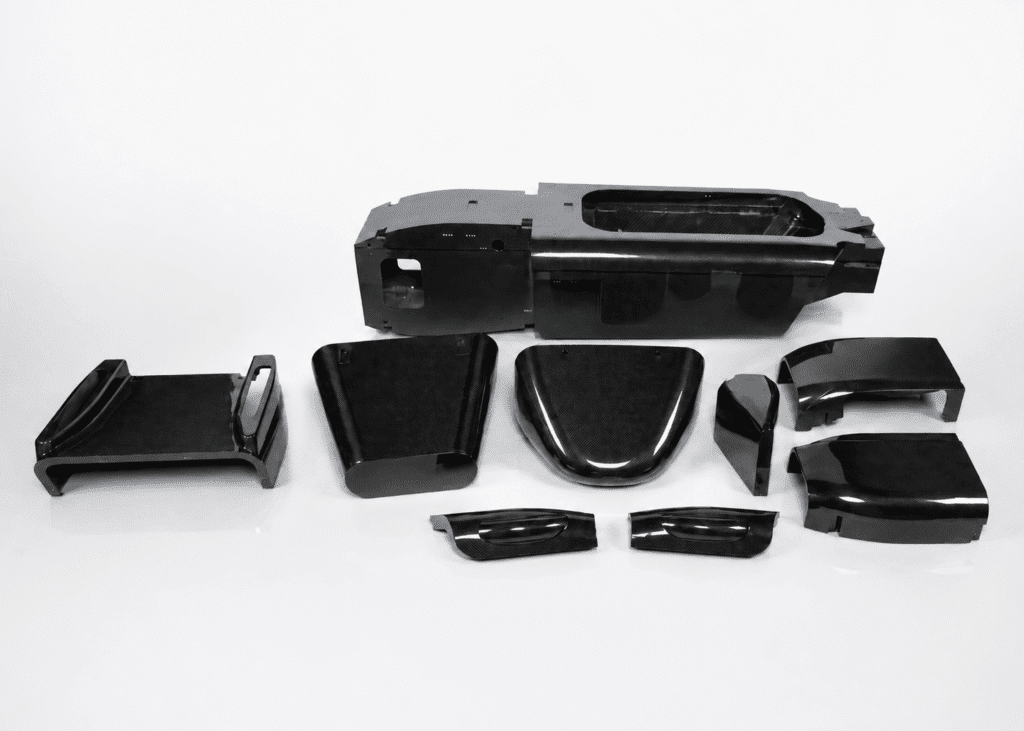
A practical example comes from a UK motorsport racing project. The client came from the professional racing field and required custom carbon fiber parts with strict standards for lightweight design, structural strength, and installation accuracy.
The target was to complete the project within around 60 days. Because the vehicle structure was complex, the project faced several key challenges.
Challenge 1: High-Precision Installation Positioning
For racing applications, fitment accuracy is not only about appearance. Small deformation, incorrect hole positioning, or poor assembly relationship can create safety risks at high speed.
The parts needed to match the vehicle structure closely. Any small error could create problems during installation or use. Instead of relying only on final trial fitting, the team used 3D data review and validation to reduce uncertainty earlier in the process.
Challenge 2: Balancing Surface Appearance and Weight Reduction
In motorsport, every gram matters. During the later stage of the project, the client wanted to reduce clear coat thickness or lower the gloss level to reduce weight and adjust appearance.
This had to be handled carefully. Excessive sanding could damage the original carbon fiber weave, affect visual consistency, or weaken local surface quality. For visible carbon fiber components, appearance and lightweight requirements must be balanced with structural integrity.
Challenge 3: Tight Timeline and Multiple Validation Rounds
Because the delivery schedule was tight, 3D printing was used to shorten the validation cycle. After several prototype trials and installation-position adjustments, the final part achieved good fitment and surface treatment.
The project still experienced some delivery delay, which is realistic for urgent custom development. To reduce final delivery time, air freight was used. This case shows that 3D printing can help reduce repeated corrections, but urgent projects still require realistic scheduling, validation time, and logistics planning.
For motorsport-related carbon fiber applications, buyers can also review examples such as custom carbon fiber bodywork for formula race cars and the carbon fiber Le Mans racing car chassis product.
How Prototypes Reduce Aesthetic and Fitment Risk
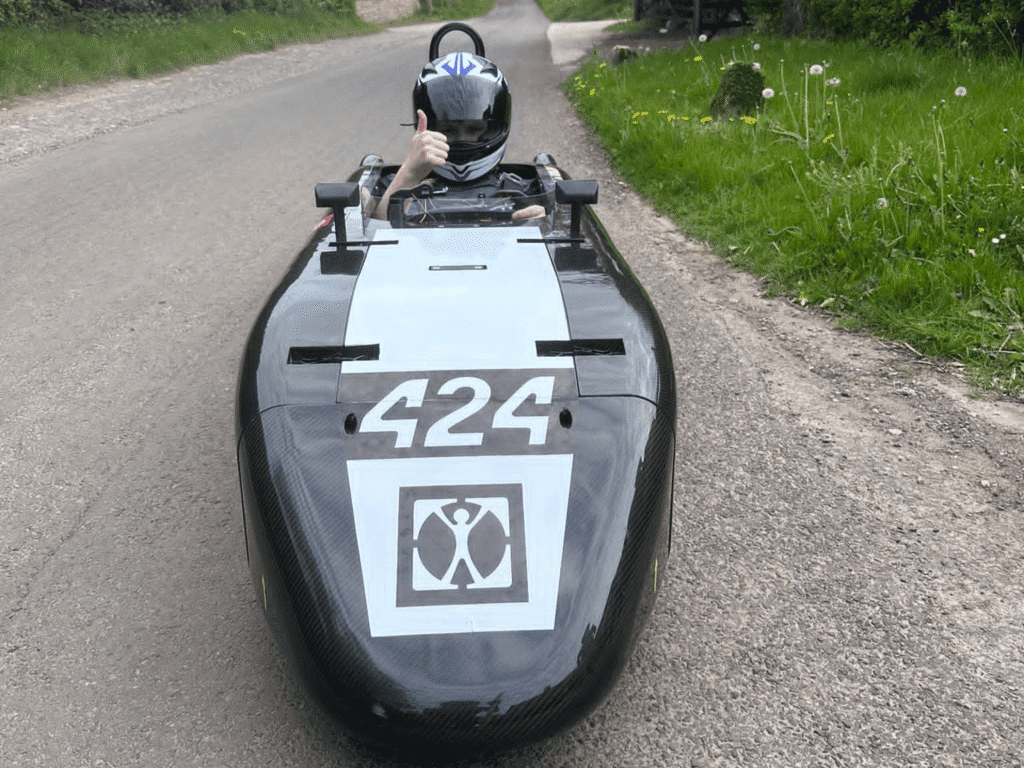
A prototype helps buyers identify problems before mass production. In carbon fiber projects, this is especially important because tooling, material, curing, and finishing costs can be significant.
Prototypes help verify:
- installation position;
- hole location;
- assembly relationship;
- vehicle or product fitment;
- surface appearance;
- gloss level;
- clear coat thickness;
- carbon fiber weave direction;
- shape proportion;
- structural reinforcement;
- lightweight strategy;
- production feasibility.
For visible premium components, prototype validation can prevent expensive mistakes. A part may look good in rendering but appear too large, too flat, too glossy, or visually inconsistent when installed. A prototype gives buyers a physical reference before moving forward.
For motorsport and automotive exterior parts, prototypes are even more important. These parts often require strict tolerance control, stable surface quality, lightweight structure, and accurate fitment. Prototype testing helps expose risks before they become expensive mass production problems.
JC SPORTLINE’s OEM development Vito W447 prototype project is an example of how prototype development can support custom carbon fiber product validation.
Recommended Timeline from Concept to Sample
There is no single timeline for every custom carbon fiber project. The development schedule depends on product size, tooling complexity, data quality, process route, revision rounds, sample validation requirements, CNC capacity, material availability, and production load.
However, a practical project timeline usually includes the following stages.
Step 1: Concept and Requirement Review
The buyer shares the product idea, application scenario, target market, material preference, appearance requirements, quantity forecast, budget range, and timeline expectations.
At this stage, the supplier should help confirm whether the project needs 3D design, reverse engineering, 3D printing, or direct tooling.
Step 2: 3D Design or Reverse Engineering
If the buyer only has a concept, the project starts with 3D design. If the buyer has a physical sample but no digital data, reverse engineering and 3D scanning may be required.
This step creates the digital foundation for mold development.
Step 3: 3D Rendering or Appearance Confirmation
For visible parts, 3D rendering can help confirm proportions, surface design, and market appeal. This is especially useful when product managers, brand teams, or end customers need to approve the design.
Step 4: 3D Printing or Prototype Validation
If fitment risk or visual risk is high, 3D printing can be used to verify shape and assembly before tooling. This step can reduce mold modification later.
Step 5: Data Review and Manufacturability Analysis
Before CNC tooling begins, the supplier should review wall thickness, mold release direction, surface finish requirements, bonding areas, structural reinforcement, and production feasibility.
This is also where 3D modeling for carbon fiber mold development becomes critical.
Step 6: CNC Tooling or Mold Development
Once the data is confirmed, CNC tooling or mold development begins. Tooling accuracy directly affects the final part’s fitment, surface quality, and repeatability.
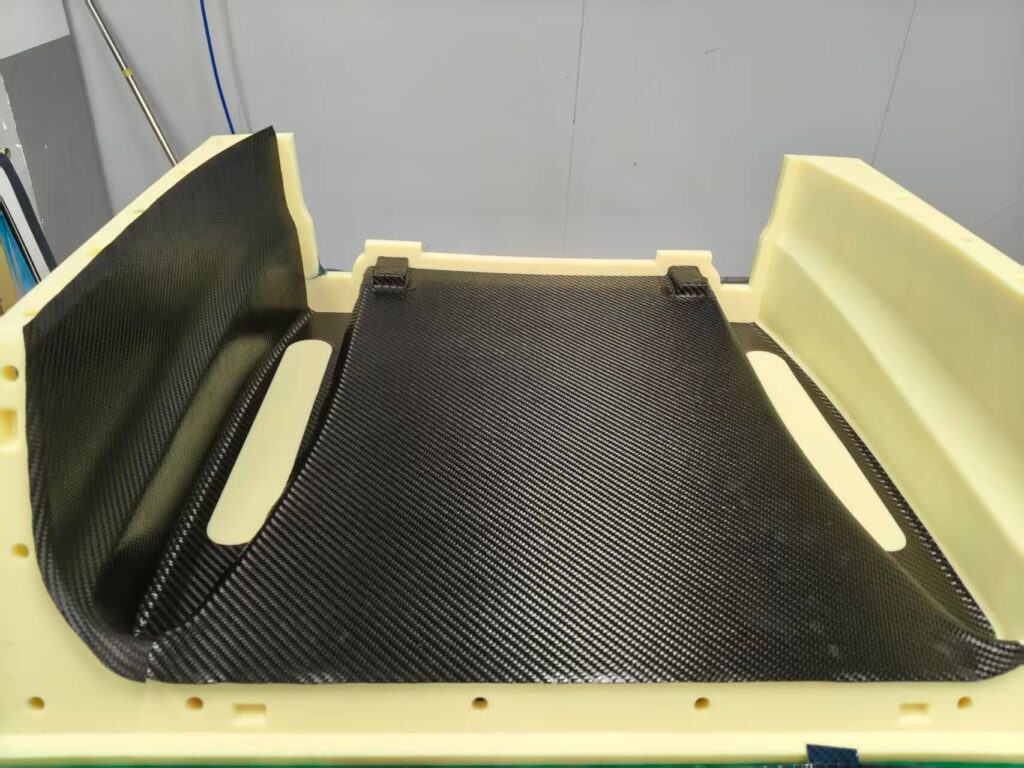
Step 7: Carbon Fiber Layup and Process Planning
The manufacturer selects the carbon fiber material, resin system, layup direction, curing process, trimming method, and surface treatment plan. For performance parts, 3D design and layup optimization for carbon fiber parts may be required.
Step 8: First Sample Production
After tooling, the first carbon fiber sample is produced. This sample is used to check fitment, structure, appearance, surface finish, installation method, and production feasibility.
Step 9: Validation, Revision, and Approval
The buyer and supplier review the sample together. If needed, adjustments are made before final approval.
Step 10: Mass Production Preparation
After the first sample is approved, the project moves toward production planning, QC standards, packaging, delivery, and batch production.
For many standard custom projects, the first sample may be completed in about 58 days after design data and development direction are confirmed. This should be treated as a typical reference, not a universal guarantee.
Buyers planning larger or more complex programs can review carbon fiber mass production capability to better understand production preparation.
Can Urgent Carbon Fiber Projects Be Accelerated?
Some urgent projects can be reviewed for priority scheduling, but acceleration is not always possible. A reliable manufacturer should not promise an unrealistic timeline before checking CNC capacity, mold complexity, material availability, sample validation needs, and current production load.
Urgent projects may be accelerated through:
- faster data review;
- priority CNC scheduling;
- simplified prototype validation;
- parallel communication between design and production teams;
- early material preparation;
- air freight or faster logistics.
However, speed should not destroy quality control. For carbon fiber parts with strict fitment, surface, or structural requirements, skipping important validation steps may create larger delays later.
How JCSPORTLINE Supports Data-Driven Carbon Fiber Development
JC SPORTLINE’s value is not only manufacturing carbon fiber parts. The company helps buyers turn creative ideas into manufacturable, market-ready products.
Its project support includes 3D design, 3D rendering, reverse engineering, 3D scanning, 3D modeling for custom carbon fiber parts, layup optimization, CNC tooling, prototype development, first sample validation, mass production preparation, and manufacturing route selection.
A key difference is that JC SPORTLINE does not rely only on final fitment testing. Instead, the process uses data review, mold comparison, product comparison, and production-stage verification to control accuracy step by step.
This approach helps reduce repeated sample shipping, repeated mold rework, and repeated installation correction. It also allows buyers to choose the most suitable carbon fiber manufacturing route based on budget, timeline, appearance standards, production goals, and technical requirements.
FAQ
Do you provide 3D design or rendering support before production?
Yes. If the client provides 3D renders, design files, or reference concepts, JC SPORTLINE can use them for reverse engineering, structure review, and mold development preparation. If the client does not have a designer, original creative design and 3D rendering support may also be available depending on project scope and complexity.
When is 3D printing needed before mold development?
3D printing is useful when the product has complex styling, high visual risk, uncertain installation positions, or when the buyer wants to verify fitment, proportion, or on-product appearance before investing in tooling.
Can carbon fiber projects move directly to CNC tooling without 3D printing?
Yes. If complete and reliable 3D data is available, and the structure has already been verified, many projects can move directly into CNC tooling or mold development. This can help save time and cost.
Can I request a prototype or first sample before mass production?
Yes. For custom projects, a first sample is normally created after tooling. The sample is used to verify fitment, structure, appearance, surface finish, installation method, and production feasibility before mass production approval.
What is the typical lead time for a new custom carbon fiber project?
For many standard custom projects, the first sample may be completed in about 58 days after the design data and development direction are confirmed. Actual timing depends on product size, tooling complexity, process route, revision rounds, and validation requirements.
Can urgent custom carbon fiber projects be accelerated?
Some urgent projects can be reviewed for priority scheduling. However, acceleration depends on CNC capacity, mold complexity, material availability, sample validation requirements, and current production load. A realistic timeline should be confirmed before accepting an urgent plan.
Conclusion: Choose the Right Development Route Before Tooling
For B2B carbon fiber projects, 3D design, 3D printing, reverse engineering, and prototypes are not fixed steps. They are tools for reducing risk, improving accuracy, and preparing the project for successful production.
If you only have an idea, 3D design may be the first step. If you have a physical sample, reverse engineering and 3D scanning may be more suitable. If fitment risk or visual risk is high, 3D printing and prototype validation can save time before tooling. If accurate data already exists, direct CNC tooling may be the fastest route.
The best carbon fiber manufacturer is not the one that recommends the same process for every project. It is the one that understands your budget, timeline, product goals, appearance standards, and production requirements, then recommends the most practical route.
If you are developing custom carbon fiber parts and need support with 3D design, 3D printing validation, carbon fiber prototype design and manufacturing, CNC tooling, or OEM carbon fiber design and manufacturing services, contact a professional custom carbon fiber products manufacturer to discuss the best development plan for your project.