
Automotive parts distributors do not need to build a factory to enter the carbon fiber auto parts market. By working with an experienced automotive carbon fiber manufacturer, distributors can access standard products, technical data, product images, warehouse inventory, dropshipping, wholesale pricing, packaging support, and OEM/ODM development without investing in production equipment, molds, engineers, or factory employees.
The most practical way to enter this market is to start with a limited number of proven products, validate local demand, and expand in stages. A distributor can begin with selected standard carbon fiber car parts, move into small-batch purchasing, develop private-label packaging, and eventually launch exclusive OEM or ODM products.
Success depends less on owning a factory and more on choosing the right supplier, managing inventory carefully, maintaining consistent product quality, and selecting products that match local vehicle demand.
Why Distributors Add Carbon Fiber Auto Parts Categories
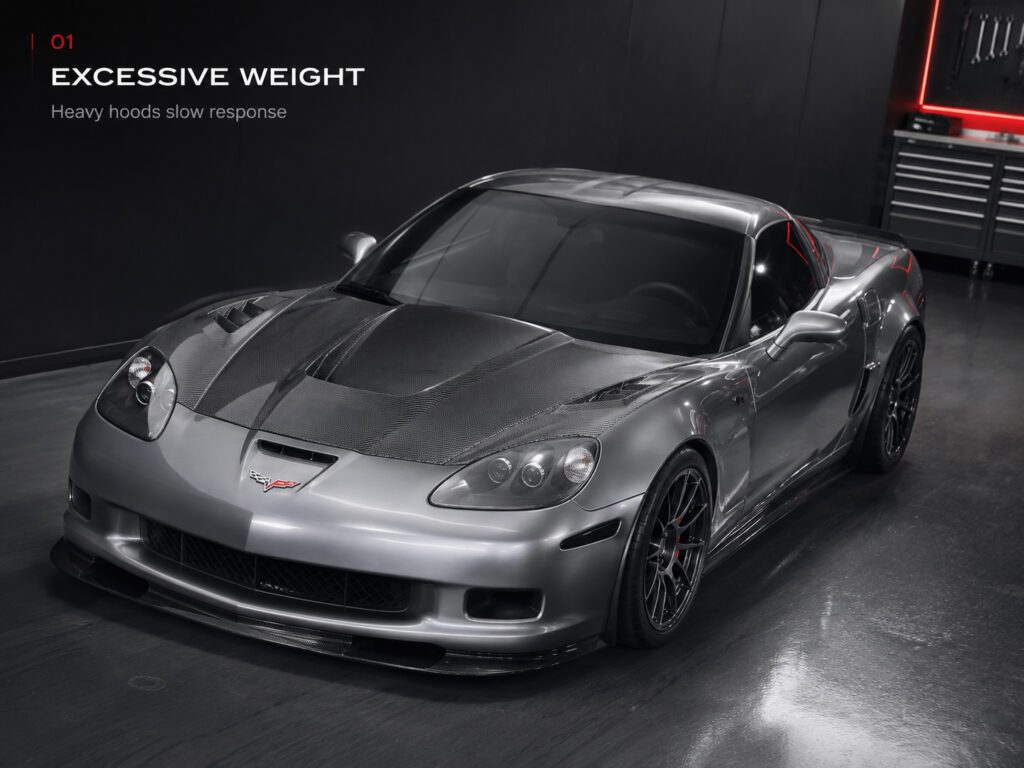
Carbon fiber products give automotive distributors access to a premium aftermarket category with strong visual appeal and clear performance positioning.
Customers often associate carbon fiber car parts with lightweight construction, motorsport styling, premium materials, and vehicle personalization. These characteristics allow distributors to expand beyond basic replacement parts and compete in higher-value tuning and performance markets.
Common carbon fiber automotive products include:
- Front lips
- Rear diffusers
- Side skirts
- Rear spoilers
- Racing wings
- Mirror covers
- Carbon fiber hoods
- Grilles
- Interior trims
- Dashboard panels
- Seat backs
- Other carbon fiber auto body parts and accessories
For distributors, the category can create several commercial advantages.
Premium Product Positioning
Carbon fiber products usually carry a higher perceived value than ordinary painted plastic or fiberglass components. A well-manufactured part with clean weave alignment, accurate fitment, and consistent surface finishing can help a distributor attract performance-car owners and premium tuning customers.
Product and Brand Differentiation
Many automotive sellers offer similar generic accessories. Carbon fiber parts allow distributors to create a more specialized product mix and position themselves as experts in performance upgrades rather than general parts resellers.
Expansion into Wholesale and Custom Projects
A distributor may begin by selling individual standard products. As local sales grow, the business can expand into wholesale orders, regional distribution, private-label products, and custom carbon fiber parts for local tuning brands or vehicle specialists.
However, these advantages only become sustainable when product quality and supply remain reliable.
Common Risks: Quality, Inventory and Listing Workload
Adding carbon fiber auto parts is not risk-free. Distributors frequently face problems related to stock, fitment, surface quality, shipping, and product content.
Understanding these risks before purchasing can prevent unnecessary inventory and after-sales costs.
Purchasing Too Much Inventory Too Early
One of the biggest mistakes is ordering a broad catalog before confirming demand. Vehicle preferences vary by region, and a product that sells well in one market may move slowly in another.
Unsold hoods, diffusers, or body kits can occupy warehouse space and tie up cash for months. New distributors should avoid large initial orders until they understand which vehicle models and product types generate consistent inquiries.
Poor Fitment and Installation Problems
Fitment is one of the most important factors in the automotive aftermarket. A visually attractive product can still create complaints if mounting points, edges, hole positions, or overall dimensions do not match the vehicle.
Poor fitment may increase installation labor, require modification, damage the original vehicle, or lead to returns.
Distributors should confirm:
- Compatible model and production year
- Whether the part is replacement-style or add-on
- Mounting method
- Included hardware
- Installation difficulty
- Whether professional installation is recommended
- Whether fitment has been physically validated
Surface Defects and Batch Inconsistency
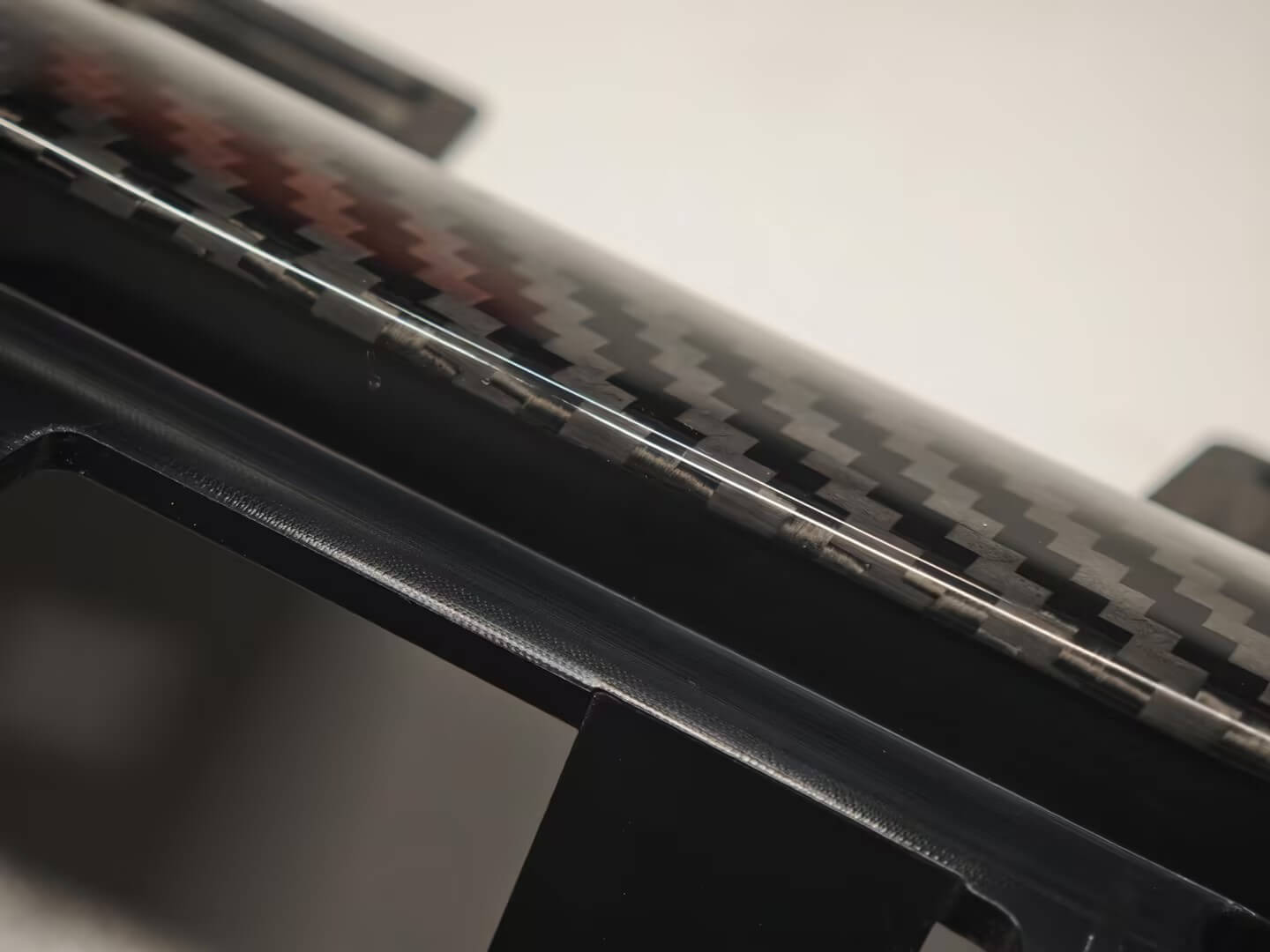
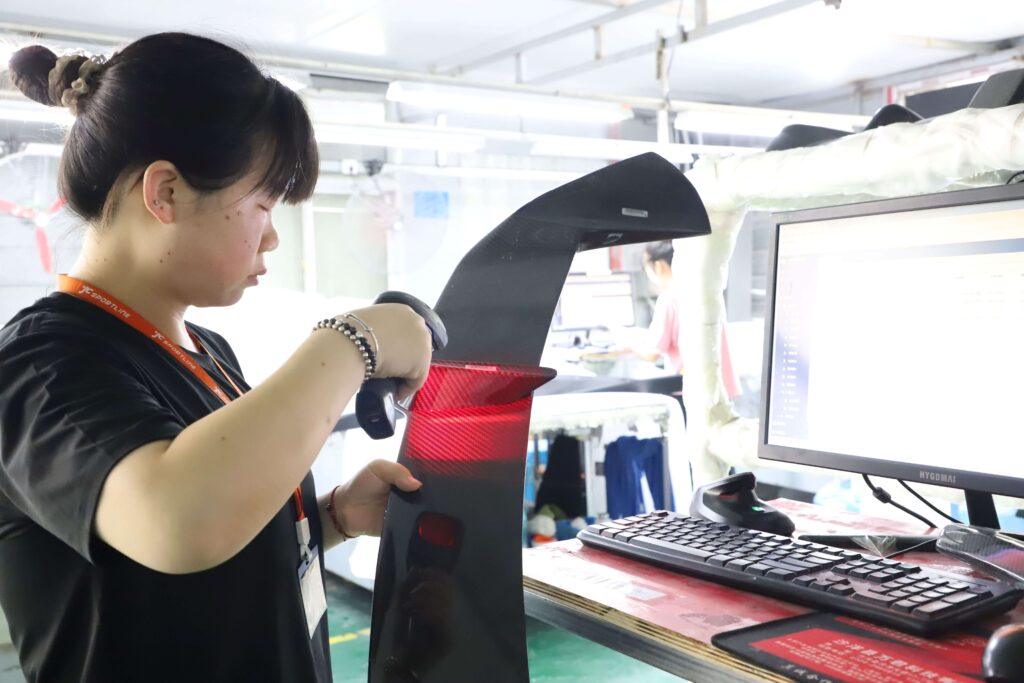
Visible carbon fiber surfaces require careful process control. Common quality problems include distorted weave, pinholes, resin marks, uneven gloss, cloudy clear coat, scratches, yellowing, and inconsistent appearance between batches.
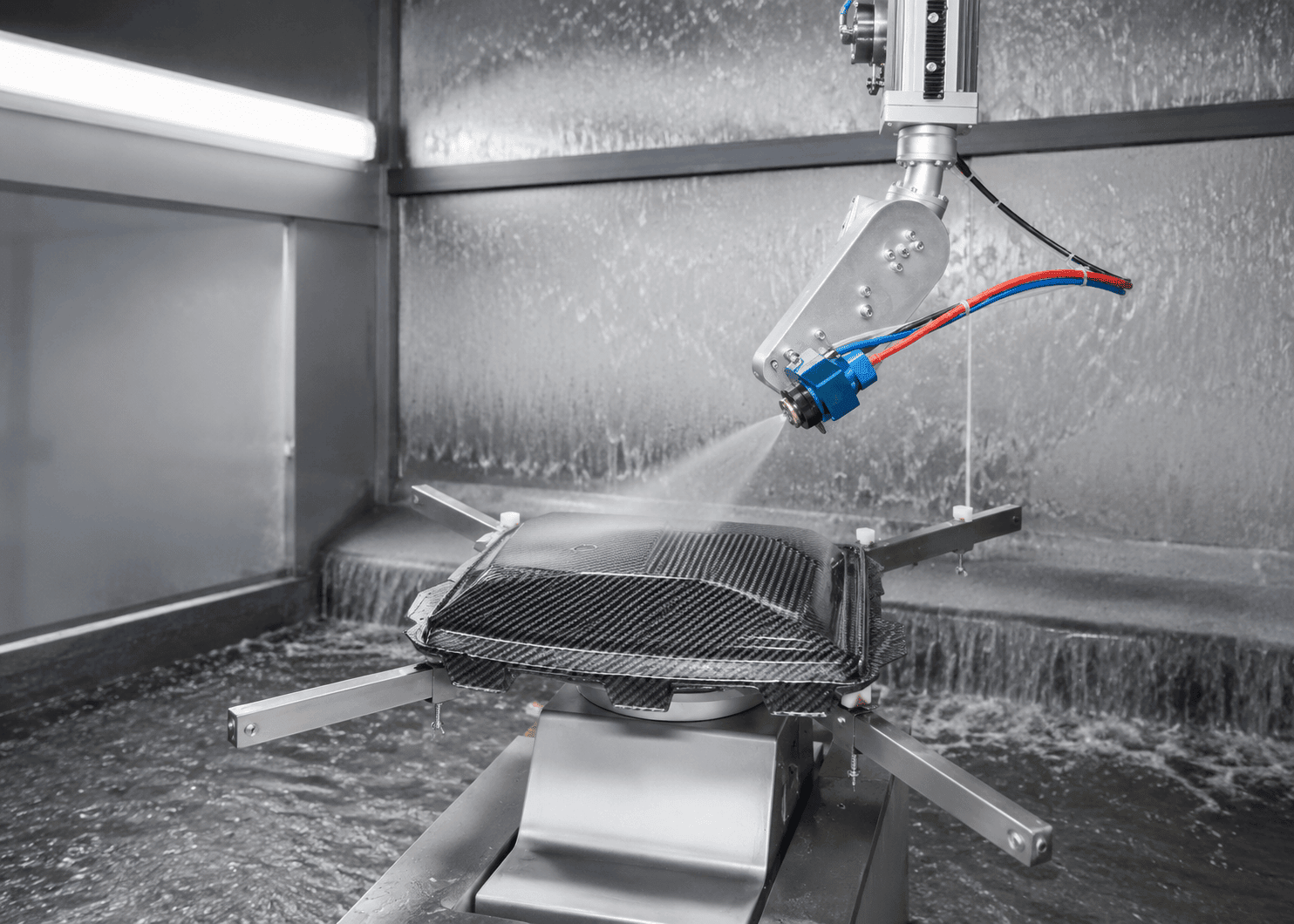
Another common risk is receiving an excellent sample followed by lower-quality production parts. A reliable supplier should control material, layup, molding, trimming, coating, polishing, and final inspection throughout mass production.
Unstable Lead Times and Stock-Outs
A distributor may build sales around a popular product only to discover that the supplier cannot replenish it quickly. Stock-outs can reduce marketplace rankings, interrupt advertising campaigns, cause lost orders, and disappoint repeat customers.
Lead time should be confirmed before promising delivery to end customers. Distributors should also distinguish between products held in inventory and products made to order.
Listing and Content Workload
Creating a professional product listing requires more than uploading one image. Sellers need titles, descriptions, model applications, product dimensions, material information, installation notes, package data, and high-resolution images.
A supplier that provides organized product content can reduce the distributor’s workload and speed up product launches.
Useful supplier materials include:
- Product names and specifications
- Vehicle application data
- Fitment information
- Product and installation images
- Surface finish options
- Package dimensions and weight
- Marketing descriptions
- Installation references
- Product videos or renders
The lowest purchase price does not always create the lowest operating cost. Poor fitment, returns, stock-outs, weak packaging, and incomplete product information can cost more than the original price difference.
Case: From Zero-Inventory Selling to a Stable Regional Partnership
A Japanese automotive parts distributor provides a practical example of how a business can enter the carbon fiber market gradually.
The customer mainly sold aftermarket vehicle parts through e-commerce platforms. At the beginning of the cooperation, the company had limited inventory capacity, relatively low sales volume, and a cautious approach to financial risk.
Purchasing a large volume of carbon fiber auto parts would have created unnecessary pressure. The distributor first needed to test market demand, build a local reputation, and understand which products customers wanted.
Market-Testing Stage
JC SPORTLINE selectively supported a dropshipping and low-inventory cooperation model. The distributor could list suitable standard products and test demand without immediately purchasing a large quantity.
Product information and images helped reduce the time required to create listings.
Growth Stage
As sales increased, the cooperation moved toward more stable supply and competitive batch pricing. The distributor began purchasing products according to actual order volume and confirmed local demand.
Inventory and delivery planning became more structured, reducing dependence on individual transactions.
Partnership Stage
After the business demonstrated stable demand, regional cooperation and market support were discussed. This helped the distributor strengthen its local competitiveness and improve supply predictability.
Customization Stage
The partnership later expanded into OEM/ODM support. The distributor gained the ability to accept custom projects from local brands and customers instead of relying only on standard product resale.
The customer developed from a zero-inventory e-commerce seller into a more stable custom-project partner and regional collaborator. These were project-specific results, not outcomes that can be guaranteed for every distributor. Market conditions, sales execution, local demand, product selection, and cooperation quality all affect the final result.
How to Start with Low-Risk SKU Selection
New distributors should begin with a focused selection of proven carbon fiber parts rather than adding hundreds of products at once.
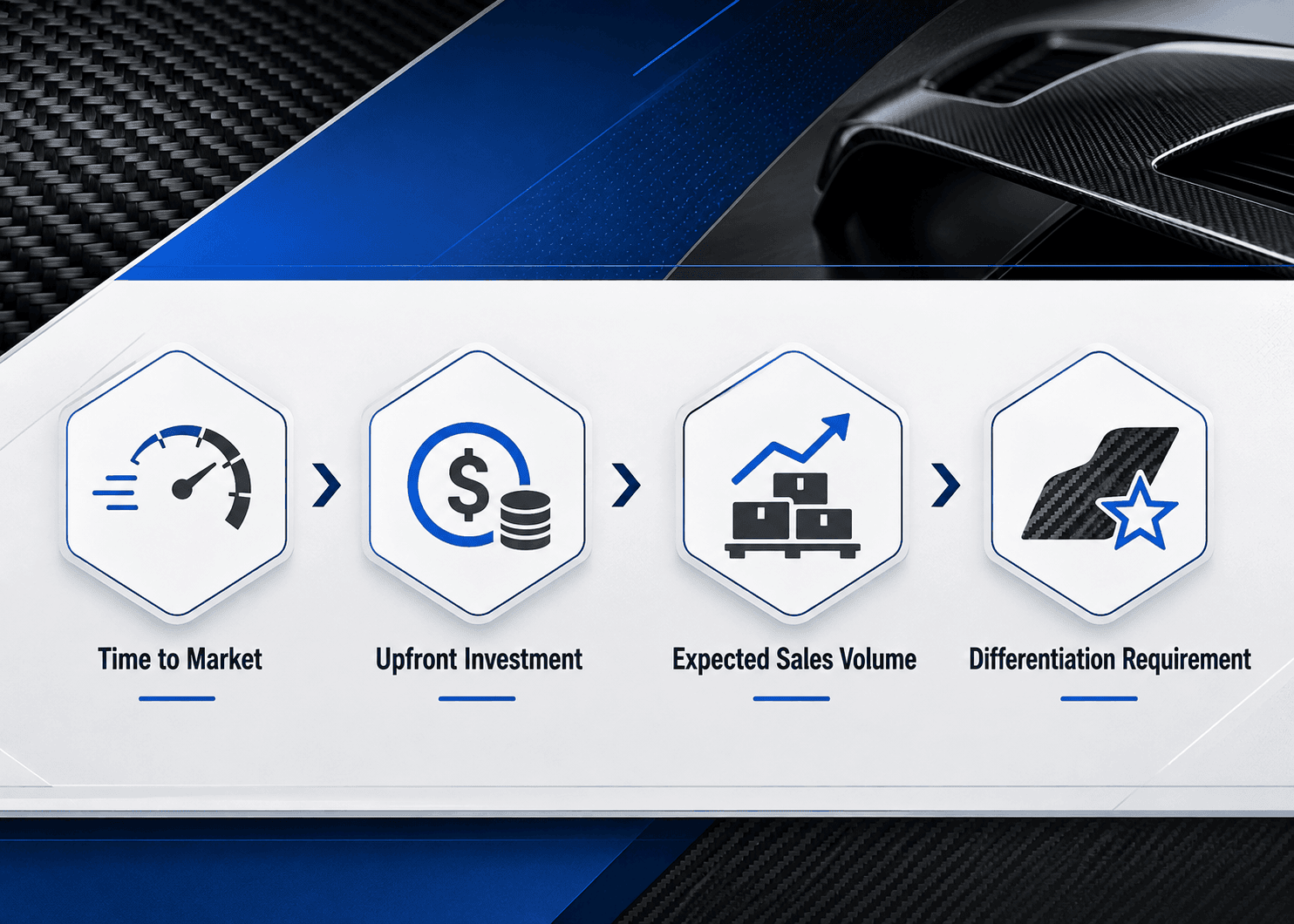
The first product group should be selected using practical commercial criteria.
Local Vehicle Popularity
Start with vehicle models that are common in the target market and have an active tuning community. Model popularity should be assessed using local vehicle registrations, marketplace searches, customer inquiries, club activity, and competitor listings.
Product Fitment Maturity
Choose products that have already been manufactured and validated. Established products generally carry less tooling, fitment, and development risk than newly designed components.
Installation Difficulty
Parts with simple installation requirements are usually easier for new sellers. Complicated products may require professional installers, additional hardware, or detailed fitment support.
Shipping Size and Damage Risk
Small parts are usually easier and less expensive to package and deliver. Large parts such as hoods, complete body kits, and racing wings require stronger packaging and carry higher freight and damage risks.
Price and Inventory Investment
Lower-cost products allow sellers to test more vehicle applications with less capital. High-value products may offer larger margins, but they also require greater inventory investment and stronger after-sales support.
Low-Risk SKU Comparison
| Product Type | Initial Investment | Installation Difficulty | Shipping Risk | Inventory Risk | Recommended Stage |
| Mirror covers | Low | Low | Low | Low | Initial testing |
| Interior trim parts | Low | Low to medium | Low | Low | Initial testing |
| Small spoilers | Low to medium | Low to medium | Low to medium | Low | Initial testing |
| Established front lips | Medium | Medium | Medium | Medium | Early growth |
| Rear diffusers | Medium | Medium | Medium | Medium | Early growth |
| Large rear wings | High | Medium to high | High | High | Stable sales stage |
| Carbon fiber hoods | High | High | High | High | Established distribution |
| Complete body kits | Very high | High | Very high | Very high | OEM/ODM or mature market |
Vehicle-specific mirror covers, interior trims, spoilers, established front lips, and popular-model diffusers can be practical starting products when fitment and inventory are confirmed.
Larger carbon fiber auto body parts should usually be introduced after the distributor has stronger sales data, installer support, and logistics capability.
Dropshipping, Overseas Warehouses and Inventory Planning
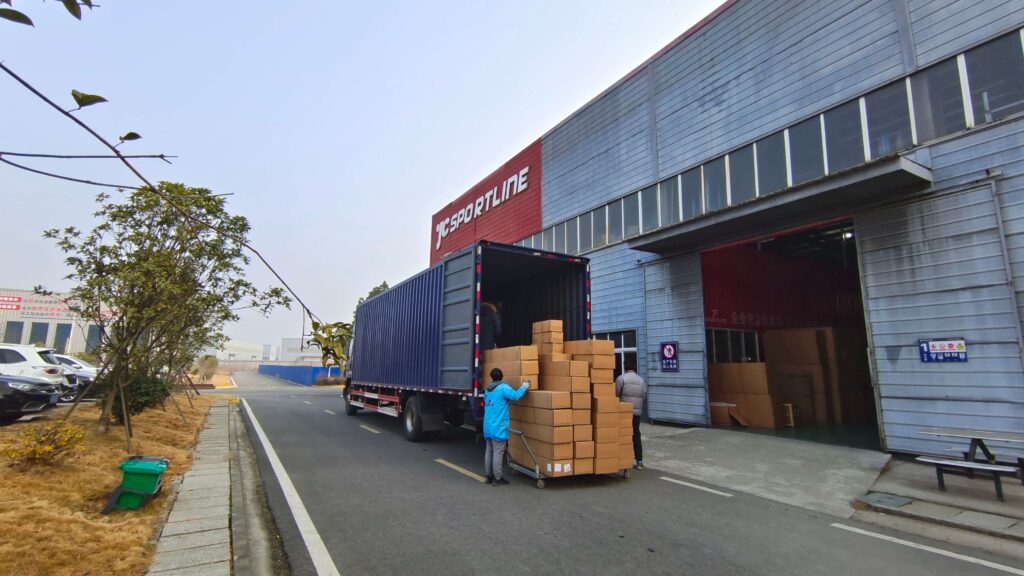
Dropshipping can help distributors test products with lower inventory pressure, but it should be treated as one tool within a broader supply strategy.
Not every product is suitable for dropshipping. Support depends on inventory availability, warehouse location, product size, packaging requirements, and the cooperation model.
Selected Dropshipping
When suitable products are held in an overseas or China warehouse, the supplier may be able to ship directly to the distributor’s customer. This reduces initial inventory investment and allows the seller to test demand.
Before using this model, distributors should confirm:
- Shipping origin
- Delivery time
- Packaging method
- Tracking availability
- Return procedure
- Branding restrictions
- Product inspection responsibility
- Available inventory
Overseas Warehouse Fulfillment
Products stored in North America or Europe may offer shorter regional delivery times than factory shipments from China. However, overseas availability varies by product and should always be confirmed before listing a guaranteed delivery time.
Factory Shipment from China
When overseas stock is unavailable, products may be manufactured or shipped from the China factory. This model offers access to a broader catalog but usually requires longer lead times and international freight planning.
Semi-Finished Inventory and Staged Delivery
For long-term B2B partners, manufacturers may discuss semi-finished inventory, staged delivery, or priority scheduling for fast-selling products.
Semi-finished stock can shorten production time while avoiding the cost of holding a large volume of completed products. Staged delivery helps distributors spread cash flow and warehouse requirements across multiple shipments.
Sales Forecasting
A distributor should regularly share sales forecasts for key products. Even an approximate forecast helps the supplier plan materials, production capacity, and warehouse stock.
Stock-outs can affect:
- Marketplace search ranking
- Advertising performance
- Order conversion
- Customer satisfaction
- Repeat purchases
- Store reputation
A capable supplier should participate in supply planning rather than only reacting after stock runs out.
MOQ and Low-Volume Development Options
MOQ for carbon fiber auto parts depends on the product, process, tooling, customization requirements, and order structure.
For many custom projects, a standard MOQ may begin around 20–30 pieces. However, this is only a reference. Existing products, new tooling projects, dry carbon components, forged carbon parts, and large body panels may each have different requirements.
Very small orders can sometimes be reviewed separately.
Projects involving 1–5 pieces may be considered for:
- Prototypes
- Fitment validation
- Show cars
- Engineering testing
- Early market testing
- Premium custom vehicles
- Photography or exhibition samples
Low-volume production usually has a higher unit cost because engineering, setup, mold preparation, material handling, and quality inspection are still required.
Distributors should not assume that every website product is available as a single unit or through dropshipping. Availability must be confirmed product by product.
When to Move from Standard Parts to Custom Projects
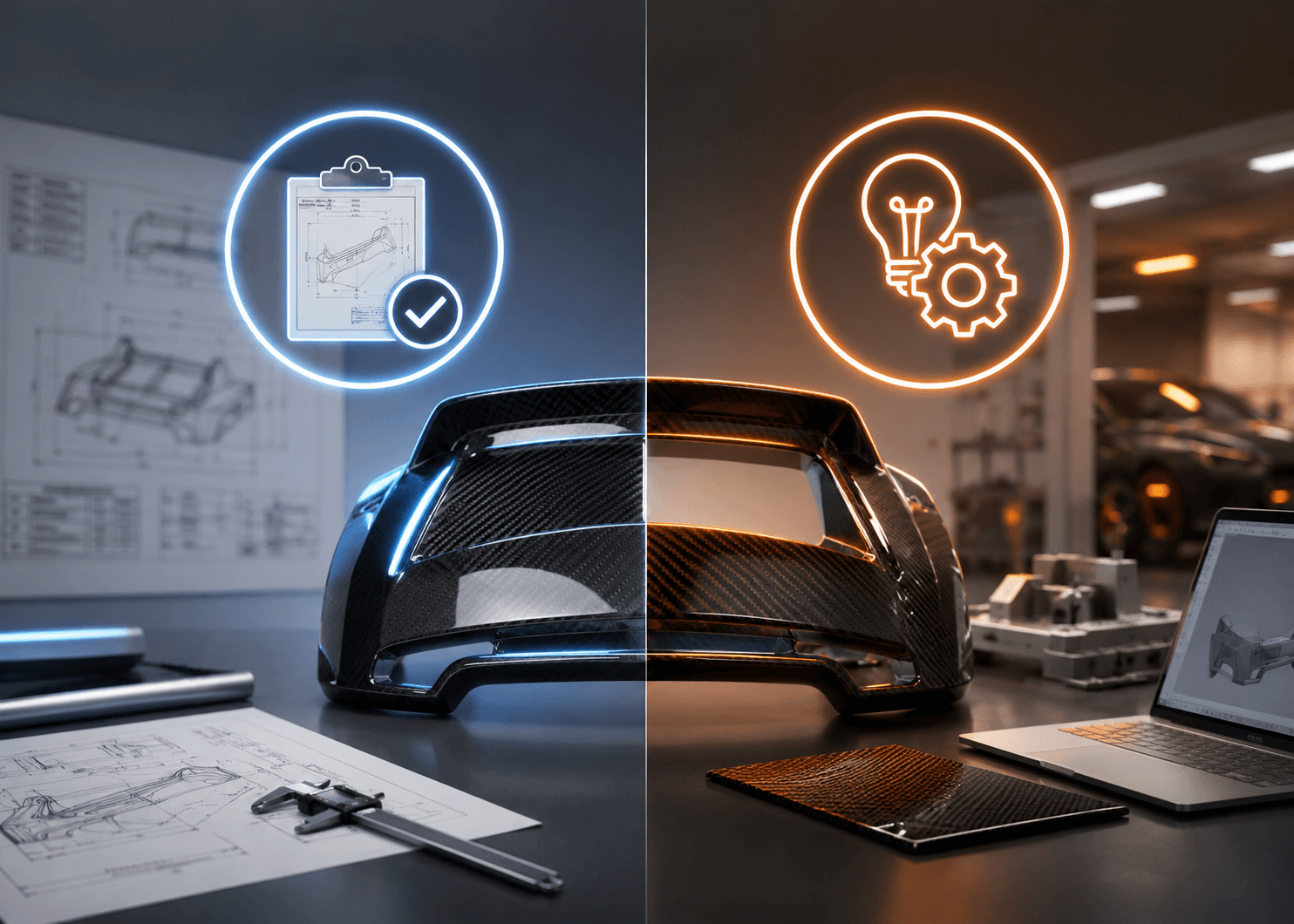
Standard products are usually the most practical starting point. OEM/ODM development becomes more appropriate after the distributor has validated demand and understands the local market.
A distributor may be ready for custom development when:
- Sales for a specific model are stable
- Customers request unique designs
- Existing products no longer provide enough differentiation
- The business has repeat buyers
- Local brands request custom products
- The distributor wants a private-label series
- The company can invest in tooling and packaging
- Forecast order volume supports development costs
Recommended Development Path
Stage 1: Standard product market testing
List a limited number of proven carbon fiber car parts and collect demand data.
Stage 2: Small-batch purchasing and stable supply
Purchase fast-moving products in controlled quantities and improve inventory planning.
Stage 3: Custom packaging and private labeling
Add branded boxes, labels, instructions, and product identification.
Stage 4: Regional agency or exclusive cooperation
Discuss regional sales support, exclusive products, or stronger supply planning.
Stage 5: OEM/ODM product development
Invest in exclusive designs, molds, prototypes, and mass production after demand has been validated.
Entering custom development too early can create tooling costs, uncertain vehicle coverage, repeated design changes, excessive inventory, and slow return on investment.
OEM/ODM Carbon Fiber Auto Parts Manufacturing
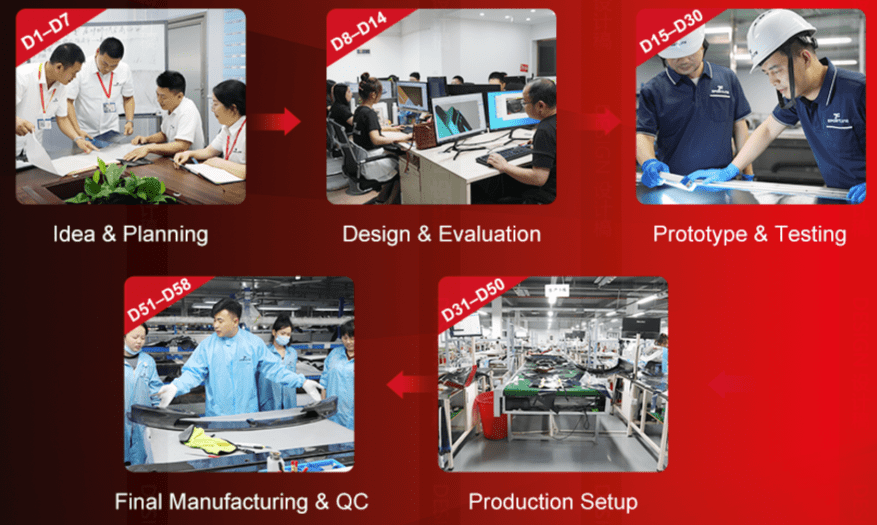
When a distributor is ready to develop its own products, an experienced manufacturer can support the full development process.
Typical services include:
- Product selection consulting
- Concept and market review
- 3D scanning
- Reverse engineering
- CAD development
- DFM review
- Mold development
- Prototype validation
- Prepreg and autoclave production
- Fitment control
- Gloss and matte finishing
- Logo customization
- Private-label packaging
- Small-batch trial production
- Mass production
- Long-term supply planning
Distributors can explore JC SPORTLINE’s automotive carbon fiber capabilities and carbon fiber mass production capability when evaluating development and supply options.
How JCSPORTLINE Supports Distributor Growth
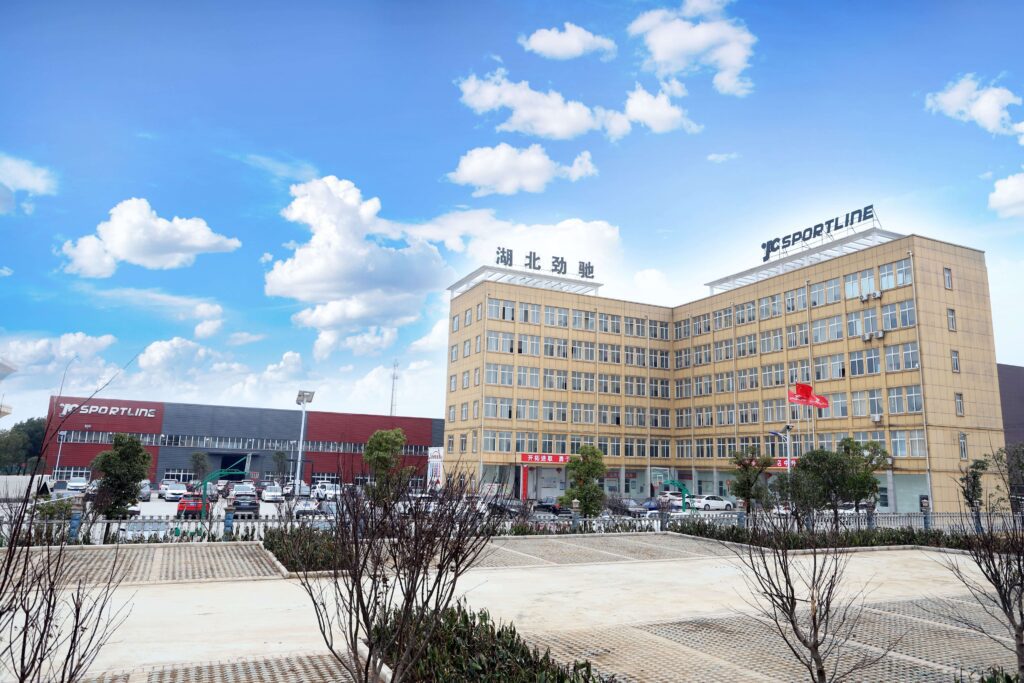
JCSPORTLINE supports distributors through a phased cooperation model rather than requiring every customer to begin with a large custom order.
Depending on the product and cooperation conditions, support may include:
- Selected dropshipping
- Low-inventory market testing
- Standard carbon fiber auto parts
- Prototype and low-volume project evaluation
- Stable batch production
- Product data and high-resolution images
- Inventory coordination
- China factory and overseas warehouse shipping
- Product selection advice
- Competitive batch pricing
- Regional cooperation
- Custom packaging and branding
- OEM/ODM development
- Fitment and surface-quality control
- Long-term B2B supply planning
The goal is to help distributors move gradually from product testing to stable sales, wholesale purchasing, private labeling, regional cooperation, and custom product development.
Businesses that need help evaluating products and market-entry options can review carbon fiber consulting services. Distributors interested in deeper cooperation can also visit the become a partner page.
Conclusion: Build the Category in Stages
Distributors can sell carbon fiber auto parts successfully without building a factory. The safest approach is to begin with proven, low-risk products, validate demand, and expand the business in stages.
A strong supply partner should provide more than products. It should help with fitment information, listing content, inventory planning, warehouse coordination, quality consistency, packaging, logistics, and custom development.
Start with standard parts. Use dropshipping or limited inventory when practical. Build sales data. Improve supply planning. Then move into private labeling, regional partnerships, and OEM/ODM projects when the market is ready.
If your company plans to add carbon fiber car parts, expand a wholesale catalog, test selected products through dropshipping, or develop an exclusive automotive product line, contact a professional carbon fiber auto parts manufacturer to discuss product selection, inventory strategy, wholesale pricing, and long-term cooperation.
FAQ
Can distributors sell carbon fiber auto parts without owning a factory?
Yes. Distributors can work with a professional manufacturer for standard products, product content, inventory, dropshipping, wholesale supply, packaging, and OEM/ODM development without investing in their own manufacturing facility.
What is the MOQ for carbon fiber auto parts?
MOQ depends on the product, manufacturing process, tooling, and customization scope. For many custom projects, a standard MOQ may begin around 20–30 pieces, while existing products or special low-volume projects may be evaluated separately.
Can you support 1–5 pieces or low-volume projects?
Some low-volume projects can be reviewed case by case, especially prototypes, show cars, validation builds, and early-stage market tests. Unit costs are generally higher than mass production because setup and engineering resources are still required.
Are all carbon fiber products on the website in stock?
No. Some popular products may be stored in China or overseas warehouses, while others are produced to order. Inventory and production time should be confirmed before placing an order or promising delivery to customers.
How can distributors reduce stock-out and inventory risk?
Distributors can use selected dropshipping, sales forecasting, small initial purchases, staged delivery, overseas inventory, semi-finished stock, and priority production plans for fast-moving products.
Can JC SPORTLINE provide dropshipping and OEM/ODM support?
Selected products may qualify for dropshipping depending on inventory and warehouse availability. JC SPORTLINE also supports OEM/ODM development, including design review, tooling, prototypes, fitment control, branding, packaging, and mass production.