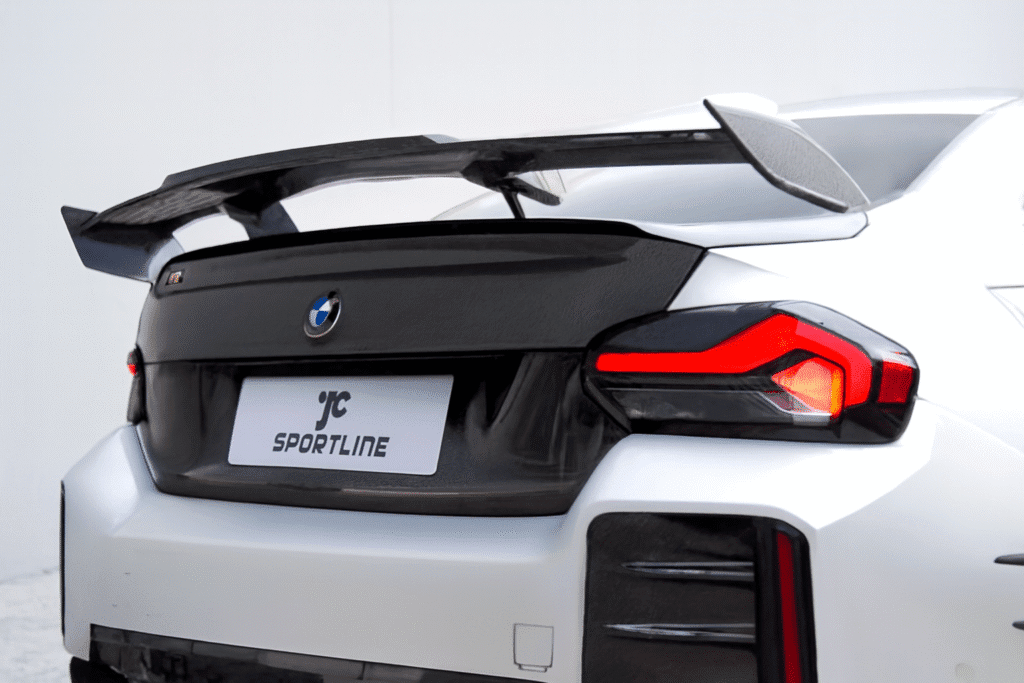
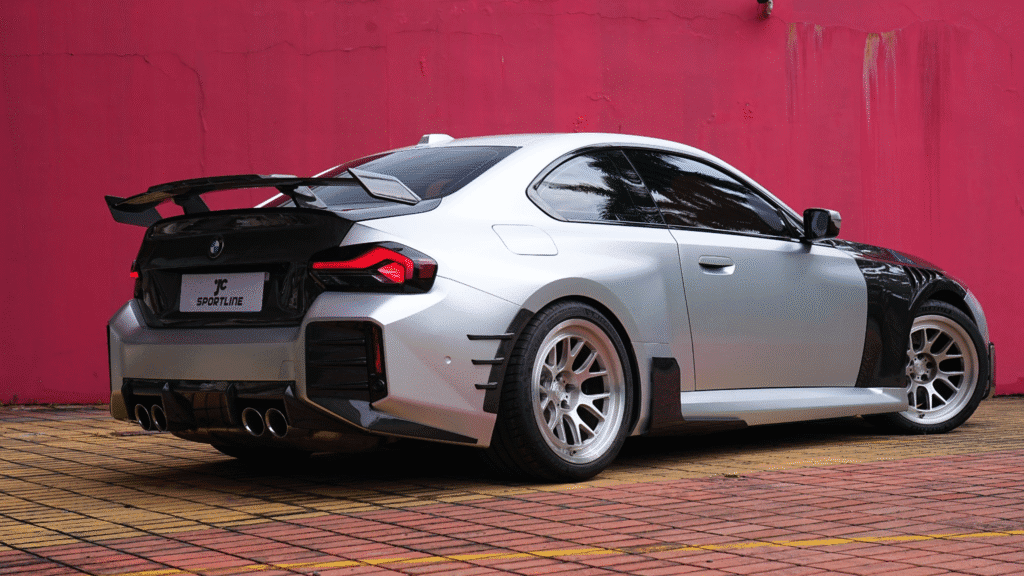
A carbon fiber spoiler is often selected for two reasons: it improves the visual identity of a vehicle and, when properly designed, can support aerodynamic performance goals. For B2B buyers, however, the decision is more complex than choosing a glossy weave or a popular style. Procurement managers, product managers, and R&D engineers need a spoiler that matches the target vehicle, fits the brand position, can be produced consistently, and is supported by a supplier that understands tooling, material behavior, surface finishing, and export requirements.
JCSPORTLINE works with tuning brands, wholesalers, performance parts distributors, modification shops, and OEM/ODM customers that need custom carbon fiber spoiler solutions for commercial programs. A successful spoiler project is not only about making a part look premium. It also involves vehicle data, mounting design, layup planning, mold stability, coating quality, packaging protection, and repeatable inspection before shipment.
Why Carbon Fiber Spoilers Need More Than Good Styling
Rear spoilers and wings are highly visible parts. A small defect in the weave, coating, edge line, mounting angle, or panel gap can affect the perceived value of the entire vehicle build. For brands selling into competitive aftermarket channels, that visual impression matters. Customers expect a carbon part to look sharp from multiple viewing angles, not only in product photos.
At the same time, a spoiler is also a mounted exterior component exposed to vibration, airflow, sunlight, heat, washing, and handling during installation. Depending on the design, it may be fixed to a trunk lid, hatch, roof area, tailgate, or bracket system. Each installation position creates different structural and fitment requirements. A part that is acceptable for display use may not be appropriate for a performance-focused application or a repeatable wholesale program.
That is why B2B buyers should treat a carbon fiber spoiler as an engineered composite product rather than a simple accessory. The material, process, and design intent must match the customer segment.
Custom Options for Brand and Market Positioning
Different sales channels require different product strategies. A high-end tuning brand may need dry carbon, tight visual control, and a refined matte finish. A distributor may need stable fitment and competitive batch pricing. An OEM-style customer may prioritize repeatability, documentation, tooling control, and long-term supply planning.
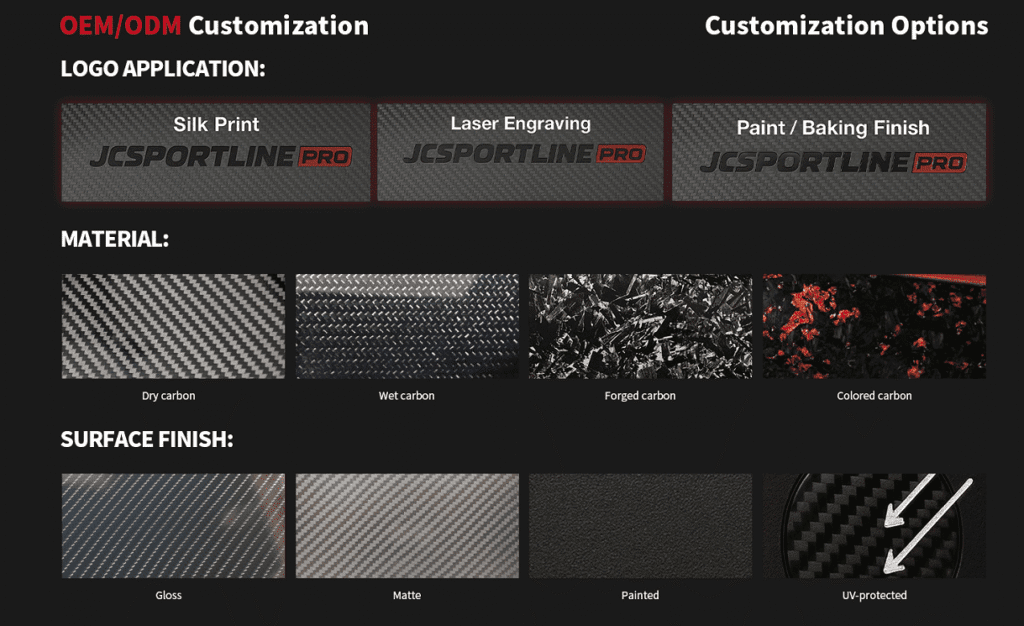
JCSPORTLINE supports customization across several practical areas. Logo application can be discussed according to brand requirements, including paint-based branding, laser marking, or other suitable methods depending on the part surface and final finish. Material options may include dry carbon, wet carbon, forged carbon-style appearance, or colored carbon fiber effects when the design and process allow. Surface finishes can be developed in gloss, matte, painted, or UV-protective coating systems based on the target market and expected use environment.
These options are not just cosmetic. They influence cost, production flow, defect risk, inspection standards, and how the finished part will be positioned in the market. For example, a visible weave product requires more careful appearance control than a fully painted spoiler. A matte finish may need different coating management than a gloss finish. A colored carbon effect may create additional requirements for batch consistency.
Spoiler Styles for Different Vehicle Programs
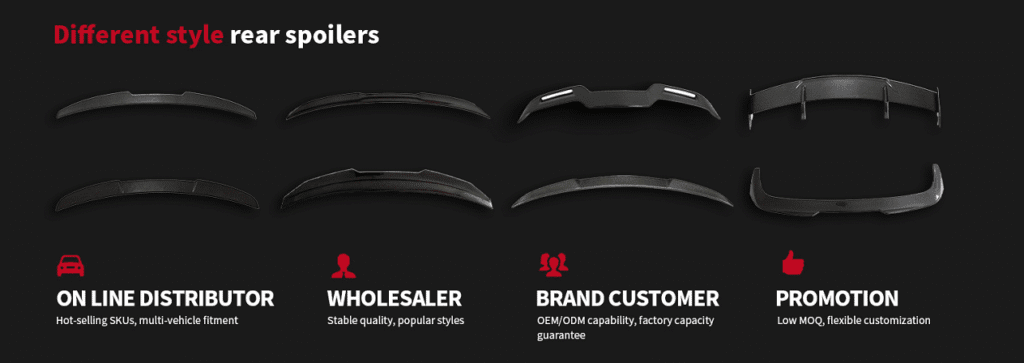
Not every spoiler design serves the same customer. A ducktail spoiler is often chosen for a clean, integrated appearance and a sportier rear profile. It is common in street performance and premium styling programs where the goal is to enhance the vehicle line without creating an aggressive racing look.
A high mount spoiler can create a more noticeable performance image and may be specified for hatchbacks, SUVs, or sport-oriented models depending on the vehicle layout. Its final effect depends on vehicle shape, mounting position, part geometry, and installation quality.
A GT wing spoiler is typically used when the customer wants a more motorsport-inspired appearance and a stronger rear visual statement. In performance programs, aerodynamic influence depends on wing profile, angle, endplate design, bracket stiffness, installation position, and the vehicle’s actual operating conditions. Because of these variables, responsible suppliers avoid universal claims and focus on design intent, fitment support, and project-specific validation.
For buyers developing a full exterior package rather than a single rear part, it is useful to align the spoiler with the hood, front lip, side skirts, diffuser, and other carbon fiber components. JCSPORTLINE’s carbon fiber products and industry solutions page provides a broader view of how carbon programs can be planned across multiple vehicle parts.
Choosing the Right Manufacturing Process
The best production method depends on the target price level, order quantity, vehicle category, finish requirement, and structural expectations. A supplier should not push one process as the universal answer for every market. Instead, the process should match the buyer’s product strategy.
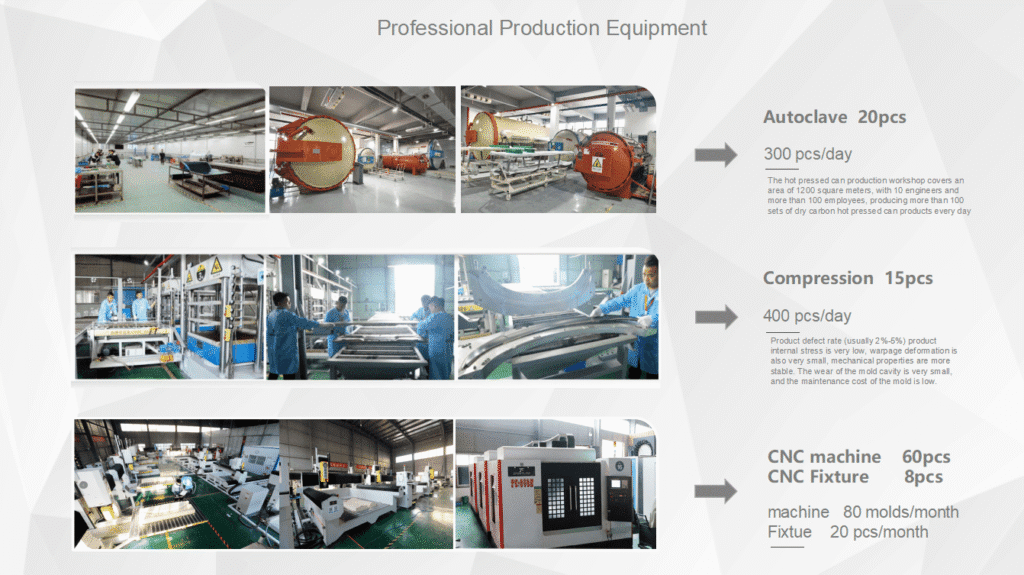
Dry prepreg autoclave production is often selected for premium projects where weight control, fiber-resin consistency, surface quality, and high-end positioning are important. It is commonly associated with performance vehicles and customized programs that require tighter control over material behavior. This process may involve higher tooling and production costs, but it can support premium product positioning when the market demands it.
Compression molded dry carbon can be suitable for repeatable products that require stable quality and controlled production efficiency. For popular vehicle platforms, this approach may support stronger batch consistency and a more scalable supply model, depending on mold design and production planning.
Vacuum-processed wet carbon can be considered for cost-sensitive programs, promotional product lines, or styling-focused applications. It may offer a more accessible price point while still delivering a carbon appearance, but expectations should be aligned with the process. Buyers should confirm finish quality, weight target, fitment tolerance, and durability requirements before selecting this route for a commercial product line.
Material and Coating Decisions Affect Long-Term Value
Carbon fiber spoilers are exposed to outdoor conditions, especially sunlight, heat, rain, cleaning chemicals, and temperature changes. Surface yellowing, gloss reduction, coating haze, bubbles, pinholes, or weave distortion can weaken the customer’s impression of quality. These issues may not appear during factory inspection if the coating system and process control are not properly managed.
JCSPORTLINE can discuss UV-protective coating systems and weathering test requirements according to the customer’s target region and product positioning. Because accelerated UV test results depend on the exact test method, equipment settings, specimen preparation, coating system, and acceptance criteria, responsible project documentation should avoid unsupported service-life promises. For professional B2B purchasing, it is better to define the required test plan and appearance standard before production rather than rely on a general claim.
Material batch control is also important. Even when the same carbon style is specified, differences in fabric batch, resin behavior, coating thickness, curing process, and spray environment can affect appearance. For brands selling multiple units under the same SKU, consistent visual quality is part of the product value.
Fitment Is a Commercial Risk, Not a Small Detail
For a retail customer, poor fitment is frustrating. For a B2B buyer, poor fitment is costly. It can create returns, delayed installations, additional technician labor, negative reviews, and pressure on sales teams. A spoiler must be developed for the correct vehicle model, trim, year range, regional version, and mounting condition. Small differences between markets or model updates can affect installation.
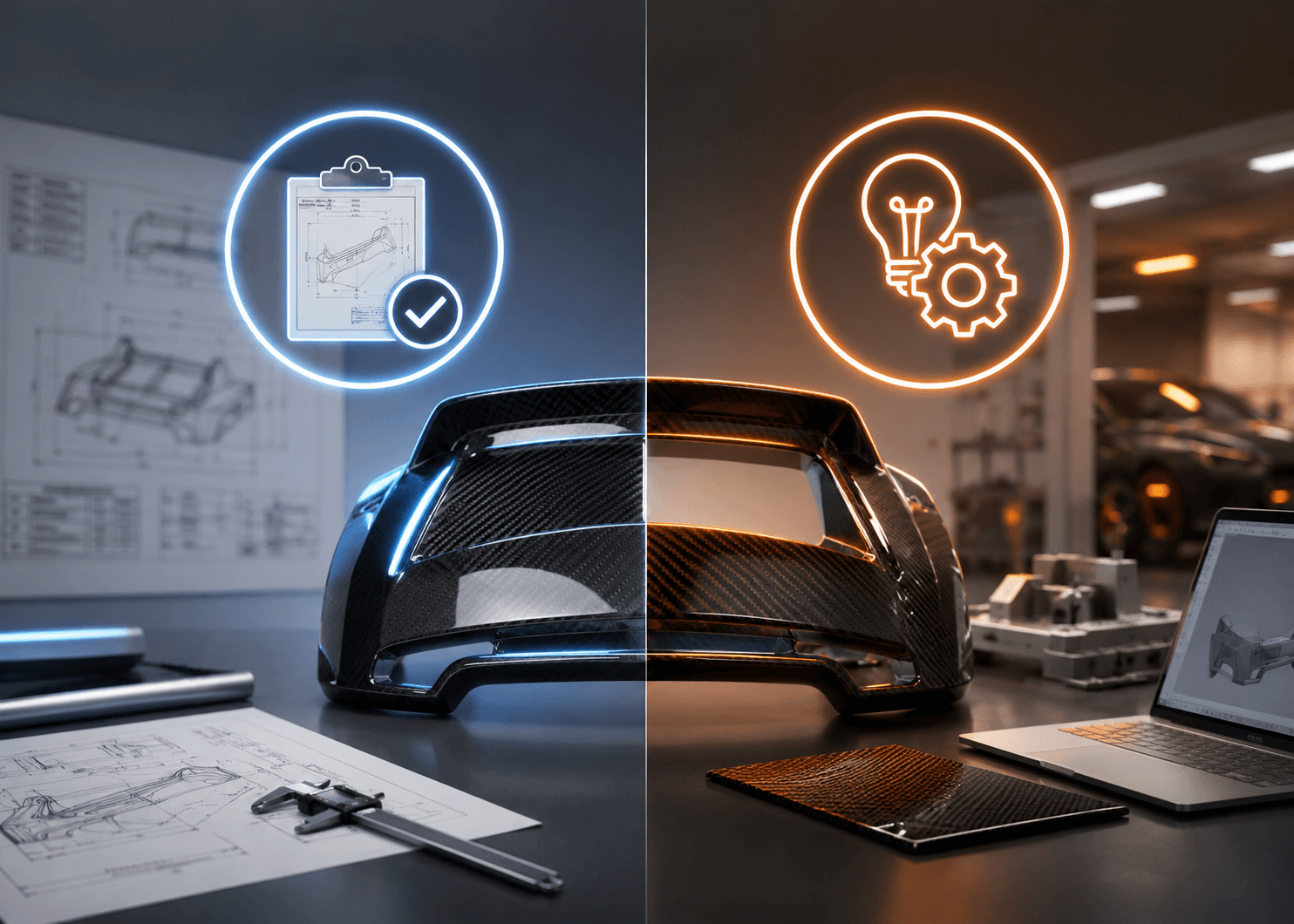
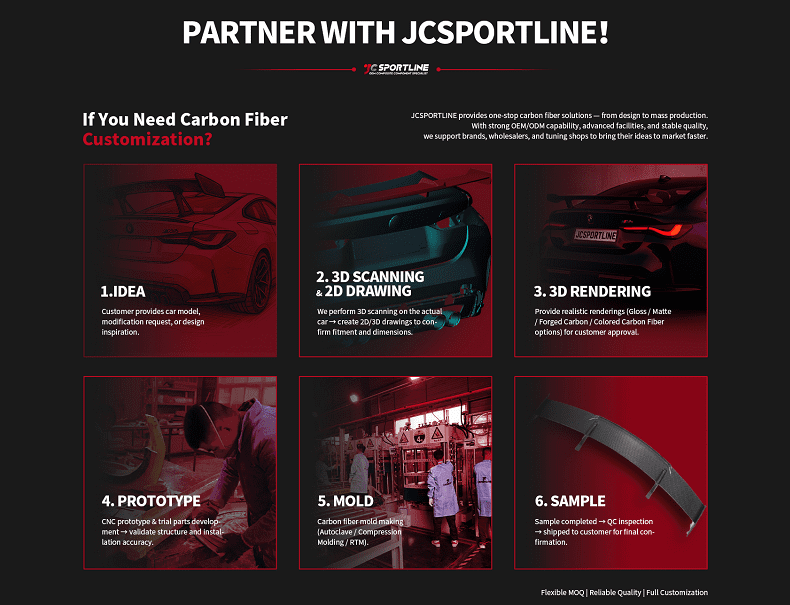
JCSPORTLINE approaches fitment as part of product development rather than a final adjustment. Vehicle data, sample review, mold accuracy, mounting point design, and trial fitting all help reduce avoidable problems. In some programs, buyers may provide drawings, 3D data, an original part, or a vehicle sample to support development. The more accurate the input, the easier it is to control risk before mass production.
For engineering teams, the key question is not only whether the first sample fits. It is whether the design can be repeated across production batches with acceptable variation. This is where mold stability, inspection fixtures, trained operators, and documented quality checks become important.
Quality Control Across the Production Flow
A professional carbon fiber spoiler program requires inspection at multiple stages. Raw material should be checked for fabric condition, resin suitability, and visual consistency. Mold surfaces should be maintained to reduce print-through, distortion, and edge defects. During layup, operators must follow the agreed structure, orientation, reinforcement plan, and process conditions. After curing or forming, the part should be reviewed for shape stability, mounting accuracy, surface defects, and edge quality.
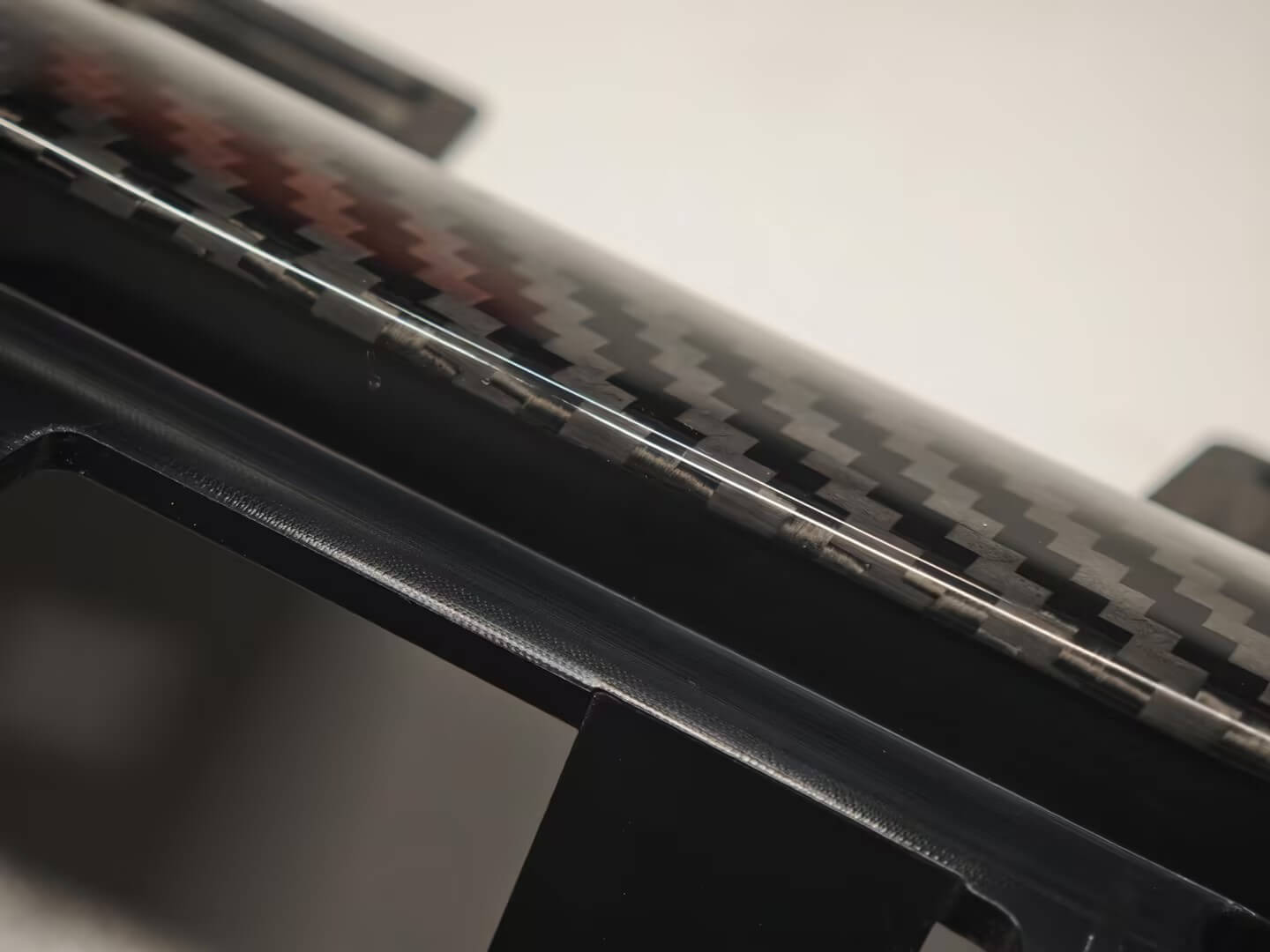
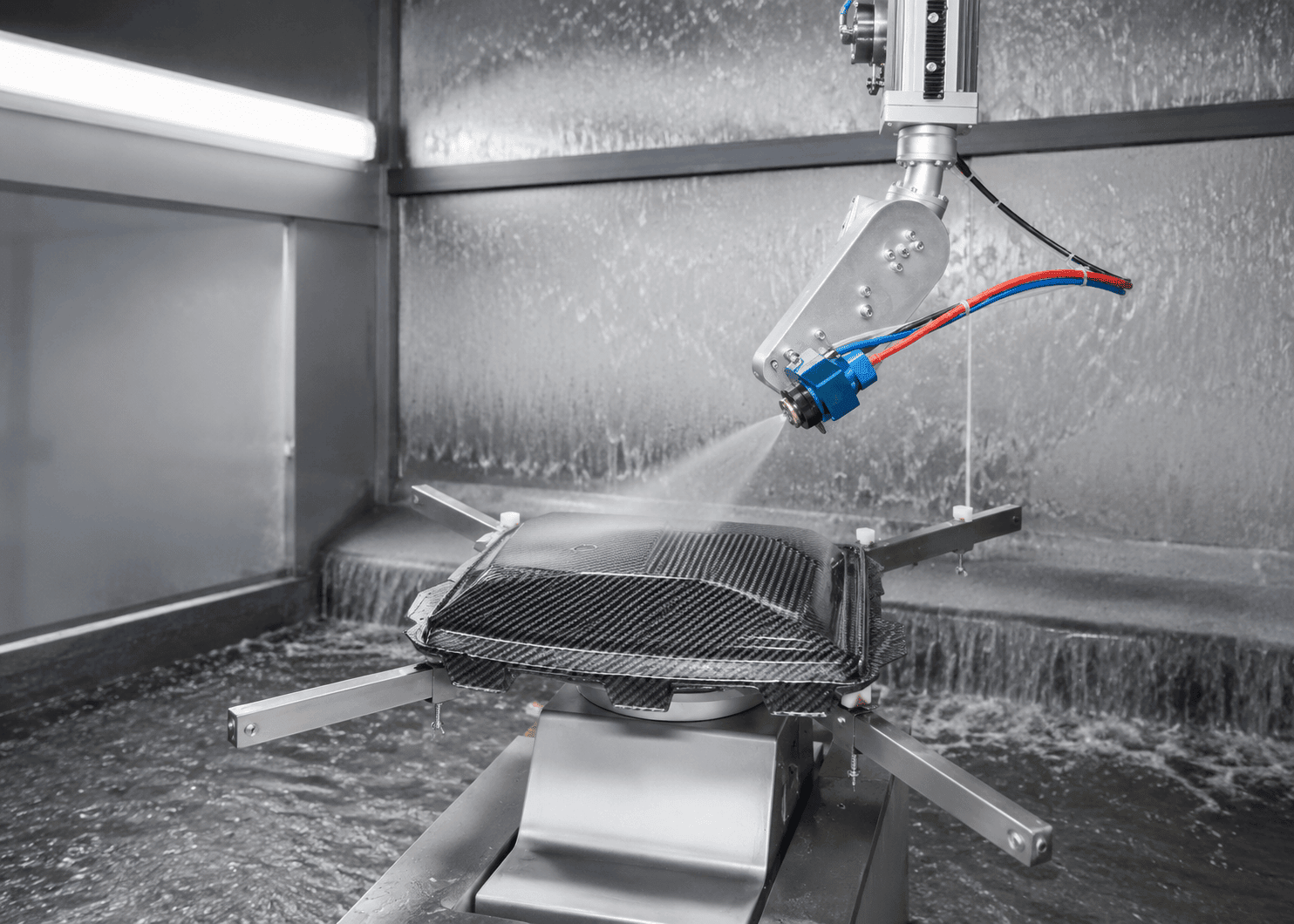
Coating and finishing require a separate level of control. Dust, uneven spray, trapped air, poor surface preparation, and inconsistent polishing can create defects that are difficult to correct at scale. For matte finishes, gloss level consistency is especially important because small variations can be visible when multiple parts are compared. For gloss finishes, orange peel, wave, pinhole, and clarity issues need careful inspection.
Before shipment, packaging should be treated as part of quality control. Spoilers often have long edges, thin sections, raised mounting areas, or delicate corners. A part that leaves the factory in good condition can still arrive damaged if packaging is not designed for international handling. For export programs, reinforced packaging, edge protection, and clear handling instructions can reduce after-sales disputes.
Common Production Challenges and How Serious Suppliers Reduce Them
Carbon fiber parts are sensitive to process discipline. Material batch variation can affect coating adhesion, color tone, weave appearance, or surface smoothness. Spray coating variation can create bubbles, streaks, uneven gloss, or white spots. Inconsistent sanding or polishing can change edge quality and visual depth. Improper fixture support can lead to shape variation during production or curing.
These are not unusual challenges in composite manufacturing. The difference is whether the supplier has a system to control them. JCSPORTLINE focuses on material selection, process refinement, coating management, inspection routines, and feedback from sample development to improve consistency. For B2B customers, this reduces the risk of receiving one good sample followed by unstable batch quality.
When a buyer requests a custom spoiler, the most useful early discussion is not only about price. It should cover vehicle data, application, target users, material preference, finish, branding, mounting method, packaging requirement, order plan, and any market-specific compliance considerations. This helps the engineering and production teams identify risks before tooling and sampling begin.
Why Premium Carbon Fiber Spoilers Cost More
Premium carbon fiber spoilers cost more because they include more than carbon fabric. The buyer is paying for project review, design feasibility, tooling accuracy, process control, surface finishing, inspection time, packaging, and supplier accountability. A low-cost part may reduce cost by simplifying one or more of these areas, but the buyer may later pay through rework, warranty handling, lost sales, or brand damage.
For product managers, the right comparison is not only unit price. A stronger comparison includes installed quality, batch consistency, defect handling, customer complaints, shipping damage rate, and the ability to support repeat orders. A spoiler that is slightly cheaper at purchase but creates repeated after-sales work may have a higher real cost over the full sales cycle.
R&D engineers may also consider how design choices influence manufacturability. A sharp edge, complex curve, deep recess, large wing surface, or difficult mounting structure can increase production difficulty. Early supplier feedback can help refine the design before costs and risks become locked into the mold.
Sample Orders and Development Timelines
Sample orders are valuable for B2B buyers because they allow teams to evaluate fitment, appearance, mounting logic, packaging, and communication before moving into larger production. The development timeline depends on vehicle data availability, design complexity, tooling requirement, material choice, surface finish, sample approval process, and logistics. A fixed delivery time should not be promised without reviewing the actual project scope.
For standard-style products or existing platforms, timelines may be shorter. For fully custom spoilers, especially those requiring new tooling, branding, special finish, or multiple sample rounds, the schedule should be agreed during project planning. A reliable supplier should explain what affects timing rather than offer an unrealistic date that creates pressure later.
Supporting Export Brands, Wholesalers, and OEM/ODM Projects
JCSPORTLINE supports customers that need carbon fiber spoiler programs for different markets and sales models. For wholesalers, the priority may be stable supply and fewer fitment complaints. For tuning brands, the priority may be distinctive design and premium finish. For OEM/ODM customers, the priority may be structured development, documentation, and long-term consistency.
Export buyers should also consider regional expectations. Product claims, installation instructions, road-use requirements, and customer warranty terms can vary by market. A supplier can support product development and manufacturing, but the buyer should confirm local requirements before making legal or road-use claims in a specific country or region.
For buyers reviewing wider exterior carbon programs, the Mustang GT S650 dry carbon body kit example shows how carbon components can be considered as part of a full vehicle styling package rather than isolated accessories.
Build a Spoiler Program Around Fitment, Finish, and Repeatability
A carbon fiber spoiler can strengthen a vehicle’s performance image and create a premium visual upgrade, but only when the design, process, and quality control match the business goal. For professional buyers, the best supplier is not simply the one with the lowest quote. It is the one that understands how to turn a design concept into a repeatable commercial product.
JCSPORTLINE provides custom carbon fiber spoiler development for brands, distributors, tuning shops, and OEM/ODM customers that need material options, branding support, finish control, and project-based manufacturing. Whether the program requires a ducktail spoiler, high mount spoiler, GT wing, dry carbon process, wet carbon solution, or customized finish, the project should start with clear technical requirements and realistic quality expectations.
If your team is preparing a new spoiler project, share the vehicle model, target market, design direction, expected order volume, preferred material, and finish requirements. JCSPORTLINE can help evaluate the manufacturing route and identify potential fitment, coating, and structure risks before production begins. To review broader capabilities, visit JCSPORTLINE carbon fiber manufacturing solutions and start the discussion with your project details.
Client Testimonials
“A Game Changer for Our Performance Vehicles!”
JCSPORTLINE’s custom carbon fiber spoilers have drastically improved the look and feel of our racing vehicles. The precision and performance gains are unmatched. — SpeedWorks Performance, USA
“Reliable, On-Time, and Always Impressive”
We’ve partnered with JCSPORTLINE for several custom spoilers, and the quality and fitment have been flawless every time. Great products for performance tuners. — Velocity Tuning Co., UK
“Exceptional Quality, Exceptional Service”
Their team is highly responsive and committed to meeting our needs. The spoilers they’ve produced for us have set a new standard in terms of both style and performance. — MotorStyle, Germany
Frequently Asked Questions
- Can I Customize My Carbon Fiber Spoiler Design?
Yes, you can fully customize your carbon fiber spoilers with unique carbon weave patterns, logo engraving, and custom color options to match your brand. - What Materials Do You Use for Your Carbon Fiber Spoilers?
We use high-strength carbon fiber compositeswith heat-resistantand UV-protected finishes to ensure long-term durability and outstanding performance. - How Long Will It Take to Receive My Custom Spoiler?
Our standard production time is 58 days from concept to delivery. This guarantees that your custom spoilers will be delivered on time without compromising quality. - Do You Offer Sample Orders for Carbon Fiber Spoilers?
Yes, we offer sample orders so that you can evaluate fitment, quality, and design before proceeding with bulk production. - Why Are Your Carbon Fiber Spoilers More Expensive Than Other Brands?
The investment in quality materials, advanced production techniques, and customization options ensures that your carbon fiber spoilers deliver superior performance and long-lasting durability — offering true value for your business and customers. - What Regions Do You Serve?
We primarily serve North America and Europe, with fast, reliable shipping and full logistics support to get your products delivered efficiently, wherever you are.