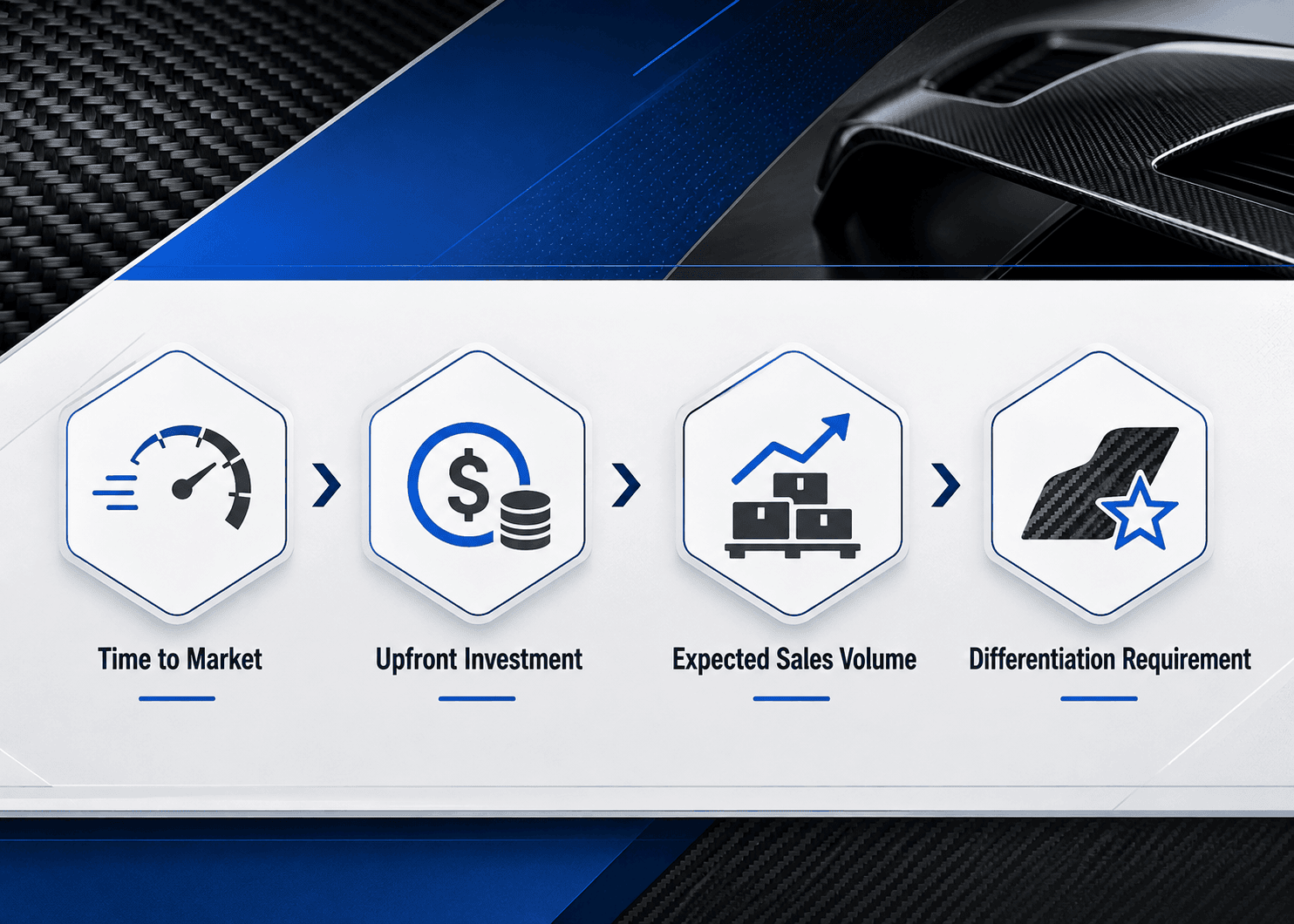
Carbon fiber rapid prototyping helps B2B teams shorten time to market by identifying design, fitment, tooling, appearance, and manufacturing risks before full production begins. However, rapid development is not achieved simply by asking a factory to work faster. It depends on choosing the correct development route, confirming data early, preparing materials in advance, coordinating departments, and making decisions within agreed deadlines.
For procurement managers, product managers, R&D engineers, automotive brands, and motorsport teams, the prototype timeline affects more than sample delivery. It can determine whether a new product reaches the market before competitors, appears at an exhibition on schedule, fulfills a dealer commitment, or captures demand for a newly released vehicle.
A professional rapid-development program should therefore cover the complete route from concept and 3D data to tooling, sample validation, production planning, packaging, and delivery.
Why Time to Market Matters in Custom Carbon Fiber Projects
Custom carbon fiber projects often support products with short commercial windows. Automotive brands may be developing parts for a newly launched vehicle. Tuning companies may need a body kit before competitors release similar products. Motorsport teams may have fixed race dates, while distributors may need samples for exhibitions, dealer meetings, or seasonal sales programs.
A slow development cycle can result in:
- missed product-launch windows;
- missed trade shows or motorsport events;
- delayed dealer commitments;
- lost customer orders;
- competitors reaching the market first;
- reduced market share;
- delayed returns on tooling investment;
- disruption to annual sales plans.
When an existing supplier requires six months or more to complete development, the buyer may lose valuable market opportunities before receiving the first usable sample.
However, speed alone does not define a successful project. A rapidly delivered part still needs accurate fitment, suitable structure, stable materials, controlled surface quality, and a realistic path to production. The goal of carbon fiber prototype development is not merely to produce something quickly. It is to reach a manufacturable, validated product sooner.
What Slows Carbon Fiber Prototype Development?
Project delays rarely come from only one production step. They usually result from several small delays across design, data review, tooling, approval, and communication.
Incomplete Design Information
Some projects begin with only a reference image or general product idea. Dimensions, installation points, performance targets, and surface requirements may not yet be clear.
The engineering team then needs additional time to define the product before tooling can begin. If the buyer changes direction repeatedly, every revision can affect structure, molds, costs, and the delivery schedule.
Repeated 3D Data Revisions
Even when CAD data is available, it may be incomplete or unsuitable for manufacturing. Problems can include inaccurate vehicle surfaces, undefined mounting positions, excessive undercuts, or geometry that cannot be released from a mold.
Delays also occur when several stakeholders provide conflicting feedback. Marketing may request a more aggressive appearance, while engineering may need additional clearance or reinforcement. These requirements must be resolved before the data is approved.
Complex Tooling
Tooling time depends on product size, geometry, surface requirements, mold materials, inserts, and production volume.
Complex curves, difficult split lines, strict visible surfaces, multiple bonding areas, and precise mounting features can extend mold development. Tool changes requested after machining has started may create further delays and additional costs.
Excessive Sample-Validation Rounds
A prototype cannot be approved efficiently when the buyer and supplier have not agreed on what the sample must prove.
One team may review appearance while another focuses on fitment. Some stakeholders may request changes only after the tooling is complete. Without clear approval standards, a project can move through repeated correction cycles.
Limited Vehicle or Physical-Sample Access
Carbon fiber prototyping for automotive parts often requires vehicle data, original samples, installation references, or on-car validation.
If the factory cannot access the vehicle, missing data may need to be obtained through scanning, third-party measurements, or international shipping. Each additional step adds uncertainty and time.
Poor Cross-Department Communication
A traditional project may move slowly from sales to engineering, then to tooling, production, finishing, and delivery. Every transfer creates waiting time.
If the sales team cannot quickly answer technical questions, or engineering feedback must pass through several people, even simple decisions can remain unresolved for days.
Shortening the timeline requires removing these waiting periods—not merely reducing manufacturing time.

When Are 3D Design and 3D Printing Necessary?
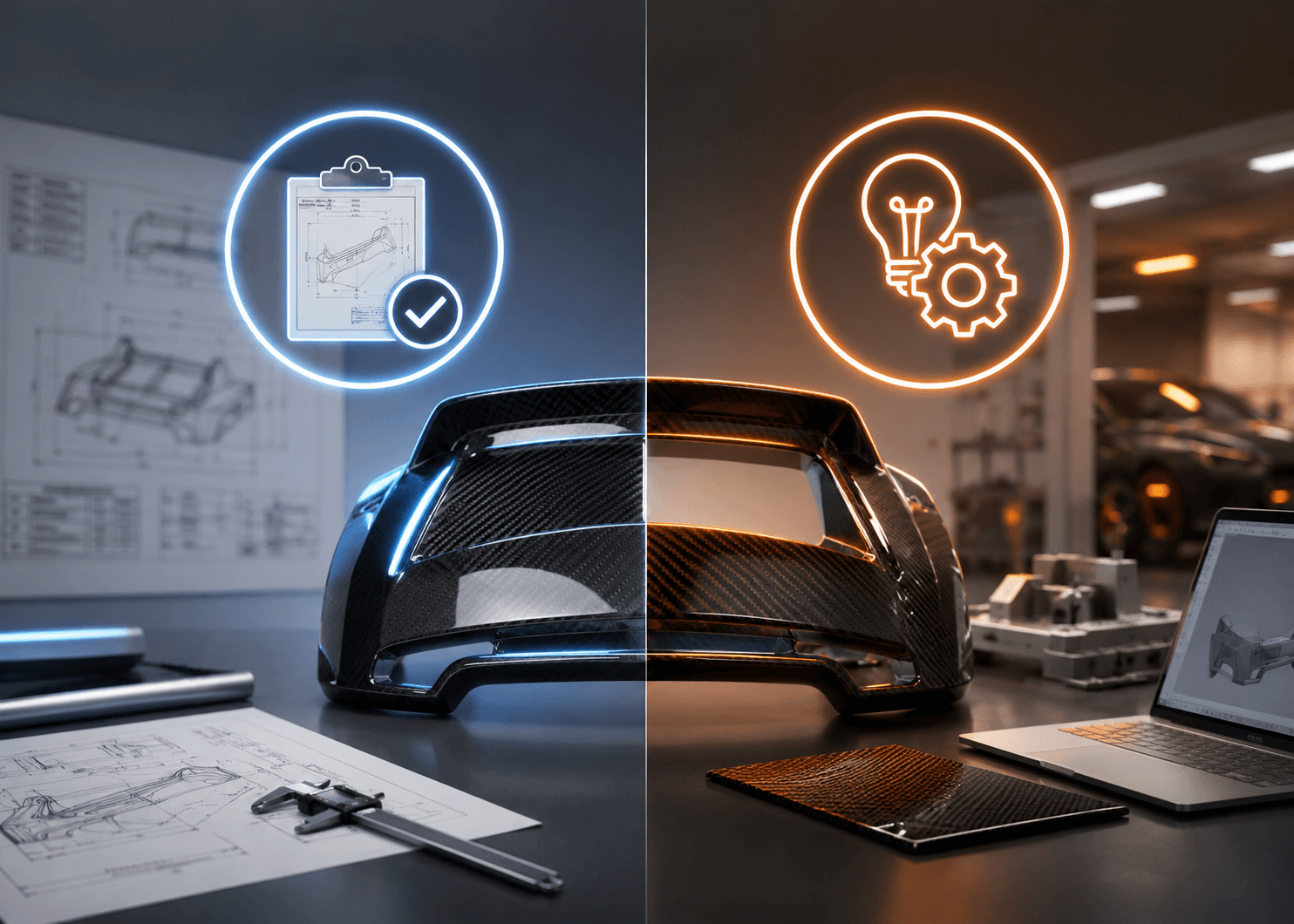
Not every custom project requires 3D printing. A reliable manufacturer should decide based on project risk rather than automatically adding the same steps to every development program.
When Direct CNC Tooling May Be Appropriate
A project may move directly to CNC mold development when:
- complete and reliable 3D data is available;
- the product structure has already been verified;
- installation points are clearly defined;
- the visual design is mature;
- the manufacturer has completed a DFM review;
- the risk of tooling correction is low.
Skipping unnecessary printing can reduce development cost and save time.
When 3D Printing Adds Value
A 3D-printed model is useful when:
- the styling is complex;
- proportions need physical confirmation;
- mounting points are uncertain;
- installation clearance must be checked;
- the buyer needs to review on-car appearance;
- tooling investment is significant;
- the design has a high revision risk;
- the project has a critical launch deadline.
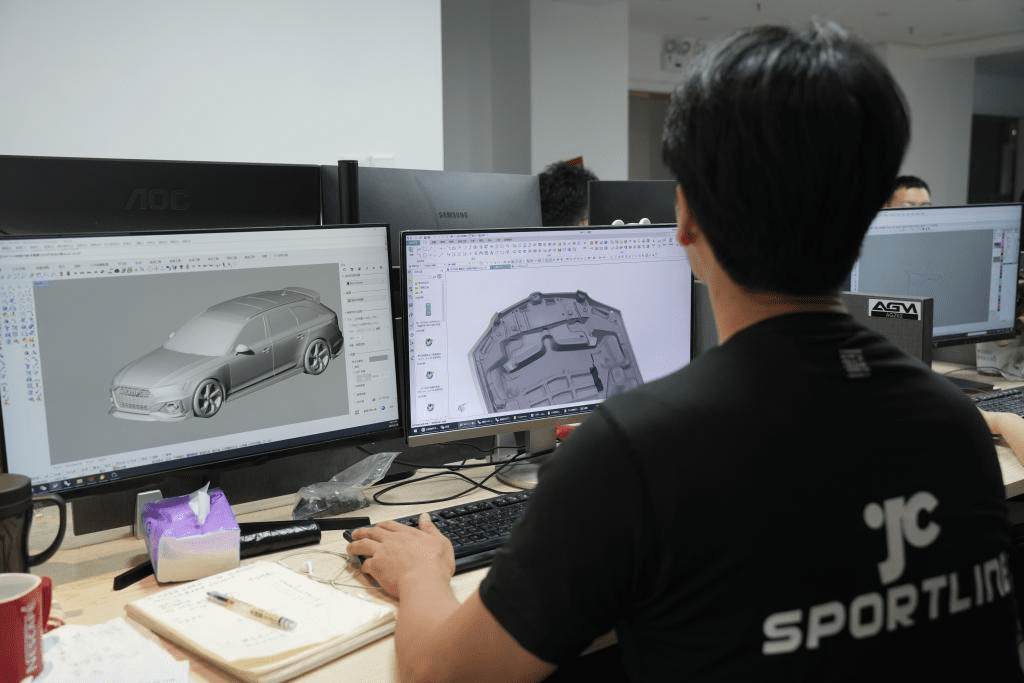
A printed model can help verify shape, dimensions, holes, assembly relationships, interference, and installation appearance before the mold is made.
However, 3D printing does not replace final carbon fiber prototype manufacturing. The printed part does not normally reproduce the final laminate structure, carbon fiber properties, resin behavior, weight, stiffness, or surface finish.
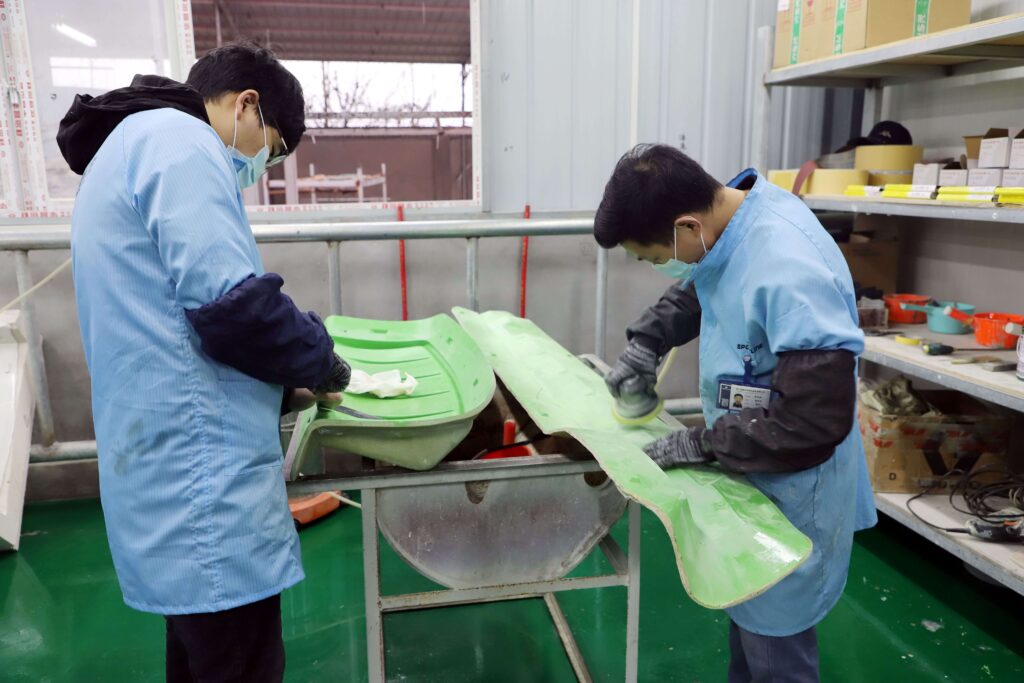
The final product still depends on material selection, layup design, mold accuracy, curing, trimming, drilling, bonding, coating, and quality inspection.
| Development Route | Best Starting Point | Main Purpose | Risk Level | Timeline Effect |
| Direct CNC tooling | Reliable, approved 3D data | Move quickly into mold development | Lower when data is mature | Can save time |
| 3D-printed validation | Complex or visually sensitive design | Check shape, fitment, and proportion | Reduces tooling risk | Adds a step but may prevent rework |
| Reverse engineering | Physical sample without CAD data | Create usable digital geometry | Depends on sample and scanning | Adds data-development time |
| First carbon fiber sample | Approved tooling and process route | Validate final material, fitment, and finish | Required before production approval | Confirms production feasibility |
Case: A 58-Day Carbon Fiber Prototype Development Program
A new US customer needed to shorten its custom product-development cycle. The customer’s existing supplier required approximately six months to move from initial development to a sample.
This long cycle limited the customer’s ability to launch new products. Competitors were entering the market earlier, and the customer was losing both market share and established customer resources.
The customer needed a faster route, but it also required visibility into the development process.
A Defined Development Framework
JC SPORTLINE established a project-specific schedule covering design confirmation, tooling, sample manufacturing, validation, and delivery.
Rather than providing a vague completion estimate, the project was divided into milestones with assigned responsibilities. This allowed the customer’s procurement, product, and sales teams to plan around the same schedule.
Structured Project Tracking
A PLM-based or structured project-management system was used to track progress. The customer could understand which stage was active, which decisions were required, and which risks might affect the next milestone.
This visibility was important because delayed approvals can create the same schedule impact as delayed manufacturing.
Cross-Department Collaboration
Sales, engineering, tooling, production, finishing, and delivery teams participated in the project instead of handling it as a series of disconnected tasks.
Engineering questions could receive faster answers, while material and delivery planning began before all development work was complete.
Regular Progress Meetings
Regular project meetings were used to:
- review completed milestones;
- identify technical risks;
- confirm design decisions;
- resolve open questions;
- update the delivery plan.
The project reportedly moved from confirmed design direction to first-sample delivery in approximately 58 days.
This timeline is a reference for suitable projects, not a universal guarantee. Actual lead time depends on product dimensions, design maturity, mold complexity, manufacturing process, revision rounds, material availability, fitment validation, and current factory capacity.
The development cycle was shorter than the customer’s previous experience, allowing the company to respond to market opportunities earlier. The result was project-specific and should not be treated as a guaranteed outcome for every buyer.
Urgent Projects, Exhibition Deadlines and SEMA Planning
Exhibition and vehicle-launch projects require stricter timeline control because the final date cannot easily move.
Examples include:
- SEMA display vehicles;
- motorsport events;
- new vehicle launches;
- distributor product releases;
- showroom builds;
- demonstration vehicles;
- promotional photo shoots.
Before accepting an urgent deadline, the manufacturer should review:
- design-data readiness;
- CNC availability;
- mold complexity;
- material stock;
- 3D-printing requirements;
- sample-validation needs;
- coating capacity;
- customer approval speed;
- logistics options;
- current production load.
Some urgent projects may qualify for priority scheduling, but acceleration cannot always be achieved safely.
Practical methods include confirming design direction earlier, reserving CNC capacity, preparing materials in advance, setting fixed approval deadlines, holding frequent project meetings, and using faster freight for final delivery where commercially justified.
Important validation and quality-control stages should not simply be removed to meet a deadline. Skipping them may create larger delays through mold rework, rejected samples, installation problems, or damaged finished products.
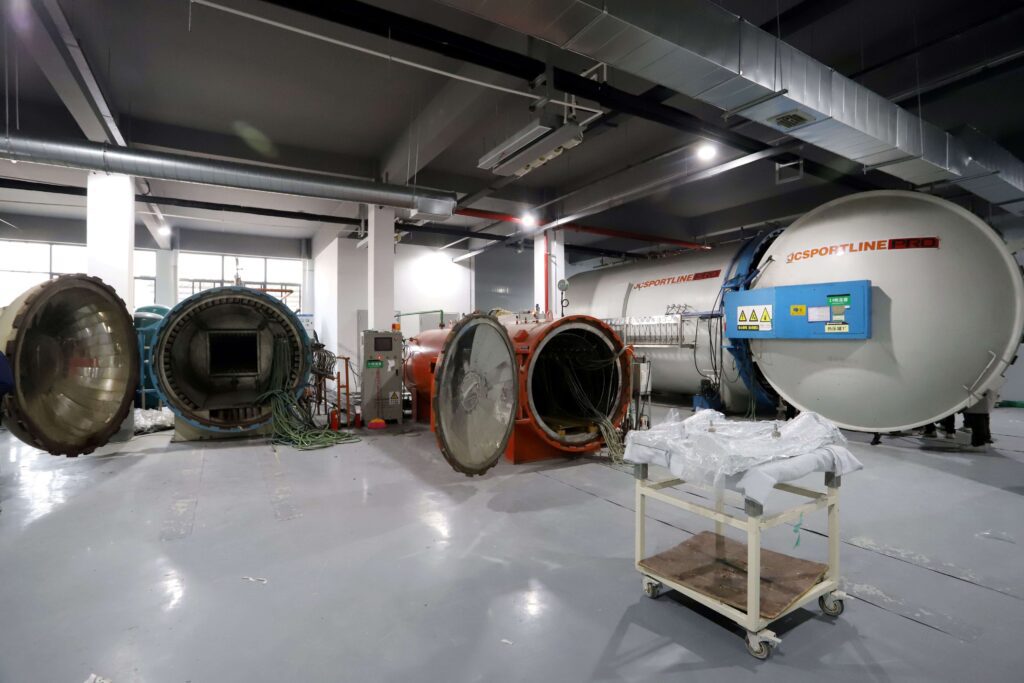
How Parallel Development Shortens the Timeline
Traditional development often follows a fully sequential structure:
design → tooling → sample → validation → production planning → packaging
This approach can create unnecessary waiting. Materials may not be ordered until tooling is finished. Packaging may begin only after sample approval. Production capacity may not be considered until the development stage is complete.
A more efficient process allows suitable tasks to move forward in parallel.
Examples include:
- engineering review and material preparation;
- mold planning and surface-process confirmation;
- tooling development and packaging design;
- sample production and marketing-content preparation;
- customer feedback and engineering adjustments;
- sample validation and production-capacity planning;
- production scheduling and logistics review.
Parallel development does not mean that every activity begins immediately. Some tasks still depend on approved data. The objective is to identify which activities can safely advance without creating revision or financial risk.
A Practical Carbon Fiber Rapid Prototyping Timeline
Stage 1: Project Kickoff and Feasibility Review
The buyer and manufacturer define the application, market, product goals, expected quantity, budget, and deadline. Major technical and schedule risks are identified.
Stage 2: Data and Design Confirmation
CAD files, scan data, samples, sketches, or reference images are reviewed. Where required, the manufacturer completes 3D design, reverse engineering, and DFM analysis.
Stage 3: Prototype-Route Decision
The project team determines whether it can proceed directly to tooling or whether 3D printing is required to verify fitment, styling, or installation.
Stage 4: Tooling and Material Preparation
The mold is developed while suitable carbon fiber materials, resin systems, inserts, fixtures, and surface processes are prepared.
Stage 5: First Carbon Fiber Sample
The first sample is molded, cured, trimmed, drilled, assembled, finished, and inspected.
Stage 6: Validation and Controlled Revision
The sample is reviewed for fitment, dimensions, structure, appearance, and installation. Necessary changes are documented and controlled.
Stage 7: Production Preparation
Once approved, the sample becomes the master reference. QC standards, process parameters, packaging, production scheduling, and delivery planning are finalized.
For additional information about this route, buyers can review JC SPORTLINE’s carbon fiber prototype development and carbon fiber design services.
What Buyers Should Prepare Before Project Kickoff
More complete information enables a faster and more accurate feasibility review.
Useful project inputs include:
- product concept;
- reference images;
- hand sketches;
- STP, STEP, STL, or IGS files;
- physical samples;
- vehicle model and production year;
- scanning data;
- target dimensions;
- installation points;
- mounting method;
- material requirements;
- target weight;
- strength or stiffness targets;
- weave preference;
- gloss or matte finish;
- prototype quantity;
- estimated production volume;
- target sample date;
- launch or exhibition deadline;
- validation standards;
- packaging requirements;
- budget range;
- approval contacts.
Buyers do not need to have every item ready before contacting a manufacturer. However, unclear applications, missing quantities, and undefined deadlines make it difficult to prepare a reliable development plan.
The buyer should also identify who has final approval authority. Projects often lose time when several departments provide feedback but no one is responsible for confirming the final decision.
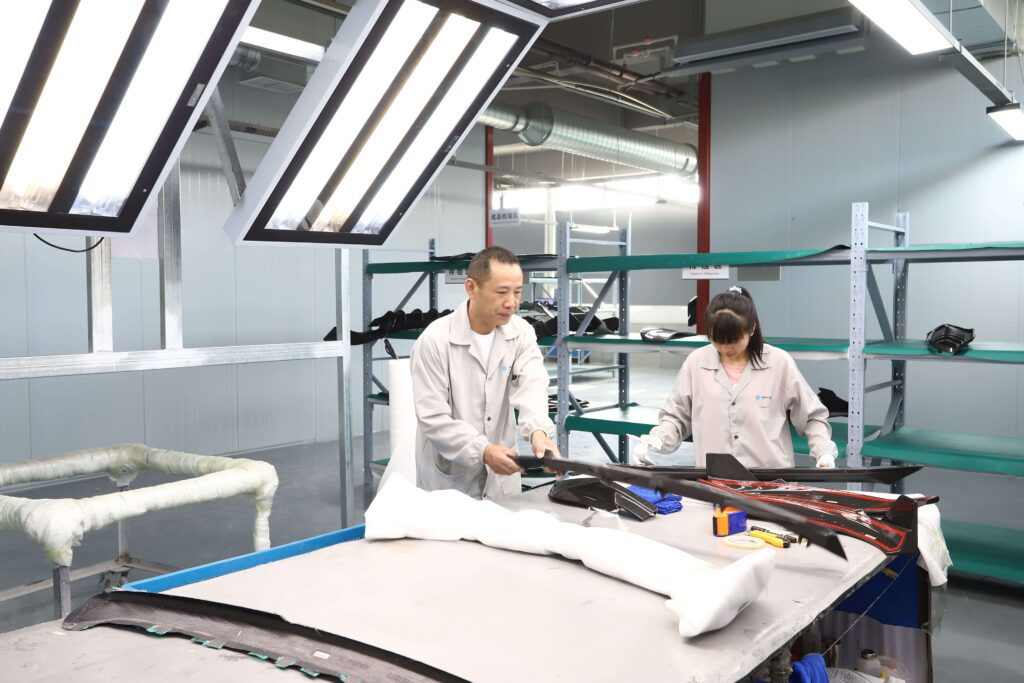
From Rapid Carbon Fiber Prototype to Mass Production
A rapid carbon fiber prototype only creates commercial value when it can be converted into repeatable production.
Before mass production begins, the manufacturer should establish:
- an approved master sample;
- finalized CAD and mold data;
- material specifications;
- documented layup standards;
- curing parameters;
- trimming and drilling fixtures;
- surface-finishing standards;
- dimensional inspection requirements;
- fitment checks;
- packaging standards;
- production schedules;
- batch QC procedures.
Moving too quickly into production can create unresolved fitment problems, unapproved design changes, surface variation, incomplete process records, insufficient mold capacity, or untested packaging.
The transition from a carbon fiber prototype to mass production therefore requires both development speed and manufacturing discipline.
Buyers developing vehicle-specific products can review existing vehicle applications and project examples such as the Nissan 400Z carbon fiber body kit.
Conclusion: Shorten the Entire Development Route
Carbon fiber rapid prototyping is not simply faster molding. It is the coordinated management of data, design, tooling, materials, validation, approvals, production planning, and delivery.
B2B teams can shorten time to market by choosing the correct prototype route, confirming data early, using 3D printing only when it reduces meaningful risk, allowing suitable activities to run in parallel, and establishing clear project milestones.
A rapid sample should never be separated from the production plan. The strongest development partner is one that can deliver a validated prototype while preparing the materials, process standards, capacity, quality controls, and packaging required for repeatable manufacturing.
For a time-sensitive custom project, contact an experienced carbon fiber manufacturer to review your data, deadline, tooling route, validation requirements, and production plan before development begins.
FAQ
Do you provide 3D design or rendering support before production?
Yes. Projects may begin from design files, renders, reference concepts, physical samples, or early ideas. Original design and rendering support may involve separate charges depending on project complexity and scope.
When is 3D printing needed before mold development?
3D printing is useful when styling is complex, visual risk is high, installation positions are uncertain, or the buyer needs to verify fitment before investing in tooling.
Can a carbon fiber project move directly to CNC tooling?
Yes. If the 3D data is reliable, the structure is mature, and the DFM review confirms a low tooling risk, the project may proceed directly to CNC mold development.
Can I request a prototype or first sample before mass production?
Yes. A first carbon fiber sample is normally used to validate fitment, structure, finish, installation, and production feasibility before mass-production approval.
What is the typical lead time for a new custom carbon fiber project?
For many suitable projects, a first sample may target approximately 58 days after the data and development direction are confirmed. Actual time depends on size, tooling, process, revisions, validation, materials, and production capacity.
Can urgent carbon fiber development projects be accelerated?
Some urgent projects can be considered for priority scheduling. Feasibility depends on data readiness, CNC and mold capacity, materials, validation requirements, customer approval speed, and current production load.