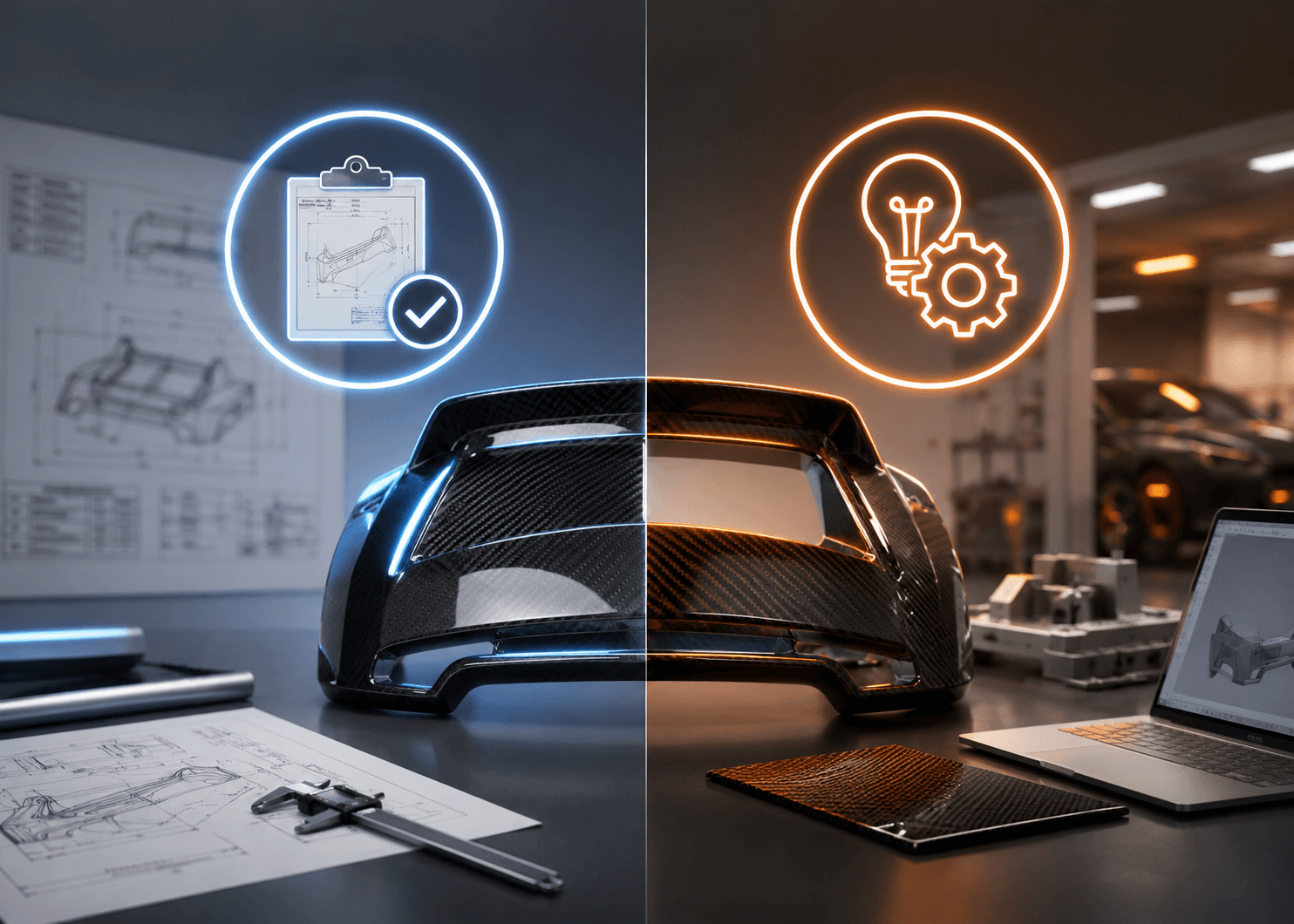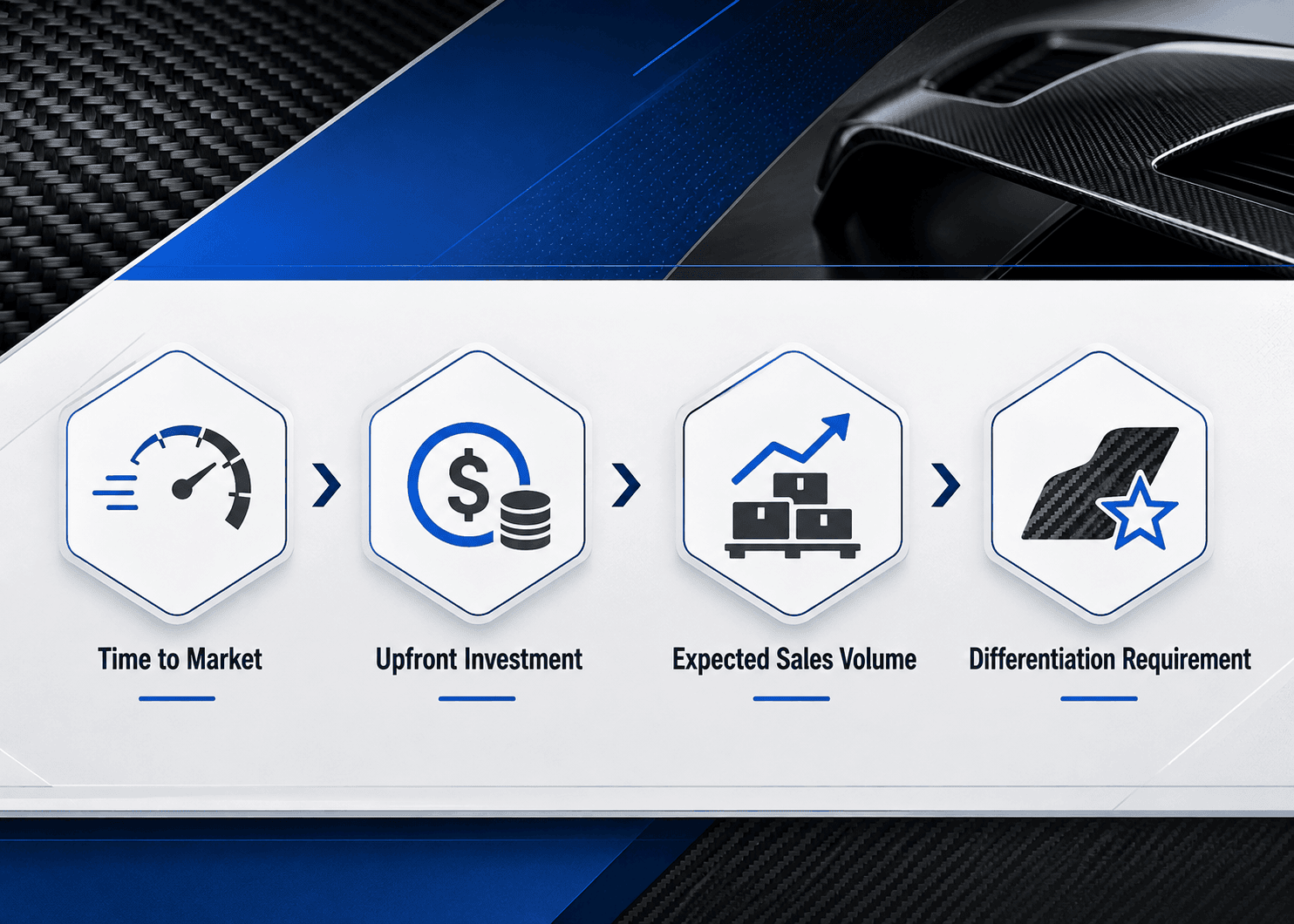
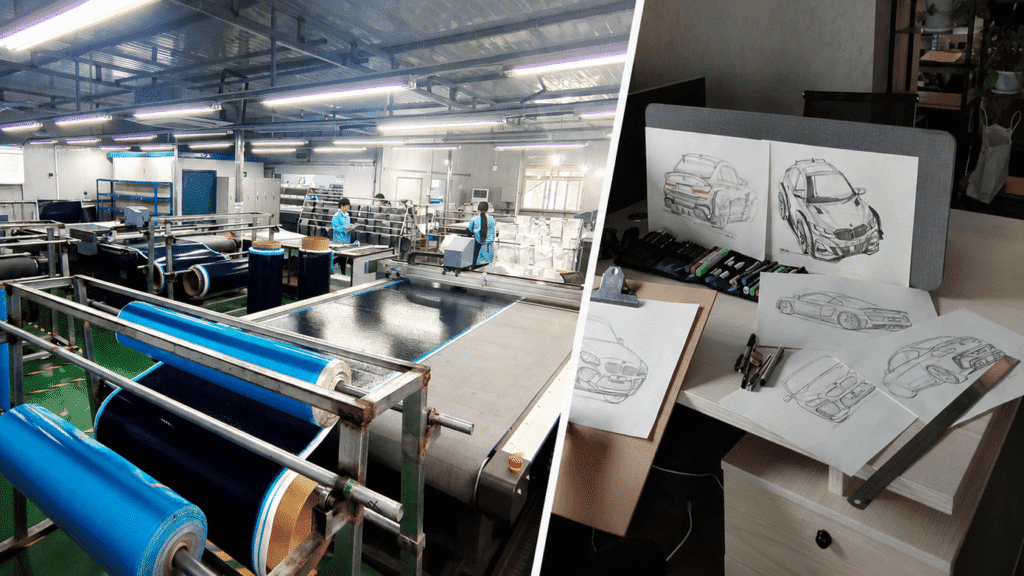
Custom carbon fiber manufacturing is the process of turning an initial product idea, physical sample, 3D file, prototype, or existing component into a manufacturable carbon fiber product that can be produced consistently. A successful project does not begin by immediately making molds or laying carbon fiber. It begins by selecting the correct development route based on the information the buyer already has, the product’s intended function, its appearance requirements, the expected quantity, the budget, and the launch schedule.
For procurement managers, product developers, industrial designers, and OEM buyers, this early planning stage is essential. It determines whether the project requires original design, 3D scanning, reverse engineering, DFM review, prototype validation, or direct mold development.
A professional manufacturer should therefore do more than request a complete production drawing. It should help the buyer convert incomplete information into a clear technical and commercial development plan.
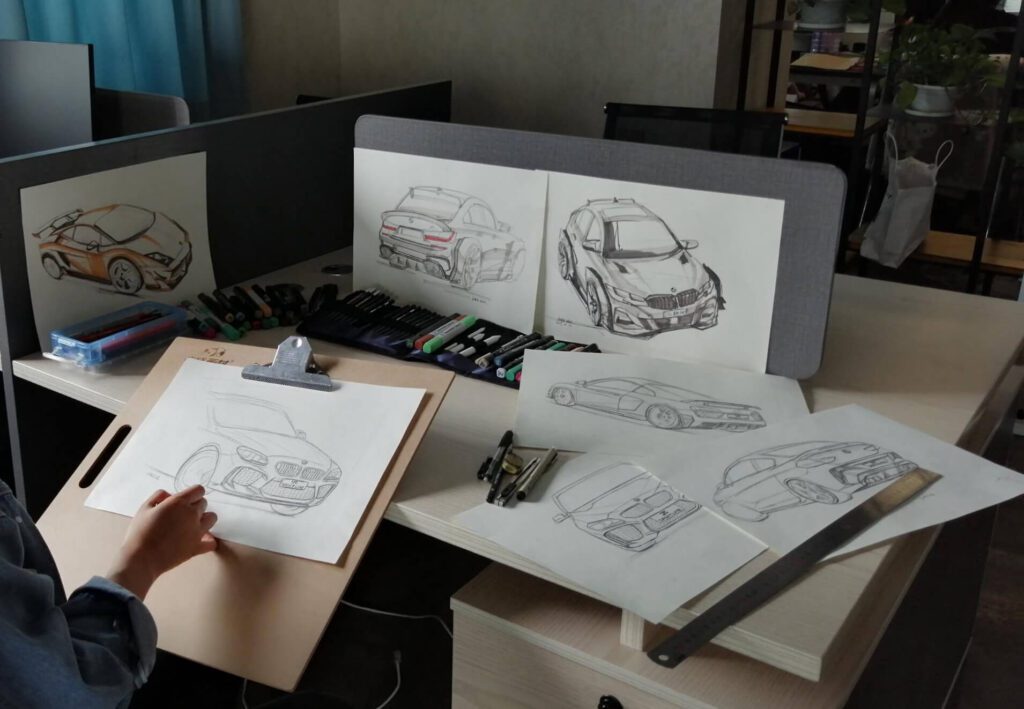
Start with a Concept, Sample, 3D Data or Existing Product
A custom carbon fiber project can begin from many different starting points. The correct route depends on what the buyer can provide and what the project must achieve.
Starting from a Concept or Hand Sketch
Some buyers begin with only a rough product idea, hand sketch, reference image, or description of the intended application. In this situation, the first task is not production. It is product definition.
The design and engineering team may need to establish:
- overall dimensions;
- exterior shape and proportions;
- functional requirements;
- installation or assembly method;
- internal structure;
- appearance direction;
- carbon fiber surface expectations;
- target weight and strength;
- manufacturing feasibility.
3D modeling and rendering may be used to convert the idea into a digital product that can be reviewed before tooling begins. However, a visually attractive design is not automatically suitable for carbon fiber production. It must still be evaluated for layup, molding, demolding, bonding, trimming, reinforcement, and repeatability.
Buyers starting from early concepts can use professional carbon fiber design services to move from creative direction to a manufacturable structure.
Starting from a Physical Sample
A stable physical sample can provide valuable information about dimensions, appearance, assembly, and functionality. However, if reliable CAD data is unavailable, the sample may need to be scanned and reverse-engineered.
3D scanning captures the product’s surface geometry. Reverse engineering then converts the scan data into usable CAD surfaces, installation points, and structural features.
The manufacturer should also evaluate whether the existing product was originally designed for another material. A metal, plastic, or fiberglass component cannot always be copied directly in carbon fiber. The design may require changes to support:
- carbon fiber ply placement;
- resin flow or prepreg processing;
- mold release;
- local reinforcement;
- bonding inserts;
- drilling and trimming;
- dimensional stability;
- final assembly.
Starting from Reliable 3D Data
If the buyer provides STP, STEP, STL, IGS, or other reliable 3D files, the development process may move more quickly. However, the data should still be reviewed before mold development.
A CAD or DFM review may identify problems involving wall thickness, sharp corners, undercuts, bonding areas, trimming boundaries, mold release direction, mounting points, or surface continuity.
Accurate 3D data reduces uncertainty, but it does not remove the need for engineering judgment.
Starting from an Existing Product
Sometimes the goal is not simply to reproduce an existing component. The buyer may want to:
- reduce weight;
- improve stiffness;
- upgrade the appearance;
- reduce part count;
- improve durability;
- create a premium version;
- develop a private-label product;
- lower total production cost;
- build a more distinctive product line.
In this case, the manufacturer should first clarify the commercial and technical objective. Replication, optimization, and complete redesign require different development routes.
Design, Scanning, Reverse Engineering and Mold Development
The engineering stages before production have a direct impact on sample lead time, tooling cost, fitment, surface quality, and future production stability.
3D Design
3D design converts an idea or sketch into a digital model. It defines the product’s shape, assembly relationships, proportions, and major functional areas.
For ODM projects, the manufacturer may contribute more original design and engineering input. For OEM projects, the buyer may already provide product data, but the supplier still needs to evaluate manufacturability.
3D Scanning
3D scanning is useful when the carbon fiber part must fit an existing vehicle, machine, housing, frame, or product. It can capture complex surfaces more efficiently than manual measurement alone.
Scanning is especially important for automotive exterior components, motorsport parts, replacement panels, industrial covers, and products with multiple installation references.
Reverse Engineering
Reverse engineering rebuilds usable CAD data from a physical sample or scan. The process may involve cleaning scan data, rebuilding surfaces, correcting deformation, defining symmetry, reconstructing mounting points, and adjusting the geometry for manufacturing.
The goal is not merely to copy the sample. It is to create production-ready data.
CAD and DFM Review
Design for manufacturing review determines whether the product can be produced reliably with the selected carbon fiber process.
Typical review points include:
- wall thickness;
- fiber orientation;
- mold split lines;
- release angles;
- local reinforcement;
- bonding and insert locations;
- trimming boundaries;
- assembly clearances;
- visible surface quality;
- production fixtures;
- dimensional inspection points.
Mold Development
The approved digital model must be converted into production tooling. Mold quality influences final fitment, dimensional accuracy, surface finish, and batch consistency.
Tooling decisions depend on product size, geometry, prototype quantity, process route, future order volume, and expected mold life. A prototype project and a long-term mass-production program may require different tooling strategies.
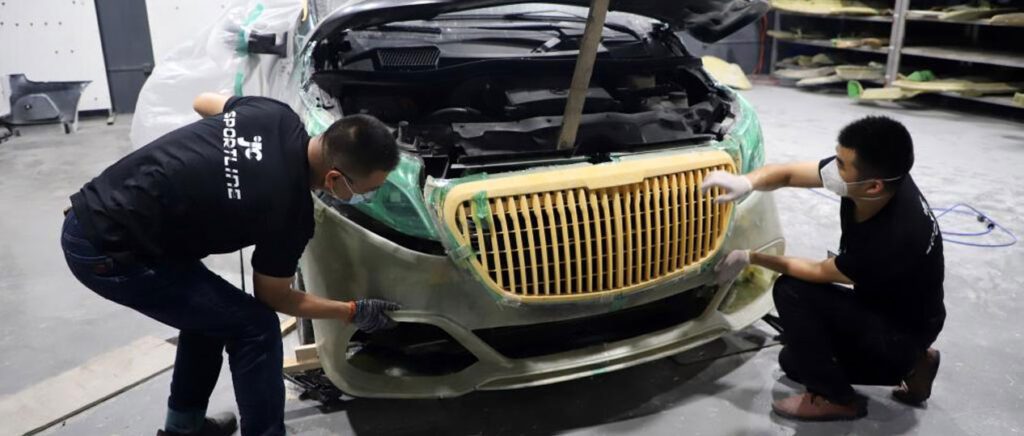
An example of prototype-led OEM development can be seen in JC SPORTLINE’s Vito W447 prototype project.
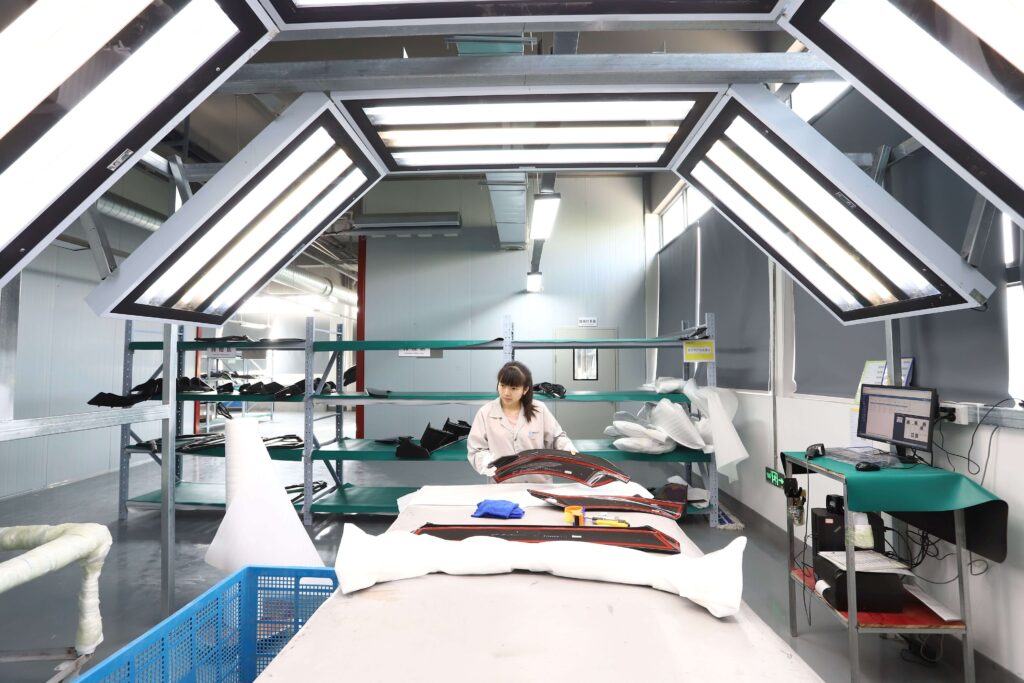
Case: A 58-Day Sample Landing with One-Stop Development Support
A Polish product-development customer previously handled mold production internally. The company faced several connected problems: mold costs were high, development cycles were long, product costs were difficult to control, and production capacity limited the speed at which new products could enter the market.
The customer wanted to shorten product-development time, improve delivery efficiency, lower the overall project burden, and prepare for repeat orders.
The Development Challenge
The issue was not limited to the price of an individual carbon fiber part. The customer’s total cost included:
- mold development;
- internal engineering time;
- repeated corrections;
- production delays;
- limited capacity;
- slow product launches;
- missed sales opportunities;
- difficulty planning repeat orders.
This is why B2B buyers should evaluate total project cost rather than comparing only unit quotations.
The Project Solution
JCSPORTLINE reviewed the development difficulties and created a project-specific route covering design, engineering review, tooling, first-sample production, delivery planning, and future batch scheduling.
The support included:
- a customized development timeline;
- defined project milestones;
- structured project tracking;
- tooling and sample coordination;
- production planning;
- batch-order scheduling;
- information to support annual sales planning.
The project moved from design to first-sample delivery in approximately 58 days.
This timeline was a project-specific result, not a standard guarantee for all products. Actual development time depends on product size, design complexity, data quality, tooling method, process selection, revision rounds, material availability, validation requirements, and factory capacity.
Project-Specific Business Results
According to the project records, the customer reduced its overall development and manufacturing burden compared with its previous internal model. Product and international freight costs were reported to be lower than the customer’s earlier self-manufacturing route, while production planning and profit potential improved.
The customer’s annual order volume also increased after cooperation, with orders reportedly growing approximately threefold within one year.
These outcomes were specific to this customer’s product, market, former cost structure, and sales execution. They should not be interpreted as guaranteed results for every custom carbon fiber project.
What Information Buyers Should Prepare
Buyers do not need to have every technical detail ready before contacting a manufacturer. A qualified engineering team should be able to help define missing information.
However, the clearer the project requirements are, the more accurately the manufacturer can recommend a process, mold strategy, timeline, and quotation.
Useful information includes:
- product application;
- target industry;
- concept sketches;
- reference images;
- physical samples;
- STP, STEP, STL, or IGS files;
- main dimensions;
- installation requirements;
- assembly method;
- target weight;
- stiffness or strength requirements;
- expected environmental conditions;
- heat, water, chemical, or UV exposure;
- visible surface expectations;
- weave preference;
- gloss or matte finish;
- color requirements;
- logo and branding needs;
- prototype quantity;
- estimated annual quantity;
- budget range;
- target launch date;
- testing requirements;
- packaging requirements.
Before requesting a quotation, buyers should also clarify several commercial questions.
Is the project only for one prototype, or is mass production planned? Is a new mold required? Is the part structural, decorative, or both? Are there critical installation dimensions? Is visible carbon fiber quality important? Does the product require compliance testing? Is the launch deadline fixed?
These questions help the manufacturer evaluate total development requirements instead of quoting an incomplete scope.
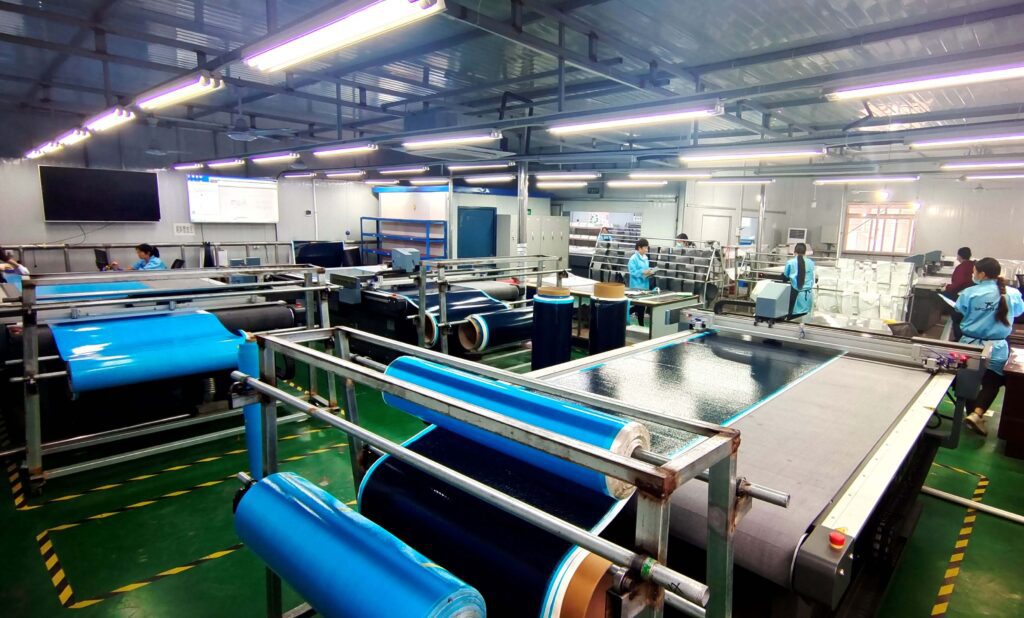
How to Select the Right Manufacturing Process
There is no single carbon fiber process that is best for every product. The correct process depends on geometry, size, structural requirements, appearance, order quantity, budget, and delivery targets.
Prepreg and Autoclave
Prepreg carbon fiber and autoclave curing are often selected for premium lightweight products, visible carbon components, motorsport applications, and projects requiring controlled laminate quality.
This route can provide strong process consistency, but tooling, material, labor, and curing costs must be considered.
Compression Molding
Compression molding can be suitable for small or medium-sized parts that require repeatable batch production. It may support shorter production cycles once the process and tooling are established.
Vacuum Infusion
Vacuum infusion can be useful for larger composite structures and selected projects where size, tooling cost, and production requirements make prepreg autoclave processing less practical.
Forged Carbon
Forged carbon can be used for complex small components and products requiring a distinctive premium appearance. It may also reduce the visual challenges of aligning woven fabric in small or irregular areas.
Roll Wrapping and Specialized Processes
Roll wrapping is commonly used for tubes, shafts, handles, and selected structural components. Pultrusion and other specialized composite processes may be appropriate for consistent-profile products.
Buyers can review different carbon fiber materials before finalizing the manufacturing route.
The cheapest process is not always the lowest-cost choice. An unsuitable process can create excess weight, difficult finishing, high rejection rates, slow production, or inconsistent quality.
From Carbon Fiber Prototype Development to Repeatable Production
A successful prototype is an important milestone, but it is not the end of carbon fiber product development.
One of the most common industry problems is that the approved sample looks acceptable, while later batches show inconsistent weave, weight variation, fitment errors, resin marks, pinholes, dimensional changes, different gloss levels, or delayed production.
To prevent this, the manufacturer must convert the approved sample into documented production standards.
Establish an Approved Master Sample
The final approved sample should become the physical reference for appearance, dimensions, fitment, weight, structure, and surface finish.
Finalize Engineering Data
CAD files, mold data, trimming boundaries, drilling positions, inserts, bonding areas, and assembly requirements should be formally approved.
Document Material and Layup Standards
Production documents should define:
- carbon fiber material;
- fabric orientation;
- ply count;
- reinforcement areas;
- resin system;
- prepreg storage and handling;
- bonding materials;
- insert specifications.
Control Process Parameters
Curing temperature, pressure, vacuum, time, demolding, trimming, drilling, sanding, coating, and polishing should follow controlled parameters.
Use Fixtures and Inspection Standards
Trimming and drilling fixtures help control repeatability. Dimensional inspection, appearance inspection, fitment checks, and weight verification help compare production parts with the approved standard.
Plan Production and Traceability
Batch records, material tracking, QC documentation, production scheduling, and packaging standards support long-term consistency.
Professional custom carbon fiber parts manufacturing is therefore not only the ability to make one successful sample. It is the ability to reproduce the sample standard consistently.
Why Project Management Matters in Custom Carbon Fiber Manufacturing
Fast sample development is not achieved simply by asking every department to work faster. It comes from a structured project-management system.
An efficient development plan requires:
- defined project stages;
- clear responsibilities;
- timely data approval;
- tooling milestones;
- material preparation;
- sample review procedures;
- controlled revision rounds;
- customer feedback deadlines;
- production scheduling;
- logistics planning.
A customized development timeline helps buyers understand what is happening at each stage. PLM-based or structured project tracking can support design approval, mold progress, sample status, revisions, and production planning.
This also helps buyers coordinate activities beyond manufacturing. Product teams can prepare marketing materials, organize launch schedules, plan annual sales, reserve production capacity, and identify risks before they affect delivery.
OEM and ODM Custom Carbon Fiber Manufacturing Services
OEM and ODM projects require different levels of supplier involvement.
OEM Carbon Fiber Manufacturing
In an OEM project, the buyer usually provides a design, sample, CAD file, performance requirement, or detailed product specification. The manufacturer develops and produces the product according to the buyer’s requirements.
OEM support may include data review, DFM, material selection, tooling, prototypes, testing, surface finishing, private labeling, packaging, and production.
ODM Carbon Fiber Manufacturing
In an ODM project, the manufacturer provides more original design and engineering support. The project may begin with only a concept, market idea, reference image, or functional target.
The manufacturer may support:
- original product design;
- 3D modeling and rendering;
- structural development;
- material and process selection;
- mold planning;
- prototype production;
- logo integration;
- packaging;
- private-label manufacturing;
- market-ready product development.
JC SPORTLINE supports custom projects across automotive and other composite applications. Buyers developing vehicle-related products can review the company’s automotive carbon fiber capabilities.
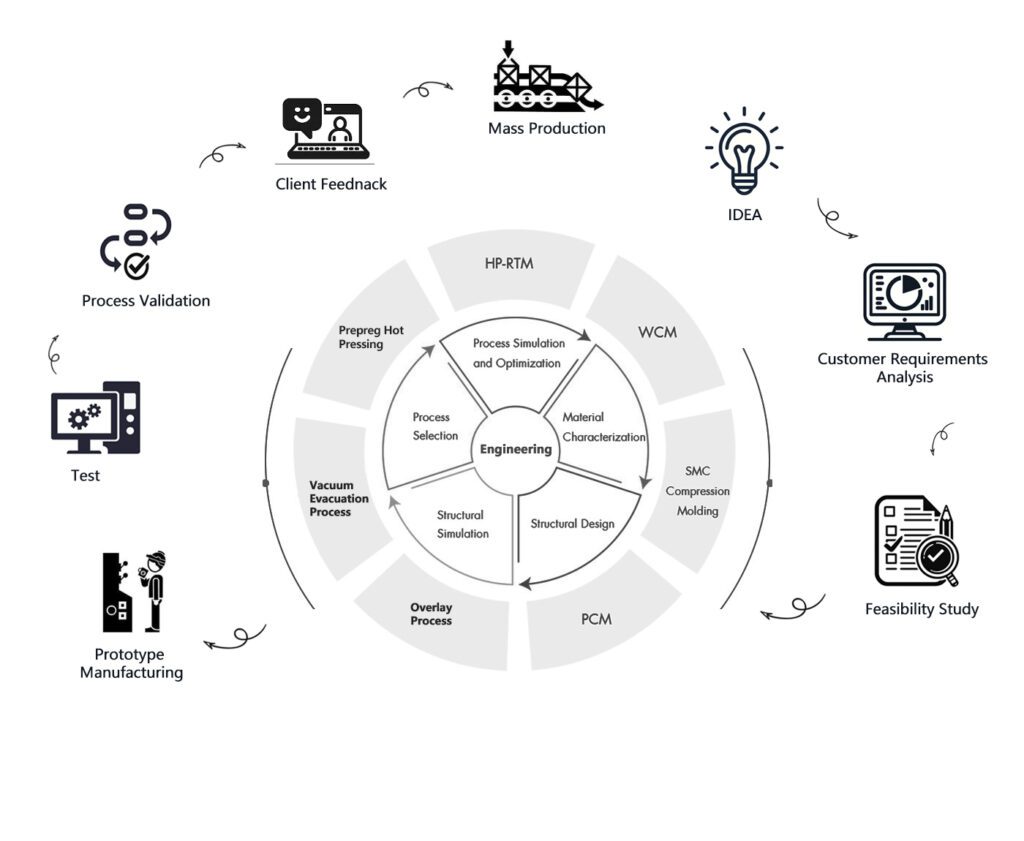
Conclusion: Plan the Development Route Before Production
Custom carbon fiber manufacturing should begin with project planning, not immediate production. The manufacturer must first understand what the buyer has, what the product must achieve, and what level of production is expected.
A concept may require original design. A physical sample may require scanning and reverse engineering. Reliable 3D data may move directly into DFM and tooling. A prototype must be converted into documented standards before repeatable production can begin.
For B2B buyers, the real project cost includes more than the unit price. It includes engineering, molds, revisions, delays, quality variation, capacity, logistics, and missed market opportunities.
If you are developing custom carbon fiber parts, contact an experienced custom carbon fiber manufacturer to review your concept, sample, 3D data, prototype requirements, tooling plan, and production targets. A structured development route can help turn an initial idea into a stable, manufacturable, and market-ready carbon fiber product.
FAQ
Can you customize carbon fiber products for B2B projects?
Yes. Customization can begin from a concept, sample, 3D file, prototype, existing product, performance target, or brand requirement. The project may include structural, material, weave, finish, logo, packaging, and process customization.
Do you support OEM and ODM carbon fiber manufacturing?
Yes. OEM support is suitable when the buyer already has a design, sample, or technical requirements. ODM support can include original design, engineering, 3D modeling, structure development, and market-ready product planning.
How does a custom carbon fiber project usually start?
The manufacturer first reviews the buyer’s available information, intended application, quantity, quality requirements, budget, and timeline. It then recommends a route involving design, scanning, reverse engineering, DFM, tooling, or prototype validation.
What is the typical custom carbon fiber product development process?
A typical process includes requirement review, feasibility analysis, 3D data review or scanning, CAD and DFM development, mold planning, tooling, sample production, validation, revision, approval, and mass-production preparation.
Can you help if I only have a concept or hand sketch?
Yes. A design and engineering team can convert a concept, sketch, reference image, or rough idea into a manufacturable 3D design. Structure, process, cost, material, and tooling requirements should be evaluated before production.
How do you move from a carbon fiber prototype to stable mass production?
The approved prototype must be converted into documented standards covering CAD data, molds, materials, layup, curing, trimming, finishing, dimensional inspection, appearance requirements, packaging, and QC. These controls allow the sample standard to be reproduced.