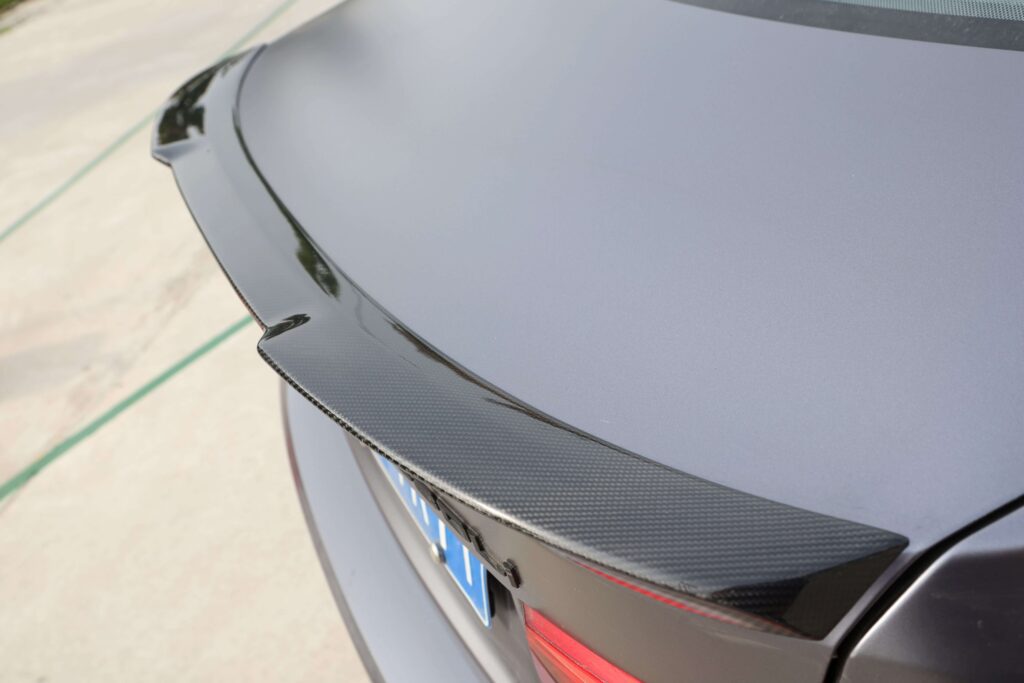
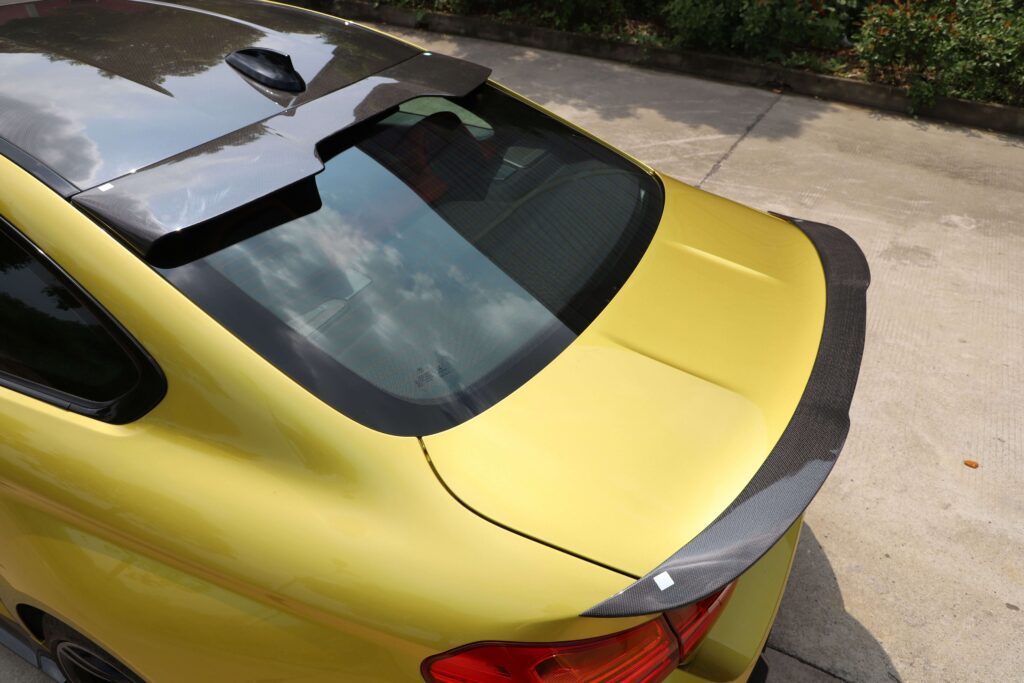
A traditional auto parts seller can develop into a carbon fiber brand without building an internal design department, mold workshop, engineering team, or carbon fiber factory. The most practical route is to work with an engineering-driven manufacturer that can support product planning, vehicle data matching, 3D design, mold development, prototype validation, private-label branding, repeatable production, and long-term supply.
For established auto parts businesses, the main obstacle to growth is often not a lack of customers. It is a lack of product differentiation. Companies that rely heavily on generic plastic body kits, universal accessories, or commonly available aftermarket products can become trapped in price competition.
Adding a carefully planned range of carbon fiber car parts can help a business enter premium performance, luxury, motorsport, and high-end modification markets. However, carbon fiber material alone does not create a successful brand. Sustainable brand value comes from original product identity, accurate fitment, stable quality, recognizable packaging, controlled supply, and strong dealer relationships.
Why Traditional Auto Parts Businesses Struggle to Scale
Many local auto parts companies begin with standard replacement parts, plastic body kits, fiberglass accessories, and universal modification products. These categories can generate steady business, but they are often difficult to scale into a more valuable brand.
Generic Products Create Price Competition
When several sellers offer the same front lip, diffuser, spoiler, or body kit, customers usually compare price, shipping time, and reviews. The seller has limited control over the product itself.
This makes it difficult to build:
- premium pricing;
- dealer loyalty;
- strong repeat purchases;
- regional exclusivity;
- recognizable product identity;
- long-term brand authority.
A competitor can often offer a similar product at a lower price, forcing the seller to reduce margins or spend more on advertising.
Limited Differentiation Reduces Perceived Value
Generic plastic or fiberglass products may meet basic market demand, but they do not always create a strong reason for customers to choose one brand over another.
Without distinctive styling, materials, finishes, or packaging, the business may be viewed as a reseller rather than a product brand. This limits its ability to attract premium vehicle owners, professional tuning shops, and established local dealers.
Unstable Suppliers Damage Growth
Traditional sellers may also face inconsistent quality from different suppliers. Common problems include poor fitment, surface defects, delayed shipments, inconsistent batches, weak packaging, and incomplete product information.
These problems affect more than one order. They can damage installer confidence, increase returns, reduce dealer willingness to cooperate, and weaken the seller’s reputation.
Carbon fiber should therefore be introduced as a higher-value category alongside the existing catalog, not as a replacement for every standard product. A phased strategy allows the business to test demand before making larger investments.
Why Carbon Fiber Is a High-Value Category
Carbon fiber automotive parts are strongly associated with performance cars, motorsport engineering, premium modification, and lightweight design. This makes them suitable for businesses that want to move beyond low-price aftermarket competition.
Typical product categories include:
- front lips;
- rear diffusers;
- side skirts;
- rear spoilers;
- racing wings;
- carbon fiber hoods;
- mirror covers;
- grilles;
- interior trims;
- aerodynamic body kits;
- other carbon fiber performance parts.
Higher Perceived Value
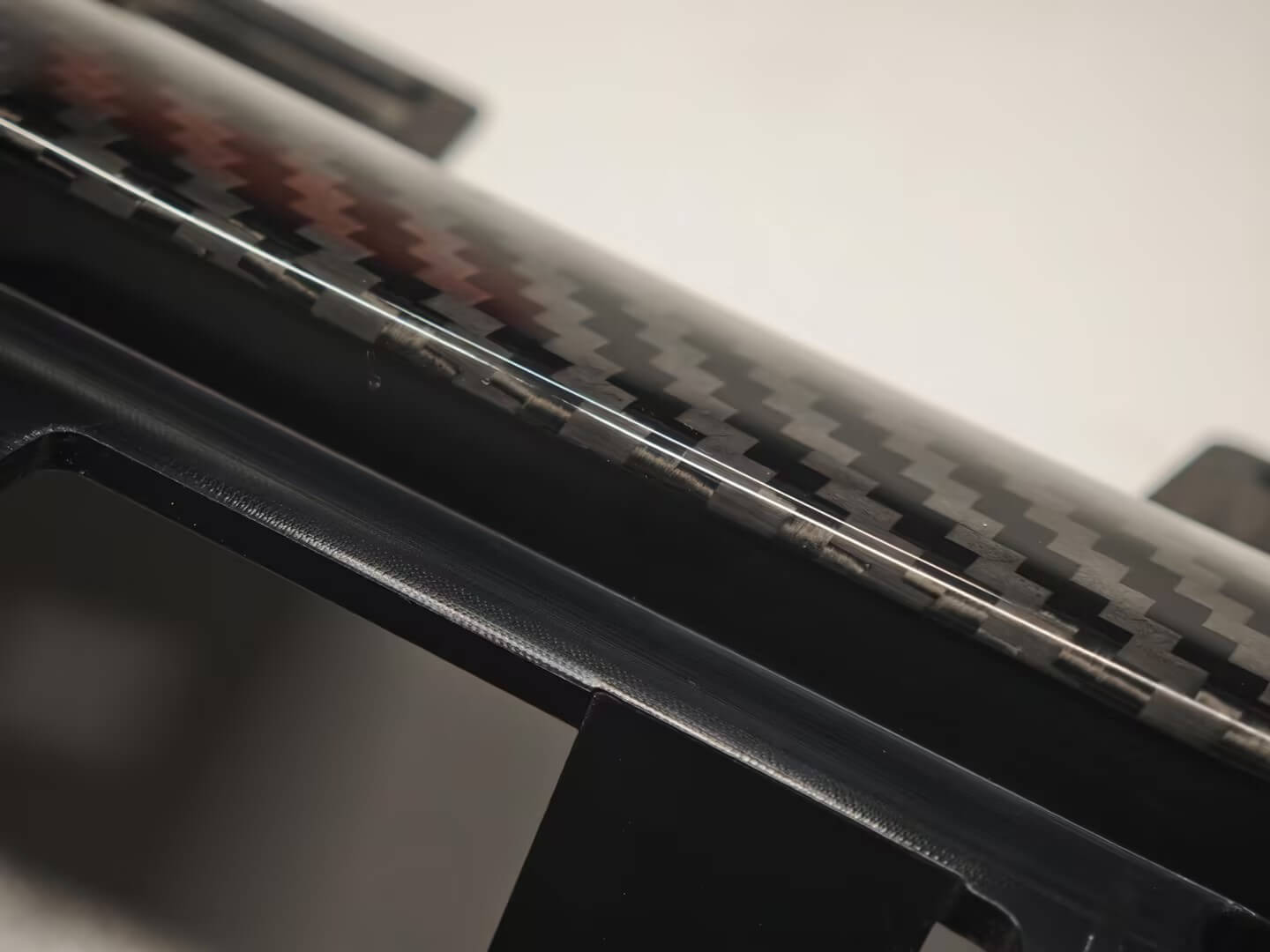
Customers generally view visible carbon fiber as a premium material. A product with clean weave alignment, accurate fitment, and a controlled gloss or matte finish can support higher-value positioning than a generic painted plastic component.
This gives sellers more room to build a product story around engineering, design, craftsmanship, and exclusivity.
Stronger Market Differentiation
A seller offering unique custom carbon fiber car parts can build a clearer position in the market. Instead of competing only through price, the company can compete through styling, vehicle coverage, fitment, quality, packaging, and brand identity.
Better Opportunities for Dealer Cooperation
Professional dealers and tuning shops are more likely to promote a product line when they trust its fitment, quality, availability, and after-sales support. A stable carbon fiber range can help a seller create deeper wholesale and regional relationships.
Still, carbon fiber appearance alone is not enough. A successful product line requires accurate applications, consistent manufacturing, reliable supply, and recognizable branding.
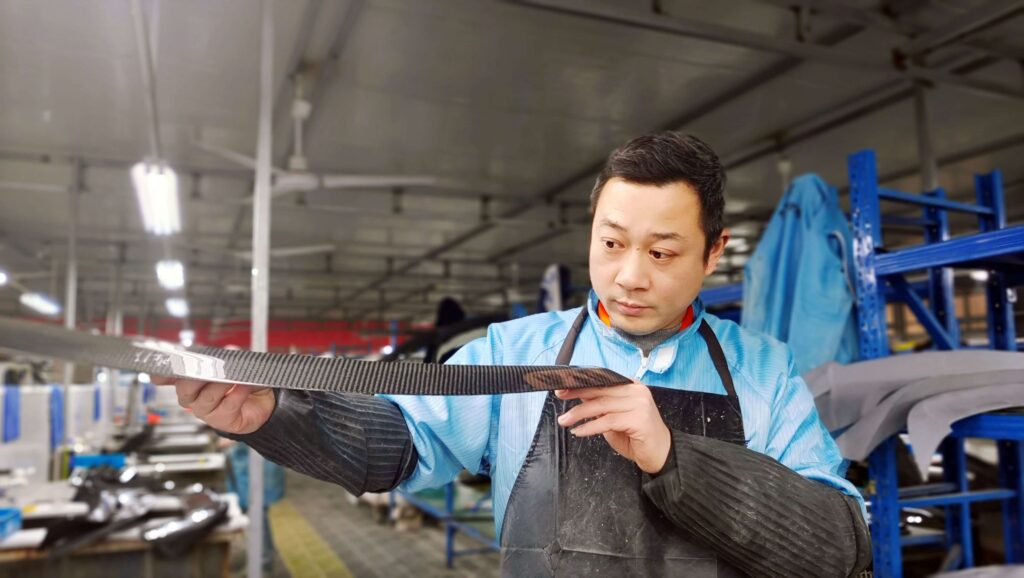
Case: From a Traditional Auto Parts Seller to a Carbon Fiber Brand
A long-term auto parts customer had more than 20 years of industry experience. The business mainly sold plastic body kits and conventional aftermarket products, but overall growth had become limited.
The customer had previously tried to source carbon fiber products. That cooperation was discontinued because the parts had unstable quality. Surface appearance varied, and the customer did not feel confident building a premium product line around inconsistent supply.
The company also had no internal design team. It could identify market opportunities and provide product ideas, but it could not independently complete 3D modeling, engineering analysis, mold development, or carbon fiber production.
The goal was to move from standard parts sales into a differentiated carbon fiber category.
Product Concept and Development Planning
JC SPORTLINE first reviewed the customer’s ideas, target vehicle models, local demand, brand direction, and expected product range.
Instead of starting with random products, the development process focused on identifying practical opportunities that could support a coherent carbon fiber line.
This included evaluating:
- target vehicle popularity;
- suitable exterior and interior parts;
- expected market positioning;
- product complexity;
- development cost;
- fitment requirements;
- future product-line expansion.
Design and Vehicle Data Support
The customer did not have complete CAD files or an internal design team. JC SPORTLINE provided design and engineering support and used available global vehicle scanning data and engineering resources to support vehicle matching and product modeling.
For selected projects, this reduced the need to repeatedly ship complete vehicles or physical reference parts across borders.
However, not every development project can proceed without a physical sample. The correct route depends on vehicle-data availability, installation complexity, product geometry, and validation requirements.
Mold and Production Development
The support covered the full path from product idea to design, engineering review, mold development, first sample, fitment confirmation, and production.
The product geometry was optimized for carbon fiber manufacturing rather than copied directly from plastic components. Mold planning considered visible surfaces, trimming boundaries, installation points, reinforcement, and future production repeatability.
Logo and Brand Identity
To help the customer create a recognizable product line, customer branding was integrated into selected products or tooling where appropriate.
Branding options can include:
- mold markings;
- engraved logos;
- under-clear-coat logos;
- surface decals;
- labels;
- serial identification;
- private-label packaging.
This allowed the products to carry a clearer identity instead of appearing as generic market parts.
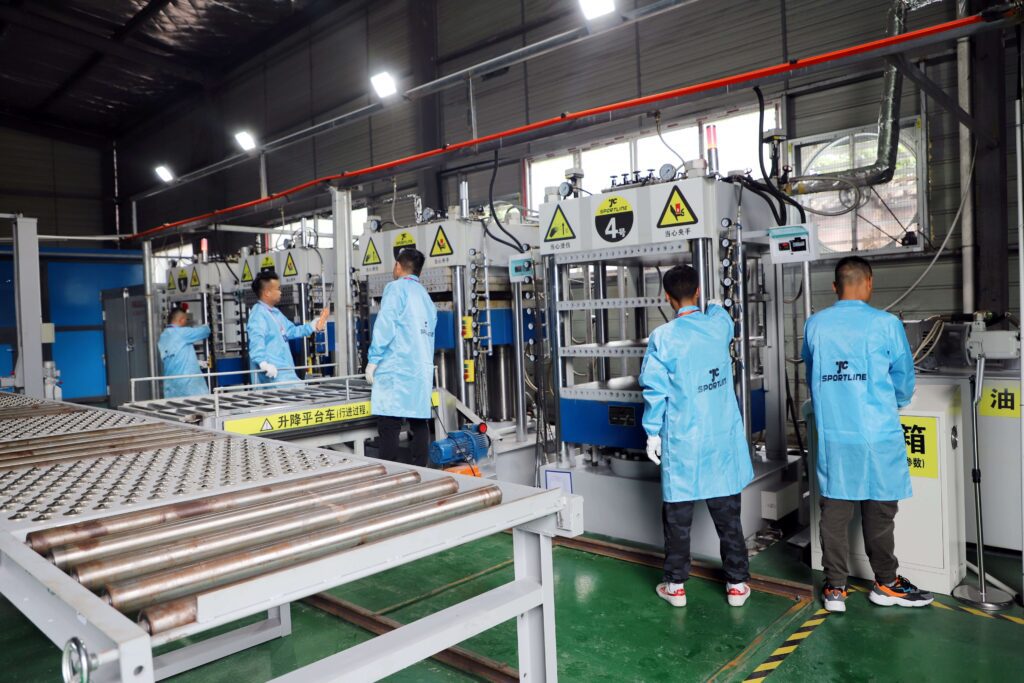
Stable Carbon Fiber Production
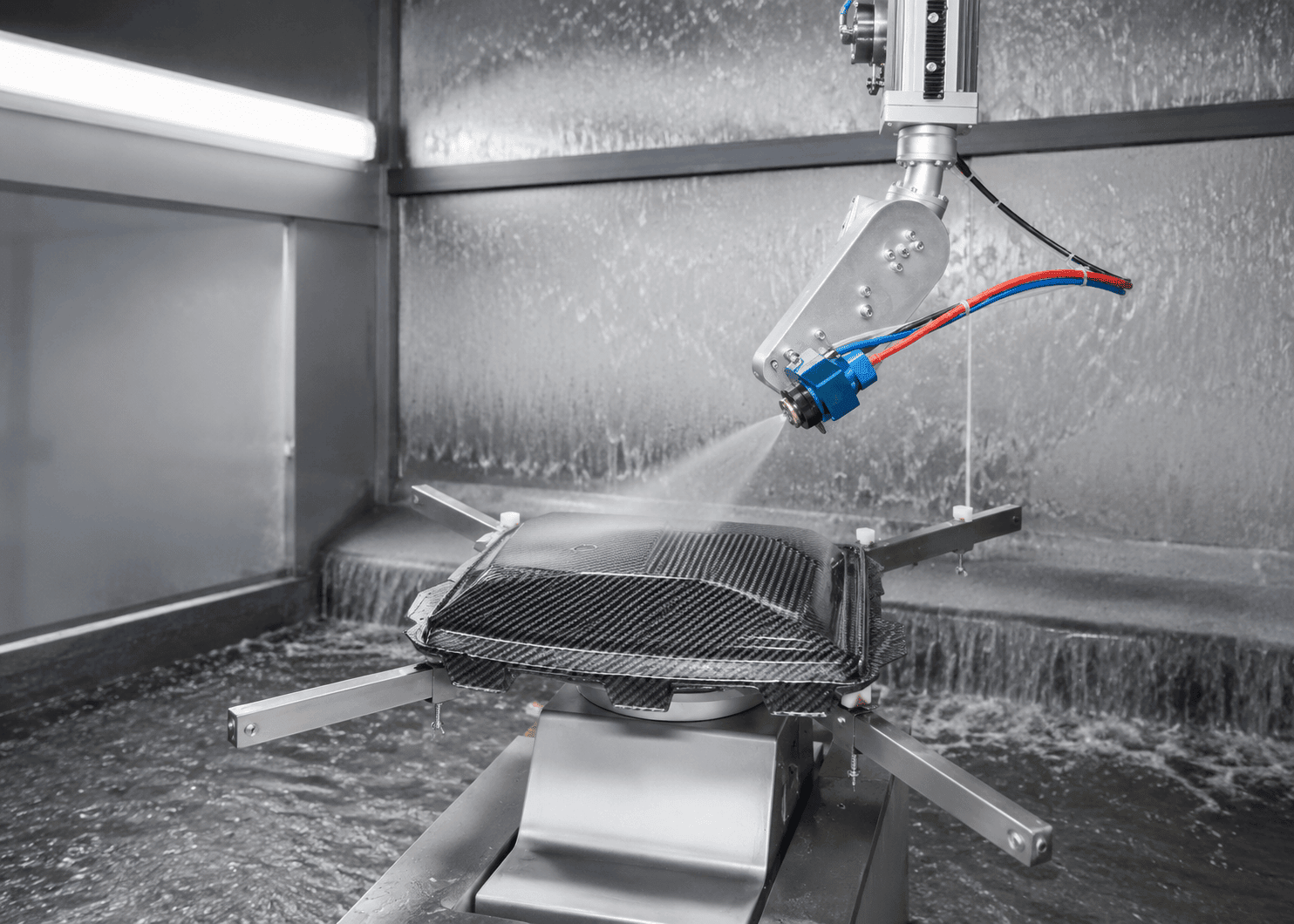
Standardized controls were used for mold condition, material selection, layup, forming, trimming, finishing, and inspection.
This addressed the customer’s main concern: the risk that an approved sample would look good while later production batches would become inconsistent.
The customer successfully added a carbon fiber automotive product line and began building relationships with recognized local auto parts dealers. Brand recognition gradually improved, and first-year business growth was reported to exceed 30%.
This was a project-specific result. It depended on the customer’s market, product selection, sales execution, supplier cooperation, and dealer network. Similar growth cannot be guaranteed for every business.
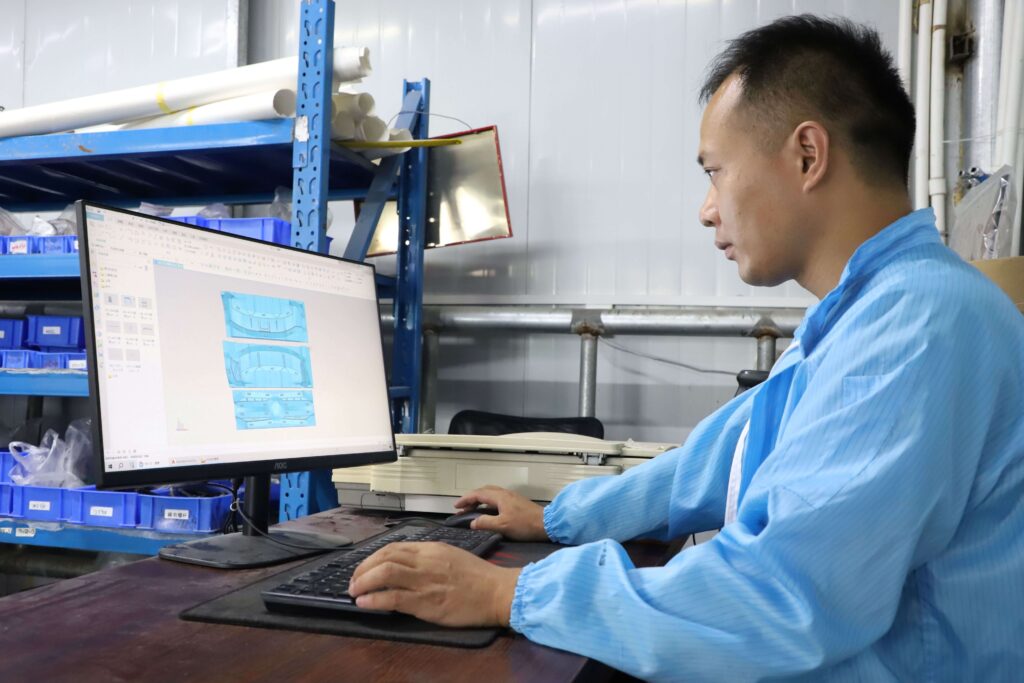
How JCSPORTLINE Supports Design-to-Production Development
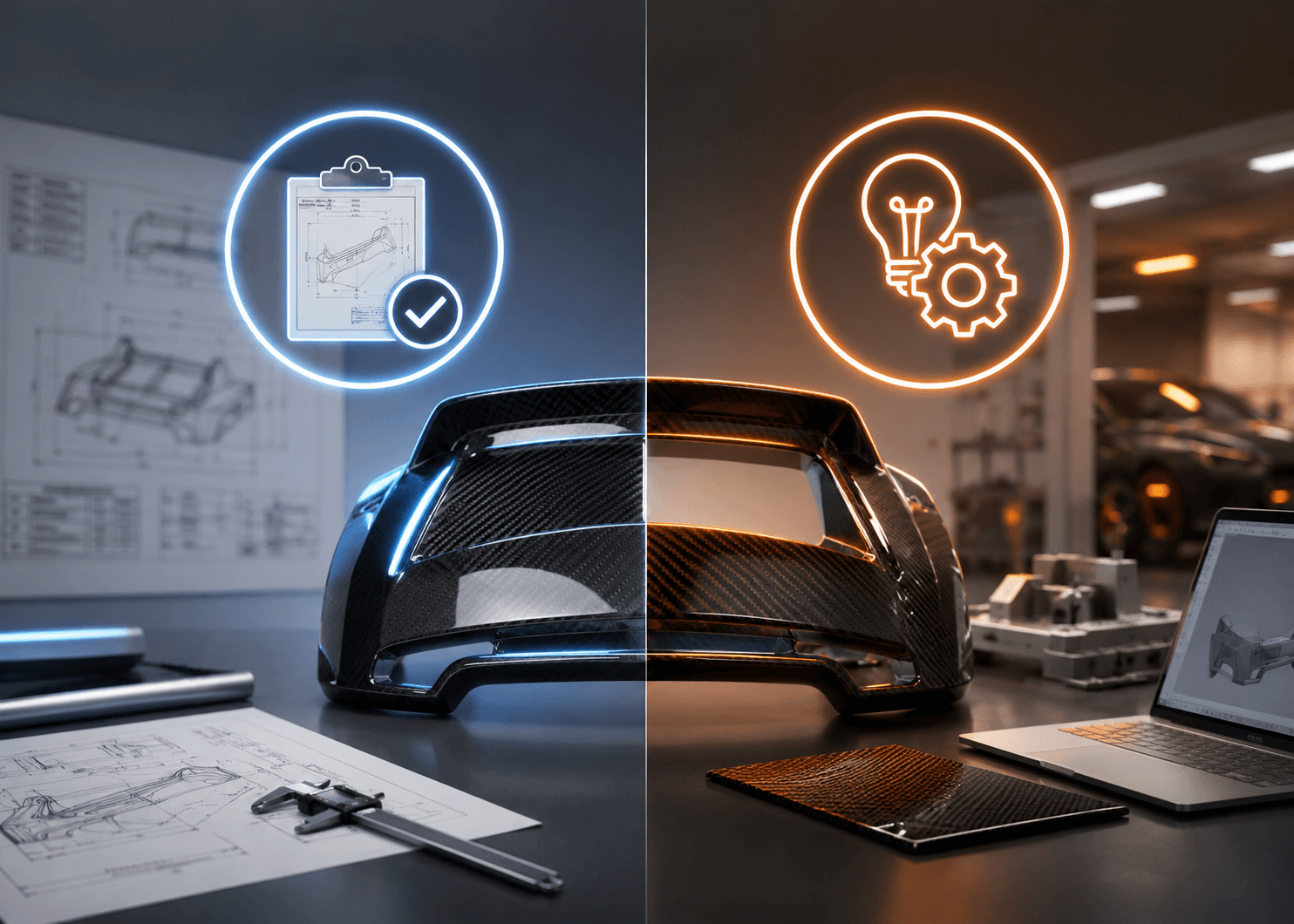
A complete carbon fiber brand development program should connect market planning with engineering and production.
A practical one-stop process may include:
- Concept and market review
- Target vehicle selection
- Reference image or sketch review
- Vehicle data evaluation
- 3D product design
- Appearance and proportion confirmation
- Engineering and DFM analysis
- Structural optimization
- Mold planning and tooling
- First sample production
- Fitment and surface validation
- Sample approval
- Production-standard documentation
- Small-batch trial production
- Repeatable mass production
- Packaging and delivery planning
This is especially valuable for buyers without internal engineering teams.
When design, scanning, molds, manufacturing, packaging, and logistics are handled by disconnected suppliers, the project can suffer from data conversion errors, unclear responsibility, repeated revisions, mold rework, schedule delays, and inconsistent standards.
An integrated development partner can reduce these communication gaps by managing the project through one coordinated system.
More information about structured development can be found through JC SPORTLINE’s carbon fiber project management capabilities.
From Generic Carbon Fiber Parts to a Recognizable Brand
A standard product with a new sticker is not always enough to create a strong carbon fiber car brand.
A recognizable brand needs a consistent product identity. This identity may include signature styling, selected vehicle coverage, specific finishes, product naming, packaging, and visual presentation.
Exclusive Styling
Exclusive products can include distinctive vent layouts, aerodynamic lines, surface details, mounting solutions, or coordinated design language across multiple parts.
A signature product style helps customers and dealers recognize the brand without relying only on the logo.
Brand Marking Options
Depending on the product and manufacturing process, brand identification may be added through:
- mold-integrated markings;
- engraving;
- under-clear-coat logos;
- removable decals;
- labels;
- metal badges;
- serial numbers;
- branded installation instructions;
- private-label boxes.
The right method depends on durability requirements, finish, product size, MOQ, tooling, cost, and whether the branding needs to be permanent.
Named Product Series
Creating a named carbon fiber series can help a seller present related parts as one coordinated range.
For example, a product series may include a front lip, side skirts, diffuser, spoiler, hood, and interior trim developed for the same vehicle platform. Consistent naming and photography make the products easier for dealers and customers to understand.
Protecting Original Carbon Fiber Designs
Original development requires investment, so project ownership and confidentiality should be discussed before design work begins.
Protection methods may include:
- nondisclosure agreements;
- defined design ownership;
- tooling-use agreements;
- confidentiality requirements;
- controlled access to project files;
- exclusive molds where agreed;
- customer-controlled branding;
- private-label packaging;
- regional distribution arrangements.
For selected projects, China-based intellectual-property support may also help reduce copying risk.
No agreement can eliminate all risk. However, clear ownership rules, limited data access, contractual protection, and controlled tooling use can make unauthorized copying more difficult.
Buyers can learn more through JC SPORTLINE’s brand protection for carbon fiber products resources.
How Standardized Production Builds Dealer Confidence
Dealers need confidence that the next batch will match the first batch. This is one of the most important factors in long-term B2B supply.
Common carbon fiber production issues include:
- distorted or inconsistent weave;
- pinholes;
- resin marks;
- gloss variation;
- surface scratches;
- fitment errors;
- dimensional changes;
- incorrect drilling positions;
- weak packaging;
- unstable delivery schedules.
Standardized production helps reduce these risks through:
- controlled molds;
- documented material specifications;
- repeatable layup standards;
- controlled forming and curing parameters;
- trimming and drilling fixtures;
- surface-finishing standards;
- dimensional inspection;
- fitment checks;
- appearance inspection;
- master-sample comparison;
- batch QC;
- production records;
- traceability;
- packaging requirements.
A dealer is more willing to promote a product when it can trust fitment, appearance, lead time, availability, and after-sales response.
Reliable manufacturing therefore supports both product quality and channel growth.
A Practical Growth Path from Auto Parts Seller to Carbon Fiber Brand
Traditional auto parts companies should upgrade in stages rather than immediately investing in a large custom catalog.
Stage 1: Select the Market and Vehicle Platforms
Review popular local vehicle models, customer inquiries, tuning activity, product price levels, and dealer demand.
Choose whether the new category will focus on performance cars, luxury vehicles, motorsport applications, or general premium modification.
Stage 2: Test Standard Carbon Fiber Products
Begin with selected existing products to evaluate demand, pricing, fitment, shipping, and installer feedback.
This allows the company to understand the market before investing in custom tooling.
Stage 3: Introduce Private-Label Branding
Once sales are stable, add branded packaging, product labels, instructions, and consistent photography.
This begins the transition from reseller to brand.
Stage 4: Develop Exclusive Products
Use customer ideas, sketches, references, samples, or vehicle data to create signature products.
At this stage, NDA terms, tooling ownership, brand identity, and future order planning should be defined.
Stage 5: Build a Coordinated Product Line
Expand from individual parts to a complete vehicle-specific series. Product-line planning can cover exterior aerodynamics, hoods, spoilers, trim, and interior components.
Stage 6: Grow Dealer and Regional Partnerships
Provide dealers with clear product data, application information, professional images, pricing structures, packaging, and supply plans.
Stable products make it easier to develop wholesale and regional cooperation.
Investing in custom products too early can create unnecessary tooling costs, excessive SKUs, repeated design changes, unclear positioning, and slow returns. Market validation should come before large-scale development.
Results: Better Dealer Relationships and Higher-Value Orders
A differentiated range of carbon fiber auto parts can help an established seller move beyond low-price competition.
Potential business benefits include:
- stronger dealer confidence;
- more repeat orders;
- access to premium vehicle customers;
- higher-value custom inquiries;
- cooperation with tuning brands;
- private-label opportunities;
- regional distribution growth;
- stronger brand recognition;
- better long-term customer relationships.
These results depend on product-market fit, local vehicle demand, design quality, manufacturing consistency, pricing, sales execution, dealer support, and reliable supply.
Carbon fiber is not an automatic growth solution. It becomes valuable when it is developed as part of a clear product and brand strategy.
JC SPORTLINE supports automotive product development as part of its broader carbon fiber automotive and carbon fiber solutions capabilities.
Conclusion: Build a Product Line, Not Just a Catalog
Moving from a local auto parts seller to a carbon fiber brand does not require owning a factory or internal design team. It requires a clear market position and a manufacturing partner capable of turning product ideas into repeatable, branded products.
Start with market and vehicle research. Test selected products. Build private-label identity. Develop exclusive designs only after demand becomes clearer. Then create a coordinated product line and use stable quality to build stronger dealer relationships.
If your business is ready to move beyond generic parts, contact an experienced carbon fiber automotive parts manufacturer for product-line planning, vehicle data support, design, mold development, private labeling, stable production, and long-term B2B growth.
FAQ
Can I build a carbon fiber brand without an internal design team?
Yes. A capable manufacturer can support concept review, 3D design, vehicle data matching, engineering analysis, mold development, prototypes, and production. The buyer should define the target market, vehicle models, brand direction, budget, and expected quantity.
Can you customize carbon fiber products from only an idea or sketch?
Yes. A project may begin with an idea, hand sketch, reference image, physical sample, or 3D file. The manufacturer should first evaluate feasibility, structure, process, cost, tooling, and validation requirements.
Do you support OEM and ODM carbon fiber automotive projects?
Yes. OEM projects usually begin with buyer-provided designs, samples, or specifications. ODM projects involve more design, engineering, and product-development support from the manufacturer.
How do you protect a client’s original carbon fiber design?
Protection may include NDAs, ownership agreements, controlled project data, tooling-use terms, confidentiality requirements, exclusive molds where agreed, and private-label arrangements. These measures reduce risk but cannot completely eliminate copying.
Can you add customer logos and private-label branding?
Yes. Branding options may include decals, under-clear-coat logos, engraving, mold markings, labels, badges, and custom packaging. The correct method depends on the product, finish, process, durability target, MOQ, and budget.
What information should I provide for a catalog or custom quotation?
Provide the vehicle model, production year, required product type, expected quantity, material preference, gloss or matte finish, destination country, and whether you need standard products or custom development.