B2B buyers can reduce carbon fiber supplier risk by evaluating more than the quotation and first sample. A reliable supplier should be able to explain its mold capacity, production schedule, material specifications, process controls, inspection standards, corrective-action procedures, and plan for repeat orders.
The lowest quotation does not always create the lowest purchasing cost. The real cost of a carbon fiber project can include mold corrections, delivery delays, rejected batches, emergency freight, installation problems, returns, stock-outs, after-sales labor, and damage to the buyer’s reputation.
A strong carbon fiber manufacturer should not only produce an attractive sample. It should be able to convert that sample into a stable production standard and maintain quality across repeat orders.
Why the Lowest Price Can Become the Highest Risk
A low quotation is not automatically a warning sign. Some suppliers may have efficient production, better material purchasing, or lower overhead. However, an unusually low price should lead to more questions.
The buyer needs to understand what is included in the quotation and what may have been removed to achieve it.
Possible hidden compromises include:
- insufficient tooling investment;
- too few molds for the planned quantity;
- lower-grade carbon fiber or resin;
- simplified layup structures;
- reduced curing time;
- limited surface-finishing work;
- fewer inspection steps;
- weak packaging;
- inexperienced operators;
- no reserve capacity for urgent orders.
These compromises may not be visible in one carefully prepared sample. They often appear later during mass production.
The Difference Between Unit Price and Total Purchasing Cost
Suppose one supplier offers a lower unit price but delivers late, creates inconsistent batches, or requires frequent rework. The buyer may then face:
- mold repair costs;
- emergency air freight;
- installation corrections;
- rejected inventory;
- customer returns;
- negative reviews;
- missed sales periods;
- distributor complaints;
- replacement supplier costs.
The lower quotation can therefore create a higher total business cost.
When comparing suppliers, buyers should evaluate the complete offer:
- material specification;
- resin system;
- manufacturing process;
- tooling plan;
- surface standard;
- inspection method;
- packaging;
- realistic lead time;
- monthly capacity;
- quality responsibility.
A professional carbon fiber company should be willing to explain how the quotation connects to the selected process and quality level.
Delivery Risk: Limited Molds and No Priority Capacity
Delivery problems are often described simply as “the factory is busy.” In reality, delays usually come from a combination of tooling, labor, finishing capacity, production planning, and material availability.
Why Mold Quantity Matters
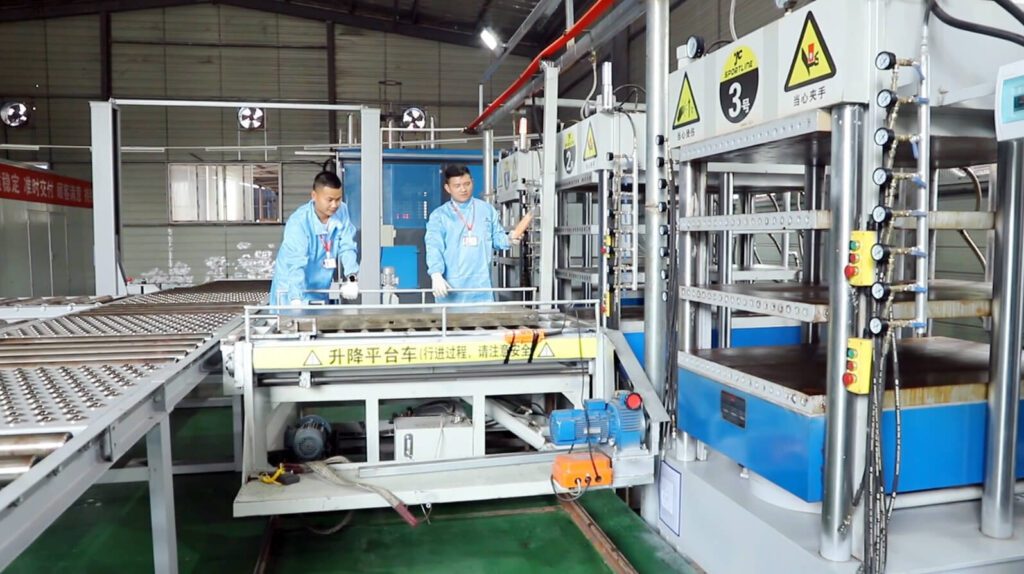
Carbon fiber output is closely connected to mold availability. If a supplier has only one usable mold for a high-demand product, production may become a bottleneck even when the factory has enough workers.
Buyers should ask:
- How many usable molds are available?
- How many parts can each mold produce per cycle?
- How long is the curing cycle?
- Is time needed for mold cooling, cleaning, or maintenance?
- Is there a backup mold if one is damaged?
A supplier may have strong overall factory capacity while still lacking sufficient tooling for one specific product.
Production Is More Than Molding
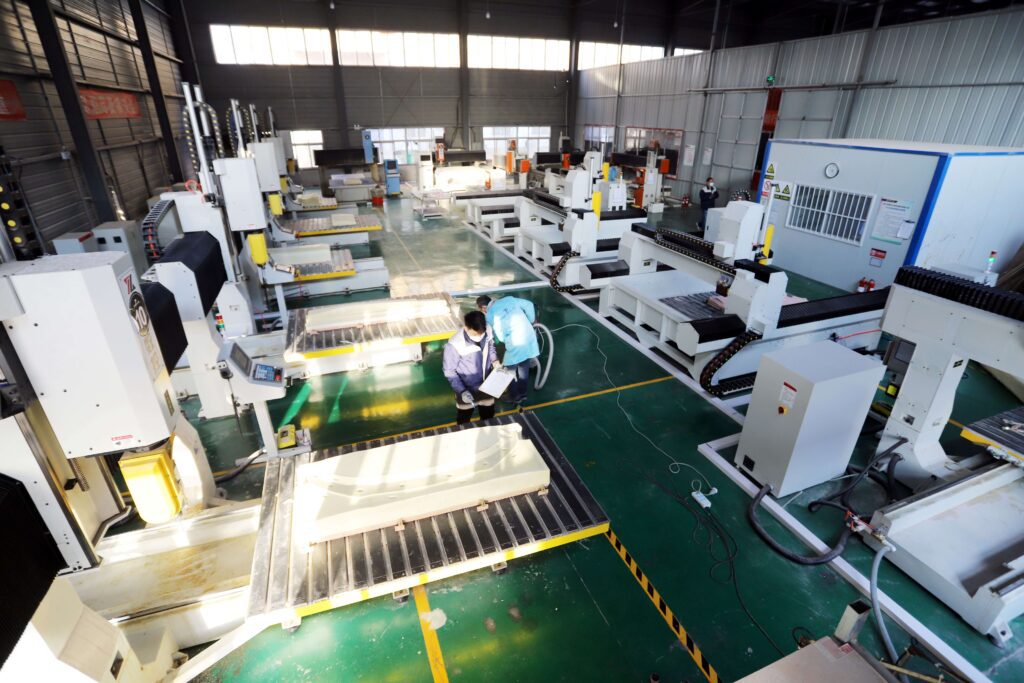
A part may leave the mold on time but still wait for trimming, drilling, sanding, coating, polishing, fitment inspection, or packaging.
Potential bottlenecks include:
- autoclave or oven availability;
- compression-molding capacity;
- skilled layup workers;
- CNC trimming;
- coating lines;
- polishing stations;
- final inspection;
- packaging preparation.
The production schedule should include the complete manufacturing route, not only the molding stage.
Questions to Confirm Before a Bulk Order
Before placing a large order, B2B buyers should confirm:
- the current production load;
- mold availability;
- raw-material status;
- planned start date;
- expected output by week;
- coating and finishing lead time;
- inspection time;
- staged-delivery options;
- priority scheduling;
- backup plans for rework or mold damage.
For suitable standard orders, production may take approximately 15–45 days. However, this is only a general reference. Large parts, complex finishes, limited molds, high quantities, or strict validation requirements may require a longer schedule.
A responsible supplier should provide a realistic plan instead of promising an attractive date that cannot be supported by capacity.
Reducing Stock-Out Risk for Distributors
For distributors and e-commerce sellers, late delivery affects more than one purchase order. A stock-out can reduce store ranking, interrupt advertising, lower conversion, and damage customer confidence.
Long-term partners may reduce this risk through:
- sales forecasting;
- material reservation;
- semi-finished inventory;
- staged delivery;
- safety stock;
- overseas warehouse support;
- priority production;
- capacity booking for bestsellers.
The right strategy depends on demand stability. A new product may not justify large safety stock, while a proven bestseller may require reserved capacity and semi-finished inventory.
A reliable carbon fiber wholesale supplier should help buyers plan future demand instead of waiting until stock reaches zero.
Quality Risk: When the Sample Is Good but Bulk Production Is Unstable
A single excellent sample does not prove that a supplier can manage mass production.
Samples often receive extra attention. The most experienced technician may produce them, and the factory may spend more time on finishing and inspection. When the order moves into regular production, more workers, molds, materials, and production cycles become involved.
This is when variation can appear.
Common Sample-to-Production Problems
B2B buyers may encounter:
- inconsistent carbon weave;
- different fiber direction;
- gloss variation;
- color differences;
- pinholes;
- resin marks;
- surface scratches;
- coating defects;
- dimensional changes;
- mounting-point errors;
- weight variation;
- inconsistent trimming;
- packaging damage.
Some of these defects are visual. Others affect installation, product performance, or customer satisfaction.
What Creates Batch Consistency?
Stable production requires control over:
- approved materials;
- carbon fabric specification;
- layup sequence;
- fiber orientation;
- ply count;
- resin system;
- curing conditions;
- mold condition;
- trimming fixtures;
- drilling fixtures;
- coating environment;
- polishing standards;
- inspection methods.
If these requirements exist only in the experience of one worker, quality may change when another person or production team takes over.
A professional carbon fiber factory should convert production knowledge into documented standards.
Locking the Approved Sample as the Mass-Production Standard
One practical way to reduce quality disputes is to lock the approved sample as the official production standard.
After the buyer confirms the sample, both sides should document the characteristics that matter.
These may include:
- dimensions;
- product weight;
- visible weave;
- surface gloss;
- color;
- mounting points;
- trimming boundaries;
- hardware;
- packaging.
The approved sample then becomes the reference for production and final inspection.
Why Sample Locking Helps
Sample locking can:
- reduce subjective judgments;
- create a clear inspection baseline;
- improve buyer-factory communication;
- reduce disputes;
- support repeat orders;
- make changes easier to control.
If the buyer later requests a different finish, structure, material, or mounting method, the change should be formally reviewed rather than introduced informally during production.
However, sample locking alone is not enough. The factory must also document the material, layup, curing, finishing, and inspection conditions used to produce the sample.
Process Control: Why Final Inspection Alone Is Not Enough
Final inspection is necessary, but it cannot correct every problem created earlier in production.
For example, final QC may identify an incorrect mounting point, but the part may already require rework or rejection. It is more efficient to prevent the error through accurate tooling, fixtures, and in-process inspection.
Quality control should therefore cover the full process.
Incoming Material Control
The supplier should verify:
- carbon fiber specification;
- prepreg or resin batch;
- shelf life;
- storage conditions;
- clear coat and bonding materials;
- material traceability.
Changing a resin, fabric, or coating without review can affect color, weight, curing, appearance, or durability.
Mold and Tooling Control
Molds and fixtures should be checked for:
- dimensional accuracy;
- surface condition;
- damage;
- contamination;
- wear;
- reference points;
- trimming and drilling accuracy.
A good material cannot compensate for a damaged or inaccurate mold.
Layup and Forming Control
Key controls include:
- material cutting;
- ply count;
- layup direction;
- sequence;
- reinforcement placement;
- vacuum preparation;
- pressure and forming conditions.
Visible carbon parts require particular attention because fiber movement can affect both appearance and structure.
Curing Control
Depending on the selected process, the supplier may need to monitor:
- temperature;
- vacuum;
- pressure;
- curing time;
- cooling conditions;
- process records.
Uncontrolled curing can lead to dimensional variation, resin problems, voids, or unstable mechanical properties.
Surface-Finishing Control
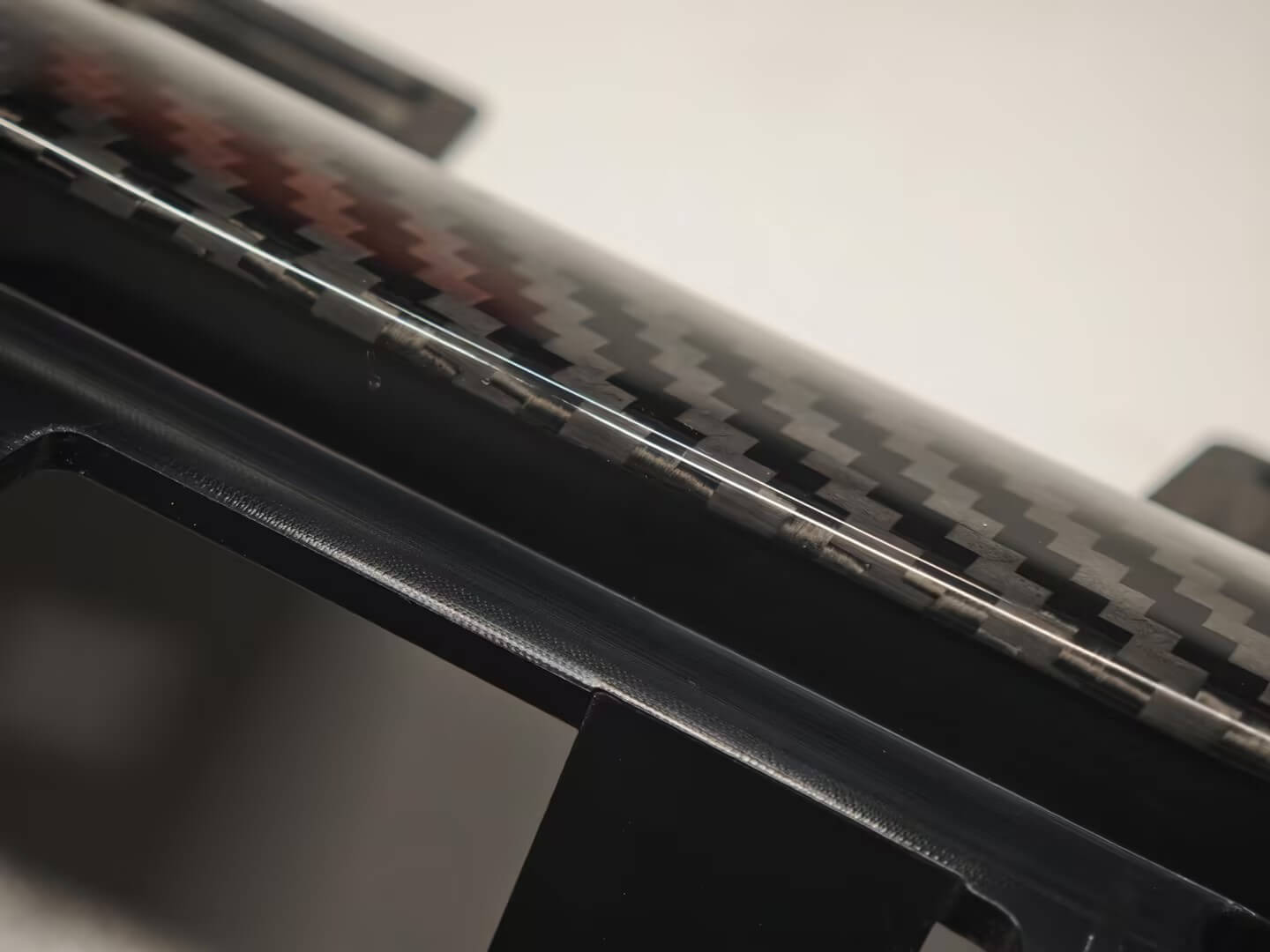
Visible carbon fiber quality depends heavily on finishing.
Control points may include:
- sanding;
- primer;
- clear coat;
- coating thickness;
- spray temperature and humidity;
- gloss level;
- polishing;
- final appearance inspection.
Gloss and color consistency become especially important when multiple parts are installed on the same vehicle or sold as one product series.
Inspection and Packaging
Before shipment, products should be checked for:
- surface finish;
- key dimensions;
- mounting points;
- fitment;
- hardware;
- packaging condition;
- project-specific requirements.
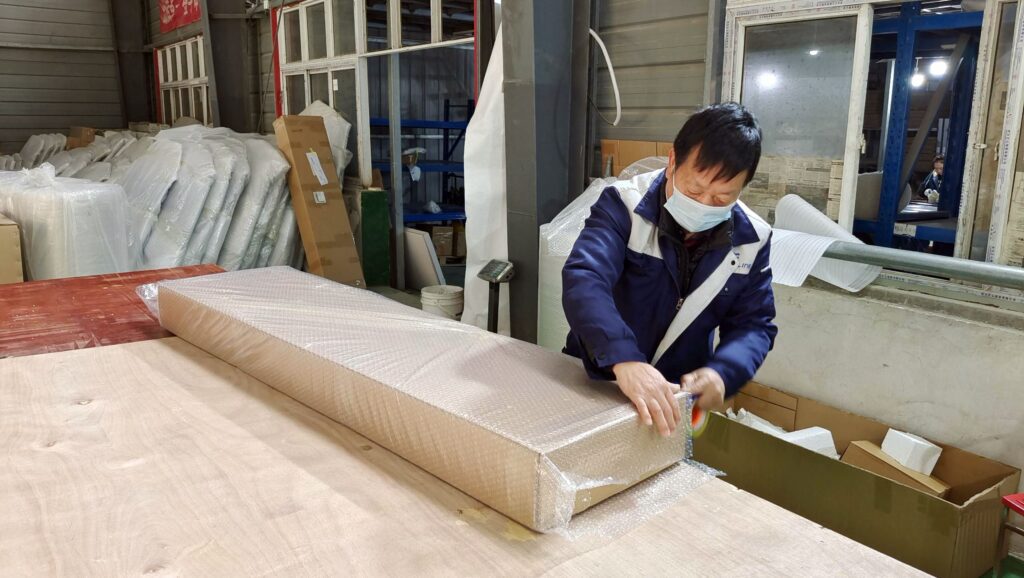
Packaging is part of quality control. A correctly manufactured part can still arrive damaged if it is not supported and protected properly.
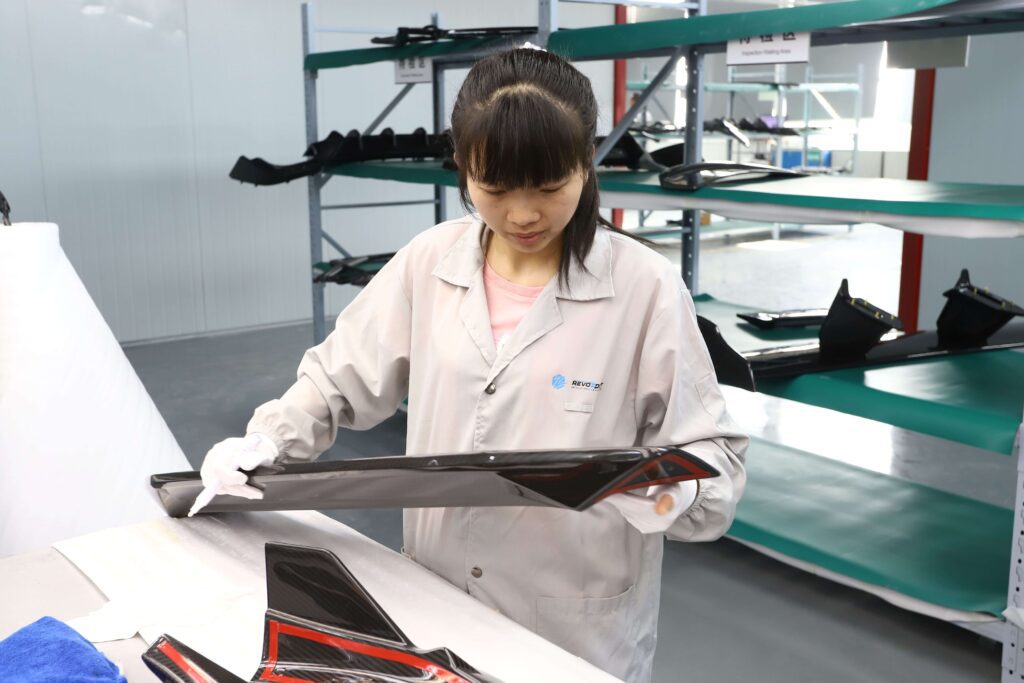
IPQC, FQC, and OQC
A reliable quality system uses inspection at several stages.
IPQC, or in-process quality control, checks the product during manufacturing. This helps identify problems before more time and materials are added.
FQC, or final quality control, evaluates the finished product against the approved standard.
OQC, or outgoing quality control, confirms that the inspected product, packaging, labels, documents, and shipment condition meet the order requirements before dispatch.
These controls work together. None of them should be treated as a complete quality guarantee on its own.
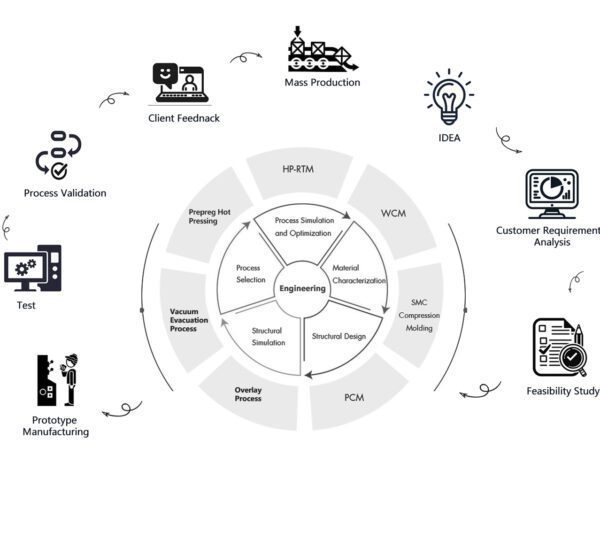
Case: Improving Batch Consistency for a European Premium Tuning Brand
A European premium tuning brand sold visible carbon fiber exterior parts. Its customers expected consistent weave, gloss, color, and fitment.
The brand’s former supplier could produce attractive samples, but bulk orders showed significant variation. Some products had different weave directions, inconsistent gloss, and noticeable color differences between batches.
These issues increased after-sales claims and weakened the customer’s confidence in China-based suppliers.
Approved Sample Locking
After sample confirmation, JC SPORTLINE used the approved part as the official production and inspection reference.
This created a clear baseline for appearance, fitment, and finishing.
Standardized Materials and Layup
The team documented:
- carbon fabric specifications;
- selected 3K and 12K combinations where required;
- layup sequence;
- fiber direction;
- operating requirements.
The objective was to reduce variation between workers, production periods, and batches.
In-Process and Final Inspection
Critical production stages were reviewed during manufacturing. Finished parts received appearance, dimensional, and fitment checks before shipment.
This allowed some problems to be identified earlier instead of after the goods reached Europe.
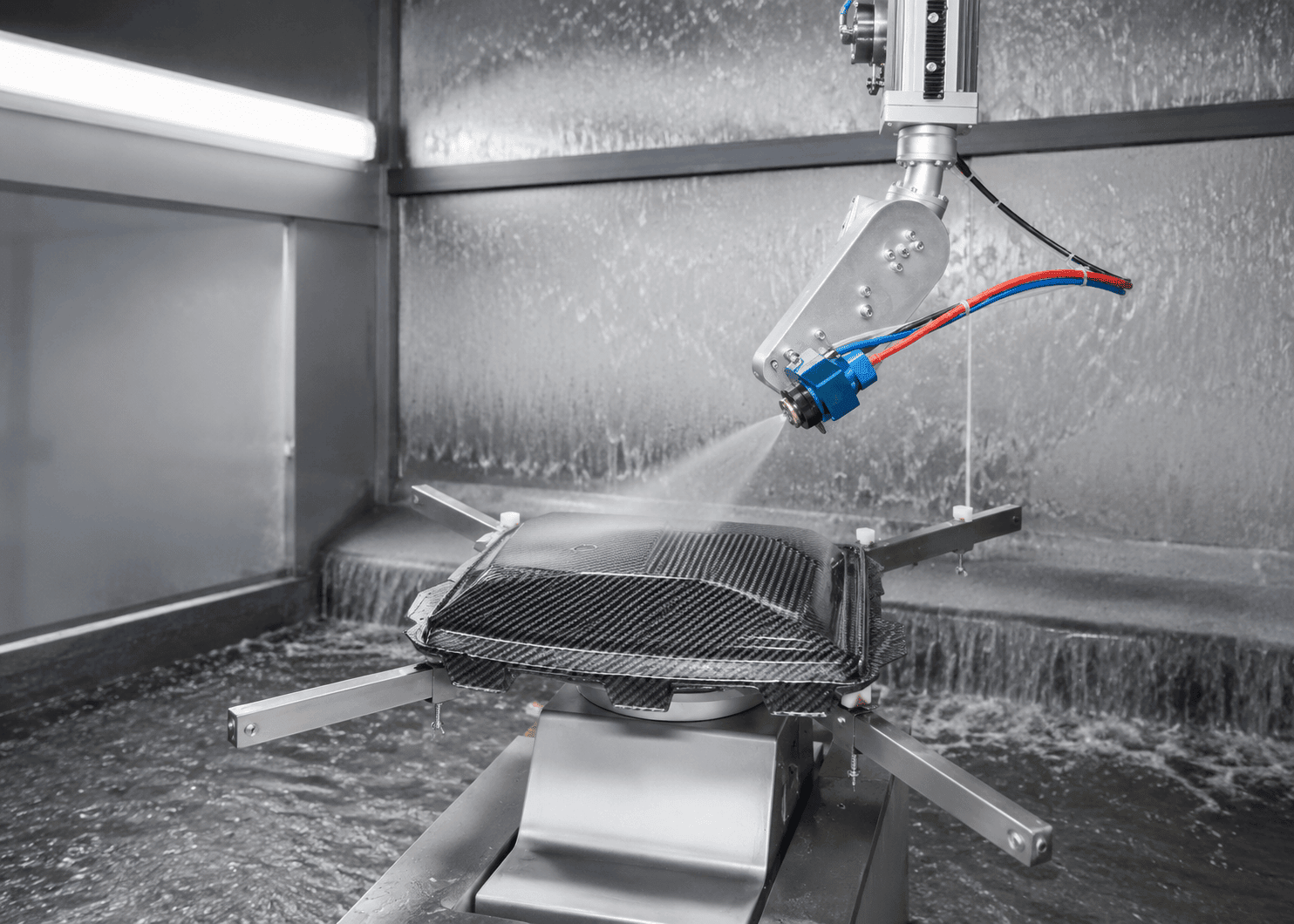
Surface-Finishing Optimization
A consistent PPG clear-coat system was selected for the project. The coating environment was controlled for temperature and humidity, while polishing and final inspection requirements were strengthened.
Small-Batch Validation
Before scaling the order, a small batch was produced to verify:
- material consistency;
- weave;
- gloss;
- color;
- fitment;
- repeatability.
Production volume increased only after the pilot batch was accepted.
According to the project record, batch consistency improved, after-sales pressure decreased, and the buyer developed stronger supply-chain confidence. Orders for one product line reportedly increased by more than 30%, and JC SPORTLINE became one of the customer’s core suppliers.
These were project-specific results, not guarantees for every buyer. Outcomes depend on the product, quality requirements, market demand, supplier cooperation, and sales performance.
Small-Batch Validation Before Scaling Production
A pilot batch can add time at the beginning of a project, but it may prevent much larger losses later.
Small-batch validation is particularly useful when working with:
- a new supplier;
- a new mold;
- a premium visible product;
- a new coating system;
- strict fitment requirements;
- a new material combination;
- a high-volume future order.
The pilot batch should verify:
- appearance;
- weave direction;
- gloss;
- color;
- dimensions;
- mounting points;
- weight;
- packaging;
- production cycle;
- inspection method.
Once the process is stable, the order can move into larger production with a clearer standard.
What Happens When a Serious Batch Quality Issue Occurs?
No supplier can honestly promise that quality problems will never occur. The more important question is whether the supplier has a defined process for responding to them.
A typical serious-quality-issue process includes:
- Identify and isolate the affected products.
- Issue an NCR or nonconformance report.
- Review defect evidence and inspection data.
- Investigate the root cause.
- Involve engineering, quality, and production teams.
- Define temporary containment measures.
- Establish corrective actions.
- Update SOPs and inspection standards.
- Confirm responsibility.
- Agree on rework, replacement, credit, or another commercial solution.
- Verify the corrective action in later production.
The supplier should not only resolve the current complaint. It should prevent the same problem from appearing again.
The final commercial solution should follow the agreed specification, inspection evidence, responsibility, and purchase agreement. Automatic refund or replacement terms should not be assumed unless they were agreed in advance.
Testing and Inspection for Carbon Fiber Products
Testing should be selected according to the actual application.
Possible inspections and tests include:
- dimensional inspection;
- fitment evaluation;
- temperature cycling;
- UV aging;
- rain exposure;
- humidity testing;
- impact resistance;
- coating adhesion;
- surface hardness;
- tensile testing;
- corrosion-related testing;
- packaging and transport inspection.
Not every product requires every test. A decorative interior trim and a structural outdoor component have different risks.
The buyer and supplier should define the validation plan according to application conditions, performance goals, industry requirements, and project value.

How JCSPORTLINE Reduces Carbon Fiber Supplier Risk
JCSPORTLINE manages supplier risk through a combination of production standards, quality control, and capacity planning.
Its approach can include:
- approved-sample locking;
- documented material and layup standards;
- mold and fixture control;
- process-parameter records;
- in-process inspection;
- final and pre-shipment inspection;
- surface-finishing standards;
- dimensional and fitment checks;
- small-batch validation;
- NCR and corrective-action procedures;
- capacity review;
- staged delivery;
- semi-finished inventory for suitable projects;
- priority planning for long-term partners.
Buyers can review JC SPORTLINE’s carbon manufacturing facilities and mass production capabilities when evaluating a long-term supply partner.
FAQ
How do you guarantee carbon fiber product quality?
Quality is controlled through material selection, documented SOPs, mold accuracy, process inspection, finishing standards, fitment checks, and final QC. Quality does not depend on one inspection alone.
What tests can be performed for carbon fiber products?
Testing may include dimensional inspection, fitment review, temperature cycling, UV aging, rain or humidity exposure, impact resistance, coating adhesion, surface hardness, tensile testing, corrosion-related testing, and packaging inspection.
Do you inspect every product before shipment?
Finished products are inspected before shipment for surface condition, key dimensions, mounting points, packaging, and project-specific requirements. The exact standard should be confirmed before mass production.
What happens if a serious batch quality issue occurs?
The supplier should isolate affected products, issue an NCR, investigate the root cause, define corrective actions, update process standards, and communicate a solution based on evidence and agreed responsibility.
What is the normal lead time for bulk carbon fiber orders?
Lead time depends on quantity, process, product size, mold availability, finishing requirements, validation, and factory capacity. Suitable standard orders may require approximately 15–45 days, while complex orders may take longer.
How can distributors reduce stock-out risk?
Distributors can use sales forecasting, semi-finished inventory, staged delivery, safety stock, material reservation, overseas warehouse support, and priority production for proven high-demand products.
Conclusion: Evaluate the System Behind the Sample
Choosing a carbon fiber supplier is not only about finding a product that looks good or receiving the lowest quotation.
A reliable supplier should prove that it can:
- deliver realistic quantities on schedule;
- reproduce the approved sample;
- control quality throughout production;
- identify and correct problems;
- support repeat orders and long-term supply.
For B2B buyers, the strongest protection is a clear system covering materials, molds, layup, curing, finishing, inspection, packaging, capacity, and corrective action.
If your company is evaluating a carbon fiber factory, planning a pilot order, or preparing for mass production, contact JCSPORTLINE through the carbon fiber project contact page to discuss sample standards, production capacity, quality requirements, inspection planning, and long-term supply risk.