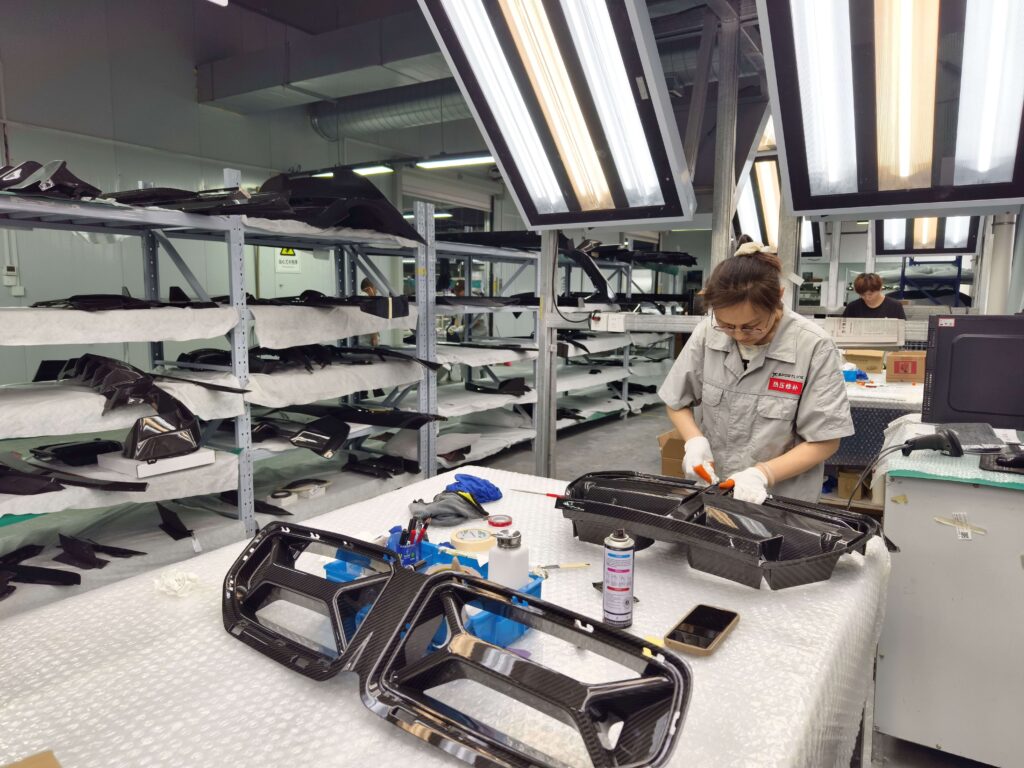
The most common line a procurement manager hears from a carbon fiber supplier is “if there’s a problem, we’ll handle it.” It answers none of the three questions that decide the outcome when a container lands: who is responsible, what evidence settles it, and what process fixes it. So do carbon fiber parts come with a warranty? They should — but a real carbon fiber parts warranty is not an open-ended replacement promise. It is a closed loop: standard confirmation, production inspection, protective packaging, evidence-based liability, and corrective prevention. For brands, importers, and distributors evaluating a Chinese factory, the warranty you can audit is worth more than the one you’re told.
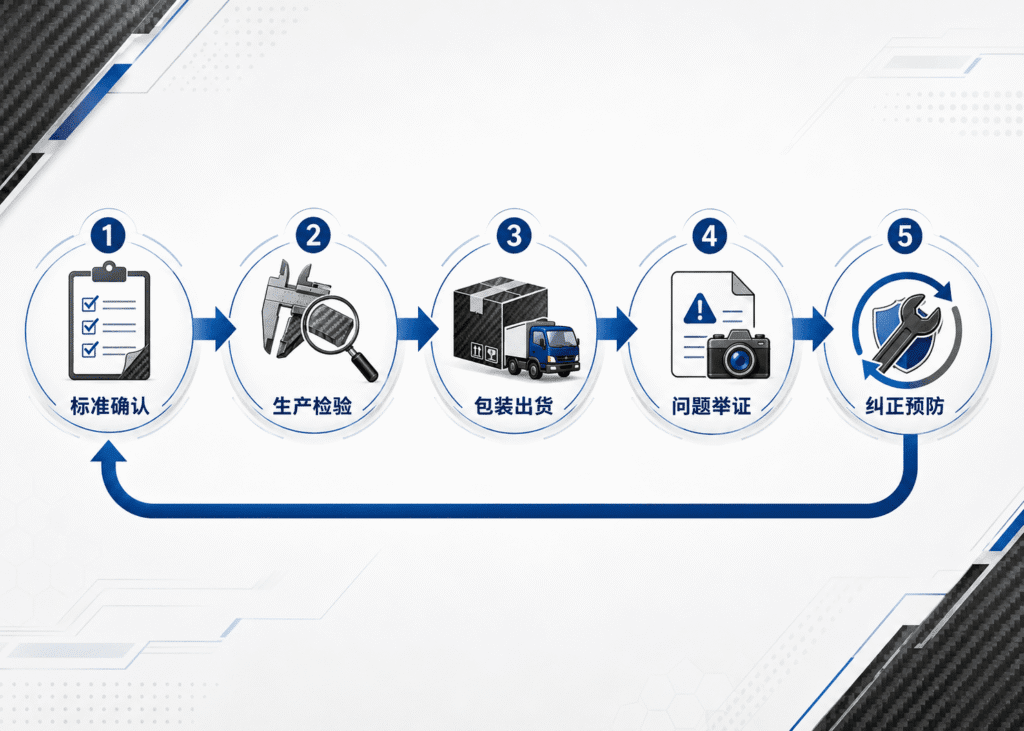
Do Carbon Fiber Parts Come With a Warranty? What a Real Warranty Actually Covers
A credible auto parts warranty in composites covers defects in material, workmanship, and manufacturing against an agreed standard — not damage from incorrect installation, vehicle-version mismatch, or unapproved modification. What separates a strong aftermarket parts warranty from a weak one is whether the scope, evidence requirements, and handling method exist in writing before production, or only as a sales-stage assurance.
JCSPORTLINE publishes no single universal warranty period or compensation ratio, because honest terms depend on product type and order conditions. Scope, duration, and handling are fixed in the contract, technical agreement, and order confirmation, so when an issue arises both sides already know the rules. That written clarity is the first thing a sourcing manager or import buyer should demand — and the first thing a supplier offering only “we’ll deal with it” cannot show.
Manufacturing Defect vs. Shipping Damage vs. Fitment Problem: A Liability Framework
Most disputes aren’t about whether a part is flawed — they’re about who pays. One question resolves it: at which stage did the problem occur, and is there traceable evidence? Without that framework, the manufacturer, freight forwarder, distributor, and installer just blame each other.
Manufacturing Defects
Delamination, resin pooling, voids, distorted weave, or clear-coat failure tracing back to production is a manufacturing defect, and the manufacturer owns it. This is where who is liable for defective parts is clearest: a flaw built into the part is a defective auto parts case the factory carries.
Shipping Damage and Damaged in Transit
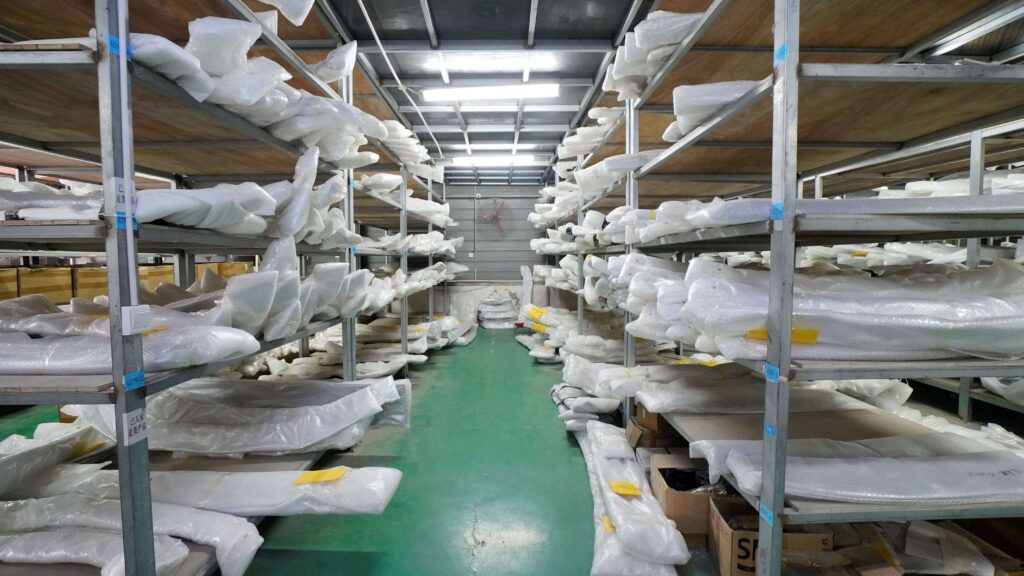
Shipping damage is the contested zone. When the outer box is intact but the part inside is cracked or scratched, the cause is almost always a combination of external force and weak internal protection. A factory that reflexively blames the carrier is dodging accountability — packaging design and internal fixturing sit inside the supplier’s improvement scope, not only the logistics company’s. Damaged in transit claims need the carton condition, delivery sign-off, and unboxing records, which is why knowing how to file a shipping damage claim starts at delivery, not after installation.
Fitment Problems
Hole misalignment and abnormal panel gap are never settled by trading photos. Carbon fiber body kit fitment problems must be judged against original-vehicle data, the exact model version, and the installation method. A factory that puts bolt hole alignment and body kit fitment back onto engineering drawings and original-car scans closes disputes in hours, not weeks. We don’t make absolute “zero panel gap” claims without first defining the vehicle, fitment method, and acceptance standard — most aftermarket parts fitment issues are a data problem, not an opinion problem.
Normal Handcraft Tolerances
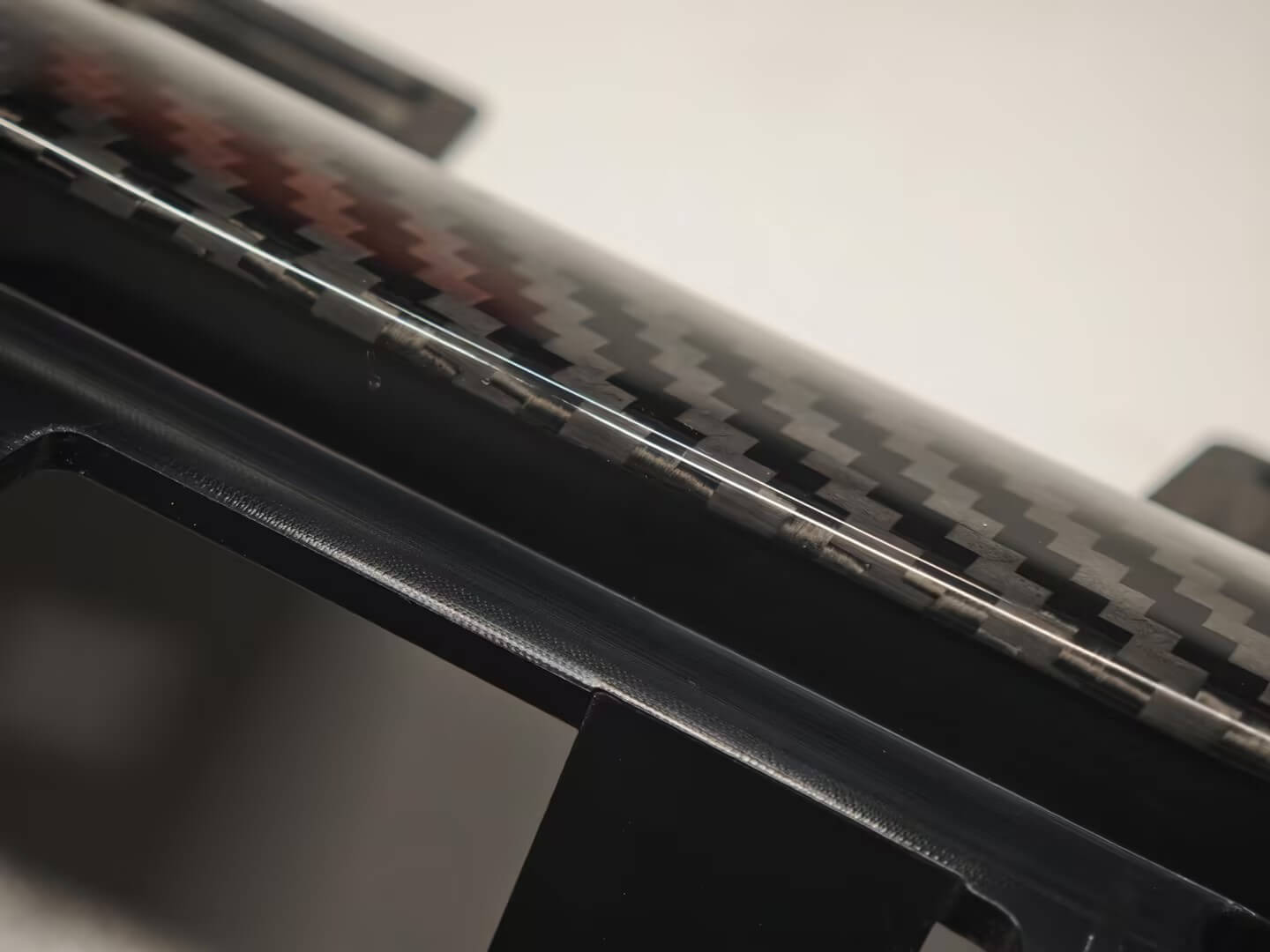
Not every visual variation is a fault. Carbon fiber is laid up and formed by hand; slight weave variation on high-curvature surfaces is normal craft. Confusing tolerance with defect produces false claims in both directions.
| Issue type | Typical signs | Responsible party | Evidence required |
| Manufacturing defect | Delamination, voids, weave distortion, clear-coat failure | Manufacturer | Photos, batch number, inspection record |
| Shipping damage | Cracks/scratches inside an intact box | Carrier + supplier (packaging) | Carton photos, sign-off, unboxing video |
| Fitment problem | Panel gap, hole misalignment | Decided by data vs. install vs. version | Test-fit video, original-car data, drawings |
| Normal tolerance | Slight weave variation on curves | Accepted by agreed standard | Confirmed sample, QC standard |
Table 1 — Liability framework by problem stage.
What to Keep When Parts Arrive Damaged or Don’t Fit: Your Evidence Checklist
What you do in the first hour decides the outcome. The instinct to keep installing or selling is exactly what kills the claim. Handled correctly, here’s what happens if carbon fiber parts arrive damaged — and the sequence that protects you. It also answers the blunt question of parts arrived damaged what to do: stop, document, verify.
Stop installation or sale immediately. Record the batch number. Photograph the outer carton, internal packaging, and the part. Shoot an unboxing video and a test-fit video. Submit a written issue list with order details. A carbon fiber parts inspection report plus these records turns a “your word against mine” standoff into a fast, fact-based resolution.
For overseas distributors and e-commerce sellers, whose end-customer reviews and delivery dates are exposed, this discipline is the cheapest insurance available.
The Real Fix Is Prevention: How Quality Control Stops Problems Before They Ship
Our stance, stated plainly: the best after-sales is the problem that never reaches your overseas warehouse. Repeated re-shipment is not a warranty — it’s the symptom of a factory with no quality control inspection upstream. The leading source of supplier quality issues is the gap between an approved sample and the bulk run, the sample vs mass production consistency problem brands complain about most.
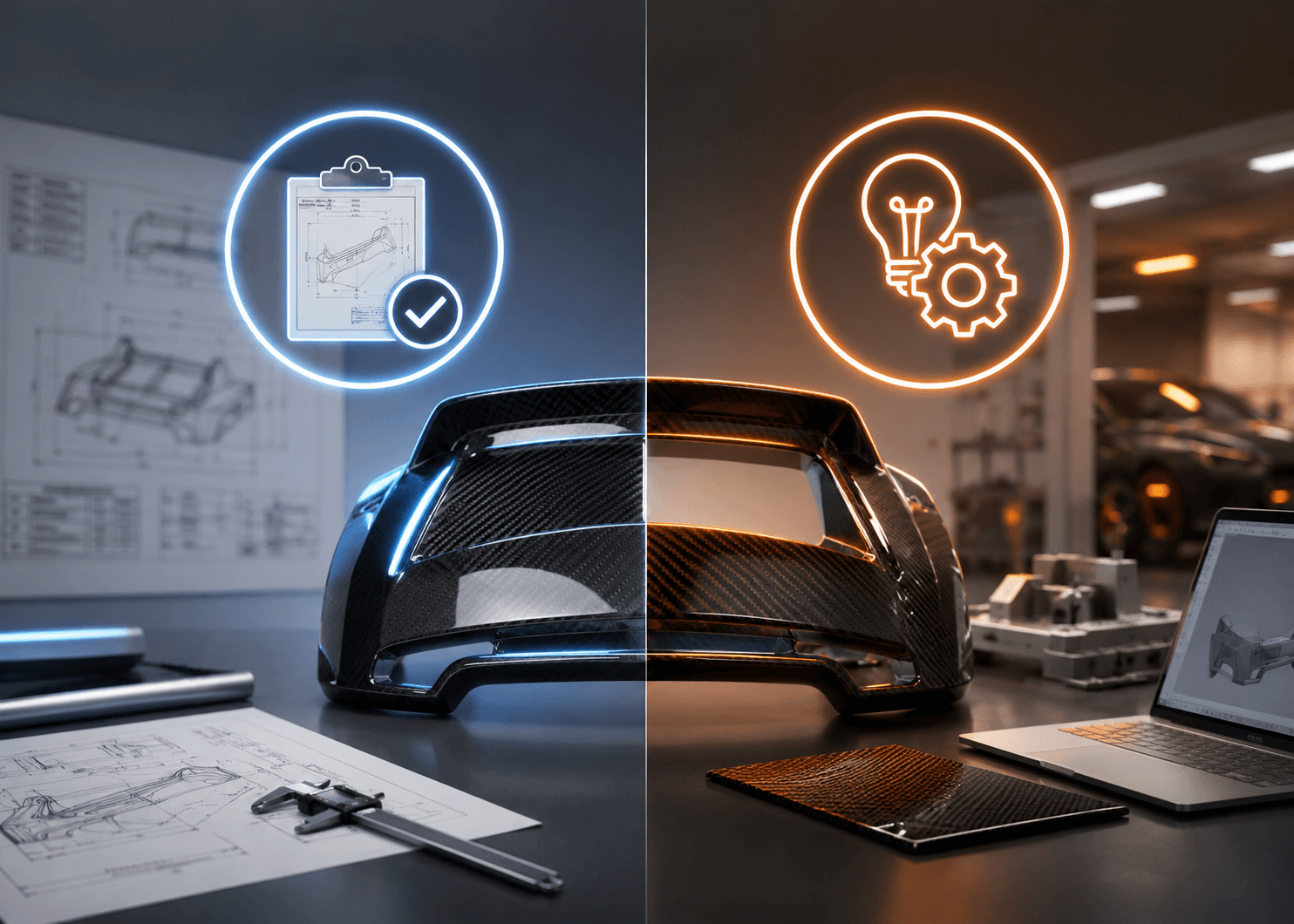
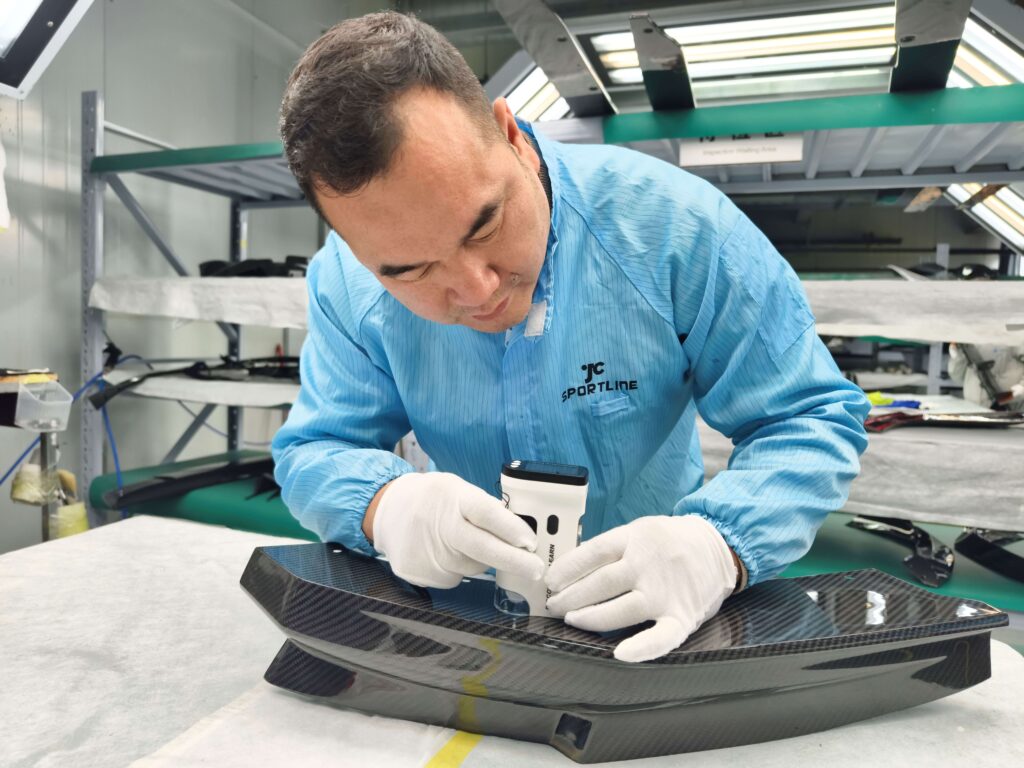
JCSPORTLINE closes that gap before mass production, not after. The approved sample is locked through first article inspection as the single production standard. Layup sequence, fiber orientation, and material spec (3K/12K combinations) are standardized into per-process SOPs. Bulk order quality control runs on real-time IPQC and piece-by-piece FQC, and fitment is judged with original-car scans, 3D models, and dedicated checking fixtures rather than an inspector’s eye. Small-batch validation confirms sample-to-batch consistency before volume scales. That is how batch quality issues become traceable instead of recurring, and how the system separates a one-off defective parts from supplier event from a systemic fault.
A European high-end body-kit brand switched to us after their previous factory delivered great samples but inconsistent batches — weave deviation, gloss variation, color difference, and a climbing after-sales rate. Locking the sample standard and standardizing the layup and surface process lifted batch consistency, cut after-sales, and grew that single product line about 30%+ (a specific project result, not a blanket guarantee). A Taiwanese brand that had leaned on small workshops with no engineering capability moved to us for scan-to-model-to-drawing development, structural optimization cutting weight 8–15%, LOGO-positioning fixtures, and 100% appearance and fit inspection — and ran over five projects with us within a year. The ability to carry a part from scan to stable mass production is what separates an engineering manufacturer from a shop that only copies a shape.
Surface Finish, Coating Tests & Assembly-Before-Shipping: Cutting Local Rework Cost
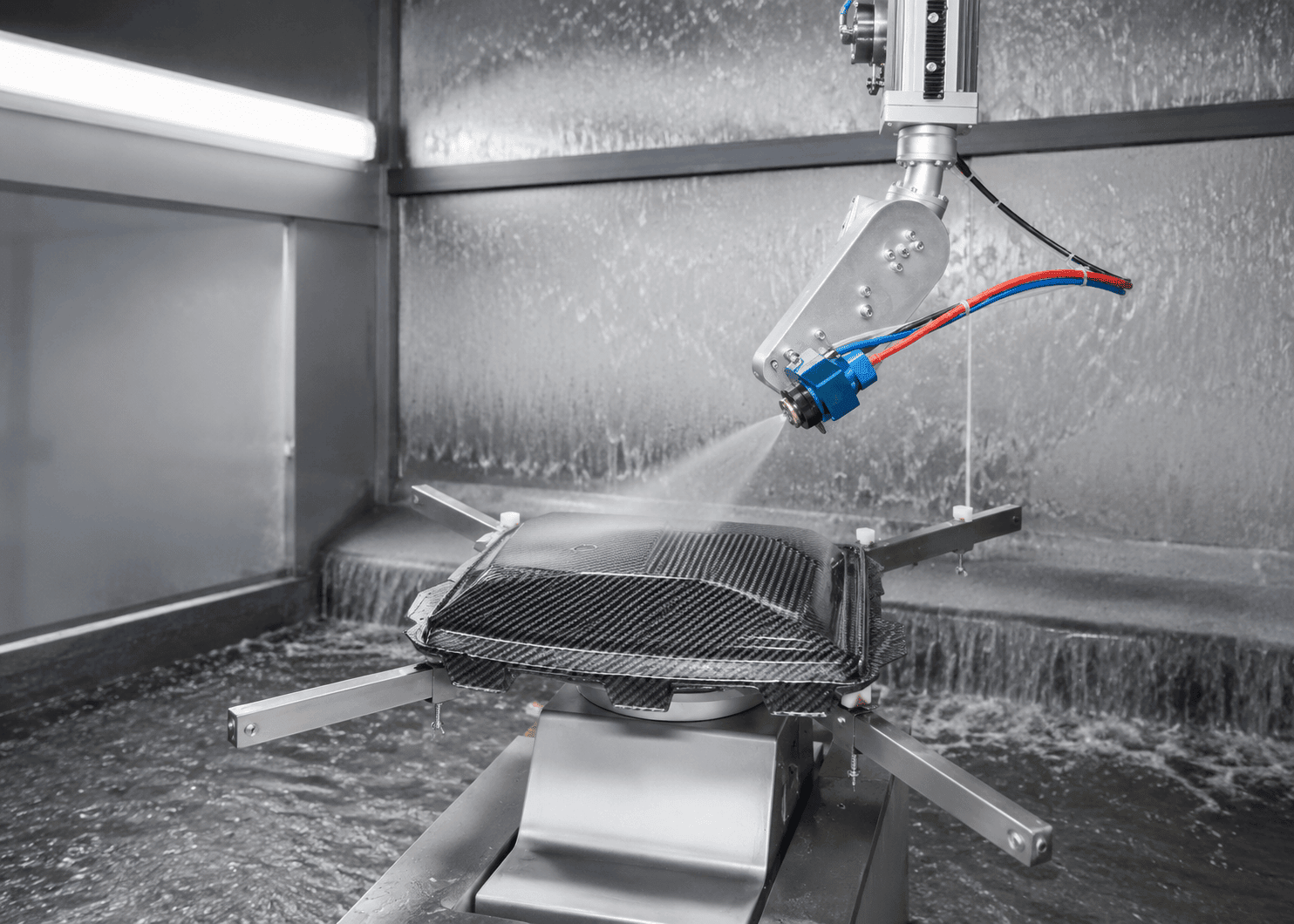
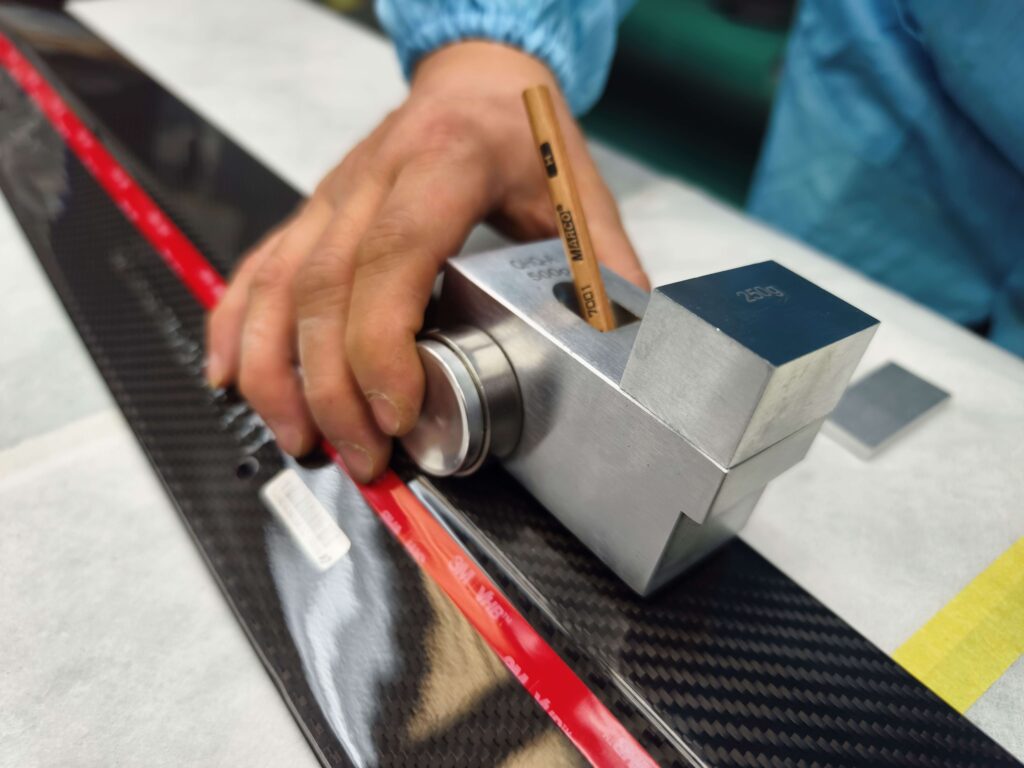
The expensive failures aren’t the obvious cracks — they’re the carbon fiber surface finish defects found after the goods land: dull gloss, surface scratches, rough internal finish, all forcing local repaint, polishing, and reassembly at labor rates well above factory rework. We attack this at the source: coating adhesion and hardness testing on professional equipment, a surface process tuned against the friction and scratching of transit and installation, and high-grade PPG clear coat applied under controlled spray conditions. Where parts suit pre-assembly, we fit embedded nuts and metal hardware and inspect them at the factory, so the buyer’s overseas warehouse skips that labor stage entirely.
A UK client of a global brand was repainting and polishing China-made carbon intake products in its own warehouse because of insufficient gloss, scratches, and rough internal finish. After we added adhesion and hardness testing, pre-assembly of embedded hardware, and a regular feedback loop, their local back-end cost dropped 80% (again, a specific project case). That is what working after-sales support looks like: engineering and quality control inspection that erase the rework, not paperwork that processes it.
From “Lowest Price” to “Total Quality Cost”: How Brands Should Evaluate a Supplier’s Warranty
The lowest unit price gets eaten alive by local rework, returns, expedited freight, and brand damage. The metric that matters is total quality cost — and evaluating a warranty is really evaluating whether a supplier has the closed loop and evidence chain to control it. North American and European overseas-warehouse stocking cuts replacement delivery to 2–3 days (one client’s annual sales more than doubled), and engineering-grade fitment carried a UK championship racing project to delivery within 60 days under strict assembly-precision requirements.
| Dimension | Lowest-price supplier | Closed-loop warranty supplier |
| What you compare | Unit price only | Total quality cost + risk |
| Defect handling | Re-ship and repeat | Root cause + corrective action |
| Fitment disputes | Photo arguments | Scan / drawing / fixture data |
| Local rework | Buyer absorbs the cost | Reduced at the factory |
| Brand exposure | High after-sales risk | Traceable, improving batches |
Table 2 — Unit price vs. total quality cost.
When deciding how to choose a reliable carbon fiber supplier, read past the quote: a credible aftermarket parts warranty is the visible edge of a controllable supply chain.
Conclusion
A carbon fiber parts warranty worth signing is not a sentence — it’s a system: confirmed standards, inspection records, protected packaging, evidence-based liability, and corrective prevention that keeps the next batch better than the last. The best after-sales is the problem prevented before mass production. If you’re evaluating or switching suppliers, fix the acceptance standard, inspection process, and liability boundaries before you place the order, and ask to see the first-article and inspection plan. Contact JCSPORTLINE to define your quality and warranty terms before production begins.
Frequently Asked Questions
What happens if a serious batch quality issue occurs?
If a major batch quality issue occurs, we review the NCR, investigate the root cause with engineering, quality, and production teams, define corrective actions, update production SOPs, and communicate a solution based on the agreed quality responsibility.
Can project development fees be refunded or credited back later?
For some custom projects, development or sample fees can be discussed as a credit against future bulk orders once an agreed purchase volume is reached. This must be confirmed in the quotation or cooperation agreement before the project begins.
Do you provide warranty or after-sales support?
Yes. We provide after-sales support for defects related to material, workmanship, manufacturing, or agreed quality standards. Warranty scope, duration, and handling method should be confirmed based on product type and order terms.
How do you handle product quality issues?
If a quality issue occurs, please provide photos, videos, order details, and a clear description. We will review whether the issue is related to manufacturing, shipping damage, installation, or handling, then provide a repair, replacement, compensation, or other solution based on responsibility.
What should I do if parts are damaged during shipping?
Please inspect the products after delivery and contact us quickly with photos, packaging images, and order information if damage is found. We will review the case with the logistics or insurance process and provide the appropriate solution.
Are slight carbon weave variations considered a defect?
Carbon fiber parts are made through a complex layup and forming process. On highly curved areas, slight weave stretching or visual variation may occur. We control this through SOPs, fabric cutting, layup planning, and QC, and we define acceptable standards with clients where needed.